Saturday, January 25, 2014

misconceptions | thunderbolts.info

misconceptions

INTRODUCTION

Historical and current discoveries in the sciences have placed a spotlight on the electromagnetic force in nature, from quantum worlds and biological systems to planetary, stellar, and galactic domains. On the following pages, we address a selection of questions that reflect common misconceptions, not only of the Electric Universe but also of the way that science is practiced, and the manner in which scientific results are interpreted and absorbed into the fabric of our world view.

CONTENTS

CM #1 FrondeDescartes 100X75 thumbnail common misconception 1 — where's the problem?
Misconception: Science is self-correcting. Answer: This misconception can be validly answered by both yes and no. No matter how glowingly scientists describe the virtues of the scientific method, it is and always shall be a human system operated by people. … Continue reading →
CM #2 centaurus-a-lobes 100X75 Thumbnail common misconception 2 — where's the real science?
Misconception: Electric Universe proponents reject the laws of physics. Answer: Science is the study of patterns in nature to uncover dependable relationships between causes and effects. As they are confirmed, these relationships lead to formulations of useful "laws" governing the natural … Continue reading →
EU Solar flare 100X75 for CM common misconception 3 — where's the math?
Misconception: If you're not doing math, you're not doing real science. Answer: Science does not begin with mathematics, but with direct observation, experiment, and special insights into cause-and-effect relationships. Many popular mathematical constructs today were devised early in the 20th … Continue reading →
CM #4 Peer-Review-Cartoon2-100X75 thumbnail common misconception 4 — where's the peer reviewed research?
Misconception: The absence of peer reviewed papers by Electric Universe authors means the ideas cannot be taken seriously. Answer: Peer review is a practice that provides both benefits and drawbacks. The path of specialized knowledge radiates out as the spokes … Continue reading →
CM #5 EU-001Galaxy100X75 thumbnail common misconception 5 — what about gravity?
Misconception: The EU concept seeks to replace gravity with electromagnetism. The Electric Universe paradigm fully accepts the existence and importance of gravitation to the practice of physical science and cosmological modelling. But it adds the crucial caveat that gravitation does … Continue reading →
CM #6 (old CM #1) image 1 common misconception 6 — how big is the universe?
Misconception: Astronomers can reliably calculate cosmological distances.  Answer: Quantifying depth or radial distance from our point of observation is arguably the most daunting and pressing problem facing astrophysics. Location relative to Earth is a primary property of celestial objects, but … Continue reading →
CM #7 EU-aurora 100X 75 thumbnail common misconception 7 — where's the conductor?
Misconception: Electric currents are impossible across the vacuum of deep space. Answer: A vacuum is an empty physical space, a complete absence of matter. It is a volume containing no mass and thus has zero density and pressure. Because of … Continue reading →
CM #8 (old CMs #5,6) Image 1 100X75 thumbnail common misconception 8 — where's the educational deficiency?
Misconception: Astronomers are well-trained in electric phenomena and have always known about the electric currents in space. Answer: As a general rule, astronomers do not receive well-balanced education from universities. If physics curricula and set priorities were designed from the … Continue reading →
CM #9 einstein-tongue_custom-100X75 thumbnail common misconception 9 — who disproved einstein?
Misconception: Einstein's relativity theory has been proven. Answer: Einstein's Relativity theory is actually two related theories—the Special Relativity (SR) theory of 1905 and the General Relativity (GR) theory of 1915. Broadly speaking, both examine the motion of physical bodies in … Continue reading →
CM #10 (old CM #7) 100X75 thumbnail common misconception 10 — why dispute the big bang?
Misconception: The Big Bang was proved by the Cosmic Microwave Background Radiation. Answer: It seemed that Big Bang Theory had been proven beyond doubt by what had been observed in the universe. Diligent work by independent scientists has shown multiple … Continue reading →
CM #11 (old CM #8) image 2 100X75 thumbnail common misconception 11 — isn't the matter settled?
Misconception: The existence of Dark Matter has been settled. Answer: If the Standard Model of cosmology is true, then Dark Matter must be causing discrepancies in motions; therefore, observed discrepancies in motions prove the existence of Dark Matter. The theory … Continue reading →
CM#12 Magnet0873 100X75 thumbnail common misconception 12 — why electricity over magnetism?
Misconception: Why electricity over magnetism? The Magnetic Universe does not require an Electric Universe. Answer: In the real world, electricity and magnetism occur together as a unitary electromagnetic phenomenon. Scientists and engineers often focus their attention on one aspect or … Continue reading →


~A.

Mānoa: New UH Mānoa faculty make a big splash | University of Hawaii News

(Not so news...)

New UH Mānoa faculty make a big splash

University of Hawaiʻi at Mānoa.   Posted: Jan 24, 2014
Interplanetary dust particles carry water generated with hydrogen solar wind. Credit: John Bradley.

Researchers from the University of Hawaiʻi at Mānoa's School of Ocean and Earth Science and Technology (SOEST), Lawrence Livermore National Laboratory, Lawrence Berkeley National Laboratory, and University of California – Berkeley discovered that interplanetary dust particles (IDPs) could deliver water and organics to the Earth and other terrestrial planets.

Interplanetary dust, dust that has come from comets, asteroids, and leftover debris from the birth of the solar system, continually rains down on the Earth and other Solar System bodies. These particles are bombarded by solar wind, predominately hydrogen ions.  This ion bombardment knocks the atoms out of order in the silicate mineral crystal and leaves behind oxygen that is more available to react with hydrogen, for example, to create water molecules. 

"It is a thrilling possibility that this influx of dust has acted as a continuous rainfall of little reaction vessels containing both the water and organics needed for the eventual origin of life on Earth and possibly Mars," said Hope Ishii, new Associate Researcher in the Hawaiʻi Institute of Geophysics and Planetology (HIGP) at UH Mānoa's SOEST and co-author of the study. This mechanism of delivering both water and organics simultaneously would also work for exoplanets, worlds that orbit other stars. These raw ingredients of dust and hydrogen ions from their parent star would allow the process to happen in almost any planetary system.

Implications of this work are potentially huge: Airless bodies in space such as asteroids and the Moon, with ubiquitous silicate minerals, are constantly being exposed to solar wind irradiation that can generate water. In fact, this mechanism of water formation would help explain remotely sensed data of the Moon, which discovered OH and preliminary water, and possibly explains the source of water ice in permanently shadowed regions of the Moon.

"Perhaps more exciting," said Hope Ishii, Associate Researcher in HIGP and co-author of the study, "interplanetary dust, especially dust from primitive asteroids and comets, has long been known to carry organic carbon species that survive entering the Earth's atmosphere, and we have now demonstrated that it also carries solar-wind-generated water. So we have shown for the first time that water and organics can be delivered together."

It has been known since the Apollo-era, when astronauts brought back rocks and soil from the Moon, that solar wind causes the chemical makeup of the dust's surface layer to change. Hence, the idea that solar wind irradiation might produce water-species has been around since then, but whether it actually does produce water has been debated.  The reasons for the uncertainty are that the amount of water produced is small and it is localized in very thin rims on the surfaces of silicate minerals so that older analytical techniques were unable to confirm the presence of water. 

Using a state-of-the-art transmission electron microscope, the scientists have now actually detected water produced by solar-wind irradiation in the space-weathered rims on silicate minerals in interplanetary dust particles.  Futher, on the bases of laboratory-irradiated minerals that have similar amorphous rims, they were able to conclude that the water forms from the interaction of solar wind hydrogen ions (H+) with oxygen in the silicate mineral grains.

This recent work does not suggest how much water may have been delivered to Earth in this manner from IDPs. 

"In no way do we suggest that it was sufficient to form oceans, for example," said Ishii. "However, the relevance of our work is not the origin of the Earth's oceans but that we have shown continuous, co-delivery of water and organics intimately intermixed."

In future work, the scientists will attempt to estimate water abundances delivered to Earth by IDPs. Further, they will explore in more detail what other organic (carbon-based) and inorganic species are present in the water in the vesicles in interplanetary dust rims.

# # #

Detection of solar wind-produced water in irradiated rims on silicate minerals, John Bradley, Hope Ishii, Jeffrey Gillis-Davis, James Ciston, Michael Nielsen, Hans Bechtel, Michael Martin. Proceedings of the National Academy of Sciences, doi: 10.1073/pnas.1320115111


Continuous codelivery = sprinkle, not an oceans worth... Sure.
~A.

Chapter 1 — What is the Electric Universe? | thunderbolts.info

Chapter 1 — What is the Electric Universe?

Open a standard textbook in astronomy and read the discussion of galaxies, stars and planets. It will appear that gravity alone organized the cosmos and now keeps it running. We all know that electricity powers our lights, runs our computers and, in an unleashed form, creates static shocks and awe-inspiring lightning bolts. But for hundreds of years astronomers believed that across interplanetary, interstellar and intergalactic distances, only gravity could do the real work. Only gravity could gather clouds of gas and dust into a star or a planet. Only gravity could produce galaxies and massive clusters of galaxies.

The Electric Universe challenges this gravity-centric viewpoint.

Lightning Strikes

To inhabitants of earth, lightning is a familiar occurrence. But only recently have we begun to discover amazing counterparts in space. Credit: NOAA Photo Library, NOAA Central Library; OAR/ERL/National Severe Storms Laboratory


Lightning is electric—like a welding arc. The Northern Lights are electric—like a neon sign. A sunny day is electric. We work and play in an electric field. We don't think about it because we're used to thinking only gravity is there. Space probes find electric features in comets, planets, stars, and galaxies. X-ray and radio telescopes find electric features connecting stars and galaxies. The Electric Universe is a way to begin thinking about all that electricity in the cosmos.
~Mel Acheson, Contributing Editor, Thunderbolts Picture of the Day

Though not replacing gravity, the Electric Universe adds the essential role of charged particles in motion. Charged particles fill all of space as electrically conductive plasma. Plasma behaves differently than gas. The Sun is plasma. Stars are plasma. Galaxies are plasma. The filaments of magnetized and radiating matter between stars and between galaxies are plasma. The isolated islands we once imagined in space do not exist. A web of electromagnetism connects planets, moons, stars and galaxies.

The movement of charged particles is an electric current. These currents give rise to pervasive magnetic fields and to high-energy electrical events.  They power exploding stars and erupt as intensely energetic jets from galactic cores. Modern telescopes can now view these events at high resolution and across the full electromagnetic spectrum. Unexpected, elaborate structure has sprung to life in radio, infrared, ultraviolet, and X-ray wavelengths. These surprises of the space age call for a reexamination of long-held theories about how the universe works.

The EU is a growing body of fact and theoretical interpretation—a new perspective on the cosmos. The factual content comes primarily from space observations and laboratory experiments. In contrast, much of the gravity-centric view is based on mathematics. Gravity is relatively easy to model mathematically. But electricity in space is a much different matter, due to the complex interplay of electric currents and magnetic fields. It will not be mathematics that opens the door to the Electric Universe, so much as direct observations and experimental analogies. See Common Misconceptions 3, "Where's the Math?"

Luminous clouds in the Orion constellation reveal the power of electrified plasma to create ribbons of star formation in the vacuum of interstellar space. Credit: ESO-operated Atacama Pathfinder Experiment (APEX) in Chile.

Luminous clouds in the Orion constellation reveal the power of electrified plasma to create ribbons of star formation in the vacuum of interstellar space. Credit: ESO-operated Atacama Pathfinder Experiment (APEX) in Chile.

Our subject in these pages is not just a theory, but a new paradigm. At every scale, the electric force plays a vital role. Its effects range from the most subtle interactions of subatomic particles to the immense alignments of galactic clusters.You can begin your personal investigation at either end of the scale, or anywhere in between. And wherever you begin, you'll be surprised at how many of today's scientific discoveries support this new view of the cosmos.

The visible universe is a theater of charged particles. A dance of electrons and protons holds it together. We see its rhythms and geometries in microscopic detail, even as its music plays out across the cosmos: atoms and molecules joined by the electric force; stars and galaxies organized and energized by the same force; and on our little planet Earth, living organisms animated by the electricity of life. No empty space exists. Everything we now see is connected by the universal dance of charged particles.
~David Talbott, The Thunderbolts Project

ADDITIONAL RESOURCES:

Common Misconceptions 3, "Where's the Math?"

Introductory Presentation on the Electric Universe, Dr. Michael Clarage, EU2013 

Essential Guide to the Electric Universe – Introduction

The Electric Universe by Wallace Thornhill and David Talbott – Chapter 1

Thunderbolts of the Gods by David Talbott and Wallace Thornhill – Chapter 1

READER COMMENTS

What attracts me to the EU is that it takes into consideration the electrical properties of matter to explain the functioning of the universe.
~Franklin Anariba, PhD., Singapore University of Technology and Design

The Electric Universe explores how electricity influences everything around us, from the electricity that powers your brain, to the lethal discharges of the average thunderbolt, to the beauty of the auroras, to the electrified plasma that makes up 99.999% of the visible universe.The EU suggests that electricity plays a more significant role in the universe than is usually credited, and it can be tested with science by experts and amateurs alike.
~Ian Tresman,  www.plasma-universe.com

Reading about the Electric Universe is like putting on a different pair of glasses and looking at all familiar things in a completely different way. The reason familiar things look different is that the EU takes powerful electromagnetic forces into account. Living on the surface of the earth,we notice little of these electromagnetic forces, we only feel gravity pulling us down, but imagine floating in space as a charged particle with pushing and pulling forces all around; that will be some ride!
~Gerard Bik, The Netherlands

The EU is a comprehensive, interdisciplinary model that is built upon electric engineering, plasma physics, chemistry, biology, and geology. But what makes it truly unique is its emphasis on human and planetary history, as found in wide-ranging studies from archaeology to world mythology.
~Evan Camp, 8th-grade science teacher and speaker EU2013


If you're interested, let me know! I would love a study/ exploration partner....and don't forget to go to chapter 2!
~A.

Art Spirit Now Four Angels of the Apocalypse (Archival Paper Print) : Four Angels (Combined)


While the word apocalypse is often defined as "the complete final destruction of the world, or an event involving destruction or damage on a catastrophic scale", the etymology of the word "apocalypse" is the Greek "apokaluptein" (from apo- "un-" + kaluptein "to cover") meaning "uncover" or "reveal". The apocalypse then, can be seen as a revealing of something that has been hidden. Our quest is to envision the concept of an apocalypse, not as the destruction or annihilation of the world, but as an awakening that will enable the creation of a liberated new world. While there is often chaos before creation, death before rebirth (the Italian Renaissance was preceded by rampant wars and plagues), it is in seeing the greater picture as a whole that these forces can be better understood. Catastrophic influences exist at every scale- from the microcosmic human scale, to the macrocosmic planetary and galactic scales. Destructive urges within humanity exist to be reconciled as expressions of collective unconscious energy, understood as symbolic acts of recreating past events, in order that they may be healed and transformed. By focusing on the transcendent opposites of these archetypal forces, we call forth the inner light to cast its resplendent rays into the shadows and awaken the sleeper. The end of a time does not signify the end of life, only the beginning of a new world yet to come. If one can witness the paradox and seeming contradictions held within these compositions, an illuminating beam of gnosis may emerge from the innermost self. This heightened awareness ceases to define existence through distinctions of polarity, but instead recognizes an interconnectedness and unity underlying all life. Layers of metaphorical meaning await our inquiry, for these four paintings tell numerous stories which overlay many interpretations (mythic, religious, scientific, astronomical, cosmological, etc.) as they offer many points of entry along the journey to Truth.


~A.

Friday, January 24, 2014

Dying grandmother's mystery code cracked by the internet after 20 years

Dying grandmother's mystery code cracked by the internet after 20 years

Dying grandmother's mystery code cracked by the internet after 20 yearsSExpand

Ask MetaFilter member JannaK presented the community with a puzzle that had been troubling her family for nearly 20 years. Her grandmother died in 1996 from cancer and in her last days she scribbled down a seemingly non-sensical string of characters on index cards. Nobody knew what it all meant. Then the Metafilter community solved the puzzle in 14 minutes.

According to the posting, JannaK's grandmother left at least 20 of the cards behind but neither JannaK nor her cousins could solve what they assumed were codes. Her father discovered one of the cards lying around recently, and so JannaK put it to the community. Holy moly, wouldn't you know it? The code turned out to be last prayers of a dying woman. Each letter stood for the first letter of the word in a prayer or message to God.

The back of the card was the easiest to decypher, revealing the pattern.

Dying grandmother's mystery code cracked by the internet after 20 yearsSExpand

As harperpitt noted, this is almost certainly the Lord's Prayer:

Our Father who art in Heaven, hallowed be thy name... etc etc etc

Having recognized the pattern and the prayer-like sentiment, community members started piecing together the front side of the card bit by bit. It all appears to be a series of thank yous and requests to god; things like "Please see that we are all happy and safe in our lives and work" and "thank you Almighty God for listening to my prayers and answering them." You've really got to read the whole thread to watch the meanings—er, possible meanings—of the code on the card unfurl.

While the analysis of the code on the back of the index card seems almost certainly correct, we'll never know for sure whether all of the guesses for the front are right. But what a touching story. And, holy crap, the internet is capable of some glorious things.


SPLOID is a new blog about awesome stuff. Join us on Facebook


~A.

Thursday, January 23, 2014

Hungarian forest cabin built in two days by T2.a Architects

Hungarian forest cabin built in two days by T2.a Architects

This boxy wooden cabin with an assortment of circular and rectangular windows was built by Hungarian studio T2.a Architects in just two days in a forest outside Budapest (+ slideshow).

House in the woods in Hungary built in two days by T2.a Architects

Bence Turanyi of T2.a Architects designed the Photographer's House for his friend, photographer Zsolt Batar.

House in the woods in Hungary built in two days by T2.a Architects

The architect used prefabricated and cross-laminated timber panels to construct the house, meaning it could be put together extremely quickly and easily.

House in the woods in Hungary built in two days by T2.a Architects

Both the architect and the photographer brought different ideas to the project, but their overall aim was for "a building which looks good and unique, is of excellent quality, and can be built during very short time and for a reasonable price".

House in the woods in Hungary built in two days by T2.a Architects

"When two different ways of thinking meet, the result is something completely new," said Turanyi. "Our conversations about art, architecture and design were brought to life in this house."

House in the woods in Hungary built in two days by T2.a Architects

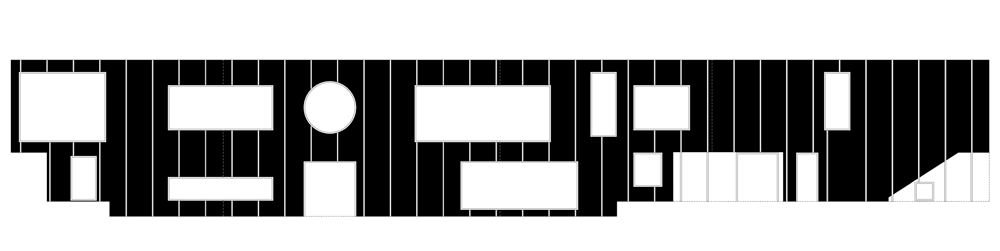
Rectangular windows stretch around each corner of the building, while smaller square and circular windows are positioned along the sides.

House in the woods in Hungary built in two days by T2.a Architects

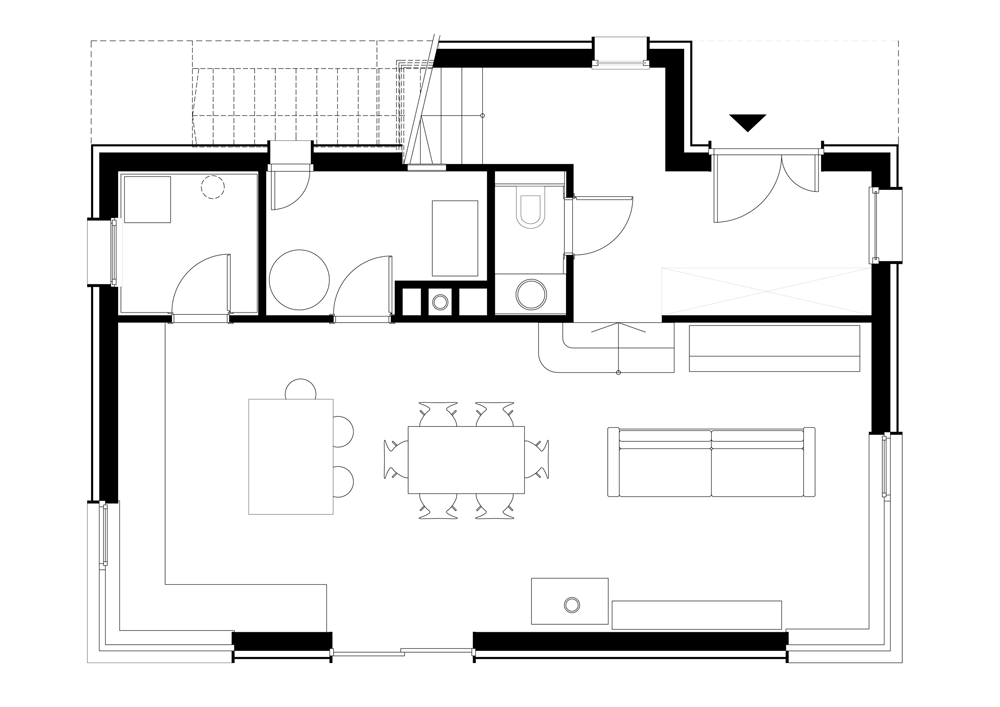
There are two floors inside the cabin; an open-plan lounge and dining room make up most of the ground floor, while a pair of bedrooms and bathrooms can be found upstairs.

House in the woods in Hungary built in two days by T2.a Architects

Wooden panels line walls, ceilings and floors throughout the house, and floor-to-ceiling windows offer views out into the surrounding forest.

House in the woods in Hungary built in two days by T2.a Architects

Photography is by Zsolt Batar.

Here's a project description:


The Photographer's House

Architect Bence Turanyi and photographer Zsolt Batar decided to unify their artistic and professional visions, and the result of their work is an extraordinary house in a forest. The idea behind the building was to create harmony among man, nature and economic aspects. The sustainable wooden house breathes together with the surrounding trees, and its life is documented by the artist who lives in it. The house was one of the favourites of the international jury for Hungary's Media Architecture Prize 2013.

House in the woods in Hungary built in two days by T2.a Architects

If I would have to tell one story to define contemporary Hungarian architecture, among the finalists of 2013, it would definitely be the story of Bence Turanyi's house – this is how Daniel Kovacs, member of the professional jury of the Hungarian Media Prize 2013 commented on The Photographer's House.

House in the woods in Hungary built in two days by T2.a Architects

The birth of this exceptional building is the result of the co-operation between an architect and a photographer, which is much more than a traditional client-architect relationship. Owner of the house, renown architectural photographer Zsolt Batar is an old friend of Bence Turanyi. The two brought ideas and ways of thinking from their own areas, and unified them in a common project.

House in the woods in Hungary built in two days by T2.a Architects

"When two different ways of thinking meet, the result is something completely new. Our conversations about art, architecture and design were brought to life in this house." - says Bence Turanyi about the crossover experience. For Zsolt Batar, the house is not only a home, but also a source of inspiration. The series about the house has become an important milestone in his artistic career: he records the relationship of the house and the forest day by day, in every season.

Ground floor plan of House in the woods in Hungary built in two days by T2.a Architects
Ground floor plan - click for larger image

Architecture is in a new and challenging situation nowadays thanks to significant changes in the economical and social environment. We still need well-structured, quality houses, but often there is a choice among sustainability, technology and price. The creators wanted a building which looks good and unique, and is of excellent quality, while it can be built during very short time and for a reasonable price. A mere week passed between sending the digital data to the manufacturer and the completion of structural assembly on site, while the House was built in two days. The structural framework of the House is made of prefabricated, cross laminated and glued timber panels (CLT).

First floor plan of House in the woods in Hungary built in two days by T2.a Architects
First floor plan - click for larger image

The Photographer's House is a unique example of slow design: you can get your hands dirty while you collect wood from the forest to heat the fireplace, it sharpens all your senses thanks to the vivid presence of the forest, and it creates an emotional bond among man and nature. The House literally breathes together with forest, while in the inside there is the constant smell of wood. And this special smell is part of the living structure of the building. In wintertime, the fireplace heats the house, while during summer nights cool breezes from the woods are let through the open windows.

Facade of House in the woods in Hungary built in two days by T2.a Architects
Front elevation - click for larger image

Architect: T2.a Architects
Location: Pilis forest, near Budapest, Hungary
Architect in charge: Turanyi Bence
Collaborator: Pinczes Eva
Area: 120 sqm
Year: 2012


~A.

| 100 Questions Designed to Boost Your Visual/Arts Intelligence Quotient | Page 10

http://viqaiq.com/page/10/

So, way, ...way.
~A.

New Smallest PC

http://www.indiegogo.com/projects/tango-pc-worlds-most-powerful-pocketable-dockable-gameable-officeable-pc#description


~A.

Me2

???

Opening Pandora's Bread Box: The Critical Role of Wheat Lectin

Opening Pandora's Bread Box: The Critical Role of Wheat Lectin

Opening Pandora's Bread Box: The Critical Role of Wheat Lectin in Human Disease

by Sayer Ji

Now that celiac disease has been allowed official entry into the annals of established medical conditions, and gluten intolerance is no longer entirely a fringe medical concept, the time has come to draw attention to the powerful little chemical in wheat known as 'wheat germ agglutinin' (WGA) which is largely responsible for many of wheat's pervasive, and difficult-to-diagnose, ill effects. Not only does WGA throw a monkey wrench into our assumptions about the primary causes of wheat intolerance, it also pulls the rug out from under one of the health food industry's favorite poster children since high concentrations of WGA is found in "whole wheat," including its supposedly superior sprouted form.  Below the radar of conventional serological testing for antibodies against various gluten proteins and genetic testing for disease susceptibility, the WGA "lectin problem" remains almost entirely obscured. Lectins, though found in all grains, seeds, legumes, dairy and our beloved nightshades: the tomato and potato, are rarely connected with health or illness, even when their consumption may greatly reduce both the quality and length of our lives.

Although significant progress has been made in exposing the dark side of wheat [1] over the past decade, gluten receives a disproportionate share of the attention. Given that modern bread wheat (Triticum aestivum) is an allohexaploid species containing six distinct sets of chromosomes capable of producing well over 23,000 unique proteins, it is not surprising that we are only now beginning to unravel the complexities of this plant's many secrets. [2] What is unique about WGA is that it can do direct damage to the majority of tissues in the human body without requiring a specific set of genetic susceptibilities and/or immune-mediated articulations. This may explain why chronic inflammatory and degenerative conditions are endemic to wheat-consuming populations even when overt allergies or intolerances to wheat gluten appear exceedingly rare. The future fate of wheat consumption and, by implication, our health, may depend largely on whether or not the toxic qualities of WGA come to light within the general population.

Nature engineers, within all species, a set of defenses against predation, though not all are as obvious as the thorns on a rose or the horns on a rhinoceros. Plants do not have the cell-mediated immunity of higher life forms, like ants, nor do they have the antibody-driven, secondary immune systems of vertebrates with jaws. Therefore, they must rely on a much simpler, innate immunity. It is for this reason that seeds of the grass family, e.g. rice, wheat, spelt, rye, have exceptionally high levels of defensive glycoproteins known as lectins, which function much like "invisible thorns." Cooking, sprouting, fermentation and digestion are the traditional ways in which people, for instance, deal with the various anti-nutrients found within this family of plants, However, lectins are, by design, particularly resistant to degradation through a wide range of pH and temperatures.

WGA lectin is an exceptionally tough adversary as it is formed by the same disulfide bonds that make vulcanized rubber (as used in bowling bowls) and human hair so strong, flexible and durable. Like synthetic pesticides, lectins are extremely small, resistant to decomposition by living systems, and tend to accumulate and incorporate into tissues where they interfere with normal biological processes. Indeed, WGA lectin is so powerful as an insecticide that biotech firms have used recombinant DNA technology to create genetically modified WGA-enhanced plants. We can only hope that these virtually unregulated biotech companies, in the business of playing God with the genetic infrastructure of life, will realize the potential harm to humans that such genetic modifications can cause.

Lectins are sugar-binding proteins and, through thousands of years of selectively breeding wheat for increasingly larger quantities of protein, the concentration of WGA lectin has increased proportionately. This, no doubt, has contributed to wheat's global dominance as one of the world's favored monocultures, offering additional "built-in" pest resistance. The word lectin comes from the same etymological root as the word select, and literally means "to choose." Lectins are designed "to choose" specific carbohydrates that project from and attach to the surface of cells. In the case of WGA, the two glycoproteins it selects, in order of greatest affinity, are N-Acetyl Glucosamine and N-Acetylneuraminic acid (sialic acid).

WGA is nature's ingenious solution for protecting the wheat plant from the entire gamut of its natural enemies. Fungi have cell walls composed of a polymer of N-Acetylglucosamine. The cellular walls of bacteria are made from a layered structure called the peptidoglycan, a biopolymer of N-Acetylglucosamine. N-Acetylglucosamine is the basic unit of the biopolymer chitin, which forms the outer coverings of insects and crustaceans (shrimp, crab, etc.). All animals, including worms, fish, birds and humans, use N-Acetyglucosamine as a foundational substance for building the various tissues in their bodies, including the bones. The production of cartilage, tendons, and joints depends on the structural integrity of N-Acetylglucosamine. The mucous known as the glycocalyx, or literally, "sugar coat" is secreted in humans by the epithelial cells which line all the mucous membranes, from nasal cavities at the top to the alimentary tube at the bottom, as well as the protective and slippery lining of our blood vessels. The glycocalyx is composed largely of N-Acetylglucosamine and N-Acetylneuraminic acid (also known as sialic acid), with carbohydrate end of N-Acetylneuraminic acid of this protective glycoprotein forming the terminal sugar that is exposed to the contents of both the gut and the arterial lumen (opening). WGA's unique binding specificity to these exact two glycoproteins is not accidental. Nature has perfectly designed WGA to attach to, disrupt, and gain entry through these mucosal surfaces.

It may strike some readers as highly suspect that wheat - the "staff of life" - which has garnered a reputation for "wholesome goodness" the world over, could contain a powerful health-disrupting anti-nutrient, which is only now coming to public attention. WGA has been overshadowed by the other proteins in wheat. Humans – not nature – have spent thousands of years cultivating and selecting for larger and larger quantities of these proteins. These pharmacologically active, opiate-like proteins in gluten are known as gluten exorphins (A5, B4, B5, C) and gliadorphins. In the short term, they may effectively anesthetize us to the long-term, adverse effects of WGA. Gluten also contains exceptionally high levels of the excitotoxic l-aspartic and l-glutamic amino acids, which can also be highly addictive, not unlike their synthetic shadow molecules aspartame and monosodium glutamate.  In a previous article on the topic, The Dark Side of Wheat: New Perspectives on Celiac Disease and Wheat Intolerance, we explored the role that these psychotropic qualities in grains played in ushering in civilization at the advent of the Neolithic transition, around 10,000 BC. No doubt the narcotic properties of wheat is the primary reason why suspicions about its toxicity have remained merely speculative for thousands upon thousands of years.

WGA is most concentrated in the seed of the wheat plant, likely due to the fact that the seeds are the "babies" of these plants and are invested with the entire hope for continuance of their species. Protecting the seed against predation is necessarily a first priority. WGA is an exceedingly small glycoprotein (36 kilodaltons) and is concentrated deep within the embryo of the wheat berry (approximately 1 microgram per grain). WGA migrates during germination to the roots and tips of leaves, as the developing plant begins to project itself into the world and outside the safety of its seed. In its quest for nourishment from the soil, its roots are challenged with fungi and bacteria that seek to invade the plant. In its quest for sunlight and other nourishment from the heavens, the plant's leaves become prey to insects, birds, mammals, etc. Even after the plant has developed beyond the germination and sprouting stages, it retains almost 50% of the levels of lectin found in the dry seeds. Approximately one third of this WGA is in the roots and two thirds is in the shoot, for at least 34 days [3]

Each grain contains about one microgram of WGA. That seems hardly enough to do any harm to animals our size. Lectins, however, are notoriously dangerous even in minute doses and can be fatal when inhaled or injected directly into the bloodstream. According to the Centers for Disease Control and Prevention, it takes only 500 micrograms (about half a grain of sand) of ricin (a lectin extracted from castor bean casings) to kill a human. A single, one ounce slice of wheat bread contains approximately 500 micrograms of WGA, which, if it were refined to its purest form and injected directly into the blood, could, in theory, have platelet-aggregating and erythrocyte-agglutinizing effects strong enough to create an obstructive clot such as that occuring in myocardial infarction and stroke. This, however, is not a likely route of exposure and, in reality, the immediate pathologies associated with lectins like ricin and WGA are largely restricted to the gastrointestinal tract where they can cause mucosal injuries. The point is that WGA, even in small quantities, could have profoundly adverse effects, given suitable conditions. Ironically, WGA is exceptionally small, at 36 kilodaltons (approximately the mass of 36,000 hydrogen atoms) and it can pass through the cell membranes of the intestine with ease. The intestines will allow passage of molecules up to 1,000 kilodaltons in size. Moreover, one wheat kernel contains 16.7 trillion individual molecules of WGA, with each molecule of WGA having four N-Acetylglucosamine binding sites. The disruptive and damaging effects of whole wheat bread consumption are formidable in someone whose protective mucosal barrier has been compromised by something as simple as nonsteroidal anti-inflammatory drug (NSAID) use, or a recent viral or bacterial infection. The common consumption of both wheat and NSAIDs may suggest the frequency of the WGA vicious cycle. Anti-inflammatory medications, such as ibuprofen and aspirin, increase intestinal permeabilty and may cause absorption of even larger-than-normal quantities of pro-inflammatory WGA. Conversely, the inflammation caused by the absorption of WGA lectin is the very reason there is a great need for the inflammation-reducing effects of NSAIDs.

One way to gauge just how pervasive the adverse effects of WGA are among wheat-consuming populations is the popularity of the dietary supplement glucosamine. In the USA, a quarter-billion dollars' worth of glucosamine is sold annually. The main source of glucosamine on the market is from the N-Acetylglucosamine-rich chitin exoskelotons of crustaceans like shrimp and crab. Glucosamine is used for reducing pain and inflammation. We do not have a dietary deficiency of the pulverized shells of dead sea critters, just as our use of NSAIDs is not caused by a deficiency of these synthetic chemicals in our diet. When we consume glucosamine supplements, the WGA, instead of binding to our tissues, binds to the pulverized chitin in the glucosamine supplements, sparing us from the full impact of WGA. Many millions of Americans who have greatly reduced their pain and suffering by ingesting glucosamine and NSAIDs may be better served by removing wheat, the underlying cause of their malaise, from their diets. This would result in even greater relief from pain and inflammation along with far less dependency on both palliative supplements and medicines.

To further underscore this point, the following are several ways that WGA depletes our health while glucosamine works against it:

WGA may be Pro-inflammatory

At exceedingly small (nanomolar) concentrations, WGA stimulates the synthesis of pro-inflammatory chemical messengers (cytokines) including Interleukin 1, Interleukin 6 and Interleukin 8 in intestinal and immune cells.[4] WGA has been shown to induce NADPH-Oxidase in human neutrophils associated with the "respiratory burst" that results in the release of inflammatory free radicals called reactive oxygen species[5] WGA has been shown to play a causative role in patients with chronic thin gut inflammation.[6]

WGA may be Immunotoxic

WGA induces thymus atrophy in rats[7] and may directly bind to, and activate, leukocytes [8]. Anti-WGA antibodies in human sera have been shown to cross-react with other proteins, indicating that they may contribute to autoimmunity [9]. Indeed, WGA appears to play a role in the pathogenesis of celiac disease (CD) that is entirely distinct from that of gluten, due to significantly higher levels of the immunoglobulins IgG and IgA antibodies against WGA found in patients with CD, when compared with patients with other intestinal disorders. These antibodies have also shown not to cross-react with gluten antigens[10] [11]

WGA may be Neurotoxic

WGA can pass through the blood brain barrier (BBB) through a process called "adsorptive endocytosis"[12] and is able to travel freely among the tissues of the brain which is why it is used as a marker for tracing neural circuits[13]. WGA's ability to pass through the BBB, pulling bound substances with it, has piqued the interest of pharmaceutical developers who are looking to find ways of delivering drugs to the brain. WGA has a unique binding affinity for N-Acetylneuraminic acid, a crucial component of neuronal membranes found in the brain, such as gangliosides which have diverse roles such as cell-to-cell contact; ion conductance, as receptors, and whose dysfunction has been implicated in neurodegenerative disorders. WGA may attach to the protective coating on the nerves known as the myelin sheath[14] and is capable of inhibiting nerve growth factor [15] which is important for the growth, maintenance, and survival of certain target neurons. WGA binds to N-Acetylglucosamine which is believed to function as an atypical neurotransmitter functioning in nocioceptive (pain) pathways.

WGA may be Cytotoxic

WGA has been demonstrated to be cytotoxic to both normal and cancerous cell lines, capable of inducing either cell cycle arrest or programmed cell death (apoptosis).[16]

WGA may interfere with Gene Expression

WGA demonstrates both mitogenic and anti-mitogenic [17] activities. WGA may prevent DNA replication[18] WGA binds to polysialic acid (involved in post-translational modifications) and blocks chick tail bud development in embryogenesis, indicating that it may influence both genetic and epigenetic factors.

WGA may disrupt Endocrine Function

WGA has also been shown to have an insulin-mimetic action, potentially contributing to weight gain and insulin resistance [19]. WGA has been implicated in obesity and "leptin resistance" by blocking the receptor in the hypothalamus for the appetite satiating hormone leptin. WGA stimulates epidermal growth factor which, when upregulated, is associated with increased risk of cancer. WGA has a particular affinity for thyroid tissue and has been shown to bind to both benign and malignant thyroid nodules [20] WGA interferes with the production of secretin from the pancreas, which can inhibit with digestion and  cause pancreatic hypertrophy. WGA attaches to sperm and ovary cells, indicating it may adversely influence fertility.

WGA may be Cardiotoxic

WGA induces platelet activation and aggregration [21]. WGA has a potent, disruptive effect on platelet endothelial cell adhesion molecule-1, which plays a key role in tissue regeneration and safely removes neutrophils from our blood vessels.[22]

WGA may adversely effect Gastrointestinal Function
WGA causes increased shedding of the intestinal brush border membrane, reduction in surface area, acceleration of cell losses and shortening of villi, via binding to the surface of the villi. WGA can mimic the effects of epidermal growth factor (EGF) at the cellular level, indicating that the crypt hyperplasia seen in celiac disease may be due to the growth-promoting effects of WGA. WGA causes cytoskeletal degradation in intestinal cells, contributing to cell death and increased turnover. WGA decreases levels of heat shock proteins in gut epithelial cells leaving these cells less well protected against the potentially harmful content of the gut lumen.[23]

WGA may share pathogenic similarities with certain Viruses

There are a number of interesting similarities between WGA lectin and viruses.  Both viral particles and WGA lectin are several orders of magnitude smaller than the cells they enter, and subsequent to their attachment to the cell membrane, are taken into the cell through a process of endocytosis. Both influenza and WGA gain entry through the sialic acid coatings of our mucous membranes (glycocalyx) each with a sialic acid-specific substance: the neuraminidase enzyme for viruses and the sialic acid binding sites on the WGA lectin.Once the influenza virus and WGA lectin have made their way into wider circulation in the host body, they are both capable of blurring the line in the host between self and non-self.  Influenza accomplishes this by incorporating itself into the genetic material of our cells and taking over the protein production machinery to replicate itself, with the result that our immune system must attack its own virally transformed cell, to clear the infection.  Studies done with herpes simplex virus have shown that WGA has the capacity to block viral infectivity through competitively binding to the same cell surface receptors, indicating that they may effect cells through very similar pathways.  WGA has the capability of influencing the gene expression of certain cells, e.g. mitogenic/anti-mitogenic action, and like other lectins associated with autoimmunity, e.g. soy lectin, and viruses like Epstein-Barr virus, WGA may be capable of causing certain cells to exhibit class 2 human leukocyte antigens (HLA-II), which mark them for autoimmune destruction by white blood cells.  Since human antibodies to WGA have been shown to cross-react with other proteins, even if WGA does not directly transform the phenotype of our cells into "other," the resulting cross-reactivity of antibodies to WGA with our own cells would nonetheless result in autoimmunity.

Given the multitude of ways in which WGA may disrupt our health, gain easy entry through our intestine into systemic circulation, and remain refractory to traditional antibody-based clinical diagnoses, it is altogether possible that the consumption of wheat is detracting from the general health of the wheat-consuming world and that we have been, for all these years, "digging our graves with our teeth." This perspective may come as a great surprise  to the health food industry whose particular love affair for whole wheat products has begun to go mass market. The increasingly hyped-up marketing of "whole wheat," "sprouted grain," and "wheat germ" enriched products, all of which may have considerably higher levels of WGA than their processed, fractionized, non-germinated and supposedly "less healthy" equivalents, may contribute to making us all significantly less healthy.

It is my belief that a careful study of the wheat plant will reveal that, despite claims to the contrary, man does not have dominion over nature. All that he deems fit for his consumption may not be his inborn right. Though the wheat plant's apparently defenseless disposition would seem to make it suitable for mass human consumption, it has been imbued with a multitude of invisible "thorns," with WGA being its smallest and perhaps most potent defense against predation. While WGA may be an uninvited guest at our table, wheat is equally inhospitable to us. Perhaps the courteous thing to do, having realized our mistaken intrusion, is to lick our wounds and simply go our separate ways. Perhaps, as we separate from our infatuation with wheat, we will grow more sensitive to our bodies' true needs and discover far more suitable forms of nourishment that nature has not impregnated with such high levels of addictive  and potentially debilitating proteins.

REFERENCES

 [1]  Ji, Sayer. "The Dark Side of Wheat: New Perspectives on Celiac Disease & Wheat Intolerance." Journal of Gluten Sensitivity. Santa Rosa: www.celiac.com, 2008. http://www.greenmedinfo.com/page/dark-side-wheat-new-perspectives-celiac-disease-wheat-intolerance-sayer-ji. (October 2012).

 [2]  Desmond, S. T. Nicholl.  An Introduction to Genetic Engineering 3rd Ed.  Cambridge: Cambridge University Press, 1994-2008, https://www.cambridge.org/aus/catalogue/catalogue.asp?isbn=9780521615211. (October 2012),

 [3]  Mishkind, Michael, Kenneth Keegstra,  Barry A. Palevitz.  "Distribution of Wheat Germ Agglutinin in Young Wheat Plants." Plant Physiology.  Rockville:  American Society of Plant Biologists, 1980. http://www.plantphysiol.org/content/66/5/950.full.pdf. (December 2012).

 [4]  Pellegrina, Chiara Dalla, Omar Perbellini, Maria Teresa Scupoli, Carlo Tomelleri, Chiara Zanetti, Gianni Zoccatelli, Marina Fusi, Angelo Peruffo, Corrado Rizzi, Roberto Chignola. "Effects of Wheat Germ Agglutinin on Human Gastrointestinal Epithelium: Insights From an Experimental Model of Immune/epithelial Cell Interaction." Toxicology and Applied Pharmacology.  Amsterdam: Elsevier B.V.., 2009. http://www.deepdyve.com/lp/elsevier/effects-of-wheat-germ-agglutinin-on-human-gastrointestinal-epithelium-DDDhjGaQzd/1. (January 2013)

 [5]  Karlsson, A. "Wheat Germ Agglutinin Induces NADPH-oxidase Activity in Human Neutrophils by Interaction with Mobilizable Receptors."  Infection and Immunity. Washington, DC: The American Society for Microbiology, 1999. http://www.ncbi.nlm.nih.gov/pubmed/10377127. (December 2012)

 [6]  Guzyeyeva, Gloria V.  "Lectin Glycosylation as a Marker of Thin Gut Inflammation."  The FASEB Journal.  Bethesda: Federation of American Societies For Experimental Biology, 2008. http://www.fasebj.org/cgi/content/meeting_abstract/22/1_MeetingAbstracts/898.3. (October 2012).

 [7]  Pusztai, A., S.W.B. Ewen, G. Grant, D.S. Brown, J.C. Stewart, W.J. Peumans, E.J.M Van Damme, S. Bardocz.  "Antinutritive Effects of Wheat-germ Agglutinin and Other N-Acetylglucosamine-specific Lectins." The British Journal of Nutrition.  Cambridge:  Cambridge University Press,  1993. http://journals.cambridge.org/download.php?file=%2FBJN%2FBJN70_01%2FS0007114593001254a.pdf&code=ad7ed0ca7f0f2f23215d621ee092fd            38. (September 2012)

 [8]  Tyrrell, Gregory J., Mark S. Peppler, Robert A. Bonnah, Clifford  G. Clark, Pele Chong, Glen D. Armstrong.  "Lectinlike Properties of Pertussis Toxin". Infection and Immunity. Washington, D.C.: The American Society for Microbiology, 1989.  http://www.ncbi.nlm.nih.gov/pmc/articles/PMC313367/pdf/iai00066-0224.pdf.  (November 2012).

 [9]   Tchernychev, B., M. Wilchek.  "Natural Human Antibodies to Dietary Lectins."  FEBS Letters.  Amsterdam:  Elsevier BV, 1996.  http://www.ncbi.nlm.nih.gov/pubmed/8955334.  (January 2013).

 [10]  Sollid, L.M., J. Kolberg, H. Scott, J. Ek, O. Fausa, P. Brandtzaeg. "Antibodies to Wheat Germ Agglutinin in Coeliac Disease." Clinical & Experimental Immunology  Hoboken:  Wiley-Blackwell Publishing 1986. http://www.ncbi.nlm.nih.gov/pmc/articles/PMC1577348/. (November 2012).

[11]  Faith-Magnusson, K., KE. Magnussen.  "Elevated Levels of  Serum Antibodies to the Lectin Wheat Germ Agglutinin in Celiac Children  Lend Support to the Gluten-lectin Theory of Celiac Disease."  Pediatrid Allergy & Immunology.  Hoboken:  Wiley-Blackwell Publishing. 1995.  http://www.ncbi.nlm.nih.gov/pubmed/7581728#.   (September 2012).

[12]  Broadwell, R.D., B. J. Balin, M. Salcman.  "Transcytotic Pathway for Blood-borne Protein Through the Blood-brain Barrier."  Proceedings of the National Academy of Sciences of the United States of America.  Washington, DC: National Academy of Sciences.  1988.  http://www.ncbi.nlm.nih.gov/pmc/articles/PMC279605/.  (December 2012).

[13]  Damak, S., B. Mosinger, RF Margolskee.  "Transsynaptic Transport of Wheat Germ Agglutinin Expressed in a Subset of Type II Taste Cells of Transgenic Mice."  BMC Neuroscience.  London:  BioMed Central, Ltd. 2008.             http://www.ncbi.nlm.nih.gov/pubmed/18831764#.  (December 2012).

 [14]  Dolapchieva, S.  "Distribution of Concanavalin A and Wheat Germ Agglutinin Binding Sites in the Rat Peripheral Nerve Fibres Revealed by Lectin/glycoprotein-gold Histochemistry".  The Histochemical Journal.  London:  Chapman & Hall, 1996. http://link.springer.com/article/10.1007%2FBF02331422?LI=true#page-1.  (January 2013).

[15]  Hashimoto, S., A. Hagino.  "Wheat germ agglutinin, concanavalin A, and lens culinalis agglutinin block the inhibitory effect of nerve growth factor on cell-free phosphorylation of Nsp100 in PC12h cells."  Cell Structure and Function Journal.  Kyoto:  Nihon Saibo Seibutsu Gakkai. 1989.  http://www.ncbi.nlm.nih.gov/pubmed/2720800#.  (September 2012).

 [16]  Liu, W.K., S.C. Sze, J.C. Ho, B.P. Liu, M.C. Yu.  "Wheat Germ Lectin Induces G2/M Arrest in Mouse L929 Fibroblasts."  Journal of Cellular Biochemistry.  Hoboken:  Wiley-Blackwell Publishing.  2004. http://www.unboundmedicine.com/medline/citation/15048871/Wheat_germ_lectin_induces_G2/M_arrest_in_mouse_L929_fibroblasts_.  (November 2012).

 [17]   Kaplowitz, Paul B. "Wheat germ agglutinin and concanavalin A inhibit the response of human fibroblasts to peptide growth factors by a post-receptor mechanism.  Journal of Cellular Physiology.  Hoboken:  Wiley-Blackwell Publishing.  1985.   http://onlinelibrary.wiley.com/doi/10.1002/jcp.1041240317/abstract.  (October 2012).

[18]   Cox, Lynne S.  "DNA Replication in Cell-free Extracts from Xenopus Eggs is Prevented by Disrupting Nuclear Envelope Function".  Journal of Cell Science.  Cambridge:  The Company of Biologists. 1992, http://jcs.biologists.org/content/101/1/43.long.  (October 2012).

 [19]   Yevdokimova, N.Y., A.S. Yefimov.  "Effects of Wheat Germ Agglutinin and Concanavalin A on the Accumulation of Glycosaminoglycans in Pericellular Matrix of Human Dermal Fibroblasts. A Comparison with Insulin".  Acta Biochimica Polonica.    Warsaw:  The Polish Biochemical Society and the Committee of Chemistry and Biophysics. 2001.  http://www.ncbi.nlm.nih.gov/pubmed/11732625.  (November 2012).

 [20]  Sasano, H., M. Rojas, S.G. Silverberg.  "Analysis of Lectin Binding in Benign and Malignant Thyroid Nodules."  Pathology & Laboratory Medicine.  Northfield:  The College of American Pathologists.  1989. http://europepmc.org/abstract/MED/2916907/reload=0;jsessionid=KYN2j0u7h2Zg8CT6OZ2D.2.  (January 2013).

 [21]   Lebret, M., F. Rendu.  "Further Characterization of Wheat Germ Agglutinin Interaction with Human Platelets: Exposure of Fibrinogen Receptors."  Journal of Thrombosis and Haemostasis.  UK:  Blackwell Publishing. 1986.  http://www.ncbi.nlm.nih.gov/pubmed/3105108.  (September 2012).

 [22]    Ohmori, T., Y. Yatomi, Y. Wu, M. Osada, K. Satoh, Y. Ozaki.  "Wheat Germ Agglutinin-induced Platelet Activation via Platelet Endothelial Cell Adhesion Molecule-1: Involvement of Rapid Phospholipase C Gamma 2 Activation by Src Family Kinases."  Biochemistry.  New York:  Bedford, Freeman & Worth.  2001.  http://www.ncbi.nlm.nih.gov/pubmed/11669637.  (November 2012).

 [23]    Ovelgonne, J.H., J.F.J.G. Koninkx, A. Pusztai, S. Bardocz, W. Kok, S.W.B. Ewen, H.G.C.J.M. Hendriks, J.E. van Dijk.  "Decreased Levels of Heat Shock Proteins in Gut Epithelial Cells After Exposure to Plant Lectins."  Gut.   London:  BMJ Group.  2000.  http://gut.bmj.com/content/46/5/680.  (September 2012).


~A.

Wednesday, January 22, 2014

(HOT!) Sauna Benefits and EMF

Story at-a-glance +

By Dr. Mercola

Steve Benda is trained in power systems and nuclear engineering. Here, we discuss saunas and the electromagnetic fields (EMF's) they can produce. While sauna bathing can be highly beneficial for your health, EMF's are a distinct health hazard. Benda literally grew up in and around saunas, due to his Finnish and German heritage.

"The saunas were always in my family and they became part of our lives, so I guess I just had an early interest," he says.

The Historical Use of Saunas

Historically, saunas have a longstanding tradition of use. They are common to many Eastern European countries, as well as Asia. In some countries, such as Finland, you can find them in nearly every home.

"Some of the old Finnish saunas were fires under piles of rocks inside a room that was very smoky," Benda explains. "People would come in to those rooms and throw water on that pile of rocks; get the steam heat in the room, and sweat.... It evolved into contained wood stoves, where the woodstove would heat the pile of rocks...  

That evolved into electrical saunas, which are more traditional now, where electric heating elements will heat the rocks in a small stove. It's very typically found in basements or little recreation centers in homes and in lots of clinics.

... That has led, in more recent years... to the evolution of the infrared sauna, which is a different kind of heating mechanism that relies on the infrared portion of the electromagnetic spectrum to provide heat and radiation; radiant heat."

The Different Types of Saunas

Today, there are three basic types of saunas:

  1. The wet Finnish sauna, where steam is created by throwing water on hot rocks (the heat can be generated by either wood burning or electricity)
  2. The dry Finnish sauna that uses electrical heating, and therefore does not employ water (these stoves are not made to have water poured on them. Doing so can result in short-circuiting)
  3. Infrared saunas

The difference between an infrared sauna and the traditional Finnish-style saunas is that the latter heats you up from the outside in, like an oven. The infrared sauna heats you from the inside out.  The traditional wet sauna typically uses a small stove with radiant heat elements, i.e. resistive elements that heat up when current flows through them. These elements heat up the rocks piled on top. The temperature is regulated by a thermostat. Initially, the sauna will feel warm and dry, but once you toss some water on the rocks, hot steam is generated.

"At that moment, when it goes from dry to more of a humid environment, thousands of pores are popping [open] at the same time on your body," Benda explains. "It feels really, really nice as your sweat mechanisms turn on. That's a traditional sauna. We throw water on the rocks. We get the steam heat in the room and we experience a lot of sweating... That'd be considered the wet sauna.

... I'll say it's the best recipe to get ready to go to bed. Now when you lay down to go to sleep at night, you're very, very relaxed and cleaned from the sauna... My sauna at home is heated every night — my traditional (sauna) in the basement."

Beware: Saunas Can Generate Very High Levels of Electromagnetic Radiation

While some still favor old-fashioned wood-burning saunas, the more modern electrical versions and the infrared saunas are the most common today. Unfortunately, this has also led to some problems, namely high electromagnetic radiation.

"Electromagnetic fields are all about electrical energy. I call it the force components that come off of electrical energy," Benda says. "The force equations are set up where electrical fields are everywhere around us. If there are energized wires, [then] electrical fields are around us…[T]hey can be mitigated through shielding. The electrical fields are probably one of the areas that we can easily contain.

But the other component that's in the electrical field is the electromagnetic radiation (EMF). ... [B]oth are very bad actors, I would say, because they act on our bodies. Our bodies are filled with charged particles. We're made up of charged particles. An electrical field will act out with a force on those charged particles, depending on its magnitude, and over time may alter the way that our bodies behave cellularly."

Many people don't realize that we are fundamentally electrical beings. The cells in your body communicate with each other electrically, and if you're exposed to an external electrical field, it could interfere with their communication and wreak havoc on your system.

"From the electrical side, I know that if I have an energized source, which is an EMF, an electromotive force – volt... Volts generate or emit electric fields. We measure that by volts per distance; that's what our meter will tell us.

The other part of that force equation would be the electromagnetic part, which is when a charged particle moves in the wire; meaning current (so you have volts and current). This generates a magnetic field around the wire, and that magnetic field will also impart a force on those same charged particles in your body. We have developed technology that can effectively mitigates or eliminates the electric field... [and]... technology that will mitigate or minimize below acceptable standards the electromagnetic [field]..."

Benda's background in nuclear power deals with radiation, power systems, and the control of electrical properties. He was asked to apply some of these theories to the development of a safer, low-EMF infrared sauna, which led to the creation of a whole new generation of shielded saunas.

Is Your Infrared Sauna Emitting High Levels of EMF?

About 15 years ago, when I first started doing saunas, the panels used to create infrared heat were initially made of ceramic. Later, they began using carbon. The problem with this is that while ceramic panels are relatively safe, the later-generation carbon panels actually emit very high EMF levels. You can easily test this by using an inexpensive electrical meter, or a more sophisticated EMF meter like Trifield.

One of the saunas I recently tested measured off the chart—about 120 milligauss. Even outside the sauna the EMF level was high. Normally, it should be below three or so.

Needless to say, the technology Mr. Benda has helped develop can be of great benefit, especially if you're regularly using your sauna. Because while radiation drops off exponentially as you move away from the source, when you're sitting in a small confined space such as a sauna, you don't have the choice to move further away.

"Hotspots would be ranges of 100 to 300 milligauss," Benda explains. "... [A]s you move away from the source, the measured field drops off by one over the distance squared. So it drops off relatively quickly. However, we don't have that luxury when we're sitting in one of these [saunas]... [M]ost likely you'll be leaning against the source...  

[W]hen there is an electric field and there's an electric current flow, it will generate electromagnetic radiation (EMR).

Being that electric fields and electromagnetic radiation fields are vectors—meaning they have a direction and a magnitude—any combination of an electric field, plus an electric field, plus other components that add up will end up to be the result of the many, not just one. What happens is, if we don't effectively control all the sources of the electric field, or all the sources of electromagnetic radiation, we aren't really taking care of the problem.

... "[To describe] the electric field, I use a water analogy where you have a garden hose, a water source, and then you saw a pressure gauge. In the pressure gauge, the pressure is volts in the electric analogy. When you turn it on, the flow of the water is the current in the electric analogy. You can't have current flowing without volts in the electric portion. To address only one, and to assume only one exists, is missing half of the equation. If we're truly addressing all aspects of the electromagnetic field, we need to effectively address both.

... So the [patented] technologies we have developed can effectively eliminate all the induced electric fields in the room so that they entire environment is below our acceptable standards. We have also upgraded the technologies to mitigate... the magnetic portion."

Many are using saunas for detoxification, and it would clearly seem counterproductive to employ a device that is aiding one aspect of their health while hurting them in another. In fact, depending on your specific health status, detoxing in a high-EMF environment might actually do you more harm than good. This is why I'm delighted to see that the issue of EMF's is finally being addressed—at least by one sauna company. Clearly, if you're in the market for a new sauna, this is definitely something you'll want to investigate, to make sure your sauna does not encase you in a high-EMF environment...

A New Generation of Infrared Saunas

The technology developed by Mr. Benda can effectively shield the bather from dangerous levels of EMF. In the interview, he describes how they determined these safer limits of exposure:

"... The standard we use as our target is one that has developed in Sweden... called the electromagnetic Swedish standard... They have developed a standard where, at 30 or 50 centimeters from [a computer] screen, there would be a certain amount of milligauss reading or maximum electric field. What we have done, based on that study and the credibility of that study, is, we have said, "Okay, let's take that same benchmark, that same standard, and apply that to our saunas."  Currently, our standard is 2.0 milligauss at 30 centimeters."

Besides addressing EMF's, Mr. Benda is also working on redefining the infrared signature from the typical 50 percent "on," to one that's about 96 percent "on." Benda explains: 

"When an infrared room nears the set point – the thermostat at 150°F setting, let's say – it begins to cycle on and off, based on the controls and the set points. We have done some very interesting high-performance [modifications] that will more effectively keep the infrared signal "on" 96 percent of the time versus only 50 percent.

To the bather that means a lot because he'll feel warm and he'll feel like he's in an experience when the infrared is on. Again, the heat signature is coming from the electrical energization, whereas if the room is turned off their bodies will start to feel cooler almost instantaneously."

Sauna Bathing Can be an Excellent Addition to a Healthy Lifestyle

Everyone today is exposed to heavy metals and toxic chemicals. Particularly for slow metabolizers, using an infrared sauna can be a very good method to detoxify. Its dry, warming energy is highly compatible with the human body. By heating your tissues several inches deep, it helps enhance metabolic processes, and greater cellular energy production facilitates healing. Furthermore, viruses and toxin-laden cells are weaker than normal cells and tolerate heat poorly, so raising your body temperature helps heal infections quicker.

A major organ of elimination, most people's skin is very inactive. Many simply do not sweat enough. Repeated use of the sauna slowly restores skin elimination, allowing toxic chemicals and metals to be removed. It's a daily habit that pays many dividends. To learn more about the health benefits of using saunas, please review the related articles listed below.

However, all of these benefits could be effectively cancelled out if your sauna is emitting very high EMF's, so please, do take the time to evaluate your sauna, and make sure to purchase a low-EMF version if you're buying new. 


~A.

Tuesday, January 21, 2014

SOUNDWAVES ART | Indiegogo

http://www.indiegogo.com/projects/soundwaves-art
Go to the site...FABulous artwork...

SOUNDWAVES ART

Digital Artist Tim Wakefield works with the world's greatest musicians to create stunning artworks to help the work of worthy causes. Using the recording studio soundwave of a song as a template, Tim customises these images which are then individually signed by the musicians. This is your chance to own one of these pieces at a great saving from the normal price and make 2014 a better year for many of the innocent victims of the ongoing crisis in Syria. 


                      The Killers When You Were Young signed original canvas.

The Soundwaves Foundation aim to raise $50,000 from this campaign to aid War Child's Children of Syria Appeal. Safe havens will be set up in the refugee camps to help protect some of the most vulnerable children affected by the conflict.  All donations to War Child's appeal will be matched pound-for-pound by the UK Government - so your support will count double!


Below is a short video made for War Child that sums up the terrible toll that the crisis in Syria is taking on it's children. 

Tim has donated the profit from over 200 of these signed Limited Edition Prints to benefit the vital work of ths amazing charity.

Our perks include highly collectable pieces hand signed by musicians and signed and numbered by Tim. Each piece will be accompanied by a letter of authenticity signed by the artist.

Tim has exhibited in cities from Singapore to Los Angeles and worked with over 150 of the world's leading recording artists. 

As Tim's work becomes more collectable you will not only be helping a worthy cause in desperate need of your help but also be investing in a highly collectable piece of music history. 


Marcus from Mumford and Sons with Tim Wakefield at War Child benefit gig in London


Tim Wakefield and Matt Bellamy of Muse at War Child benefit in London in 2013.


~A.

Monday, January 20, 2014

Confessions of a Renegade Psychiatrist - Page 2 | GreenMedInfo | Blog

Confessions of a Renegade Psychiatrist - Page 2

...SUGAR and

Food Intolerances

Gluten, soy, and corn have been identified as allergenic foods and a leading speculation as to how these foods became and are becoming more allergenic is the nature of their processing, hybridization, and genetic modification rendering them unrecognizable to our immune systems and vehicles of unwelcome information.  Gluten (and processed dairy), when incompletely digested, result in peptides that, once through the gut barrier can stimulate the brain and immune system in inflammatory ways.

Autoimmunity

The epidemic incidence of autoimmune disorders in this country is a direct reflection of environmental assault on our system.  The body's ability to determine self from other starts with the gut and our host defenses there.  Unfortunately, it doesn't end there because autoimmune disorders typically have psychiatric manifestations.  This makes sense – the body's immune system is misfiring, and the immune cells of the brain (called microglia) are following suit.  Beyond rampant inflammation, autoimmune disorders such as Hashimoto's thyroiditis (more here) also result in symptoms related to damage to tissues.  Low or erratic thyroid function can cause anxiety, depression, flattened mood, cloudy thinking, metabolism changes, and fatigue.  Sometimes even the presence of immune system misfiring can predict depression as was noted in this recent study where women with thyroid autoantibodies in pregnancy went on to develop postpartum depression.

Before You See A Psychiatrist

Diet

Do a 30-day diet overhaul.  If you feel committed to the cure, eliminate these provocative foods: corn, soy, legumes, dairy, grains.  What do you eat?  You'll eat pastured/organic meats, wild fish, eggs, fruit, vegetables, and nuts/seeds.  If this is not revolutionary, then you may be someone for whom nightshade vegetables, nuts, or eggs are inflammatory.  If that seems entirely overwhelming, then start with dairy and gluten.  If that is too much, then gluten is my top pick.

Coconut Oil

Introduce 1-2 tablespoons of virgin coconut oil to give your brain an easy source of fuel that does not require significant digestion.  When your brain is inflamed and your sugar is out of balance, your brain cells end up starving for nutrients to make energy.  This can be an effective shortcut.

Turmeric

I use this spice in therapeutic doses, but it has recently been demonstrated to be as effective as Prozac (I will discuss in a future post!). If you cook with it, use pepper and oil (red palm, coconut, olive oil, ghee) for enhanced absorption. 

Fermented Foods

Naturally fermented foods like sauerkraut, kimchi, and pickles as well as kefir and yogurt if you are dairy tolerant are a source of beneficial bacteria that can retrain the gut to protect you from unwanted pathogens.  A recent study demonstrated that these bacteria can, indeed, affect brain function.

Detox Your Environment

Here's an important way to call off the dogs of your immune system.  Give it less stimulation.

  • Filter air and water
  • Purchase products free of known carcinogens and endocrine disruptors such as parabens, TEA, fragrance (pthalates), sodium lauryl/laureth sulfate, triclosan
  • Eat organic produce, pastured meat/dairy
  • Make your own cleaning products from household vinegar, baking soda, tea tree oil, or purchase similarly simple products
  • Avoid eating or drinking from heated plastics
  • Avoid cell phone use
  • Avoid processed foods and sugar, consume low-mercury fish
  • Carefully consider risks and benefits of any elective medical interventions

Promote Healing Messages

I have developed an appreciation of the body's ability to work towards balance when obstacles are removed.  An important obstacle is the stress response that is activated by many of the above factors as well as perceptions of busy-ness, lack of downtime and community support, and trauma.  Take 10-20 minutes a day (or even 2!) to promote the relaxation response by breathing in with a count of 6 and breathing out with a count of 6.  Imagine the air flowing in and out through your heart and cultivate a feeling of gratitude.  The benefits of this practice have been well-studied by Heartmath Institute.

Psychiatry has long suffered from pseudoscience and propaganda.  From an embarrassing history of pathologizing human behavior, applying crude "treatments", and imposing beliefs about societal welfare on vulnerable populations, we haven't come very far in the past century.  Incidence of mental illness is rising, partly from changes in diagnostic criteria, commercializing mental illness, collusion between doctors and patients around the "quick fix", and partly because our bodies and minds are crying out in protest about this toxic world we live in.  Take control of your body to heal your mind – take back your health and bear witness to the power of a lifestyle renaissance.

Go Back to Page 1

Dr. Brogan is allopathically and holistically trained in the care of women at all stages of the reproductive cycle experiencing mood and anxiety symptoms, including premenstrual dysphoria (PMDD), pregnancy and postpartum symptomatology, as well as menopause-related illness.


~A.