FORMER ACTING INSPECTOR GENERAL FOR THE U.S. DEPARTMENT OF HOMELAND SECURITY INDICTED ON THEFT OF GOVERNMNET PROPERTY AND SCHEME TO DEFRAUD THE UNITED STATES GOVERNMENT
WASHINGTON, D.C. – A federal grand jury in the District of Columbia returned a sixteen-count indictment against a former Acting Inspector General for the U.S. Department of Homeland Security ("DHS") and a former subordinate for their alleged theft of proprietary software and confidential databases from the United States government as part of a scheme to defraud the United States government.
U.S. Attorney Timothy J. Shea for the District of Columbia, Assistant Attorney General Brian A. Benczkowski of the Justice Department's Criminal Division, Inspector General Joseph V. Cuffari for the U.S. Department of Homeland Security, and Inspector General Tammy L. Whitcomb for the United States Postal Service made the announcement.
The indictment charges Charles K. Edwards, 59, of Sandy Spring, Maryland, and Murali Yamazula Venkata, 54, of Aldie, Virginia, with conspiracy to commit theft of government property and to defraud the United States, theft of government property, wire fraud, and aggravated identity theft. The indictment also charges Venkata with destruction of records. The indictment, which was returned on Thursday, March 5, 2020, was unsealed this morning after Edwards and Venkata were taken into custody under the charges. Both defendants will be presented for an initial appearance at 1:45 p.m. today before United States Magistrate Judge Robin M. Meriweather.
According to the allegations in the indictment, from October 2014 to April 2017, Edwards, Venkata, and others executed a scheme to defraud the United States government by stealing confidential and proprietary software from the Office of the Inspector General of DHS (DHS-OIG), along with sensitive government databases containing personal identifying information ("PII"), so that Edwards's company, Delta Business Solutions, could later sell an enhanced version of DHS-OIG's software to the Office of Inspector General for the U.S. Department of Agriculture ("USDA-OIG") at a profit. Although Edwards had left DHS-OIG in December 2013, he continued to leverage his relationship with Venkata and other DHS-OIG employees to steal the software and the sensitive government databases.
The indictment further alleges that, in addition to stealing DHS-OIG's software and the sensitive government databases, Venkata and others also assisted Edwards by reconfiguring his laptop so that he could properly upload the stolen software and databases, provided troubleshooting support whenever Edwards required it, and helped him build a testing server at his residence with the stolen software and databases, which contained PII. As further part of the alleged scheme, Edwards retained software developers in India for the purpose of developing his commercial alternative of DHS-OIG's software. In so doing, Edwards not only shared DHS-OIG's proprietary software with foreign nationals but also the PII of U.S. federal employees and individuals implicated (either as victims, subjects, or witnesses) in official investigations conducted by DHS-OIG as well as the Office of Inspector General for the U.S. Postal Service ("USPS-OIG").
The indictment is the result of an ongoing investigation by DHS-OIG and USPS-OIG and is being prosecuted by Assistant United States Attorney David B. Kent of the U.S. Attorney's Office for the District of Columbia and Trial Attorney Victor R. Salgado of the Criminal Division's Public Integrity Section.
The defendants face maximum terms of imprisonment of 5 years on the conspiracy to commit theft of government property charge; 10 years on the theft of government property charge; and 20 years on the wire fraud charges. The defendants face a mandatory minimum sentence of 2 years of imprisonment on the aggravated identity theft charges. Venkata faces a maximum term of imprisonment of 20 years on the destruction of records charge. Both defendants face fines on each count of conviction of up to $250,000 or twice the pecuniary gain or loss arising from the scheme alleged in the indictment.
An indictment is a formal accusation of criminal conduct, not evidence of guilt. The defendant is presumed innocent unless proven guilty.
Stonington zoning board OKs boutique hotel at Mystic Seaport
Mystic — In a 3-2 split vote Tuesday night, the Stonington Planning and Zoning Commission approved plans by Mystic Seaport Museum to demolish its Latitude 41 restaurant and construct a three-story building with a restaurant and boutique hotel closer to the Mystic River.
The commission made the decision on the $12 million project after a three-hour public hearing during which Seaport representatives outlined their plan, the Eastern Connecticut, Greater Mystic and Ocean Community chambers of commerce spoke in favor of it and a few residents expressed concerns about traffic on Route 27 and the 41.5-foot height of the hotel.
Commissioners asked numerous questions about windows, parking, traffic impact, lighting, flood elevation and other issues.
In the vote on the five separate approvals needed for the project, commission members Lynn Conway and Ben Philbrick voted in opposition, saying they were concerned about the height of the hotel, its impact on views of the Mystic River and that it did not conform with the town's Plan of Conservation and Development. Members Gardner Young, Fred Deichmann and Chairman David Rathbun voted in favor of the project.
After Conway said the hotel would have a negative impact on the surrounding neighborhood, Young disagreed, saying, "You're getting rid of an ugly restaurant and putting up a beautiful hotel."
The project calls for a 26-room hotel and a 160-seat restaurant with banquet space that would accommodate 250 seats, as well as a guest cottage. Plans also call for a pool and outdoor patio with seating overlooking the river and an existing dock.
The hotel/restaurant would be built by the Greenwich Hospitality Group, whose principal, Charles Mallory, a former member of the Seaport's board of trustees, developed the Stonington Commons project in Stonington Borough. It will be called the Delamar Hotel.
Plans call for the demolition and construction to begin in 2021, with an opening in the spring of 2022. Latitude 41's lease runs through the end of this year. On Tuesday, the Seaport's project team showed access to the site via a shared driveway from a parking lot that would serve the adjacent Mystic River Boathouse Park, which remains in the planning stages.
There will be eight valet parking spots along a circle in the front of the hotel, with the rest of the parking across Route 27 in the large museum lot. The project's traffic engineer stated the hotel/restaurant would generate 12 more cars entering or leaving the property onto Route 27 per day, even though the restaurant would have fewer seats and require less parking than Latitude 41.
The first floor of the new hotel/restaurant will be 2 feet above flood elevation, compared to the current situation in which Latitude 41's basement and restaurant both lie in the flood plain. The basement of the 55-year-old building floods frequently. The new building's elevation also will meet the 2-foot-above flood elevation that is expected to be required by the state and would accommodate a 20-inch rise in sea level predicted for the area by 2050.
In a letter the town received Tuesday, the state Department of Energy and Environmental Protection again expressed a number of concerns involving placing residential units in flood zones and allowing a non-water-dependent use on the property.
It said careful consideration should be given to placing a hotel with guests in a flood-prone area and said the town needs to develop a plan to evacuate guests if needed. Development of such a plan was one of the nine stipulations the commission attached to its approval. The museum already has an emergency management plan that could be amended to include the new building.
During the hearing, museum President Steve White told the commission that the project was one of the results of the museum's strategic planning process designed to determine how best to use its assets to contribute to the future of the museum and enhance its financial stability. He said the hotel would be an attraction in the destination tourism market.
Edible flowers can be used to add a splash of colour to all kinds of foods, from salads to desserts to fancy cocktails. A single borage petal, carefully placed, can really enhance a slice of cake or an amuse bouche.
Before venturing out to the garden to harvest a bunch of flowers for the dinner table, it's important to remember that some flowers are poisonous. Make sure to make a positive identification of each variety before using. Obviously, one should avoid flowers that may have been sprayed with pesticides or other chemicals. It's useful to either grow organic flowers, or harvest them from a location where no chemicals are used. Organic or not, all flowers should be shaken and washed in cold water prior to use, as they may to be homes for insects.
Pick edible flowers in the morning, when they have the highest water content. Keep them on some dampened paper towel inside a sealed container in the refrigerator for as long as a week. Wilted flowers can be revived by floating them in some ice water for a few minutes. Prepare them for eating just before serving in order to prevent further wilting.
Remove the stamens and styles from flowers before eating. Pollen can cause allergic reactions when eaten by some people, and it may overwhelm the otherwise delicate flavour of the petals. The exception here is the Violas, including Johnny-Jump-Ups and pansies, as well as scarlet runner beans, honeysuckle, and clover. The flowers of these varieties can be enjoyed whole, and will probably be more flavourful this way.
This list of Edible Flowers is not comprehensive so if you notice a flower missing from this list, please do further research before you consider it edible. Don't assume that all flowers are edible – some are highly poisonous.
Agastache – Anise Hyssop (Agastache foeniculum) is also sometimes known as licorice mint. Both the young leaves and the striking purple flowers have a mild licorice flavour. Pull the purple flower tubes away from the central structure of the flower and scatter them in salads or fancy drinks for a pop of colour and flavour.
Angelica – This relative of celery (Angelica archangelica) has licorice-scented, pinkish flowers borne in large umbels. The flowers make an interesting addition to salads, but it is mostly grown for its stronger-tasting leaves.
Apple – Be sure to only try flowers from trees that have not been sprayed. Apple blossoms (Malus spp.) have an appealing but delicate flavour and scent. They work particularly well with fresh fruit salads. Use in moderation, as the flowers contain very low levels of poisonous chemicals.
Arugula – Once this cool-season plant (Eruca vesicaria) begins to bolt, its leaves will have become tough and almost too spicy to eat. So let it bolt, and enjoy some of its very small, spicy, white or yellow flowers. They add a nice, unusual zing to salads.
Basil – Most growers use basil's leaves (Ocimum basilicum) before the plant has flowered. After blooming, the character of the leaves changes and becomes less appealing, but the flowers can be eaten. They may be white to lavender, but they look stunning when sprinkled over pasta. Thai basil is sometimes allowed to flower before whole stems, with leaves attached, are harvested. The whole flower is edible.
Begonia – both tuberous (Begonia x tuberhybrida) and wax (B. x semperflorens-cultorum) begonias have edible flowers with a slightly bitter to sharp citrus flavour. Tuberous begonia flowers contain oxalic acid, so should be avoided by people suffering from kidney stones, gout, or rheumatism.
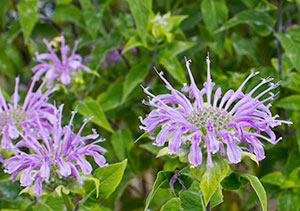
Bergamot, wild – This plant (Monarda fistulosa) may be listed as bee balm, Monarda, Wild Bergamot, Oswego Tea, or Horsemint. The flowers (and the young leaves) have an intense flavour of mint with undertones of citrus and oregano. This plant that has a scent highly reminiscent of Earl Grey tea. Somewhat confusingly, the "oil of bergamot" used to flavour Earl Grey is actually derived from citrus peel from the Bergamot Orange. Monarda flowers are formed by large clusters of edible tubular petals that can be separated before adding to cakes, fancy drinks, or salads.
Borage – This familiar garden herb (Borago officnialis) has furry leaves and exquisite blue, star-shaped flowers. Both have a cooling taste reminiscent of cucumber. Try some of the flowers in a summer lemonade or sorbet – or a gin & tonic! They work particularly well as garnishes for gazpacho, cheese plates, or just sprinkled over salads.
Calendula – All "pot marigolds" (Calendula officinalis) have flower petals that are edible. They have a nice flavour that ranges from peppery to bitter, and they add bright yellow, gold, and orange colour to soups and salads. They may even tint some dishes like saffron does.
Chamomile – Choose the German chamomile (Matricaria chamomilla syn. M. recutita) for its daisy-like flowers. They can be used fresh or dried, and make a particularly nice tea that tastes vaguely like apples. Drink the tea in moderation – some allergy sufferers may have a negative response. Otherwise, sprinkle the petals into salads and soups.
Chervil – The lacy leaves of this shade-loving herb (Anthriscus cerefolium) are topped by delicate white flowers borne in umbels. Both the leaves and the flowers have a very mild anise or licorice-like taste. Add chervil to your dishes just before serving to maintain the best flavour.
Chicory – All endive varieties (Cichorium endivia & C. intybus) produce, at summer's end, tall stems with striking, sky-blue flowers. The petals can be pulled off and added to salads for their earthy, endive-like flavour. The unopened flower buds can also be pickled like capers.
Chives – The flowers of chives (Allium schoenoprasum) are ball-like clusters of hundreds of little florets that can be separated and scattered onto salads for colour and a mild onion flavour.
Chrysanthemum – The edible chrysanthemum and garland Chrysanthemum (both are Leucanthemum coronarium) that we offer produce both edible young leaves and appealing white daisy-like flowers with yellow centres, or flowers that are entirely yellow. The petals of both types are edible and faintly tangy.
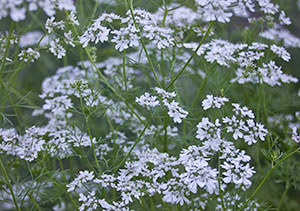
Cilantro – This leafy herb (Coriandrum sativum) is also known as Coriander. In summer heat it is quick to bolt, and will send up tall umbels of white flowers. These have an intensely herbal flavour, just like the leaves, roots, and seeds of the plant, and can be used as a garnish where cilantro leaves would otherwise be used.
Clover – The flower heads of clover (Trifolium spp.) are edible, and have a sweet, mild liquorice flavour. In fact, the whole above ground plant is edible, but it's best to grow clover as tender sprouts or to use the flower tubes in moderation as a salad garnish. Mature clover is tough to digest, and may cause bloating.
Cornflower – The pretty, blue flowers of cornflower (Centaurea cyanus) have a slightly spicy, clove-like flavour with a subtle sweetness. Cornflower petals look wonderful in salads. Use torn petals as a garnish, or whole flowers in fancy drinks.
Dame's Rocket – The petals of this tall relative of mustard (Hesperis matronalis) are pink, lavender, or white, and always come in fours. Perennial Phlox looks similar, and also has edible flowers, but always have five petals. The petals (and the immature leaves) of Dame's Rocket are worth adding to salads, but have a mild bitter flavour.
Dandelion – The ubiquitous dandelion (Taxacum officinalis) is entirely edible. When picked small, and unopened, the flower buds have a surprising sweetness, reminiscent of honey. Young greens are also tasty either raw or steamed. Dandelion petals look very nice when scattered over pasta or rice. While dandelions are rather easy to come by, make sure to harvest them only from organic gardens. Avoid any grown near roads or picked from lawns where chemicals may be present.
Day Lilies – The fleshy, short-lived flowers of day lilies (Hemerocallis spp.) are sweet, with a flavour resembling mild melon or cucumber. Make sure to cut the tasty petals away from the bitter base of each flower. Try them in salads! Eat in moderation.
Dianthus – Look for the large-flowered carnation (Dianthus caryophyllus), and cut the sweet tasting petals away from the bitter white base of each flower. The bright red and pink petals have a mild clove flavour and are great for desserts or salads.
Dill – Stronger in flavour than the leaves, the flowers of dill (Anethum graveolens) can be used when cooking fish, or raw in salads. They are very small, yellow, and borne on tall umbels. Best used when they have just opened, as they set seed quickly.
English Daisy – The low growing flowers (Bellis perennis) have a bitter flavour, but are entirely edible. They are small enough to use simply by sprinkling the petals onto salads or other meals, and will not overwhelm stronger flavours.
Fennel – Both the garden herb and the vegetable Florence fennel(both are Foeniculum vulgare) will eventually produce attractive and tall umbels of tiny yellow flowers that have the same mild licorice flavour as the leaves. These work very well in desserts!
Fuchsia – Avoid nursery-bought Fuchsia (Fuchsia x hybrida) flowers, as they may have been sprayed. Otherwise, the extraordinary looking flowers make great garnishes and have a slightly acidic flavour.
Garlic – Allowed to open, garlic flowers (Allium sativum) are pink to white, with florets that can be separated and inserted into salads for a mild garlic zing. However, allowing the plants to flower may divert energy that would otherwise go to the bulb. Many garlic growers prefer to cut the flower stems (scapes) before they open. These can be sautéed in butter for an intense, early summer side dish, or run through the food processor and mixed with Parmesan cheese, olive oil, and pine nuts for a sensational pesto.
Hollyhock – The large, brightly coloured flowers of common hollyhocks (Alcea rosea) have almost no flavour of their own, but they sure look nice cut into salads or sprinkled over desserts. Be sure to use the petals only – cut these away from the central structure of the flower just before serving.
Honeysuckle – The long flower tubes of various honeysuckle species are edible, but Japanese honeysuckle (Lonicera japonica) is best, with its distinctly honey-like flavour. Do not eat the berries that follow, or any other part of the plant, as they are all poisonous.
Impatiens – The flowers of Impatiens (Impatiens walleriana) may be bright white or shocking red, but the petals are edible and have a surprisingly sweet taste. They can be torn into salad or mixed into fancy drinks.
Johnny-Jump-Up – This plant (Viola tricolor) produces masses of small, brightly coloured flowers that have a faint wintergreen taste. They look great served on cakes, served with soft cheeses, or as a topping for salads. Use the whole flower intact.
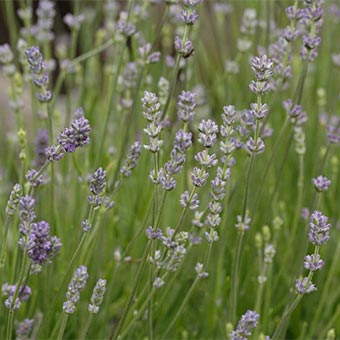
Lavender – Pull the clustered flowers of lavender (Lavandula angustifolia) apart and sprinkle a few pieces onto chocolate cake. Submerge one or two pieces in a glass of chilled champagne. The sweet, intensely floral flavour of lavender should be used with restraint, but adds an incredible to pop savory dishes as well as desserts.
Lemon Bergamot – Like its wild cousin above, Lemon Bergamot (Monarda citriodora) has a perfume-like, intense, almost astringent quality, but it is strongly scented with citrus. Use portions of the flower conservatively in drinks or desserts or in herbal teas.
Lilac – Like lavender, the flowers of lilac (Syringa vulgaris) have an intensely floral, almost perfumey flavour with lemon undertones. A little goes a long way, but one or two individual flowers added to a summer punch looks wonderful and tastes very refreshing.
Marigold – Both French marigolds (Tagetes patula) and African marigolds (T. erecta) produce flowers that are technically edible, but the pungent scent is probably worth avoiding. African marigold flowers are used as a food colourant in Europe, but have only been approved for use as a poultry feed additive in the US. However,T. tenuifolia has a refreshing citrus, lemony flavour, and its petals work well torn into salads or smart drinks.
Mint – All mint varieties (Mentha spp.) have minty-flavoured, edible flowers that may be sweet or lemon-scented, or even with chocolate overtones depending on the type.
Nasturtium – All garden nasturtiums (Tropaeolum majus) produce edible flowers and leaves. Even the fresh seeds can be pickled like capers. Curiously this familiar garden flower is a cousin of the Brassica family (cabbage, broccoli, mustards, etc…). All parts of the nasturtium have a pleasant, sweet, peppery flavour. The flowers can be used whole to decorate salads and a variety of other foods, but you may want to remove the long spur at the back of the flower, as this is the nectary and may harbour small insects.
Pansy – The flower petals of the familiar garden pansy (Viola x wittrockiana) are edible and highly decorative. The petals have little flavour, but the whole flower can also be used. It has a grassy, wintergreen undertone that works well in fruit salad.
Pea – Edible garden peas (Pisum sativum) produce edible flowers that look great in salads. Serve a blend of peas in a meal: shelled peas, pea tendrils, pea pods, and some flowers for garnish. Note: Ornamental sweet peas are poisonous.
Perennial Phlox – Be certain that you've got the tall-growing perennial garden Phlox (Phlox paniculata), and not the inedible annual, creeping type before you try the flowers. The perennial type bears pink to white flowers with five petals that have a pleasant, peppery flavour. They look great and taste great in fruit salads.
Primrose – With its bland, but highly colourful flowers, primrose (Primula vulgaris) is worth cultivating if only to tear its petals into a few summer salads. The flower buds can also be pickled, steamed, or fermented into wine.
Queen Anne's Lace – The Wild Carrot (Daucus carota) produces tall umbels of exquisite, tiny, white flowers, each one marked by a blood-red centre. Although this plant is grown for its decorative, edible flowers, it can cross-pollinate with its close relative the carrot, so if you happen to be growing carrots with the intent of saving seed, avoid this plant in your garden. The flowers of Queen Anne's Lace have a mild, carroty flavour. Be absolutely certain that the plant you are harvesting is not the invasive weed known as Wild or Poison Hemlock (Conium maculatum), which looks very similar. The stems of Queen Anne's Lace are hairy, while Poison Hemlock has smooth, hollow stems with purple spots.
Rose – Another surprisingly edible garden flower is the rose (Rosa spp.). Although its petals are intensely perfumed, their flavour is subtler and a bit fruity, with complex undertones that depend on the variety and soil conditions. The petals of all roses are edible, but you should remove the bitter white base of each petal. Be sure to use only rose flowers that have been organically grown from a reliable source, as nearly all nursery or cut flower roses will have been treated with pesticide.
Rosemary – It takes nimble fingers to pull the strongly scented flowers of rosemary (Rosmarinus officinalis) from between the tightly packed leaves. The leaves contain more oil than the flowers, but both are similar in flavour. Use the flowers as you would the herb. Flowers are deep blue to pink, depending on the soil.
Safflower – The dried yellow flowers (Carthamus tinctorius) are sometimes sold as Mexican saffron, and used like saffron as a food dye. Otherwise, fresh petals can be torn into salads, soups, and sauces. They have a very mild flavour of their own.
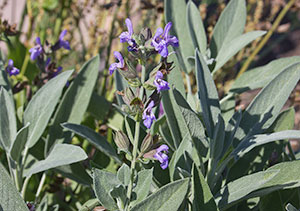
Sage – The deep blue flowers of sage (Salvia officinalis) add an interesting mild-sage flavour to salads or savory dishes. Pull individual flower tubes from the stems and use with discretion, as the taste is strong.
Scarlet Runner Bean – The flowers of this vine (Phaseolus vulgaris) are vivid, intense red, and also delicious. They make excellent garnishes for soups and salads, providing a real visual high note.
Sorrel – Like the leaves of sorrel (Rumex acetosa), its flowers have a strongly lemony flavour, and can be scattered over salad or used in sauces. The flavour comes from oxalic acid, so should be avoided by those with kidney conditions or rheumatism.
Squash – Both male and female flowers of all squash and zucchini varieties are edible, and have a faint squashy flavour. It may be sensible to only use the male flowers, as they will not form fruits. They can be torn into salads or stuffed with savory items like herbs and goat cheese, and then fried in a light tempura batter. There are many squash blossom recipes online.
Sunflower – It's still a little known fact that unopened sunflower (Helianthus annuus) buds can be steamed or sautéed in butter and served whole. They have an artichoke-like flavour. Alternately, the petals can be pulled from the edge of the opened flower and added to soups and salads. Their flavour is somewhat bitter.
Violet – Many varieties (Viola spp.) are suitable for decorating food. They come in a range of sweet, perfumed flavours, and a wide range of colours. Some of the tiniest violet flowers make the best additions to cakes, drinks, and salads.
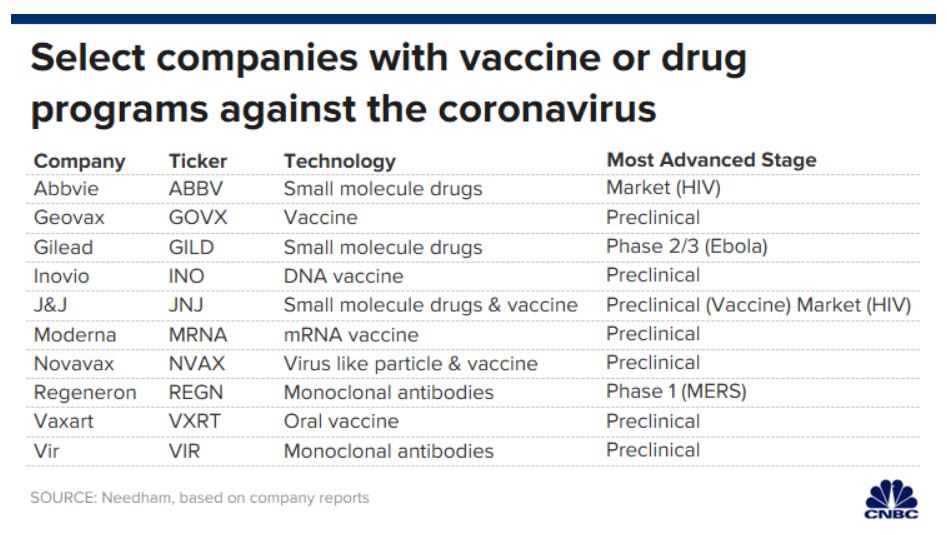
The deadly coronavirus worsened quickly this month, roiling the financial markets as investors fled risk assets amid concerns the outbreak would disrupt the global economy. Meanwhile, a number of biotech companies have ramped up vaccine or drug programs to battle the disease, causing investors to bid up their shares amid the market rout
Monoclonal antibodies represent another approach and Regeneron has indicated they are weeks away from announcing their target antibodies identified by using their VelocImmune mice used to screen for the viruses antibodies.
However, the most novel way to treat the disease comes from CytoDyn's researchers, who in a cancer trial have demonstrated how to control the trafficking of suppressor cells that instigate an inflammatory cycle that in some cases is more destructive than the initial viral infection.
CytoDyn's lead candidate leronlimab, filed for Breakthrough Therapy Designation (BTD) in metastatic breast cancer (MBC) and anticipates an FDA decision by March 10th. The interim results of the trial showed a stoppage of metastasis and the tumor shrinkage was linked to a halt of the CD4 suppressor cells to the tumor.
(this is an ad for GGI... another ad at the bottom..)
Strong evidence from leading virologists suggests that controlling the cytokine storm which is a result of the trafficking immune cells could make a profound difference in the treatment of the disease. If these theories pan out in soon to start clinical trials, a potent COVID-19 treatment could emerge.
Biotechs working on Coronavirus Vaccine
The $35 billion vaccine market is dominated by GlaxoSmithKline, Sanofi Adventis, Merck and Pfizer. These 4 players represent 85% of the vaccine market. These are the primary players but are by no means alone because there is a global rush out there. Here are some companies making news in COVID-19.
List of Biotechs working on Coronavirus Vaccine
Moderna
Moderna made news news recently when it announced that Moderna's experimental vaccine was ready for human testing with mRNA COVID-19 vaccine and mRNA-1273 been shipped to U.S. governmental researchers at the National Institute of Allergy and Infectious Diseases. The company anticipates the vaccine's first clinical trial could start in April. Assuming the April start early-stage trial results could be available in August. The company has approximately 10 indications in phase 1/2 clinical trials.
Inovio Pharmaceuticals Inc
Inovio Pharmaceuticals Inc partnered with Beijing Advaccine Biotechnology Co. to advance the development of INO-4800 which is their version of the vaccine to target COVID-19. Through their partner they hope to quickly advance the vaccine through Chinese clinical trials. They are also developing a vaccine to treat the MERS strain of coronavirus. The company is also developing a phase 3 candidate for cervical HSIL using its compound VGX-3100.
Vaxart Inc
Vaxart Inc has a core competency in oral recombinant protein vaccines but is expanding indications to work on a possible vaccine against Covid-19. Since the vaccine is in the form of a tablet it lends itself to much wider adoption should it be approved. Studies have shown that it is just as effective as the seasonal vaccine Fluzone manufactured by Sanofi Adventis. The market cap is only $80 million so any positive approval news could vault the stock price.
Novavax Inc
Novavax Inc has a proprietary nanoparticle technology that uses different antigens to give the patient better immune response. This broader response could result in a superior vaccine that a level of adaptability built into the vaccine. The company quickly developed a COVID-19 vaccine candidate and has a track record of success in vaccine development especially for the MERS and SARS strains.
Standard approaches to stopping Viral Infections
In an online interview Dr Mark Denison, a virologist at Vanderbilt University School of Medicine said "there are two basic approaches to stopping viral infections. One is to block an enzyme the virus needs to survive…so protease, polymerase, exonuclease, endonuclease, cap inhibitors, you name it, right? So we want to find things that target every function. A second approach is to give people drugs made from antibodies know to stop a particular virus."
Many of these approaches were used during the HIV epidemic that resulted in Highly Active Antiretroviral Therapy (HAART). The legacy of HAART resulted in a basketful of drugs to treat the disease. Many may not realize but there are 5 classes of drugs and over 40 drugs or combinations approved for HIV today. Many of the HIV drugs target these viral enzymes and are probably worthy of research and like HIV the therapy may be a combination of therapies designed to the virus on multiple fronts.
Denison concluded the interview by saying "if we understood ways the coronavirus has caused lung disease, we might be able to block that damage while we're treating the virus." The recent Washington Post article, How the coronavirus can kill people, echoed Denison's sentiment and addressed in detail the factors that cause the lung damage. This represents a third possible approach.
NanoViricides has been very actively traded since it announced it was working on a treatment for COVID-19. The company has a platform technology that is designed to bind to the virus and then eventually encapsulates the virus which ultimately leads to its destruction.
NanoViricides technology designed to bind to Coronavirus for vaccine development
Crocrystal
Crocrystal is another stock moving which announced a licensing agreement with Kansas State University for COVID-19 using their technology to identify target enzymes needed for viral replication. The company is in their preclinical phase.
Monoclonal Antibodies
Regeneron
During the Ebola outbreak Regeneron was able to demonstrate a superior standard of care with their REGN-EB3 drug. They demonstrated a 90% survival rate on Ebola patients that receive treatment early. They used a technique that utilized its VelociSuite technologies to figure out a combination of 3 monoclonal antibodies. Regeneron's plan is to use the same technique to develop a coronavirus drug candidate.
As part of the VelociSuite technology the company "humanized" their mice. When these mice are exposed to a disease like COVID-19 their immune system ends up making human antibodies to fight the disease. These antibodies can be captured and tested as therapeutics.
Regeneron's Christos Kyratsous, Vice president of research for infectious diseases and viral vector technologies said, "They are basically making fully human antibodies. We've created a mini-human immune response in a mouse. And the mice are mounting an immune response against these components as we speak. So within the next few weeks, we should be able to start harvesting antibodies out of these mice and testing them in vitro assets (ph)." It appears that Regeneron is still in the race and should be closely watch for developments in the near future.
Vir Biotechnology
Vir Biotechnology is moving rapidly in the fight against COVID-19. They recently identified 2 antibodies that bind to the spike protein using the same process that they used to isolate mAb114 during the Ebola outbreak. VIR has a library of 20 human antibodies that neutralize related coronaviruses. They just announced a collaboration with WuXi Biologics to develop the cell-line and work on regulatory approval in China. It's important to point out that finding a target doesn't always result a therapeutic that works.
Stopping Lung Damage
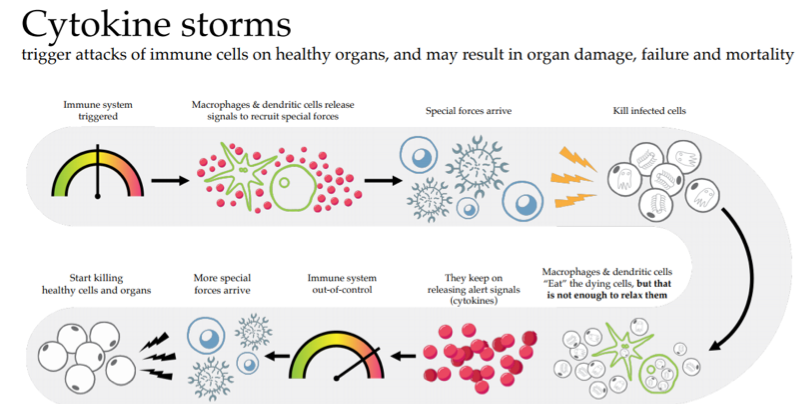
The Washington Post article really highlighted a novel approach. To many that have been infected with COVID-19 it is tantamount to a bad cold, but to others it becomes a fight for their life. The key to the severity of the disease is based on the individual's immune response. In the article Matthew Friedman, a virologist at the University of Maryland School of Medicine said "What you get is the initial damage and rush of inflammatory cells, but the damage is so extensive that the body's immune response is completely overwhelmed — which causes even more immune response, more immune cells and more damage." He is referring to the trafficking of suppressor cells to the lungs.
CytoSorbents
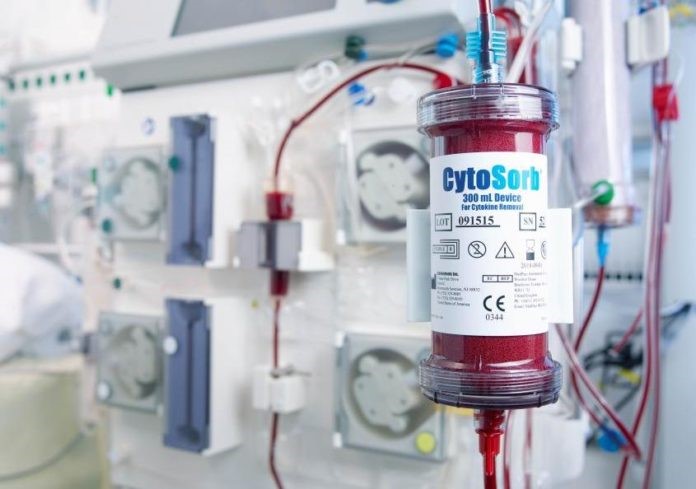
Acute Respiratory Distress Syndrome (ARDS) is a consequence of the damage the virus inflicts on the patients lungs. A ventilator is the primary treatment option that forces the body to absorb some of the fluid in the lungs so that there is a better oxygen transfer. The leader in this field of therapy is CytoSorbents which just recently announced an agreement with China Medical System Holdings Limited to bring CytoSorb to China to treat the critically-ill COVID-19 patients.
The cooperative agreement hopes to achieve regulatory approval under China's "fast track" program established by the National Medical Products Administration of the People's Republic of China (NMPA). CtyoSorb is essentially a specialized filter used in conjunction with extracorporeal membrane oxygenation (ECMO). ECMO procedures use a heart lung machine that takes blood out of a vein and then oxygenates and removes CO2 only to return it to the artery. This procedure is a last resort that not only provides oxygen to the oxygen deprived organs in the body, but also filters the virus and inflammatory cytokines from the blood. This procedure worked on the SARS and MERS outbreaks and is destined to work on COVID-19.
CtyoSorb is a great concept however in mass casualty situations that currently exist in Wuhan China, this may not be a realistic treatment for the masses.
CytoSorbents's CytoSorb vaccine to treat Coronavirus
Bioxytran Inc
Just recently Bioxytran Inc announced it was seeking to partner with a drug company to treat COVID-19 using its lead compound BXT-25. Bioxytran is developing an oxygen transport molecule that is 5000 times smaller than a red blood cell. It's molecule is based off of Hemopure which is an FDA approved blood substitute for veterinary use. The drug is thought to be safe and is designed to get rid of the Nitric Oxygen scavenging which effected the approval trajectory of Hemopure. The drug is a product of over 30 years and $500 million of drug development.
As an oxygen carrier it can treat literally any disease including ARDS and stroke. In ARDS the theoretical mechanism is that BXT-25 would be part of the blood plasma that leaks out into the lungs getting much closer to the air so that it is able to capture the oxygen and recirculate it. Unless they are able to get a quick approval and funding this preclinical asset may be too late to join the fight regardless of the vastness of their platform technology to deliver oxygen without a hypobaric chamber.
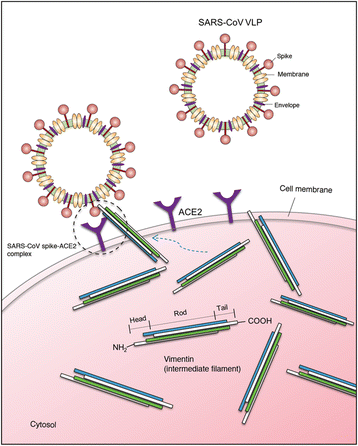
Fusion inhibitors would be the ideal way to treat the disease because it would simply keep the virus outside the target cells. This is exactly what CytoDyn's drug leronlimab does in HIV. It blocks the CCR5 Co-receptor. After the SARS outbreak there was a lot of research that found viable targets but then became ignored because the virus disappeared. The fact remains that one of those targets is cell surface vimentim. In a 2016 journal article titled Surface vimentin is critical for the cell entry of SARS-CoV the mechanism is elucidated.
Simplified diagram of the involvement of vimentin within SARS-CoV spike-ACE2 complex during cell entry. The dashed circle indicates the spike-ACE2 complex on the cellular membrane, and the blue dotted arrow demonstrates the possible pathway when vimentin translocates from cytosol to membrane
Nascent Biotech Inc
The only company with a target for vimentim is Nascent Biotech Inc. Their lead candidate is pritumumab which was a phase 2 brain cancer asset in Japan. They have redone their cell line for study and on the cusp of starting their phase 1 cancer trial.
The Cytokine Storm
In COVID-19 viral loads are ultimately not the killing factor. In reality the human immune system does a great job of controlling the virus but once the adaptive immune system kicks this is the tipping point where intervention could be the key in treating the disease.
CytoDyn's diagnostic partner Bruce Patterson said in a press release "Leronlimab has both the potential to enhance the cellular immune response by suppressing Treg cells that, in turn, inhibit the anti-viral T-cell responses and the potential to repolarize macrophage activity. Lung (alveolar) macrophages in coronavirus infections have been implicated as a contributing factor to significant morbidity and mortality of the infectious disease. Leronlimab could potentially synergize with other retroviral therapies that are currently being used for the potential treatment of 2019-nCoV."
The Cytokine Storm
The bottom line of the scientific jargon is that leronlimab has the potential to stop the trafficking of cells. This will prevent the immune system from spinning out of control which ultimately results in the downfall of the patient.
Vaccines take time to develop and require extensive testing to ensure their safety and effectiveness. Companies which have tailored therapies to end stage patients have a limited patient population, but have the ability to charge a lot if their efficacy comes through as expected. Understanding the underlying mechanism of action is the key to predicting this outcome. Doctors know that a shot of lidocaine in the hand will also work in the toe because of the underlying mechanism of action of the drug. The science fits and throttling the suppressive response of the immune system seems to be the best theory to fight the disease. There is no magic bullet to treat COVID-19 yet even though some ideal targets have been identified like cell surface vimentim.
GreatGameIndia is a journal on Geopolitics and International Relations. Get to know the Geopolitical threats India is facing in our exclusive book India in Cognitive Dissonance. Past magazine issues can be accessed from the Archives section.
Read more on Chinese Biological and Chemical warfare activities against India in our exclusive History of Narco-Terrorism issue.
Send in your tips and submissions by filling out this form or write to us directly at the email provided. Join us on WhatsApp for more intel and updates.
We need your support to carry on our independent and investigative research based journalism on the external and internal threats facing India. Your contribution however small helps us keep afloat. Kindly consider donating to GreatGameIndia.