Women protest against far-right presidential candidate Jair Bolsonaro on September 29, 2018, in Sao Paulo, Brazil. Victor Moriyama/Getty Images
A viral (and false) meme shows a picture of Brazil's left-leaning Workers' Party presidential candidate Fernando Haddad, with a superimposed quote attributed to him: "When they turn five, children will become the property of the state. It's up to us to decide if a boy will become a girl, and vice versa! It's parents' job to respectfully comply with our decision! We know what's best for children!"
Meanwhile, a video viewed more than 4 million times since late September claims that the Workers' Party was distributing baby bottles shaped like penises in daycare centers.
These are among the false messages that have circulated through Brazil's Pentecostal and evangelical social networks in the last few weeks of Brazil's 2018 first-round presidential election campaign. Purveyors of "fake news" seek to manipulate evangelicals and Pentecostals by emphasizing the core issues of Brazil's culture wars: gender, sexuality, and the role of parents and the state in children's education.
Meanwhile, viral videos feature evangelicals praising the far-right presidential candidate Jair Bolsonaro — a politician whose incendiary comments and ambiguous commitment to democracy have led to frantic condemnations from such hotbeds of leftist radicalism as The Economist and Foreign Policy.
On Sunday October 7, Brazilians went to the polls for the first-round presidential election. Bolsonaro had steadily climbed in vote intentions for months. Still, to many observers' shock, the rightist surpassed all projections, ending up with 46 percent of the first-round vote in a field of 13 candidates.
On October 28, Bolsonaro will face Haddad, who took second place, in a runoff election. The Workers' Party candidate — the designated successor of former President Luiz Inácio Lula da Silva, whom the Supreme Court had barred from candidacy due to a conviction for corruption — garnered just 29 percent of the vote.
What was the role of evangelicals and Pentecostals in the election? Did their support help drive the spike in Bolsonaro's support? We think it did. As one of us shows in a forthcoming book, evangelicals and Pentecostals first started to get involved in Brazilian electoral politics in the 1980s. Still, Pentecostal and evangelical leaders have shown their political muscle in 2018 like never before.
Throughout most of its history, Brazil was known as a Catholic country. Beginning in the 1970s, however, the ranks of Pentecostal and evangelical clergy, as well as the pews of their congregations, began to swell. Rising from a bit over 5 percent of the population in 1970, evangelicals and Pentecostals will likely constitute nearly 30 percent of the population in Brazil's 2020 census.
From the early days of Brazil's return to democracy in the 1980s, evangelical and Pentecostal leaders have recognized the importance of electoral politics. Both the Universal Church of the Kingdom of God and the Assembly of God have mobilized to support socially conservative policies and candidates.
Until now, though, evangelical and Pentecostal activists have usually been most effective in supporting candidates for legislative office. Under Brazil's open list proportional representation rules in which a single district elects dozens of legislators, highly organized religious denominations such as the Universal Church of the Kingdom of God can muster enough votes to get their own legislative candidates elected.
But at the presidential level, evangelical and Pentecostal activism has usually been marked by disunity, with different denominations supporting different candidates. In the most recent presidential election of 2014, evangelical and Pentecostal alliances were "pulverized" among the three leading candidates.
Yet 2018 has taken a drastically different turn. Though various presidential candidates sought evangelical alliances in other recent elections, in 2018 Bolsonaro was the primary candidate to court evangelical leaders. Bolsonaro claims to be a nominal Catholic, yet he attends a Baptist church and has long sought the political support of evangelical and Pentecostal leaders. Cementing these alliances, he was baptized in the Jordan River by the prominent Assembly of God Pastor Everaldo Dias in 2016 (who himself had run for president in 2014).
So it was not surprising when influential Assemblies of God Pastor Silas Malafaia declared his support for Bolsonaro in March 2018. Malafaia predicted that 80 percent of the evangelical vote would go over to Bolsonaro with him. A frequent social media commentator, Malafaia began to use his online presence to attack Bolsonaro's opponents.
Bolsonaro's religious alliances solidified in the final week of the first-round campaign. On September 30, Edir Macedo, the powerful founder of the Universal Church for the Kingdom of God and owner of the third-biggest TV station in Brazil, publicly threw his support behind Bolsonaro and gave him a softball interview. José Wellington Bezerra da Costa, the president of the General Convention of the Assemblies of God of Brazil, soon followed in publicly endorsing Bolsonaro on October 2, as did the Congressional Evangelical Caucus on October 4.
Has all of this made any impact on evangelical and Pentecostal citizens? Malafaia might have been wrong about the exact figure, but there is no doubt that Bolsonaro has done well with evangelicals. In the final month of the election, Bolsonaro's votes among evangelicals shot upward: from 26 percent on August 22 to 36 percent on September 20, and, finally, to 48 percent on October 4.
Still, the rapid growth in Bolsonaro's support might not be due to the influence of evangelical leaders. The candidate's support among non-evangelicals also rose dramatically in this period.
But survey evidence indicates that evangelical and Pentecostal citizens were at least getting the message from their leaders. Over the last two weeks of the first-round campaign, one of us (Amy Erica Smith) ran an online survey asking Brazilians about political information in their churches. Among those who attend church, 29 percent of Catholic church attendees, 38 percent of non-Pentecostal evangelicals, and 46 percent of Pentecostals were aware of their church leaders supporting a candidate. Nearly all of them said that that candidate was Bolsonaro.
So what happened? Did evangelical leaders' campaigning matter? We suspect that it did. In the final days of the campaign, Bolsonaro's support jumped by about 5 percentage points. Some of the voters Bolsonaro gained may have been persuaded by evangelical leaders and their church communities.
Yet perhaps the most important impact of Bolsonaro's late-in-the-game evangelical endorsements may have been to give him the aura of momentum and inevitability. While much attention has been paid to the #elenão movement against Bolsonaro, the rejection rate for Haddad and the PT is nearly as high, reaching 40% in various polls. As a result, in the final days of the campaign, Bolsonaro picked up steam, as undecided voters jumped on his bandwagon, and strong opponents of the Workers' Party decided he was their best bet.
According to Ayurveda, herbal formulations can be "activated" in certain ways to boost their bio-availability and effectiveness.
Herbal formulas using whole, organically-grown herbs of good quality, combined with other herbs to enhance their intelligence, and taken in-season can provide a combination of nutritional benefit, probiotic support, and a needed therapeutic impact.
In this article, I will describe the ways in which these traditional formulas were enhanced or activated.
Microbial Activators
It is well understood that plants carry subtle properties in addition to their biochemical blueprint. Magnifying the microscope, we find that microbes in the soil adhere to the plant roots, stems, leaves, and flowers and enhance the plant's bio-intelligence.
Microbes, referred to as "krimi" in ancient Vedic texts, carry impressions, bio-intelligence, and genetic information about the changing outside world onto and into the human body.
In the same way that soil microbes attach themselves to the skin of a root, stem, leaf, or flower, upon consumption, they attach to the inner skin of the body—the skin that lines the intestinal and respiratory tracts, arteries, areas of lymphatic concentration, and the senses—as well as the outer skin.
Microbes in the soil and on plants change dramatically each season. Seasonal microbes help manufacture digestive enzymes to aid in the digestion of seasonal foods. They boost immunity when needed in the winter, decongest the body in the spring, and dissipate heat during the hot summer.
This is science that shines new light on the importance of aligning one's diet with the seasons and coincides with Nobel Price-winning 2017 science on circadian medicine. (4)
New studies are linking common health concerns that seasonally wax and wane to the natural seasonal shift in the body's microbiome which changes based on seasonal eating. (5)
Microbes carry information from the gut to the brain via the gut-brain axis (GBA) while also transporting genetic information to the body's genetic code—all to keep the host (the human body) a viable and healthy carrier for krimi. (1,2)
The information transmitted to us from our intestinal flora to our brain alters our moods, emotions, hunger levels, cravings, and sleep patterns. (2) In one study, intuitive decision-making and gut feelings were explained by the passing of information from the microbes in our guts to our brains. (3)
The microbes or krimi that naturally exist on whole herbs are beginning to be understood as critical to the intended biological benefit one gleans from ingesting an herb.
These are just some of the reasons we use organic whole herbs at LifeSpa. Conventionally-grown plants are sprayed with insecticides that kill the synergistic microbes.
Herbal extracts, which are extremely common in the marketplace, do have powerful properties because they are standardized to a certain concentration of active plant constituents. They play an important role in herbal medicine and I do use them occasionally, but the trade-off is that they are sterile and, therefore, carry none of the seasonal microbial and biochemical synergy of that plant.
Activating Herbs with Other Herbs
Putting herbs together into a formula is an art in Ayurveda, and can make all the difference as to whether an herb is effective or not. The proper combination of herbs can not only boost the biochemical effects of an herbal formula but also change its microbial status as well.
At LifeSpa, I combine most of the Ayurvedic herbs in the traditional manner. Turmeric is a perfect example.
While known for its many health benefits, it is also known to be a challenge to absorb. Studies found that when you combine it with black pepper in a ratio of 16 parts turmeric to 1 part black pepper, its bio-availability can be boosted by between 200- 2000%. (6)
One year, when we combined our batch of turmeric with black pepper, the microbial counts shot up. They were still within the FDA's normal range, but it was clear that combining these two herbs "activated" them in a big way.
The lab we used to test them even asked if we were trying to make a probiotic. I told him, "In fact, yes!"
This was the traditional way we attained microbial diversity in out guts, by ingesting seasonal herbs that were still very much alive.
At LifeSpa, I combine most of our Ayurvedic herbs into activated formulations based on time-tested herbal wisdom. Here are a few examples:
Herbal Formula
Part Used
Herbs Used to Activate/Enhance
Turmeric Plus
Root
Black Pepper
Boswellia Joints Plus
Gum/resin
Ginger, Turmeric, Ashwagandha
Manjistha
Root
Gokshura
Regenerate Shilajit
Resin
Ashwagandha, Amalaki
Neem Plus
Leaf
Amalaki, Guduchi
Bacopa
Herb
Shilajit, Evoluvus
Sugar Destroyer
Leaf
Fenugreek, Cinnamon, Shilajit
Guggul Lean
Gum
Arjuna, Phyllanthus, Shilajit, Turmeric, Black Pepper
Rasayana Herbs
There are also many Ayurvedic herbs that are very effective all on their own. To name a few, amalaki, brahmi, and shatavari.
These are herbs that generally carry the label "rasayana," which means that they are naturally activated.
Ashwagandha is also considered a rasayana but is well-known to be hard to digest. It is a winter-harvested, warm, heavy, and sweet root that makes it somewhat dense and hard to digest.
We combine it with a very small amount of ginger helps to activate the adaptogenic constituents in ashwagandha as well as make it lighter, much easier to digest, and more bio-available.
I recently had the pleasure of connecting with a lovely lady who was very concerned about her thyroid nodules. She was a new mom who had just given birth and found that the nodules she had on her thyroid had grown. She was planning on getting them biopsied and potentially removing her thyroid, and wanted to know what her options were for addressing this concern.
I frequently receive these types of questions about thyroid nodules — why they happen, and what to do about them. While I personally did not present with thyroid nodules, I have had a few clients and readers with Hashimoto's and nodules, and was pleasantly surprised when they shrunk their nodules using my recommendations for Hashimoto's. Don't you just love these kinds of surprises? 🙂
Up to 50 percent of our population has thyroid nodules. Nodules are also more common in those with Hashimoto's — so chances are, if you're reading this article, you may have a nodule (or even multiple thyroid nodules).
This article will cover:
What thyroid nodules are and why they happen
Testing for benign and cancerous nodules
How to shrink thyroid nodules
The lab results of one of my readers who had been exposed to Chernobyl and was able to get 3 nodules to disappear!
What Are Thyroid Nodules?
Nodules are defined as "solid or fluid filled lumps" within the thyroid gland and can vary in size and location. Most nodules will not cause symptoms and will only be discovered during a manual examination of the thyroid gland or during a thyroid ultrasound.
However, large nodules may result in a visible swelling of the thyroid or neck; and they can cause pain, difficulty swallowing, and/or difficulty breathing.
Some types of nodules can actually produce thyroid hormones, which can result in hyperthyroidism.
Many people with Hashimoto's have thyroid nodules, and in fact, detecting the presence of thyroid nodules is a common way to diagnose autoimmune thyroid disease.
Having thyroid nodules is one of the most common endocrine conditions in the United States. About 50 percent of American adult ultrasonographic examinations (a safe medical procedure where sound waves bounce off bones and tissues in the body to produce a black and white image on a monitor) reveal thyroid nodules (4).
Women are three times more likely to have nodules: about 30 percent of women in their 30s will have at least one, and most women will develop a thyroid nodule by the time they are 50.
Types of Thyroid Nodules
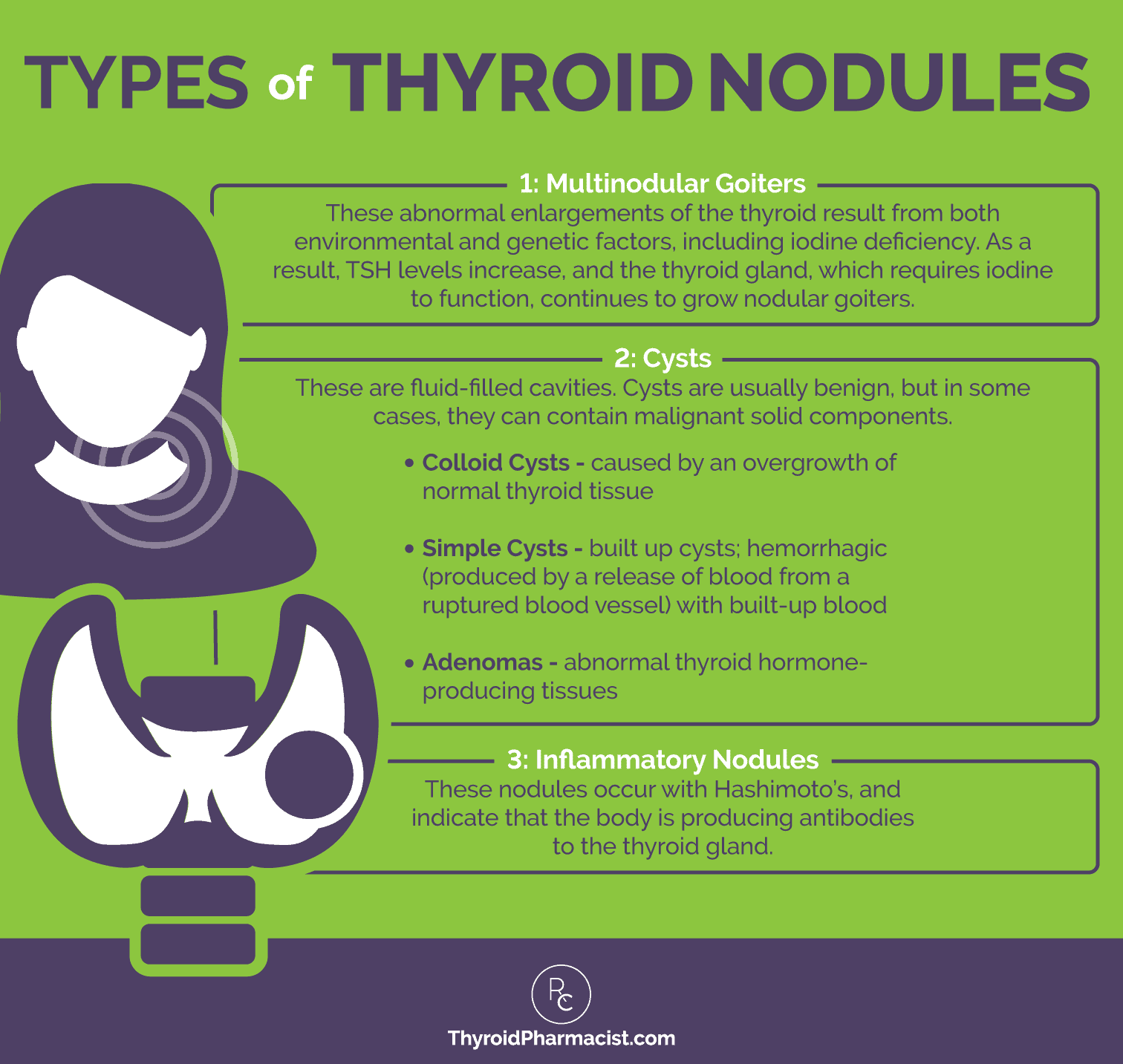
There are various types of benign nodules, which I've outlined in the following infographic:
Are Nodules Cancerous?
While over 90 percent of thyroid nodules are benign (non-cancerous), certain nodules may be malignant (cancerous).
Some thyroid nodules are actually cysts filled with fluid, rather than thyroid tissue. Purely cystic thyroid nodules (thyroid cysts) are almost always benign.
The complications stemming from inflammation associated with Hashimoto's can put you at greater risk for other autoimmune diseases, as well as thyroid cancer (including thyroid lymphoma). Research shows people with Hashimoto's have a much higher risk for thyroid cancer than those without Hashimoto's (around 22.5 percent versus 2.4 percent) (8).
The risk of having thyroid cancer increases if you have a family history of thyroid or endocrine cancer, if you're younger than 30 or older than 60 years old, if you are male, or if you have a history of radiation exposure (including dental and chest X-rays). There is typically a delay of 20 years or more between radiation exposure and the development of thyroid cancer.
To learn more about diagnosis, please read my article on thyroid cancer. I'll detail how to test for cancerous nodules below.
Signs and Symptoms of Nodules
The signs and symptoms of nodules aren't always so apparent. You may notice them yourself as a lump on your neck, while buttoning your collar. Or, your doctor might only discover nodules during a physical exam or on imaging tests like ultrasounds or CT scans for other reasons.
Fortunately, most nodules are asymptomatic, but rarely, these symptoms can manifest:
Pain in your neck, jaw, or ear
Trouble breathing, swallowing, or feeling a tickle in your throat (if the nodule is large enough)
Hoarseness if the nodule irritates the nerve that controls the vocal cords (Note: This can be related to thyroid cancer.)
The production of excessive levels of thyroxine, creating symptoms of hyperthyroidism, including tremors, nervousness, unexplained weight loss, and erratic heartbeat
Abnormal thyroid test results may also be an indicator that a person should be examined for nodules.
Testing for Nodules
If you're wondering how you can test for thyroid nodules, there are several options you can pursue:
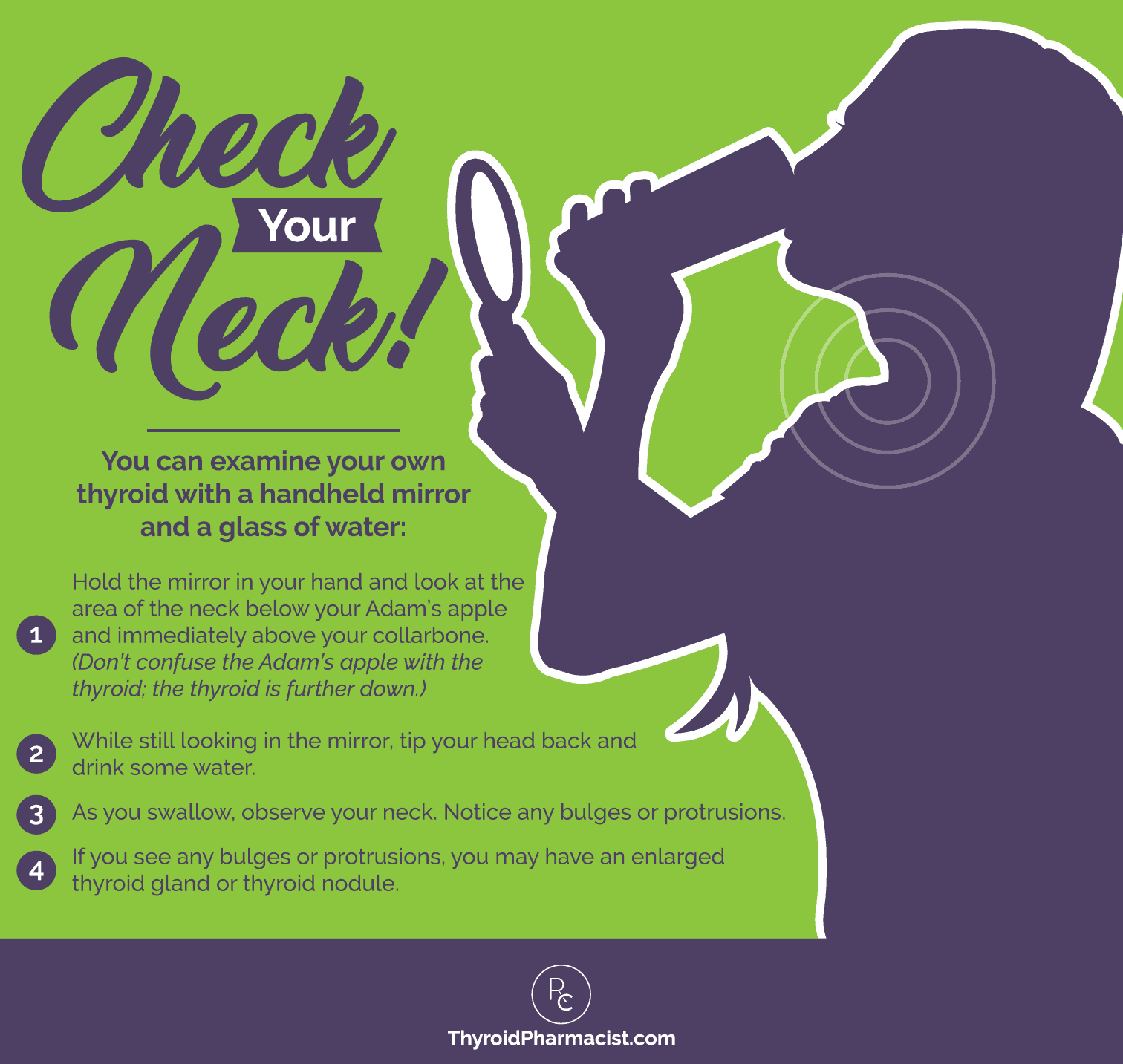
1. Conduct a physical self-exam. I created an infographic that details how to perform a simple self-check at home:
2. Check your thyroid hormone levels to ensure they're in the optimal ranges. Note: Be sure to request a full thyroid panel (TSH, free T4, T3, reverse T3). You can read my article on the top 10 thyroid tests for more information on how to order your own thyroid panels and interpret your results. Should you suspect nodules from your physical self-exam or from suboptimal thyroid hormone levels, you may wish to consult your physician to order an ultrasound.
3. Order an ultrasound from your doctor. Ultrasonography will provide information about the structure or shape of your nodules. It can also help your doctor determine whether a lump is a cyst or a solid nodule, and whether you have multiple nodules. Radiologists can then make recommendations regarding next steps. Benign and "non suspicious" findings don't need to be biopsied. Other nodules, however, may need a biopsy or repeat ultrasound depending on size. The goal here is to avoid unnecessary biopsies. However, if there any suspicious findings, you may have to…
4. Follow up with a fine needle aspiration (FNA) biopsy. If your doctor suspects a nodule might be malignant, he or she might perform a fine-needle aspiration (FNA) biopsy. A FNA is usually only considered when nodules are larger than 10 mm in diameter, unless ultrasound results are otherwise suspicious. Additionally, nodules ≤5 mm are generally monitored rather than biopsied.
A FNA biopsy involves the insertion of a very thin needle into the thyroid, and cells are aspirated (removed) for further evaluation. A FNA biopsy helps determine whether the nodule is a true nodule (malignant) or a pseudo-nodule (benign).
While this is the gold standard to differentiate between benign, inflammatory, or malignant nodules (classifying them as either true nodules or pseudo-nodules), it is invasive. A more non-invasive technique to differentiate pseudo-nodules and true nodules is sonoelastography, where ultrasonography imaging is used to evaluate the mechanical properties of soft tissue.
Research shows sonoelastography can be an effective alternative to avoid using invasive biopsies or surgical interventions to detect a true nodule diagnosis (12). Once your physician determines you have nodules, he or she will likely refer you to an endocrinologist for further treatment.
Newer tests can also help specialists better determine whether nodules are benign or cancerous. One of them is the American College of Radiology (ACR) Thyroid Imaging, Reporting, and Data System (TI-RADS). This test scores various features of nodules on an ultrasound, and assigns points to help users of the report with recommendations. The higher the total score, the higher the chances of malignancy.
The American College of Radiology's TI-RADS (Thyroid Imaging, Reporting and Data System) assigns points to thyroid nodules based on five features:
Composition (how "cystic" a thyroid looks)
Echogenicity (the ability to bounce back an echo during an ultrasound exam)
Shape (wider-than-tall, or taller-than-wide)
Margin (how far the thyroid extends around surrounding organs)
Echogenic focus (bright spots or shadows seen on an ultrasound)
Based on that ratings scale, nodules are then classified as:
Benign (non-cancerous)
Not suspicious
Mildly, moderately, or highly suspicious
5. Another method of diagnosis is to get a thyroid scan done. An isotope of radioactive iodine is injected into a vein in the arm to find nodules that produce an excess of thyroid hormone. (These will take up more of isotope then normal thyroid tissue.) You may find cold or hot nodules. Cold nodules are non functioning and appear as defects or holes in the scan. Hot nodules are almost always non-cancerous, while only some cold nodules are cancerous.
The Conventional Approach to Thyroid Nodules
Most conventional doctors will recommend the following options for treatment of thyroid nodules:
1. Observation. When you have benign nodule, most doctors will recommend monitoring your thyroid with regular checkups (ie. physical exams, thyroid tests, and follow up biopsies) to check for malignancy. This is especially important for those with Hashimoto's, as they are at an increased risk of thyroid cancer. An increase in size or symptoms may demand a repeat biopsy or another treatment, but nodules that don't change over the years might not require any additional treatment.
2. Thyroid hormone suppression therapy. Prescribing thyroid hormone replacement medications can lower the production of TSH from the pituitary gland, and thus decrease the growth of thyroid tissue. Some practitioners may even attempt to suppress TSH with thyroid medications, to reduce nodule size. One double-blind, placebo-controlled study looked at 123 patients with a single palpable benign nodule, using levothyroxine therapy to suppress their TSH below 0.3 mIU/L over 18 months. The study found that those in the medication group had a significant decrease in the size of their largest nodules, while the placebo group saw an increase in nodule size (23).
3. Surgery. Surgery may be recommended when a benign nodule is large in size and causing difficulty when breathing or swallowing, when there are diagnosed large multinodular goiters, or when goiters constrict airways, the esophagus or blood vessels. Surgery is also recommended when nodules are suspected to be cancerous. Options include a total thyroidectomy (where the entire thyroid gland is removed) and a partial thyroidectomy (where only parts of the thyroid are removed).
I've seen countless times where people have had their thyroid glands removed due to thyroid disease (most commonly Graves' and thyroid cancer). In the case of autoimmune thyroid disease, removing the thyroid with a thyroidectomy eliminates thyroid antibodies, as there is nothing left to attack. However, life is not always roses with a thyroidectomy, as it does not remove the autoimmunity. Furthermore, a thyroidectomy may result in difficulty breathing, bleeding or infection, injury to the parathyroid glands near the thyroid (which could cause low blood calcium levels or neuromuscular symptoms), and permanent hoarseness or voice changes due to nerve damage. You can check out my article about getting a thyroidectomy for Hashimoto's for more information.
While those with co-occurring Hashimoto's and thyroid cancer may wish to follow this approach, I do not generally recommend this strategy for Hashimoto's in most cases, as there are so many dietary and lifestyle interventions that can be implemented to prevent the progression of autoimmunity and reduce the size of nodules. (I'll discuss this more below!)
The Root Cause Approach to Thyroid Nodules
Although the above treatment options can reduce or remove thyroid nodules, I have heard many success stories of people reducing or eliminating their nodules with dietary and lifestyle interventions.
Shrinking Nodules – A Success Story
I'd like to share the success story of a client who was able to reverse her nodules with nutrition, supplements and treating Blastocystis hominis. Her thyroid antibodies are also now in the remission range (she is not taking any thyroid medications). This 60 year old woman with asthma, Hashimoto's and past exposure to Chernobyl had consecutive ultrasounds on an annual basis to monitor her thyroid nodule. As of 2018, this person still does not have any nodules on her thyroid ultrasound. She did, however, have a flare in asthma and thyroid antibodies in 2017 after having dairy. As a side note, I think the significant dairy reactivity may be due to the Chernobyl exposure and the radioactive toxins concentrated in the milk from cows in Eastern Europe. My theory is that this exposure made people highly sensitized to dairy proteins.
Here are the results from her first test:
11/5/10: First ultrasound (before diet)
FINDINGS: There is a 6 x 3 x 4 mm hypoechoic solid nodule in the right lobe with multiple small but discrete hyperechoic foci likely due to calcifications. There is a 2 x 4 x 2 mm partly calcified solid nodule in the left lobe that demonstrates shadowing. IMPRESSION: There are bilateral calcified thyroid nodules. The nodules measure under 1 cm in diameter. The nodules are nonspecific in appearance and results should be correlated with clinical and laboratory data. Follow up ultrasound needed in 12 months due to the calcifications.
She started with having elevated TPO antibodies and saw that her nodule had consistently increased in size with every subsequent ultrasound scan. Deciding to take her health into her own hands, she removed gluten and dairy (two common food sensitivities in those with Hashimoto's) from her diet. Six months after starting the gluten free diet, her ultrasound showed a decrease in the size of her nodules:
11/20/14 – After starting a gluten and dairy free diet
FINDINGS: The right lobe of the thyroid measures 1.4 x 1.3 x 3.8 cm. Left lobe of the thyroid measures 1.6 x 0.9 x 3.9 cm. The isthmus measures 3 mm in thickness. Right lobe: Lower pole, posterior, lateral, well circumscribed intermediate echogenicity. Central calcification. No increased vascularity. 0.3 x 0.4 x 0.3 cm. Prior studies do not demonstrate a nodule in this location, however a larger calcified nodule was identified previously in a more superior location of the thyroid gland. The previously measured nodule is not demonstrated on this exam. It is possible that the small nodule measured today represents a decrease in size of the previously seen nodule in the change in location relates to imaging technique. This nodule is indeterminate. Continuing thyroid ultrasound follow-up is recommended. Left lobe: Mid thyroid, mid gland well-circumscribed. Intermediate echogenicity. Calcified. 0.2 x 0.3 x 0.1 cm. Previously measured 0.3 x 0.2 x 0.1 cm. This calcification/nodule is stable to decreased in size compared to prior ultrasound consistent with a benign finding.
IMPRESSION: I suspect that the right sided calcified nodule described above in the lower pole today represents the previously measured thyroid nodule and has decreased in size consistent with a benign finding, however the differences and described location of the nodule may direct correlation difficult. Continued ultrasound follow-up is recommended.
After being gluten free for 1.5 years, her thyroid nodule shrunk! Her TPO levels also decreased from 120.7 IU/mL to 42.6 IU/mL. Here's what her most recent ultrasound test said:
1/29/16 – After treating Blastocystis hominis
FINDINGS: The right lobe measures 3.4 x 1.2 x 0.8 cm. The left lobe measures 3.8 x 1.0 x 0.9 cm. The isthmus measures 0.3 cm in AP dimension. The gland is mildly heterogeneous. Color imaging demonstrates increased vascular flow bilaterally. A coarse calcification in the left lobe measures 3 mm, interpolar. This is stable. There is no discrete nodule.
IMPRESSION: No suspicious nodule identified. The previously described right thyroid nodule is no longer seen. A coarse calcification on the left measures 3 mm, nonspecific but stable and of doubtful significance. This is unchanged dating to the earliest available exam of 11/05/2010.
As you can see, her latest ultrasound test showed that her nodule had disappeared!
What Causes Nodules?
Many people with Hashimoto's have nodules, as the root causes of thyroid nodules are often the same root causes of their own autoimmune condition, including:
Chronic inflammation of the thyroid (thyroiditis) – The chronic inflammation associated with autoimmune thyroid conditions increases the risk for thyroid nodules (7), and the inflammation associated with autoimmune thyroiditis can further enlarge nodules. With Hashimoto's, the body develops antibodies to normal proteins produced by the thyroid gland, which in turn can result in the development of malignant (possibly cancerous) nodules. Your thyroid might also form pseudo-nodules (or benign nodules) that come and go.
Nutrient deficiencies in iodine, selenium, and vitamin D – Iodine deficiencies typically occur in diets lacking iodine, and can result in a multinodular goiter. However, this is unlikely to occur in North America where iodine is added to foods, as is the case with iodized salt. With Hashimoto's, iodine excess is far more likely to create nodules. You can read more about how iodine affects Hashimoto's. That said, vitamin D deficiency is quite common. This vitamin controls the way in which cells grow and divide, and insufficiency increases one's risk of nodules, fibrosis and polyps in many areas of the body. Selenium deficiency is also a potential cause of nodules, as studies suggest that selenium supplementation can result in improved thyroid ultrasound features and smaller nodules (25).
Toxins – This is oftentimes an overlooked culprit for nodules. A 2015 study in Sicily found that people living closer to a petrochemical complex, and thus are subject to its pollution, were more likely to have a greater frequency of thyroid nodules as well as Hashimoto's (6). Radiation exposure, such as being exposed to Chernobyl, can also cause nodules (38). Additionally, a 2017 study found that thyroid nodules were more likely to be found in those with both autoimmune thyroid disease and a nickel allergy (20). Further research is needed, but this supports the idea that toxic exposure, like nickel toxicity, may play a role in the development of nodules in those with Hashimoto's.
Pregnancy and hormonal changes –Often times, women develop thyroid nodules during pregnancy, and pre-existing thyroid nodules may grow during pregnancy (26). A recent study done in Hong Kong saw an increase in the number of the thyroid nodules and well as their size over a period of 10 to 12 weeks apart each trimester of pregnancy. The growth of the nodules appeared to be much faster than what is normally seen in non-pregnant women. While the cause of nodules during pregnancy remains unclear, the study suggested that this could be due to negative iodine balance associated with pregnancy (26).
H. pylori infections – H. pylori infections have been considered a trigger of Hashimoto's and have been found in almost 50 percent of patients with Hashimoto's in one Iranian study. (You can read more about that in my article on Hashimoto's and H. pylori.) A 2013 study found that H. pylori infections were associated with the presence of thyroid nodules in individuals, despite having normal thyroid function (27). Given that the theory of molecular mimicry suggests that the immune system may attack its own thyroid gland when it is infected with a pathogenic organism that looks similar to components of the thyroid gland, it's possible that such an infection increases the autoimmune attack on the thyroid, resulting in the development of thyroid nodules.
Blastocystis hominis infections – I have heard anecdotal stories from my clients and readers claiming that addressing a Blastocystis hominis infection resulted in the elimination of their nodules. I suspect the reason behind this is similar to why H. pylori infections are associated with the development of thyroid nodules. Another hypothesis I have relating to the role of infections in thyroid nodules, is that nodules may be created when a foreign substance (like bacteria) is inserted into the body and the body reacts by trying to wall it off by forming a capsule of scar tissue around it.
Food and diet – We know that food sensitivities can exacerbate the attack on the thyroid and increase one's levels of chronic inflammation, which, as I mentioned earlier, has been linked to the development and enlargement of nodules. Additionally, based on anecdotal stories from clients who have shrunk their nodules through dietary interventions that remove common inflammatory foods, it's possible that food sensitivities contribute to the development and growth of thyroid nodules. I've received numerous reports from clients and readers who were surprised that their nodules disappeared after following the Paleo or Autoimmune Paleo diets. Please note: this approach works over months, sometimes years. Additionally, blood sugar imbalances can also lead to a greater risk of thyroid nodules (39).
Ways to Shrink Benign Nodules
That is why I believe that a number of dietary and lifestyle changes can help improve symptoms of Hashimoto's and reduce the size of thyroid nodules.
As mentioned above, many root causes of Hashimoto's are associated with the development of thyroid nodules, so addressing them may reverse their growth and shrink them! Here are some tips that may help to reduce the size of your thyroid nodules:
Address nutrient deficiencies in iodine, selenium, and vitamin D – While iodine deficiency is rare in those with Hashimoto's, those that are indeed low in iodine may benefit from taking a multivitamin with iodine, like Nutrient 950 from Pure Encapsulations. A dose of up to 250 mcg of iodine per day has been found to be helpful and beneficial in people with Hashimoto's; however, doses above 300 mcg can be potentially inflammatory. Vitamin D and selenium supplementation may also help. You can read more about addressing vitamin D and selenium deficiencies in my articles.
Clear out toxins – Supporting your liver's detoxification pathways as well as opting for non-toxic, natural personal products can greatly reduce your body's toxic burden and result in optimal thyroid health. Check out my article on liver support for more information.
Address underlying infections – As I mentioned earlier, infections like H. pylori and Blastocystis hominis are a common root cause and trigger for Hashimoto's, and can contribute to thyroid nodules. Addressing these infections may eliminate your thyroid nodules, as well as the autoimmune attack on the thyroid. (You can read more about treating Blasto and H. pylori infections.)
Change your diet and remove food sensitivities – Balancing your blood sugar can help with shrinking thyroid nodules. Removing common food sensitivities like gluten and dairy can also help reduce the size of your nodules. Check out my article on food sensitivities for more information on how to identify them.
Consider smart supplementation – Some of my readers have reported an elimination of nodules utilizing the systemic enzyme Wobenzym, and others with turmeric.
Address estrogen dominance – Excess estrogen can be a trigger for thyroid nodules. In the case of excess estrogen due to pregnancy or using birth control pills, the estrogen will likely rebalance on its own with time after you have your baby or stop the pill. If a year has passed since you had a baby or stopped the pill, or if your estrogen dominance is due to other reasons, consider using food, supplements and progesterone to balance out your hormones. I've written an article on how to recognize the symptoms of estrogen dominance, and one on the birth control pill.
Consider echotherapy (HIFU ablation) – New research suggests that a single session of high-intensity focused ultrasound (HIFU) ablation, which uses focused ultrasound energy to induce thermal ablation (removal), may be more beneficial (and safer) than a thyroidectomy for symptomatic but benign thyroid nodules. In one study, patients who underwent HIFU ablation did not scar, had a shorter hospital stay, and were less likely to have voice pitch issues a month after their treatment. Furthermore, those in the study saw a greater improvement in symptoms and a lower prevalence of subclinical hypothyroidism compared to those who had surgery. While this treatment is currently only available in a few clinics in Europe, further studies may be conducted in the future to explore its efficacy as a possible thyroidectomy alternative (36).
The Takeaway
Nodules are often present in those with Hashimoto's and may be detected with a thyroid panel and ultrasound tests, but most nodules are benign. While thyroid medication can help address thyroid hormone imbalances, they may not always get to the root cause of the nodules alone.
Fortunately, benign nodules may be reduced or even eliminated with dietary changes, strategic supplements, and other innovative lifestyle changes that address the underlying root causes of Hashimoto's, as discussed in my book Hashimoto's Protocol. This comprehensive plan has helped many patients feel better and get their thyroid disease into remission, and I hope these changes help you as well!
You can also download a free Thyroid Diet Guide, 10 Thyroid friendly recipes, and the Nutrient Depletions and Digestion chapter for free by subscribing to my weekly newsletter. You will also receive occasional updates about new research, resources, giveaways and helpful information.
For future updates, make sure to follow us on Facebook!
References
McAninch EA, Bianco AC. Thyroid hormone signaling in energy and energy metabolism. Annals of The New York Academy of Sciences. 2014;1311:77-78.
Koulouri O, Moran C, Halsall D, Chatterjee K, Gurnell M. Pitfalls in the measurement and interpretation of thyroid function tests. Best Practice & Research Clinical Endocrinology & Metabolism. 2013;27(6):745-762. doi:10.1016/j.beem.2013.10.003.
Andreoli TE. Essentials of Medicine. 7th ed. New York, NY: Elsevier; 2007.
Bianco AC, Kim BW. Deiodinases: implications of the local control of thyroid hormone action. Journal of Clinical Investigation. 2006;116(10):2571-2579. doi:10.1172/JCI29812.
Tomer Y, Huber A. The etiology of autoimmune thyroid disease: A story of genes and environment. Journal of Autoimmunity. 2009;32:231-239.
Arena S, Latina A, Baratta R, Burgio G, Gullo D, Benvenga S. Chronic lymphocytic thyroiditis: Could it be influenced by a petrochemical complex? Data from a cytological study in South-Eastern Sicily. European Journal of Endocrinology. 2015;172(4):383–89. doi:10.1530/eje-14–0864.
Takashima S, Matsuzuka F, Nagareda T, Tomiyama N, Kozuka T. Thyroid nodules associated with Hashimoto thyroiditis: assessment with US. Radiology. 1992 Oct;185(1):125-30.
Boi F, Lai ML, Marziani B, Minerba L, Faa G, Mariotti S. High prevalence of suspicious cytology in thyroid nodules associated with positive thyroid autoantibodies. European Journal of Endocrinology. 2005 Nov;153(5):637-42.
Contempre B, Dumont J, Ngo B, Thilly CH, Diplock AT, Vanderpas J. Effect of selenium supplementation in hypothyroid subjects of an iodine and selenium deficient area: the possible danger of indiscriminate supplementation of iodine-deficient subjects with selenium. J Clin Endocrinol Metab. 1991;73(1):213-215.
Amdur RJ, Mazzaferri EL. Measuring urinary iodine. Essentials of Thyroid Cancer Management. New York, NY: Mazzaferri, Springer Science + Business Media, Inc; 1989:215–19.
Food and Nutrition Board, Institute of Medicine. 2000. Selenium. In Dietary Reference Intakes for Vitamin C, Vitamin E, Selenium, and Carotenoid. Washington, DC: National Academy Press. 284–324.
Yildrim D, Gurses B, Gurpinar B, Ekci B, Colakoglu B, Kaur A. Nodule or pseudonodule? Differentiation in Hashimoto's thyroiditis with sonoelastography. J Int Med Res. 2011;39(6):2360-2369. DOI:10.1177/147323001103900636
Durante C, Costante G, Lucisano G, Bruno R, Meringolo D, Paciaroni A, et al. The natural history of benign thyroid nodules. JAMA. 2015 Mar 3;313(9):926-35. doi: 10.1001/jama.2015.0956.
Chistiakov D. Immunogenetics of Hashimoto's thyroiditis. Journal of Autoimmune Diseases. 2005;2:1.
Kroger-Ohlsen MV, Trugvason T, Sklbsted LH, Michaelsen KF. Release of iron into foods cooked in an iron pot: Effect of pH, salt, and organic acids. Journal of Food Science. 2002;67(9):3301–03.
Mohommad MK, Zhou Z, Cave M, Barve A, McClain CJ. Zinc and liver disease. Nutr Clin Pract. 2012;27(1): 8–20.
DeLuca HF, Cantorna MT. Vitamin D: Its role and uses in immunology. FASEB Journal. 2001;15:2579–85.
Anil C, Kut A, Atesagaoglu B, Nar A, Bascil Tutuncu N, Gursoy A. Metformin Decreases Thyroid Volume and Nodule Size in Subjects with Insulin Resistance: A Preliminary Study.Medical Principles and Practice. 2016;25(3):233-6.
Choi WK, Kim J. Dietary Factors and the Risk of Thyroid Cancer: A Review.Clinical Nutrition Research. 2014 Jul; 3(2): 75–88.
Takir M, Turkoglu O, Turkoglu Z. Thyroid Hormone and Ultrasonographical Analyses in Patients with Nickel Allergy. EJMO. 2017;1(3):145-148. DOI: 10.14744/ejmo.2017.02996
Wémeau J-L, Caron P, Schvartz C, Schlienger J-S, Orgiazzi J, Cousty C, et al. Effects of Thyroid-Stimulating Hormone Suppression with Levothyroxine in Reducing the Volume of Solitary Thyroid Nodules and Improving Extranodular Nonpalpable Changes: A Randomized, Double-Blind, Placebo-Controlled Trial by the French Thyroid Research Group. The Journal of Clinical Endocrinology & Metabolism. 2002;87(11):4928–4934. https://doi.org/10.1210/jc.2002-020365
McHenry CR, Phitayakorn R. Follicular Adenoma and Carcinoma of the Thyroid Gland. The Oncologist. 2011;16(5):585-593. doi:10.1634/theoncologist.2010-0405.
Ventura M, Melo M, Carrilho F. Selenium and Thyroid Disease: From Pathophysiology to Treatment. International Journal of Endocrinology. 2017;2017:1297658. doi:10.1155/2017/1297658.
Kung AWC, Chau MT, Lao TT, Tam SCF, Low LCK. The Effect of Pregnancy on Thyroid Nodule Formation. The Journal of Clinical Endocrinology & Metabolism. 2002;87(3):1010-1014. https://doi.org/10.1210/jcem.87.3.8285
Shen Z, Qin Y, Liu Y, Lu Y, Munker S, Chen L, et al. Helicobacter pylori infection is associated with the presence of thyroid nodules in the euthyroid population. PLoS One. 2013 Nov 11;8(11):e80042. doi: 10.1371/journal.pone.0080042.
Gharib H, Papini E, Paschke R. Thyroid nodules: a review of current guidelines, practices, and prospects. European Journal of Endocrinology. 2008;159(5):493-505. https://doi.org/10.1530/EJE-08-0135.
Gharib H, Papini E, Garber JR, Duick DS, Harrell RM, Hegedüs L, et al. American Association of Clinical Endocrinologists, American College of Endocrinology, and Associazione Medici Endocrinologi Medical Guidelines for Clinical Practice for the Diagnosis and Management of Thyroid Nodules–2016 Update. Endocr Pract. 2016 May;22(5):622-39. doi: 10.4158/EP161208.GL.
Busko M. Echotherapy: A Future Option for Benign Thyroid Nodule Symptoms?. Medscape. https://www.medscape.com/viewarticle/881235. Published June 7, 2017.Accessed September 26, 2018.
Sategna-Guidetti C, Volta U, Ciacci C et al. Prevalence of thyroid disorders in untreated adult celiac disease patients and effect of gluten withdrawal: an Italian multicenter study. The American Journal of Gastroenterology. 2001;96(3):751-757. doi:10.1111/j.1572-0241.2001.03617.x.
Cahoon EK, Nadyrov EA, Polyanskaya ON, Yauseyenka VV, Veyalkin IV, Yeudachkova TI, et al. Risk of Thyroid Nodules in Residents of Belarus Exposed to Chernobyl Fallout as Children and Adolescents. J Clin Endocrinol Metab. 2017 Jul 1;102(7):2207-2217. doi: 10.1210/jc.2016-3842.
Chen Y, Zhu C, Chen Y, Wang N, Li Q, Han B, et al. The Association of Thyroid Nodules with Metabolic Status: A Cross-Sectional SPECT-China Study. Int J Endocrinol. 2018 Mar 6;2018:6853617. doi: 10.1155/2018/6853617.
Fiction Excerpt: A Prince Goes on a High-Tech Job Interview
Hotlittlepotato
Something is fishy at a giant company called Anahata—and it's not just the giant squid that serves as a mascot for the world's largest tech firm. A prince in exile is working as a product manager. The sales guys are battling with the engineers. The female employees are the unwitting subjects of a wild social experiment. The VPs are plotting against each other. And the yoga-loving, sex-obsessed CEO is rumored to be planning a moon colony, sending his investors into a tizzy. Is it all downhill from here? Or is this just the beginning of a bold new phase in Anahata's quest for global domination?
This excerpt is from The Big Disruption, a work of fiction by Jessica Powell. It may or may not be a coincidence that she is a former Google employee.
To interview at Anahata was a privilege. And the next, nearly inevitable step—to be rejected from Anahata—was a great honor. Just making it into the company's lobby already indicated that one was superior to 99.39 percent of the world's population. To be accepted, of course, required passing an even higher bar.
One by one, the gobsmacked Rejects filed past the Hopefuls sitting in the lobby, as unsure of their steps as they now were of their qualifications. They turned back to catch a final glimpse of Anahata's collection of gleaming white buildings, and smiled then, just briefly, knowing that despite their failure—a failure from which they might never recover—at least they were among the few to have glimpsed the world hidden behind the company's doors.
Arsyen Aimo surveyed his surroundings. It couldn't have been a friendlier place: wide green sofas, a gigantic refrigerator full of fresh juices, and a flight simulator to help pass the time in the unlikely event of a delay.
Sitting on the very edge of the first couch was a young man, hair uncombed, T-shirt wrinkled, emitting a faint odor of sweat. Crumbs of breakfast cereal cast a pebbled road across his chest. A thin folder jittered in his hand, its transparency revealing a document whose tidy bullet points and blurbs belied the man's unkempt appearance. His knees bounced lightly up and down, and he rocked as he sat, lips moving silently as though he were counting to himself.
On the second couch was another man, this one in his mid-thirties and wearing a suit, his cologne the essence of a crisp morning in the mountains. His back was against the sofa, one ankle thrown across the opposite knee, an arm thrown over the cushion as if he were there to watch Sunday football. He kept checking his watch, darting glances both anxious and dismissive at the female receptionists.
Arsyen immediately recognized their types. The first was an engineer, the second a salesman. And there was no reason for Arsyen to think any more of either of them—or the other fifteen iterations also waiting in the lobby—as he had seen enough of both during his time in the Valley to identify their species by smell alone.
about the author
Jessica Powell formerly ran Google's communications division; prior to that she was the CMO of Badoo, the world's largest dating site.
Arsyen had other things on his mind; he was there to conquer his job interview. For he was Arsyen, Prince of Pyrrhia.
Or rather, a former prince who due to unfortunate circumstances had been reduced to working as a janitor in Silicon Valley.
Or, as he preferred to refer to it, a sanitation engineer.
Not that he liked cleaning. He hated it. Prince Arsyen had not been raised in the Order of the Red Woodpecker—buffed and preened and rubbed and polished to perfection by handmaidens each morning—with the idea that he would leave the royal palace and clean people's toilets in America. (As a child, Arsyen didn't even know how to use a toilet, thanks to the service of his royal wipers.)
But like most everything he undertook in life, Arsyen excelled at janitorial work—he was so good, in fact, that he usually finished his work in half the time of other janitors. Previous employers had occasionally misinterpreted his skill as laziness and accused him of not having logged sufficient time with the mop. But Arsyen knew that a truly exceptional company would see it differently.
Anahata was that company, and this was no ordinary janitorial job. It paid better than any other Silicon Valley company by a full $3 an hour. If all went according to plan, in a few decades, Arsyen would save enough money to raise an army and reverse the unfortunate circumstances that had driven him from his country. His future, and the future of his adoring minions, depended on the outcome of this interview.
A recruiter entered the room, and the crowd of hopefuls looked his way. His casual good looks and affable demeanor struck Arsyen as an effective ambassador for a company whose public image was one of approachable superiority.
"Arsyen Aimo?" the recruiter read from a sheet of paper.
Prince Arsyen, Arsyen silently corrected him.
The recruiter used a badge to push past the security doors, and Arsyen's mouth moved in a silent Wow as he entered the building. The cheerful but simple lobby area had not prepared him for this. The recruiter stopped—a seemingly well-rehearsed pause of ten seconds—to let Arsyen take it all in.
The building was a light-filled air hangar with expansive skylights and shoulder-height cubicles of varying geometric configurations. One could see across the entire building in a glance. Colorful beanbags were sprinkled here and there, and sleep capsules lined the walls, emitting the faint lullaby of snoring engineers. Each corner and space was maximized to project a sense of possibility, and employees seemed to congregate wherever the mood struck—a beanbag suddenly the appropriate place for a conference call; a foosball or pingpong table a surface to plop one's computer.
Arsyen was ushered into a small, white room. It looked like a normal office, except all the walls were made of glass—a familiar layout in Silicon Valley. For most employees, these spaces were a symbol of transparency and openness. For sanitation engineers like Arsyen, they were just an invitation for dirty fingerprints.
The recruiter sat Arsyen at a table in the center of the room.
"We've found that it's most efficient for everyone to take a test before we invest in a conversation," he said.
"Sorry?" said Arsyen, perpetually annoyed that the English language required him to apologize when it was others who were unclear.
"You're going to take a test now. If you pass, then someone will come interview you," the recruiter said.
"And then I meet Bobby Bonilo?" Arsyen asked.
"The founder of Anahata? At your interview? Uh—"
"I give great interview," said Arsyen, rising to his feet. He placed his hands on his hips and raised his chin as his father, the king, used to do.
The recruiter's smile collapsed for a split second before rebounding.
"How about we first see if you can find the error on this page." He pulled a paper from the top of his stack and handed it to Arsyen.
Arsyen looked down and gasped at the dark incantations before him: nonsensical numbers and letters enclosed in .
It wasn't that Arsyen had never seen computer code before. It was inescapable in the Valley—on buses and billboards, hats and T-shirts. Valley people spoke of code like it was an act of progress, on par with a social movement. Over the years, as he mopped and scrubbed in the background, Arsyen had overheard more than a few hallway conversations in which scrawny men talked about using their code to change the world.
But knowing how to recognize code and knowing how to code were two very different things. Surely there was no way he could be expected to perform such a task. Arsyen grunted. It was in moments like this that he particularly missed his home country of Pyrrhia. There he would have had any number of servants who could have learned computer programming on his behalf. Perhaps this was the right moment to inform the recruiter of his royal lineage. Arsyen ignored the recruiter's prompt to find the coding error—he had no clue, and in any case, such details were for clerks and commoners. Instead, he sketched a crude outline of a pointy crown across the length of the page.
"Done," announced Arsyen, pushing the paper across the table.
The recruiter glanced at Arsyen's paper and did a double take. "Well, that's a bold statement," he said finally, then excused himself and left the room.
Hotlittlepotato
Minutes later, a slightly balding man in his thirties entered carrying a brown paper bag. He was wearing a purple T-shirt with an orange cartoon character on the front; the sandals on his feet were made of red plastic. Arsyen was surprised by the ensemble. From what he had seen during his time in America, most sanitation engineers dressed inconspicuously, their very livelihood dependent on being able to make dirt—and themselves—as invisible as possible to the general population.
This man looked more like a court jester.
"Hi, I'm Roni," he said, setting Arsyen's test on the table and extending his hand. "You got a résumé?"
Arsyen shook his head. No one had ever asked him for a résumé before.
"I get it, I get it," Roni said. "I think they're dumb, too. I mean, a piece of paper—it's like, so corporate, you know? We don't need 'em. Let's just talk like equals, like regular guys who went to Stanford together."
He sat down in the chair opposite Arsyen.
"So, how long have you been an engineer?"
Arsyen felt his heart jump. It was the first time someone had properly called him an "engineer." "Four years," he answered.
"Now, where were you before this?"
"Galt."
Roni's eyebrows leaped up in a flash, but then, equally quickly, were dragged downward—a clear attempt by their owner to anchor his admiration. Galt was one of the Valley's hottest startups, famous for having created a bunch of apps and tools that eliminated the tedium of journalism, research, essays, and speeches by reducing all thought and opinion to easily shareable, bite-sized chunks. Everything they did was about minimization—making the world "easier to digest." Some people predicted Galt was the next Anahata, though personally Arsyen had found the company lacked any creativity or vision and was always asking him to take a second pass at the men's stalls.
"Galt, eh? Well, that explains this," said Roni, pointing at the crown Arsyen had sketched across his test, lassoing most of the page's code.
"Pretty ballsy to suggest all of our code is a mess," Roni said. "I would respectfully disagree, but I applaud your moxie. You must be good at debugging."
Arsyen's face pruned. "Bugs," he spit. "I kill them every day."
"Awesome. Me too, me too. Obviously, there's no coding in a P.M. job, but people here will respect you a lot more if you have an engineering background."
Arsyen didn't know what Roni meant by "P.M. job." Was it a powerful mopper? A plumbing manager?
Roni dipped his hand into the brown paper bag and slowly pulled out an enormous sandwich. Arsyen watched as he slowly removed the plastic and unfolded a paper napkin, square by square, until finally smoothing it before him. Roni paused and bent his head toward his sandwich, lifting his hands just slightly in prayer. And then, suddenly, the hands disappeared, the plastic wrap was on the other side of the table, and the sandwich was half hanging out of Roni's mouth. Turds of tuna fell onto the napkin below.
"Let's get going, shall we? I only ask one big question in my interviews. I'm kinda known for that. It's all about the process, about how you go after it. It's not what you say, it's what you say, okay?"
Arsyen nodded.
"So," began Roni. "You're a pirate and—"
"No, a prince."
"Huh? Oh right, haha. Well, for the purpose of this question, you're a pirate. If you want, you can be the captain of the pirate ship. Does that work?"
"A captain is king of the pirate ship?"
"Exactly. Now you and your crew discover a treasure chest with one hundred gold coins, and you have to find a way to split it up."
"I give no gold. Gold is mine," Arsyen said.
"Well, now wait, that's the catch. If you don't give the other pirates anything, they will throw you off the ship. In order not to be killed, you have to come up with a way to distribute the coins so that at least half of the pirates agree with your proposal."
"I kill them and take gold," said Arsyen, dismissing the question with a wave of his hand. "Not so fast," Roni said. "You're the captain, but you're outnumbered. So you can't kill them—though I like your aggressiveness.
"Now, if you get killed, another pirate will have to come up with a proposal, but then he could be killed, too, so it goes to the next pirate. And so on and so on. So it's in everyone's interest to agree on a proposal right from the start—but also maximize their profit. It's basically a distribution problem. Actually, you know, I was given the same problem when I came to interview at Anahata. Except my interviewer used the Easter Bunny and a bunch of eggs, and the pirates were actually little kids and…"
But Arsyen had already stopped listening. His family had plundered plenty of ancient treasure over the centuries, swindling mercenaries, gangsters, and, yes, occasionally pirates—stealing from the very worst of mankind to give to the good people of Pyrrhia.
"You can use this whiteboard here to work through the problem," said Roni, pointing to one of the walls. "Take your time."
"One gold coin," answered Arsyen. "You give pirates one coin each." Roni's eyes bulged.
"Wow, uh, okay, that was quick. I mean, how did you…I mean, the whiteboard…Like, if there's two pirates and then you figure out…Wait, how did you do this so fast? Talk me through the math."
"In time to do math, other pirates kill captain," Arsyen answered. "Capitan use brain." He tapped the side of his head, just in case Roni wasn't sure where the brain was located. Roni seemed a bit dim; he clearly had never been a pirate or even known one.
"Oh yeah, like, totally," said Roni, regaining his composure. "I mean, yeah, it's not difficult. But, um, we still have some time left, so…"
Roni looked around the room, then jumped up from the table and scribbled something on the whiteboard.
How do you use data to make your decisions?
He stood back, shook his head, then erased it.
Describe how you would improve your favorite Anahata product.
He erased that one just as quickly.
Then he tried something else.
Automation.
He grinned and returned to the table.
"Okay, pick something in the modern home and tell me what technologies you would use to automate it.
"No automation. Hire more servants," Arsyen said.
"Huh? Uh, no, you can't have more servants," said Roni, shaking his head.
"Why? Because someone killed them?"
"Let's try this again," said Roni, his face reddening slightly, fingers pressing into his napkin. "I want a technical framework for how you would go about automating something in your house."
Arsyen couldn't resist a smirk. Everyone in the Valley wanted to automate everything, but to what end? All they were really doing was getting rid of people's jobs, which of course meant the peasants would eventually rise up and slaughter them. Technologists were so naive.
Adapted from THE BIG DISRUPTION by Jessica Powell. Copyright 2018 by Jessica Powell. Reprinted by permission of Medium
/cdn.vox-cdn.com/uploads/chorus_image/image/61689261/1043182136.jpg.0.jpg)
:format(webp)/cdn.vox-cdn.com/uploads/chorus_image/image/61689261/1043182136.jpg.0.jpg)


 According to