Saturday, June 17, 2017

The Top Five Medicinal Herbs to Grow in Your Garden and How They Heal

The Top Five Medicinal Herbs to Grow in Your Garden and How They Heal

The Top Five Medicinal Herbs to Grow in Your Garden and How They Heal

Medicinal herbs are not only easy to grow but they can also be beautiful and health-promoting too. Here are my top five herbs to grow in your garden to appreciate for their medicinal qualities as much as their flowers and foliage.

The Top Medicinal Herbs to Grow in Your Garden

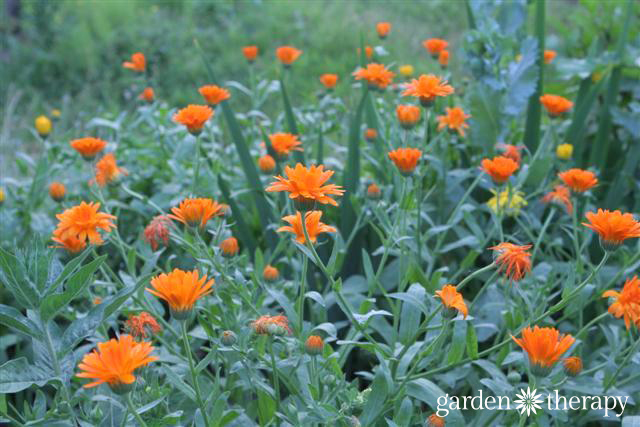
1. Calendula (Calendula officinalis)Calendula: One of the Top 5 Healing Herbs to Grow in Your Garden

Calendula, also known as pot marigold, is an annual with bright yellow and orange flower heads that shine like the sun in your garden.  An edible flower that can be added to salads and used to decorate cakes, calendula is one of the most commonly used herbs in herbal oils, salves, and creams.  Calendula is used in cosmetic and skin preparations for its anti-inflammatory, anti-microbial and skin-healing properties, to treat everything from acne to eczema.

Calendula has also been used topically for varicose veins and gum disease, and is often included in natural vaginal lubricants for vaginal dryness and for recurrent candida yeast infections.  Like all marigolds, calendula also helps to protect other plants in your garden from pests like aphids.

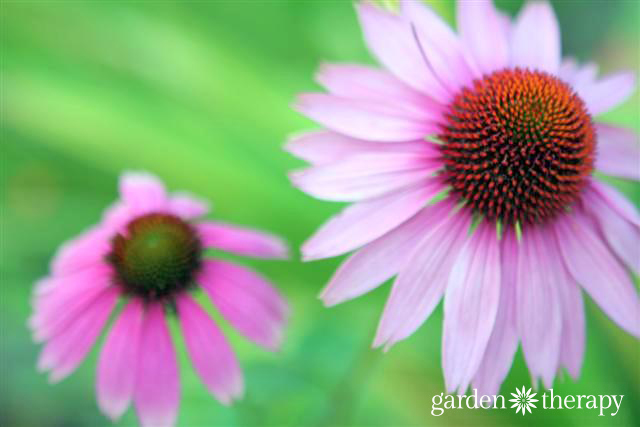
2. Echinacea (Echinacea purpurea or angustifolia)Echinacea One of the Top 5 Healing Herbs to Grow in Your Garden

Echinacea, also known as coneflower, is a tall prairie flower with bold pink to purple petals.  Native to North America, this perennial medicinal herb is both heat- and drought-tolerant.  Its long, rigid flower stalks make it a great addition to flower arrangements.

Medicinally, echinacea is primarily used to boost immune system responsiveness in bacterial and viral infections. It is used both preventatively and for acute treatment of colds and flus. Echinacea's antibacterial and antiviral effects have supported its use in treating vaginitis, chronic upper respiratory tract infections and other viral and bacterial infections. Topically, echinacea is used to prevent infection of skin conditions, as well as for boils, cuts, and poorly healing wounds.

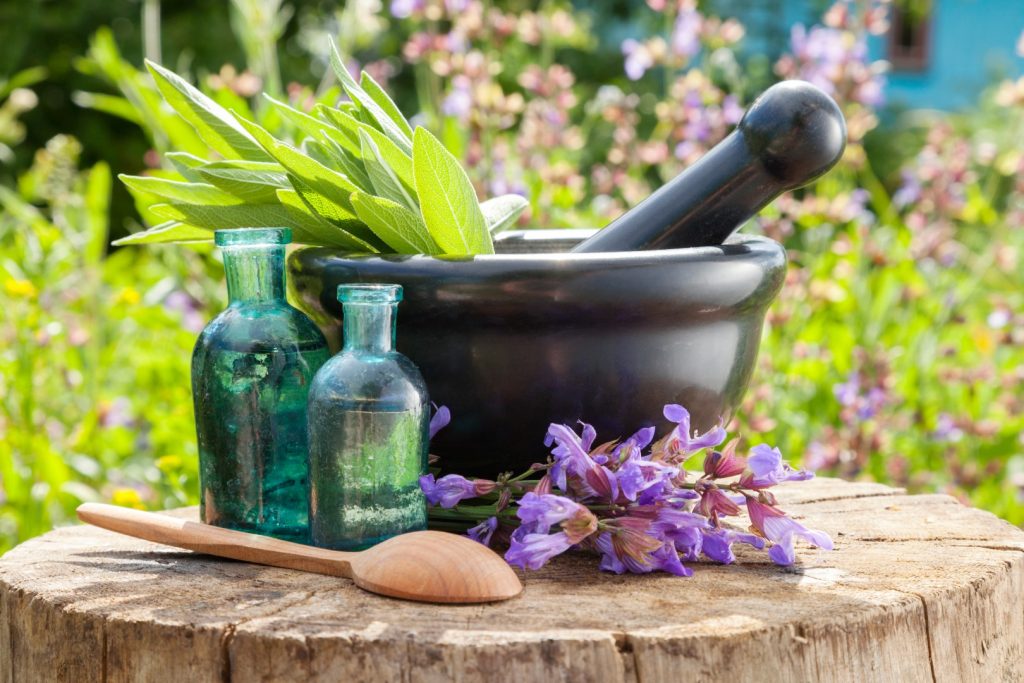
3. Sage (Salvia officinalis)

The top medicinal herbs that everyone should grow in their home garden

Sage, like lavender, has a distinctive aroma when you brush up against it in your garden.  It is also notable for its greyish-green foliage that provides a welcome contrast to the brighter green leaves of other plants.

Thanks to its astringent properties, sage is most frequently used for sore throats and gum disease, and also to reduce hot flushes during menopause. Astringency is also the reason why lactation consultants and midwives have long warned that large amounts of sage will decrease milk supply. Sage tea can help ease the transition to weaning, especially in cases where weaning is abrupt or after a perinatal loss.

4. St. John's Wort (Hypericum perforatum)st johns wort - One of the Top 5 Healing Herbs to Grow in Your Garden

St. John's wort has bright yellow flowers and leaves with translucent spots. Both literally and figuratively, St. John's wort allows the sun to shine through, alleviating mild to moderate depression. Research has also shown that St. John's wort is great for depression that occurs as a premenstrual or menopausal symptom, in conjunction with anxiety, or because of a concussion. St. John's wort's antiviral and skin-healing properties make it useful for herpes, genital warts, nerve pain, sunburns, muscle pain, and wounds.

Although St. John's wort is a beautiful herb to include in your garden, it is also an herb to use cautiously. St. John's wort may lead to photosensitivity and speeds up the metabolism of many pharmaceutical drugs. Consult with a health-care provider before taking St. John's wort. Of course, that shouldn't stop you from growing it in your garden.

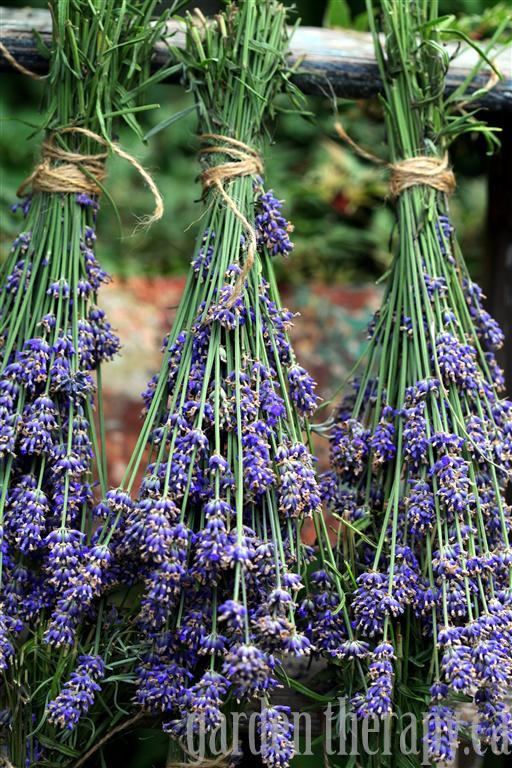
5. Lavender (Lavandula angustifolia)lavender

Lavender is an easy-to-grow, non-invasive perennial to add to your garden. It is a great flower for using as a border around a garden or along a path where you can get the most out of its fragrance. The relaxing scent of lavender comes from its essential oils, which are also the part of the plant which provides its medicinal qualities.

Lavender is also an excellent herb for reducing anxiety, whether the anxiety is acute and specific or more chronic and generalized. Most of us already think of lavender as a relaxing scent, in part because it is commonly stuffed into dream and eye pillows to encourage a good night's sleep.

Lavender flowers can be enjoyed for their aromatic and calming scent in the garden, or added to your bath to help ease both emotional and physical tension.  Lavender is also great when mixed with other garden herbs and made into a calming tea.

About the Author

This article is courtesy of The Essential Guide to Women's Herbal Medicine by Cyndi Gilbert © 2010 www.robertrose.ca Reprinted with permission. Available where books are sold.

Dr. Cyndi Gilbert, BA (Hons), ND is a Naturopathic Doctor with an inclusive, clinical practice which focuses on women's health and mental health.  Cyndi is also faculty at the Canadian College of Naturopathic Medicine, where she teaches Botanical Medicine and supervises student interns at one of the school's teaching clinics.  She received her BA in Cultural Studies from Trent University, and her ND from the Canadian College of Naturopathic Medicine.  Cyndi resides in Toronto, ON.

Grow these medicinal herbs in your flower garden - they are beautiful and have amazing healing properties too

Shop Related Products


Sent from my iPad

HeyWhatsThat Sitemap/FAQ

HeyWhatsThat Sitemap/FAQ

HeyWhatsThat Sitemap/FAQ


Looking for Sea Level Rise or other mapplets?
Visit our new Sea Level, Contours, and Profiler pages.

WHAT'S HEYWHATSTHAT?

You hike to the top of a mountain or pull off at a scenic overlook. You see mountains in the distance. Which mountains are they? HeyWhatsThat will tell you, providing a 360° panoramic sketch labeled with the names of the peaks you're looking at. From almost anywhere in the world.

Our current offerings:

The main site computes the horizon and mountain names and other related visualizations, including the surface of the Earth visible from where you're standing (the visibility cloak or viewshed) and the line of sight profile between you and the distant peaks.
You can view panoramas that someone else has requested and generate your own. (FAQ)
The Path Profiler allows you to create a path and generate its elevation profile. (FAQ)
We're running on several models of mobile phone (FAQ).
For the iPhone and Android, use your mobile browser to visit m.heywt.com.
(We're developing an Android application that takes advantage of the built-in compass, but it hasn't been tested on much hardware ...)
Turning to astronomy, our Eclipse site uses the Google Earth plug-in (currently only available for Windows and Mac OSX) to simulate solar and lunar eclipses.
Our Planisphere enhances the night sky feature of Google Earth by providing overlays of your horizon, an azimuth/altitude grid, and the positions of the Sun, Moon and planets. (FAQ)
Our Reviews page will show you what other people are saying about us, and the Technical FAQ explores issues like the visibility cloak, the elevation profile, and public APIs to our services.

Why isn't it working with my browser?

We develop and debug this site with Firefox, so the layout might be incorrect and some features may not work if you're using a different browser.

How do I get more information?

In addition to the general FAQ you're reading right now, we've got a technical FAQ and a planisphere FAQ. See what other people are saying on our reviews page. We gave a Google Tech Talk Hey, What's That? A Map Hack. Sign up for our occasional email announcements or follow @heywhatsthat on Twitter. And please contact us at comments@heywhatsthat.com

MAIN SITE

How do I choose a panorama to view?

Click the tab labelled All panoramas to see all the panoramas currently available to you. These include queries you have made (), queries that other folks have made and set public (). and queries that you've made and set public ().

To view a panorama, click on a map marker or a name on the panorama list and hit View. Or select a panorama from the dropdown in the View tab.

I'm looking at a panorama. What do I see?

When you view a panorama (e.g. the view from Mount Battie in Camden, Maine), you'll see three panes: a panorama image, a Google Map, and a list of peaks. The peaks are marked on the image and the map with red triangles (), and the viewer location on the map is marked with . You can click on the panorama image, on the Google map, or on the list of peaks and the other panes will react. When you click on the map or panorama image, if you click right on a peak, it will be highlighted; if you miss a peak, you'll get a sight line on the map and the panorama showing you where you're looking.

You can toggle between bearings relative to true or magnetic north.

You're not telling me the name of the mountain I'm looking at.

For a peak to be detected by the system, it must appear against the horizon, it must be an elevation maximum with enough slope on either side to be visible to the naked eye (a few arcminutes is what we look for), and it must be listed in the database of features we're using. If you're curious about a peak that's missing from the list, clicking on the panorama and following the resulting line on the Google map should get you to its name, or at least its latitude and longitude.

Yeah, but I'm sure I see Mount Jellyfish when I'm on Mount Squid.

If you're actively looking for a particular peak -- i.e. it's not that you see something and want to know what it is, but that you know something is there and keep looking until you find it -- then you'll probably need less of it to be visible than our algorithm requires.

And it could be that there are special atmospheric conditions working in your favor. We discuss refraction a bit below and in more detail in the technical FAQ, and acknowledge that our computations don't cover all possible circumstances. On the other hand, meteorologists have told us that refraction can really only do so much. There are other possible phenomena: we particularly like the section How far can you see? at Distance to the Horizon and the technical discussion at Mirages.

We're constantly refining our approach, and welcome your comments and suggestions at comments@heywhatsthat.com

Okay, I can click around and see the peaks. What else can I do?

While viewing a panorama, hit the Visibility cloak button on the map. We overlay the map with red pixels indicating all the ground area that can be seen from the viewer's location. For example, we predict that from the top of Mount Washington the farthest you can see is Saddleback Mountain, 137 miles away in Maine at 45.51°N 69.135°W. (This is not the Saddleback Mountain ski resort in Rangeley at 44.946°N 70.526°W, though much of that is also covered by the visibility cloak.)

Outside of HeyWhatsThat.com the visibility cloak is known as the viewshed. Among its many uses: it can give you an idea of where your proposed building will be visible from, and it will show the area covered by line of sight communications (be sure to set your tower height when you make your query).

Next?

Hit the Contours button. As you move around the map you'll see contour lines (lines of constant elevation). Hover over the button to see the interval between contour lines. (Finer control over contours -- setting your own intervals and color -- is available in the Elevation Contours mapplet; see the mapplet FAQ.)

And?

The next thing to try is the Show profile button on the upper right. This opens a new pane displaying the elevation of the path you'd walk travelling from the viewer location to any spot you click on. (You can draw arbitrary paths and draw their elevation profiles with the Path Profiler and the Path Profiler mapplet.)

Wait a minute. I was looking at the Mount Washington panorama and hit Show Profile. Then I zoomed out on the map and clicked on a spot in Rocky Mountain National Park in Colorado. The profile showed a continuous line between the two spots. Does this mean I can see Colorado from Mount Washington?

No. Note the 'flat earth' checkbox just under the profile. If it's checked, the profile window is simply an elevation graph and doesn't include the effects of the curvature of the Earth; if not checked, you'll see that the Earth gets in the way. (Note that the computations for the visibility cloak and the list of visible peaks include the Earth's curvature, and the refraction of light as well.)

How do I generate my own panorama?

Open the request form by clicking on the New panorama tab.

Set the desired viewer location by clicking on the map, by entering the latitude and longitude, or by looking up an address. If you're manually entering latitude and longitude, use decimal degrees 44.0538, degrees with decimal minutes 44 3.23, or degrees minutes seconds 44 03 14. (Spaces are optional, but if you don't use spaces, be sure to include leading zeroes, e.g. for 44° 3.23' use 4403.23, not 443.23.) Check that you have the signs correct; in the continental US, longitudes should be negative numbers and latitudes positive.

Use the default elevation of six feet above ground level, or explicitly set the elevation on the form.

If you want to be sure you're running the calculation on a peak, use the Move button and dropdown to move to the highest nearby point. For example, suppose careful map reading tells you the peak of Bald Mountain is at 44.232°, -69.136°. According to the elevation data we use, that point is actually north of the summit, and the resulting panorama would have the southern view blocked. Use Move to make sure your request matches where our elevation data puts the peak, 44.22972°, -69.13667° in this case.

Hit the Submit request button when you're done. While the request is being processed you can view other results and enter other queries; a window will pop up when the computation is finished.

Can I share this query with others?

You can email someone a link that will open a particular panorama; click on Email this panorama while viewing a panorama.

You can also make your queries visible to everyone who visits the site. All panoramas will show you all the panoramas that you have generated (along with those that other users have made public). Click on a map marker or a name in the list to delete or to change the public/private status of your own queries.

By email? How do I do this by email?

Email to qq@heywt.com . You can send either your latitude and longitude or an address. In either case we ignore the subject line, but the request comprises the entire body of the message, so don't send HTML formatted messages or any extra text.

For latitude and longitude, send just the latitude and longitude. Follow the coordinates with a p if you want the system to run the computations from where it thinks the peak is (but no more than 100 feet away). Latitude and longitude can be entered exactly as described above; be sure to use negative values for west longitudes and south latitudes. For example, the email message body

  442107 -693201 p
asks for latitude 44°21'7" north longitude 69°32'1" west, adjusted to the highest spot within 100 feet, and
  44.2107 -69.3201
asks for 44.2107°N 69.3201°W, no adjustment.

For addresses, send just the address in the same format used on this page. These seem to work:

  1600 pennsylvania ave, washington dc    main & elm, 04843

How do I export the list of peaks to GPS software?

Check out GMapToGPX. It's a nifty utility that exports data from a few selected sites -- heywhatsthat.com's peaks and maps.google.com's directions, for example -- into GPX format.

And Google Earth?

After you've installed Google Earth, click on View in Google Earth by day in the top right-hand corner of the page while viewing a panorama. Google Earth will open and zip over to the origin of the panorama. Enable the Horizon overlay to see the panorama we generate and compare it with their visualizations. (We call it Horizon here because Panorama generally refers to wide angle photos in Google Earth.)

Be sure to enable the Visibility cloak as well, which will show both the overall extent visible from the viewer's location (Entire visible area) and the specific regions that are visible (Pixel by pixel).

Clicking on View all in Google Earth while viewing the All panoramas tab will send a list of all your panoramas and all the public panoramas to Google Earth.

Google Earth by night?

This is our interface to Google Sky. Click on the at night button under the View in Google Earth by day button. Google Earth will start up and overlay the celestial sphere with your horizon and peaks, an azimuth-altitude grid, and the positions of the Sun, Moon and planets (and Pluto too), reflecting the state of the sky at that instant.

You may find you have to manually switch to sky view (under the View menu hit Switch to Sky), and if you don't see the overlays -- blue horizon line, red summit markers, and green grid lines -- you'll have to refresh the Network Link you just loaded: look in Google Earth for an entry on the left under Temporary Places labeled something like Planisphere for XXXX (current), right-click on it, and select refresh. Note that you can refresh it any time and the horizon and everything else will be updated.

You can do more by visiting our Planisphere page and its FAQ, including determining the horizon for any specified time and for any arbitrary latitude/longitude, even locations above 60° north latitude and below 54° south where we don't have elevation data.

What data do you use?

We use two sets of data to generate these results. First, we use a digital elevation model, which is the height of the surface of the Earth above sea level at a network of points. In this case we're using the SRTM data generated by the February 2000 Space Shuttle mission. It comprises elevations determined roughly every 100 feet north-south and east-west for the US and every 300 feet elsewhere, covering latitude 60°N to 54°S. For more information, see the NASA Jet Propulsion Laboratory and USGS Shuttle Radar Topography Mission pages.

The second data set is a list of summits, comprising their latitudes, longitudes and names. For the US names we use data from U.S. Geological Survey, 19810501, U.S. Geographic Names Information System (GNIS): U.S. Geological Survey, Reston, VA. For the rest of the world we use data compiled by Geonames.org, licensed under the Creative Commons 2.5 Attribution License.

The data used to generate the planisphere is described in the Planisphere FAQ.

How do you compute magnetic North (the declination)?

We use code and data from NOAA's National Geophysical Data Center . Specifically, we use GEOMAG Version 7.0 with the International Geomagnetic Reference Field model, using the current date and mean sea level, and rounding to the nearest integer.

Note that they also provide some web services for obtaining this (currently listed in the second paragraph, under Revised on-line calculators).

Can I see all the names?

Go to the test version and hit the button labelled More features at the top right-hand corner of the map. You'll see a bunch of markers; mouseover for the names and elevations. Move the map and click the bookmark again to see more summits.

What datum do you use?

We use the WGS 84 reference ellipsoid in our calculations.

Do you correct for refraction?

We model refraction by adding roughly 3.6 arc seconds to the altitude of an object for every mile away from the viewer, which comes from the surveying rule of thumb of adding 14% of the drop in altitude due to curvature of the earth. See the technical FAQ.

What's the (shown at ...) business all about?

The elevation data and the summit name data is fairly well synchronized, but can't match exactly. When we calculate the position of a peak it is usually close to, but not exactly on top of, the location of the summit in the names database. If we only showed the location from the names database you'd ask How come a summit is listed at latitude 44.1111 on your map but you display it at 44.1112? and if we just showed the location from the computation you'd say I looked up Mount Squid in the latest US GNIS and it's supposed to be at 44.1111 but you say it's at 44.1112 so we figured we'd give you all the data. Of course, we could just round ...

PATH PROFILER

What's the Path Profiler?

The Path Profiler generates an elevation profile for an arbitrary path.

Build a path, hit calculate profile, and you'll get the elevation profile (the hills and valleys you'd traverse as you travel that path). You can add points to the path by clicking on the map or by entering addresses and hitting Find. If you hit get route the system (actually, Google's system) will find a smooth driving route between the last two points on the path.

The UI is unapologetically anachronistic; how often do you see a button labelled backspace in a web app?

The Path Profiler doesn't quite do what I want. Do you know of any similar sites?

There are several other web sites with similar functionality, some tailored to particular applications like walking, running or biking. (Peter, a cyclist and friend of HeyWhatsThat, has tried a few of them out and sent us these images.) Here's our current list:

The Profiler is no longer redrawing the profile when I add new points, or the profile isn't changing

The Profiler should redraw every time you hit the draw profile button, and the Profiler mapplet should redraw whenever you add a point. If you don't see any changes in the image, maybe you've got too many points in the path (see next question).

Is there a limit to the number of points in the path?

Yes.

Our server currently limits incoming URLs to 8190 bytes, which limits profiles to about 200 points. And while Firefox apparently has no length limit for outgoing URLs, Internet Explorer limits them to 2083 bytes, which corresponds very roughly to 50 points.

If you're using follow driving route it's easy to hit these limits, so the profiler tries to interpolate fewer points in smoothed routes when it reaches these URL limits.

Can I save a path in the profiler?

We don't have accounts for saving paths, but you can hit the button labelled Checkpoint and, in your browser's address bar, you'll get the full URL you'll need to return to the profiler with the current path. So, when you have the path you want, hit Checkpoint and bookmark the page.

You can also save the URL of the image. In Firefox, for example, right click on the image, select copy image location and paste it into a document. (Using the API description in the technical faq you can even edit it.)

ACKNOWLEDGMENTS

Data courtesy of the U.S. Geological Survey, NASA, Geonames.org, and the U.S. Naval Observatory. Colocation graciously provided by Midcoast Internet Solutions. None of those organizations endorse this site.

How do I contact you?

comments@heywhatsthat.com

12/2016



Sent from my iPad

Friday, June 16, 2017

Make Iced Coffee At Home

Make Iced Coffee At Home

It's gotten hot here in Rhode Island and if we could fill a swimming pool with cold brew, we would. As it is, we have to settle for a moderate-sized tub. What about you? Want to have smooth cold brew ready to go every morning? Or maybe you need a chilly caffeine hit right now and should go for a flash brew. Recipes and recommendations below.
COLD BREW
Rich, smooth, and chocolaty, cold brew is delicious coffee you can enjoy all day long. Great for camping, cookouts, and coastal adventures. Let the summer begin.
What you’ll need:
  • 60 grams of freshly roasted coffee (about ¼ cup)
  • 800 grams of filtered or spring water (about 3.5 cups)
  • An 8 cup (34 ounce) french press or similar sized container
  • Grinder
  • Electronic scale or measuring cup
  • A resealable container (such as a mason jar or flip top bottle)
A step by step guide:
  1. Remove plunger lid from french press and add freshly roasted coffee ground on a medium-coarse setting.
  2. Add water directly onto grounds and stir generously to wet all of the coffee evenly.
  3. Reinsert lid but do not press plunger down below the water line. Refrigerate overnight, about 12-18 hours.
  4. When time has elapsed, plunge the brewer and pour concentrate into a sealable container.  Concentrate is best enjoyed within two days of brewing.
  5. Dilute to taste, add ice, and enjoy!

FLASH BREW

Fast, fresh, and flavorful--here's a simple way to make delicious iced coffee whenever you want it. By brewing a concentrate directly onto ice, this method cools and dilutes the coffee to the perfect strength and temperature. Sweet, bright, and balanced.

What you’ll need:
  • 30 grams of freshly roasted coffee (about ⅛ cup)
  • 165 grams of ice
  • 330 grams of filtered water (about 1-½ cup)
  • A brewer and carafe*. Either an automatic brewer or pourover dripper with kettle.
  • Filters
  • Grinder
  • Electronic scale or measuring cup
A step by step guide:
  1. Place your filter in the dripper and rinse with hot water, discarding water after rinse.
  2. Weigh out 165 grams of ice in your carafe.
  3. Add freshly roasted coffee ground on a fine-medium setting (about the size of coarse table salt) to your filter.
  4. Add the filtered water to your kettle or brewer. Brew water should be at around 200℉, about one minute off of boiling.
  5. Place dripper over carafe and begin brew:  
  • For pourover, gently add enough water to wet all the grounds and wait for 30 seconds. Then, carefully add the remaining water in a slow, steady stream.  
  • For an automatic brewer, simply make sure the correct amount of water is in the brewer and hit start.
  • Total brew time should take around 3 minutes
  1. After brewing is finished, swirl carafe to melt any remaining ice and incorporate the brew. Then serve and enjoy!

How to Shuck an Oyster (Tips from a Pro) · Faith Middleton's Food Schmooze

Hey, its the Local way…….  ;-)

How to Shuck an Oyster (Tips from a Pro)

Even if you know how to shuck an oyster, you may still relegate that task to a pro. If you're lucky, you tuck yourself into bar seat seven or eight at Mystic's Oyster Club and watch chief shucker John Bertino do what he does best. For John, shucking oysters is an art. He estimates he's shucked around two million oysters in his career.

• ON-DEMAND: Listen to Faith and the gang discuss the tricks of the trade with John and learn about the best varieties of oysters to eat right now. •

John Bertino_Oyster Club_how to shuck an oysterJohn Bertino_Oyster Club_how to shuck an oyster

Oyster-shucking tip for the home cook: If you can't get your oyster open, pop it in the freezer for two minutes. The shell should open up enough that you can slip a knife into the opening and snip that mussel to loosen the oyster in its shell.

Photos: Courtesy of John Bertino

Asking these 5 questions reveals everything about someone's personality, according to a psychologist - Ideapod blog

Asking these 5 questions reveals everything about someone's personality, according to a psychologist - Ideapod blog

Asking these 5 questions reveals everything about someone's personality, according to a psychologist

We can all agree that meeting new people is one of the greatest thrills in life. Every single friend, lover, coworker, neighbour, acquaintance was once a stranger.

And when you first met them, you never would have thought you'd eventually form a meaningful relationship with them. Or could you have?

While it's difficult to learn ALL you need to know about someone the first time you meet them, there are certain questions you can ask that give you a deeper insight into the nature of their character, according to psychologists. 

And let's be honest, simple questions like, "How is your day?" or "What's on for the rest of the week", aren't exactly going to give you insight into who they truly are.

But the following questions are different.

They're designed to give you a more accurate and deeper insight into a stranger you've just met so you can work out whether you two will get along in the future.

1) How would you describe yourself?

This question might seem like it's nothing special in particular, but its ambiguous nature of will reveal a lot about the answeree's personality.

Why?

Because you can answer this question in many different ways. They might talk about their personality, their job, their family. Whatever they answer will generally show their priorities in life.

Also pay attention to the type of words they use. If they use words like "observant" or "recreational" they're more likely to be humble, whereas if they use words like "smart" or "athletic" they might be extroverted.

2) What is your biggest accomplishment?

This will give a critical insight into a person's past, and will also reveal two subtle things about their personality.

Once again, it shows where a person's interests lie as it's an ambiguous question. Is it a sporting accomplishment? Professional? Personal?

Also, how long did it take them to come up with this accomplishment? If it was a long time, it could be they have lots of accomplishments or few. You'll have to use your spidey sense to find out.

3) Have you read any good books?

This is a great question and the answers will vary wildly.

First, you'll easily be able to work out the non-readers from the readers. Some will be honest and say "they don't read". Other non-readers will take ages to work out what they're last book was. This also shows they're trying to impress you by searching for a book to say.

Among readers, you'll find people who either prefer business or self-help books, or novels or science.

4) What is your dream job?

Another ambiguous question that will reveal a lot.

Some will show they're the creative type by highlighting creative pursuits. Some will try and be funny and describe jobs that don't exist like "beer taster" or "puppy cuddler".

Whatever they respond with, it will reveal whether they've thought about this question a lot or not at all.

5) Who is your personal hero?

Quite a meaningful question to ask. You'll find some will describe a family member, while others will describe an athlete or pop culture celebrity. You'll learn a lot about their values here. You can probe there questions by asking "what is it that makes this "hero" stand out?"

Usually they'll mention traits and characteristics that they aspire to have in themselves.

Once you spend a little bit of time with someone, these questions are perfect to break. How they react and how they answer them will reveal a lot about their personality.

The views expressed in this article are those of the author alone and not necessarily Ideapod. Articles are intended to give exposure to perspectives that ignite conversation. Please join us in continuing the conversation at ideapod.com, our social network for everyone to share their ideas. To learn more about Ideapod, see our About section, or subscribe to our weekly email below.


Sent from my iPad

The Spiritual Consequences of Alcohol Consumption - Superhv

The Spiritual Consequences of Alcohol Consumption - Superhv

The Spiritual Consequences of Alcohol Consumption

Although it is mass produced, mass promoted, legal, and ingested by a multitude of people all over the world, most people don't ever consider or understand the spiritual consequences of drinking alcohol.

Let's begin by taking a look at the etymology of the Word alcohol. Etymology means the root of the word… where it is derived from.

The word "Alcohol" comes from the Arabic "al-kuhl" which means "BODY EATING SPIRIT", and gives root origins to the English term for "ghoul". In Middle Eastern folklore, a "ghoul" is an evil demon thought to eat human bodies, either as stolen corpses or as children.

The words "alembic" and "alcohol", both metaphors for aqua vitae or "life water" and "spirit", often refer to a distilled liquid that came from magical explorations in Middle Eastern alchemy.

In the words of writer and health enthusiast, Jason Christoff –  "In alchemy, alcohol is used to extract the soul essence of an entity. Hence its' use in extracting essences for essential oils, and the sterilization of medical instruments. By consuming alcohol into the body, it in effect extracts the very essence of the soul, allowing the body to be more susceptible to neighboring entities most of which are of low frequencies (why do you think we call certain alcoholic beverages "SPIRITS?"). That is why people who consume excessive amounts of alcohol often black out, not remembering what happened. This happens when the good soul (we were sent here with) leaves because the living conditions are too polluted and too traumatic to tolerate. The good soul jettisons the body, staying connected to a tether, and a dark entity takes the body for a joy ride around the block, often in a hedonistic and self-serving illogical rampage. Our bodies are cars for spirits. If one leaves, another can take the car for a ride. Essentially when someone goes dark after drinking alcohol or polluting themselves in many other ways, their body often becomes possessed by another entity."

I became aware of this phenomenon years ago when I was given a spiritual vision. In this vision, I was transported as an observer above a popular bar and nightclub. Above the venue where a variety of ghoul-like entities. Inside the bar were people drinking alcohol, socializing, dancing, and so on. I watched as certain people became very drunk. I saw their souls, while connected through a thread, exited the body. I understood that the soul was leaving the body because of the great discomfort of being in a body highly intoxicated with alcohol. When the soul exited the body, other non-benevolent entities entered or latched on to their vacant shells. Once the entities took hold of the body, they used the body to play out all kinds of dark acts, such as violence, low-level sexual encounters, destructive behaviors, rape, and more.

Years later, while reading a book called Mans Eternal Quest, by Paramahansa Yogananda, this spiritual master clearly explained the exact same thing as I was shown in the vision.

I began to look back over my life and remember situations where I saw dark spirits hanging around people who had become very drunk. Let me elaborate a bit when I say I saw these entities … I have had the abilities of clairvoyance (the ability to perceive things beyond the natural range of the senses … which can include: ESP, extrasensory perception, sixth sense, psychic powers, second sight; telepathy, and more) , clairaudience ( the ability to perceive sounds or words from outside sources in the spirit world), and the experience of being a spiritual intuitive and empath since childhood. I have the ability to see energies and spiritual manifestations that most people don't see. As I looked back over my life I could remember many incidents of encountering non-benevolent spirits in the presence of intoxicated individuals. I also have had experiences of looking into the eyes of a few people who were surely "possessed" by dark energies that were not their own.

I also remember a psychology course I once took. In part of this course, we studied advertising and the effects on humans. We looked at the advertising for alcohol. A master teacher of this subject illuminated the fact that most alcohol advertisements are embedded with hidden messages and images – not typically perceivable to the common sight, yet perceived through the subconscious. Knowing how powerful the subconscious is in our decisión making, feelings, reactions, beliefs, etc., the slick sales teams of alcohol (as well as tobacco and other products) used this sinister technique to trick us into buying their products and joining the societal cult of mental apathy and cultural obedience. Many of these hidden messages and images were extremely sexual – working to influence some of the basest urges and primal nature of humans. Let this example bring you to a place of curiosity and questioning. Why have the marketing teams felt the need to trick us and coerce us through subliminal messages to buy products that are harmful to the human body and to our soul?

How many times have you or someone you know, after becoming quite intoxicated with alcohol, behaved in a manner uncommon to them? Perhaps you experienced the changing of voice, violence, sexual promiscuity, ingesting of harmful substances, destruction to property, conflictual behavior, and other negative expressions. Consider these experiences and ask yourself – is this the manifestation of light, love, and positivity? Do these occurrences represent a path of consciousness and health?

It is a known by many that ingesting alcohol depresses the nervous system, kills brain cells, is toxic to the liver, weakens the immune system, and has many other harmful effects.  We are taught that long-term alcohol use can lead to unwanted weight gain, diseases of the liver, lowering of intelligence, and negative effects on hormones. Drinking alcohol while pregnant can lead to birth defects, mental retardation, and deformities in the developing fetus. Yet still, it is mass promoted and supported by our mainstream culture. Have you ever considered that alcohol is a slick tool of the supporters of the Matrix (global mind control and oppression program) to keep people on a path of disempowerment and sickness?

We have to ask why is alcohol legal throughout most of the world, yet in many countries, and specifically the United States, psychedelics are illegal. The conscious and safe use of psychedelics or "visionary medicines"are known to assist in mind expansion, to initiate spiritual experiences where people have communed with the divine, healed numerous physical and spiritual ailments, increase intelligence, help to re-pattern the brain in a positive way, assist people in aligning with their soul's purpose, and have inspired many people to create great works of art and other innovative creations. It seems that these substances would definitely be banned and discouraged if there truly is an agenda seeking to oppress the human potential and keep us "in the dark" regarding who we are as spiritual beings, our innate potential, and the path to empowerment.

As we strive to heal, awaken, and transform our world – I pray that we wise up to the dirty trick played upon humanity in regards to alcohol. Non-benevolent forces have wanted to keep us oppressed, disempowered, and asleep.

How many of us have seen families broken and lives lost because of alcohol and alcoholism?

Do you think it makes us smarter or healthier or overall better people?

It's time to change things.

Let's stand behind replacing the rampant abuse of alcohol with more health enhancing practices and activities –

and learn how to live awakened and empowered lives!

Before I close this writing, I want to share a little more about the history of the word alcohol. There have been some people who look into the etymology and discover this explanation –

"alcohol (n.)  – 1540s (early 15c. as alcofol), "fine powder produced by sublimation," from Medieval Latin alcohol "powdered ore of antimony," from Arabic al-kuhul "kohl," the fine metallic powder used to darken the eyelids, from kahala "to stain, paint."

Paracelsus (1493-1541) used the word to refer to a fine powder but also a volatile liquid. By 1670s it was being used in English for "any sublimated substance, the pure spirit of anything," including liquids. Sense of "intoxicating ingredient in strong liquor" is first recorded 1753, short for alcohol of wine, which was extended to "the intoxicating element in fermented liquors." In organic chemistry, the word was extended 1850 to the class of compounds of the same type as this."

Upon further research, we can find that in ancient Egypt, the eyes of both men and women were lined top and bottom with a thick black powder known as kohl, kajal, or mesdemet. The outlined eye resembled the almond-shaped eye of the falcon god Horus observed in the Eye of Horus glyph. It was believed that this shape invoked the god´s protection and warded off evil spirits.

Yet if one were to dig deeper, as a true scientist, researcher, or truth seeker does, you will also discover these interesting facts…

  1. Dr. Rachel Hajar, an accomplished modern-day editor, author and medical advisor, while researching an article on alcohol for her online medical journal, found additional meanings in ancient Arabic texts;
  1. Al kol: Genie or spirit that takes on varied shapes or a supernatural creature in Arabic mythology.
  1. Al kol: Any drug or substance that takes away the mind or covers it."
  1. The word alcohol is also linked to the fixed star in astronomy known as Algol- also known as "the Demon's head."
  1. The current Arabic name for alcohol (ethanol) is الغول al-Ä¡awl – properly meaning "spirit" or "demon".

It is not a coincidence that alcohol has often been referred to as spirits. There is a deep history behind this intoxicating substance. There are layers of information throughout our culture, sometimes we have to look below the surface of things to find the fullness of truth. I encourage you to deeply consider the information shared here, look at the effects of alcohol in your life, in the lives of the people you know, and in society at large. Make conscious, informed, and health enhancing decisions. The more people who awaken to truth and seek health and liberation from mind control agendas, the more likely we are to make positive changes and co-create a world we feel good about living in.

For more information on retreats and activities click HERE

By Zahrah Sita | The Costa Rica News


Sent from my iPad