The large vessel Earth 300 will be able to carry 400 people including 160 scientists and 165 crew, for research expeditions.
The Earth 300 is designed by Iddes Yachts international design firm, to be emission-free and powered by nuclear energy.
Scheduled to launch in 2025, the explorer vessel is equipped with 22 state-of-the-art laboratories, will carry 160 scientists and 40 VIP guests.
Aaron Olivera, the CEO of Earth 300, wants to bring the "brightest and smartest" scientists aboard.
"We need to create this power from clean, sustainable sources with zero carbon emissions, so that humanity can thrive and enjoy our planet for generations to come."
Food security depends on water security, they're inextricably linked. The world is running out of clean, fresh water to feed and nourish a growing global population and maintain the health of our planet. We need to act now. The planet is hotter than it's ever been in human history. The relatively stable climate that we've enjoyed is a thing of the past. Things are going to change even faster and more dramatically in the decades ahead.
Education is essential to mitigating the climate crisis. We need to help people understand and address the impacts of global warming, encourage behavioural change and help them adapt to climate-related trends.
Covid-19 has acted like a stress test on every aspect of life, it has particularly exposed weaknesses in global health systems. It's important to learn the right lessons with regard to preparedness, capacity and future resilience.
Earth 300 promises to be an important repository of data and information for planet Earth. We're providing an open platform for science and innovation that can be accessed on a global scale.
Earth 300 executives estimate the total cost would come to between $500 million and $700 million.
About to get busier: Dutch scientists train bees to sniff out coronavirus
Scientists have harnessed bees' acute sense of smell to detect coronavirus in a method that could be applied in developing countries lacking the necessary diagnostic tools, researchers at Wageningen University say.
The project, carried out by startup InsectSense and Wageningen Bioveterinary Research (WBVR), involved the conditioning of some 150 bees using the Pavlov method. Every time the bees were exposed to the virus, they were given sugar water as a reward.
Coronavirus causes a metabolic change in the body which releases a certain smell which bees, and dogs, can pick up on because of their highly developed sense of smell.
By repeating the action the bees associated the sugar water with the presence of the coronavirus smell and stuck out their tongues.
Training the bees only takes a few minutes, the scientists found, and it takes the bees just seconds to identify the smell.
The samples for the tests were initially taken from healthy and infected mink, resulting in very few false-negatives and false-positives, the researchers said. Subsequent tests using human samples yielded equally good results.
If the method can be successfully scaled up, bees could be trained to detect coronavirus all over the world, the scientists hope. InsectSense has already designed a prototype machine to train bees and a bisosensor which uses the bees to diagnose the disease.
There is no danger the bees will spread the virus, professor Wim van der Poel told DutchNews.nl. 'The bees are not sensitive to the virus and don't come into direct contact with it during the trials.'
'BeeSense', as the diagnostic system has been dubbed, could help developing countries which lack the infrastructure for diagnosis and have no access to state of the art technology.
Wageningen and InsectSense are also working on the so-called LumiNose biochip technology, which uses insect odour receptors to detect the virus. Once perfected non-invasive, precise and cost-effective testing using this technology could be on the horizon, the scientists said.
Thank you for donating to DutchNews.nl
The DutchNews.nl team would like to thank all the generous readers who have made a donation in recent weeks. Your financial support has helped us to expand our coverage of the coronavirus crisis into the evenings and weekends and make sure you are kept up to date with the latest developments.
s'Okay... so they can sniff you're pregnant?, how about they can sniff you just went poo, or took a hit, or it's your birthday... then they train the drone to do it...and you are on their front page, surprised?
In this episode, Nick goes back to the very basics. In just 10 minutes, he explains the layman version of why the EMFs emitted by your phone, wifi routers or Bluetooth gadgets are anything but safe.
This is the episode/video you'll want to share with skeptics in your circles.
Discussed during this episode:
Why the lag between "early warnings" and change in policies is often deadly, and how the same mistake is being made with EMFs
The science showing that EMFs are a carcinogen to take seriously is piling up
How industry funding influences EMF studies
EMFs can not only increase cancer risks, but also impair your fertility
A few ideas to minimize the risks associated with your phone and other sources of electro-pollution
Links Mentioned:
NEW! Watch the YouTube version of this interview here!
NOTE: This content is based on Nick's opinion and is provided solely for entertainment purposes. You should do your own research when searching for information regarding health issues and always review the information carefully with your professional health care provider before using any of the protocols or recommendations presented on this podcast. The information provided is not intended to replace medical advice offered by a physician or other licensed health care provider.
When you go paperless, taking notes is easy, but knowing what to do with them is hard. Learn how to organize and store your digital notes in a way that makes them useful.
Seinfeld fans will remember a glorious scene from the show when Jerry and Elaine show up at a car rental agency. Jerry asks to pick up a midsize car that he reserved. The agent at the counter replies that they don't have any midsize models left because they ran out. "See," Jerry says, "you know how to take the reservation. You just don't know how to hold the reservation." I think the same way about digital notes. It's very easy to take notes, but much harder to use them.
To actually use the notes you take, you have to organize and know how to find them. These tips on getting started with a note-taking app and organizing your notes will help.
1. Pick a Great Note-Taking App
The note-taking app you choose heavily influences whether and how you'll ever see your notes again. The basic note-taking app that came preinstalled on your phone or tablet probably isn't very good. Sure, you've used it before, and it works fine, but maybe you don't know what features you're missing that separate merely satisfactory apps from excellent ones.
Three features that make note-taking apps truly useful are:
folders,
tags, and
optical character recognition (OCR).
I'll go into more detail about each point in a moment.
The three apps that I recommend the most, based on my personal testing of many note-taking apps over the years, are:
When you jot down a note quickly, you need a place to save it where it won't get lost. Create an Inbox folder in your note-taking app and set it as the default storage location.
Go through the Inbox regularly to add more information about your notes and sort them. You'll see how to do that in the next few tips. You don't need to clean the Inbox on a set schedule, but try to do it when you have your note-taking app open on a full-sized screen (see #10, below). It makes it easier to see what you're doing and see all the options you have.
You don't need to shoot for Inbox Zero in a note-taking app. An Inbox is a great place to store notes you revisit frequently. For example, I keep a note with all my friends' Wi-Fi network names and passwords so if I bring a new device to their house or wipe the save password, I can join the network again without bothering them for the details. That note has a permanent home in my inbox.
3. Sort Notes into Folders or Notebooks
Folders, which some apps also call Notebooks, help you organize your notes manually. They become useful later when you want to explore notes on a certain topic, such as all notes that are recipes.
The folders you create and how you name them depends on what kinds of notes you take and how you use them. If you aren't sure, start with folders for Inbox, Reading, Household, Personal, and Work. You can always change them and create more once you get a sense of how you use them.
4. Make Shortcuts for Your Favorite Folders
Any well-used note-taking app has folders that see more action than others. Make those folders easy to reach by creating shortcuts to them or marking them as favorites. These are the folders in which you frequently look at notes you've made and add new ones.
You likely have other folders that merely hold notes until an unexpected time when you need them. They need not be front and center.
5. Use Tags
Tags help you find existing notes. They can narrow down what you see in a particular folder or show you all notes tagged with a common theme across multiple folders. They also help you find notes that pertain to some theme even if the thematic word doesn't appear in the note itself. Let me give some examples.
Example 1: Say you have a folder called Recipes, and you're planning a party for some vegetarians. You can pull up all notes from only that folder that are tagged vegetarian for ideas on what to make.
Example 2: Perhaps you're a writer who writes for different publications. You might make notes about articles and organize them into folders based on where they're published. There may be times, however, when you want to explore all the notes you have on a certain theme, regardless of who published the piece. If you've tagged your notes with this theme, you can search for the tag and see them all no matter what folder they're in.
Example 3: You forward an email related to a project you're working on into your note-taking app. The message never says the name of the project or what it's about. That's how people communicate when they're in the thick of something. In this case, you could add tags to define the note (project name, client, description of the work) so that you'll be able to find the note when you need it.
6. Cull Tags
There is such a thing as having too many tags. The more you add tags, the sloppier they get. So from time to time, cull your tags. Here's how to do it.
Pull up a list of all tags in use. Often, you can see the note count next to the tag. First, look for near-duplicates. If you have tags for both "app" and "apps," get rid of whichever one has fewer notes. Open the affected notes and add the tag you're going to keep. Delete the other tag.
Additionally, if you have any tags with two or fewer notes, consider getting rid of them. They're probably not doing you any good.
7. Create a Shortcut on Your Phone
Make a shortcut on your phone to start a new note in your note-taking app so that capturing ideas and information is always within quick reach. On iOS devices, you can make a Siri shortcut, and on Android look for a New Note Widget option in the app.
8. Dictate
When something comes to mind you want to write down but you're seriously rushed or you're walking your dog and can hardly manage to hold both the leash and your phone at the same time, dictate.
Most smartphones have a speech-to-text function. Use it! Start a new note, press the microphone icon on the keyboard, and speak whatever you want to write down. Alternatively, you can record a voice memo and transcribe it later. If you get into the habit and end up frequently dictating long passages, you may want to use a transcription service to save yourself some time. There are many good free and paid options available, though the paid options tend to be considerably more accurate.
9. Attach Images and PDFs, Use OCR
If your app has OCR, it can search the text found in images, PDFs, and other files you upload to it. Don't be shy to add files to your notes when you need them. That includes snapping photos of informational signs, handwritten notes, pages of books, and so forth.
You can see how it's useful through an example. Let's say you attach a PDF of a receipt for a meal that you need to claim on an expense report. You forgot to tag it "receipt," and you don't know where it is. If you remember the name of the restaurant, you can type that into the search bar, and OCR will track it down.
Pay attention to the limits your note-taking app or account type put on your OCR use and storage. For example, the free version of Evernote runs OCR on images, but not PDFs and Office documents. You need a Premium or Business account for that. If your app doesn't have scanning built in, you might consider pairing it with a mobile scanning app.
10. Organize on a Big Screen
Ideally, your note-taking app will have a desktop app and web app. Use one of them (generally speaking, desktop apps are better for this purpose) when sorting through your inbox and organizing your notes. Having a large screen helps you see more of the app, and therefore, more of your folder structure, tags, and other information you add to notes to keep them organized. If you can see all your options, you're more likely to choose the right ones.
Blood Donors Needed In Stonington-Mystic Area: Red Cross Drives Coming Up Soon
Donations of all blood types are needed as the pandemic has affected the nation's blood supply.
so, I am not a VAXXer,
have not encountered the Covid19 Virus
and my blood is NO GOOD ???
STONINGTON-MYSTIC, CT — Blood donations typically wane in the warmer months. The Red Cross and other organizations are working hard to shore up the nation's reserves.
Blood donations are also down in part because of the coronavirus pandemic.
Red Cross blood drives follow coronavirus safety protocols including temperature screening, social distancing and face coverings for donors and staff.
Here are the Red Cross blood drives coming up in the Stonington-Mystic area in the next few weeks. You can search for additional Red Cross blood drives from a wider area here.
5/25/2021: 12:30 p.m. - 6 p.m., Hugo A. Simonelli VFW Post 3263, 60 Stonington Road (Mystic)
People who have received a coronavirus vaccine can donate blood so long as they are symptom-free, feeling well and can provide the vaccine manufacturer's name, according to the American Red Cross. There is no waiting period after getting a vaccine dose.
All blood types are needed, especially type O, to refuel the country's blood stockpile for the spring and summer.
In most states, donors need to be at least 17 years old, weigh at least 110 pounds and be in generally good health; some states allow 16-year-olds to donate with parental consent. Donors 18 years old and younger need to meet certain height and weight requirements.
People who donate blood, platelets or plasma in May through the Red Cross will be automatically entered for a chance to win a travel trailer camper that sleeps five from Suburban Propane. Anyone who donates through May 15 will receive a $5 Amazon gift card by email courtesy of Suburban Propane.
Donors are asked to schedule an appointment prior to arriving at the drive. Appointments can be made via the American Red Cross Blood Donor App, online or by calling 1-800-RED CROSS.
CVS and Walgreens Have Wasted More Vaccine Doses Than Most States Combined
Rachana Pradhan:
A person checks in for a covid vaccine appointment at a CVS Pharmacy in Eastchester, New York, on Feb. 12. (Gabriela Bhaskar / Bloomberg / via Getty Images)
Two national pharmacy chains that the federal government entrusted to inoculate people against covid-19 account for the lion's share of wasted vaccine doses, according to government data obtained by KHN.
The Centers for Disease Control and Prevention recorded 182,874 wasted doses as of late March, three months into the country's effort to vaccinate the masses against the coronavirus. Of those, CVS was responsible for nearly half, and Walgreens for 21%, or nearly 128,500 wasted shots combined.
CDC data suggests that the companies have wasted more doses than states, U.S. territories and federal agencies combined. Pfizer's vaccine, which in December was the first to be deployed and initially required storage at ultracold temperatures, represented nearly 60% of tossed doses.
It's not completely clear from the CDC data why the two chains wasted so much more vaccine than states and federal agencies. Some critics have pointed to poor planning early in the rollout, when the Trump administration leaned heavily on CVS and Walgreens to vaccinate residents and staff members of long-term care facilities. In response to questions, CVS said "nearly all" of its reported vaccine waste occurred during that effort. Walgreens did not specify how many wasted doses were from the long-term care program.
One thing is clear: Months into the nation's vaccination drive, the CDC has a limited view of how much vaccine is going to waste, where it's wasted and who is wasting it, potentially complicating efforts to direct doses to where they are needed most. Public health experts say having a good handle on waste is crucial for detecting problems that could derail progress and risk lives.
The Pfizer-BioNTech and Moderna vaccines, which come in multidose vials, are fragile and have limited shelf lives. Overall, waste has been minuscule: As of March 30, the U.S. had delivered roughly 189.5 million vaccine doses and administered 147.6 million, including 7.7 million in long-term care facilities, according to the CDC.
Among other things, tracking wasted doses helps to identify bottlenecks where distribution adjustments might be needed, said Dr. Bruce Y. Lee, a professor of health policy and management at the City University of New York. Because the federal government is footing the bill for the country's doses, any waste amounts to "basically throwing [taxpayer] money down the chute," he said. CVS, Walgreens and other retailers don't pay for the vaccine. The government provides it. And under the Medicare program, it pays providers roughly $40 for each dose administered.
Particularly early on, officials didn't adequately assess where there would be demand and set up sites in response, Lee said — something that's especially important when trying to jab as many people as possible as quickly as possible.
"If you think of any business, they're going to determine where the customers are first," he said. "It's not just a matter of loading up vaccine and going to a place."
KHN's survey of vaccine waste is based on public records requests to the CDC and all 50 states, five major cities, Puerto Rico and Washington, D.C. Combined, the records document more than 200,000 wasted doses. However, the data has clear shortcomings. Data from 15 states, the District of Columbia and multiple U.S. territories are not included in the CDC's records. And, in general, waste reporting has been inconsistent.
In addition to the CDC, 33 states and D.C. provided at least some data to KHN in response to those records requests. They reported at least 18,675 additional doses that have been wasted across 10 jurisdictions not represented in the CDC figures. They include 9,229 doses wasted in Texas as of March 26 and 2,384 in New Hampshire as of March 10.
An additional eight states told KHN of more wasted doses than they reported to the CDC.
But no city or state comes close to the waste reported by CVS and Walgreens, whose long-term care vaccination drive was criticized by some officials as slow and ineffective. Among nursing home staffers, a median of 37.5% reported they got a shot in the first month, according to a February CDC study.
"To me, this ultimately correlates with just poor planning," said Dr. Michael Wasserman, immediate past president of the California Association of Long Term Care Medicine and a critic of the corporate effort.
Wasserman said the companies' approach was too restrictive and their unfamiliarity with long-term facilities' needs harmed the effort.
"CVS and Walgreens didn't have a clue when it came to interacting with nursing homes," he said. "Missed opportunities for vaccination in long-term care invariably results in deaths."
A CVS spokesperson, Michael DeAngelis, in an email blamed wasted doses on "issues with transportation restrictions, limitations on redirecting unused doses, and other factors."
"Despite the inherent challenges, our teams were able to limit waste to approximately one dose per onsite vaccination clinic," he added.
Walgreens said its wastage amounted to less than 0.5% of vaccines the company administered through March 29, which totaled 3 million shots in long-term care facilities and 5.2 million more through the federal government's retail pharmacy partnership.
"Our goal has always been ensuring every dose of vaccine is used," company spokesperson Kris Lathan said in an email. Before scheduled clinics, she said, Walgreens would base doses it would need on registrations, "which minimized excess and reduced overestimations."
CDC spokesperson Kate Fowlie said that because the retail pharmacy giants were tasked with administering a large number of doses, "a higher percentage of the overall wastage would not be unexpected, particularly in an early vaccination effort that spanned thousands of locations." Since President Joe Biden took office in January, his administration has directed pharmacies to prioritize vaccinations for teachers and school personnel.
Overall, pharmacies accounted for almost 75% of wasted doses reported to the CDC. States and some large cities accounted for 23.3% of vaccine waste reported, and federal agencies, including the Bureau of Prisons and the Indian Health Service, for just 1.54%. The Virgin Islands — the only U.S. territory in the federal data — was 0.19%.
"Though every effort is made to reduce the volume of wastage in a vaccination program, sometimes it's necessary to identify doses as 'waste' to ensure anyone wanting a vaccine can receive it, as well as to ensure patient safety and vaccine effectiveness," Fowlie said. Even still, the CDC has provided guidance and worked with health departments to train staff members to reduce wastage, and clinic staffers should do "everything possible" to avoid wasting shots, she added.
Vaccine waste could increase in the coming weeks as officials shift tactics to inoculate harder-to-reach populations, public health experts say.
"I think we are getting to a place where, to continue to be successful with vaccination, we're going to have to tolerate some waste," said Dr. Marcus Plescia, chief medical officer of the Association of State and Territorial Health Officials. People unwilling to travel to a mass-vaccination site might go to a primary care physician or smaller rural pharmacy that might not be able to use every dose in an open vial, he said.
Claire Hannan, executive director of the Association of Immunization Managers, said concerns about waste should not trump getting shots into arms.
"If someone's there, you need to vaccinate them," she said. "In our efforts not to waste a dose, we may be missing opportunities to vaccinate because we don't have 15 people lined up or 10 people lined up."
CDC Numbers Don't Match State Data
The federal government collects information about vaccine waste through federal systems called VTrckS, which manages ordering and shipments, and Tiberius, a platform run by the Department of Health and Human Services that monitors distribution. VTrckS can exchange data with state and local immunization registries that track who has received a shot, but some states rely on manual data entry, Hannan said.
The 15 states not included in the CDC's data are Alaska, California, Colorado, Kansas, Louisiana, Maine, Maryland, Michigan, Nebraska, Nevada, New Hampshire, Ohio, Oklahoma, Oregon and Texas. The District of Columbia is also missing.
Of those jurisdictions, 11 provided data to KHN: Alaska, Colorado, Kansas, Maryland, Nebraska, Nevada, New Hampshire, Ohio, Oregon, Texas and D.C.
Most of those reported minimal waste to KHN: Colorado, Kansas, Nebraska and D.C. together registered just 1,090 wasted doses.
In others, the numbers are more significant. On March 19, the Maryland Department of Health said it knew of 3,175 wasted doses.
Texas had the most wasted doses of any state in either the CDC's data or the data states provided to KHN. Its records showed 9,229 wasted doses as of March 26, putting it third in overall waste behind CVS and Walgreens.
Fowlie, the CDC spokesperson, said the agency is "working closely" with states that have technical issues to ensure accurate reporting.
Broken Freezers, Bent Needles, No-Shows
The reasons states gave for waste varied, from broken vials and syringes, to provider storage errors, to leftover doses from open vials that couldn't be used.
The largest waste incidents, in which hundreds of doses were lost at a time, tended to be due to freezer malfunctions or workers leaving doses at room temperature too long.
But state records also register the little things that can go wrong.
On Dec. 16, the public health department in Gunnison County, Colorado, lost a single dose of the Pfizer vaccine when someone bumped into a table and a vial spilled. On Jan. 5, the Tri-County Health Department in Westminster, Colorado, reported that it wasted a Moderna dose because a hypodermic needle bent.
Remi Graber is a registered nurse who has vaccinated people at mass sites and community health clinics in Rhode Island. They said it's not uncommon for a vial to have one too many or one too few doses, which can lead to a dose being counted as wasted. There are also sometimes syringe problems that result in waste.
But Graber said the biggest problem is people not showing up. Once a vial is punctured, Pfizer's vaccine must be used within six hours. On April 1, Moderna announced that an opened vaccine vial was good for 12 hours — double what it had been previously.
"What could happen is you get people who just decide, 'You know what? I don't need my vaccine today. I'm not going to show up,'" they said. "Well, now we're scrambling to find somebody to take the vaccine, because we don't want to waste it."









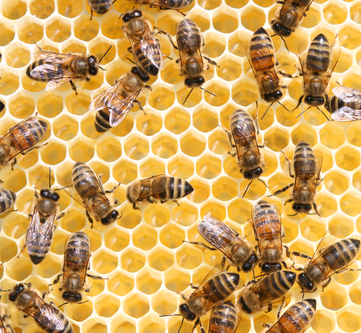 Scientists have harnessed bees' acute sense of smell to detect coronavirus in a method that could be applied in developing countries lacking the necessary diagnostic tools, researchers at Wageningen University say.


