The Gut Wrenching Reality: One of the Best Bug-Out Strategy Guides You'll Ever Read
SHTFplan Editor's Note: At some point in the future many of us will be faced with a life-altering decision: To bug-in at home or to bug-out and head for the hills. In the following strategy guide our friend Todd Savage explores the former and discusses some critical considerations that must be made once you and your family come to the determination that it's time to get out of Dodge.
Todd knows a thing or two about survival retreats, perimeter defense strategies and what it will take to survive should the world around us collapse overnight. He is the founder of Survival Retreat Consulting and recently launched the Strategic Relocation For Sale By Owner web site which pairs like-minded people offering strategic properties with those looking for primary residence outside of densely populated areas or simply a back-up retreat in the event of an emergency.
He has generously agreed to share his insights and recommendations with our community and you'll likely find, as we did, that his analysis is right on target. In fact, we believe you'll significantly improve your chances of avoiding dangerous situations and surviving just by taking the time to understand all of the components involved with a successful bug-out strategy.
We all have ideas of how a worst-case scenario event may play out. Todd does too and he does an excellent job of filtering out the dream and focusing on the gut wrenching reality of what we'll face. It will be a trying time for all involved, but success can be achieved if you a clear and concise strategy in place.
Update: Part 2 of this series is now available here: Strategic Relocation Guide: How To Position Yourself To Survive A Major TEOTWAWKI Event
Bugging Out: Dreams vs. Reality [Part 1]
By Todd Savage | Strategic Relocation
 Don't be the Last Out without a Destination!
Solar storm, nuclear EMP, or a derivatives crash; any one of these could trigger a national or worldwide socio-economic collapse on a scale nobody has ever seen, with the subsequent destruction of life, liberty and property almost unimaginable. Out of the smoke and stench of the collapse, one nasty fact remains; not living full time at a retreat will require bugging out, it's just a matter of time. The journey for most will be long and treacherous, may take weeks, months or even years and may result in injury or casualties to the group. However, only those who are prepped, trained, have an up to date evacuation plan with a viable destination will be successful. We will try and help you create a bug-out plan and cover the basics of retreat selection by using an easy outline that forces you to really think through this critical aspect of survival.
'Bugging Out' may be one of the most discussed topics in the Survival and Preparedness world topped only by everyone's favorite genre; firearms. Everyday there are new articles about bugging out; the best bag, fire starter, communications gear, flashlight, compass, et cetera, but rarely does the topic of the evacuees route planning and destination come to the forefront of the discussions. Why? It's just not exciting, probably because you can't put an ACOG, Magpul furniture, sling and a 40 round Pmag on your 'destination' and most folks just think they can make up the route as they go. Not so.
Let's take a look at what some Preppers dream about as they drift off to sleep at night…
The Bug Out Dream: Buy a small parcel of land halfway across the country with all your friends. Build the coolest bug out bags ever conceived and wait for the mushroom clouds to appear. One day, it happens! In a magnificently coordinated evacuation everyone rides off into the sunset arriving unscathed at the fully self-sustaining retreat a few days later having fought through several zombie roadblocks. The group survives the collapse and all ends well. You write a book about your adventure and become famous the world over. The end.
Now let's wake up in a cold sweat when reality hits…
The Gut Wrenching Reality: The lights go out for good. Too much time passes before realizing it's not just another rolling blackout. The time to go safely has passed. Group members are scattered all over the city, with several key members out of town on business unable to make it back. Stress and panic reign as 2000 pounds of equipment fail to fit into an ill-conceived bug-out vehicle and trailer because there isn't a destination with pre-positioned supplies. One member breaks down and decides to ride it out in their basement. Your own children tell you your crazy and sit in the front yard in defiance because you won't bring the PlayStation 4, fear then turns to anger and rage. The next morning travelling westward towards no-man's-land the truck runs out of fuel on a lonely back road trying to circumvent the next chaotic metropolitan area. After abandoning the vehicle and walking for three days, a hastily constructed checkpoint appears a hundred meters past the turn in the road that was not correctly scouted. Unfortunately, a ruthless street gang has set it up and the Preppers demise is all but sealed. The REAL END.
It's time to take stock of where you are right now. How many Preppers have built a bug-out or go-bag, retrofitted an EMP proof truck and have a basement full of supplies, a basic evacuation plan, yet no destination to strive to reach? If we took a survey, probably more than 95% are not fully prepared. This is not good. Is it the end of the world if your family doesn't own a retreat? Of course not, the reality is that most Preppers can't afford a separate fully operational retreat, and that's ok. However, not having a pre-arranged destination of some kind, with pre-positioned supplies is absolutely not acceptable. This could be located at a fiends or relatives home in the country, or a group purchase of a retreat, even a small parcel with a stream and cached supplies is better than nothing.

There are several aspects to every successful bug-out, the first of course is actually leaving your current location on time and travelling to your destination. The second is the destination itself. This article will cover the Basic Bug-Out Plan in two parts. This week Part I will cover the Plan outline and the following week Part II will cover the destination and survival retreat search and acquisition.
PART I
The Bug-Out Plan
To cover the bug-out part we have coined an easy acronym. Use it so you're never: LAST OUT.
L ocation
A lternative Routes
S upplies
T iming
O bservation
U niformity
T ransportation
Location
Location and communication with family or group members when the SHTF will be key. The Dream is that everyone is in the same location and ready to go when the balloon goes up. Reality dictates otherwise. It's always best to assume that the family or group will be scattered across the city at best, at worst members are out of town with limited or no means of communication. These factors complicate and unravel any good bug-out plan. Even the most decorated combat veteran will feel the gut wrenching pain when they realize that loved ones are possibly far away and unreachable if a sudden event arises. Communication or a complete understanding of when and where to meet will be required to keep order. If funds dictate the purchase of small HAM hand held radios for each member, then by all means do so.
Alternative Routes
It's critical that two distinct routes are mapped with different rally points on the way to the final destination. The first route will be for an early bug-out, when the timing is perfect and all the roads will still be open, as mass panic has not ensued. These should still detail driving around major cities (but not smaller towns), as there is no reason to drive right back into a possible hot zone you have just left. Although this is a plan that may not ever be used, having it in place is required.
The second route plan will detail how not only to avoid all major metropolitan areas but must circumvent smaller cities and towns, especially those with bridges (and tunnels) that cross key terrain (water, mountains and gorges). No matter where you live and your intended route, there will be at least one bridge. These might as well be brick walls. If the bridge is controlled and they turn you away (or ambush you) all bets are off. Do you have your route planned to cross over key terrain features well outside of town and have you driven your route at least once, all the way to your retreat? Planning this type of evac route may take days, maybe your entire vacation, twice, but not only would it be fun (unless you have young children screaming in the back seat) but will ensure you have a fighting chance. If you think you can pick the route as you go, good luck.
Rally Points: Which rally points will be used? There are many factors such as the type and location of the event, wind direction (w/ other factors) and public reaction that will dictate which direction and rally point to use. Multiple rally points are crucial and they can only be identified as you pre-drive your routes. Everyone must understand routes to the main jump off point as well as additional rally points if any area is compromised.
The best advice is to have pre-planned rally points and schedules vacuum sealed in a water tight packet and carried in either each vehicle, in purses or day bags wherever family or group members go. It's much easier to open and read instructions during stressful events that were previously well thought out and arranged. Locations of cached supplies, rally points, times and step by step color coded flow charts directing certain actions will work well.
These plans may be ever changing as members travel for work or vacation and should be updated to fit the itineraries of those that travel far and wide. It may be as simple as these out of touch members' rally point is actually the objective itself, the retreat. You'll see them if they make it, maybe weeks or years later. Period. If the travel is localized in the region, say within 100 miles, then standard rotating or floating rally points can be pre-selected and used.
Supplies
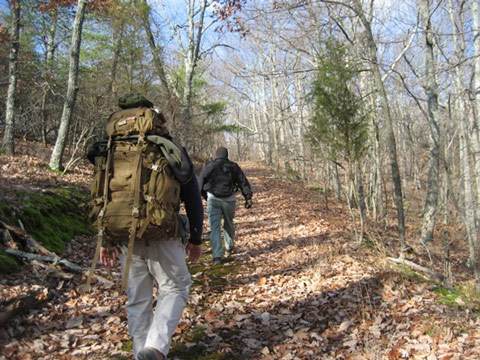
Your supplies will both hinder your movement and provide the means to keep moving. A certain pragmatic duality. Always pack your bug-out bag for dismounted travel. There are only eight basic mandatory items to cover in your bug-out bag to be ready. Remember, these packs are built light to allow you move RAPIDLY towards your rally points and then to the final destination where hopefully all your preps are waiting. You will have to modify these to fit your own unique situation, just ensure you pack them in dive bags to keep supplies dry and to use your go-bag as a flotation device if needed;
- Water Purification Equipment (w/ extra filters)
- Clothing for the anticipated environment
- Shelter for the anticipated environment
- Fire starter (reliable)
- Food rations (dehydrated) and game processing tools
- Personal Medical Kits (w/ Colloidal Silver)
- Communications (HAM) and Energy creation equipment (small Solar charger packs)
- Defensive equipment (lightweight and the ability to break down to hide in the pack)
Your own needs will dictate how incredibly light, or heavy and burdensome this pack will be in the end. The Myth says you can carry an 80-pound pack and an M1a rifle with a full battle load from Florida to your retreat in Montana. Reality says your better off with a 25-pound pack and a lightweight carbine. You decide, either way you'll likely walk to your retreat in almost any scenario, so tread lightly, very lightly. Water is heavy, but the purification equipment is much lighter, so carry less water between rally points / bivouac sites and fill up when you're unsure of the lay of the land. Topographical maps of your entire route on paper will allow planned water recovery breaks and less of a load. For more information about what to include in a pack please refer to this article.
Timing
Timing as they say is EVERYTHING. Timing will dictate who arrives to leave with you, the routes you choose on your way out, and of course if you can leave at all. Timing from the start of the event to ascertain when full public knowledge will hit causing the breakdown of local order is paramount. How many people sat and watched a few blocks away as the Towers fell on 9-11 and ultimately died because they were too close to the destruction and were hit by debris? How many more will perish in the next local, regional or national disaster by watching the events unfold, too in shock to move? Remember, it's better to be a few minutes, hours or even years too early, than a second too late.
Living in Baltimore and own a retreat in Montana? Congratulations! You better leave early, or be a pilot. Storing up sick and vacation days that can be used at the last minute can be key. There may be times that the handwriting is appearing on the wall, and those days are used several times over a few years on events that don't materialize, thus allowing a return to life as normal without quitting a job after acting in haste. First, its great training and dry runs always pay off later. One day, it'll pay off as the collapse deepens quickly and you're a day ahead of the stagnate freeways filled with zombies, rather than seconds too late. One day, the event may be upon us in a spit second, but all that training pays off in a well executed bug-out mission. One never knows, but that's half the fun of being a Prepper, right?
Observation and Intel
In conjunction with timing is observing your surroundings and intelligence gathering. It can be very hard to keep the big picture in mind, as the world appears to be crumbling before ones eyes. Step away from the here and now, relax and take a moment to 'see' the world around you. Observing everything from traffic flow to the actions of people on the street will help determine if this is 'the event' that requires activation and implementation of the bug out plan. In such, accurate intelligence from any inside sources working in various sectors of our society will be invaluable. Are members of the group law enforcement offices, firefighter/paramedics, ER doctors, on active duty, in the financial business or in other jobs that may receive inside information early on about certain unfolding threats? If not members of the group or close outside friends are there neighbors who may feel an obligation to let 'inside information' and warnings slip out? Are these neighbors quietly packing up and leaving?
Pride in your network, group and plans that have been created can lead one to miss finite details that would otherwise warn of impending doom, keeping eyes and ears open so the boots can move fast when the intel points to the green light is key when living in perilous times and locales. Remember, you're not as good as you think you are, especially when the first bullet rips past your head. As you move along your evacuation route obtaining intel will be key, so try and converse with anyone that may look like they have information, if it's safe to do so.
What's to be learned here: Fast and accurate situational observation/awareness and intelligence gathering is key to activating the evacuation plan and bugging out before the golden horde realizes what's happening. The sooner one leaves the farther the final destination can be. Again, the sooner one leaves the farther the final destination can be. If only one fact from this article is remembered let it be that.
Uniformity of Preps
For the few readers out there that have ever felt that comforting feeling when a teammate throws a spare magazine over while pinned down under fire, understanding uniformity of preps is easy. However, getting two or more Preppers to agree to go to a Group Standard system of preps, as coined by James Wesley, Rawles in his first book 'Patriots: Surviving the Coming Collapse', especially when it comes to firearms, is akin to paddling upstream. It's sad that this has to be mentioned, but the reality of this very serious key criteria is that it will be both the undoing of many small Prepper groups during peaceful times and the death of many more when the Schumer Hits The Fan.
The best advice is for everyone in a small group to be willing to swallow their pride and make a change to a group standard list of preps. This should include Water purification equipment, Fire Starters, Medical kits, Communications gear, Energy creation equipment and finally, of course, Defensive tools. Utilizing the same style of packs with markers or tags to identify one another can also be of benefit. These can be sewn into the pack with IR reflective tape (with a cover) to use if everyone has NV gear. One of the most overlooked, but expensive preps, is the Thermal Monocular. Preferably a dual purpose so it can be quickly placed on a rifle for combat operations. These units can be a lifesaver, especially bugging out in urban environments, unsure of immediate threats. Then, in the countryside, seeing hidden ambushes or roadblocks may prove invaluable.
Transportation
How many of us have thought about multiple different and/or redundant modes of transportation, each with it's own unique and targeted task in the overall bug-out plan? Each person is different, and we could spend hundreds of pages going through each unique bug-out plan, but for now we will focus on individuals or groups without young children, as these plans are the hardest to develop and even harder to execute successfully.
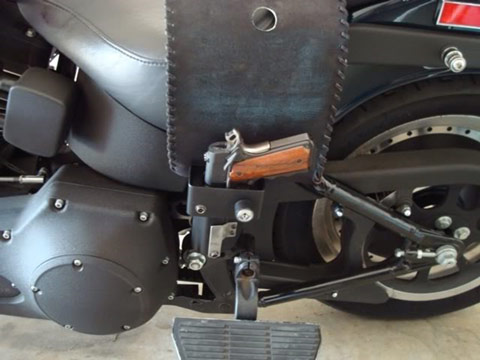
Ground Vehicles: Don't fool yourself. You're probably not going to get far in a vehicle, at least not if you're leaving from the depths of a big city, especially a few minutes too late. If you don't have children to protect, then the motorcycle may be the best ground based vehicle to outfit. Maneuverable both on and off road with fantastic gas mileage, the only caveat is storage for gear and gas. If you can modify a dirt bike with saddlebags and an extra 5-gallon can as well as wear your bug-out bag on your back with your rifle in a scabbard, then you may be in good shape.
For example, we will look at a group of friends that all have jobs in and around a very large metropolitan center in excess of a 500,000-population range. Let's assume they have completed a group purchase of a small retreat property located in a small town about 800 miles from their location.
Each person has access to a storage unit that allows vehicle storage with a bug out motorcycle at the ready. Since the roadways in most events will come to a screeching halt within minutes or hours depending upon the disaster event profile, having well equipped motorcycles fast at hand to quickly leave the city will be key for this group.
Upon mutual agreement that they should 'call it a day' in the large metro area, due to an event such as the looming financial collapse or a Massive Causality Incident (MCI), the group members dawn their gear and utilize the motorcycles to move in and out of the standstill traffic on metro Interstate and then veer off on county roads for approximately 200 miles. This is the groups first rally point and well within a tank of gas for modified Enduro dirt bike carrying additional supplies. There they have stashed several mid seventies vintage 4×4 pickup trucks (EMP proof), each with the ability to carry a dirt bike or two in the beds, so they can bring them as back up transportation. The vehicles carry enough extra fuel and supplies to make the final 600-mile drive to the retreat location.
Although the aforementioned example is bordering on a script for a survivalist novel, the bottom line is that thinking outside the box will ultimately provide what anyone in a survival situation requires, OPTIONS, especially in the transportation aspect of a bug-out plan. The more options the better, and of course half the fun of being a Prepper is thinking through your own unique situation and working with your family or group to put these plans on paper and work towards the goal of making them a reality.
Boats: This is a widely overlooked transportation means for the Prepper, along with the Aircraft. Depending upon start and end points on the bug-out route a boat may be a key element of the escape. There are many retreats that are built on small islands on freshwater lakes not only in the U.S., but also around the world. Some are fairly inexpensive and are within reasonable affordability for most survival property buyers. A boat may be a necessary initial bug-out mode of transport to get over a small body of water such as a bay or across a lake that a large metro area is built on or nearby, especially in the Southeastern U.S.. I'm sure one may be hard pressed to hide a speed boat to leave Manhattan, but a small kayak might be the answer, who knows, just remember this is just another option in a world of chaos. The ability to have the bug-out gear all packed in separate waterproof storage bags (dive bags) in the backpack is also a great way to keep the gear dry and serviceable and to have a built in life preserver to swim or float across bodies of water if needed.
Aircraft:If there ever were a mode of transportation that could get a Prepper out of a jam, it would be air travel. Of course, it helps to be a pilot. There are several types of aviators out there; the novice, private, commercial, airline transport and the military pilot. The novice will account for most of the potential Prepper 'pilots' today, including myself.
A novice would fall into the first and easiest category; with fewer than fifty hours of training they could fly ultra-light platforms such as powered parachutes, gliders, trikes and small fixed wings (3-axis). The downside to these is their lack of an acceptable payload. It's a great day just to bring along a small go bag with your rifle and one battle load of magazines and ammo. However, these types of ultra-lights can be stored very discreetly and enable the owner to leave the area of engagement extremely fast, hopefully not under fire.
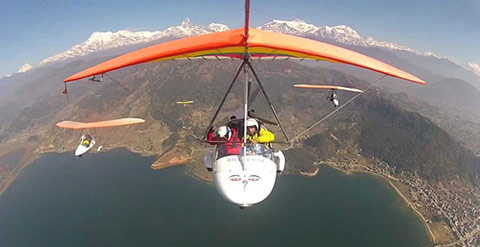
Utilizing these small units where no pilots' license is required to own or operate is a realistic answer to making a fast and short evacuation. However, the fuel capacity and limited range will quickly show their drawbacks. These units require many fuel stops and landing near a freeway off ramp to get gas may bring undue attention. If the landing was successful, who will guard the plane while you barter for fuel? If you own a two-seat rig is it better to take another person of 150 pounds of gear?
Planning for refueling will be a bit more technical than caching for your motorcycle or bug-out truck, and nightfall will certainly come at the worst time as well during your flight out of an affected area. For those of you that are pilots and reading this, you're sure to be nodding in agreement. Being a proficient pilot (novice or licensed) is just the beginning of a huge learning curve that's sure to provide more than a few 'come to Jesus' moments, so to speak. Thinking of using night vision goggles? Sure, until you realize it takes many hours of training to use them while flying. Being prepared means TRAINING!
These small, portable and easily hidden in plain site aircraft will be great to make those first 100 to 200 miles, albeit most likely alone of course, but it gets you out. There may be a scenario where this is used to get from a highly densely populated downtown area (in place of a motorcycle) to your home in the suburbs where the family is waiting with the bug-out vehicle, who knows, but it's an option for sure. Typically anywhere from $2,000 to $20,000 buys one of these novice units, so they are affordable.
When planning for this contingency don't think for a minute that after taking a few lessons that you'll just fly off into the sunset with your gear. If you don't own a Cessna or similar type aircraft it's highly doubtful that you'll be able to run to the nearest airport to rent one. The owners will be using those aircraft themselves to get out of dodge, or the airspace may likely already be grounded, like on 9-11-2001. Remember 'Timing' as noted in this article.
One last bit of advice from this 'novice'; Keep paper maps at hand, as the GPS units and other navigation gear may be unserviceable. Always think about not having any sort of technology during the bug-out. For those professional or aspiring licensed pilots out there looking for a spectacular 'destination' in the American Redoubt, look no further than this Bug-Out Pilot property.
Dismount on Foot: For those out there that are not in shape, the word 'dismounted travel' should scare the hell out of you. For many, if they make it out of the city, death will find them on foot, and only in a matter of hours or days. No more fantasy survival novel about walking from Miami to Montana, good luck. It's time for another reality check. If you can grab your bug-out bag, rifle and vest and walk out the door to complete the following, then you might have a chance;
5-mile walk with 100-yard sprints in between each mile
100 sit-ups
10 pull-ups
This is not a Special Forces test; it's a wake up call. Stop buying cases of ammo and new guns, save your cash and buy a treadmill. Seriously, if it takes such a wake up call to bring 'Tactical Fitness' and 'Mission Readiness' back into the limelight, then so be it. Ask yourself if the SHTF right now if you could defend your family AFTER a massive physical endeavor like the one above, plus ad the psychological impact of a societal collapse happening around you. If you've never been in combat, go find someone and ask him or her what it's like. You'll be surprised at what they tell you. Whatever it takes, get in shape, the success of your bug-out plan is riding on it.
In The End
In Part I we have covered the basics of how to formulate a better bug-out plan by thinking about options. The hardest part of the entire evacuation / bug-out operation will be deciding when to go. This may seem easy on the surface but indecisiveness in the group will ruin friendships if the order is given even once without the event propagating into 'the one'. If you happen to make the right call and it really is time to go, did you start soon enough? Your entire life and the lives of your family and/or group will depend on Timing. The Right Event, Right Time, Right Routes, Right Supplies, Right Transportation and Communication and of course the Right Destination. Whatever you do as the mushroom clouds rise, don't panic and never be the LAST OUT!
Next week we'll cover Part II, The Destination, the cornerstone of any true Prepper Bug-Out Plan, where we will take a close look at how to find the right Survival Retreat covering such topics as the correct Locale, Location of the Property, Land Attributes, Home criteria and of course Water, Food, Energy and Defense.
Update: Part 2 of this series is now available here: Strategic Relocation Guide: How To Position Yourself To Survive A Major TEOTWAWKI Event

Todd Savage is the CEO of the Strategic Relocation Group that operates Survival Retreat Consulting, Strategic Relocation Realty, Strategic Relocation FSBO and Strategic Relocation Blog.