Toko Shinoda Dies at 107; Fused Calligraphy With Abstract Expressionism
One of the foremost Japanese artists of the 20th century, she was sought after by major museums and galleries worldwide for more than five decades.
"Harmony" (2003), by Toko Shinoda. Her work married the ancient serenity of calligraphy with the modernist urgency of Abstract Expressionism.Toko Shinoda/The Tolman Collection of Tokyo
Toko Shinoda, one of the foremost Japanese artists of the 20th century, whose work married the ancient serenity of calligraphy with the modernist urgency of Abstract Expressionism, died on Monday at a hospital in Tokyo. She was 107.
Her death was announced by Allison Tolman, her gallerist in the United States.
A painter and printmaker, Ms. Shinoda attained international renown at midcentury and remained sought after by major museums and galleries worldwide for more than five decades.
Her work has been exhibited at, among other places, the Metropolitan Museum of Art and the Museum of Modern Art in New York; the Art Institute of Chicago; the British Museum; and the National Museum of Modern Art in Tokyo. Private collectors include the Japanese imperial family.
Writing about a 1998 exhibition of Ms. Shinoda's work at a London gallery, the British newspaper The Independent called it "elegant, minimal and very, very composed," adding, "Her roots as a calligrapher are clear, as are her connections with American art of the 1950s, but she is quite obviously a major artist in her own right."
Ms. Shinoda's "Karigane" (1995).Toko Shinoda/The Tolman Collection of Tokyo
As a painter, Ms. Shinoda worked primarily in sumi ink, a solid form of ink, made from soot pressed into sticks, that has been used in Asia for centuries.
Rubbed on a wet stone to release their pigment, the sticks yield a subtle ink that, because it is quickly imbibed by paper, is strikingly ephemeral. The sumi artist must make each brush stroke with all due deliberation, as the nature of the medium precludes the possibility of reworking even a single line.
"The color of the ink which is produced by this method is a very delicate one," Ms. Shinoda told The Business Times of Singapore in 2014. "It is thus necessary to finish one's work very quickly. So the composition must be determined in my mind before I pick up the brush. Then, as they say, the painting just falls off the brush."
Ms. Shinoda painted almost entirely in gradations of black, with occasional sepias and filmy blues. The ink sticks she used had been made for the great sumi artists of the past, some as long as 500 years ago.
Her line — fluid, elegant, impeccably placed — owed much to calligraphy. She had been rigorously trained in that discipline from the time she was a child, but she had begun to push against its confines when she was still very young.
"New Dimension," a lithograph triptych from 1993.Toko Shinoda/The Tolman Collection of Tokyo
Deeply influenced by American Abstract Expressionists like Jackson Pollock, Mark Rothko and Robert Motherwell, whose work she encountered when she lived in New York in the late 1950s, Ms. Shinoda shunned representation.
"If I have a definite idea, why paint it?," she asked in an interview with United Press International in 1980. "It's already understood and accepted. A stand of bamboo is more beautiful than a painting could be. Mount Fuji is more striking than any possible imitation."
Spare and quietly powerful, making abundant use of white space, Ms. Shinoda's paintings are done on traditional Chinese and Japanese papers, or on backgrounds of gold, silver or platinum leaf.
Often asymmetrical, they can overlay a stark geometric shape with the barest calligraphic strokes. The combined effect appears to catch and hold something evanescent — "as elusive as the memory of a pleasant scent or the movement of wind," as she said in a 1996 interview.
Ms. Shinoda's work also included lithographs; three-dimensional pieces of wood and other materials; and murals in public spaces, including a series made for the Zojoji Temple in Tokyo.
Ms. Shinoda in an undated photo. She shunned representation in her work: "A stand of bamboo," she once said, "is more beautiful than a painting could be."Kiyoyuki Fukuda/The Tolman Collection of Tokyo
The fifth of seven children of a prosperous family, Ms. Shinoda was born on March 28, 1913, in Dalian, in Manchuria, where her father, Raijiro, managed a tobacco plant. Her mother, Joko, was a homemaker. The family returned to Japan when she was a baby, settling in Gifu, midway between Kyoto and Tokyo.
One of her father's uncles, a sculptor and calligrapher, had been an official seal carver to the Meiji emperor. He conveyed his love of art and poetry to Toko's father, who in turn passed it to Toko.
"My upbringing was a very traditional one, with relatives living with my parents," she said in the U.P.I. interview. "In a scholarly atmosphere, I grew up knowing I wanted to make these things, to be an artist."
She began studying calligraphy at 6, learning, hour by hour, impeccable mastery over line. But by the time she was a teenager, she had begun to seek an artistic outlet that she felt calligraphy, with its centuries-old conventions, could not afford.
"I got tired of it and decided to try my own style," Ms. Shinoda told Time magazine in 1983. "My father always scolded me for being naughty and departing from the traditional way, but I had to do it."
Moving to Tokyo as a young adult, Ms. Shinoda became celebrated throughout Japan as one of the country's finest living calligraphers, at the time a signal honor for a woman. She had her first solo show in 1940, at a Tokyo gallery.
Ms. Shinoda's "Golden Tablets" (2011) was rendered with ink and white pigment on gilded paper.Toko Shinoda, via the Metropolitan Museum of Art, New York
During World War II, when she forsook the city for the countryside near Mount Fuji, she earned her living as a calligrapher, but by the mid-1940s she had started experimenting with abstraction. In 1954 she began to achieve renown outside Japan with her inclusion in an exhibition of Japanese calligraphy at MoMA.
In 1956, she traveled to New York. At the time, unmarried Japanese women could obtain only three-month visas for travel abroad, but through zealous renewals, Ms. Shinoda managed to remain for two years.
She met many of the titans of Abstract Expressionism there, and she became captivated by their work.
"When I was in New York in the '50s, I was often included in activities with those artists, people like Mark Rothko, Jackson Pollock, Motherwell and so forth," she said in a 1998 interview with The Business Times. "They were very generous people, and I was often invited to visit their studios, where we would share ideas and opinions on our work. It was a great experience being together with people who shared common feelings."
During this period, Ms. Shinoda's work was sold in the United States by Betty Parsons, the New York dealer who represented Pollock, Rothko and many of their contemporaries.
Returning to Japan, Ms. Shinoda began to fuse calligraphy and the Expressionist aesthetic in earnest. The result was, in the words of The Plain Dealer of Cleveland in 1997, "an art of elegant simplicity and high drama."
Among Ms. Shinoda's many honors, she was depicted, in 2016, on a Japanese postage stamp. She is the only Japanese artist to be so honored during her lifetime.
No immediate family members survive.
When she was quite young and determined to pursue a life making art, Ms. Shinoda made the decision to forgo the path that seemed foreordained for women of her generation.
"I never married and have no children," she told The Japan Times in 2017. "And I suppose that it sounds strange to think that my paintings are in place of them — of course they are not the same thing at all. But I do say, when paintings that I have made years ago are brought back into my consciousness, it seems like an old friend, or even a part of me, has come back to see me."
A few weeks ago I asked a fire fighter friend how they extinguish electric vehicle battery fires.
He said "Oh you mean like a Tesla or something? The answer is you can't. You cordon off the area, and spray a fine mist of water on the fire to try to keep the temperature down until it finishes burning. Takes a few days until it is safe".
The problem is, besides being highly flammable, lithium is literally the lightest metal. At atomic number 3, it is the first element in the periodic table which is a solid. The two previous elements, hydrogen and helium, are both gasses.
Lithium is so light, it floats on water (lithium density 0.543, half the density of water). Lithium is entirely happy to blaze away while sitting on the surface of a puddle of water.
So if you try to smother a lithium fire with sand, the sand sinks to the bottom, and the lithium floats on top.
Lithium melts at 180C / 356F, and burns at 2000C / 3632F – almost hot enough to melt steel, more than hot enough to destroy most composites and metals like aluminium.
The fumes from a burning lithium fire are highly toxic, capable of causing death or long term dementia like brain injuries – so you need to keep members of the public at a safe distance. Fire fighters need to wear respirators if they approach the flame.
There are chemical extinguishers, but my fire station friend didn't seem to think much of them, at least not for large lithium fires.
I guess you might be able to smother a large lithium fire by dropping a Chernobyl style sarcophagus made of steel on top of it, or possibly made of some other material which could handle the heat. Then you could fill the sarcophagus with an inert gas like Argon, or just wait for the oxygen to run out. But equipping fire departments with a sarcophagus device large enough to smother an EV fire, and the equipment required to deploy it, would be an expensive exercise.
What does your fire department do when they have to extinguish a large lithium fire? I'd love to know, so I can tell Australian fire departments. Cordon off the area and spray a mist of water at the fire for a few days would be a serious inconvenience or worse, if the burning vehicle was say blocking an important road junction, on the high street, or in someone's residential or workplace garage or workshop.
Table 1. Recommended Adult Immunization Schedule for ages 19 years or older, United States, 2021
ACIP recommends use of COVID-19 vaccines within the scope of the Emergency Use Authorization or Biologics License Application for the particular vaccine. Interim ACIP recommendations for the use of COVID-19 vaccines can be found on the ACIP Vaccine Recommendations and Guidelines page.
Hard copies of the schedule are available for free using the CDC-info on Demand order form.
Legend
Recommended vaccination for adults who meet age requirement, lack documentation of vaccination, or lack evidence of past infection
Recommended vaccination for adults with an additional risk factor or another indication
Recommended vaccination based on shared clinical decision-making
No recommendation/Not applicable
Vaccine
19-26 years
27-49 years
50-64 years
≥65 years
Influenza inactivated (IIV) or Influenza recombinant (RIV4)
1 dose annually
Influenza live attenuated (LAIV4)
1 dose annually
Tetanus, diphtheria, pertussis (Tdap or Td)
1 dose Tdap each pregnancy; 1 dose Td/Tdap for wound management (see notes)
1 dose Tdap, then Td or Tdap booster every 10 years
Measles, mumps, rubella (MMR)
1 or 2 doses depending on indication (if born in 1957 or later)
Varicella (VAR)
2 doses (if born in 1980 or later)
2 doses
Zoster recombinant (RZV)
2 doses
Human papillomavirus (HPV)
2 or 3 doses depending on age at initial vaccination or condition
27 through 45 years
Pneumococcal conjugate (PCV13)
1 dose
1 dose
Pneumococcal polysaccharide (PPSV23)
1 or 2 doses depending on indication
1 dose
Hepatitis A (HepA)
2 or 3 doses depending on vaccine
Hepatitis B (HepB)
2 or 3 doses depending on vaccine
Meningococcal A, C, W, Y (MenACWY)
1 or 2 doses depending on indication, see notes for booster recommendations
Meningococcal B (MenB)
2 or 3 doses depending on vaccine and indication, see notes for booster recommendations
19 through 23 years
Haemophilus influenzae type b (Hib)
1 or 3 doses depending on indication
Administer recommended vaccines if vaccination history is incomplete or unknown. Do not restart or add doses to vaccine series if there are extended intervals between doses. The use of trade names is for identification purposes only and does not imply endorsement by the ACIP or CDC.
Notes
Recommended Adult Immunization Schedule for ages 19 years or older, United States, 2021
ACIP recommends use of COVID-19 vaccines within the scope of the Emergency Use Authorization or Biologics License Application for the particular vaccine. Interim ACIP recommendations for the use of COVID-19 vaccines can be found on the ACIP Vaccine Recommendations and Guidelines page.
Haemophilus influenzae type b vaccination
Special situations
Anatomical or functional asplenia (including sickle cell disease): 1 dose if previously did not receive Hib; if elective splenectomy, 1 dose, preferably at least 14 days before splenectomy
Hematopoietic stem cell transplant (HSCT): 3-dose series 4 weeks apart starting 6–12 months after successful transplant, regardless of Hib vaccination history
Hepatitis A vaccination
Routine vaccination
Not at risk but want protection from hepatitis A (identification of risk factor not required): 2-dose series HepA (Havrix 6–12 months apart or Vaqta 6–18 months apart [minimum interval: 6 months]) or 3-dose series HepA-HepB (Twinrix at 0, 1, 6 months [minimum intervals: dose 1 to dose 2: 4 weeks / dose 2 to dose 3: 5 months])
Special situations
At risk for hepatitis A virus infection: 2-dose series HepA or 3-dose series HepA-HepB as above
Chronic liver disease (e.g., persons with hepatitis B, hepatitis C, cirrhosis, fatty liver disease, alcoholic liver disease, autoimmune hepatitis, alanine aminotransferase [ALT] or aspartate aminotransferase [AST] level greater than twice the upper limit of normal)
HIV infection
Men who have sex with men
Injection or noninjection drug use
Persons experiencing homelessness
Work with hepatitis A virus in research laboratory or with nonhuman primates with hepatitis A virus infection
Travel in countries with high or intermediate endemic hepatitis A (HepA-HepB [Twinrix] may be administered on an accelerated schedule of 3 doses at 0, 7, and 21–30 days, followed by a booster dose at 12 months)
Close, personal contact with international adoptee (e.g., household or regular babysitting) in first 60 days after arrival from country with high or intermediate endemic hepatitis A (administer dose 1 as soon as adoption is planned, at least 2 weeks before adoptee's arrival)
Pregnancy if at risk for infection or severe outcome from infection during pregnancy
Settings for exposure, including health care settings targeting services to injection or noninjection drug users or group homes and nonresidential day care facilities for developmentally disabled persons (individual risk factor screening not required)
Hepatitis B vaccination
Routine vaccination
Not at risk but want protection from hepatitis B (identification of risk factor not required): 2- or 3-dose series (2-dose series Heplisav-B at least 4 weeks apart [2-dose series HepB only applies when 2 doses of Heplisav-B are used at least 4 weeks apart] or 3-dose series Engerix-B or Recombivax HB at 0, 1, 6 months [minimum intervals: dose 1 to dose 2: 4 weeks / dose 2 to dose 3: 8 weeks / dose 1 to dose 3: 16 weeks]) or 3-dose series HepA-HepB (Twinrix at 0, 1, 6 months [minimum intervals: dose 1 to dose 2: 4 weeks / dose 2 to dose 3: 5 months])
Special situations
At risk for hepatitis B virus infection: 2-dose (Heplisav-B) or 3-dose (Engerix-B, Recombivax HB) series or 3-dose series HepA-HepB (Twinrix) as above
Chronic liver disease (e.g., persons with hepatitis C, cirrhosis, fatty liver disease, alcoholic liver disease, autoimmune hepatitis, alanine aminotransferase [ALT] or aspartate aminotransferase [AST] level greater than twice upper limit of normal)
HIV infection
Sexual exposure risk (e.g., sex partners of hepatitis B surface antigen [HBsAg]-positive persons; sexually active persons not in mutually monogamous relationships; persons seeking evaluation or treatment for a sexually transmitted infection; men who have sex with men)
Current or recent injection drug use
Percutaneous or mucosal risk for exposure to blood (e.g., household contacts of HBsAg-positive persons; residents and staff of facilities for developmentally disabled persons; health care and public safety personnel with reasonably anticipated risk for exposure to blood or blood-contaminated body fluids; hemodialysis, peritoneal dialysis, home dialysis, and predialysis patients; persons with diabetes mellitus age younger than 60 years, shared clinical decision-making for persons age 60 years or older)
Incarcerated persons
Travel in countries with high or intermediate endemic hepatitis B
Pregnancy if at risk for infection or severe outcome from infection during pregnancy. Heplisav-B not currently recommended due to lack of safety data in pregnant women
Human papillomavirus vaccination
Routine vaccination
HPV vaccination recommended for all persons through age 26 years: 2- or 3-dose series depending on age at initial vaccination or condition:
Age 15 years or older at initial vaccination: 3-dose series at 0, 1–2 months, 6 months (minimum intervals: dose 1 to dose 2: 4 weeks / dose 2 to dose 3: 12 weeks / dose 1 to dose 3: 5 months; repeat dose if administered too soon)
Age 9–14 years at initial vaccination and received 1 dose or 2 doses less than 5 months apart: 1 additional dose
Age 9–14 years at initial vaccination and received 2 doses at least 5 months apart: HPV vaccination series complete, no additional dose needed
Interrupted schedules: If vaccination schedule is interrupted, the series does not need to be restarted
No additional dose recommended after completing series with recommended dosing intervals using any HPV vaccine
Shared clinical decision-making
Some adults age 27–45 years: Based on shared clinical decision-making, 2- or 3-dose series as above
Special situations
Age ranges recommended above for routine and catch- up vaccination or shared clinical decision-making also apply in special situations
Immunocompromising conditions, including HIV infection: 3-dose series as above, regardless of age at initial vaccination
Pregnancy: HPV vaccination not recommended until after pregnancy; no intervention needed if vaccinated while pregnant; pregnancy testing not needed before vaccination
Influenza vaccination
Routine vaccination
Persons age 6 months or older: 1 dose any influenza vaccine appropriate for age and health status annually
Egg allergy, hives only: 1 dose any influenza vaccine appropriate for age and health status annually
Egg allergy–any symptom other than hives (e.g., angioedema, respiratory distress): 1 dose any influenza vaccine appropriate for age and health status annually. If using an influenza vaccine other than RIV4 or ccIIV4, administer in medical setting under supervision of health care provider who can recognize and manage severe allergic reactions.
Severe allergic reactions to any vaccine can occur even in the absence of a history of previous allergic reaction. Therefore, all vaccine providers should be familiar with the office emergency plan and certified in cardiopulmonary resuscitation.
A previous severe allergic reaction to any influenza vaccine is a contraindication to future receipt of the vaccine.
LAIV4 should not be used in persons with the following conditions or situations:
History of severe allergic reaction to any vaccine component (excluding egg) or to a previous dose of any influenza vaccine
Immunocompromised due to any cause (including medications and HIV infection)
Anatomic or functional asplenia
Close contacts or caregivers of severely immunosuppressed persons who require a protected environment
Pregnancy
Cranial CSF/oropharyngeal communications
Cochlear implant
Received influenza antiviral medications oseltamivir or zanamivir within the previous 48 hours, peramivir within the previous 5 days, or baloxavir within the previous 17 days
Adults 50 years or older
History of Guillain-Barré syndrome within 6 weeks after previous dose of influenza vaccine: Generally, should not be vaccinated unless vaccination benefits outweigh risks for those at higher risk for severe complications from influenza
Measles, mumps, and rubella vaccination
Routine vaccination
No evidence of immunity to measles, mumps, or rubella: 1 dose
Evidence of immunity: Born before 1957 (health care personnel, see below), documentation of receipt of MMR vaccine, laboratory evidence of immunity or disease (diagnosis of disease without laboratory confirmation is not evidence of immunity)
Special situations
Pregnancy with no evidence of immunity to rubella: MMR contraindicated during pregnancy; after pregnancy (before discharge from health care facility), 1 dose
Nonpregnant women of childbearing age with no evidence of immunity to rubella: 1 dose
HIV infection with CD4 count ≥200 cells/mm3 for at least 6 months and no evidence of immunity to measles, mumps, or rubella: 2-dose series at least 4 weeks apart; MMR contraindicated for HIV infection with CD4 count <200 cells/mm3
Severe immunocompromising conditions: MMR contraindicated
Students in postsecondary educational institutions, international travelers, and household or close, personal contacts of immunocompromised persons with no evidence of immunity to measles, mumps, or rubella: 2-dose series at least 4 weeks apart if previously did not receive any doses of MMR or 1 dose if previously received 1 dose MMR
Health care personnel:
Born in 1957 or later with no evidence of immunity to measles, mumps, or rubella: 2-dose series at least 4 weeks apart for measles or mumps or at least 1 dose for rubella
Born before 1957 with no evidence of immunity to measles, mumps, or rubella: Consider 2-dose series at least 4 weeks apart for measles or mumps or 1 dose for rubella
Meningococcal vaccination
Special situations for MenACWY
Anatomical or functional asplenia (including sickle cell disease), HIV infection, persistent complement component deficiency, complement inhibitor (e.g., eculizumab, ravulizumab) use: 2-dose series MenACWY-D (Menactra, Menveo or MenQuadfi) at least 8 weeks apart and revaccinate every 5 years if risk remains
Travel in countries with hyperendemic or epidemic meningococcal disease, microbiologists routinely exposed to Neisseria meningitidis: 1 dose MenACWY (Menactra, Menveo or MenQuadfi) and revaccinate every 5 years if risk remains
First-year college students who live in residential housing (if not previously vaccinated at age 16 years or older) and military recruits: 1 dose MenACWY (Menactra, Menveo or MenQuadfi)
For MenACWY booster dose recommendations for groups listed under "Special situations" and in an outbreak setting (e.g., in community or organizational settings and among men who have sex with men) and additional meningococcal vaccination information, see www.cdc.gov/mmwr/volumes/69/rr/rr6909a1.htm
Shared clinical decision-making for MenB
Adolescents and young adults age 16–23 years (age 16–18 years preferred) not at increased risk for meningococcal disease: Based on shared clinical decision-making, 2-dose series MenB-4C (Bexsero) at least 1 month apart or 2-dose series MenB-FHbp (Trumenba) at 0, 6 months (if dose 2 was administered less than 6 months after dose 1, administer dose 3 at least 4 months after dose 2); MenB-4C and MenB-FHbp are not interchangeable (use same product for all doses in series)
Special situations for MenB
Anatomical or functional asplenia (including sickle cell disease), persistent complement component deficiency, complement inhibitor (e.g., eculizumab, ravulizumab) use, microbiologists routinely exposed to Neisseria meningitidis: 2-dose primary series MenB-4C (Bexsero) at least 1 month apart or 3-dose primary series MenB-FHbp (Trumenba) at 0, 1–2, 6 months (if dose 2 was administered at least 6 months after dose 1, dose 3 not needed); MenB-4C and MenB-FHbp are not interchangeable (use same product for all doses in series); 1 dose MenB booster 1 year after primary series and revaccinate every 2–3 years if risk remains
Pregnancy: Delay MenB until after pregnancy unless at increased risk and vaccination benefits outweigh potential risks
For MenB booster dose recommendations for groups listed under "Special situations" and in an outbreak setting (e.g., in community or organizational settings and among men who have sex with men) and additional meningococcal vaccination information, see www.cdc.gov mmwr/volumes/69/rr/rr6909a1.htm
Age 19–64 years with chronic medical conditions (chronic heart [excluding hypertension], lung, or liver disease, diabetes), alcoholism, or cigarette smoking: 1 dose PPSV23
Age 19 years or older with immunocompromising conditions (congenital or acquired immunodeficiency [including B- and T-lymphocyte deficiency, complement deficiencies, phagocytic disorders, HIV infection], chronic renal failure, nephrotic syndrome, leukemia, lymphoma, Hodgkin disease, generalized malignancy, iatrogenic immunosuppression [e.g., drug or radiation therapy], solid organ transplant, multiple myeloma) or anatomical or functional asplenia (including sickle cell disease and other hemoglobinopathies): 1 dose PCV13 followed by 1 dose PPSV23 at least 8 weeks later, then another dose PPSV23 at least 5 years after previous PPSV23; at age 65 years or older, administer 1 dose PPSV23 at least 5 years after most recent PPSV23 (note: only 1 dose PPSV23 recommended at age 65 years or older)
Age 19 years or older with cerebrospinal fluid leak or cochlear implant: 1 dose PCV13 followed by 1 dose PPSV23 at least 8 weeks later; at age 65 years or older, administer another dose PPSV23 at least 5 years after PPSV23 (note: only 1 dose PPSV23 recommended at age 65 years or older)
Tetanus, diphtheria, and pertussis vaccination
Routine vaccination
Previously did not receive Tdap at or after age 11 years: 1 dose Tdap, then Td or Tdap every 10 years
Special situations
Previously did not receive primary vaccination series for tetanus, diphtheria, or pertussis: At least 1 dose Tdap followed by 1 dose Td or Tdap at least 4 weeks after Tdap and another dose Td or Tdap 6–12 months after last Td or Tdap (Tdap can be substituted for any Td dose, but preferred as first dose); Td or Tdap every 10 years thereafter
Pregnancy: 1 dose Tdap during each pregnancy, preferably in early part of gestational weeks 27–36
Wound management: Persons with 3 or more doses of tetanus-toxoid-containing vaccine: For clean and minor wounds, administer Tdap or Td if more than 10 years since last dose of tetanus-toxoid-containing vaccine; for all other wounds, administer Tdap or Td if more than 5 years since last dose of tetanus-toxoid-containing vaccine. Tdap is preferred for persons who have not previously received Tdap or whose Tdap history is unknown. If a tetanus-toxoid-containing vaccine is indicated for a pregnant woman, use Tdap. For detailed information, see www.cdc.gov/mmwr/volumes/69/wr/mm6903a5.htm
Varicella vaccination
Routine vaccination
No evidence of immunity to varicella: 2-dose series 4–8 weeks apart if previously did not receive varicella-containing vaccine (VAR or MMRV [measles-mumps-rubella-varicella vaccine] for children); if previously received 1 dose varicella-containing vaccine, 1 dose at least 4 weeks after first dose
Evidence of immunity: U.S.-born before 1980 (except for pregnant women and health care personnel [see below]), documentation of 2 doses varicella-containing vaccine at least 4 weeks apart, diagnosis or verification of history of varicella or herpes zoster by a health care provider, laboratory evidence of immunity or disease
Special situations
Pregnancy with no evidence of immunity to varicella: VAR contraindicated during pregnancy; after pregnancy (before discharge from health care facility), 1 dose if previously received 1 dose varicella-containing vaccine or dose 1 of 2-dose series (dose 2: 4–8 weeks later) if previously did not receive any varicella-containing vaccine, regardless of whether U.S.-born before 1980
Health care personnel with no evidence of immunity to varicella: 1 dose if previously received 1 dose varicella-containing vaccine; 2‑dose series 4–8 weeks apart if previously did not receive any varicella-containing vaccine, regardless of whether U.S.-born before 1980
HIV infection with CD4 count ≥200 cells/mm3 with no evidence of immunity: Vaccination may be considered (2 doses 3 months apart); VAR contraindicated for HIV infection with CD4 count <200 cells/mm3
Severe immunocompromising conditions: VAR contraindicated
Zoster vaccination
Routine vaccination
Age 50 years or older: 2-dose series RZV (Shingrix) 2–6 months apart (minimum interval: 4 weeks; repeat dose if administered too soon), regardless of previous herpes zoster or history of zoster vaccine live (ZVL, Zostavax) vaccination (administer RZV at least 2 months after ZVL)
Special situations
Pregnancy: Consider delaying RZV until after pregnancy if RZV is otherwise indicated.
Severe immunocompromising conditions (including HIV infection with CD4 count <200 cells/mm3): Recommended use of RZV under review
Vaccines in the Adult Immunization Schedule
Vaccines
Abbreviations
Trade names
Haemophilus influenzae type b
Hib
ActHIB® Hiberix® PedvaxHIB®
Hepatitis A vaccine
HepA
Havrix® Vaqta®
Hepatitis A and hepatitis B vaccine
HepA-HepB
Twinrix®
Hepatitis B vaccine
HepB
Engerix-B® Recombivax HB® Heplisav-B®
Human papillomavirus vaccine
HPV vaccine
Gardasil 9®
Influenza vaccine, inactivated
IIV
Many brands
Influenza vaccine, live, attenuated
LAIV4
FluMist® Quadrivalent
Influenza vaccine, recombinant
RIV4
Flublok Quadrivalent®
Measles, mumps, and rubella vaccine
MMR
M-M-R® II
Meningococcal serogroups A, C, W, Y vaccine
MenACWY-D MenACWY-CRM MenACWY-TT
Menactra® Menveo® MenQuadfi®
Meningococcal serogroup B vaccine
MenB-4C MenB-FHbp
Bexsero® Trumenba®
Pneumococcal 13-valent conjugate vaccine
PCV13
Prevnar 13®
Pneumococcal 23-valent polysaccharide vaccine
PPSV23
Pneumovax® 23
Tetanus and diphtheria toxoids
Td
Tenivac® Tdvax™
Tetanus and diphtheria toxoids and acellular pertussis vaccine
Tdap
Adacel® Boostrix®
Varicella vaccine
VAR
Varivax®
Zoster vaccine, recombinant
RZV
Shingrix
This schedule is recommended by the Advisory Committee on Immunization Practices (ACIP) and approved by the Centers for Disease Control and Prevention (CDC), American College of Physicians (ACP), American Academy of Family Physicians (AAFP), American College of Obstetricians and Gynecologists (ACOG), American College of Nurse-Midwives (ACNM), and American Academy of Physician Assistants (AAPA).
The comprehensive summary of the ACIP recommended changes made to the adult immunization schedule can be found in the February 12, 2021 MMWR.
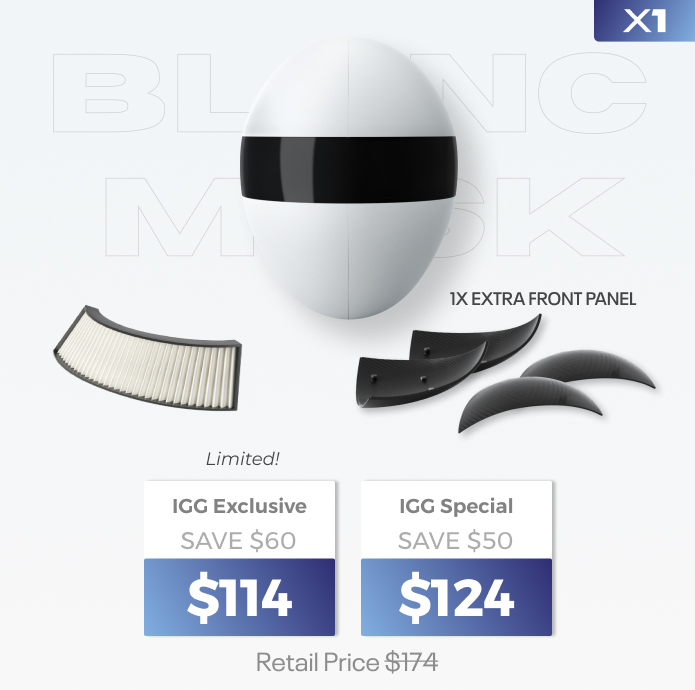
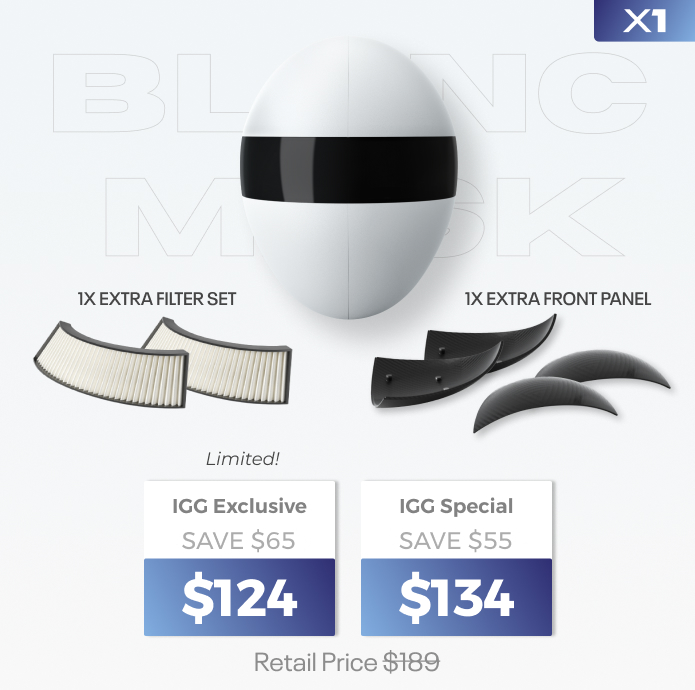
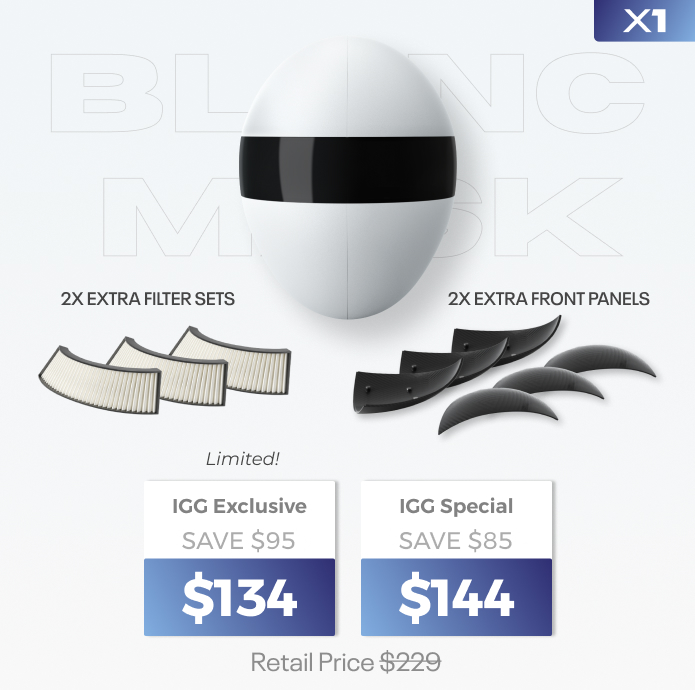
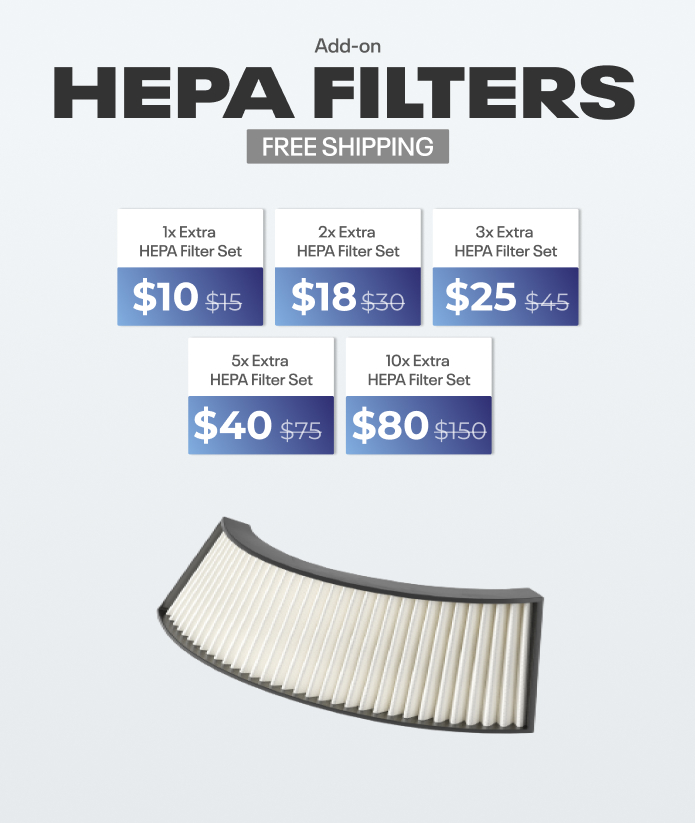
HEPA filters, or high-efficiency particulate air filters, are a special form of mechanical air filters that force air through a multi-layered fine mesh of angled micro-fibers. This traps harmful particles such as pollen, pet dander, tobacco smoke, pollution and dust mites.
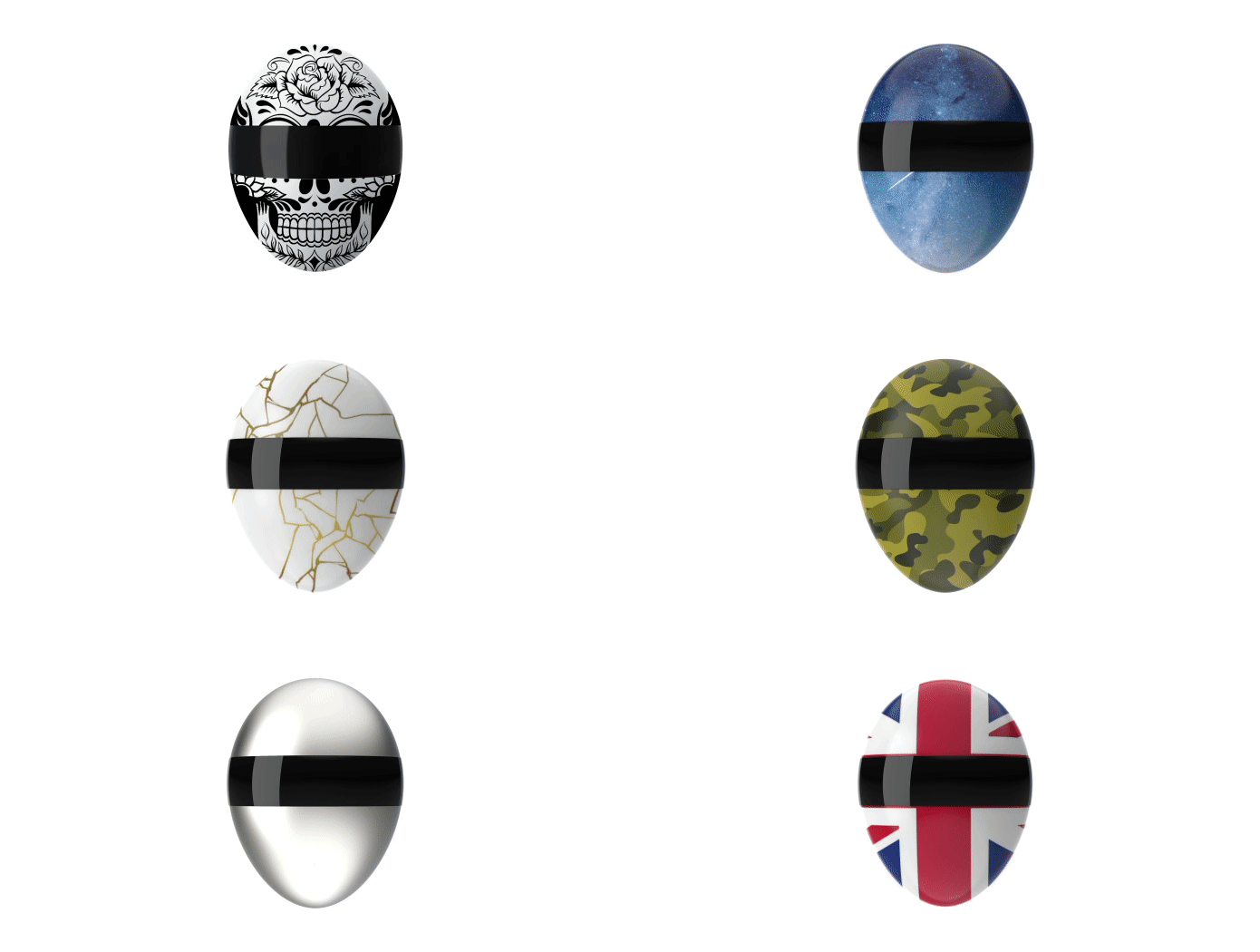
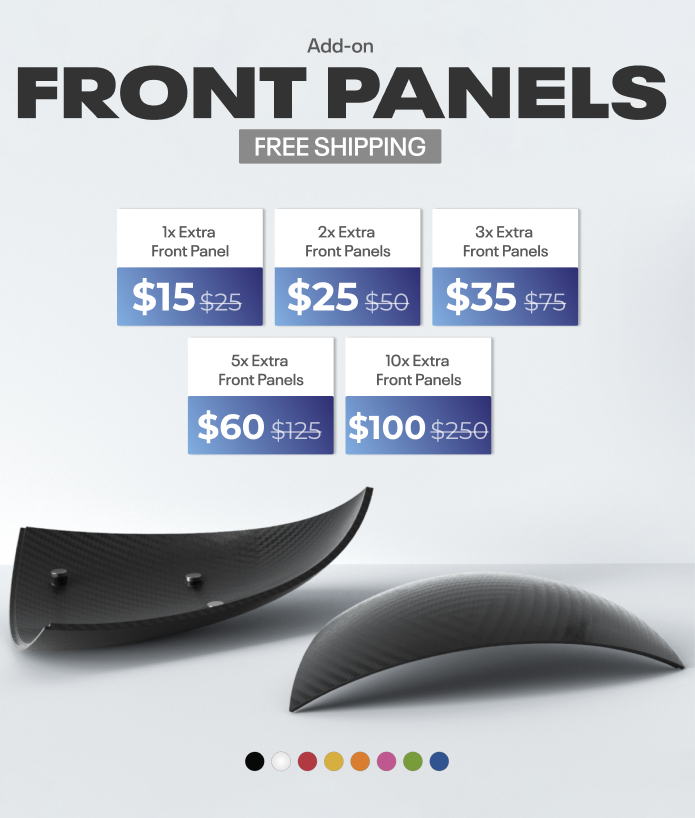
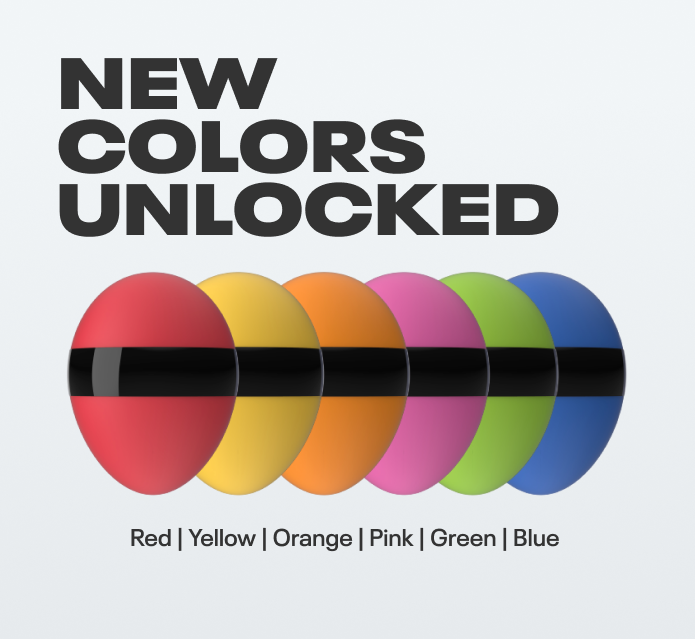
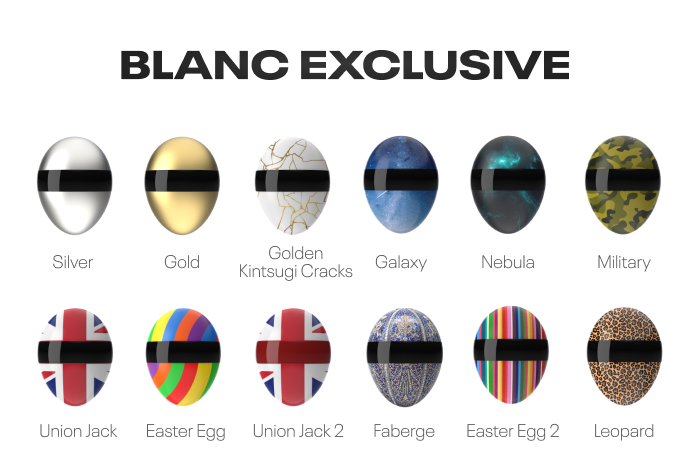
Never settle for the ordinary. With its interchangeable magnetic panels, you can easily customize your Blanc's front panel with different materials, textures, and colors to express yourself.
Put on your best look. Make every outfit count. This is your mask. This is you.
Become The One Behind The Mask
You know that feeling when you put sunglasses on? When no one can see where you're looking?
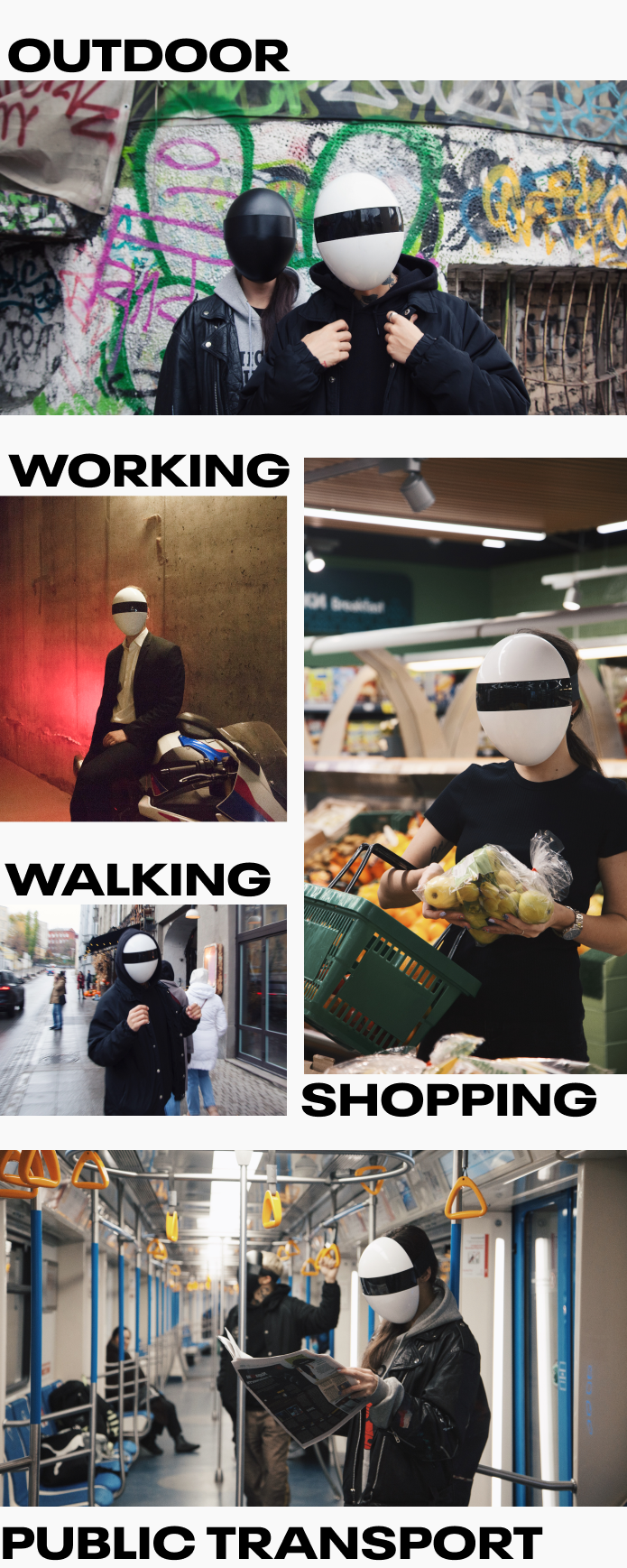
Whether you are saving the world, delivering packages, out shopping, on your commute, partying with your friends, going on a blind date, you can be certain that all eyes are on the mask, not your face.
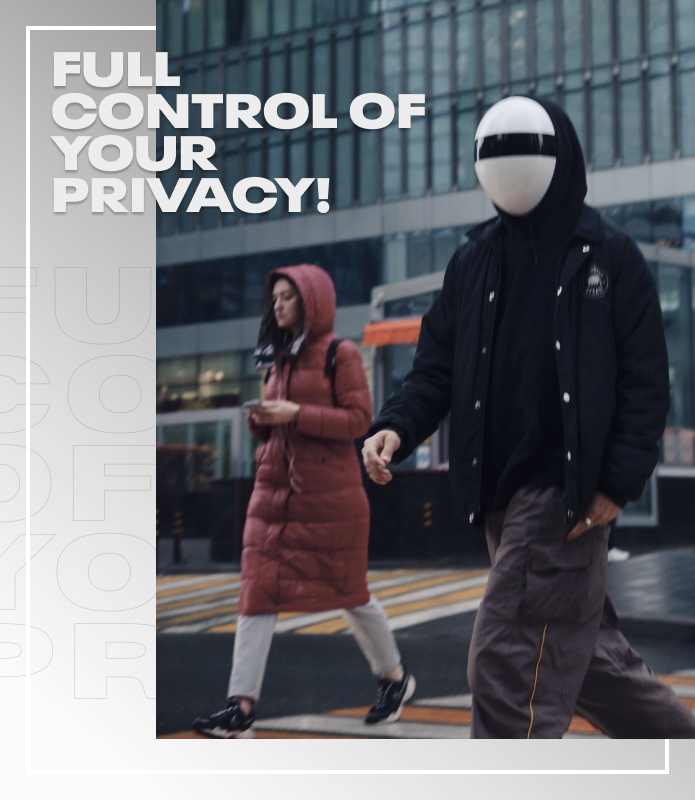
Regular masks only cover part of what matters, Blanc is not only a cool full face mask with a HEPA filter— It protects your identity.
We live in a world where surveillance cameras lurk on every street corner, in every office building, and now on every front door. With the advancement of facial recognition systems, protecting your identity is more important than ever.
With Blanc's full-facial opaque protection, you decide when, where, and with whom you share your personal facial information.
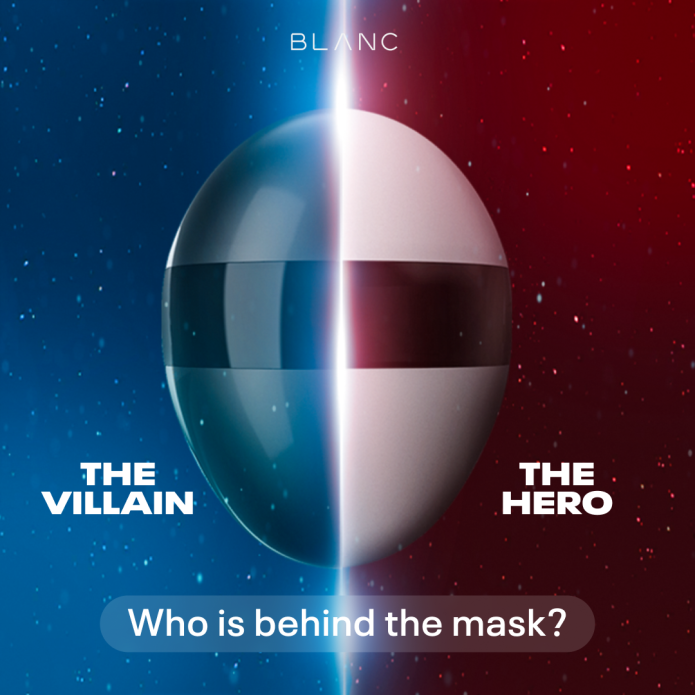
The anonymous hero. Or the secret villain. Everyone wants to know who the man behind the mask is. Be bold, shroud yourself in mystery, and show the world you don't follow the status quo.
USE CASES
If you are looking for a solution to take style, privacy to new heights, Blanc Mask is tailored to you! As technology continues to improve, the way we equip ourselves for the day to day should improve as well.
Full-Facial Protection 24/7
Are regular masks just not cutting it for you? Changing them every 4 hours? Constantly buying new ones?
This may be an adequate short-term solution, but when you start adding up the cost of wearing disposable masks every day, changing them 4 times a day as recommended… you'll end up spending over $500 a year!
Blanc is the full-facial protection you can wear and forget about. There's no danger of touching your face, or of the mask's HEPA filters wearing out over the course of the day.
Walk Around In A Bubble Of Fresh Air
High-Efficiency Particulate Air filters have been used for years to clean and purify the air in interior spaces. From bedrooms to factory floors, indoor air quality is assured through these durable filters.
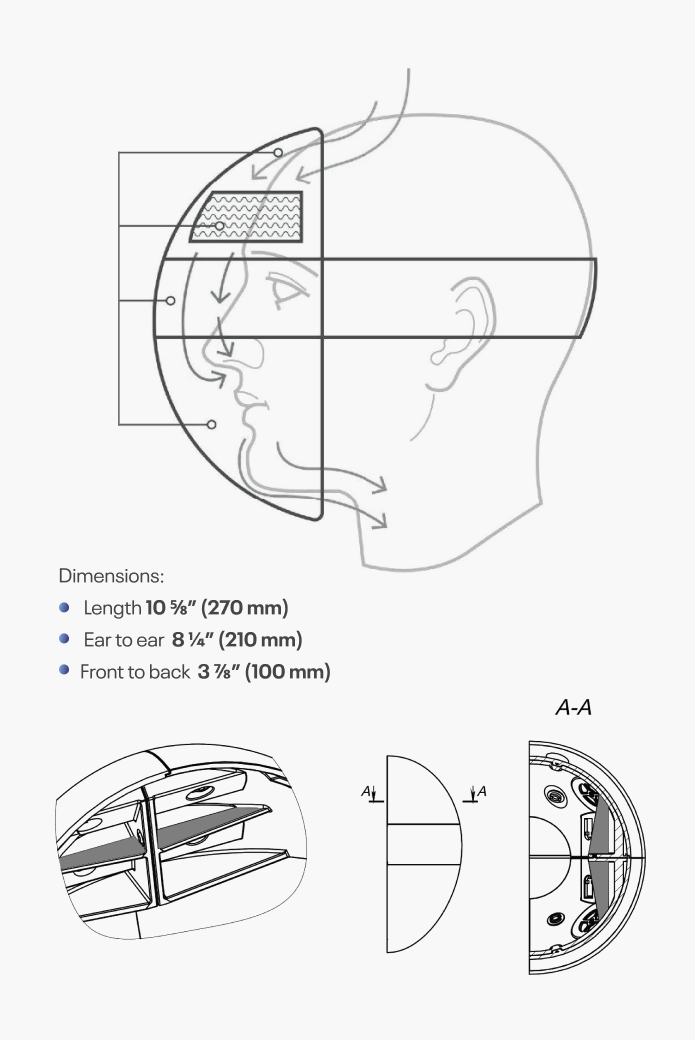
Now, Blanc brings that same high indoor air quality to your face. The SGS-tested HEPA filters trap all particles, creating a safe breathing environment around your nose, eyes and mouth.
180-Degree Airtight Seal
Everyone knows they need to be wearing masks. But it's hard to argue their effectiveness when you see their flimsy material and poor fit. The huge gaps around the edges let a stream of unfiltered air in every time you breathe.
Blanc isn't just a piece of cloth loosely draped across your mouth. Blanc mask is designed to ergonomically fit against your face, creating an airtight enclosure, and only feeding you air filtered through its high-efficiency HEPA filters.
All-Day Comfort
Regular masks' thin straps dig into your skin, and are constantly slipping down, making you touch them and reposition them — a big no no according to the authorities!
With Blanc, there's no need for readjustments throughout the day. The interior chamber of Blanc is crafted to ergonomically adjust to your face. And its super-comfortable wide headband perfectly locks the mask in place, without stretching your ears or squeezing your head.
Whether you are taking a subway to work, on a long flight, or going out to a cyber-punk underground party with friends — regardless of what you're doing, you can rest assured that Blanc is kept firmly in place.
Unmask Blanc
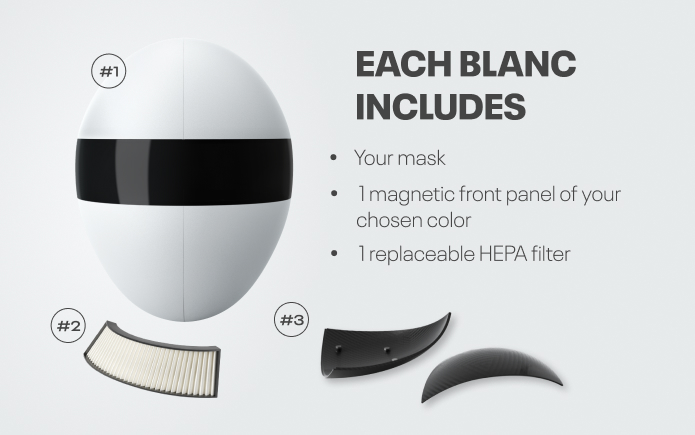
To enjoy your Blanc mask, you need only these three accessories, that comes inside the box:
1x Blanc Mask (see #1)
2x Magnetic front panels of your choice (see #2)
1 Replaceable and reusable HEPA filter (see #3)
Get More Done With Your Blanc Mask
A Mask That Evolves With You
Wearing a mask shouldn't be an annoyance. It should be a possibility! Blanc is here to revolutionize the way we see masks, opening the doors to practical and cool everyday add-ons that make your life easier and more fun.
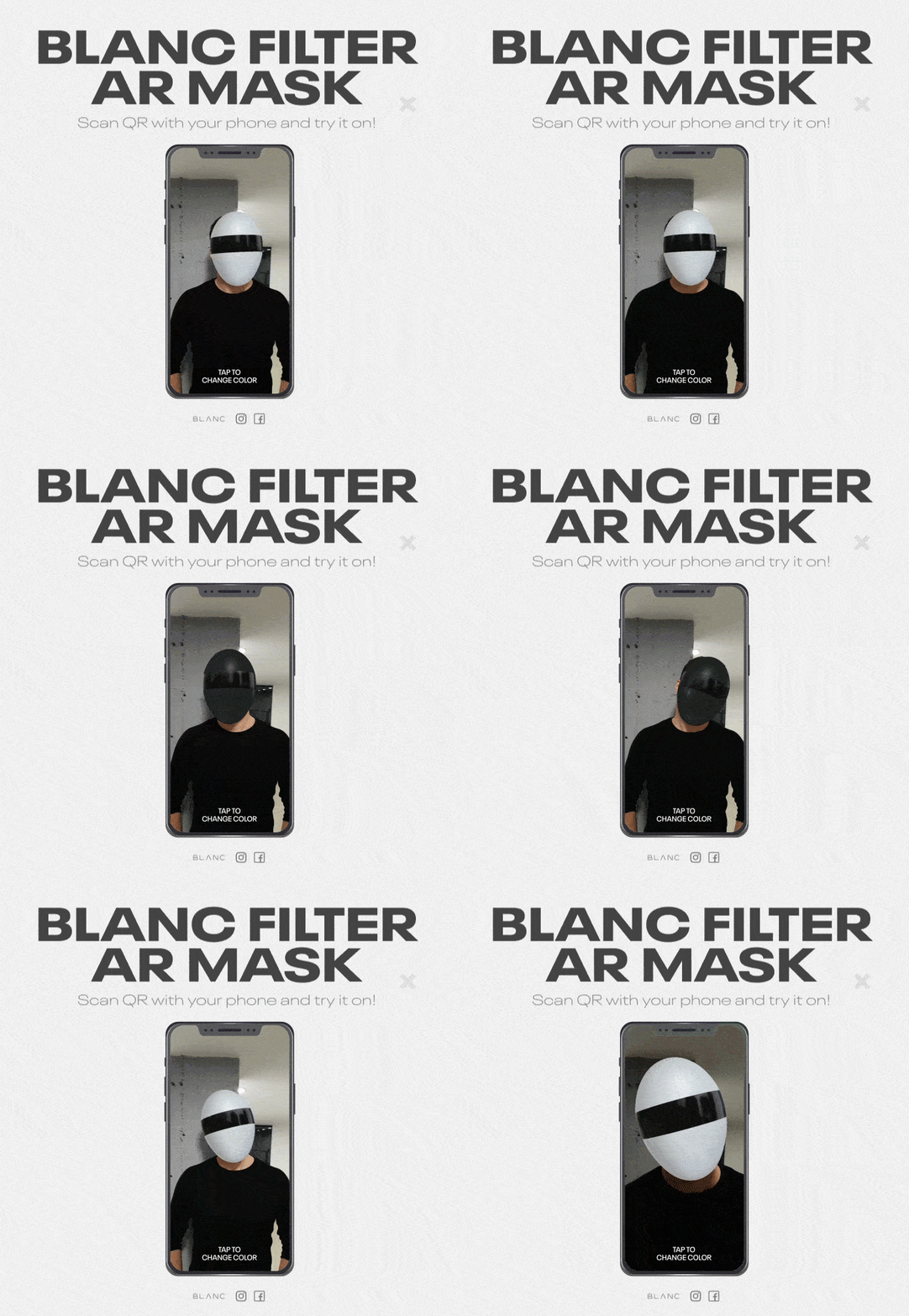
By open-sourcing aspects of Blanc's design, we're developing an ecosystem of mask upgrades, from voice modulators to Bluetooth headsets, HUDs and augmented reality systems. You will be able to upgrade your mask with Blanc's add-ons in the near future.
For centuries, face masks have been used during parties to let the wearer have a little bit of fun without showing who they actually were. Blanc goes beyond that!
You won't find anything like this in the world. Its full-face form covers your whole face and allows you to regain control of your visual identity, emotions, and expressions anywhere you have it on.
Change the way you see the world. Change the way the world sees you.
Get to Know Blanc
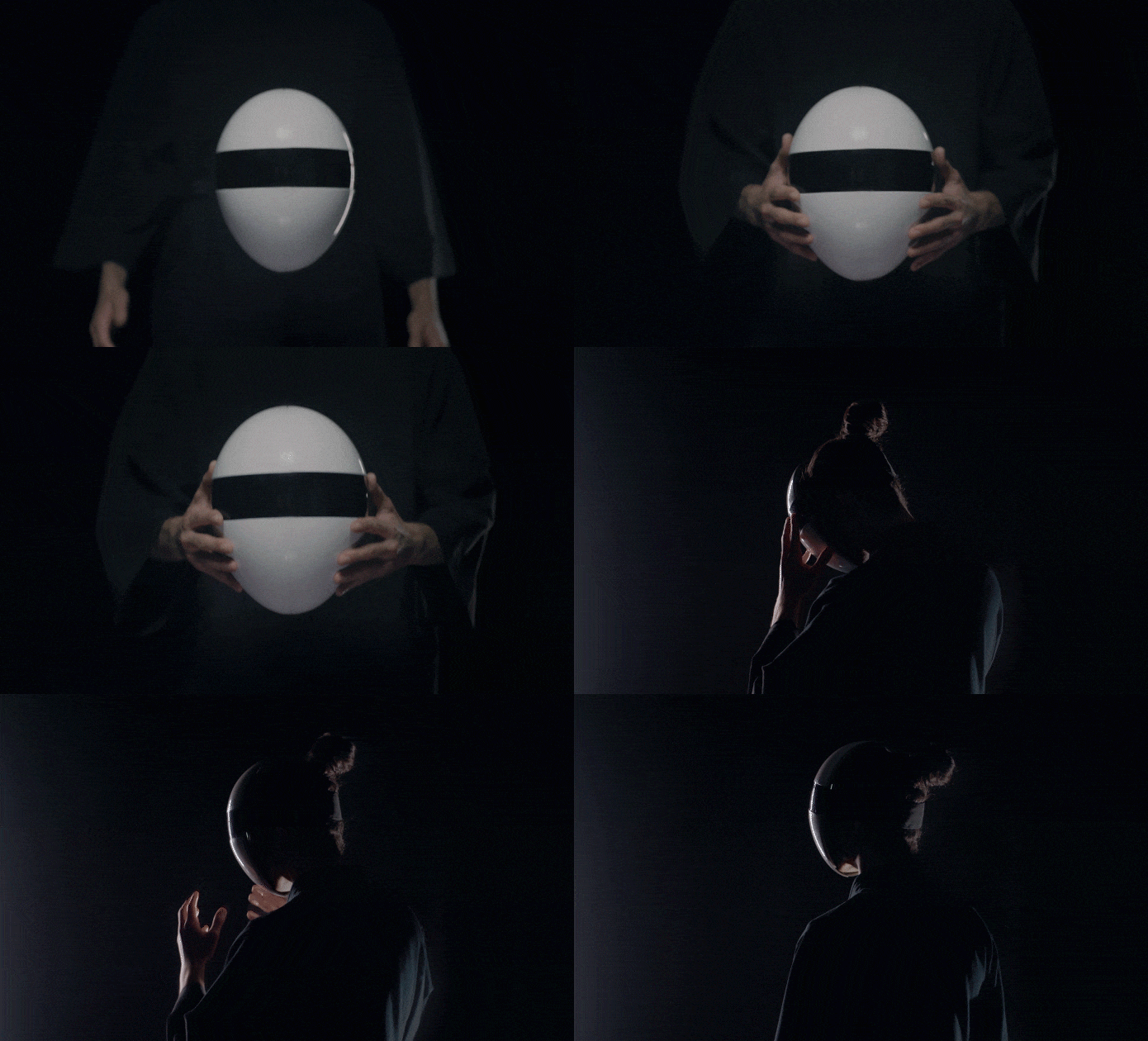
We've designed Blanc Mask with your privacy and your desire for individuality in mind. It consists of two vertical symmetrical parts which fold together. Using a simple "face wash" gesture with the palms of your hands, you can lock the two sides of your mask together at the midline of your face.
Thanks to its ergonomic design, it easily adjusts to your anatomical features, making for a supremely comfortable fit.
Technical Specifications
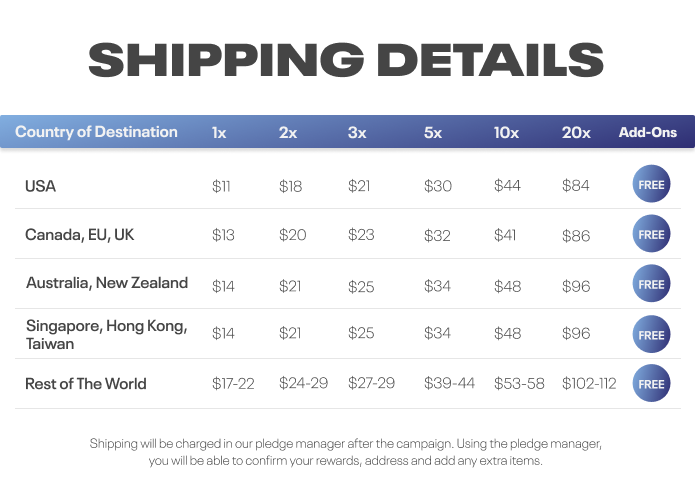
Shipping Information
Blanc ships worldwide. Because creativity doesn't have limits, and neither does Blanc.
We offer custom-friendly shipping to USA, Canada, the EU, UK and Australia
Shipping will be charged after the campaign is over via our pledge manager software. Thanks to our pledge manager, you'll be able update your shipping address, choose and add extra features to your Blanc mask, and more... ;)
Below you can find the shipping estimates for all Blanc rewards.
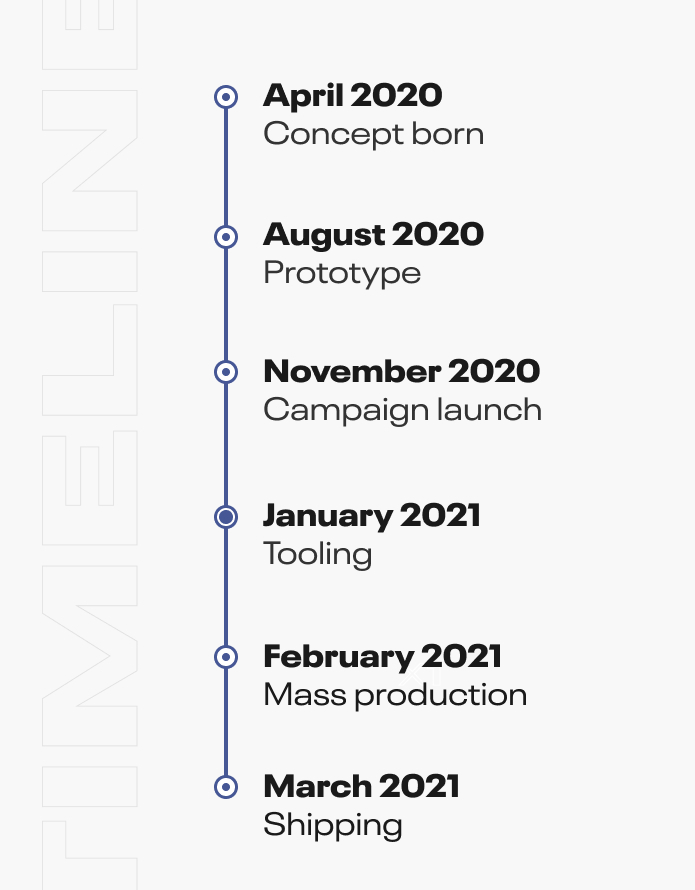
Timeline
OUR STORY
We are a team of renowned product designers, engineers, and marketing specialists led by a duo of serial entrepreneurs with a 10+ years corporate footprint of building, protecting, and reviving brands for IT companies and startups worldwide.
The few things we had in common before 2020 was — and is — good all-around IT expertise, keen interest in tech and innovation, and profound global market vision. The new thing that sparked our creativity and helped us created Blanc is the 2020 and the challenges we've faced during these few months as a team.
We started working on the concept and the product philosophy behind it in April of 2020, and have gone a long and winding road of developing the whole new product category.
After thinking for a while, we decided to name our new product "Blanc" — one can switch the magnetic front panels in 5-10 seconds, creating a whole new mask from the outside. You decide what you are willing to broadcast to the outside world — which harmonies, mood, and emotions to relay, and which to keep.
DISCLAIMER
Blanc does not imply or claim to diagnose, cure, treat, or prevent an illness or condition (whether via a device itself or its parts/components).
We created Blanc to highlight the wearer's creativity, individuality, provide them with protection and privacy, and by no means promote social anarchy and illegal activities. Visual protection and privacy imply responsible usage of the wearer. We are not revolutionaries: Blanc Inc. as well as any of its affiliates do not associate themselves with any manifestations of using Blanc during illegal and/or anti-social activities.
Some US states have anti-mask laws, as do a few other countries. Please make sure you check on the law, before putting the mask on in public.
We believe in Blanc masks' highest quality and have promised to provide a 100% money-back guarantee with your mask. However, the new regulation states that there'll be " no return for personal goods that touched the person's face." This means we have to remove the "30-Day Satisfaction Guarantee," which we've promised earlier.
However, being confident in the quality of our mask, we want to ask you to contact us at hello@blancmasks.com if you have any concerns, and we'll be happy to view your case individually and make everything right for you.
Risks and challenges
This is our first campaign and our first Kickstarter!
We have put in enormous energy and hours in developing Blanc Mask and, as of today, have a few effectively working examples ready.
We clearly understand that no project is without risks and challenges, but we have done our best to minimize them — discussed the development and logistics issues with our partners from all over the world, calculated production timing development.
If our Kickstarter campaign is successful, we'll deliver rewards on time, as presented in the timeline above. In case we have delays for whatever reason, we'll immediately update you on it.