THIS INGENIOUS LADY BUILT HER HOME OUT OF SHIPPING CONTAINERS. YOU WON'T BELIEVE THE RESULTS!
Claudie Dubreuil, a general contractor in Mirabel, Quebec, is the owner of Collections Dubreuil. Her company builds traditional wood houses and condos — fantastic for business, but the owner's design aesthetic is a bit more adventurous.
When it was time for Dubreuil to build her new home, she decided to take a different path — a path that involves shipping containers and an incredible design.
Although finding an engineering firm to help her was difficult, her dream came true for a total cost between $330,000 and $377,000, in U.S. dollars. (The total cost included lot price, excavation, labor, and materials.)
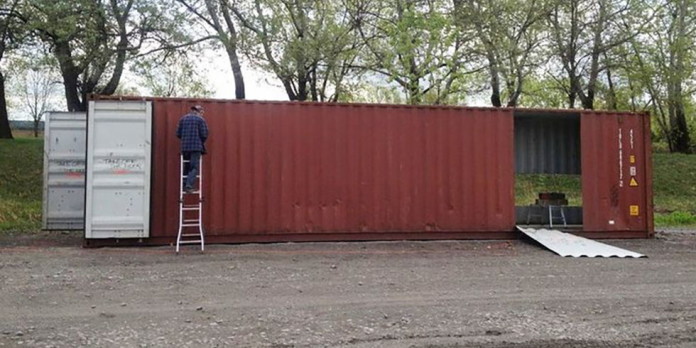
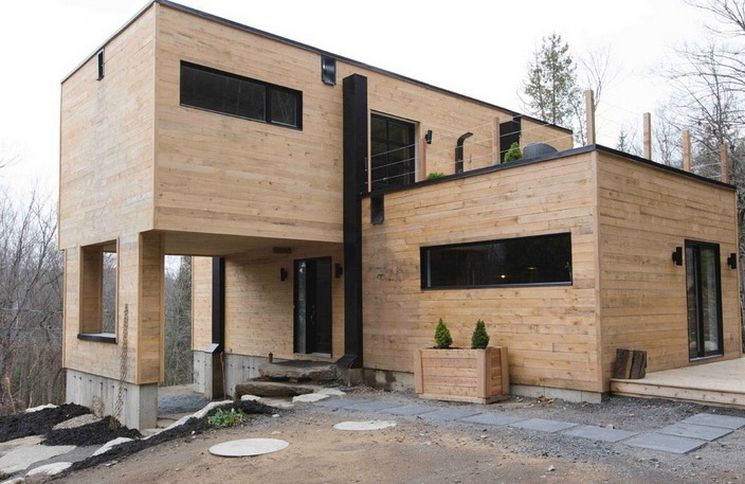
The containers she purchased were 8 feet wide and 40 feet long. That might not seem like much space. However, what you see in the first photo is just step one.
The engineering firm cut out sections of the containers to fit her design and shipped them to her lot.
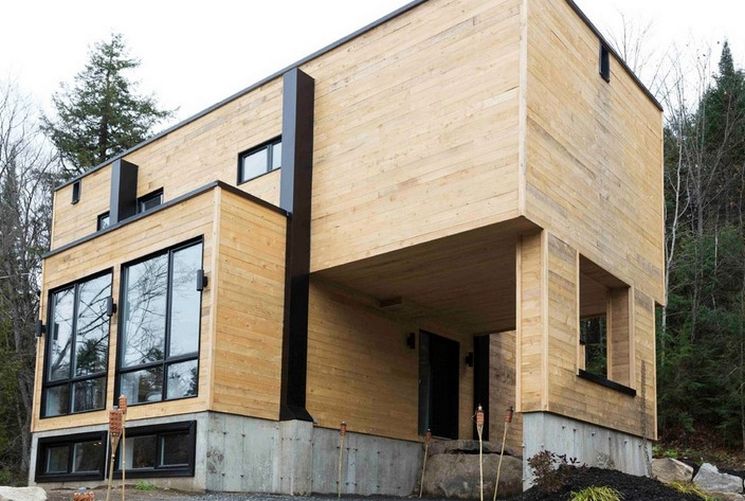
She had a cement basement and foundation poured to place the containers upon.
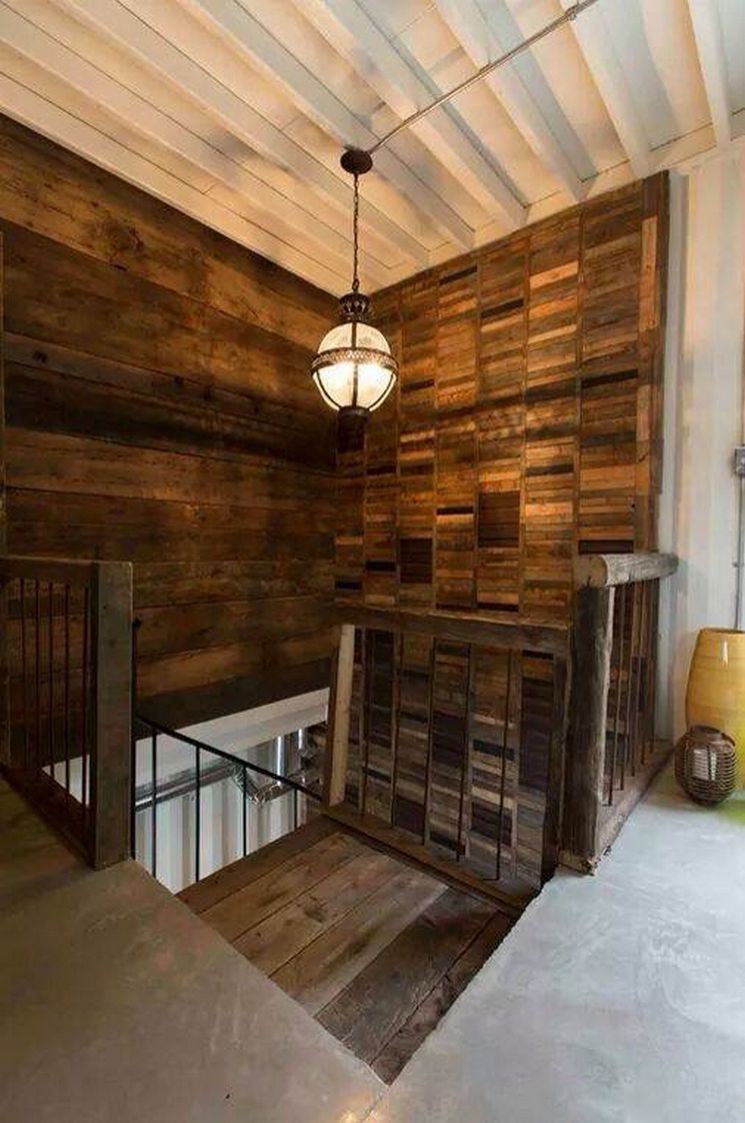
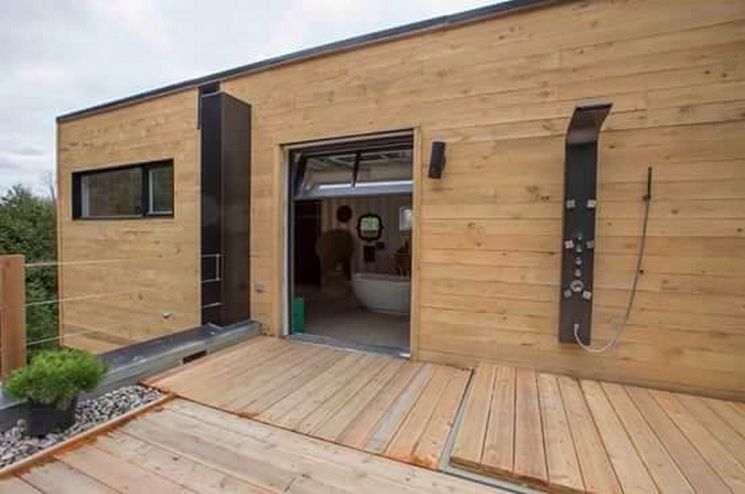
She covered the outside of the containers with wood paneling because she did not want to have to paint them every year.
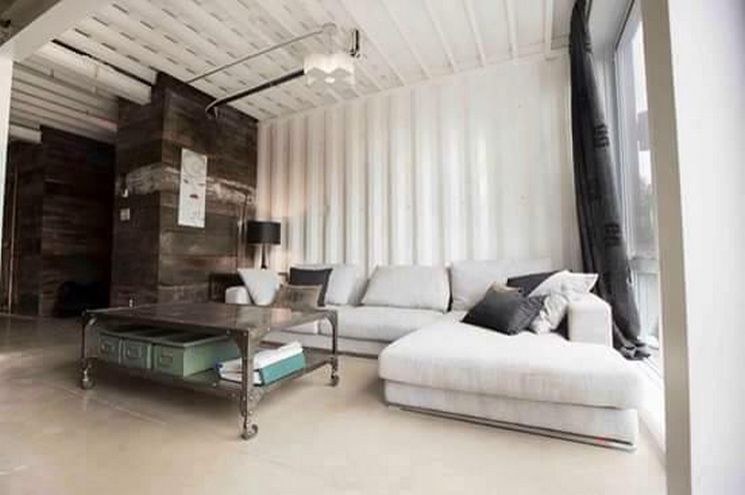
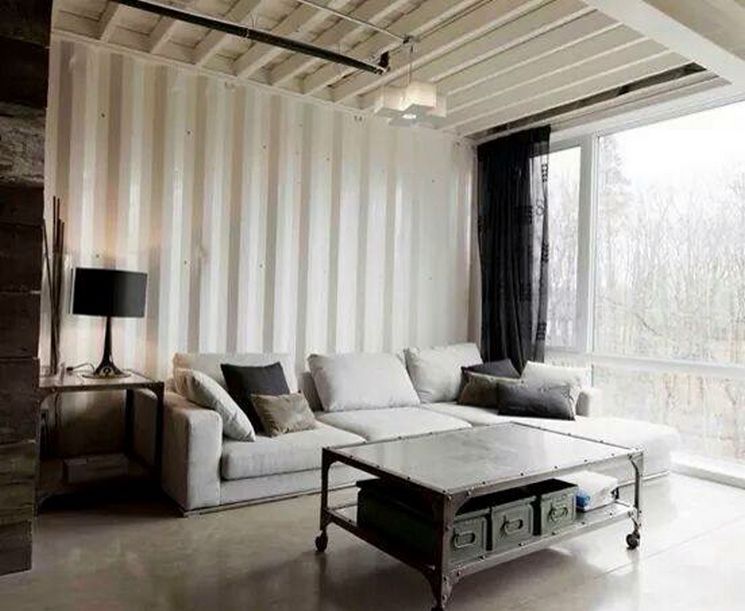
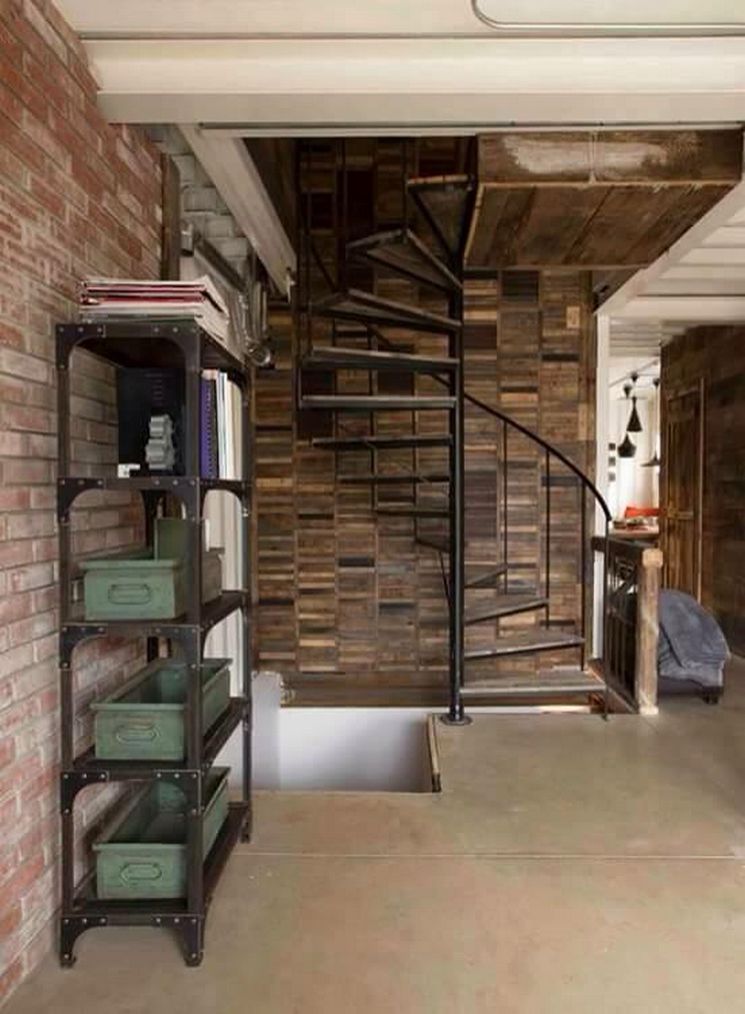
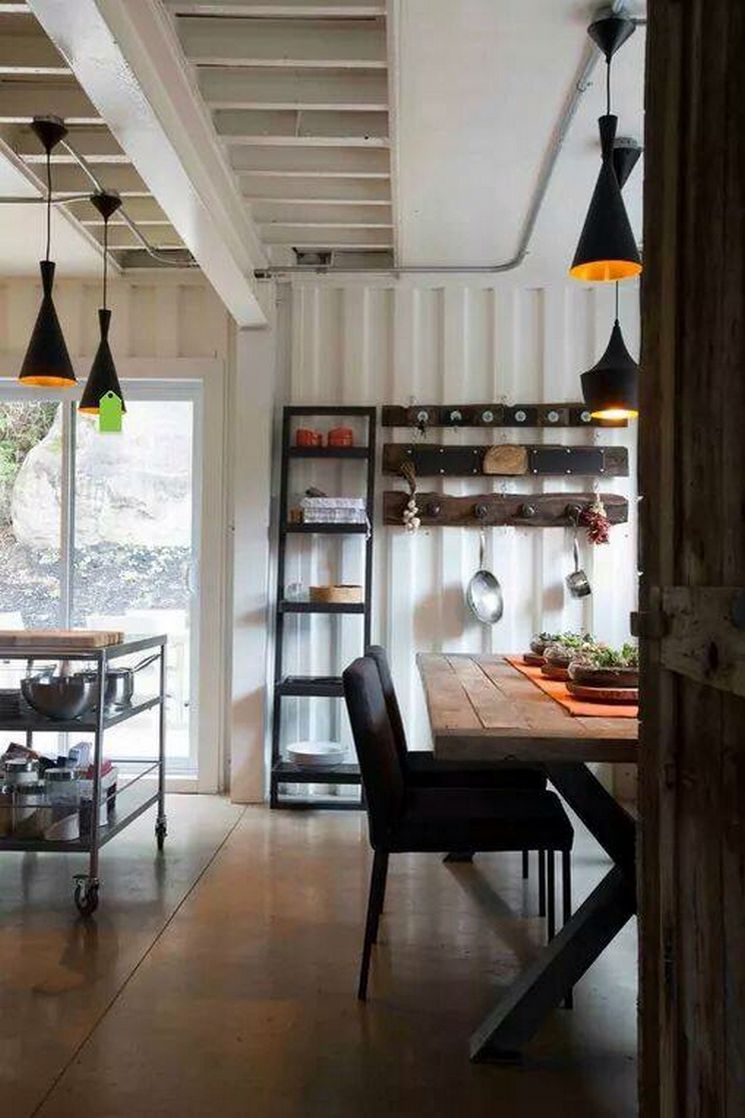
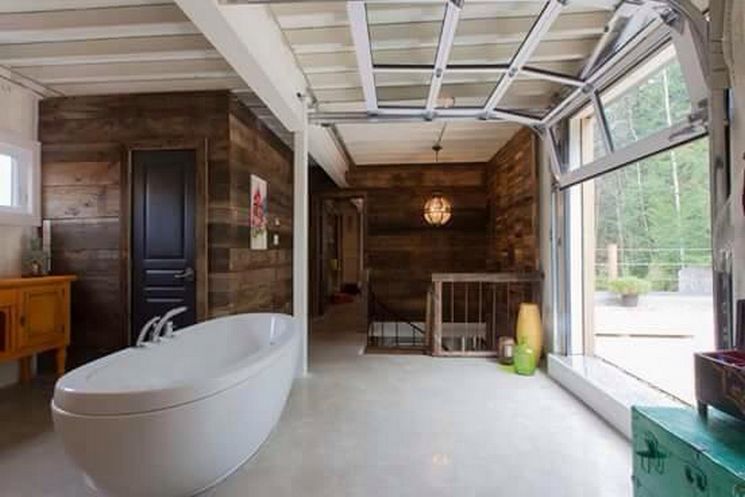
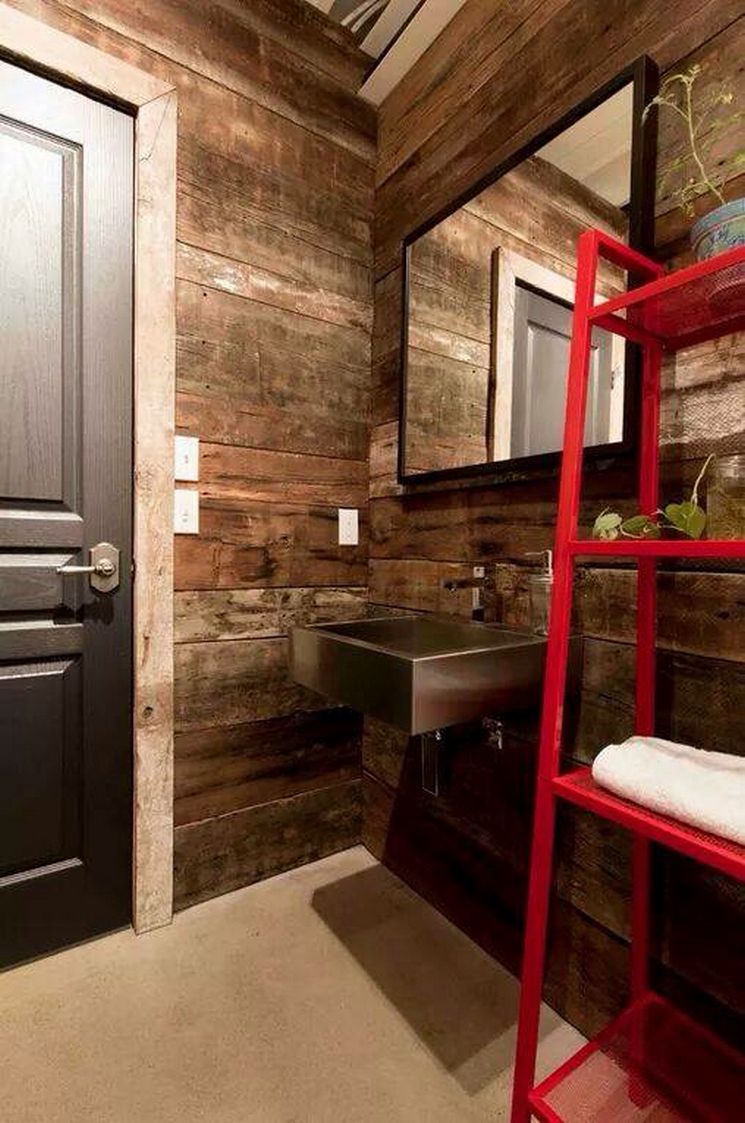
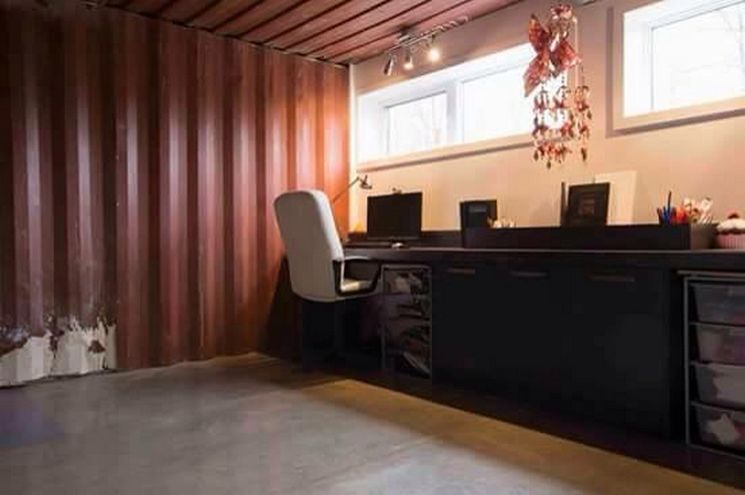
She kept some of the inside walls original, which gives the home an industrial feel.
There is a spiral staircase up to the second floor to save room.
She also decided on a nice balance of natural and artificial lighting.
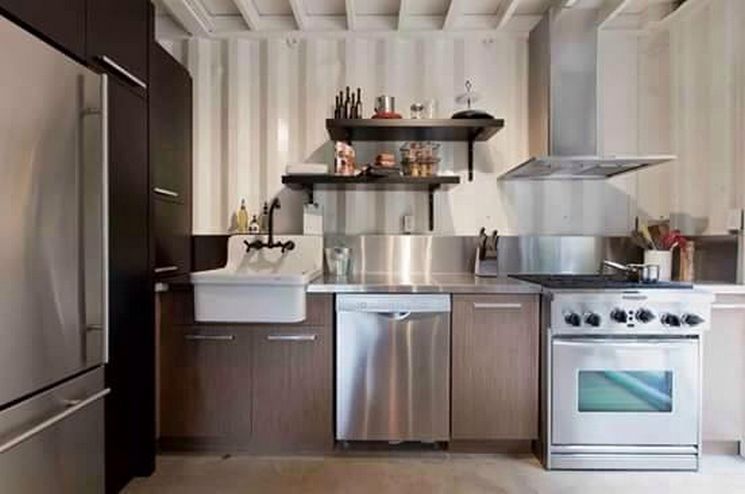
The kitchen and dining room are modern, simple, and bright!
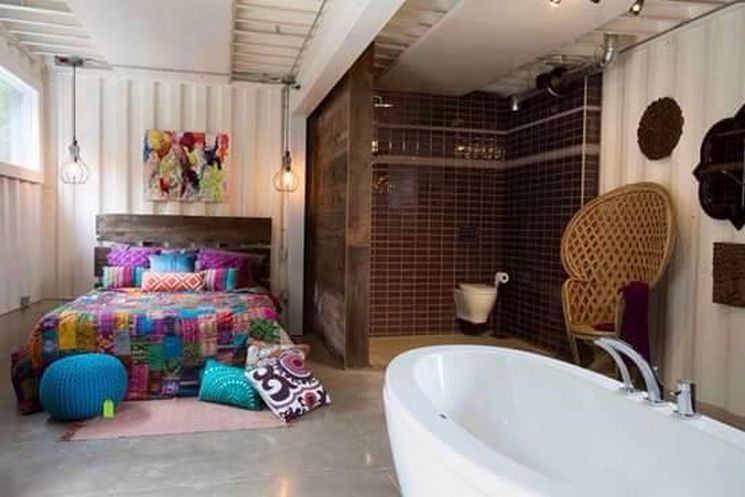
As you can see, in one part of the house, a bedroom and bathroom combo possesses a very open design.
There are also private areas in the home for those who need their own space.
The second-floor patio/deck is a definite plus to the design. It looks like the perfect place to soak up the morning sun.
The office is located in the basement — a great place for a quiet workspace.
This is a fantastic little home!
Container homes are more popular than one may think. Shipping containers are sturdy and made for stacking, and they can make designing a new and perfect home fun!
Here's how the different countries compare when it comes to carbon, land, material and water footprints. Source: Ivanova et al. Environmental Impact Assessment of Household Consumption. Credit: Journal of Industrial Ecology.
The world's workshop—China—surpassed the United States as the largest emitter of greenhouse gases on Earth in 2007. But if you consider that nearly all of the products that China produces, from iPhones to tee-shirts, are exported to the rest of the world, the picture looks very different.
"If you look at China's per capita consumption-based (environmental) footprint, it is small," says Diana Ivanova, a PhD candidate at Norwegian University of Science and Technology's Industrial Ecology Programme. "They produce a lot of products but they export them. It's different if you put the responsibility for those impacts on the consumer, as opposed to the producer."
That's exactly what Ivanova and her colleagues did when they looked at the environmental impact from a consumer perspective in 43 different countries and 5 rest-of-the-world regions. Their analysis, recently published in the Journal of Industrial Ecology, showed that consumers are responsible for more than 60 per cent of the globe's greenhouse gas emissions, and up to 80 per cent of the world's water use.
"We all like to put the blame on someone else, the government, or businesses," Ivanova says. "But between 60-80 per cent of the impacts on the planet come from household consumption. If we change our consumption habits, this would have a drastic effect on our environmental footprint as well."
The analysis allowed Ivanova and her colleagues to see that consumers are directly responsible for 20 per cent of all carbon impacts, which result from when people drive their cars and heat their homes.
But even more surprising is that four-fifths of the impacts that can be attributed to consumers are not direct impacts, like the fuel we burn when we drive our cars, but are what are called secondary impacts, or the environmental effects from actually producing the goods and products that we buy.
A good example of this, Ivanova says, is water use.
Cows, not showers
When you think about cutting your individual water use, you might think about using your dishwasher very efficiently, or taking shorter showers.
Those aren't bad ideas on their own, but if you look deeper, like the NTNU researchers did, you'll find that much of the water use on the planet is gulped up by producing the things that you buy.
Consider beef. Producing beef requires lots of water because cows eat grains that need water to grow. But because cows are relatively inefficient in converting grains into the meat that we eat, it takes on average about 15,415 litres of water to produce one kilo of beef.
Dairy products require similarly large amounts of water to produce.
When a group of Dutch researchers looked at the difference in producing a litre of soy milk with soybeans grown in Belgium compared to producing a litre of cow's milk, they found it took 297 litres of water to make the soy milk (with 62 per cent of that from actually growing the soybeans) versus a global average of 1050 litres of water to produce a litre of cow's milk.
Processed foods, like that frozen pizza you bought for dinner last night, are also disproportionately high in water consumption, Ivanova said. Making processed foods requires energy, materials and water to grow the raw materials, ship them to the processor, produce the processed food items and then package the final product.
This is particularly bad news when it comes to chocolate, which is one of the most water-intensive products we can buy. It takes a shocking 17,000 litres to produce a kilo of chocolate.
Richer countries, larger impacts
The researchers also looked at environmental impacts on a per-capita, country-by-country basis.
While the information is sometimes surprising—Luxembourg has a per capita carbon footprint that is nearly the same as the United States—it mostly follows a predictable pattern. The richer a country is, the more its inhabitants consume. The more an individual consumes, the bigger that person's impact on the planet.
But the differences between individual countries are extremely high, Ivanova said.
"The countries with the highest consumption have about a 5.5 times higher environmental impact over the world average," she said.
The United States is the overall worst performer when it comes to per capita greenhouse gas emissions, with a per capita carbon footprint of 18.6 tonnes CO2 equivalent, the unit used by researchers to express the sum of the impacts of different greenhouse gases, such as carbon dioxide, methane, nitrous oxide and sulphur hexafluoride.
The US was followed closely by Luxembourg, with 18.5 tonnes CO2 equivalent, and Australia, with 17.7 tonnes CO2 equivalent. For comparison, China's per capita carbon footprint was just 1.8 tonnes CO2 equivalent. Norway, at 10.3 tonnes CO2 equivalent per capita, was three times the global average of 3.4 tonnes CO2 equivalent per capita.
The results for individual countries also reflect the effects of the electricity mix, or the fuel source that countries rely on for electric power. The prevalence of nuclear or hydroelectric power in countries such as Sweden, France, Japan and Norway means that these countries have lower carbon footprints than countries with similar incomes but with more fossil fuels in their energy mix.
For this reason, Ivanova says, a significant portion of household impacts from Sweden and France come from imports (65 and 51 per cent respectively), because the products that are imported are mostly produced with fossil fuels.
An enormous database allows comparisons
The researchers relied on an extremely large and detailed database that NTNU developed in partnership with colleagues from the Netherlands, Austria, Germany, the Czech Republic and Denmark called EXIOBASE.
The database describes the world economy for 43 countries, five rest-of-the-world regions and 200 product sectors, which allows researchers to ask questions about how different products or countries affect the environment.
They were also able to ask how an average consumer in each of the countries or regions affects the environment as measured by greenhouse gas emissions (tonnes CO2 equivalent), water use (in cubic metres), land use (in 1000 square metres) and material use (in tonnes).
The 43 countries represent 89 per cent of the global gross domestic product and between 80-90 per cent of the trade flow in Europe, as measured by value.
No surprises: take the bus, eat vegetarian or vegan
The advantage of identifying the effects of individual consumer choices on the different environmental measures is that it pinpoints where consumers in different countries can cut back on their impacts.
"Households have a relatively large degree of control over their consumption, but they often lack accurate and actionable information on how to improve their own environmental performance," the researchers wrote in the journal article reporting their results.
Eventually, the goal is to be able to use this information to guide policy, Ivanova said. The effort is a part of the GLAMURS project, an EU-funded effort designed to promote greener lifestyles and environmentally responsible consumption in Europe.
In the meantime, two easy ways to cut your environmental impact are to stop eating meat, and cut back on your purchases, she said.
Currently, EU consumers spend 13% of their total household budget on manufactured products. If the average EU consumer switches away from spending money on these manufactured products to paying for services instead, this would cut close to 12 per cent of the EU's current household carbon footprint, Ivanova said.
"Any activity where we have a choice of buying a product or using a service, the service will have much less impact," she said.
More information: Diana Ivanova et al. Environmental Impact Assessment of Household Consumption, Journal of Industrial Ecology (2015). DOI: 10.1111/jiec.12371
Provided by: Norwegian University of Science and Technology
The Best Time to Buy a Flight is 54 Days Out…Or Is It?
If you've spent any amount of time shopping for flights, you probably know that airfares change a lot. Airlines will tell you that the price fluctuations are based on meticulous real-time calculations to match supply and demand, but to travelers the ups and downs seem random, totally unpredictable, and utterly without rhyme or reason.
Whether there is really a method to the madness or not, everyone just wants to know one simple question: when is the best time to buy an airline ticket?
To answer that question, we looked at 1,336,030,117 air fares (that's about 1.3 billion) as part of our annual air fare study. Since "it's complicated" doesn't make for a very good headline, we'll start by focusing on a bottom line number, and that number is 54 days. That was, on average, the best number of days in advance to buy a flight in 2015, for travel within the U.S.A.
The reason it's a little more complicated than that, though, is that every trip is different. While 54 days in advance might have been the average best time to buy based on everybody's trips last year, that doesn't mean it will be the best time to buy for your trip this year.
In our study we looked at 2,926,668 "trips". That's just under 3 million. We defined a "trip" as an itinerary going from Point A to Point B on a specific date with a specific return date. For each trip we looked at the lowest fare offered for that trip every day from 320 days in advance until 1 day in advance.
If you look at all 3 million itineraries, the best times to buy were all over the map (no pun intended). For a lot of them (about 13,000 in total) 54 days out was indeed the best time to buy, but for almost as many the best time to buy was 53 days out, or 52 days, or 45 days, or 60 days. In fact, for almost 30,000 trips the best time to book was actually the day the flight first went on sale! And for a fraction of them (a tiny, tiny fraction) it was best to book at the very last minute.
The point is there is just no one magic number that you can rely on to create a calendar reminder x number of days in advance and know that that day is the best day to book. We can say, though, that there are some general rules that do usually hold up (except for super-busy holiday times where all the rules go out the window.)
As you move from the time a flight initially opens for sale, to the day the flight departs, we see a pattern of how fares change – typically starting off high, slowly coming down, and then a few weeks before flight time starting to climb, with a particularly sharp increase once you're inside 14 days.
To make this easier to understand, we've divided the typical booking window of a flight into 5 booking "zones" which we are labeling "First Dibs" (6 ½ – 11 months out); "Peace of Mind" (3 ½ – 6 ½ months out); the "Prime Booking Window" (3 weeks – 3 ½ months out); the "Push Your Luck" (14 – 20 days out); and "Hail Mary" (0 – 13 days out). Here is some more information on each:
The "First Dibs" Zone 197-335 days out (approximately 6½ – 11 months) Most airlines begin selling seats for flights 335 days out, or roughly 11 months in advance. In most cases, when flights first open for sale their fares are on the high side – and at some point in the future they are likely to come down. Still, the nice thing about buying flights early is that you have a full choice of flight options. All the flights are generally available so if you want a nonstop, or a flight at a specific time, you can usually have your pick if you book within this window. You also get first dibs on seat selection on most airlines which is important because fewer and fewer window and aisle seats are being made available without an extra charge. Early bookers have the best odds of snagging one of them.But these perks come at a cost. The lowest fares available for purchase 197-335 days out average about $50 more than those available during the "Prime Booking Window", which is the least expensive time to buy.
The "Peace of Mind" Zone 113-196 days out (approximately 3½ – 6½ months) If you don't like the idea of paying a big premium to book in the "First Dibs" period, but you also want to relax and know your plans are firm well in advance of your trip, the "Peace of Mind" Zone might be for you. Travelers booking between 3 ½ and 6 ½ months in advance do pay a premium over the those buying in the "Prime Booking Window", but it's a modest premium, only about $20 more per ticket on average. And for that extra price you generally have more options to choose from, since by the time you get inside 3 months often the best flights are sold out at the lowest fares.
The "Prime Booking Window" 21-112 days out (approximately 3 weeks – 3 ½ – months) If you're a bargain hunter like most of us, your sweet spot is the "Prime Booking Window", about 3 weeks to 3 ½ months in advance. We do a similar analysis every year and this window has been pretty consistent over time.Of course, 21 – 112 days out is a pretty big range –about 3 months. And we absolutely don't want to suggest that there is no difference between buying your ticket 21 days in advance vs. buying it 112 days in advance vs. buying it at any other point in that window. During these 90 days, fares will likely fluctuate a lot. Don't be surprised at all to see big swings, sometimes from day to day. Here's the thing: we can't promise you will necessarily get a good deal if you buy your ticket on any random day in this window. But we do suggest that you check fares frequently during this period because at some point during these 3 months the best fare is likely to pop up.
The "Push Your Luck" Zone 14-20 days out (2 – 3 weeks) An interesting dynamic occurs right in the between the "Prime Booking Window" which ends about 3 weeks out and the "Hail Mary" Zone where you absolutely don't want to be (inside of 14 days).
There is a week in the middle between 14 and 20 days out where circumstances can vary dramatically. There are times when you book in this window and you get hammered – flights are full and fares are through the roof. But other times you get lucky and there are actually some great fares comparable to the best fares offered months before. It really depends on how full the flights are.
If you're thinking about chancing it, one very general rule of thumb is: the more popular your destination and the more popular your travel time, the less likely you are get lucky. Full flights are expensive flights. Going to New York for a week in the winter? You might find a great fare two weeks before. Going to Orlando for Spring Break? That's much less likely.
The "Hail Mary" Zone 0-13 days out Maybe you've heard a story of someone, somewhere who once booked a flight a day in advance and got a fantastic deal. And maybe you watched Aaron Rodgers throw that 42-yard Hail Mary touchdown pass to Jeff Janis to force overtime in the Divisional Playoff Game against the Cardinals. But just as almost all Hail Mary passes land incomplete, an overwhelming majority of last minute fare searches end in frustration.When you book your flight within 7 days of departure, you pay, on average, just under $200 more than if you booked during the "Prime Booking" window – and you'll probably have only one flight time to choose from if you want to avoid paying even more. When you book between 7 and 13 days out, it's a little better, but still you can expect at least a $75 premium on the cheapest flight, and often hundreds of dollars more on the best flights.
So regardless of what you may have heard about airlines having empty seats at the last minute that they practically "give away" – don't believe it. We've seen a lot of people test out that theory and it just about never ends well.
It really would be nice if buying an airline ticket was like buying almost everything else: the price is the price, you buy whenever you're ready. But unfortunately, things don't work that way with airline tickets. It's a unique marketplace, more like playing the stock market than anything else. We'll keep collecting airfare data and we'll do our best to keep finding useful information for you. But if you're finding the process too stressful, drop us a note with your question or call our Customer Support Desk. We'll do what we can to make it a little bit easier.
Want to do a little more research? Check out our When to Buy Flights page for thousands of cities.
Sign Up! Save with this invitation!
What a great way to get around -
It was a lifesaver my very first trip...
a dark and stormy midnight rerouted flight with no way to get home...
No matter how much we try to advise, change, coerce, convince, or cajole one another (and ourselves), real change takes its own sweet time. I see this in world affairs and I see it in myself at home. When I started gardening, I flat-out ignored a lot of very good advice—advice that would have brought me what I wanted a lot sooner—had I followed it.
So why didn't I? A whole bunch of reasons. Impatience. Feeling overwhelmed. Contradictory opinions. Endless possibilities. The need to process information in my own way, at my own speed, and learn from hands-on experience. And did I mention being impatient?
Here's some examples of garden advice I now follow and share but could not embrace at the start:
1. Improve the soil first.
The Clay Soil At My Old Garden
When I started gardening, like many people, I wanted it all and I wanted it now. In reality, my budget was $100 a year and I was determined to stretch it as far as I could.
To me, that meant buy as many plants as you can and hope for the best. But every experienced gardener who saw my horrendous (clay, clay, clay, slope, clay) growing conditions told me otherwise: before you put one plant or seed in the ground, you've got to improve the soil first or your plants will not thrive.
Use every penny you've got to add compost and more compost, then you can think about adding plants. In other words, the health of the garden is all about the health of the soil.
It took me years of struggle with unhappy plants to see the practical wisdom in those words. But looking back, there's no way I could have summoned the patience to just plump up my soil for the first year or two without adding any plants. So, excellent advice—for other people who don't need physical proof to believe something. My early plants died, ironically providing expensive compost with their corpses, and things gradually began to thrive. Today, I compost, compost, compost.
Some links (like Amazon) go to shops via my affiliate accounts—or to eBay, where I write a blog.
2. Focus on the natural diversity of your garden, rather than treating specific pests.
Red Lily Beetles—Never A Good Sign
Many of us start gardening in new subdivisions where nature has been stripped away to build houses. When the houses are ready, topsoil is dumped down over the builder's rubble, sod is rolled out, and they call it a yard.
We start introducing plants and wonder why so many 'pests' attack our few plants. What else can they do? We've taken away their entire habitat!
Early on, I would see a shrub struggling or insects all over a plant and my reflex was to eradicate the pests. Thankfully I was strong-armed by someone who suggested I stand back and look at the bigger picture. Until you re-build some diversity in the garden, there will be gross imbalances. I can endlessly treat symptoms with pesticides/herbicides/insecticides (that kill not just the "pests" but the beneficial insects as well), or accept that some plants don't have what it takes to survive and focus on practices that build a stronger garden (again, good soil, plants that tolerate my environment, diversity).
Thankfully I listened to that one, probably because it required buying plants.
3. Encourage native plants.
Gout Weed. Good Luck Getting Rid Of It.
The three biggest foes of nature these days are climate change, pollution, and the invasion of non-native plants and animals. Removed from the food chain or life cycle of their natural environment, non-native species can be extraordinarily invasive and destructive.
When you have a garden, you are already tampering with nature, attempting to control, cultivate, and convince plants to do things in un-natural ways. As consumers, we have access to a lot of plants that are not native to our areas and in some cases hazardous. It takes time to learn which plants benefit one's garden and which ones do not. Native plants are great choices because they thrive without invading or requiring coddling and provide essential habitat.
I don't know why I resisted this one for so long. I wish I had a dollar for every person who suggested it. Raised beds solved a number of problems at my old garden. When I finally installed them on the sloped front yard in full sun and was able to grow vegetables for the first time. You only have to add enough soil and compost to fill the box, they stop erosion, they protect the plants, and nibblers like rabbits won't jump into them if they can't see over the top.
Now I'm a raised bed fanatic. I've got eight of them. I use them for year round vegetable growing, adding lids for cold weather protection. You can also create a pond in a raised bed.
What took me so long? I don't know. But I'm here now, probably ignoring a whole bunch more good advice—in gardening as in life.
An Open Letter to My Friends Who Support Donald Trump
Michael Vadon/Flickr
I'm cool with you removing me from your friends list if you don't like this post. You can even disown me if you like. But Donald Trump isn't a good person, nor would he be a good president. I can understand a difference in politics. I can understand if you don't like a government run by Democrats. I can understand if you don't like certain ideologies, like Socialism. But I can't understand why you would support someone as hateful, sexist, racist and ignorant as Donald Trump.
How do you support him so blindly? Ask yourself, are you a racist, sexist, hateful and ignorant person as well? I hear his supporters saying they like him because he tells the truth, because he's so rich he can say whatever he feels like with no apologies. Just because Trump is saying these things doesn't suddenly make them right. It's not okay to discriminate against an entire religion based on a small percentage of its followers who have become terrorists by twisting the words of the religion to fit their crazy ideals. It's not okay to marginalize an entire race of people, saying things like all the Mexicans are lazy, that they are all stealing our jobs and bringing drugs into our country.
White people also have bad apples. So does every race of people. We're all human. Some humans are really bad people. Some are really good. And it doesn't matter what color they are, it makes no difference whatsoever. Trump says he is just telling the truth. But whose truth? There are lazy people in every race and there are dangerous violent people in every race and every religion. Kicking all Muslims out of the country is not the answer, nor is it the acceptable behavior of a person in an extremely powerful position, like the President of the United States.
The Japanese Internment camps were wrong, Segregation was wrong, Slavery was wrong. We fought wars amongst ourselves to rise above racism and hatred. In WWII more than 60 million people died worldwide. Why? Because of twisted people who were whipping up the population into a frenzy and making ridiculous statements, killing innocent people simply because of their race or religion. The United States lost more than 400,000 lives fighting in that war, against the same ideas that Trump is pushing. The idea that certain religions are more dangerous than others and the idea that people should be judged based on the color of their skin rather than the content of their character.
We're still healing from the damage inflicted by the Civil War, WWI, WWII, Vietnam, Iraq and the War on Terror. And it isn't just ISIS or Al-Qaeda. It's our own people in this country killing their fellow countrymen over differences of opinion, like whether or not you believe abortion is okay or what kind of political ideology you support. And then there are just the plainly insane people who finally snap and go on shooting rampages for no discernible reason at all. They just went mad.
The kind of leadership Trump is displaying is irresponsible and dangerous. His virulent ideas are seeping into the brains of his supporters. Supporters who think it's okay to say things like "light the mother@!$%#er on fire" while a protester is being dragged out of one of his rallies. Maybe the protester was wrong to be where he was at the time, but no matter what he did, there was no reason to set him on fire. In fact, there is NEVER a reason to set anyone on fire. Unless it's because they are dead and they wish to be cremated.
Trump's supporters are angry, and anger is infectious. I can tell you as a non-supporter of Trump I am just as angry. We need the kind of leader that seeks to bring us together, not tear us apart. Why do we have to fight against helping each other, against common sense, against a united Nation? The American Dream is a nightmare and we are feeding it, making it worse every day. Trump is a bully, a loud mouth, ignorant, sexist, racist, disgusting example of how horrible humans can potentially be.
He is the crazy person at your dinner table who won't stop running his mouth. The only reason he is allowed to carry on with his ugly hateful rhetoric is because you have too much respect for Grandma to get into a fist fight in her home. He's the guy you have to endure until he leaves, all the while hating every minute that you have to occupy the same space. Lucky for us, this isn't Grandma's house, so feel free to punch him in the mouth in the form of getting out and making your vote count.
They always say it's so important to make your voice heard, to get out and vote. But I'm not sure if it's ever been more important than now. Differences of political ideals are one thing, I can agree to disagree on many matters across a wide array of topics, but racism isn't one of them, neither is hate, neither is the belittling of women or the judgment of others based on their appearance or their disability, or their sexual preference.
By supporting Trump do you think things will go back to the way they were? Back when gay people had to hide in fear, back when people of any other color than white had to worry about getting lynched, back when it was okay to openly hate? Do you think empowered women will suddenly quit their jobs and go back to the kitchen ? Because electing Trump won't make any of that come true. We're past that as a nation, or at least I thought we were.
If you're not a racist, bigoted, misogynistic jerk then voting for Trump simply because you don't like Democrats is wrong. If you are one of his supporters and you're just a racist and you don't care who knows it then vote for him, but know that the good people of America will not stand for it and he will never win a fair election. And please consider pursuing an education and work on your empathy toward your fellow human beings. Whatever led you to believe that racism is okay can be unlearned if you open your mind. I'm sorry that you were raised to believe that you deserve better treatment than the rest of the people on the planet that have different views than yours, worship different gods than you and have skin that isn't white.
To all the people, of all the races and religions that Donald Trump stands against, to all the women that don't meet his standards of beauty, to all the good Muslims, and Christians, Mormons and Catholics and Jewish, Italians, Irish and Asians, to the African-Americans and Native Americans, to anyone who has ever been persecuted, belittled, made to feel inferior or bullied based on ignorance like the kind that Trump is spewing, please, I implore you to get out and vote against him. Don't let the progress of this great nation be halted. We've come too far.
In this country we FIGHT and DIE for freedom, for Truth and Justice. We fight for what's right. And what Trump is doing and saying isn't right. Abraham Lincoln said:
"I see in the near future a crisis approaching that unnerves me and cause me to tremble for safety of my country; corporations have been enthroned, an era of corruption in High Places will follow, and the Money Power of the country will endeavor to prolong its reign by working upon the prejudices of the People, until the wealth is aggregated in a few hands, and the Republic destroyed."
And he couldn't be more right. Trump IS the one percent, he IS working on your prejudices, and he WILL destroy the Republic if he is elected, make no doubt about it.
If you don't believe me, just look at the level of crazy coming out of his own mouth:
"[I am] calling for a total and complete shutdown of Muslims entering the United States until our country's representatives can figure out what is going on" - Donald Trump. That's religious discrimination.
"An 'extremely credible source' has called my office and told me that Barack Obama's birth certificate is a fraud" -Donald Trump. That's an outright lie.
"Ariana Huffington is unattractive, both inside and out. I fully understand why her former husband left her for a man - he made a good decision."- Donald Trump. This is sexism, and just plain rude.
"You know, it really doesn't matter what the media write as long as you've got a young, and beautiful, piece of @!$%#." - Donald Trump. This is misogyny at its finest.
"I will build a great wall -- and nobody builds walls better than me, believe me -- and I'll build them very inexpensively. I will build a great, great wall on our southern border, and I will make Mexico pay for that wall. Mark my words." - Donald Trump. The words of an arrogant hate monger.
"When Mexico sends its people, they're not sending the best. They're not sending you, they're sending people that have lots of problems and they're bringing those problems with us. They're bringing drugs. They're bringing crime. They're rapists... And some, I assume, are good people." -Donald Trump. Racist.
"Our great African-American President hasn't exactly had a positive impact on the thugs who are so happily and openly destroying Baltimore." - Donald Trump. Racist.
"If I were running 'The View', I'd fire Rosie O'Donnell. I mean, I'd look at her right in that fat, ugly face of hers, I'd say 'Rosie, you're fired." - Donald Trump. The words of an @!$%#.
"The beauty of me is that I'm very rich." - Donald Trump. So Vain.
"It's freezing and snowing in New York - we need global warming!" - Donald Trump. Ignorant.
"My fingers are long and beautiful, as, it has been well documented, are various other parts of my body." - Donald Trump. Gross.
"I think the only difference between me and the other candidates is that I'm more honest and my women are beautiful." - Donald Trump. Sexist. As if women are possessions rather than people. And also a lie. A lie about how honest he is.
How can you support this man? An Open Letter to My Friends who Support Donald Trump
How the US Went Fascist: Mass Media Make Excuses for Trump Voters
Donald Trump is interviewed by CNN's Wolf Blitzer for The Situation Room. (Photo by Regine Mahaux/Getty Images)
This post originally appeared at Juan Cole's blog,Informed Comment.
The rise of Donald Trump to the presumptive Republican standard bearer for president in 2016 is an indictment of, and a profound danger to, the American republic.
The Founding Fathers were afraid of the excitability of the voters and their vulnerability to the appeal of demagogues. That is the reason for a Senate (which was originally appointed), intended to check those notorious hotheads in Congress, who are elected from districts every two years.
But it isn't only the checks and balances in government that are necessary to keep the republic. It is the Fourth Estate, i.e. the press, it is the country's leaders and it is the general public who stand between the republic and the rise of a Mussolini.
The notables have been shown to be useless. Donald Trump should have been kicked out of the Republican Party the moment he began talking about violating the Constitution. The first time he hinted about assaulting the journalists covering his rallies, he should have been shown the door. When he openly advocated torture ("worse than waterboarding"), he should have been ushered away. When he began speaking of closing houses of worship, he should have been expelled. He has solemnly pledged to violate the First, Fourth and Eighth Amendments of the Constitution, at the least. If someone's platform is unconstitutional, it boggles the mind that a major American party would put him or her up for president. How can he take the oath of office with a straight face? The party leaders were afraid he'd mount a third-party campaign. But who knows how that would have turned out? Someone with power needs to say that Trump is unacceptable and to define him out of respectable politics, the same way David Duke is treated (Trump routinely retweets Duke fellow-travellers).
Then there is the mass media. As Amy Goodman has pointed out, corporate television has routinely pumped Trump into our living rooms. They have virtually blacked out Bernie Sanders. Trump seems to have connived to have 10 or 15 minutes at 7:20 every evening on the magazine shows. Chris Matthews of Hardball obligingly cut away to Il Duce II's rants and gave away his show to him on a nightly basis.
Not long ago, extremely powerful television personalities and sportscasters were abruptly fired for saying things less offensive than Trump's bromides. Don Imus was history for abusive language toward women basketball players. But Trump's strident attack on Megyn Kelly as a menstruating harridan was just allowed to pass. Jimmy "the Greek" Snyder was fired by CBS for saying African-Americans were 'bred' to be better athletes. But Trump issued a blanket characterization of undocumented Mexican labor migrants as rapists, thieves and drug dealers. Of course this allegation is untrue.
I watched the Nevada caucus coverage on MSNBC and was appalled at the discourse. One reporter tried to assure us that Trump voters were not actually voting for racism and bullying politics, they were just upset. But polling in South Carolina demonstrated that Trump voters were significantly to the right of most Republicans on some issues. In South Carolina, 38 percent of Trump voters wished the South had won the Civil War, presumably suggesting that they regretted the end of slavery.
Another MSNBC reporter helpfully explained that Trump voters feel that "political correctness" has gone too far. But what does Trump mean by "political correctness"? He means sexism and racism. So what is really being said is that Trump supporters resent that sexist and racist discourse and policies have been banned from the public sphere. There is ample proof that Trump's use of "political correctness" identifies it with sexist and racist remarks and actions.
Yet another asserted that "some of" Trump's positions "are not that extreme." Exhibit A was his praise for Planned Parenthood. But he wants to outlaw abortion, i.e. overturn the current law of the land, which is extreme. (A majority of Americans support the right to choose, so he is in a minority).
Chris Matthews explained to us that people hoped he would do something for the country rather than for the government.
But Trump has made it very clear that he is not interested in a significant proportion of the people in the country. He is a white nationalist, and his message is that he will stand up for white Christian people against the Chinese, the Mexicans and the Muslims. Just as Adolph Hitler hoped for an alliance with Anglo-Saxon Britain on racial grounds (much preferring it to the less white Italy), the only foreign leader Trump likes is the "white" Vladimir Putin. That he won the evangelical vote again in Nevada is helpful for us in seeing that American evangelicalism itself is in some part a form of white male chauvinist nationalism and only secondarily about religion.
By the way, the idea that Trump won the Latino vote in Nevada is nonsense. In one of a number of fine interventions at MSNBC, Lawrence O'Donnell pointed out that something on the order of 1,800 Latinos voted in the Nevada GOP caucuses, of whom perhaps 800 voted for Trump, i.e. 44 percent of this tiny group. Trump lost the vote of even this small group of hard right Latinos, since 56 percent of them voted for someone else.
There are 800,000 Latinos in the state of Nevada (pop. 2.8 million). In 2012, 70 percent of Latinos voted for Barack Obama, while Mitt Romney got 25 percent. My guess is that Trump can't do as well among them as Romney did.
It has been a dreadful performance by the press and by party leaders. They are speaking in such a way as to naturalize the creepy, weird and completely un-American positions Trump has taken.
This is how the dictators came to power in the 1920s and 1930s. Good people remained silent or acquiesced. People expressed hope that something good would come of it. Mussolini would wring the laziness out of Italy and make the trains run on time.
When Benjamin Franklin was asked by a lady after the Constitutional Convention what sort of government the US had, he said, "A Republic, Madame, if you can keep it."
You have to wonder if we can keep it.
The views expressed in this post are the author's alone, and presented here to offer a variety of perspectives to our readers.