The design process is a complex journey that doesn't happen overnight. It gets even more complicated if you don't understand the basics. Therefore, to ease your struggles, we have made a list of 10 things you need to know about UX and UI design.
1. UX and UI are not alike
Using the term User Experience (UX) and User Interface (UI) interchangeably is a common mistake. However, it's important to distinguish the two. It might be a surprise to some but UI is actually a part of UX.
Eventbrite.com/
Basically, User Experience design focuses on functionality, usability, simplicity and clarity of the product/service. In short, if users are able to solve a particular problem within the design and how easy/hard it is. User Interface, on the other hand, is about the visual experience of the product/service. It focuses on the look and feel of the product/service.
2. You are not the target audience
Designers, entrepreneurs and innovators often assume that the potential users of their product are like them. That's a big mistake. The psychological term for this tendency is a false-consensus effect. Basically, people assume that others share the same beliefs and will behave similarly in a given context as they do. Avoid that, many others have done that before you and it didn't end up well for them. Whatever product you are making there is a high chance that the future users are typically not like yourself. Most probably, they have different backgrounds, different mindsets, different mental models, and different goals.
3. UX should be a mindset, not a step in the procedure
The wheels need to keep turning and you have a deadline to meet. This is a common justification for why UX is not prioritized. It's also a common way of spotting whether your organisation has understood what UX really is. User Experience design is not a process that your team has to adhere to, it's a mindset. You should always keep a superior user experience in mind when you are designing and developing your product.
4. UI is like a joke – if you have to explain it, it's not good enough
You remember the time you dropped a joke and nobody got it, so you had to explain it? Yeah, it wasn't that funny after all. Same goes for UI, if you have to explain the design and the reasons why you made the choices that led to that design, then it's not good enough.
media.giphy.com
5. All pages need to be accessible with a maximum of 3 clicks
Well, that's just partially true. The idea that every distant corner of your product should be reachable within a few clicks is just plain wrong. Not all the information possible needs to be the first thing the users see. A great example is the "about company" button. For those interested in the history behind the company, they can dive into that and dig around. In a world where humans are scoring a record low on the attention span chart, you need to put all your focus into what brings value to your users, the vital information.
6. Adjust design for short attention spans
Speaking of attention spans, you need to be crisp when serving your users, don't overwhelm them with information. An attention span is defined as the amount of time someone concentrates on a task without becoming distracted. In 2015 Microsoft conducted a study that revealed that the average human attention span has declined from 12 seconds to 8 seconds. That's some scary stuff, we basically have a shorter attention span than a goldfish. Yes, a freaking goldfish. So when you are designing your product, ask yourself this: "Would a goldfish be able to use this?" If not, back to the drawing board.
7. Leave your ego at the door
We love this one. Especially founders, CEOs and chairmen have built careers by having strong opinions about virtually anything. By having strong opinions, most of which were correct, otherwise, they wouldn't be able to enjoy their level of success. This fact builds ego. But when it comes to creating an awesome experience for your users, ego has no place in that process. So before you walk into a work session or an individual testing session together with your colleagues, leave your ego at the door. That's a very useful inspirational quote. It looks amazing if written in Helvetica, printed and framed, and hanged at the entry of office spaces that are genuinely collaborative.
Redbubble.com8. Use real content when designing
Don't use Lorem Ipsum and dummy placeholders all over the place when you demo a new design. It is hard to come by a product that is not based around original content, whether that's text, images, or videos. It's not far off to say that design is an enhancement to the content. Yet many make the mistake of putting Lorem Ipsum all over their design, not taking content into account during the design phase.
9. KISS – Keeping It Simple, Stupid
Simplicity is the king and consistency is the queen. In the context of digital products, simplicity means that's it's easy to understand and interact with your product. Your users shouldn't need to read instructions to understand how to use the app or have a sitemap to be able to navigate through it. It's part of your job to make things clear and subtly guide them from where they are to where they need to go.
10. Prototype
There is nothing worse than a design phase stuck in the basement, never to see the light of day until the big curtain unveil. The design phase for digital products should include a prototyping stage that includes users actually testing the product. Typically a lot of effort is put into creating something that we believe is great. So the longer you wait to test this greatness, the more stressful is the realization that the solution doesn't work as expected once users get their hands on it.
Prototyping allows you to test your hypothesis before spending time with an engineering or development team building the actual product. Designers can use different design techniques for it. One useful technique is called rapid prototyping. It's a popular way of quickly creating the future state of a product, be it a website or an app, and validating it with a group of users.
Conclusion
We hope that after reading this article you feel more confident about UX and UI design and you are ready to start designing your own app/website! In case you need help with anything digital, remember that we are always here for you, so don't hesitate to contact us!
Also, if you want to read more interesting articles about the latest technologies keep an eye on our site as you can expect a new post every day!
While the list of crimes committed by authorities during the COVID-19 pandemic is a long one, perhaps the biggest crime of all is the purposeful suppression of safe and effective treatments. At this point, it seems quite clear that this was done to protect the COVID jab rollout.
The COVID shots were brought to market under emergency use authorization (EUA), which can only be obtained if there are no other alternatives available. In a sane world, the COVID gene therapies would never have gotten an EUA, as there are several safe and effective treatment options available.
One treatment that stands out above the others is ivermectin, a decades-old antiparasitic drug that is on the World Health Organization's list of essential medications.
What makes ivermectin particularly useful in COVID-19 is the fact that it works both in the initial viral phase of the illness, when antivirals are required, as well as the inflammatory stage, when the viral load drops off and anti-inflammatories become necessary. It's been shown to significantly inhibit SARS-CoV-2 replication in vitro,1 speed up viral clearance and dramatically reduce the risk of death.
Gold Standard Review Supports Use of Ivermectin
Dr. Tess Lawrie, a medical doctor, Ph.D., researcher and director of Evidence-Based Medicine Consultancy Ltd (video above).2 in the U.K., has been trying to get the word out about ivermectin. To that end, she helped organize the British Ivermectin Recommendation Development (BIRD) panel3 and the International Ivermectin for COVID Conference,4 which was held online, April 24, 2021.
Twelve medical experts5 from around the world shared their knowledge during this conference, reviewing mechanism of action, protocols for prevention and treatment, including so-called long-hauler syndrome, research findings and real world data. All of the lectures, which were recorded via Zoom, can be viewed on Bird-Group.org.6
Lawrie has published several systematic reviews and meta-analyses of studies looking at ivermectin for the prevention and treatment of COVID-19 infection. A rapid review performed on behalf of the Front Line COVID-19 Critical Care Alliance (FLCCC) in the U.S., January 3, 2021, found the drug "probably reduces deaths by an average 83% compared to no ivermectin treatment."7
Her February 2021 meta-analysis, which included 13 studies, found a 68% reduction in deaths. This is an underestimation of the beneficial effect, because one of the studies included used hydroxychloroquine (HCQ) in the control arm. Since HCQ is an active treatment that has also been shown to have a positive impact on outcomes, it's not surprising that this particular study did not rate ivermectin as better than the control treatment (which was HCQ).
Two months later, March 31, 2021, Lawrie published an updated analysis that included two additional randomized controlled trials. This time, the mortality reduction was 62%. When four studies with high risk of bias were removed during a subsequent sensitivity analysis, they ended up with a 72% reduction in deaths.
(Sensitivity analyses are done to double-check and verify results. Since the sensitivity analysis rendered an even better result, it confirms the initial finding. In other words, ivermectin is unlikely to reduce mortality by anything less than 62%.)
Lawrie reviewed the February and March analyses and other meta-analyses in an interview with Dr. John Campbell, featured in "More Good News on Ivermectin." Lawrie has now published her third systematic review. According to this paper, published June 17, 2021 in the American Journal of Therapeutics:8
"Meta-analysis of 15 trials found that ivermectin reduced risk of death compared to no ivermectin (average risk ratio 0.38 …) … Low-certainty evidence found that ivermectin prophylaxis reduced COVID-19 infection by an average 86% … Secondary outcomes provided less certain evidence.
Low-certainly evidence suggested that there may be no benefit with ivermectin for 'need for mechanical ventilation,' whereas effect estimates for 'improvement' and 'deterioration' clearly favored ivermectin use. Severe adverse events were rare among treatment trials …"
World Health Organization Refuses to Recommend Ivermectin
Despite the fact that most of the evidence favors ivermectin, when the WHO finally updated its guidance on ivermectin at the end of March 2021,9,10 they largely rejected it, saying more data are needed. They only recommend it for patients who are enrolled in a clinical trial.
Yet, they based their negative recommendation on a review that included just five studies, which still ended up showing a 72% reduction in deaths. What's more, in the WHO's summary of findings, they suddenly include data from seven studies, which combined show an 81% reduction in deaths. The confidence interval is also surprisingly high, with a 64% reduction in deaths on the low end, and 91% on the high end.
Even more remarkable, their absolute effect estimate for standard of care is 70 deaths per 1,000, compared to just 14 deaths per 1,000 when treating with ivermectin. That's a reduction in deaths of 56 per 1,000 when using the drug. The confidence interval is between 44 and 63 fewer deaths per 1,000.
Despite that, the WHO refuses to recommend this drug for COVID-19. Rabindra Abeyasinghe, a WHO representative to the Philippines, commented that using ivermectin without "strong" evidence is "harmful" because it can give "false confidence" to the public.11
Why Ivermectin Has Been Censored
If you've been trying to share the good news about ivermectin, you're undoubtedly noticed that doing so is incredibly difficult. Many social media companies are banning such posts outright.
Promoting ivermectin on YouTube, or even discussing benefits cited in published research, violates the platform's posting policies. DarkHorse podcast host Bret Weinstein, Ph.D., is but one of the victims of this censorship policy.
His interviews with medical and scientific experts such as Dr. Pierre Kory, a lung and ICU specialist, former professor of medicine at St. Luke's Aurora Medical Center in Milwaukee, Wisconsin, and the president and chief medical officer12 of the FLCCC, and Dr. Robert Malone, the inventor of the mRNA and DNA vaccine core platform technology,13 have been deleted from the platform. The interview with Malone had more than 587,330 views by the time it was wiped from YouTube.14
But why? Why don't they want people to feel confident that there's treatment out there and that COVID-19 is not the death sentence they've been led to believe it is? The short answer is because ivermectin threatens the vaccine program. As explained by Andrew Bannister in a May 12, 2021, Biz News article:15
"What if there was a cheap drug, so old its patent had expired, so safe that it's on the WHO's lists of Essential and Children's Medicines, and used in mass drug administration rollouts?
What if it can be taken at home with the first signs COVID symptoms, given to those in close contact, and significantly reduce COVID disease progression and cases, and far fewer few people would need hospitalization?
The international vaccine rollout under Emergency Use Authorization (EUA) would legally have to be halted. For an EUA to be legal, 'there must be no adequate, approved and available alternative to the candidate product for diagnosing, preventing or treating the disease or condition.'
The vaccines would only become legal once they passed level 4 trials and that certainly won't happen in 2021 … The vaccine rollout, outside of trials, would become illegal.
The vaccine manufactures, having spent hundreds of million dollars developing and testing vaccines during a pandemic, would not see the $100bn they were expecting in 2021 … Allowing any existing drug, at this time, well into stage 3 trials, to challenge the legality of the EUA of vaccines, is not going to happen easily."
The WHO and Drug Companies Are Severely Compromised
The WHO's rejection of ivermectin only makes sense if a) you take into account the EUA requirements; and b) remember that the WHO receives a significant portion of its funding from private vaccine interests.
The Bill & Melinda Gates Foundation is the second largest funder of the WHO after the United States, and The GAVI Alliance, also owned by Gates, is the fourth largest donor. The GAVI Alliance exists solely to promote and profit from vaccines, and for several years, the WHO director-general, Tedros Adhanom Ghebreyesus, served on the GAVI board of directors.16
As reported by Bannister, Merck, the original patent holder of ivermectin, also has severe conflicts of interest that appear to have played a role in the rejection of ivermectin. He writes:17
"Ivermectin has been used in humans for 35 years and over 4 billion doses have been administered. Merck, the original patent holder,18 donated 3.7 billion doses to developing countries … Its safety is documented at doses twenty times the normal …
Merck's patent on Ivermectin expired in 1996 and they produce less than 5% of global supply. In 2020 they were asked to assist in Nigerian and Japanese trials but declined both.
In 2021 Merck released a statement claiming that Ivermectin was not an effective treatment against Covid-19 and bizarrely claimed, 'A concerning lack of safety data in the majority of studies' of the drug they donated to be distributed in mass rollouts, by primary care workers, in mass campaigns, to millions in developing countries.
The media reported the Merck statement as a blinding truth without looking at the conflict of interests when days later, Merck received $356m from the US government to develop an investigational therapeutic.
The WHO even quoted Merck, as evidence, that it didn't work, in their recommendation against the use of Ivermectin. It's a dangerous world when corporate marketing determines public health policy."
FLCCC Calls for Widespread and Early Use of Ivermectin
In the U.S., the FLCCC has been calling for widespread adoption of ivermectin, both as a prophylactic and for the treatment of all phases of COVID-19,19,20 and Kory has testified to the benefits of ivermectin before a number of COVID-19 panels, including the Senate Committee on Homeland Security and Governmental Affairs in December 202021 and the National Institutes of Health COVID-19 Treatment Guidelines Panel in January 2021.22
As noted by the FLCCC:23
"The data shows the ability of the drug Ivermectin to prevent COVID-19, to keep those with early symptoms from progressing to the hyper-inflammatory phase of the disease, and even to help critically ill patients recover.
… numerous clinical studies — including peer-reviewed randomized controlled trials — showed large magnitude benefits of Ivermectin in prophylaxis, early treatment and also in late-stage disease. Taken together … dozens of clinical trials that have now emerged from around the world are substantial enough to reliably assess clinical efficacy."
The FLCCC has published three different COVID-19 protocols, all of which include the use of ivermectin:
I-MASK+24 — a prevention and early at-home treatment protocol
I-MATH+25 — an in-hospital treatment protocol. The clinical and scientific rationale for this protocol has been peer-reviewed and was published in the Journal of Intensive Care Medicine26 in mid-December 2020
I-RECOVER27 — a long-term management protocol for long-haul syndrome
In addition to Lawrie's meta-analysis in the American Journal of Therapeutics, the FLCCC has also published a scientific review28 in that same journal.
This paper, "Review of the Emerging Evidence Demonstrating the Efficacy of Ivermectin in the Prophylaxis and Treatment of COVID-19," published in the May/June 2021 issue, found that, based on a meta-analysis of 18 randomized controlled trials, ivermectin produces "large statistically significant reductions in mortality, time to clinical recovery, and time to viral clearance."
Ivermectin Significantly Reduces Infection Risk and Death
The FLCCC also found that when used as a preventive, ivermectin "significantly reduced risks of contracting COVID-19." In one study, of those given a dose of 0.4 mg per kilo on Day 1 and a second dose on Day 7, only 2% tested positive for SARS-CoV-2, compared to 10% of controls who did not get the drug.
In another, family members of patients who had tested positive were given two doses of 0.25 mg/kg, 72 hours apart. At follow up two weeks later, only 7.4% of the exposed family members who took ivermectin tested positive, compared to 58.4% of those who did not take ivermectin.
In a third, which unfortunately was unblended, the difference between the two groups was even greater. Only 6.7% of the ivermectin group tested positive compared to 73.3% of controls. According to the FLCCC, "the difference between the two groups was so large and similar to the other prophylaxis trial results that confounders alone are unlikely to explain such a result."
The FLCCC also points out that ivermectin distribution campaigns have resulted in "rapid population-wide decreases in morbidity and mortality," which indicate that ivermectin is "effective in all phases of COVID-19." For example, in Brazil, three regions distributed ivermectin to its residents, while at least six others did not. The difference in average weekly deaths is stark.
In Santa Catarina, average weekly deaths declined by 36% after two weeks of ivermectin distribution, whereas two neighboring regions in the South saw declines of just 3% and 5%. Amapa in the North saw a 75% decline, while the Amazonas had a 42% decline and Para saw an increase of 13%.
It's worth noting that ivermectin's effectiveness appears largely unaffected by variants, meaning it has worked on any and all variants that have so far popped up around the world. Additional evidence for ivermectin will hopefully come from the British PRINCIPLE trial,29 which began June 23, 2021. Ivermectin will be evaluated as an outpatient treatment in this study, which will be the largest clinical trial to date.
Ivermectin in the Treatment of Long-Haul Syndrome
The FLCCC believes ivermectin may also be an important treatment adjunct for long-haul COVID syndrome. In their June 16, 2021, video update, the team reviewed the newly released I-RECOVER protocol.
Keep in mind that ivermectin is not to be used in isolation. Corticosteroids, for example, are often a crucial treatment component when organizing pneumonia-related lung damage is present. Vitamin C is also important to combat inflammation. Be sure to work with your doctor to identify the right combination of drugs and supplements for you.
Last but not least, as noted by Kory in this video, it's really important to realize that long-haul syndrome is entirely preventable. The key is early treatment when you develop symptoms of COVID-19.
While ivermectin has a good track record when it comes to prevention and early treatment, it can be tricky to obtain, depending on where you live and who your doctor is.
A highly effective alternative that anyone can use, anywhere, is nebulized hydrogen peroxide. It's extremely safe and very inexpensive. The biggest cost is the one-time purchase of a good tabletop jet nebulizer. To learn more, download Dr. Thomas Levy's free e-book, "Rapid Virus Recovery," in which he details how to use this treatment.
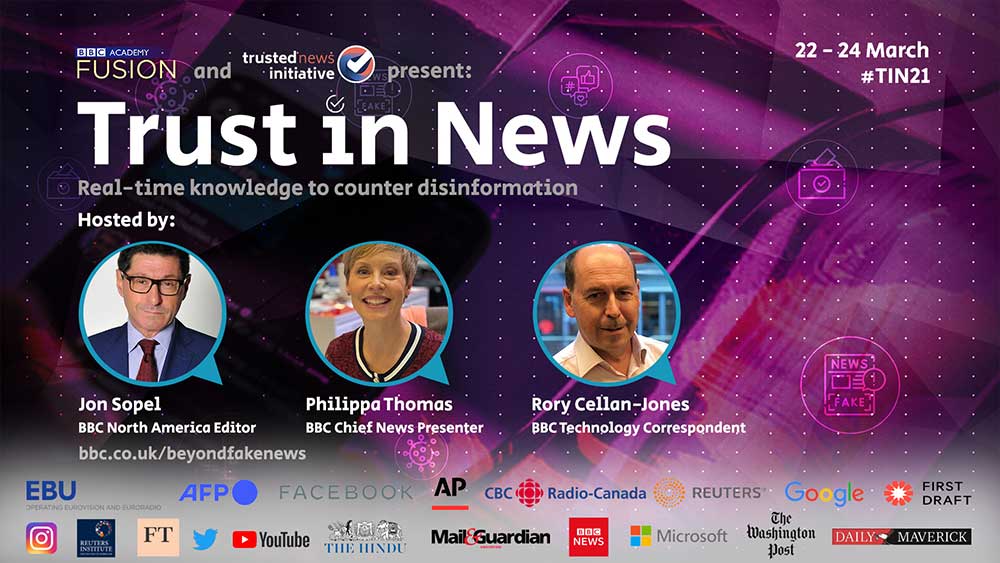
AFP in full force at Trust in News conference (22nd-24th March)
Three members of AFP's fact-checking team will be attending the Trust in News conference organised by the BBC from the 22 - 24 March.
Three members of AFP's fact-checking team will be attending the Trust in News conference organised by the BBC from the 22 - 24 March.
The Trusted News Initiative and BBC Academy's 'Trust in News' is a three day conference (Online webinars) to share knowledge on how to tackle disinformation.
Morning Conference session 1100 - 1200 - The view from the frontline
Jon Sopel, BBC North America Editor, opens the event. He'll be joined by Tim Davie, BBC Director General, to talk about the BBC's role in tackling disinformation and how the Trusted News Initiative is fighting back and tackling harmful disinformation in real time.
Rasmus Kleis Nielsen, Director of the Reuters Institute for the Study of Journalism and Professor of Political Communication at the University of Oxford, reveals the latest global research - funded by the BBC World Service - looking at the effectiveness of disinformation fighting techniques, such as labelling or correcting false information.
Workshop: 1215 - 1300 - A fact checking masterclass
Learn from those on the frontline about how to debunk stories and the critical questions to ask.
Maria Clara Pestre, Brazil-based fact checker for AFP, will reveal the challenges she faces when trying to fact check politicians, including President Jair Bolsonaro.
Hazel Baker, Head of UGC Newsgathering, Reuters, explains how debunking takes time, and also shares the critical questions to ask if you're asked to fact check under pressure.
Peter Mwai, Kenya-based journalist for BBC Reality Check.
Afternoon Conference Session One: 1400 - 1500 - Labelling Lies - how to do it effectively
How should debunked or fact checked information be presented? Expert researchers discuss the findings of RISJ's research and what they mean for fact checkers and social media platforms around the world. We'll cover the role that culture plays in debunking false claims and how journalists can best present their work to reduce the spread of harmful disinformation.
Claire Wardle, Co-founder and US Director, First Draft.
Santanu Chakrabarti, Head of Audience Research, BBC World Service.
Afternoon Conference Session Two: 1515 - 1600 - The Threat to Democracy
Jon Sopel, BBC North America Editor, shares his experience of tackling lies, propaganda and 'fake news'. An international panel of journalists joins him to discuss how journalists can hold politicians to account when they don't play by the rules. From the US to Myanmar, what can journalists do to defend democracy against disinformation and manipulation? What are the elephant traps, and what are the solutions?
Janine Gibson, Assistant Editor, Financial Times.
Larry Madowo, BBC North America correspondent.
Cameron Barr, Managing Editor, The Washington Post.
Day Two: 23rd March
Morning Conference Session 1100 - 1200 - Engaging hard to reach audiences
Philippa Thomas, BBC Chief Presenter, hosts today's sessions to understand the behaviours and perceptions of audiences, explaining how to win trust and engage hard to reach communities.
Rebecca Skippage, BBC News Editor and Disinformation Lead, BBC Monitoring and 2020/1 Reuters Journalist Fellow, reveals how to use the tactics of the disinformation actors to engage unreached audiences.
Sriram Srinivasan, Strategy & Digital Editor, The Hindu, will share his own examples of reaching out to and understanding the needs of remote communities.
Clara Jiménez Cruz, co-founder and CEO of Maldita.es explains how she created a community of "superpower warriors" to fight misinformation in closed messaging groups.
Barbara Whitaker, News Editor AP Verification, will talk about the need to connect with small neighbourhoods, forgotten by local news networks.
Workshop: 1215 - 1300 - Young people – the first line of defence
When misinformation enters the home, it's often down to the young people to separate fact from fiction, to keep their relatives safe. Children from across the globe explain how disinformation affects their families and what journalists can do to help them.
Ankur Garg, Country Director Indonesia, BBC Media Action talks about the success of using fast fiction, radio drama to inform audiences across Indonesia.
Afternoon Conference Session 1400 - 1500 - The human cost of disinformation
Katarina Subasic, is a senior fact checker for AFP covering Serbia, Bosnia, Croatia and Montenegro. She'll share her tips for protecting herself against harassment.
Marianna Spring, the BBC's specialist disinformation reporter, reveals the impact her job has on her and the people she reports on. From daily death threats to abuse, we'll discuss how to reduce the threat and psychological trauma.
Diana Swain, Senior Investigative Editor for CBC News, will describe the protective measures they've introduced to keep her teams safe.
Imran Ahmed, CEO Center for Countering Digital Hate, explains why journalists are trolled on social media, and gives practical tips on how to deal with it.
Day Three: 24th March
Morning Conference Session 1100 - 1200 - The tech giants' role
Rory Cellan-Jones, BBC Technology Correspondent, hosts today's sessions. He'll speak to representatives of the social media platforms about their part in turning the tide on disinformation.
Workshop: 1215 - 1300 - Project Origin – tackling disinformation in the digital ecosystem.
We'll hear about the latest technology to track and secure the provenance of content. Understand how it will work and help you to prove that media hasn't been tampered with.
Afternoon Session: 1400 - 1500 - What's Next?
After more than a year of reporting the pandemic, how do news organisations rebuild trust and tackle the next disinformation challenges? Four leading journalists and experts explain what needs to be done to keep one step ahead of the bad actors.
Sophie Nicholson, Deputy Chief Editor digital verification, AFP, gives advice on how to immunise the public against misinformation by revealing how you reach your conclusions.
Claire Wardle, Co-founder and US Director, First Draft, will discuss the implications for news when half of the country relies entirely on a completely separate information diet based on an alternative reality.
Liz Corbin, Head of News, EBU: will explain the importance of public service media and local journalism to tackle misinformation.
Hazel Baker, Head of UGC Newsgathering, Reuters, reveals how to predict when conspiracy theories will arise and fill timelines with trusted content before misinformation spreads.
COVID-19 Censorship: Trusted News Initiative to Decide the Facts?
Since time immemorial, those with power have used it to control those without. In the modern world, big government and big tech represent the seats of power when it comes to who is allowed to say what. Of course, many think that "private companies" can regulate speech in any way they see fit. But from either an ethical or legal point of view, this is false. The argument from the societal benefits of free speech works equally for posting YouTube videos and handing out flyers on a corner. Legally, the Supreme Court has long held that when a private company creates something that functions as a public square (think of a company town), the First Amendment comes into play. Way back in April 2020, it was already clear that the then-existing online socio-political censorship was going to expand into the world of science, medicine, and academia in the new COVID-19 era. On April 1 of that year, early in the pandemic, Foreign Policy took a look at these questions in a piece titled, "Coronavirus Has Started a Censorship Pandemic." And while TrialSite has noted that telling people to drink bleach for their COVID-19 is close to the legally unprotected shout of "fire" in a crowded theater, we think that disallowing good-faith medical information because the public can't be presumed to properly weigh claims is infantilizing said public, along with dismantling the free speech culture that perhaps peaked in the 20th Century. The efforts now underway to completely suppress positive data associated with early-onset treatment prospects such as ivermectin or the squelching of any discussion of vaccine safety issues is completely unacceptable in a civilized, democratic market-based society. Those perpetuating such offenses are in fact on the wrong side of history.
Algorithms Even Take Down New York Times
Preliminarily, Foreign Policy reminds us that the pandemic has seemingly suspended the freedom we are used to. Lockdowns and masks hit at the basic rights to move freely about and to show one's face. And perhaps these moves were necessary. But, bans on "disinformation" can impact experts' abilities to share thoughts and analyses and ultimately to find the truth. Egypt and Singapore are two example cases where fake news restrictions have resulted in criminal charges against attorneys, activists, watchdog groups, and regime opponents. Human Rights Watch reported that in Cambodia, "at least 17 people have been arrested on fake news charges for comments they made about the coronavirus." And this included four folks associated with a former opposition political party. And in Thailand, a man's Facebook allegation of virus-safety laxity at Suvarnabhumi Airport, while in Turkey at least 93 people are under investigation for "unfounded and provocative" postings about COVID-19. Over in the Free World, the major internet platforms have also been infected with the "censorship bug," reports Foreign Policy. These tech giants are doing a balancing act: ensuring that important information about the pandemic can be disseminated while "limiting the virality of potential harmful disinformation…." Using algorithms and not humans, even well-researched stories from places like the New York Times and the Atlantic have been removed from the modern public square under this new regime. The two Foreign Policy authors argue that the tendency of authoritarian practices to grow is so ever-present that we need to rein in the algorithms and let the free market of ideas exist in peace, especially when it comes to medical information.
Can We Trust the Trusted News Initiative?
In December 2020, the BBC took a look at one major effort to fight "fake news." The Trusted News Initiative (TNI) was founded in 2019 "to protect audiences and users from disinformation, particularly around moments of jeopardy, such as elections." TNI partners are no small frys—they include, "AP, AFP, BBC, CBC/Radio-Canada, European Broadcasting Union (EBU), Facebook, Financial Times, First Draft, Google/YouTube, The Hindu, Microsoft, Reuters, Reuters Institute for the Study of Journalism, Twitter, [and] The Washington Post." With vaccines on the way, BBC pointed out that related disinformation was, "spreading online to millions of people" and included minimizing COVID-19 risks along with impugning the vaccine developers' motives.
TNI members "will alert each other to disinformation which poses an immediate threat to life" so said materials can be swiftly removed and publishers avoid republishing "dangerous falsehood." Separately, TNI "had success running a rapid alert system during the UK 2019 General Election, Myanmar and Taiwan 2020 General Elections, and the US Presidential Election." Tim Davie, Director General at BBC, offered: "2020 has been a year like no other. We have seen the rapid spread of harmful disinformation and a growing number of conspiracy theories online. Whether it's a threat to our health or a threat to our democracy, there is a human cost to disinformation—The Trusted News Initiative partners will continue to work together to expand our framework and ensure legitimate concerns about future vaccinations are heard, whilst harmful disinformation myths are stopped in their tracks." The folks at the website Covexit also looked at TNI issues in December. They point out that a stunning aspect of the pandemic has been, "the near simultaneous repression of information, using very similar phrasing, by various media, both social and mainstream" when it comes to COVID-19 news. They also note that since March 2020 there has been a coordinated effort, "to tackle to spread of harmful coronavirus disinformation."
TrialSite View
Our nation was founded on free speech principles, and we are big fans of American Constitutional principles. TrialSite was founded to bring much-needed transparency, accessibility, and engagement to research—this will help all, from patient and provider to pharma and trial site investigator and staff, as research and care will increasingly blur over time. Overall, science is one area where open and unfettered discourse is key to advancement. Efforts to "pre-judge" scientific facts are a recipe for censorship, and we urge caution in any efforts to limit what people can say about COVID-19.
LobsterCraft recently opened up a new restaurant on Greenwich Avenue. (MaxEx photo)
GREENWICH, CT — When Mike Harden retired in 1997 from Crayola where he had spent most of his career designing and developing toys, he found himself in a little home in South Norwalk right on the beach, staring out at the boats in the water.
Looking for something to do, he put himself on the back of a lobster boat and worked there for about two years. Harden described himself as always being a "water person."
When the owner of the boat wanted out, Harden -- now known as Captain Mike -- bought everything; the boat, the equipment, the traps, the dock, and he obtained a lobster license. Catching lobsters quickly became a passion.
For a while, Harden was bringing home his fresh catch and selling to the neighborhood. However, there was a big lobster die-off in the Long Island Sound. Harden then decided at the advice of his wife to open up a gourmet food truck business called LobsterCraft, the first of its kind in the area, selling hot buttered lobster rolls on the streets of Stamford.
Harden's offerings featuring several lobster rolls and other seafood fare quickly caught on with the public. His plain hot lobster roll with melted butter — called The Coastal — has been featured on Food Network and Flavored Nation, and it was named "The Best CT Style Hot Buttered Lobster Roll in the Country" in 2018 and 2019.
Now with two food trucks, Harden only does catering, special events, corporate lunches and festivals. There are also brick-and-mortar locations now, too, with a new LobsterCraft spot that opened up several weeks ago in Greenwich.
There will also be new restaurants coming to Fairfield and West Hartford this summer, and even down in Florida to Ft. Myers and Sarasota later this year.
The Greenwich location is at 107 Greenwich Avenue, tucked away on the second floor in a nautically-splashed space.
For Harden, less is more. The menu isn't big by design.
"We pride ourselves on knowing how to handle the meat," Harden said. "We do a short menu really, really well. Some restaurants put in spices and use brioche rolls, and other people use the standard potato roll and they barely warm up the meat enough. There's three ingredients here: lobster, butter and bread."
The rolls are baked fresh every morning at 4 a.m. by a local commercial bakery, and the lobster, of course, is handled by Harden from start to finish, and he uses the most expensive butter he can find.
The Coastal Roll is the best seller. It features hot, buttered lobster, topped with a dash of a secret ingredient in a perfectly toasted bun. Harden's personal favorite is the Heat Wave, which boasts hot lobster that's dressed with serrano and habanero pepper infused butter for just the right amount of heat, all on a toasted bun.
The LBLT roll (MaxEx photo)
Other roll options include the LBLT: hot buttered lobster, bacon, lettuce and tomato with fresh, crisp romaine lettuce, diced garden tomatoes, bacon, and topped with garlic aioli.
Then there's the California: lobster topped with house-made wasabi soy sauce, garnished with thinly sliced cucumber and avocado, and served on a toasted split top roll.
The Surf N Turf roll has sweet claw and knuckle lobster topped with marinated flank steak shaved over a toasted roll, and finished with garlic aioli.
The Dirty Maynard has knuckle and claw lobster meat, garnished with farm fresh onions, carrots, and celery on a bed of lettuce, dressed in seasoned mayonnaise.
There is also a lobster roll flight, to go along with lobster tacos, lobster mac and cheese, clam chowder, lobster bisque, lobster grilled cheese, and fries.
The Surf N Turf roll (MaxEx photo)
"We're always asked, can you do a shrimp roll, can you do a baked salmon roll. We have a full kitchen, we can do all that. But we're best with a short menu, and we're happy," Harden said.
LobsterCraft Greenwich also features a creative beverage program that consists of craft beer selections, select wines, Tito's Vodka cocktails, White Claw Hard Seltzer, Hosmer Mountain craft soda, and East Coast Kombucha.
Harden chose Fairfield and West Hartford for new locations because of the food truck's success there.
"The trucks became my recon. When we got a couple of investors and they said 'let's open some stores,' I opened up the records for my truck and saw Greenwich loves us, Fairfield loves us, West Hartford loves us. Let's start there. It has become our road map. Wherever we put the truck, it either works or it doesn't work and we know right away."
LobsterCraft Fairfield will be located at 1814 Post Rd., and in West Hartford, the restaurant will be at 981A Farmington Ave. Currently, Fairfield is offering lobster rolls out of a temporary "pop-up" concession on-site while the restaurant completes construction.
Harden said when there are enough restaurants around the country, and potentially worldwide, he wants to spend more time out on the boat, where it all started for him.
"I love it. I love doing it. I love being at the front counter, but my passion is being on the boat," he said.


 Redbubble.com8. Use real content when designing