South Korea's leading credit card firm Shinhan Card has been granted a patent for a blockchain payments system, English-language local media The Korea Times reports on July 15.
Per the report, with the newly patented technology the company has established a blockchain-powered credit transaction process allowing for setting spending limits, paying in monthly installments and carrying out payments. The outlet quotes an anonymous Shinhan Card official commenting on the development:
"Services using those key functions of credit cards will be extended to the blockchain-based system, a notable advancement from the status quo whereby most blockchain-based services available are limited to cash wiring or user identification for online transactions."
The official also reportedly explained that the company has been awarded the patent about a year and a half after conducting a feasibility study, and that the firm is currently working to also obtain patents in European countries, the U.S., Japan, China, Vietnam and Indonesia. According to the article, the system could also soon allow for cardless transactions via a mobile app.
Per the report, the initiatives could result in a phase-out of the network of three intermediaries, namely credit card firms, a value-added network service provider and a Payment Gate. Value-added networks are service providers connecting credit card companies and member stores to verify and approve transactions, while the payment gate is tasked with carrying out the payment.
Company information website Crunchbase claims that Shinhan Card is South Korea's leading credit card provider and corporate analytics service Owler estimates the firm's annual revenue to be $841.6 million.
As Cointelegraph reported yesterday, a consortium of major South Korean firms partnered to launch a blockchain-based mobile identification system in 2020.
At the end of June, Crypterium, a crypto payment firm led by former Visa exec, revealed it shipped about 4,000 crypto debit cards in a week since the launch of the card.
A Neuroscientist Explains How He Found Out Meth Is Almost Identical to Adderall
A Columbia University psychiatry professor talks about what he's learned from trying the drug himself and studying it over the years. By Carl L. Hart Feb 9 2016, 2:00pmShareTweet
Instead of fighting the politicization of drug policy, the UN has failed to challenge the ideology and junk science that fuel the demonization of drugs.
This piece was published in partnership with The Influence.
"A Drug-Free World—We can do it!"
That's the slogan that was agreed upon and adopted as the United Nations' mandate when this body last convened in a major summit in 1998 to discuss global drug policy. Today, there is little question that global drug control has been misguided, overly punitive and largely ineffective, and has steered national drug policies in disastrous directions.
UN member states will come together again next week, from April 19-21 in New York, for another summit on drug control: UNGASS 2016. The question now is whether the UN can dispense with its old, unrealistic and harmful slogan and adopt a position in line with human rights and science.
The global drug control regime that member states must consider dates from 1961, and its age is showing. The UN drug conventions go out of their way to demonize drugs without reference to science—an approach ripe for abuse in punitive and discriminatory ways.
Marijuana is a prime example. It is described in the conventions as "particularly liable to abuse and to produce ill effect" and without any therapeutic value. That classification is not surprising in view of the ranting at UN meetings in the 1950s by the then-US drug czar, Harry Anslinger, that the "killer weed" marijuana was the "most violence-causing drug in the history of mankind" and its consumption was linked to immorality among "Negroes, Hispanics and jazz musicians."
Though some countries have in recent years stepped away from the UN's classification of marijuana, many retain laws that were influenced by the UN treaties. Across Africa and in much of Asia, in spite of acceptance of many traditional and cultural uses of marijuana, national laws are particularly harsh. In Kenya, for example, the law states that where an accused person can convince the court that the marijuana he or she possesses is for individual use only, the prison sentence can be up to ten years—in all other cases, it's up to 20 years.
Several countries have begun to recognize the misinformed view of the UN on marijuana regulation. Four states in the US and Uruguay have legalized recreational marijuana use by adults, and multiple US states and several countries around the globe have decriminalized possession. Some have changed marijuana policies because of concerns about racial discrimination in the enforcement of drug laws. For example, in the US at the state level, black people are about four times more likely to be arrested for marijuana than their white counterparts. At the federal level, Hispanics represent two-thirds of the individuals arrested for marijuana violations. This is despite the fact that blacks, Hispanics and whites all use the drug at similar rates.
Others have implemented policy changes because many assertions—taken as fact—made about marijuana several decades ago are simply inconsistent with evidence from research.
Statements made about the addictive potential of marijuana amount to pure hyperbole when considered alongside the evidence. It's true that about 9 percent of marijuana smokers will become addicted at some point in their life, but about 15 percent of alcohol drinkers and a third of tobacco smokers will become addicted over their lifetime. These developments highlight the fact that unless the UN takes a realistic look at its current drug regime, more and more countries will reject its guidance.
The UN should in theory provide a counterweight to the politicization of national drug policy. Instead, it has failed to challenge the ideology and junk science that fuel the demonization of drugs.
Methamphetamine is another example. It is heavily criminalized in most regions of the world. The UN Office on Drugs and Crime regularly bemoans the threat of methamphetamine use and encourages heavy law enforcement responses. But, from a chemical and a user perspective—as I have demonstrated in my own research and previously written—methamphetamine is nearly identical to the medicine Adderall. In fact, both drugs are approved in the US for treating attention-deficit/hyperactivity disorder (ADHD). Of course, Adderall is also used to treat narcolepsy and to facilitate wakefulness in soldiers, among many other things. Prohibiting methamphetamine by law inevitably creates a black market in which toxic adulteration of the substance is inevitable, leading to a great deal more danger than is caused by the substance itself.
Opioids are a third example. Over the past decade, the US and Canada have seen a steady increase in opioid-related fatalities. This phenomenon that has drawn attention as it shows up outside the urban environment, including in affluent white suburbs. But here too, the problem reflects a long history of bad decision-making, demonizing opioids and undermining their positive uses.
Lethal overdose on heroin alone is not common. The vast majority of these "overdoses" occur as a result of combiningopioids with another sedative, such as alcohol or benzodiazepines. In other cases, unsuspecting people may ingest street opioids adulterated with other compounds, including fentanyl—an opioid considerably more potent than heroin. Again, black markets formed by punitive drug laws enhance the likelihood of these negative outcomes.
The US can and should learn lots from some European countries where a wider range of services are available for people who become dependent on opioids (who are a small percentage of all opioid users). Part of overdose prevention in Europe is ensuring easy access to therapies using opioid medicines such as methadone and buprenorphine. Methadone therapy has a long record of success, but in the US, it is still highly stigmatized, and many people who need it simply cannot get it. In Switzerland, Germany and a number of other countries, the few people who are not helped by other therapy are even allowed to receive heroin by prescription, safely, in controlled doses of known strength, administered in a health facility. Studies have demonstrated the efficacy of this measure. But most countries are far from that kind of pragmatic policy, and the UN, in the past, has rejected it too.
Globally, it is clear that punitive drug policies have been used to further marginalize marginalized groups. African-Americans, Afro-Brazilians, Roma in parts of Europe and poor Filipinos, among many others, are all arrested and incarcerated for drug law violations at rates disproportionate to their numbers in their respective societies. This shameful use of drug policy should be universally condemned, especially in light of the fact that many of the policies are based on false assumptions about drugs.
The UN's founding principles include human rights, equitable development and human security. But it has sabotaged its ability to adhere to these principles with its tacit acceptance of ineffective and discriminatory drug policies and its rejection of pragmatic, scientifically sound approaches. The UNGASS 2016 drug summit presents an opportunity for this body to do the right thing by adopting a position on drugs that is consistent with evidence, decreases racial discrimination and enhances the humane treatment of people who use drugs.
Dr. Carl L. Hart is a professor of psychiatry at Columbia University. He is also the author of the bookHigh Price: A neuroscientist's journey of self-discovery that challenges everything you know about drugs and society Follow him on Twitter.
Joanne Csete is an adjunct associate professor at Columbia University.
This article was originally published by The Influence, a news site that covers the full spectrum of human relationships with drugs. Follow The Influence on Facebook or Twitter.
5 Min Home Test to Determine if You Have Adrenal Fatigue (Do this IMMEDIATELY if you do)
Posted on: March 14, 2016 at 1:03 pm
Last updated: July 16, 2018 at 11:14 am
You might have heard about it before since it's becoming increasingly common, but what is adrenal fatiguereally? Believe it or not, adrenal fatigue affects about 80% of people around the world and can seriously impact day-to-day life. The biggest worry is its symptoms are indicative of a few different disorders and as a result, are often overlooked by healthcare professionals. Don't worry—there is something you can do at home to find out whether or not you're at risk!
What do my adrenal glands do?
Your two adrenal glands are about the size of a thumb and sit just above the kidneys. They are responsible for producing over 50 hormones needed to drive nearly every bodily function essential to everyday life. It's important to understand how responsive our hormones are; they react with each other and respond to organs and tissue. If something is out of balance, your hormones will change accordingly.
Your adrenals are also involved in how you cope with stress. Stress is seen as a threat by your body, so the adrenals step in to fight it by releasing adrenaline hormones. This quick response sends a surge of blood to your brain, heart, and muscles, which then triggers a release of corticosteroids which slow other bodily processes that aren't being used for immediate survival (like digestion).
The adrenal glands are also responsible for balancing hormones including the following:
Glucocorticoids
Mineralocorticoids
Sex hormones (estrogen and testosterone)
Adrenaline
What is adrenal fatigue?
Advertisement
Adrenal fatigue affects millions of people in the United States alone, but how? It has everything to do with hormones. When your hormonal levels are abnormal—either too high or too low—your adrenals might be weak, which can negatively affect your health.
Your cortisol levels are always too high. During this stage, you will have tons of energy and won't necessarily feel sick.
Without making appropriate lifestyle changes to manage the high cortisol levels in stage 1, you will eventually move into stage 2 where your cortisol levels drop way below normal. This is when you will start feeling fatigue.
Your cortisol levels will be constantly low which cause extreme exhaustion and zero energy to do simple tasks.
Of course, there are different severities of the disorder. Mild cases might be tolerable with just a few cups of coffee to jump-start your day, but caffeine is not recommended for those with this disorder. In more serious cases, the adrenal glands' activity might be so diminished that getting out of bed for just a few hours a day is a struggle.
With each reduction in adrenal gland function, every organ and system is seriously affected. These changes can occur in your carbohydrate, protein and fat metabolism, cardiovascular system, and even sex drive. Regardless of its severity, adrenal fatigue causes changes on a cellular level, and though your body tries its best to make up for these glands' loss of function, it's extremely damaging.
What causes it?
Adrenal fatigue occurs when your adrenal glands simply cannot keep up with the amount of stress your body is experiencing. According to most healthcare practitioners, either prolonged or acute stress can cause your adrenals to become overworked and eventually ineffective.
Other causes might include the following:
Exposure to environmental toxins
Stressful experiences like divorce or death of a loved one
Prolonged stress caused by conditions like a poor work environment, unhealthy relationships or financial hardships
Not getting enough sleep
Poor diet and lack of exercise
Negative thinking/pessimism
What are the symptoms?
Below are several common symptoms of adrenal fatigue that you need to look out for:
Muscle weakness
Hair loss
Dizziness, especially when moving from a horizontal to a vertical position
Twitching muscles
Excessive sweating even though you've done minimal activity
Pain in the lower back
Sensitivity to light
Chronic infections (most commonly, bacterial, fungal and yeast infections)
Cravings for salt
Irritability
Heart palpitations
Light-headedness, especially upon standing
Lethargy
Dry, brittle skin
Low or decreased libido
Premature aging
Instant mood change after eating carbs
Depression
Easily startled
Cravings for sweets and carbs
Does this sound like you or someone you know? If it does, the good news is hormonal restoration is possible through simple lifestyle modifications. A change in diet is the key to leading a healthy life and should be your focus. Eating well will help promote hormonal balance and reduce stress.
The Postural Hypotension Test
If you're worried you might be at risk, there's an adrenal function test you can do at home to avoid a trip to the doctors.
It's common for those with adrenal fatigue to experience dizziness or lightheadedness upon rising from a seated or laying position. The Postural Hypotension Test is easy to perform and will measure the change in blood pressure as you move from one position to the other… and all you'll need is a blood pressure cuff!
Advertisement
To do the test, you must lie down and rest for 5 minutes. While you're in this horizontal resting position, record your blood pressure. Once 5 minutes have passed, stand up and record your blood pressure a second time. Typically, your blood pressure should rise 10-20 points, but if you see a drop, you're likely suffering from adrenal insufficiency.
Lifestyle tips for coping with adrenal fatigue
If you have adrenal fatigue, there are changes you can make to naturally treat this disorder. The best thing you can do is adopt a positive mindset—replace your negative thoughts with positive ones.
The Right Diet
There are certain foods you should eliminate from your body that trigger inflammation or are hard for your body to digest. The idea is to eat foods that are easy to digest and that don't exhaust your adrenals.
Body Signals: 9 Signs That Your Body is Crying for Help
Posted on: August 15, 2017 at 10:48 am
Last updated: June 28, 2018 at 2:29 pm
We may never understand it all, but our bodies have been perfectly and intricately designed. In fact, it even seems to talk to us sometimes – that is, if we choose to listen. For example, our body has mechanisms to warn us when we're falling ill such as the tickle in your throat or that subtle chill that sends shivers through your body.
However, oftentimes these signs can be vague and it can be difficult to figure out the root cause. Read on for a list of the most common symptoms that can leave us perplexed, and the most likely root causes. Chances are if you address these root causes the symptoms should resolve; if not it may be time to see your healthcare practitioner.
9 Body Signals You Probably Should Not Ignore
1. Leg Cramps
Have you ever woken up to an agonizing leg cramp? The sudden, sharp, lasting pain is the worst. Muscle cramps usually disappear on their own which is great. But there are steps you can take to prevent them from happening as often (or at all).[1]
Causes
Inadequate blood supply can occur because of a narrowing of the arteries. People often feel cramp-like pain in their legs during workouts, but it tends to go away after exercising.
Compression of the nerves in your spine can produce leg cramps, especially if you've been walking for a long time.
Mineral depletion is the most likely cause of your leg cramps and blood pressure medications like diuretics aren't helping. Minerals such as potassium, calcium, and magnesium are key for reducing leg cramps.
Solutions
Leg cramps can be hard to fully address because so much contributes to them, but following these steps should help. Help ensure better blood supply by doing gentle yoga and 6 other methods. To improve your spinal health, try to avoid making these subtle spine-damaging mistakes. Eating more potassium-rich foods such as tomatoes, oranges, bananas, and spinach. But when those fail to help, you can also drink a large glass of water, eat half a banana before bed, or drink liquid magnesium glycinate (just talk to your medical practitioner first about correct dosage).
2. Food cravings
We've all had those food cravings that can't be denied. It's hard, no doubt. But paying attention to other areas of your lifestyle and diet may solve the craving problem for you![2,3]
Causes
Over the years, people have trained their brains when it comes to the sweet or salty foods everyone craves. Our brains have come to expect the pleasure and reward felt from eating our guilty pleasures; it's not easy but breaking the cycle of junk food here is key in order to rewire the brain.
Hormone imbalances such as adrenal fatigue or too little leptin can often cause food cravings.
People also crave certain foods because they're lacking certain essential nutrients. For example, omega-3 deficiency has been known to trigger cheese cravings.[11] And we all know, too much cheese can't be good. Or, if you notice more intense sweet cravings, your body could be asking for glucose.
Solutions
Advertisement
It will be tough, but not buying processed foods and other packaged, sweet and salty snacks will make a huge difference. Your leptin and ghrelin levels help you regulate your appetite, but they work best when you get enough good sleep so try to lose the late nights. Less sleep often means more stress, which can lead to more sweet and salty cravings. Try relieving your stress like this, or by using this calming supplement by Natural Vitality. You can also make an appointment with your doctor to check for nutritional deficiencies or see if you have adrenal fatigue by asking yourself if you have these symptoms.
3. Dry Skin
You'd be surprised at how many people have come to accept dry, taut, or ashy skin. However, it could be trying to tell you more.
Causes
It sounds redundant, but dry skin can occur as a result of dry weather. In North America, for example, this time happens to be in the dead of winter. On the opposite end of the spectrum, dry heat provided by desert-like areas or even wood-burning stoves or space heaters can also lead to dry skin.
Hot baths and showers are linked to dry skin. While it's soothing and relaxing, the heat does take a toll, especially if your skin is sensitive. Speaking of water, heavily chlorinated pools also have a negative, drying effect on skin, so moisturizing right after a swim or shower is key to maintain healthy skin.
Many soaps and detergents can be harsh on any skin type. Because they're designed to remove oils (natural or otherwise), your skin is left feeling dry. But dosing up on vitamin E or foods like vegetables, nuts, oil, and fish can be a great help to restore dehydrated skin.
Solutions
Soothing dry skin has never sounded so delicious. The more good fats you get into your diet, the smoother and more moisturized your skin will be. This means eating more avocados, fatty fish, nuts, seeds, and olive oil. If you don't want to eat away the dry skin, you can take cooler showers and limit the number of times a day you wash your face to one. Oh, and find a mild soap or serum and oil to wash your face instead.
4. Headaches
Millions of people suffer from headaches every day and, more often than not, they can be simply solved by hydrating yourself. Now, there are many types of headaches, but these are the most common causes.[4]
Causes
Having an infection, cold, or fever usually results in headaches due to the pressure of congestion and inflamed sinuses.
Emotional stress is linked to things such as depression, poor slees, overmedication, and skipping meals tend to add up and can take a huge, unhealthy toll on your brain.
Your environment greatly affects your well-being. This may include things like second-hand smoke, strong fragrances, and specific foods.
Solutions
Avoiding environmental exposure is the toughest solution, so we'll get it out of the way first. It's tough because no one has control over what other people do. Think of, for example, cigarette smoke or strong perfumes. It's not as easy as simply avoiding them, but everyone does their best. Keeping a food diary can help you track what foods result in headaches, e.g., foods like wheat, dairy, or sugar. Boosting your immunity with these natural antibiotics and magnesium-rich foods can also help reduce headaches. Getting enough sleep and staying hydrated throughout the day will also help keep headaches at bay.
5. Brittle Nails
Nails can get more brittle with age and most often occurs in women. But age isn't the only cause.[5,6]
Causes
Long-term nail polish use, no thanks to all the chemicals, can damage your nails. So, if you can help it, try going without it or finding an organic, chemical-free product.
A hormone imbalance can result in a long list of things: depression, muscle or joint pain, obesity, increased cravings, and… brittle nails. But restoring balance helps make your nails stronger and healthier.
Eating a poor diet isn't helping brittle nails either. But vitamins and minerals such as zinc, iron, and vitamins B and C can help restore healthy nails.
Solution
Balancing hormones is almost impossible to do on your own, so it's best to go on this journey with a health practitioner. They'll be able to find specifically what nutrients, vitamins, minerals, and foods your body is lacking, as well as set you up with a diet that will help get you there. Frequently using nail polish or going for manicures can weaken your nails, too.
6. Split Ends
Men may not care as much, but a head full of split ends is a nuisance. Unless you're looking close, however, split ends are almost invisible. But it's not so much how they look and rather what they mean for your health.[7]
Causes
Using heated appliances like blow-dryers or hair straighteners can dry out your hair. Excessive and aggressive brushing can also wear your ends out.
Using chemical-filled hair dyes is known to look great but at a cost – it leaves your hair dry and brittle like hay. So, if you can, try opting for natural coloring alternatives.
Most importantly (and least aesthetically), a lack of healthy fats in your diet could be responsible for your split ends. Over time, adding healthy fish or olive oils to your diet can help promote stronger, healthier hair.
Solutions
If you dye your hair, the harsh coloring chemicals dry your hair right out. So the next time it's time for some color, try some natural hair color such as henna or use protective sprays if you are going to use potentially damaging hair products. Instead of using blow-dryers, allow yourself some extra time for your hair to dry naturally as much as you can to avoid the direct heat that can damage your ends. Lastly, eat a more protein-rich diet. The collagen in your body helps produce your hair, which protein is key in creating. Try using this collagen supplement by Neocell.
7. Bad Breath
We've all experienced it – the self-conscious feeling of being in a face-to-face conversation when you have bad breath. There are so many factors that can lead to bad breath, but these are the most common.[8]
Causes
The food you regularly eat affects your entire body. Depending on the type of food you eat and how great (or not) your oral hygiene is, broken down food particles can begin to rot between your teeth and in pockets of your gums.
Having a dry mouth can cause bad breath. Without saliva, the body's natural cleanser, there's nothing in your mouth to remove particles in your mouth that cause rancid odors.
Oral infections are important to keep an eye out for, because they can affect other parts of your body such as your gut. Whether it's gum disease or tooth decay, regular flossing, gargling with salt, brushing, and additional alternatives like oil pulling go a long way to prevent these infections.
Advertisement
Solutions
The food you put in your tummy affects what comes out and that includes your breath. Eating more real foods and less processed foods is the first place you should start. This includes boosting your microbiome with pro and prebiotics. Lastly, just like you probably tell your own children, grandchildren, nephews and nieces, use good dental hygiene practices: tongue scraping, brushing, flossing, gargling with salt, and oil pulling.
8. Bloating
Bloating and feeling gassy after overeating at Thanksgiving lunch or Christmas dinner is one thing, but always feeling that discomfort isn't a good sign.[9]
Causes
Eating too fast can result in bloating after you finish a meal. Good thing is, it can be easily avoided if you simply eat slower.
A diet full of rich and fatty foods can also lead to bloating because they take longer to digest than protein or carbs. As a result, you feel (probably uncomfortably) fuller for longer. The best thing you could do is limit the amount of rich, fatty foods on a weekly basis.
You may also have a food sensitivity that causes your stomach to bloat up every time you eat it. If you aren't sure what's causing it, try something like an elimination diet.
Stomach acid is the starting point of digestion in the gut; if you have low stomach acid this results in improper breakdown of food in the stomach and eventually fermentation, off-gassing and symptoms of acid reflux. You may also feel tired, heavy and sluggish after meals if you have low stomach acid.
If there is an overgrowth of bacteria in your small intestine (known as SIBO) this can result in chronic bloating; essentially there is too much bad bacteria overpowering the good gut bacteria in your gut
Solutions
Start small. Simple changes in eating patterns like eating less rich or fatty foods and eating smaller portions more slowly can make a big difference. If the problem remains, consider assessing the state of your gut – do you really know if it's healthy or not? You can replenish good bacteria with pro and prebiotics and do an at-home stomach acid test. As a rule of thumb, it always helps to visit your healthcare practitioner. This product by Atrantil to decrease bloating and relieve small bowel issues.
9. Hammer Toes
Having toes that always look curled might not seem like a big deal, but the condition known as hammer toes can cause complications such as an overcompensating gait that could lead to strain on your back, discomfort in your feet, and can be especially concerning for people with diabetes. [10]
Causes: Hammer toes (where the toes are curled in and the "knuckle" is raised, often rubbing against shoes) is usually caused by poor footwear choices over a long period of time. However, hammer toes are also more common with people with flat feet. People with bunions or rheumatoid arthritis can also develop hammer toes.
Solutions: If you have flexible hammer toes (ie. you can bend your toes straight with your hands without pain), only minor treatments are necessary, starting with finding more appropriate footwear and applying ice packs. If you have rigid hammer toes (ie. is it painful to attempt to straighten them out), this means your misaligned tendons have impeded your joint mobility- usually surgery is necessary to reverse the problem. In either case, you should speak with your family doctor or a podiatrist to discuss most appropriate next steps.
If you notice you have hammer toes, you should act sooner than later to reduce the risk of back problems, injury, and diabetic complications in the future.
There you have it – 9 body signals that you should probably address if they ever come up!
Advertisement
Pssst. Looking for another great way to improve your heart health? Try this Pure Coconut Water Powder! Unlike coconut milk or oil–both of which come from mature coconuts–coconut water is harvested from young, green coconuts. Bursting with electrolytes, antioxidants, and potassium, studies show that it could also play a role in boosting heart health!
Growing new plants from cuttings is a great way to increase your stock in a relatively short time. Rooted cuttings are often sturdier than seedlings, and come to maturity faster, many of them bearing flowers and fruits much earlier than seedlings. For example, if you were to grow English Holly from seeds, it may take years to grow into a good-sized bush and bear the red berries, if at all it does. Holly is dioecious, having separate male and female plants. After years of waiting, you may end up with a male plant that bears no berries.
Plants grown from cuttings are exact clones of the parent plant, so you know exactly what you're growing, which is not the case with seed-grown plants. That's why many gardeners prefer to grow new plants from cuttings even when they can be easily grown from seeds. You can pick and choose from existing plants that have desirable characteristics such as good vigor, optimum size, disease resistance, and good yield.
Populating your garden with cuttings may work out to be very cost effective. A single plant can give you plenty of cuttings without jeopardizing its health. If you have gardening friends, you can exchange cuttings. If not, you can get just one or two plants from the gardening center and take multiple cuttings from them even before planting them out in the garden. This is the way to go if you need a large number of plants for a hedge or beds. You can even take some tip cuttings from the herb bundles you buy from the supermarket shelves.
Some plants are sterile; they do not make viable seeds. This is the case with many naturally occurring and artificially developed hybrids. Such plants can be propagated only by cuttings or some other method of vegetative reproduction such as division, layering, grafting or tissue culture.
For successful propagation, cuttings should be taken at the right time, especially for plants that change their growth pattern according to seasonal changes. There are different types of cuttings depending on the age of the stems from which they are taken.
Types Of Cuttings
Softwood cuttings – Taken in late spring or early summer (May-June) from new shoots that appeared that season. The soft, flexible, green stems should be kept moist with frequent misting. They readily take root and get established in the same season.
Semi-ripe cuttings – Taken in summer (June – August) from slightly matured stems of that season, they may take a bit longer than softwood cuttings to take root, but the warmth of the summer months helps with root growth.
Our Latest DIY Projects
Hardwood cuttings – Taken in fall and winter from mature, woody stems, they are ready for planting in next spring. Ideally, the cuttings should be prepared as soon as the shrubs start shedding leaves so that they can grow enough roots before the spring flush of shoot growth.
You can use different parts of the stem to grow new plants, but some plants can be propagated from leaf and root cuttings too.
Tip cuttings – 6-8 inches long cutting from the growing tip of the stem is taken just below a node. Most herbs can be grown from tip cuttings.
Basal cuttings – A side branch is taken, cutting it as close to the main stem. Most plants grow readily from 6-10 inches long basal cuttings.
Heel cuttings – Many shrubs require a bit of the old stem for successful rooting. The side branches are yanked off the parent plant so that they contain a part of the main stem (heel).
Stem sections – Many cane-forming plants can be propagated by midsections of their long stems. Each 4-6 inch section containing a few nodes can sprout roots at the bottom end and new top growth from side buds. Since the sections may have the same thickness at both ends, the bottom ends should be marked as soon as you divide the stem.
Root sections – Some plants like the sumac and the Californian tree poppy are easier to grow from root cuttings than stem cuttings. A few roots can be dug up in the dormant season without harming the parent plant, and divided into several sections.
Leaf cuttings – Many succulents grow new plants from whole leaves, but snake plant and begonias can be propagated from sections of the stem.
Helping The Rooting Process
Preparing The Cuttings
The cuttings need to be stripped away from the lower leaves before sticking them in the rooting medium. For woody cuttings, the bottom end is slightly scraped to expose the cambial tissue. Cuttings of some fleshy stems should be kept aside overnight or for a few days to form a callus––a layer of dry scar tissue––at the bottom end.
Rooting medium
A good rooting medium that keeps the cut end constantly moist is necessary. Garden soil is better avoided because it contains disease causing organisms and spores that can rot the cuttings. A combination of peat moss and sand/perlite is good enough for holding enough moisture while allowing good drainage. Do not add any fertilizer to the mix.
Regular misting and watering
The cuttings should not be allowed to wilt. Keep on misting the top portion and water the medium regularly, but ensure drainage. Covering the pot/propagation tray with plastic helps provide a warm, humid atmosphere ideal for growth.
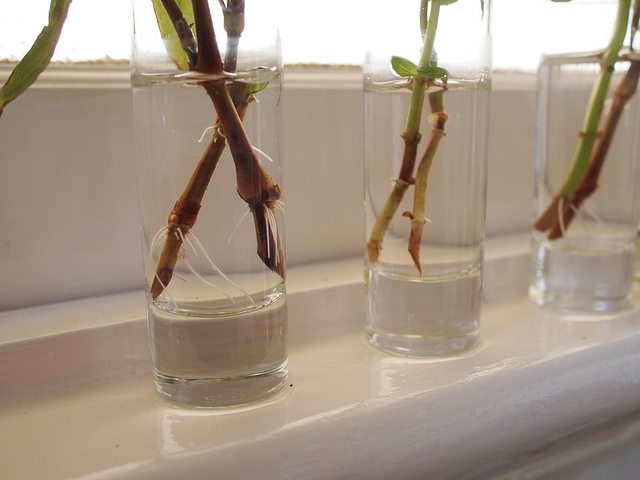
Most cuttings can actually take root in water, but water-grown roots are relatively fragile, so extra care should be taken while transplanting them into soil.
Providing warmth
Heating pads may be used to provide bottom heat. It encourages root growth.
Rooting hormones
Hormones can be used to ensure greater success with rooting, but are only necessary with some plants that are difficult to root. An infusion of willow branches can help with rooting. The medium should not contain fertilizers when rooting hormones are used.
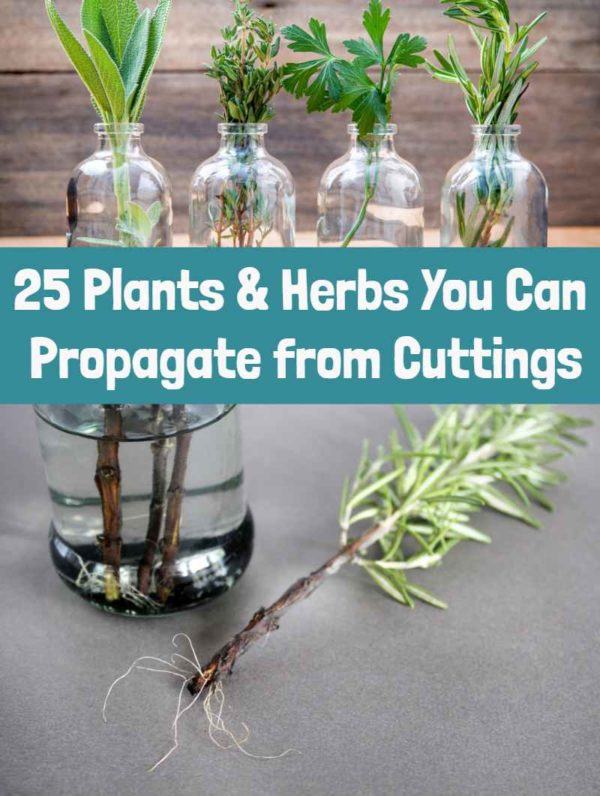
Although it doesn't hurt to experiment with growing any plant or herb from cuttings, many annuals that grow readily from seeds may not be worth the effort. The cuttings of some plants, particularly fruit trees that are grafted onto rootstocks, will not grow well even if you manage to force out some roots with the help of rooting hormones. But the following plants give excellent results.
1. Sage – Take 4-inch semi-ripe basal cuttings in fall and pot up. Keep the rooting medium warm and moist throughout winter and then transplant in spring.
2. Thyme – Grow several varieties of thyme from tip cuttings taken in summer and inserted into some moist potting medium.
3. Basil – They are easily grown from seeds, but add to the variety by rooting up tip cuttings taken at any time of the year and kept in a warm, protected place out of direct sun.
4. Rosemary – Take 3-5 –inches long tip cuttings in spring from new growth, or use heel or basal cuttings in fall for rooting in cold frame. If you don't want a lot of rosemary plants, root a few cuttings directly in individual pots covered with a plastic dome.
5. Lavender – Take 3-inch tip cuttings in early spring and root them in a cold frame. Transplant the rooted plants into garden beds after 4-6 weeks. In summer and fall, heeled cuttings can be taken for spring planting the following year.
6. Horseradish – Lift the root in early spring and cut into 3-inch sections. Plant them a foot apart directly in the garden bed.
7. Comfrey – Dig up a plant and take root cuttings in either spring or fall. Directly plant in a deeply worked bed and cover with mulch. Its roots grow deep into the soil and bring up the nutrients.
8. African violets – Cut off young, healthy leaves with 2-3 inches of leafy stalk. After poking a hole with a chopstick at a 70-degree angle, insert the stalk of each leaf into a tray of moist compost and sand. Keep the tray moist and warm and in brightly lit area.
9. Rex Begonia – All you need to grow these big-leaved beauties is a single leaf. Make a few slashes on the prominent veins on the underside of the leaf and lay it on a moist bed of peat moss and sharp sand in equal proportions. Weight the leaf down with a few pebbles so that the cut edges remain in contact with the bed. Keep in a warm, well-lit place and watch the new plants appearing at these cut edges.
10. Snake plant (Sansevieria) – 2-3 inch sections of the leaf can be used to make new plants. You can thus make a large number of plants from one parent plant. The only problem with this method of propagation is that the new plants will not carry the original variegation. Sections of rhizomes should be planted to retain the variegation.
11. Aluminum plant (Pilea cadierei) – Take tip cuttings with 3-4 nodes. Strip the lowest pair of leaves and trim the stem at that node. Insert into moist rooting medium and keep in a warm place. Keep the medium moist at all times until new growth appears.
12. Coleus – Growing tips, as well as side shoots, arising from the axils of leaves on this plant, will result in new plants. Water the plants very well before snipping off growing tips with 2-4 nodes. Remove the lower leaves and stick into some moist rooting medium. You can insert the cuttings into bottles of plain water, but water-grown plants need extra care while transplanting.
13. Geranium – 6-8 inches long cuttings can be rooted, but it helps if the parent plant is allowed to wilt slightly prior to taking the cuttings. Withdraw water for a week and then take the cuttings 12 hours after watering the plant. The rehydrated stems take root more easily.
14. Philodendrons – You can find a large variety of philodendrons with attractive leaf patterns and colors, but the good news is that all of them are easy to grow from cuttings. Tip cuttings with 2-3 nodes are the easiest to root because they start growing from the tip as soon as the roots form, sometimes even earlier. Mid sections with 2-3 nodes are also good, but it may take some time for new shoots to develop from leaf axils.
15. Jade plant (Crassula) – These fleshy-leaved plants are great for gifting. If you have one plant, you can make several with stem cuttings taken almost any time of the year, as in the case of most houseplants that are tropical in origin. Take 3-4 inch long cuttings with a sharp blade and keep them aside for a week. A good callus formation protects the fleshy stems from rot. Insert the cuttings in a well-draining potting mixture used for succulents. Water occasionally, allowing the potting mix to become nearly dry in between.
16. Chinese evergreen (Aglaonema spp.) – When these plants become leggy, take tip cuttings and pot them up in moist compost and sand potting mix. Keep the soil evenly moist, not wet. Mist the leaves to keep them hydrated until new roots can supply water. Make 3-inch long sections of the remaining stem and lay them horizontally into a tray of moist peat-sand mix. Partially cover the sections with sand and enclose the tray in clear plastic until new shoots start to push through the plastic. Pot up the new plants in individual pots.
17. Dumb cane (Dieffenbachia spp.) – The plants keep losing lower leaves as they grow. Cut off the leafy heads and set them aside for a day or two to form a callus. Pot up in individual containers and keep in a warm place that gets good light. Cut off the remaining bare canes 2 inches above the soil line. Divide these canes into 3-inch sections and place in rooting trays containing peat and compost. Keep covered until shoots come up. Keep the original plant in a warm, well-lit area; it will put up new growth in no time.
18. Ti plant (Cordyline spp.) – These cane-forming plants will eventually grow too tall and lanky. Whenever you feel like pruning your Ti plant, make new plants with the cut branches. Take 1 to 1 ½ ft long growing tips and trim off the lower leaves. Insert into potting mixture in individual pots and keep them in a warm place near a bright window. If any part of the cane is left over, cut it into sections 8-10 inches long. Mark the bottom end of each section by giving it a slanted cut. Insert into a bed of moist soil in the garden.
19. Fragrant Corn plant (Dracaena fragrans) – This one is closely related to Ti-plant, so the propagation method is similar. Tip cuttings and mid-section cuttings can be grown into new plants.
20. Fuchsia – One can never have enough of these beauties; luckily they are very easy to grow from cuttings taken in spring. Tip cuttings with 3 pairs of leaves can be inserted into a moist compost-sand mix and kept covered with plastic to provide humidity and warmth. Plant them out in summer to get flowers in the same season.
21. Hydrangea – Take 4-inch long tip cuttings carrying 3-4 pairs of leaves. Remove the lowest pair and trim the stem closer to the node. Insert into moist rooting medium and cover with plastic sheet. You can trim the larger leaves by 3/4th to reduce water loss through evaporation.
22. Holly – In fall, take 10-12 inch cuttings from a female (one that has borne berries before) bush and wound the bottom one inch. Dip in rooting hormone powder and pot up in some moist rooting medium. Cover with plastic sheeting and keep indoors.
23. Californian tree poppy (Romneya sp.) – Dig up some roots in winter (December) and cut them into 3-inch sections. Lay them horizontally on a tray of moist sand-compost mix. Cover with a glass until shoots appear. Wait until summer to plant them outside.
24. Rose – Take 12-inch long hardwood cuttings of pencil thickness in fall and plant out in the chosen location. Water the cuttings thoroughly until winter.
25. Weigela – Take 5-inch long softwood/semi-ripe cuttings in late spring or early summer and pot up, keeping under a plastic cover. Plant out in early fall. Alternatively, take hardwood cuttings in fall. Root them and overwinter them in a cold frame, until they can be planted outside next spring.