Thousands of studies have been done on the health effects of vitamin D, and research shows it is involved in the biology of all cells and tissues in your body, including your immune cells. Your cells actually need the active form of vitamin D to gain access to the genetic blueprints stored inside.
This is one of the reasons why vitamin D has the ability to impact such a wide variety of health problems — from fetal development to cancer. Unfortunately, despite being easy and inexpensive to address, vitamin D deficiency is epidemic around the world.
It's been estimated that as many as 90 percent of pregnant mothers and newborns in the sunny Mediterranean region are even deficient in vitamin D,1 thanks to chronic sun avoidance. A simple mathematical error may also deter many Americans and Canadians from optimizing their vitamin D.
The Institute of Medicine (IOM) recommends a mere 600 IUs of vitamin D per day for adults. As pointed out in a 2014 paper,2 the IOM underestimates the need by a factor of 10 due to a mathematical error, which has never been corrected.
Grassroots Health has created a petition for the IOM and Health Canada to re-evaluate its vitamin D guidelines and correct this mathematical error.3 You can help further this important cause by signing the petition on ipetitions.com.
More recent research4 suggests it would require 9,600 IUs of vitamin D per day to get a majority (97.5 percent) of the population to reach 40 nanograms per milliliter (ng/mL).
The American Medical Association uses of 20 ng/ml as sufficient, but research shows 40 ng/mL should be the cutoff point for sufficiency in order to prevent a wide range of diseases, including cancer.
Research Again Concludes Vitamin D Lowers Cancer Risk
A large number of studies have shown raising your vitamin D level can significantly reduce your risk of cancer.
Most recently, a randomized clinical trial5 by researchers at Creighton University, funded by the National Institutes of Health (NIH), found vitamin D and calcium supplementation lowered participants' overall cancer risk by 30 percent.6,7,8
The study, which included more than 2,300 postmenopausal women from Nebraska who were followed for four years, looked at the effects of vitamin D supplementation on all types of cancer.
Participants were randomly assigned to receive either 2,000 IUs of vitamin D3 in combination with 1,500 mg of calcium, or a placebo for the duration of the study. Blood testing revealed that 25-hydroxyvitamin D (25(OH)D) levels were significantly lower in those who did develop cancer.
Joan Lappe, Ph.D., professor of nursing and medicine at Creighton University and lead author of the study, said:
"The study provides evidence that higher concentrations of 25(OH)D in the blood, in the context of vitamin D3 and calcium supplementation, decrease risk of cancer … While people can make their own vitamin D3 when they are in the sun near mid-day, sunscreen blocks most vitamin D production.
Also, due to more time spent indoors, many individuals are lacking adequate levels of vitamin D compounds in their blood. The results of this study lend credence to a call for more attention to the importance of vitamin D in human health and specifically in preventing cancer."
Vitamin D Status Is Strongly Correlated With Cancer Risk
Previous research has shown that once you reach a serum vitamin D level of 40 ng/mL, your risk for cancer diminishes by 67 percent, compared to having a level of 20 ng/ml or less.9,10,11,12,13,14,15,16
Most cancers, they found, occurred in people with a vitamin D blood level between 10 and 40 ng/mL. The optimal level for cancer protection was identified as being between 40 and 60 ng/mL.
Another study17 published in 2015 found women with vitamin D concentrations of at least 30 ng/mL had a 55 percent lower risk of colorectal cancer than those who had a blood level below 18 ng/mL.
Even earlier research,18 published in 2005, showed women with vitamin D levels above 60 ng/mL had an 83 percent lower risk of breast cancer than those with levels below 20 ng/mL!
The Health and Medicine Division of the National Academies of Sciences, Engineering and Medicine (formerly IOM) has also reported an association between vitamin D and overall mortality risk from all causes, including cancer.19,20
Vitamin D also increases your chances of surviving cancer if you do get it,21,22 and this includes melanoma.23,24
Access Sun Exposure as Much as Possible and Get Your Vitamin D Level Checked
The UVB in sunlight is what triggers your body to produce vitamin D. I firmly believe getting regular, sensible sun exposure is the ideal way to not only optimize your vitamin D level, but maximize your health as well, because sunlight also has many other important health functions. I'll review some of these in another section below.
Regular sun exposure provides over 1,500 different wavelengths, and we're just now rediscovering the value of many of these other wavelengths besides UVA and UVB. For example, we now know that red and infrared light helps your body form structured water, which is important for cellular function.
Many do not appreciate that red, near-, mid- and far-infrared have many important biological functions. One of them is to improve mitochondrial function, especially the 660 nm and 830 nm wavelengths, as cytochrome C oxidase in mitochondria use these wavelengths to produce ATP more efficiently.
Vitamin D3 supplements are a poor second resort, but if you're unable to get sufficient sun exposure, then it's better than nothing. As demonstrated in the featured study — which specifically looked at the effects of supplementation — they do have some benefit.
Also, while not addressed in this study, I strongly recommend taking your vitamin D3 with vitamin K2 and magnesium as well, since all three work in tandem.
A primary consideration when it comes to vitamin D is to get your level checked, ideally twice a year, in the middle of the summer and winter, when your level is at its highest and lowest.
What you're aiming for is a level between 40 and 60 ng/mL year-round. Grassroots Health offers vitamin D testing at a great value through its D*Action study.
How to Minimize Your Risk of Skin Cancer From Sun Exposure
Many avoid sun exposure for fear of melanoma, an aggressive and potentially lethal form of skin cancer. However, it's important to realize that melanoma occurs among those with minimal sun exposure as well.
An important risk factor for melanoma is overexposure to UV radiation. Baking in the sun for hours on end on a weekend here and there is not a wise choice.
To minimize your skin cancer risk, you want to avoid sunburn at all cost. If you're going to the beach, bring long-sleeved cover-ups and a wide-brimmed hat, and cover up as soon as your skin starts to turn pink.
Following are some general guidelines for sensible sun exposure. If you pay close attention to these, you can determine, within reason, safe exposure durations.
Know your skin type based on the Fitzpatrick skin type classification system. The lighter your skin, the less exposure to UV light is necessary. The downside is that lighter skin is also the most vulnerable to damage from overexposure.
For very fair skinned individuals and those with photodermatitis, any sun exposure may be unwanted and they should carefully measure vitamin D levels while ensuring they have an adequate intake of vitamin D, vitamin K2, magnesium and calcium.
For most individuals, safe UV exposure is possible by knowing your skin type and the current strength of the sun's rays. There are several apps and devices to help you optimize the benefits of sun exposure while mitigating the risks. Also, be extremely careful if you have not been in the sun for some time. Your first exposures of the year are the most sensitive, so be especially careful to limit your initial time in the sun.
Vitamin D Influences Your Health in Many Ways
The benefits of vitamin D are not restricted to cancer prevention. In fact, the list of health benefits of vitamin D is exceedingly long. As noted earlier, researchers have now realized that vitamin D affects virtually every cell and tissue in your body, so it might be easier to list what it will no taffect, rather than what it will impact.
Compelling evidence suggests that optimizing your vitamin D can reduce your risk of death from any cause,25 making it a foundational component of optimal health. Megadoses of vitamin D have also been shown to decrease the length of time critical care patients must remain hospitalized.26 Those who received 250,000 IUs for five days were released after an average of 25 days, compared to the average 36 days for those receiving placebo.
Patients who received 500,000 IUs of vitamin D for five days were released after an average of just 18 days, effectively cutting their hospital stay in half. The health care savings in this instance alone are tremendous. When you add in all possible diseases and ailments vitamin D can prevent and/or ameliorate, the savings could potentially tally into the trillions each year.
Certainly, for the average person, optimizing your vitamin D level is one of the least expensive preventive care strategies at your disposal. If you suffer from any of the following ailments and still haven't checked your vitamin D level, now may be the time to go ahead and do so, as research27 into vitamin D has found it can help prevent and/or address:
Osteoporosis, osteomalacia (bone softening) and hip fractures
Type 1 and type 2 diabetes
Cancer, including cancers of the breast, colon, prostate, ovaries, esophagus and lymphatic system.
Adding vitamin D to the conventional treatment for pancreatic cancer may also boost the effectiveness of the treatment28
Hypertension (high blood pressure), cardiovascular disease and heart attacks.
What's worse, if you have a heart attack while vitamin D deficient, your risk of dying is nearly guaranteed)
Obstructive sleep apnea. In one study, 98 percent of patients with sleep apnea had vitamin D deficiency, and the more severe the sleep apnea, the more severe the deficiency29
Multiple sclerosis30 (MS). Research shows MS patients with higher levels of vitamin D tend to experience less disabling symptoms31
Depression,32,33Seasonal Affective Disorder and psychiatric conditions such as schizophrenia
Neurological disorders, including autism, dementia and Alzheimer's34,35
Health Benefits of Sun Exposure Beyond Vitamin D
There's overwhelming evidence to suggest the human body evolved to obtain health benefits from, and to thrive in, sunlight. As previously noted in The Daily Mail:36"Even taking the skin-cancer risk fully into account, [scientists] say that getting a good dose of sunshine is statistically going to make us live longer, healthier and happier lives."
One significant mechanism by which sunlight helps optimize your health is by triggering the release of nitric oxide (NO) when sunlight strikes your skin.37
NO is a powerful blood pressure lowering compound that helps protect your cardiovascular system, cutting your risk for both heart attacks and stroke. According to one 2013 study,38 for every single skin cancer death, 60 to 100 people die from stroke or heart disease related to hypertension. So, your risk of dying from heart disease or stroke is on average 80 times greater than your risk of dying from skin cancer.
Importantly, while higher vitamin D levels correlate with lower rates of cardiovascular disease, oral vitamin D supplements do not appear to benefit blood pressure, and the fact that supplements do not increase NO may be the reason for this. According to researcher Dr. Richard Weller:
"We suspect that the benefits to heart health of sunlight will outweigh the risk of skin cancer. The work we have done provides a mechanism that might account for this, and also explains why dietary vitamin D supplements alone will not be able to compensate for lack of sunlight."
To get a thorough understanding of how UV light affects your cardiovascular function, read Weller's paper, "Sunlight Has Cardiovascular Benefits Independently of Vitamin D."39 Research also shows that UV light:
Helps treat and prevent the spread of diseases like tuberculosis40
Helps anchor your circadian rhythm, helping you sleep better
Helps kill and prevent spread of antibiotic-resistant bacteria. UV light at 254 nanometers acts as a potent bactericidal, killing drug-resistant strains of S. aureus and E. faecalis in as little as 5 seconds41
Reduces your risk of myopia (short-sightedness). As reported by The Daily Mail:42 "[R]esearchers believe that the neurotransmitter dopamine is responsible.
It is known to inhibit the excessive eyeball growth that causes myopia. Sunshine causes the retina to release more dopamine"
Boosts men's libido by increasing testosterone. Research reveals men's' testosterone levels rise and fall with the seasons. Researchers have also linked low vitamin D with an increased risk for erectile dysfunction45
Helps maintain vitamin D status in elderly people at a lower cost than that of using oral vitamin D supplementation.46
Not only could UV lamps help improve nursing home patients' physical health, they could also help relieve symptoms of depression
Lowers all-cause mortality. In one study,47,48 women who avoided sun exposure had double the all-cause mortality rate of those who got regular sun exposure.
Another 54-month-long study,49 involving more than 422,800 healthy adults, found that those who were most deficient in vitamin D had an 88 percent increased mortality risk
Embrace Sensible Sun Exposure as a Health-Promoting Habit
Safe exposure to sunshine is possible by understanding your skin type, the UV strength at the time of exposure, and your duration of exposure. My advice has been clear: Always avoid sunburn. Once your skin develops the slightest tint of pink, cover up with clothing to avoid further exposure.
The most important part of the equation is to pay close attention to your vitamin D level. Ideally, get your vitamin D tested during the peak of summer and at the end of winter to help guide your UV exposure and vitamin D supplementation. The evidence is overwhelming: You really do need sensible sun exposure for optimal health.
Since few foods contain any significant amount of vitamin D, and your body certainly was not designed to get its vitamin D from supplements, which are a modern invention, the only rational conclusion is that sun exposure is the ideal way to raise your vitamin D level.
Research has shown just how beautifully your body has been designed to use the sun's UV rays to promote health. It even has built-in "fail-safes" and self-regulatory processes to ensure you cannot produce too much vitamin D from sun exposure. Plus, the vitamin D produced by UVB rays actually helps counteract the skin damage caused by UVA. It's an intricate dance that simply cannot be fully duplicated with a supplement.
Here in the Mobile Work Unit (MWU) in Portland, Oregon the Coroflot team is getting pretty damn excited for our first ever Sketch Jam. If you haven't already heard the news, the event is going down on April 26th from 6-9PM at the Hand-Eye Supply's Glisan Garage in Downtown Portland, Oregon. It promises to be the most high-concept, high-flying, and downright fun sketching competition you've ever seen. There will be sixteen competitors and the winner of the bracket style competition will receive a Wacom Cintiq 27!
In keeping with the spirit of Sketch Jam, we've decided it's the perfect time to highlight some of the most talented sketchers in the Coroflot community. These aren't just any sketchers, but rather ones who occasionally forgo the temptation to use a tablet so they can keep their analogue skills sharp. Digital sketching is definitely more practical for most jobs these days, yet there's something still so satisfying about seeing a sketch done on paper. Maybe it feels more personal because we get a slightly closer look at the ideation process. Whatever it is, we love checking out analogue product sketches. Here are 10 designers from the Coroflot community with some serious sketching skills:
You want linework? You got linework with a large collection of concept sketches done on a handful of different kinds of paper - even yellow notepad paper! Whether he's drawing baby sippies or futuristic weapons, Jeff is a pro when it comes to on-the-fly sketching.
It's not exactly easy to make a printer look interesting, and in that feat Grant succeeds. His sketches are simple and clean, managing to visually convey the dimension and feel of this product.
Despite what the project title suggests, these sketches are far from dumpy. While some are digital, the ones that really stand out for us are the pencil and pen sketches. Even though we're not sure how the concept would work, the hourglass lamps look cool as hell.
Gotta love the ideation! With Himanshu's collages of sketches, we are presented with a clear image of how his mind works and how he translates his ideas to stylish designs. These sketches are fairly minimal in terms of drawing material, but the design ideation is captured perfectly.
One of the trademarks of this longtime Coroflot member is the extremely thorough presentation of each project he posts. Sketches don't take the spotlight in the project as a whole, yet what we do see gives us clarity into how focused Kenneth is from the moment he begins working on an idea until the moment production is finished.
Kelly Custer is responsible for some incredible digital sketches too, but we are consistently blown away by the sheer mastery of her skill she demonstrates with just some markers and a note pad. Her designs are highly technical and her techniques are tip-top. Bonus points for taking such good photos.
Marc's sketching is precise and in this particular project he clearly lays out every step of his process. We especially like his use of Chartpak markers to communicate the exact colors and shades of this product.
Simplicity is key in this brief collection of car sketches. Mauricio uses only a blue pencil and you can tell he moved through these sketches quickly, yet the skill demonstrated with just this one drawing tool is impressive to say the least.
The thing we love the most about this collection of sketches is that you can tell Hector was doing them for fun. He sketches everything from Stormtroopers to old school iMac computers, and he does this without taking himself too seriously. Sometimes it's good to just play around on paper and that is exactly what we get here.
In this collection we get a little bit of everything, and we especially like how Michael shows the sketches and then also includes the digital renderings. He perfectly illustrates the importance of simply throwing all of your ideas out onto the page and then his process for bringing those ideas to fruition.
Sketch Jam takes place on Wednesday, April 26, 2017 from 6PM-9PM in Portland, Oregon. Want to apply to compete? ENTER HERE! You can check out the Design Week Portland event page HERE and our Facebook event page HERE. Make sure to follow Coroflot on Facebook, Twitter, and Instagram for more Sketch Jam updates!
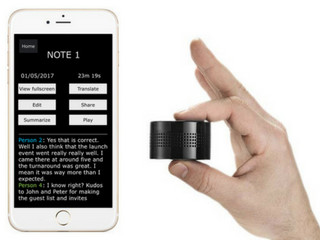
Simply place Titan Note on your table during class or a meeting, and it will not only record everything but accurately convert it to text. Titan Note is a groundbreaking tool that will improve your learning by changing how you take notes. Distinguish who is speaking, summarize, translate, share and edit your notes - all with Titan Note.
Take better smartphone photos with these simple tips and tricks
Lights, smartphone camera, action
By now we're all familiar with the basics of smartphone photography: You pull out your phone and push a button. But if you really plan to preserve those memories for posterity, then you'll want your phone snaps to look their best. So up your phone photo game with these nine tips and tricks.
Camera settings, lighting, scene modes, and composition can all play a part, as we'll explain. And when you've got your photos looking suitably fantastic, make sure you also take the time to back them up somewhere safe.
Adjust focus and exposure
Smartphone cameras have come a long way in a short time, and most handsets now give you some control over the focus and exposure of your shot. If manual focus is available, it's usually activated with a tap on the screen, on the point where you want the camera to focus.
Check in the settings for your phone's camera app too. If you find a face recognition option, it'll automatically zero in on faces, helping you avoid shots where your friends' faces are a blurred mess.
Then there's the exposure, or how much light is allowed into the frame. In the default iPhone camera app (shown above), you can tap once to focus, then hold and drag to adjust the exposure. It's a similar story in the camera app for stock Android: Tap once for focus, then you can adjust exposure via the slider that pops up at the side or top of the screen. For more tips on nighttime photography, check out this guide to capturing celestial objects in the night sky.
Use HDR mode
HDR, or High Dynamic Range, is now a staple feature for smartphone camera apps. Simply put, it brings detail out of the darkest and lightest parts of your picture and creates a better balance of colors overall. The downside is that, in HDR mode, photos take a little longer to process while your smartphone works all this out.
It's particularly suitable for landscapes and portrait shots, especially when there's a wide range between the darkest and lightest parts of your photo. As it takes a few milliseconds longer to take a snap though, you should avoid using it on fast-moving subjects or when you can't keep your phone steady.
Whatever your make and model of phone, you should see "HDR mode" in a prominent place somewhere on screen. It's also likely that you can set this to automatically kick in (as on stock Android, above), which means HDR mode will activate whenever the camera senses it could be useful. You can also turn HDR mode on and off manually.
Use natural light where possible
Light is one of the most important factors in any photo. If you can make use of the available natural light, then you don't have to resort to your phone's built-in flash (which may give you less-than-ideal results, particularly at a distance).
If you can, position your subjects so they're well-lit from the front and not silhouetted by a strong light from behind. Of course, this isn't always possible for quick shots, but do what you can.
Using artificial light can work too, though you need to take more care. In a night scene, for example, get your friends to stand closer to the glow of artificial lights rather than deeper in the shadows, and make sure their faces are as well-illuminated as possible. Using the flash can help, but if you have time, try one shot with flash and one without to see the difference.
Steady your shot
One area where smartphone snappers still lag behind dedicated cameras is in their sensitivity to movement. Even a slight shake can leave a smartphone photo looking like it was taken on a rocking boat, while a more professional DSLR copes better with this type of motion.
It's therefore important to minimize camera shake as much as possible. Buying a tripod might seem like overkill, but you can pick up cheap, small tripod models that are made specifically for smartphones.
If you don't want to get a tripod then use whatever's available—a wall, a friend's shoulder, or even your other arm. Keeping the shot steady is particularly important in low light conditions, when exposure times have to be longer.
Apply the rule of thirds
This is an old photography trick that's been around for years, but you can still apply it to smartphones. According to the rule of thirds, an image is split into nine equal blocks that form a three-by-three grid (like in the image above). You should aim to get the most interesting parts of your image (like a treeline or a group of faces) near the corners of these segments, where the imaginary gridlines meet.
To improve your shot composition, give the rule of thirds a try. Whether you're taking pictures of friends at a bar or working on a landscape shot, you'll find it simple and effective.
It's even more simply when you don't have to imagine the dividing lines yourself. This being the age of instant smartphone photography, just about every camera app out there will display them for you. On the stock Android camera app, you'll see the grid icon at the edge of the screen, while in iOS the grid option is under Photos & Camera in Settings.
Take photos in bursts
The days of waiting for your film to get processed and developed before you can see your photos are long gone. Take advantage of our brave new world of instant photography by firing off as many shots as possible. Then, you can review your images after the event and delete all but the best ones.
Most phones come with a burst mode for this very purpose. On both iOS and (stock) Android, you activate it by holding down the shutter button in Photo mode. You can dive into the camera settings to make changes to how burst mode works.
Third-party camera apps often have a burst mode too. It gives you a useful range of different pictures to choose from, and can prove handy in pretty much any situation, from casual family shots with your blink-prone cousin to wildlife photos.
Edit images on the go
Getting good pictures from your phone doesn't start and end with your camera app of choice. You can also add a photo editing app to the mix to tweak your shots before sharing them with the wider world.
You can add filters, tweak colors, straighten images, and more. Also keep an eye out for the "one touch" fixes that enhance your pictures with minimal effort from you. Some image editing apps import photos taken by your camera, while others have an integrated camera component of their own. Which brings us on to our next tip...
Install a third-party camera app
If you've never ventured beyond your phone's default camera app, then you might be surprised at just how many third-party alternatives are out there. They give you access to extra settings, different features, and bundles of filters to get your mobile photos looking their best.
Take Manual for iOS, for instance, which lets you control shutter speed, ISO, white balance and more. Afterlight for iOS and Android gives you access to a similar set of pro tools, together with a bunch of impressive filters.
Speaking of filters, Instagram for iOS and Android (above) isn't just a social network. It can also turn your shoddy photos into works of art with a couple of taps. The app now includes a host of editing and tweaking tools besides the filters it's famous for, making it one of the best photo-taking apps you can get.
Explore the default camera app
Even with plenty of third-party camera apps to pick from, it's worth exploring everything the default app on your phone has to offer. If you're on iOS, the built-in camera comes with a selection of live filters you can choose from (tap the icon in the top-right corner to see them). And if you're using an iPhone 7 Plus, then you can swipe across to the Portrait mode for an instant depth-of-field effect (where the subject remains sharp but the background is blurred).
On Android, the camera app you've got will vary depending on which manufacturer made your phone. The stock Google Camera app has a very useful lighting filter available via the thermometer icon. You can choose from presets including cloudy and tungsten, so you can get the colors looking just right no matter what type of light you're dealing with.
Meanwhile, default camera apps from Samsung, LG, Sony, Huawei (above), and others include a variety of extra scenes and tools to play around with. On newer Samsung handsets, for example, you can tap the Mode button to bring up a Pro mode packed with filters and adjustments for color and contrast that can be tweaked even before you take your shot. So open up your app, and do some exploring.
The board of a luxury New York City apartment complex raised concerns about "dog racism" in 2015, when it started requiring residents to test their dogs' DNA before granting the animals permission to reside in the building.
The board reasoned that certain dog breeds are aggressive by nature. (The complex has a list of banned breeds, which includes Pomeranians, according to DNAinfo.)
Dog DNA tests claim they can tell you about your pet's behavior, estimate how big a puppy will get, and indicate whether it will play nice with children or other pets.
Having experimented with testing my own DNA, I decided to find out more about my pup. In honor of National Pet Day, here's how it went:


 Copic Marker sketches by Kelly Custer