Lower-Your-Blood-Pressure-Naturally-eBook.pdf


https://tellyourfamilystory.com/
"...Those familiar with my work know that I’m a writer of narrative history: the Dutch founding of New York, the history of Amsterdam, the American Revolution… My new book enters — for me — wholly uncharted territory. Like the man said, This time it’s personal. I’ve known since I was a kid that my grandfather, along with my great-uncle, ran the mob in my Pennsylvania hometown. But I also internalized the family’s vow of silence on the topic. Then one evening my mom’s cousin, Frankie Filia, taking a break between sets in the little geriatric jazz combo he was singing for (“Fly me to the moon…”), said to me,“Russell, you’re a writer – what are you gonna do about the story?”
Smalltime is my answer to Frankie. Researching it took me into a netherworld of bookies and payoffs, of America in its mid-century brawn, and into the heart and soul of my family. Feel free to click the links, to see what others have had to say about it, to take the book for a spin, and by all means to order a copy.
And meanwhile… While I was researching the book I was asked to be writer-in-residence at Baruch College in New York, and I made the workshop into a “Tell Your Family Story” course. It was an overwhelming experience. My students came flooding forth with an amazing array of family tales. And I got an idea: create an online course, in which I could show people how to research their own family history by bringing them along with me as I dug into my grandfather’s life and times. So if you’ve always had an inkling to delve into your backstory but weren’t sure how to begin, you might want to click this link. "
which I think is pretty cool....~A.

"Why are there so many different bird house plans?"
Many bird house plans are species specific and for good reason. For example, cavity-nesters require different entry-hole diameters.
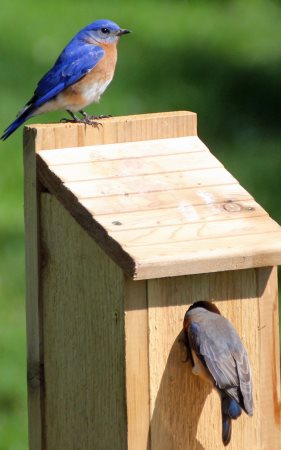
A hole size for bluebird house plans will be different than one for chickadees. There are even different recommended hole sizes for each species of bluebirds such as Eastern, Western and Mountain Bluebirds.
This chart has bird house dimensions and hole sizes for 34 species.
It is also important to make the appropriate size hole because it will exclude certain undesirable species.
For example, a hole size 1 1/8 inch in diameter will exclude starlings and house sparrows, which often monopolize nest boxes and even evict more desirable species. So it is important to choose the appropriate bird house plan for the species you wish to attract.
We have made a collection of free bird house plans for general and species-specific nest box plans for you to use to build your own bird houses.
This is a more elaborate design, but gives you a quick look at one type of bird house design. View our birdhouse plans further below for an easier to build box.
Some great inexpensive books on building bird ho
Approximately 1 dozen cavity-nesting birds will use boxes with a 1 1/2" entrance hole. These include Tree & Violet-green Swallows, bluebirds, chickadees, wrens, nuthatches, and possibly titmice. Wrens will use holes that are smaller than 1 1/8" in diameter. Woodpeckers will prefer larger holes, 2 1/2" across.
Below is a one-board bird house plan from the North American Bluebird Society (NABS) that will attract a variety of birds to nest.
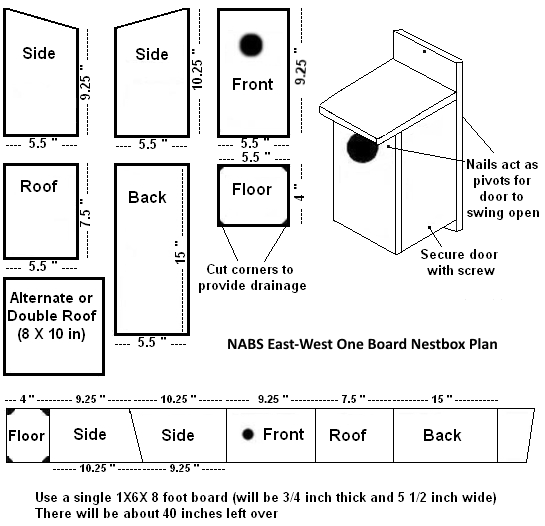
Here are bluebird nest box plans (pdf) that are fairly simple, you make all your cuts out of one 1"x6"x4' board. The plans can be used to attract either Western or Eastern Bluebirds.
If you live in an especially hot climate, like the South, here are cooling bluebird house plans designed to draw air in and keep nestlings cool on hot days.
We aslo have more information and plans on our bluebird house plans and Eastern Bluebird pages.
Very similar to bluebird houses, the wren house plans are also made from one 1"x6"x4' board. Mounting location will be different as well as hole diameter size. You can read more by following the link above.
As you may already know, when building a bird house for Purple Martins, you are 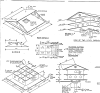 not building for one pair, but rather for several to many pairs of birds because Purple Martins are colony nesters.
You are essentially building an apartment complex that consists of several units or rooms for each pair of birds.
You can also use gourds that are hung together instead of building a house.
Here are purple martin plans for 1-level, 8 rooms (pdf file).
We have additional information on our purple martin bird house plans and gourd birdhouses pages.
Robins, phoebes and barn swallows are not cavity nesters so instead of a closed-in 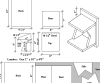 house, they rather prefer to nest on shelf or platforms with the front being completely open.
They can be 4-sided, with a floor, 2 walls and a roof or if you have a sheltered area, like under an eave or porch, you can just build an open platform with no walls or roof.
Here are robin nest shelf plans made easily from one 1"x10"x4' board.
More free plans can be found at Phoebe and Robin nest box plans.
If the box is too small, the birds will not use it or it may become so crowded as the young grow.
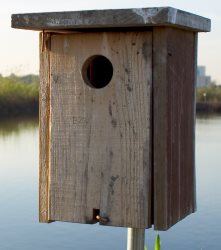
They may not be injured, but a crowded box is hard for the adults to keep clean and it is more difficult for chicks to stay cool. It is possible that young are forced to fledge prematurely.
Some believe that larger boxes help the birds exercise more, so they are more capable of flying when they fledge.
If the box is too large, the birds may not use it because it is too vulnerable to predators or it may attract too much attention or be difficult to support.
Every nest box needs a roof (though many natural cavities are open on top). Our choices are fairly simple. Flat or a sloping; overhang or flush.
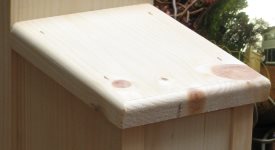
It appears that in most cases (there are lots of nest box designs) that 1 inch overlap on the sides and 2 inch overlap in the front is adequate for protecting the occupants from the elements (rain) and increasing the boxes longevity by keeping the box dry.
Another main function of the roof is to provide shade for nest boxes that are exposed to the Sun, especially in warm climates.
So the roof should be sloped to help water runoff (as close to 45 degrees as possible), and it should be overlapped to let water drip away from the box and to provide more shade.
If you plan to place your box in the open (bluebirds for example) in a warm area, you should consider a double roof to keep the box cooler. The two roofs should be spaced to allow air to circulate between them. It has also been suggested that a second side wall be added to also shade the west side of the box.
Front of Nest Box
Most nest box plans have a perpendicular face, but recently, several designs have a sloping front.
The advantages:
Disadvantages:
What kind of Hole for the Nest Box? Round, Oval or Slot? One hole or two?
Believe it or not, several bird house designs have more than one hole.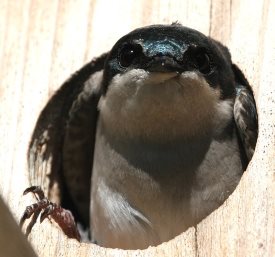
Advantages? Both adults can feed young at the same time - one adult doesn't have to waste energy & time flying around.
A second hole may prevent the strongest chick from dominating access at the entrance hole.
Also, if predators or house sparrows get in the nest, at least the adults have a chance to escape through the second hole.
If ventilation is an issue, the second hole also acts as a big vent. Well, at least I have convinced myself... the next box I build or modify will have two entrance holes.
Disadvantages - May allow easier access by predators and weather (rain).
Some of the research seems to indicate that Bluebirds are attracted to the oval hole (more than the Peterson box shape).
There are conflicting data about the slot hole design and access for house sparrows. Some say the slot entrance discourages house sparrows and others have found that house sparrows readily use them.
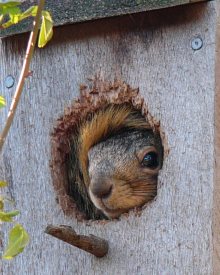
If you have trouble with squirrels, then make sure you install a hole guard or restrictor to prevent squirrels from chewing the entrance hole larger. Squirrels will kill and eat nestlings if they get access.
The building materials don't necessarily have to be wood. I guess we could use the recycled plastic material that is being used for decks and fences.
Nest boxes can also be made from PVC pipe or plastic buckets, but those are different plans to be covered later.
If you have access to redwood or cypress or even cedar, that's great. Those types of wood will last a long time, but they can be expensive. Hardwoods will last longer than soft woods, but they can also be expensive.
Treated wood (softwood) will last longer. But is treated wood safe to use for bird houses?
The EPA website says treated wood is safe to use in vegetable gardens and on picnic tables, but it is not safe to use on cutting boards, counter tops or bee hives.

CCA treated (Wolmanized). This material was stopped from use in residential construction in 2003, Canada.
I have seen web sites that claim treated wood releases "dangerous fumes" and should not be used when making bird houses. They do not cite the source of this information.
Another website says that only untreated wood should be used in case the birds "gnaw" on the wood. Except for parrots, birds are not generally known for gnawing, but they do peck at the wood (That is how woodpeckers and chickadees excavate their nest cavities).
The Purple Martin Conservation Organization recommends: "Only untreated wood (no pressure-treated wood, no chemically-treated wood, etc.)" when making bird houses.
Since birds are well known to be very sensitive to environmental pollutants (remember the canary in the coal mine?), let's not take any chances. Only use untreated wood.
Nest Boxes can be made from solid wood stock, plywood, bark slabs or solid logs
Many of the nest boxes I built in the past were made of plywood, because I always had scraps of plywood handy.
Many plans recommend using plywood (exterior grade plywood) and some even preserve the wood with spar varnish.
Nest boxes can also be built by using exterior slabs (slab lumber) that still have the outside tree bark when the tree is sawn up to make lumber.
Solid logs can also be hollowed when making bird houses.
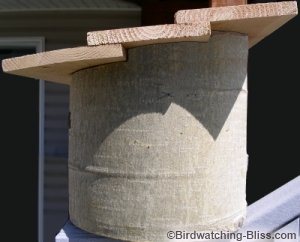
I have done this by first splitting the log, then hollowing out each side, drilling an entrance hole, then joining the two halves back together with wood glue and screws. The log bird house pictured on the right was not split, but hollowed out.
I have been planning to build a bird house or nest box from a real wood tree log for several years. I like the way they look and the extra thick walls insulate the birds from heat and cold.
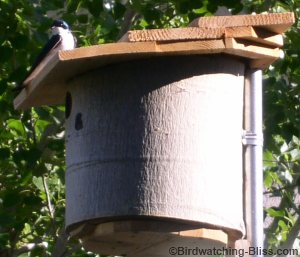
I had been looking for a nice 10-12 inch log, so when we found a fresh fallen 10 inch aspen near our campsite two years ago, I knew I found the right log.
We don't have the best video camera and we didn't want to get too close and end up disturbing the nesting tree swallows since they were so nice to choose and use our birdhouse :-), but here is a quick summary video of of the aspen tree bird house:
I didn't want to split the aspen log, because I like the way the bark looks and didn't want to mark it up or have it fall off the log.
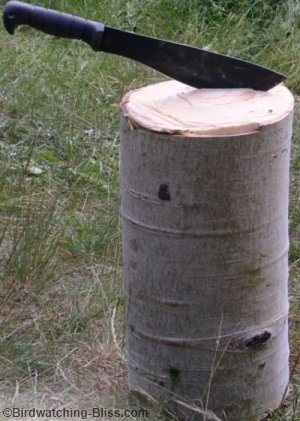
I chopped a two foot section from the downed tree with the idea that I could make two nest boxes.
The birds most likely to use the nest log at our house were Tree Swallows. They had successfully nested for several years in a nest box attached to the down spout on our front porch.
As the trees in the front yard grew, there seems to be more competition from house sparrows. A female Tree Swallow as actually killed several years ago in the box. We assume the house sparrows were responsible. The new aspen nest log was going to be mounted in the back yard, where there was more open space.
Since Tree Swallows commonly nest in bluebird houses, many people assumed the two species need the same size box. Wrong.
According to the Tree Swallow Projects website, a Tree Swallow nest box should have a minimum floor space of 5x5 inches and a depth from the hole to the floor of 7 inches.
A growing brood of Tree Swallows becomes too crowded in the small bluebird nest box and that reduces their nesting success.
They can and will use a small box if nothing else is available, but more nestlings survive if the box is bigger.
If the recommended floor space of a tree swallow bird house cavity is 5x5 inches or 25 square inches, what size log is needed to create a cavity with the same area?
Yes, you can actually use some of the that math you learned in school.
If my log was 10 inches diameter, then the radius was 5 inches. If I left two inches of wood all the way around, the radius of the open cavity was 3 inches.
The nest log was still very heavy with two inches of wood left around the edge of the log, so I thinned it down to 1½ inches.
Our houses are built with 2x4 lumber, which is 1½ inches thick, so that should be plenty thick for a bird house.
After I took another ½ inch off the nest log, it was lighter and still plenty strong. This also added ½ inch to the radius of the open area inside.
The final cavity area of the nest log was
I hoped that would not be too large.
If you are considering making a nest log, I calculated the size log needed to create the minimum cavity area required for several cavity nesting bird species.
Table 1 shows the recommended nest box sizes for three sizes of nest boxes and for five species of birds that commonly use nest boxes.
Table 1. Minimum Log Sizes for Various Bird Houses by Species
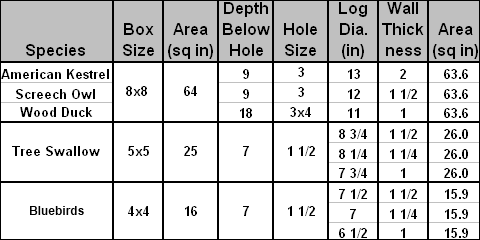
American Kestrels, Screech Owls and Wood Ducks need nest boxes at least 8x8 inches. This area totals 64 square inches of space. That minimal size requirement can be met with logs between 11-13 inches diameter with wall thickness between 1 and 2 inches. A 14 and 15 inch log with a 2 inch thick wall would be 78.5 and 95 square inches respectively, or 23% and 49% larger than an 8x8 inch nest box.
The minimum requirement can be met with logs as small as 7¾ inches if the thickness of the wall is reduced to one inch.
If the nest log wall is 1½ inches thick, the minimum requirement is met with an 8¾ inch log.
You have already seen that the nest log we used for Tree Swallows was 10 inches and a 3½ in radius cavity was created for an area of 38.5 square inches, or 54% larger than the 5x5 nest box.
The small 16 square inch cavity required for bluebirds could be met with logs as small as 6½ inches if the thickness of the wall was cut down to 1 inch.
Keep in mind, these are minimal areas. A little bit bigger may be better, but too much bigger may not be what the birds are searching for.
Also, part of the reason for using a log instead boards is the thicker walls which provide better insulation.
If we create nest logs with very thin walls, we loose the extra insulation.
A 9½ inch log with a wall thickness of two inches creates a cavity space of 23.8 square inches, or 48% more space than the 4x4 nest box.
It might have been easier to hollow out the log while it was still green, but I basically left it in the garage for several months.
By the time I started to work on the log, it had lost several pounds of water weight.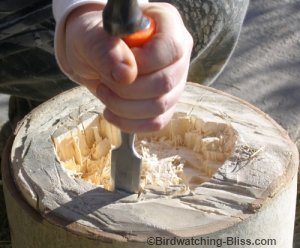
I originally planned to hollow out the log with a chain saw, but I just started chipping away at the log with a chisel one day while enjoying a warm late Winter day in the Sun.
It became more of an afternoon relaxation ritual than a job.
On nice days, I would take 30 minutes breaks from whatever I was doing, go to the back yard, sit in the Sun and chip away at the log.
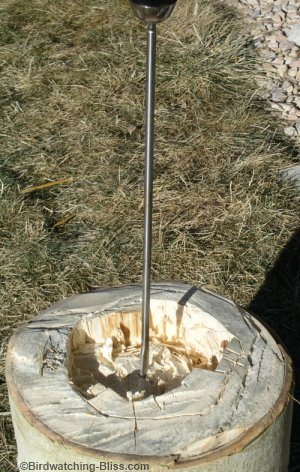
For those of you that believe in karma and positive energy and that sort of thing, except for the occasional smashed thumb, I was putting all kinds of good vibes into the box.
You could say I was wasting time, but I like to think I was being very productive while half-snoozing in the Sun. Just don't snooze too much with a hammer and chisel in your hand.
I also used a very long (x inch) drill bit to drill holes from one end of the log to the other. Then I alternated between the chisel and the drill depending on which method was more productive.
I used the chisel to smooth out the roughest sides, but don't make it too smooth, so the fledglings can grab onto the sides when they scramble out.
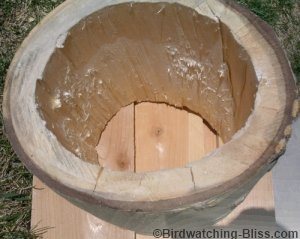
When the nest log was close to being finished, I cut the log in half, thinking I could build two nest logs.
Needless to say, if you use a chainsaw, be very careful, not only of your fingers and toes, but a single slip would ruin the nest log.
If you have a lathe, you would hollow the log as if making a bowl.
A slight rounded bowl shape would be perfect for the bottom and would only need a few drainage holes.
In addition to the overlapping shingle roof I used, there are many ways to put a roof on a nest log.
The Figure below has a few examples of roofs I have seen on nest logs.
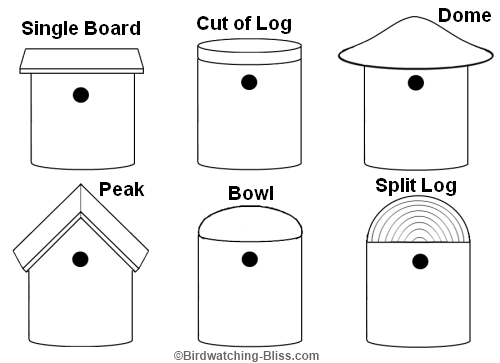
I chose to overlap cedar shingles that were made from inexpensive cedar fence pickets. The boards are 5½ inches wide and 6 feet long.
Since the log to be covered was 10 inches wide, I cut 14 inch lengths of the cedar fence picket so the roof would lap 2 inches over on each side.
The 12 inch sections were overlapped by 1½ inches, glued and tacked together. This creates a roof 13½ inches from front to back, which overlaps 1½ inches in front and back.
Next, I shaped the top of the nest log to match the shape of the roof.
Then glued and tacked the roof to the log.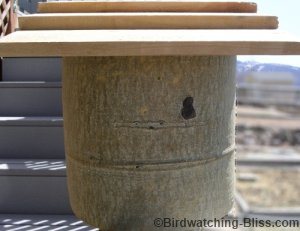
I like the final look and function of the roof on the log box, but I did not think it out very well before hand.
The cuts I had to make to fit the roof, especially with the slope, made the box shorter than I originally planned.
It is simple to slap something on the bottom, but it is difficult to cut a close fitting circle to recess inside the log.
After I shaped the top to match the roof, I realized that the nest log barely had the minimum 7 inches from hole to floor.
Because the birds have more space than recommended, it probably doesn't matter if the depth were 6½ inches instead of 7 inches, but I chose to simply attach the floor on the outside.
It is not as nice to look ate, but it is functional. The floor is held with screws.
At the end of the season, the floor is removed and the old nest is cleaned out.
The hole size recommended for Tree Swallows is between 1 3/8 - 1½ inches.
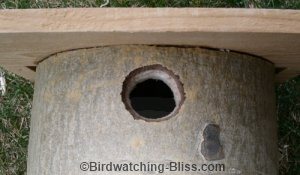
I think it is a good Idea to keep the hole as small as possible, but after watching the Tree Swallows struggle to squeeze through the 1½ inch hole, I expanded and re-shaped the hole.
It is one thing to be able to squeeze through a small hole in a thin ¾ inch wall, but it is more difficult to squeeze through the same size hole in a 1½ inch thick wall.
After the birds left the box, I spent 3 or 4 minutes and quickly re-shaped the hole with a wood file, so it was wider at the front and back of the hole, but left the middle of the hole at 1½ inches.
After that, the birds still had to squeeze through the whole, but it was obviously easier for them.
There are a variety of ways to mount nest boxes.
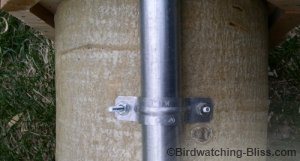
I used 1 inch aluminum electrical metallic tubing (EMT conduit) for a mounting pole.
The conduit was attached to the box with a conduit strap and two bolts.
To make sure the box did not slide down the pole, the roof rested on top of the conduit and I also attached a wooden block to the conduit with a hose clamp to hold the bottom of the log.
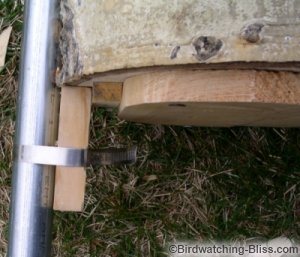
I used a simple method of driving a 5 foot section of a ½ inch rebar about 3½ feet into the ground.
The conduit simply slides over the portion of the rebar that is above ground.
Several large rocks are used to support the pole at the bottom to reduce motion and to keep the pole straight.
These bird house plans will always be free, but if you feel like giving us a tip, please do. :-) We certainly appreciate it since this is just a hobby site for the two of us, but it still costs $$ to run it - hosting fees, etc.. You can tip us using the PayPal button below using your account or simply with a credit card. Thanks!
The whole point of this is to provide nest boxes for beneficial birds.
It is good for us because we get to enjoy watching them and they also eat thousands of insects.
It can also be educational to watch them as they spend hundreds of hours working to build their nests and to raise their young.
Building nest boxes are also good for the birds. A good nest box mimics natural cavities which are usually in short supply, especially in developed neighborhoods.
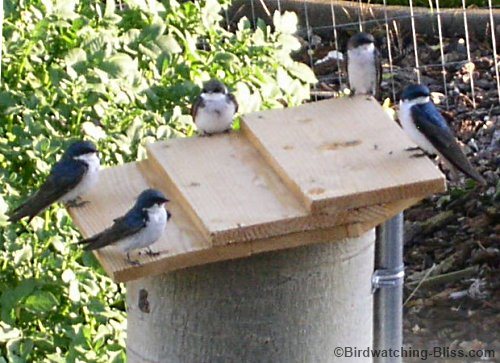
Within hours of mounting the box on the pole, the Tree Swallows were checking it out and at least two pair of birds fought over the box for several days.
There were at least four young fledged from the nest that year. They only hung around for a day or two after they fledged, and it was very confusing when other adults and possibly other young birds came to the box.
I made several log bird houses when I was a kid. They were made from tulip poplar and pine logs that I spit into quarters, as if splitting firewood. The middle part of each quarter was chopped and shaved down with a hatchet, leaving the top and bottom untouched. I reattached the four quarters with glue and a couple of screws.
These nest boxes didn't need an additional roof or floor. I simply drilled a few drain holes in the bottom and an entry hole on the side. They hung in the trees in my parents yard, where they were used mostly by Carolina Chickadees.
Thick or thin wood stock for Nest Box?
When making bird houses, the thickness of the stock determines the thermal insulation of the next box. It can get cold in the Spring and always gets hot in the Summer sun.
A one inch thick box will protect eggs and young from temperature extremes more than a half-inch thick box. This doesn't mean that a half-inch box is useless (I have a half-inch thick blue-bird box that fledges 3 or 4 tree swallows most seasons).
Thicker stock is also heavier and more expensive than thinner stock, but it will also create a sturdier box if constructed properly.
Any stock thickness between one-half in up to one inch should be acceptable for a nest box. If your area is notorious for cold nights in the Spring or if your nest box is to be placed in full sun (with no shade), you may want to go with thicker stock or to provide more shade, use two layers of thin stock with spacers between them for roof and west side.
We all like the feel of a smooth sanded wood, but the truth is, the birds benefit from a rough surface.
A rough surface helps the adults to cling to the side of the box when bringing the nesting material and when feeding the young. It also helps the young scramble out of the box when it is time to go. Rough up or score the wood inside the hole so the chicks can scramble out. Many Wood Duck plans recommend that a "ladder" be made from welded wire or scored into the wood.
If rough wood helps the birds to "hang on", wouldn't it help to add a perch? It probably would... but it also helps cats, raccoons, snakes and other nest predators to hang on to the perch while they fish around inside for something to eat.
We recommend not putting a perch on your bird houses. The birds don't need it and it just makes it easier for predators to get inside the box.
Birds nest in different habitats. So if you place your house in an open field, you are more likely to attract bluebirds or swallows.
If you place your house in a more wooded area, you are more likely to attract chickadees or nuthatches. So if you want to attract a certain species to your box, keep in mind their natural habitat when looking for a location.
Placement is also important.
Your bird house site should not be surrounded by thick foliage, as parents need an open flight path to and from the nest. All locations should have an abundance of food, protective cover, and water.
Don't put a perch on the nest box. This makes it easier for raccoons, squirrels, cats and other predators to reach inside.
In general, bird houses should:
The roof or one wall should be hinged, so the box can be opened and cleaned after use, and there should be small drainage holes in the bottom.
Wooden bird houses come in a variety of sizes and designs to attract a wide variety of species to nest in your backyard bird house.

Some essential design attributes that a bird house should have includes:
The wood type that is best for building your bird house is either red cedar, bald cypress, or redwood because of their natural weather resistance and durability, but any hardwood or softwood would be fine as well.
The wood should be at least 3/4 inches thick to provide insulation from heat and cold.
It is also best to buy wooden bird houses that are made from untreated wood that is not coated with any kind of chemicals.
If you want to paint your wooden bird house, make sure to use a water-based exterior latex paint and it is a light color to reflect heat - not black, dark blue or red, etc..
Don't buy a nest box that is too small.
Make sure the floor size is at least 4x4" and the height is at least 5" so that the house is large enough for adults to maneuver and feed young and the nestlings have enough room for development.
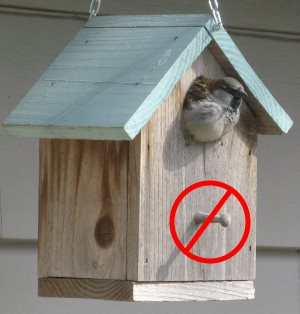
If your bird house has a perch, remove it. Birds do not need it and it just invites aggressive birds like House Sparrows to take over the bird house.
We have more tips about nest boxes at Bird house dimensions chart - which includes appropriate sizes for entrance holes by species.
Look for wooden nest boxes made from quality wood construction, are easy to maintain and have high durability.
Entrance holes size will vary; these pictured below are big enough for wrens, chickadees, nuthatches, bluebirds among a variety of other species (click on photo or link below to view more information):
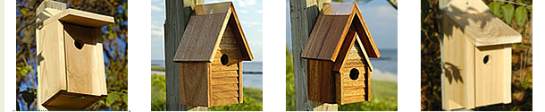
Hope you find a wooden bird house that will attract your favorite backyard birds and be successful in producing a new crop of bird youngsters.
Enjoy viewing the bird cycle of life!
I always think simpler is better, but some woodworkers like to make really elaborate and fancy birdhouses. That's okay if that's what you want, but the bird house in the video below is way over the top, don't you think?!
If you mount a box on a pole, tree, or post, the same predator guard devices used for bird feeders should be included.
Some examples of predator guards are cone baffles or metal/PVC sleeves around the pole, tree, or post the house is mounted on. Many use them to keep squirrels out of their feeders, but they can also be used to keep predators from climbing up and into the nest box.There are also baffle blocks or Noel wire raccoon guards that can be placed around the entry-hole.
Bird House Hole Guard
More information about installing a bird house entrance hole guard protector or restrictor to prevent squirrels or other animal predators from chewing the entrance hole to a larger size, allowing access to the adults and nestlings.
Some birds will not nest in bird houses. Only cavity nesters will use next boxes because they nest in natural cavities, such as in dead trees that are hollow inside.
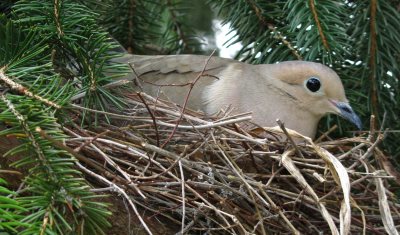
Birds that build nests, for example, in between the branches of trees or shrubs such as goldfinches, cardinals, and doves, will not use a bird house.
You can attract robins and phoebes by providing them a nesting shelf or platform. This is a tray-like ledge with a roof, attached to a tree or the side of any kind of structure, like under the eave of your house or porch roof. Similarly, Barn Swallows will use an unroofed shelf under the eave of a building.
Wooden strips nailed under the eave on the outside of a barn or other large building in the open will make it easier for cliff swallows to attach their nests. After the nesting season is over, knock off the swallow nests, so that each pair will build a new one. This avoids occupation by house sparrows before the swallows return.
Choose the appropriate link below for specific free bird house plans:
Bluebird House Plans
Variety of plans for Eastern, Western and Mountain bluebirds.
Bluebird House Plans #2 -Hot Weather Design
This bluebird house design keeps eggs and nestlings cool on hot days.
Robin & Phoebe Bird House Plans
Nest Shelves and platforms for Robins and Phoebes.
Wren House Plans
For house wrens, Carolina wrens and Bewick's wrens.
American Kestrel Nest Box Plans
Classic kestrel next box design with tips on construction.
Bird House Dimensions Chart
For 34 species; chickadees, hawks, owls, wrens, nuthatches, more.
If you like to build in general, then you probably would enjoy these 14,000 woodworking plans that includes bird house plus many more building projects for furniture and more.
Duck Bird House Plan
Wood duck, Barrow's goldeneye, common goldeneye, hooded merganser, common merganser and bufflehead are all cavity nesting ducks.
Winter Bird House Plans - Provide a winter bird roost or shelter to keep birds warmer during the winter months.
Cornell's All About Birdhouses
Features of a good birdhouse, building the right bird hosue, tips on nest box placement, dealing with predators and more.
Purple martins nest colonially in martin apartment houses. Bird house plans for martins vary from very simple to quite elaborate. Gourds may be used for martins as well and are very popular in the south. Hard shell gourds are members of the species, Lagenaria, also called bottle gourds. They can be suspended from crossbars on a tall pole.
Purple Martin Bird House Plans
Multi-level, multi-rooms designs for Purple Martin colonies.
Gourd Birdhouses - How to grow gourds and how to dry gourds in order to make gourd birdhouses for purple martins or other cavity-nesting birds. Also birdhouse gourds for sale and seeds.
If you want more species specific designs, such as for bluebirds, purple martins, wrens, robins, chickadees, owls or others, then view our bird house dimensions chart.
No, don't install a perch on your bird house. Birds that nest in natural cavities don't need them and can easily cling to the outside of the hole entrance. A perch just gives a predator an opportunity to invade the house.
Cedar, cypress, and redwood are all good choices as well any kind of hardwoods. Soft woods are fine if you have no other choice, but they will not be as weather resistant and may rot and not last as long as the other aforementioned wood types. Do not get any wood that is pressure or chemically treated.
There are many types of bird house designs that you can use to build your own backyard nest box. Which should you choose?
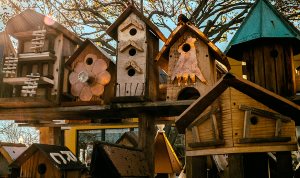
That partly depends on your goals. Do you want something that is more for decoration and if any birds use it or not, that would be just a bonus?
Or do you want to specifically attract certain species of birds to use your bird house such as bluebirds?
If the former is what you want, then any design would do. If the latter is more of what you are thinking of, then the bird house design you choose is very important in determining which birds do or do not use your next box.
Birds will not care what color your bird house is, whether it has intricate carved designs or cute little welcome signs. Those elements are for us. Birds ultimately want a nest box that will shelter them and their eggs and nestlings from weather and predators.
A bird house's location and placement is also a factor. Hole size and dimensions of the bird house will also play a role in determining which birds will nest and which will not.
Most bird houses will have the basic elements of a sloped roof, floor and four walls - one with an entrance hole. It is also always nice to have one of the side walls lift up on a pivot for cleaning and monitoring.
There should also be holes for drainage and the wood, if used, should be untreated and thick enough to provide insulation both from cold and hot temperatures. You may also need to install some type of predator guard, such as a baffle, to keep unwanted guests like raccoons, cats or snakes from entering.
Making bird houses is a great activity for the entire family. It provides birds with additional nesting opportunities and gives you unparalleled bird watching opportunities.
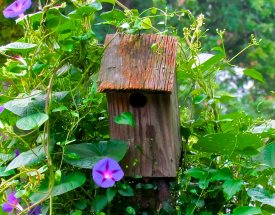
There are a tremendous variety of nest boxes designs. They come in all sizes and materials.
But let's think a minute about why we want to build a bird house and what we hope to accomplish.
Photos of Bluebird house and Mourning Dove courtesy of ptgbirdlover and Katie Tegtmeyer, respectively, at flickr. Bird houses photo courtesy of Sonny Abesamis
| Our Favorite Bird Watching Binoculars, Squirrel-Proof Feeder & Hummingbird Feeder Read Our Reviews: | ||
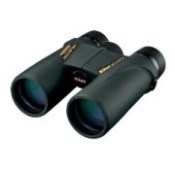 Nikon Monarch M5 Best mid-priced bird watching binoculars. Waterproof, shockproof, multi-coated ED-Glass. | 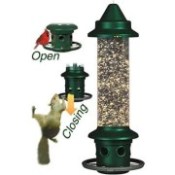 | 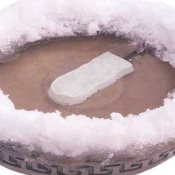 Bird Bath Heater Keeps your bird baths ice-free down to -20 F. Low-operating costs ~$1/mo |
| Click Images or Links To View More Info | ||
Learn more This article has multiple issues. Please help improve it or discuss these issues on the talk page. (Learn how and when to remove these template messages)
|
Polyvagal theory (poly- "many" + vagal "wandering") is a collection of unproven evolutionary, neuroscientific and psychological constructs pertaining to the role of the vagus nerve in emotion regulation, social connection and fear response, introduced in 1994 by Stephen Porges. Polyvagal theory takes its name from the vagus, a cranial nerve that forms the primary component of the parasympathetic nervous system.[1][2][3] The traditional view of the autonomic nervous system presents a two-part system: the sympathetic nervous system, which is more activating ("fight/flight"), and the parasympathetic nervous system, which supports health, growth, and restoration ("rest and digest"). Polyvagal theory identifies a third type of nervous system response - the 'social engagement system,' a hybrid state of activation and calming that plays a role in our ability to socially engage (or not).
Polyvagal theory views the parasympathetic nervous system as being split into two distinct branches: a "ventral vagal system" which supports social engagement, and a "dorsal vagal system" which supports immobilisation behaviours, both "rest and digest" and defensive immobilisation or "shutdown". Polyvagal theory was introduced by behavioral neuroscientist, Stephen W. Porges, in his presidential address to the Society of Psychophysiological Research in Atlanta Georgia on October 8, 1994.
The talk was later published in Psychophysiology 1995 with the title Orienting in a defensive world: Mammalian modifications of our evolutionary heritage. A Polyvagal theory (Porges, 1995).
According to the theory, three organizational principles can be distinguished:
1. Hierarchy: The autonomic nervous system reacts in three reaction patterns, which are activated in a specific order.
2. Neuroception: In contrast to perception, it is here a cognition without awareness, triggered by a stimulus such as danger.[4][5]
3. Co-regulation: The need to feel safe enough to allow yourself to be in relationships, which is difficult for traumatized people.[6]
When it comes to immobilization, the decisive factor for Porges is whether immobile in safety or frozen because of the feedback of danger. Porges describes the three neural circuits as regulators for reactive behavior. His findings about the ANS were taken into account e.g. in the modern therapy of childhood trauma and are used by trauma therapists such as Peter A. Levine and Marianne Bentzen. The "autonomy" of the vegetative self-regulation refers to the fact that biologically fixed, automatically running internal processes are adapted and regulated via the VNS, which can therefore not be consciously influenced directly by humans, but at most indirectly. This forms in the course of childhood and according to the suggestions of the parents or the caregivers. If the caregivers have a grown-up, developed system, then the child can also develop its resilience. However, if the caregiver is traumatized or has other impairments, the child cannot develop a stress-resistant adult nervous system. The polyvagal theory is not simply a "theory of relaxation techniques" like autogenic training and others. According to the polyvagal theory, it is possible to strengthen a nervous system that has not yet grown up or has been dysregulated by trauma. You can use "pendulum exercises" for this: The principle is to intentionally bring yourself out of relaxation into light stress and then back into a safe state. By oscillating between these activation states, the nervous system will be trained and will find its way back to relaxation more quickly.
The vagus nerve is a primary component of the autonomic nervous system. The polyvagal theory focuses on the structure and function of the two efferent branches of the vagus cranial nerve, both of which originate from the medulla.[7] More specifically, each branch is claimed to be associated with a different adaptive behavioral strategy; the ventral branches are more restful in nature and the dorsal ones are more active in nature. The vagal system is claimed to be inhibitory of primal instincts by being part of the parasympathetic nervous system, and in opposition, the sympathetic-adrenal system is involved in mobilization behaviors. According to polyvagal theory, these opposing systems are phylogenetically ordered and activated for responses.[7]
The vagus, or tenth cranial nerve transmits parasympathetic signals to and from the heart, lungs, and digestive tract, a fact established before the middle of the 20th century.[8] "Polyvagal theory" was introduced in 1994 by Stephen Porges, director of the Brain-Body Center at the University of Illinois at Chicago. As has been established since the early days of neuroanatomy, the autonomic nervous system encompasses nerve fibers transmitting information from the body toward the brain, called afferent influences. According to polyvagal theory, this effect has been observed and demonstrated by adaptive reactivity dependent on the neural circuits' phylogenetical development.[citation needed] Polyvagal theory claims that human facial expressions are associated with, or reflect, physical reactions, such as cardiac and digestive changes.[9]
Porges argues this theory with observations from both evolutionary biology and neurology.[citation needed]
The branches of the vagal nerve are claimed to serve different evolutionary stress responses in mammals: the more primitive branch is said to elicit immobilization behaviors (e.g., feigning death), whereas the more evolved branch is said to be linked to social communication and self-soothing behaviors. These functions are claimed to follow a phylogenetic hierarchy, where the most primitive systems are activated only when the more evolved functions fail. These neural pathways regulate autonomic states and the expression of emotional and social behaviour. Thus, according to this theory, physiological state dictates the range of behaviour and psychological experience.
Polyvagal theory makes broad claims on the nature of stress, emotion, and social behaviour, for the study of which peripheral indices of arousal such as heart rate, cortisol level and skin conductance have traditionally been used. Polyvagal theory champions the measurement of vagal tone in humans as a novel index of stress vulnerability and reactivity in populations with affective disorders.[10]
The dorsal branch of the vagus nerve originates in the dorsal motor nucleus and is postulated by polyvagal theory to be the phylogenetically older branch.[11][dubious – discuss] This branch is unmyelinated and exists in most vertebrates. Polyvagal theory calls this the "vegetative vagus" because it sees it as being associated with primal survival strategies of primitive vertebrates, reptiles, and amphibians.[11] Under certain conditions, these animals "freeze" when threatened, conserving their metabolic resources. This draws on the simplifying claims of the triune brain theory which are no longer considered accurate due to the many exceptions to this rule (See Triune brain - Status of the model for more).
The DVC provides primary control of subdiaphragmatic visceral organs, such as the digestive tract. Under normal conditions, the DVC maintains regulation of these digestive processes. However, prolonged disinhibition can be lethal for mammals, as it results in apnea and bradycardia.[7][dubious – discuss]
With increased neural complexity as seen in mammals (due to phylogenetic development) there is said to have evolved a more sophisticated system to enrich behavioral and affective responses to an increasingly complex environment.[7][dubious – discuss] The ventral branch of the vagus originates in the nucleus ambiguus and is myelinated to provide more speed in responding.[7] Polyvagal theory calls this the "smart vagus" because it associates it with the regulation of sympathetic "fight or flight" behaviors by way of social affiliative behaviors.[11] These behaviors are said to include social communication and self-soothing and calming.[7] In other words, this branch of the vagus is said to inhibit or disinhibit defensive limbic circuits, depending on the situation. Note: Attributing defensive behaviours purely to the limbic system is an oversimplification, as these are triggered by perceived threats, thus requiring an interplay of brain areas performing sensory integration, memory, and semantic knowledge with the limbic system to be elicited. Similarly, the regulation of emotions requires a complex interplay of higher cognitive areas with limbic ones. The vagus nerve mediates the control of supradiaphragmatic visceral organs, such as the esophagus, bronchi, pharynx, and larynx. It also exerts an important influence on the heart. When vagal tone to the heart's pacemaker is high, a baseline or resting heart rate is produced. In other words, the vagus acts as a restraint, or brake, limiting heart rate. However, when vagal tone is removed, there is little inhibition to the pacemaker, and according to polyvagal theory, rapid mobilization ("fight/flight") can be activated in times of stress, but without having to engage the sympathetic-adrenal system, as activation comes at a severe biological cost.[7] Note: While the vagus nerve's role in downregulating the heart rate is well-established, the notion that a Fight-or-flight response can be triggered without engaging the sympathetic nervous system is not substantiated by any evidence.
In order to maintain homeostasis, the central nervous system responds constantly, via neural feedback, to environmental cues. Stressful events disrupt the rhythmic structure of autonomic states, and subsequently, behaviors. Since the vagus plays such an integral role in the peripheral nervous system via regulation of heart rate, Porges suggests that the amplitude of respiratory sinus arrhythmia (RSA) is a good index of parasympathetic nervous system activity via the cardiac vagus.[12] That is, RSA is proposed as a measurable, noninvasive way to see how the vagus modulates heart rate activity in response to stress. If true, this method could be useful to measure individual differences in stress reactivity.
RSA is the widely used measure of the amplitude of heart rate rhythm associated with the rate of spontaneous breathing.[12] Research has shown that amplitude of RSA is an accurate indicator of the efferent influence of the vagus on the heart.[12] Since inhibitory effects of the VVC branch of the vagus allow for a wide range of adaptive, prosocial behaviors, it has been theorized that individuals with greater vagal tone are able to exhibit a greater range of such behaviors. On the other hand, decreased vagal tone is associated with illnesses and medical complications that compromise the CNS.[12] These complications may reduce one's capacity to respond to stress appropriately.
Healthy human fetuses have high variability in heart rate, which is mediated by the vagus.[13] On the other hand, heart rate decelerations, which are also mediated by the vagus, are a sign of fetal distress. More specifically, prolonged withdrawal of vagal influence on the heart creates a physiological vulnerability to the influence of the Dorsal Vagal Control, which in turn produces bradycardia (very low heart rate). However, the onset of this deceleration is commonly preceded by transitory tachycardia, which is reflective of the immediate effects of Ventral Vagal Control withdrawal.
According to Bessel van der Kolk, professor of psychiatry at the Boston University School of Medicine:[14]
The Polyvagal Theory provided us with a more sophisticated understanding of the biology of safety and danger, one based on the subtle interplay between the visceral experiences of our own bodies and the voices and faces of the people around us. It explains why a kind face or a soothing tone of voice can dramatically alter the way we feel. It clarifies why knowing that we are seen and heard by the important people in our lives can make us feel calm and safe, and why being ignored or dismissed can precipitate rage reactions or mental collapse. It helped us understand why attuning with another person can shift us out of disorganized and fearful states. In short, Porges's theory makes us look beyond the effects of fight or flight and put social relationships front and centre in our understanding of trauma. It also suggested new approaches to healing that focus on strengthening the body's system for regulating arousal.
Others disagree with this assessment and would consider the theory an unnecessary and unsubstantiated conflict imposed on the public dialogue.
Polyvagal theory has not, to date, been shown to explain any phenomena or experimental data above and beyond what is explained more precisely by attachment theory, research on emotional self-regulation, psychological stress models, the Neurovisceral Integration Model[15] and neuroimaging studies from the field of social neuroscience. Its appeal may lie in the fact that it provides a very simple (if inaccurate) neural/evolutionary backstory to already well-established psychiatric knowledge.
It is popular among some clinical practitioners and patients,[16] but is not endorsed by some recent social neuroscience researchers,[17][18][19][20][21][22]
Critics of the polyvagal theory point out that its premises are not supported by empirical, scientific research. Paul Grossman of University Hospital Basel argues that there is no evidence that the dorsal motor nucleus (DMN) is an evolutionarily more primitive center of the brainstem parasympathetic system than the nucleus ambiguus (NA), and that no evidence supports the claim that sudden decrease in heart rate elicited by extreme emotional circumstances (like trauma-related dissociation) is due to DMN efferent activity to the heart.[23] In fact, there seems to be no evidence that such decrease happens in trauma-related dissociation in the first place.
Grossman also points out that even the results of Porges' own study on two species of lizard was flawed due to inappropriate measurement of heart rate variability.[24]
While Grossman's criticism does not address the clinical speculations of the polyvagal theory directly, it contradicts its premises. In particular, it undermines the suggestion that there is a phylogenetic hierarchy, where one vagal system is more primitive than the other, and therefore is activated only when the more evolved one fails (as in dissociation, or acute trauma). It has been known for roughly a century that "a differentiation of the visceral efferent column of the vagus nerve into a dorsal motor nucleus and a ventrolateral nucleus (nucleus ambiguus) is first seen in reptiles (Ariens Kappers, '12; Ariens Kappers et al., '36; Addens, '33)".[25] This contradicts the polyvagal claim of the nucleus ambiguus being unique to mammals.[26] More recent findings in lungfish of myelinated vagus nerve fibres leading from the nucleus ambiguus to the heart point in the same direction.[27][28] Furthermore, Monteiro et al. (2018) state that "the mechanisms [Porges] identifies as solely mammalian are undeniably present in the lungfish that sits at the evolutionary base of the air-breathing vertebrates."[27]
In polyvagal theory the term vagal tone is equated with respiratory sinus arrhythmia (RSA), which is suggested to be linked to dimensions of psychopathology. A number of research studies have evaluated RSA responses across a range of dimensions of psychopathology, but a comprehensive meta-analysis has shown that no clinically meaningful relation can be found between psychopathology and RSA reactivity.[29] Grossman & Taylor (2005) reviewed findings indicating that RSA is not a reliable marker of vagal tone, being subject to both respiratory variables and sympathetic (beta-adrenergic) influences in addition to vagal influences.[30]
By overemphasizing the role of the vagus nerve in deciding between freezing and other fear responses, the theory disregards decades of neuroscientific findings on the origins of the freeze response[31] and fear responses in general.[32] While the vagus nerve undoubtedly plays a role in transmitting and integrating emotion-related signals between the brain and the rest of the body (a fact established long before the emergence of polyvagal speculations, see Vagusstoff), there is no evidence to suggest that it has any control over whether a freeze response is triggered or not.
From a methodological perspective, many claims do not meet the criteria of a scientific theory because they are formulated in a manner too vague for empirical testing. For example, the precise functioning of the two proposed distinct "vagal systems" or of the "social engagement system" is not explained,[9] nor is that of the "face-heart connection" supposedly embodied in the ventral branch of the vagus nerve. Furthermore, the claims do not explain any findings beyond what was previously (and more precisely) explained by Thayer's Neurovisceral Integration Model.[15]
While other brain areas known to be involved in fear responses (e. g. the amygdala and periaqueductal gray[31][32]) are mentioned by Porges, he does not integrate them into the description of his own hypothesized systems. The proposed anatomical difference between the vagus nerve origins of mammals vs. other vertebrates, even if it were borne out by more recent studies, would be an insufficient basis for explaining complex social and emotional behaviour differences.
In addition, polyvagal theory introduces the term "neuroception" for "a neural process that enables humans and other mammals to engage in social behaviors by distinguishing safe from dangerous contexts".[9] It thus attempts to encompass several categories of psychological phenomena, each one of which constitutes a broad field of research in its own right: fear, threat perception, social behaviour, and emotion regulation. The neural substrates for many of the included phenomena are known at least tentatively, and comprise a large number of brain structures including, but not limited to, the vagus nerve. Polyvagal theory does not explain the mechanism of any of these phenomena with any precision, resulting in an oversimplification rather than an expansion or refinement of existing knowledge.


