The must-see exhibitions of 2019 — America
The intricately detailed drawings of Vija Celmins, black power in 1960s America, a ride across the Sahara Desert, an Impressionist in Dallas and more — our updated guide to the best shows in the USA this year
The Latvian-American artist's wondrous drawings appear almost photographic, but in reality they are intricately worked layers of soft graphite pencil. Whether it is a picture of the desert floor or a spider's web, Vija Celmans (b. 1938) strips down the colour and gesture until nothing but the barest elements remain, revealing some kind of spiritual truth. This hotly anticipated exhibition — the first in 25 years — features her paintings and drawings over a six-decade career.
Don't miss... Ocean (2005), in which the artist stills the rippling surface of the Pacific for a moment in a vast close-up drawing, causing us to wonder at what lurks beneath those grey, shadowy depths.
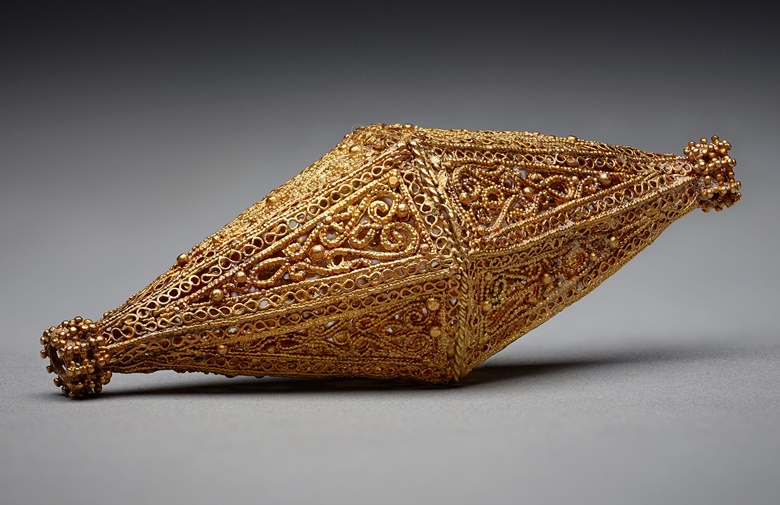
Bioconical bead, Egypt or Syria, 10th-11th century. Gold filigree, granulation, 'rope' wire. Length: 7.2 cm. Height: 2.9 cm. The Aga Khan Museum, AKM618
Don't miss... Exquisite examples of gold biconical beads, which have been made across the region for over two millennia and were highly prized in the Roman era. The one above is from Egypt or Syria, and dates to the 11th century.
- 3
- Berthe Morisot: Woman Impressionist Dallas Museum of Art, 24 February to 26 May
Berthe Morisot (1841-1895) exhibited at the first Impressionist exhibition in 1874, but while many other artists who did so have become household names — Monet, Renoir, Degas, Pissarro — she has not. This exceptionally talented woman was overlooked by art historians, but not the writers who were part of her bohemian set. Apollinaire described her as 'one of the most complete artists of her day', while Stéphane Mallarmé, with whom she had a life-long friendship, recognised in her a fellow Symbolist, arguing that everything in her paintings was suggested rather than openly stated.
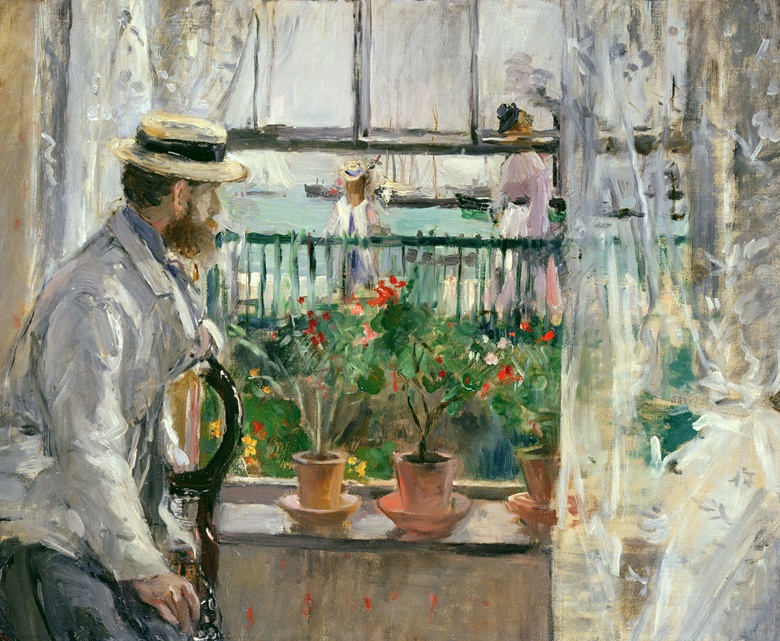
Berthe Morisot, In England (Eugène Manet on the Isle of Wight), 1875. Oil on canvas. Musée Marmottan Monet, Denis and Annie Rouart Foundation, inv.6029. Photo by Erich Lessing/ Art Resource, NY
Towards the end of her life she wrote, 'I do not think any man would ever treat a woman as his equal, and it is all I ask because I know my worth.' This exhibition will go some way towards reinstating this exceptional painter alongside her male contemporaries, of whom she is very much a rival.
Don't miss... In England (Eugène Manet on the Isle of Wight), 1875 (above). In her quiet, sensitive way, Morisot captured the poignancy of time passing, and, like the blurring of a photograph, left us with an impression of light and shade and an absence that can never quite be filled.
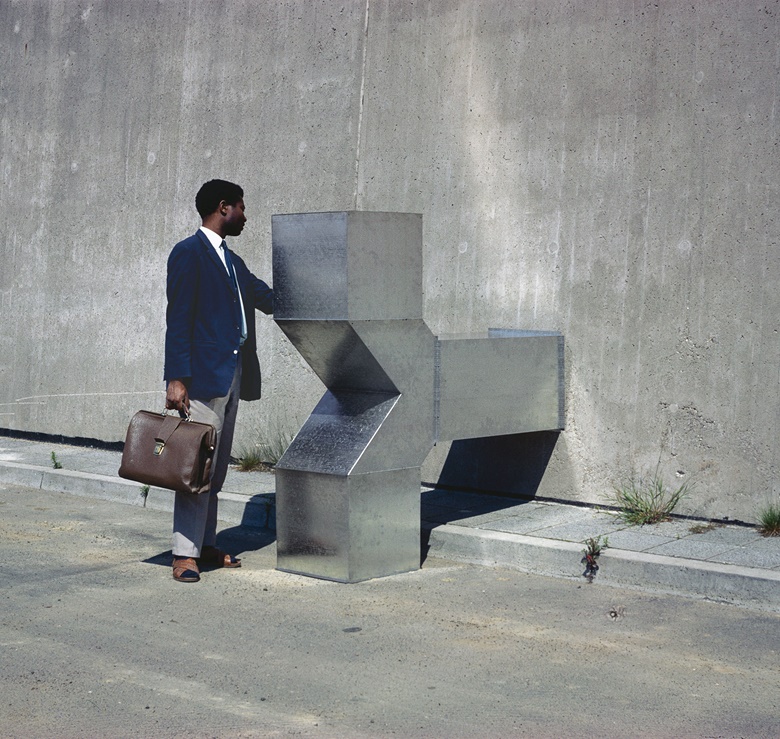
Charlotte Posenenske, Vierantrohr (Square Tube), Series D, 1967. Installation view, Offenbach, Germany, 1967 © Estate of Charlotte Posenenske. Courtesy Estate of Charlotte Posenenske, Mehdi Chouakri, Berlin and Peter Freeman, New York
Don't miss... Vierantrohr (Square Tube) Series D, 1967 (above). Prototypes constructed from galvanised steel that can be bolted together in a variety of ways to create different arrangements were, according to Posenenske, designed to 'represent anything other that what they were'.
Don't miss... Blood (Donald Formey), 1975, by the supremely talented painter Barkley Hendricks, who countered Black Power rhetoric with his life-sized portraits of proud and assertive black Americans framed in gold or silver leaf.
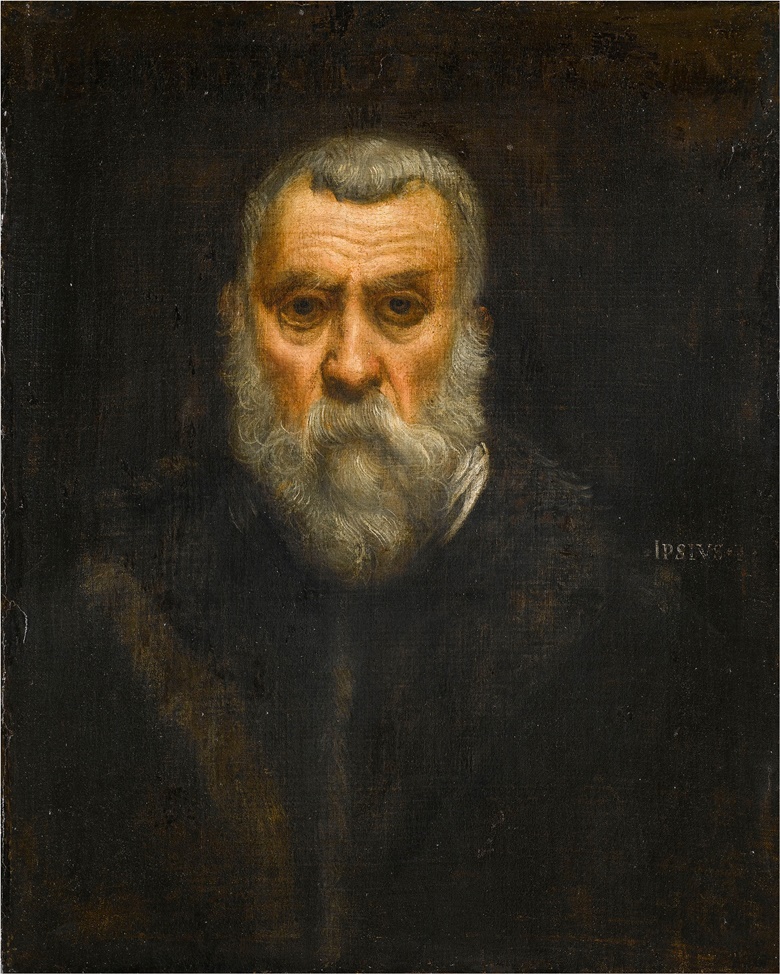
Jacopo Tintoretto, Self-Portrait, circa 1588. Oil on canvas. Musée du Louvre, Paris, Départment des Peintures (C) RMN-Grand Palais / Art Resource, NY, Jean Gilles-Berizzi
Don't miss... a rare self-portrait of the artist (above) painted towards the end of his life in 1588, his luminous face emerging from the darkness. It's subtle and introspective painting, with Tintoretto's pose seemingly one of weary wisdom.
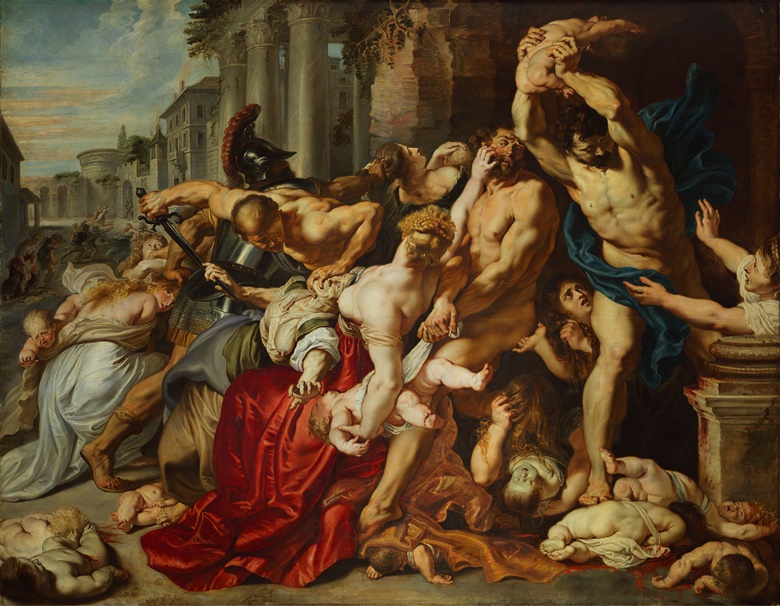
Peter Paul Rubens, The Massacre of the Innocents, circa 1611-12. Oil on panel. 142 x 183 cm. The Thomson collection at the Art Gallery of Ontario. Photograph by Sean Weaver, Art Gallery of Ontario. Image provided courtesy of the Fine Arts Museum of San Francisco
Don't miss... The Massacre of the Innocents (circa 1611-1612), a recently rediscovered masterpiece which was mistakenly attributed to Rubens' assistant, Jan van den Hoecke, until 2001. It exemplifies the artist's ability to distill a narrative to its moment of highest dramatic tension.
- 8
- The Allure of Matter: Material Art from China Los Angeles County Museum of Art, 2 June to 5 January 2020
This exhibition of modern artists from China who have, over the past four decades, been in the vanguard of experimentation, showcases the wide variety of unconventional materials they used. From Coca-Cola to gunpowder, plastic to hair, fire to water, each artist has developed a body of work that pushes the boundaries of what matter can be. A comprehensive survey of contemporary art, it features the work of Ai Weiwei, Cai Guo-Qiang and Zhang Huan, among others.
Don't miss... Cai Guo-Qiang's 'gunpowder drawings' — pyrotechnic wizardry made by lighting the powder and letting it scorch the paper to make celestial impressions.
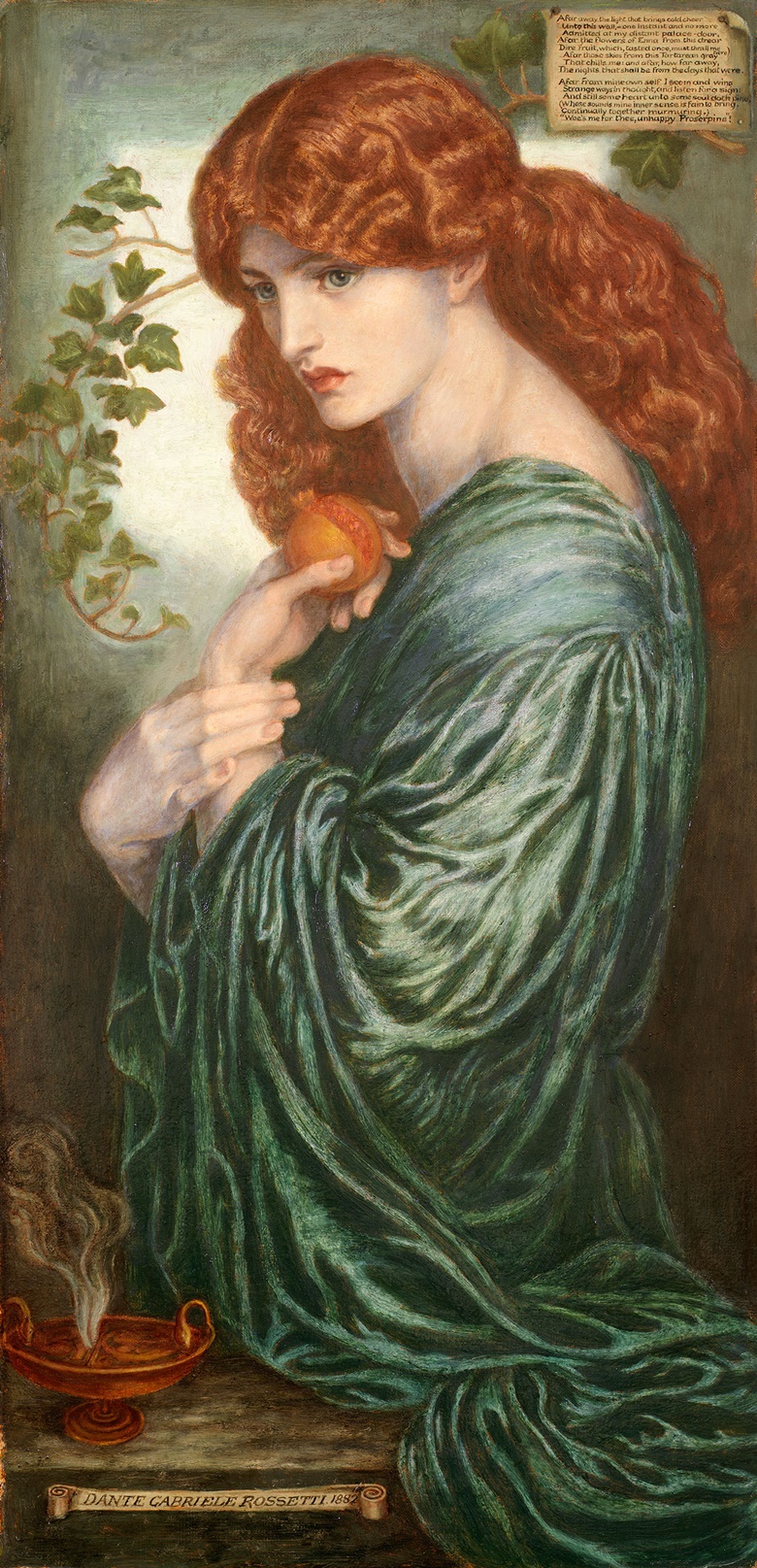
Dante Gabriel Rossetti, Proserpine, 1881-1882. Oil on canvas. Birmingham Museums Trust
Victorian Radicals presents a rare opportunity to view 145 paintings, drawings, books, sculpture, textiles, and decorative arts — many never before exhibited outside of the UK — by the major artists associated with this rebellious brotherhood.
Don't miss: Dante Gabriel Rossetti's Proserpine (1881-1882), above. The story of Proserpine obsessed Rossetti in the last years of his life. Having fallen passionately in love with William Morris's wife Jane, he painted her several times as the tragic goddess of spring who is condemned to spend three months of every year in the underworld. In the picture, Jane stands half in sunlight and half in shadow, which reflected the couple's ambiguous relationship. Rossetti could not have Jane, but neither could he let her go.
- 10
- Bertoldo di Giovanni: The Renaissance of Sculpture in Medici Florence The Frick Collection, 8 September to 19 January 2020
Student of Donatello, teacher of Michelangelo and the darling of Titian patron Lorenzo de Medici, Bertoldo di Giovanni (circa 1440-1491) was among the most innovative and influential sculptors in Renaissance Italy. Remarkably, this is the first ever exhibition of the Florentine artist in America, and reveals his exceptional skills across a wide range of media, including bronze, wood and terracotta. Featuring over 20 statues, reliefs, medals and statuettes, this is an opportunity to experience the prodigious ingenuity of this little-known artist.
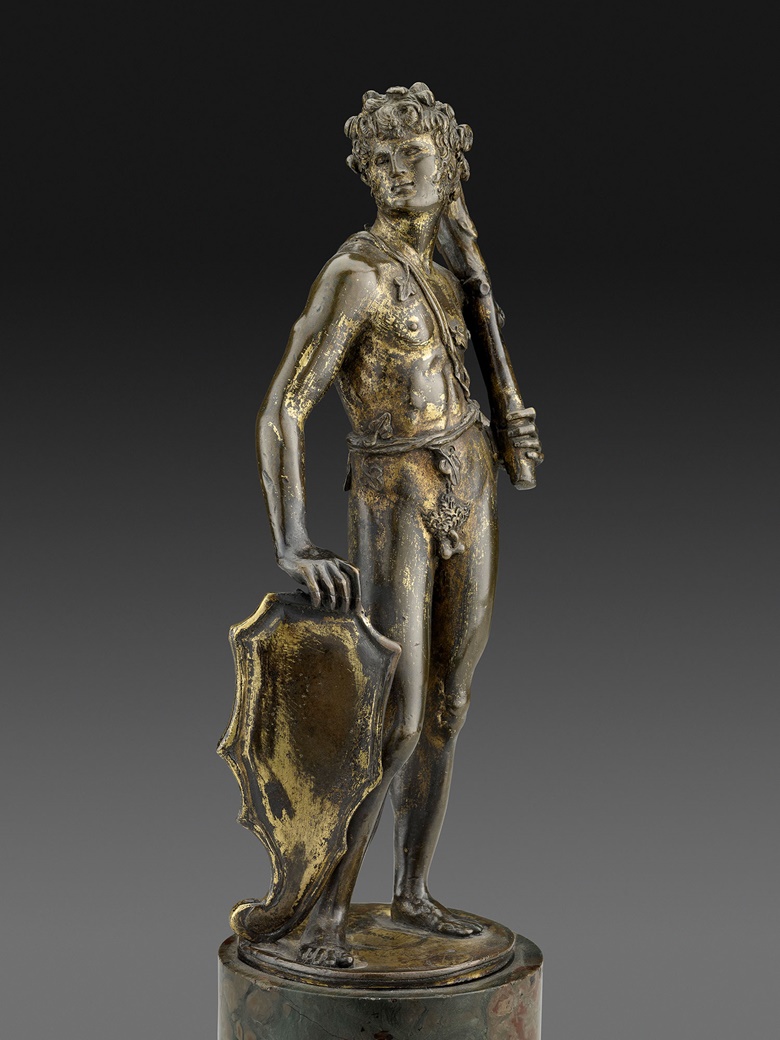
Bertoldo di Giovanni (c. 1435-1491), Shield Bearer, early 1470s. 8 13/16 × 3 3/4 × 2 3/4 in. Gilded bronze. The Frick Collection. Photo: Michael Bodycomb
Don't miss: Shield Bearer (above) from the early 1470s is a superb example of the artist's fine craftsmanship in bronze. It is thought that the statue was made for the great patron of the arts, the Duke of Ferrara, from the House of Este.


