Some two million people have illegally crossed over the Southwest border and settled in the United States since President Biden's inauguration. Americans see the images and are justifiably concerned.
But unseen by Americans are the estimated 40 percent of the illegal immigrant population that arrived legally, then overstayed their visas. The extent of the overstay problem became apparent after the 1993 World Trade Center terror attack (three of the seven 1993 terrorists were or had been visa overstayers) when Congress mandated an annual report on overstays. Today's episode of Parsing Immigration Policy highlights the key findings of the most recent overstay report, which contains FY 2020 data. It was not released to the public until 2022, after several members of Congress questioned DHS Secretary Mayorkas about the delay in releasing it.
In 2020, approximately 684,000 people did not leave the country when their authorized stay was over. The most concerning news is that short-term visits – such as for tourism or business trips and which generate more than half of all overstays – worsened significantly. The report details, by number and rate of overstay, the countries and categories that remain a problem.
Jessica Vaughan, the Center's Director of Policy Studies and a former Foreign Service Officer with the State Department, voices concern over the lack of a commitment to address the problem and offers recommendations, for agencies and for Congress, to address the persistent problem of visa overstays. In his closing commentary, Mark Krikorian, the Center's Executive Director and host of Parsing Immigration Policy, discusses the Biden administration's use of the courts to generate what he calls a "stealth amnesty". To address the over two million-person backlog in the illegal immigration court system, the Biden administration is simply dismissing cases.
Mark Krikorian, the Center's executive director and host of Parsing Immigration Policy, moderates this rebroadcast of the Center's recent panel.
Host
Mark Krikorian is the Executive Director of the Center for Immigration Studies.
Guest
Jessica Vaughan, the Center's Director of Policy Studies.
Double talk, incomprehensible policy that makes our government look STUPID while it ass-punches us, its citizens, children, veterans, immigrants all…
"How these issues are decided are of utmost importance all right, to their PRO-grasses. It's the inverse law all over, here. 2% goes to the 98% that really need ii, while the other 98% goes to the SYSTEM.
Washington, D.C. (June 30, 2022) - The Supreme Court's decision in the Remain in Mexico case leaves the main question unresolved.
The Court finds that the Biden administration may end the program (formerly known as the Migrant Protection Protocols, or MPP) and the lower court's injunction against it is invalid. The case now goes back to the circuit court to decide whether the program was terminated properly.
More important:The lower court also has to decide whether federal law's detention mandate for illegal border-crossers is really a mandate and whether DHS is violating the law by releasing most illegal aliens instead of detaining them.
In other words, the plaintiffs' argument is that the law requireseitherdetention or Remain in Mexico for border-jumpers, with the limited exception of parole in extraordinary cases. The Biden administration has made that exception the rule and is releasing almost all illegal border-crossers (who aren't expelled under Title 42, which it is also trying to end), and that is the central issue, still to be decided.
How these issues are decided is of great importance, given the unprecedented growth in the illegal population under the Biden administration. Census data suggests the illegal-alien population grew by 1.4 million since inauguration day 2021, while administrative data suggests the growth may be as large as 2 million. Ending Remain in Mexico, as well as the Title 42 orders, will only supercharge the flow of illegal immigration across the southern border (not to mention visa overstayers).
What we are about as humanitarian actors is very basic: save lives and ease suffering
21 March 2022
Introduction
"Humanitarian needs are at an all-time high, driven largely by the resurgence in conflicts, combined with the impact of climate change. Basic norms and principles are being challenged as rarely before, making the delivery of aid more difficult and dangerous." 2021 European Commission Communication on the EU's humanitarian action.
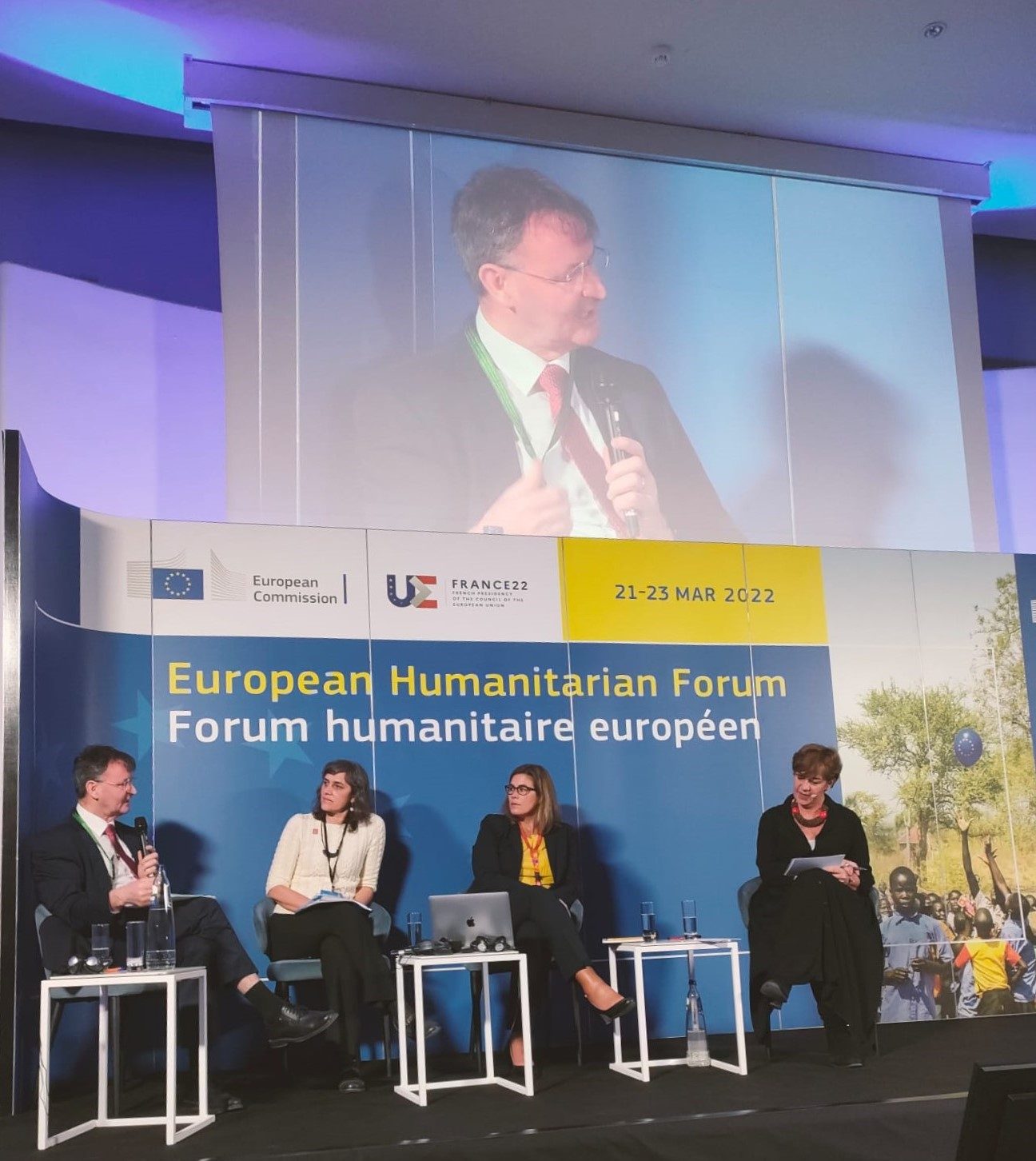
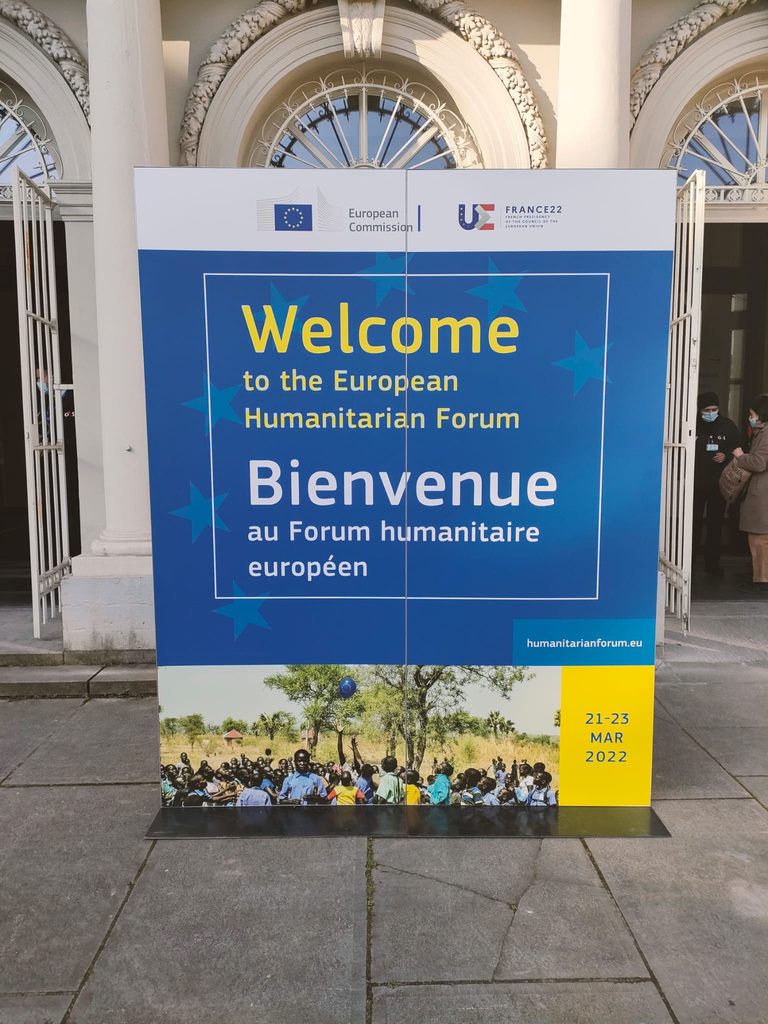
On 21-23 March 2022, the European Commission, together with the French Presidency of the Council of the EU, organised the first European Humanitarian Forum, a space where the international community came together to discuss humanitarian policy and strategy.
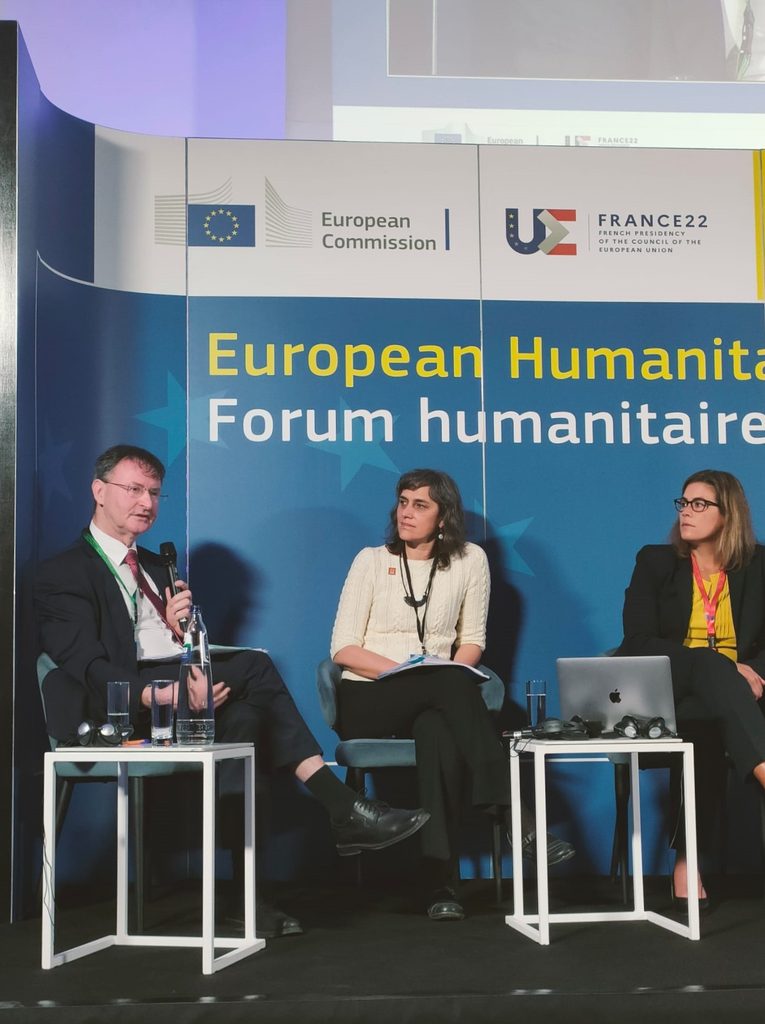
Paul O'Brien, National Director of Plan International Ireland and Chair of the Plan International Europe Board, participated in the high-level panel of Stepping up the Call to Action from Gender-Based Violence in Emergencies. Following the Forum, Petros Kremonas, Communications and Campaigns Coordinator of the Plan International EU Office, sat down with him to hear about his experience.
The below interview took place on 21 March 2022.
Petros: During the last years, especially during the coronavirus pandemic, the term "shadow pandemic" became standard when trying to capture the size and severity of gender-based violence. Can you tell us a bit more about it?
Paul: The coronavirus pandemic resulted in many countries simultaneously going into lockdown which, in turn, exposed some people to the issue of domestic violence to a much higher degree than normal. It also highlighted that a large majority of gender-based violence cases are perpetrated either by a partner or by a former partner or by a family member of the victim. This is a shocking fact. Does this make GBV worse? I personally think that it does. It is a huge indictment on how men abuse their power, both physical and psychological on their partners or former partners or family members.
Social norms, rules and laws built over the years, however good or bad, are broken or quickly ignored though the change in power. It is in these cases that you see a dramatic escalation of gender-based violence where it is used as a weapon in the conflict.
Petros: How does this connect to humanitarian crises?
Paul: The perpetrator is one of the main differences here. Often, in humanitarian crises violence does not only come from intimate partners or ex-partners. In conflict situations, you see what I would describe in an oversimplified manner as "men with guns" taking advantage of the changing power dynamics in a crisis resorting to violence and exploitation of vulnerable groups.
But despite the differences, the abuse of power is a constant.
I have been working in the humanitarian sector for over 30 years and I have seen some patterns taking place again and again.
When a humanitarian crisis occurs, either from conflict, or from a natural disaster, the normalcy of people's lives and communities breaks down and often people are forced to move from the safety of their family homes and communities. We have witnessed in many countries that this large and forced movement of people "disturbs peace" and life of a community and creates a situation where people, particularly women and children, find themselves in heightened risk.
We have witnessed this historically over the years in places like Sudan when the Dinka moved from their homeland to the Arab north due to the food crisis. We have also witnessed it in Bangladesh with Rohingya refugees in the early 1990s and mid 2000s. We have witnessed it in the aftermath of Rwanda and Yugoslavia.
All these crises dramatically changed the normal settled situation and made many people, particularly girls and young women, vulnerable. Social norms, rules and laws built over the years, however good or bad, are broken or quickly ignored though the change in power. It is in these cases that you see a dramatic escalation of gender-based violence where it is used as a weapon in the conflict.
We are accountable to the people with whom we work. It is important that we do things right as well as fast.
Petros: During the European Humanitarian Forum, you mentioned the need for humanitarian workers to find a balance between a quick response and a quality response. Would you care to elaborate a bit more on this?
Paul: Let's take the example of Ukraine. Plan International response teams in Poland, Moldova, Romania, reported that they witnessed a great outpouring of assistance from the host populations in each country wanting to help refugee families. As a citizen, I admire this volunteerism and good intentions of those locals. But as a humanitarian, this admiration must be married with some basic levels of precaution and care.
The majority of refugees crossing the border from Ukraine are women and children. At an early stage in our response, we need to quickly establish high standards in safeguarding and child protection. Perhaps 99% of refugees who crossed the borders will be safe, but our mandate is also to support the 1% who are most vulnerable as well. And 1% of 3 million refugees who crossed the borders from Ukraine is 30,000 people – who may have been exposed to people traffickers or other exploitation because of the absence of standards from day one of the crisis.
This is why you should slow the speed of a response, to ensure quality standards are put in place – ideally from the beginning. Doing things quickly is important but it also increases the danger of doing things badly. Then again, doing things too slowly can increase quality but in a crisis, it can create other problems in terms of a large build-up of numbers at reception centres. We need to ensure a balance. How do we get that balance? Personally, I feel that the most important thing is to have people that are competent, capable and experienced deployed quickly to these crisis as they will know the dangers, spot safeguarding, trafficking risks, and so on.
A recent example from my home country Ireland. Around 20,000 Irish families put their names forward to host Ukrainian refugee families and at the time of this interview almost 10,000 Ukrainians had already arrived into Ireland. A system needed to be put in place to make this hosting process as safe as possible by conducting police checks and vetting those offering accommodation. This will slow the process down but this layer of protection is essential to ensure refugees who are already vulnerable are not placed in greater risk. It is our responsibility to ensure that we are not putting people who are coming out of one bad situation into another vulnerable situation.
We are accountable to the people with whom we work. It is important that we do things right as well as fast. That is why Plan International has signed up to CHS, or Common Humanitarian Standard. It means we are accountable to our programme participants. It also means we must find the balance between doing things quickly and doing things well. That is how we deliver better with quality.
Petros: Intersectionality is very close to the DNA of Plan International. How does it connect to the Call to Action from Gender-Based Violence in Emergencies?
Paul: In very simple terms, what intersectionality says is that when planning a response, there are different layers of one's identity that we need to take onboard.
Going back to the example of Ukraine, I believe there are over 100,000 children in the care of the Ukrainian state in the country that are in a very vulnerable situation. We need to understand what this number includes as our response needs to be inclusive and 'one size' does not fit all.
Girls are more vulnerable than boys and exposed to different risks. Children and adults with a physical or mental disability are facing different obstacles. Perhaps there are adults and children from different ethnic groups or LGBTQI+. We need to understand the intersection of these characteristics to understand what they need to ensure our response is inclusive and appropriate. We need to bring all of these nuances to our response so that all of these adults and children are safe and no one is left behind.
I am not very worried if the sessions are not considered very innovative. What we should focus on as humanitarian actors is very basic. The humanitarian imperative is to save lives and ease suffering.
Petros: What are your impressions of the first European Humanitarian Forum? We have heard positive feedback, such as the importance of public commitments, as well as less positive comments, like the lack of innovation or new and inspiring ideas. Where do you stand on this?
Paul O'Brien at the European Humanitarian Forum 2022.
Paul: Personally, I am not very worried if the sessions are not considered very innovative. We often try to find new ways or use different language to communicate our work and our priorities but, in the end, the basic fundamental humanitarian principles do not change.
What we should focus on as humanitarian actors is very basic. The humanitarian imperative is to save lives and ease suffering. We need to take a principled approach. That aid is given based on need and regardless of gender, ethnicity, religion, etc. That's what it is fundamentally about.
Impartiality, neutrality, independence and humanity. These are key principles and values of humanitarian work. Getting everyone in the room to agree on these principles is the most important part. Events like the EHF that bring us all together to discuss current challenges and trends are great. Our organisations evolve and change, we try to learn from each other, we try to learn from each crisis and do better the next time.
Petros: Part of your panel contribution was about localisation. Is localisation becoming a tick-the-box exercise, or is there meaningful progress?
Paul: Localisation or locally-led is the right way forward but we need to see how it can become a reality. There are many challenges in this that we need to be honest about.
For example, donor funding. Humanitarian donors tend to fund on a 6-9 month or even annual basis. The issue with short-term funding is that it does not allow organisations to build strong, long-term partnerships with local organisations. In addition, some donors do not allow for a decent overhead for local partners which can help an organisation evolve, build capacity and develop.
On top of the short-term funding is the issue of increasing compliance. We all know the need for good compliance for a well-functioning sector but we need to find a balance. As compliance demands and standards continue to increase, intermediary organisations like INGOs are caught between donors and local partners. In many cases, the intermediary INGO is carrying all of the risks for local organisations as donors may not want to fund local organisations directly and local organisations may not be capable of carrying the compliance burden of donors. This is one of the dilemmas while trying to make progress working with local organisations.
So yes, the strategy of localisation – locally-led makes sense but it needs to be adjusted depending on the humanitarian context and the capacity and capability of the local organisations. In addition, local organisations in a conflict may end up in great danger from warring factions, if they are perceived to support, or come from, one ethnic group. Context is also very important.
Petros: What would you like to see in the foreseeable future from the side of the international community, especially the institutions, when it comes to gender-based violence in emergencies?
Paul: I believe that evidence and transparency in regards to funding gender-based violence must be a priority. We need more clarity.
I feel that mitigation and response to gender-based violence is happening to some extent and there is greater awareness of what needs to be done at the time of an emergency and what services need to be provided in response. Prevention, on the other hand, has a long long way to go. And this should be a major part of the discussion.
Let's be honest. Gender equality is not a reality in any country in the world.
93% of women in Ireland in a recent survey said they feel vulnerable because of their gender. I imagine a survey like this will be similar in other countries. We have made progress in some countries but we have a long way to go to achieve equality, and this is key to any prevention strategy.
Petros: Any last comments?
Paul: During these conferences, I always ask myself: will this conference make a difference to people affected by a humanitarian crisis? Will it help us to deliver a better humanitarian response? Will it help to ensure humanitarian principles are at the heart of our responses? There is a new generation coming through and there are increasing humanitarian crisis. The numbers are increasing – we need to get better faster at delivering appropriate responses.
Paul O'Brien
CEO, Plan International Ireland
Petros Kremonas
Communications and Campaigns Coordinator, Plan International EU
Terms and concepts
Call to Action from Gender-Based Violence in Emergencies: A multi-stakeholder initiative to transform the way gender-based violence is addressed in humanitarian emergencies. The aim is to drive change and foster accountability so that every humanitarian effort, from the earliest stage of a crisis, includes the policies, systems and mechanisms to mitigate gender-based violence risks, especially violence against women and girls, and to provide safe and comprehensive services to those affected by gender-based violence. More information.
Intersectionality: The network of connections between social categories such as race, class and gender, especially when this may result in additional disadvantage or discrimination. Definition by Oxford dictionary.
Emergencies, Protection from violence, Gender-based violence
Related pages
Adolescent Girls in NW Syria: research findings
On the occasion of the 2022 Syria Donor Conference, Plan International is inviting you to an event on "Adolescent Girls in NW Syria: Survivors of Vulnerabili…
An extraordinary moment for the world
After returning from Poland where she was deployed for 4 weeks, Anne-Marie McCarthy, Head of Partnership at Plan International EU, shares her thoughts in an …
A year after the EU Strategy on the Rights of the Child
Joint reaction of 16 children rights organisations on the first anniversary of the EU Strategy of the Rights of the Child.