An empath absorbs the emotions of other people into their own bodies.
As an empath and psychiatrist, I know that feeling well.
Even though empaths may set excellent limits with energy vampires, it's common for us to experience "emotional hangovers," an energetic residue left over from the interaction. Toxic emotions can linger long afterwards which make you feel exhausted, beset with brain-fog, or ill. When dealing with drainers at work or at home, empaths often need time to recuperate later. In addition, try the following suggestions from my book "The Empath's Survival Guide" to remove any hangover symptoms from an energy vampire encounter.
Protection Strategies
9 Strategies to Cure Emotional Hangovers
Whenever you suspect you've absorbed emotions from someone else and feel an emotional hangover coming on, practice these strategies. They're a way of clearing unwanted energy and emotions from your body.
Don't Let the Bed Bugs Bite: Orkin Releases New Top 50 Cities List
Baltimore Holds Top Spot on Bed Bugs Cities List
ATLANTA (January 3, 2017) – Baltimore tops this year's Top 50 Bed Bug Cities list, released today by pest control leader Orkin. In the six years Orkin has released the bed bug city rankings, this is the first time Baltimore has made the top five, moving up nine spots since last year. Four metro regions — Las Vegas, Portland, Salt Lake City and Greensboro-High Point-Winston Salem — made the list for the first time this year.
The list is based on treatment data from the metro areas where Orkin performed the most bed bug treatments from December 1, 2015 – November 30, 2016. This ranking includes both residential and commercial treatments.
Baltimore (+9)
Washington, D.C. (+1)
Chicago (-2)
New York
Columbus, Ohio
Los Angeles (-4)
Detroit
Cincinnati
Philadelphia (-3)
San Francisco-Oakland-San Jose (+4)
Richmond-Petersburg, Va. (-2)
Raleigh-Durham, N.C. (-1)
Cleveland-Akron-Canton, Ohio (-1)
Indianapolis (+1)
Dallas-Ft. Worth (-2)
Atlanta (+3)
Houston
Buffalo, N.Y. (+2)
Charlotte, N.C. (-3)
Norfolk-Portsmouth-Newport News, Va. (+10)
Knoxville, Tenn. (+3)
Denver (-4)
Nashville, Tenn. (-1)
Pittsburgh (+5)
Greenville-Spartanburg, S.C.-Asheville, N.C. (-4)
Phoenix (-3)
Grand Rapids-Kalamazoo-Battle Creek, Mich. (+5)
Boston (-3)
Milwaukee (-3)
Champaign-Springfield-Decatur, Ill. (+12)
Hartford-New Haven, Conn. (+3)
Dayton, Ohio (-4)
Omaha, Neb. (+3)
Seattle-Tacoma (-6)
Tampa-St. Petersburg, Fla. (-4)
Charleston-Huntington, W.Va. (-1)
St. Louis (+3)
Cedar Rapids-Waterloo-Dubuque, Iowa (+3)
Myrtle Beach-Florence, S.C. (+11)
Syracuse, N.Y. (+6)
Louisville, Ky. (-2)
Greensboro-High Point-Winston Salem, N.C.
Lexington, Ky. (-10)
Orlando-Daytona Beach-Melbourne, Fla. (-6)
Kansas City, Mo. (-1)
Miami-Ft. Lauderdale, Fla. (-3)
Salt Lake City, Utah
Honolulu, Hawaii
Las Vegas
Portland, Ore.
"We have more people affected by bed bugs in the United States now than ever before," says Orkin Entomologist and Director of Technical Services Ron Harrison, Ph.D., adding that bed bugs are a growing issue. "They were virtually unheard of in the U.S. 10 years ago," he says.
According to a 2015 "Bugs without Borders Survey" by the National Pest Management Association, nearly all (99.6 percent) of pest professionals nationwide have treated bed bugs in the past year, up from five, 10 and 15 years ago.
Bed bugs are great hitchhikers because they travel from place to place with ease, including luggage, purses and other belongings. Bed bugs can be found anywhere, from single family homes, apartments and hotel, to public places like movie theaters, public transit and libraries and offices.
"Anyone can get bed bugs in their home. They are not a sign of uncleanliness. Bed bugs only need blood to survive. We have treated for bed bugs in everything from million dollar homes to public housing," Harrison says.
Bed bugs can be difficult to detect and treat because of their small size and ability to survive up to a year without feeding. They are about the size of an apple seed when fully grown, and can hide around seams of a mattress, behind headboards and in cracks and crevices, usually within a five-foot radius of the bed. The first signs of a bed bug infestation are often the bed bugs themselves or small dark stains bed bugs can leave behind.
"People may have bed bugs and not know it, because many people have no physical reaction to bed bug bites," Harrison says. "That's why it's important for people everywhere to inspect for bed bugs regularly."
While the 50 metro areas listed above required the most treatments for bed bugs in 2016, Orkin has treated for bed bugs in all 50 states and around the world. To help detect and prevent bed bugs, Orkin recommends homeowners and travelers do the following:
At Home:
Inspect your home for signs of bed bugs regularly. Check locations where bed bugs hide during the day, including mattress seams and behind baseboards, headboards, electrical outlets and picture frames. "I like to inspect every week when I change the sheets to make sure I don't have a visitor," Harrison says.
Decrease clutter around your home to make bed bug inspections and detection much easier.
Inspect all secondhand furniture before bringing it inside your home.
Dry potentially infested bed linens, curtains and stuffed animals on the hottest temperature allowed for the fabric.
During travel, remember the acronym S.L.E.E.P to inspect for bed bugs:
Survey the hotel room for signs of an infestation. Look for black or brown spots on any furniture.
Lift and look in bed bug hiding spots: the mattress, box spring, bedskirt and other furniture, as well as behind baseboards, pictures and even torn wallpaper.
Elevate luggage away from the bed and wall. The safest place is in the bathroom.
Examine your luggage while repacking and once you return home from a trip.
Place all dryer-safe clothing from your luggage in the dryer for at least 15 minutes at the highest setting after you return home.
Bed bugs can quickly become a major problem, as they can spread from room to room if undetected and allowed to multiply. Anyone who suspects a bed bug infestation should contact a pest management professional immediately.
For more information about bed bug detection and prevention, visit Orkin.com. You can also find 100 facts about bed bugs in Orkin's new bed bug e-book.
About Orkin, LLC
Founded in 1901, Atlanta-based Orkin is an industry leader in essential pest control services and protection against termite damage, rodents and insects. The company operates more than 400 locations with almost 8,000 employees. Using a proprietary, three-step approach, Orkin provides customized services to approximately 1.7 million homeowners and businesses in the United States, Canada, Mexico, Europe, South America, Central America, the Middle East, the Caribbean, Asia, the Mediterranean and Africa. Orkin is committed to studying pest biology and applying scientifically proven methods. The company collaborates with the Centers for Disease Control and Prevention (CDC) and eight major universities to conduct research and helps educate consumers and businesses on pest-related health threats. Learn more about Orkin at Orkin.com. Orkin is a wholly-owned subsidiary of Rollins Inc. (NYSE: ROL). Follow us on Facebook and Twitter.
Researchers Have Started a Trial to Refreeze the Arctic
Snow Machines
One of the strongest and most obvious indications of global warming is the receding polar ice caps, most specifically, the Arctic sheets. In February of this year, scientists brought up a peculiar solution for combating melting ice caps: refreezing them. Now, this seemingly outlandish idea is about to get a test run in Switzerland.
The pilot Swiss plan is similar to the proposed Arctic solution, except instead of entire ice caps, the target would be a small, artificial glacier at the foot of the Diavolezzafirn glacier. While the Arctic plan proposed the use of wind-powered pumps to spew water on top of ice, this mini-version of the project will use snow machines to preserve the glacier over the summer by covering it with artificially created snow.
If it works, the next step would be to try it out on the larger Morteratsch glacier in the eastern Swiss Alps, a plan Oerlemans recently presented at an annual meeting of the European Geosciences Union in Vienna, Austria. Rising temperatures due to global warming have caused this vast valley glacier to recede at an alarming rate of 30 to 40 meters (98 to 131 feet) each year, according to a New Scientist report.
Oerlemans and his colleagues, however, don't just plan to keep the Swiss glaciers from receding. They want to grow them back, and 4,000 snow machines might just do the trick. "In principle, even the snout could grow back," said Oerlemans. Within 20 years, he concluded, the glacier might be able to grow by 800 meters (2,625 feet) if researchers blow just a few centimeters of artificial snow over a 0.5 square kilometer (.19 sqaure mile) plateau each summer to give it cover.
In the case of the Arctic, however, it wouldn't be that simple. The area is huge, roughly 107 square kilometers (3.8 million square miles), and the plan to refreeze it with water pump would require a huge investment. If it worked, however, an extra meter of sea ice could be added in just one year, according to the Arctic plan, winding the ice cap clock back by 17 years.
Buying that sort of time might just be worth the effort required to put seemingly impossible ideas to fight climate change into action, and this smaller project in Switzerland could provide the confidence needed to give them a shot.
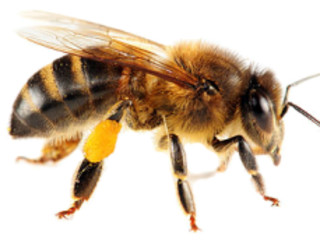
This Smart honey farming project will help build micro-businesses in Aotearoa/NZ through a vertically integrated apiculture farming Co-Op. The first Co-Op in 105 years set up to support Maori landowners who traditionally get poor economic returns from their land. Permanent IoT Smart honey farming "Bee-Villages" plus new micro cropping creates job opportunities for retiring family members to go home & build whenua cash flow. Honey sales are shared between landowner & HoneyHut owner for 20 years
WHAT A GIFT! A PERSONAL IoT SUPPORTED SMART HONEYHUT - ONE THAT KEEPS ON GIVING HONEY-MONEY TO YOUR CHILDREN, EMPLOYEES, FAMILY, ETC FROM A SECURE BEEVILLAGE IN AOTEAROA/NZ.
The gift for all seasons. The gift for all reasons. "The gift that just keeps on giving". Ideal for birthdays, Christmas, weddings, graduation celebration, corporate bonuses and every other occasion. A gift that delivers tasty returns for the person lucky enough to have been given such a rewarding, "giving gift". BTW, why not reward yourself too and buy a Smart HoneyHut?
SMART GIFTS THAT SUPPORT BEE BIO-SECURITY
It is said that 60% of mankinds food will disappear if bees disappear. It is said that within 4 years of the disappearance of the bees, mankind too will disappear. Yet against this threat of bee extinction, here in our Moana nation of Aotearoa/NZ we allow a clear and present danger to threaten our bee population. The trucking of bees and hives from one location to another. Smart HoneyHuts placed into permanent IOT supported Smart Bee-Villages in Manuka honey bushlands will help stop this dangerous, ongoing Bio-Security risk that threatens the continuing existence of our Moana nation's bee population.
A BIG BIO-SECURITY RISK CREATED & AGGRAVATED BY BAD LAW
This bio-security risk has largely arisen because of the discriminatory "Native Land" laws in NZ that have (1) caused havoc to our bee population and (2) economically marginalized Maori land values by depriving Maori landowners of equal access to capital with which to harvest crops that their whenua (land) grows and supports. Produce such as Manuka honey that comes from their whenua (lands). Legislation that has forced Maori landowners into a subservient role in commercial partnering relationships in respect of the natural produce / food that their lands produce depriving them of a fair reward for produce from their whenua (lands).
The transportation of bees and hives by beekeeping companies into Maori tribal lands to take out Manuka honey and then paying the landowners a fraction of its market value is a demonstrably clear example of this subservience. A practice that gave rise to ongoing bio-security risks in our Moana nation of Aotearoa/New Zealand. It was the direct cause of the introduction of the destructive Varroa mite into our previously disease free rohe (territory). For so long as this trucking practice continues, it leaves the door open to even more bio-security risks such as Myrtle Rust, a disease that if it gets hold in our country, our Manuka Honey industry will be destroyed. Already spreading in Australia, Myrtle Rust attacks the Myrtaceae species such Leptospermum Scoparium (manuka) and our beloved Pohutakaka tree causing tree death. We Maori landowners want to eliminate this risk by stopping the dangerous trucking / transportation of bees and their hives into our native bushlands. We can do this by establishing permanent, disease free bee-villages on our lands under our proprietary RTOL (Right to Occupy License) contracts with Maori landowners.
WEALTH & JOB CREATION FRUSTRATION
Rickson is a fellow director of mine and like me, is a Maori landowner. Unfortunately and like so many of my whanau and Hapu, he too continues to experience the negative impact of value destroying, discriminatory land ownership laws created in the colonial era. Laws that to this day, preventme and my fellow Maori landowners from using our personally owned Manuka honey bushlands as security to raise the money we need to develop permanent bee-villages on our lands to support the launch our own "honey-farming" Cooperative using modern day, cloud and Internet of Things (IOT) SaaS management technology on our own Manuka bushlands, the source of Manuka honey. The the world's most expensive honey. Land laws that have fragmented native land title making it extremely difficult for banks to lend on Maori owned whenua (land) in the same way that they will lend to non-Maori owned freehold landowners. Change these laws and banks would be then be able to support a far wider range of Maori whanau (family) developed commercial ventures such as our Co-Op, this in turn creating new job and wealth creation opportunities for Maori landowners.
PRE SALES = OUR SOLUTION = OUR 20 YEAR PRESENT FOR YOU
Because of this inability to gain access to bank funding, our Smart Bee-Village landowner group decided to pre-sell the 30 HoneyHuts needed to launch "HoneyHut Village @ Herepara Farm" in Whanarua Bay as a scalable/replicable Minimum Viable Product (MVP) permanent "HoneyHut Village" demonstrator prototype for Maori owned Manuka bushland in our rohe (territory). This despite the fact that Rickson's property, is in the heart of the best Manuka bushland in the country with million dollar Pacific Ocean views that every tourist / visitor looks in awe at the amazing panorama. However, our Moana nation's native land laws make it worth only one eighth of his neighbours macadamia orchard land and only one seventh of his uncles adjoining "non-native" title land. A double-whammy as some would say.
LEGISLATED LAND VALUE DISPARITY HAS MARGINALIZED ECONOMIC LAND YIELD
Rickson's whanau (family) whenua (land) would be worth over NZ$1.4M if it were not classified as being "Maori land". Not the lowly NZ$207k ($23k per ha) that the local Council says Rickson's land is worth while valuing his Macadamia orchard owning neighbour's land as being worth NZ$202k per ha. Same typography. Same views. Same soil type. Same "everything" with the only difference being that the macadamia orchard owner next door to Rickson can use his "non native title" classified land as security to secure funding to support his farming based business, Rickson cannot because of these colonial era government sanctioned discriminatory native land laws that for 150 years have economically marginalized Maori landowners. It is the impact of these laws, that forced our founder group to find another way to fund the launch of the Co-Op. By pre-selling 30 Smart HoneyHuts to people that love honey, want to help build and improve bee bio-security and earn a return on their Smart Bee-Village HoneyHut, the group founded the HoneyHuts concept/product to launch on Rickson's whenua (land) as an MVP prototype for other landowners. A project that will help to increase the return and thus economic value of Maori owned whenua for their whanau in accordance with Tikanga and Kaitiakitanga.
ITS A 20 YEAR "WIN-WIN" RELATIONSHIP WITH YOUR MAORI LANDOWNER!
A HoneyHut purchaser will own one Smart HoneyHut on Maori owned land for 20 years, sharing the raw honey production with 30% being paid to the HoneyHut owner and 70% to the landowner. Based on 2017 average farm gate pricing and assuming an average honey producing year, a HoneyHut owner could earn NZ$240 in their first full year from their HoneyHut. However we do draw your attention to risks associated with the honey industry as set out below. As a HoneyHut owner you are also (1) supporting much needed Maori job creation in rural areas where jobs are scarce, (2) helping to preserve and build the bee population, critical to the entire food chain, (3) helping to restore greater economic returns to Maori landowners and (4) enjoying some really neat benefits through your Club HoneyHut membership.
RISKS AND CHALLENGES
There are risks associated with the apiary (beekeeping) farming sector. Issues such as Colony Collapse Disorder and the Varroa Mite that cause damage to bees and the bee colonies found within a bee hive (HoneyHut). One huge advantage that the HoneyHut village concept brings to the sector is the elimination of transporting bees from one location to another. A practice that is widespread in Aotearoa/NZ as traditional (non-Maori) beekeepers must move their hives into Maori owned land areas to access honey such as Manuka. This movement angers Maori landowners whose land the bees take honey from and is known to be an acute bio-security risk. One that is non-existent with the fixed location of HoneyHuts on one site for 20 years under the daily watchful eye of the landowner and his whanau (family) who have a far greater vested interest in "nursing" and looking after the HoneyHuts, working closely with the Co-Ops trained beekeepers who provide full HoneyHut support services all they way through to the extraction phase. Support that will very quickly and readily identify any issues re bee health and hive security as a risk mitigating strategy.
ABOUT OUR CHAIRMAN / THE CO-OP KAUPAPA (OBJECTIVE)
My name is Toopi "Jim" Wikotu, a Maori descendant of the legendary "Mataatua" waka (Maori canoe) that landed in the eastern Bay of Plenty area of our Moana Nation of Aotearoa (NZ) nearly 1,000 years ago. I am a Kaumatua (elder) and Rangatira (leader) of the Te-Upokorehe Hapu (tribe). Because of the economic stress and hardship that my whanau (family) endured during my early years, I left school when I was only 15 years old and entered the workforce at a young age working in a wide range of outdoor jobs from building, to land-clearing and forestry driving huge earth moving equipment. Upset with the poverty that so many of my brothers were also experiencing, I co-founded the largest motor-bike club in the country, formed when a group of us back in the day, retaliated against drug pushers who we dealt with according to Tikanga (Maori customary law) to keep them and their hard drugs away from our mokopuna (children).
WHAKAPAPA AND KAITIAKITANGA (genealogy and guardianship)
Rickson and his fellow landowners are whanau (family) of mine and like, them, I too have interests in many landblocks in our country including a dairy farm, yet I cannot easily extract/create economic value from them for the next generation due to the "native land" laws that have been forced upon us by non-Maori. Yes FORCED upon the tangata-whenua (original people) of this land. This is why I formed the Te-Upokorehe Business Development Unit to support and encourage inter-tribal cooperation in order to create and build greater land-use efficacy and yield for both our current and future generations. The much lower input costs of HoneyHuts (bee hives) on whenua owned by Maori whanau makes the apiary sector a very attractive form of land use for our Maori people.
MY KAUPAPA (OBJECTIVE)
As a Maori elder, I have acquired an extensive understanding and knowledge of Maori tradition, culture and how much more remains to be done for true equality to be enjoyed by Maori people. For this reason, I operate a Child and Youth Protection refuge, acting as an interface between the Courts and young Maori who are at risk of falling between the cracks. I am a Maori Lore practitioner and a Department of Justice Maori Court Assessor for Marae based legal process according to Tikanga.
I am the founding chairman of the recently formed Aotearoa Cooperative Honey Co Ltd. The first Maori landowner-farmer Co-Op to have formed to help Maori landowners in this country since my Uncle, the legendary Sir Apirana Ngata who started the Waiapu Farmers Co-Op in 1912. The man whose image appears on the NZ$50 bank note. My kaupapa in forming the Co-Op is to dvelop an inter-generational legacy land-use project that helps to rebuild and foster ever improving economic relationships between our Maori people and their whenua (land) for the good of their whanau (family) for generations to come.
In closing, I ask you to please support our project.
President Trump painted a golden future of "great wealth" and "great jobs" powered by oil pumped from the ocean floor as he signed an executive order on Friday to consider new offshore drilling around the country.
But his efforts could splash harmlessly against the hardened barricades that California has been fortifying for decades with regulation and legislation to prevent additional drilling along its treasured coast.
Even the faintest possibility of new oil operations prompted an immediate backlash in the state as environmentalists feared ecological disaster, surfers warned of soiled beaches and politicians promised new measures to block any development.
At a time when California is forging ahead with ambitious policies on climate change and renewable energy, the mere suggestion of additional derricks dotting the horizon was met with revulsion from the state's leaders, and it brought unwelcome reminders of the coast's painful history with oil spills.
"We will fight to the end," said Susan Jordan, executive director of the California Coastal Protection Network, an environmental group. "They will not get any new oil on these shores."
Although the oil industry praised Trump's executive order, there appeared to be little enthusiasm for new drilling along California's coast. With the price per barrel below $50, expensive offshore operations may not be cost-effective, especially in a region with steep regulatory hurdles.
Most notably, even if the Trump administration awarded a new lease for drilling in federal waters, getting the oil ashore would be nearly impossible without a pipeline. State leaders pledged to stand in the way, and attempts at new developments could face endless litigation.
"I'm not worried about seeing oil derricks out there any time soon," said Deborah A. Sivas, director of Stanford University's Environmental Law Clinic. "There are a lot of roadblocks."
Offshore drilling in California (@latimesgraphics)
There are 27 oil platforms off California's coast, but no new leases have been granted in federal waters since 1984. Most of the state's oil production occurs on land. Polls show offshore drilling remains unpopular, and oil companies already mired in battles over California's policies on climate change may be unwilling to ruffle more feathers by trying to expand drilling.
Trump's order did not specifically mention California or the Pacific Ocean as potential areas for oil development, but left the door open to the possibility. Environmentalists were particularly alarmed by Trump's call for a review of marine sanctuaries, which were expanded by former President Obama.
"That's a clear statement that they're interested in California drilling even if the other language was equivocal," said Richard Charter, a senior fellow with the nonprofit Ocean Foundation who has been following coastal drilling issues for decades.
U.S. Interior Secretary Ryan Zinke acknowledged looming resistance to offshore drilling in California, telling reporters Thursday evening that federal officials would incorporate local input before making any decisions.
"I was out in Santa Barbara recently," he said. "There's a lot of people who don't like it out there."
That was an understatement.
"Californians will not stand for this," said Jennifer Savage, a spokeswoman for the Surfrider Foundation, a nonprofit conservation group. "We love our coast. It's our playground, the driving force of our economy, the place where we find solace, joy and sustenance."
California Atty. Gen. Xavier Becerra, along with Gov. Jerry Brown and top lawmakers, promised to fight any oil drilling.
"Instead of taking us backward, the federal government should work with us to advance the clean energy economy that's creating jobs, providing energy and preserving California's natural beauty," he said.
State Sen. Hannah-Beth Jackson (D-Santa Barbara) quickly announced new legislation Friday that would bar state commissions from allowing any new oil infrastructure along the coast, from piers to pipelines.
"President Trump and his oil industry cronies may want to drill, but we're going to stop that oil and gas development from being feasible," she said.
The legislation, scheduled to be introduced next week, would buttress opposition to offshore drilling from the California Coastal Commission and the State Lands Commission, who have jurisdiction over the coastline and the waters stretching three miles into the ocean.
"California's door is closed to President Trump's Pacific oil and gas drilling," said Lt. Gov. Gavin Newsom, who is chairman of the state's lands commission.
Workers try soak up oil in Santa Barbara Harbor after a devastating spill in 1969. (Don Cormier / Los Angeles Times)
The state was the site of the first offshore drilling in the U.S., starting with the Summerland oil field off the coast of Santa Barbara in 1896. But the same region was tarnished by the worst spill in California history in 1969, when more than 3 million gallons of oil poured into the ocean. Only the Deepwater Horizon and Exxon Valdez spills — in 2010 and 1989, respectively — have been more devastating.
The oil fouled the channel and coastline of Santa Barbara Channel from Goleta to Ventura as well as the shorelines of four channel islands. An estimated 3,700 sea birds were killed, along with a variety of marine animals, including dolphins, elephant seals and sea lions. Virtually all commercial fishing in the Santa Barbara area was halted, and tourism dropped dramatically.
Public outrage generated by the spill and widespread media coverage helped spark the modern environmental movement and prompted state and federal legislation to protect the environment.
A much smaller Santa Barbara spill in 2015, when a ruptured pipeline dumped 123,000 gallons of oil, was a reminder of the environmental dangers.
"I like to say that nothing about what Trump dreams up surprises me now — but this move is a shocking, purely political giveaway to the oil industry," said former Rep. Mel Levine, a Democrat who represented Santa Monica in Congress from 1983 to 1993.
"There was no issue that unified my district more — regardless of what political party someone belonged to — than the anti-oil drilling battle," Levine said.
Times staff writers Evan Halper and Louis Sahagun contributed to this report.
"…..To this day, 300 tons of contaminated, radioactive water flow into the Pacific Ocean every day as many of the leaks can never be sealed due to the extreme heat. Now, nearly six years after the meltdown, radiation from Fukushima has made landfall on the West coast of the United States, signaling a dangerous new era for residents and wildlife along the Pacific coastal region……"
Officials: Fukushima Has Now Contaminated 1/3 Of The Worlds Oceans
Post Views: 21,477
Seaborne Cesium 134, a radioactive isotope released by the 2011 Fukushima disaster, has been detected on the US' Pacific coast for the first time by independent researchers
After the catastrophic triple meltdown of the Fukushima Daiichi nuclear power plant in 2011, the Japanese government and the plant's parent company, Tokyo Electric Power Company (TEPCO), worked to cover up the damage done and downplay the amount of radiation the disaster had released into the environment. Though the disaster's many impacts have been suspiciously absent from mainstream media reports in the years since, the radiation pouring out of the plant's damaged reactors have never stopped.
To this day, 300 tons of contaminated, radioactive water flow into the Pacific Ocean every day as many of the leaks can never be sealed due to the extreme heat. Now, nearly six years after the meltdown, radiation from Fukushima has made landfall on the West coast of the United States, signaling a dangerous new era for residents and wildlife along the Pacific coastal region.
Researchers from the Woods Hole Oceanographic Institution (WHOI), a crowd-funded team of scientists, announced yesterday that they had detected, for the first time, seaborne cesium 134 in seawater on the shores of Tillamook Bay in Oregon. The group has been monitoring the waterborne radiation as it extends from Fukushima across the Pacific for years. According to WHOI as well as other scientists, cesium 134, a dangerous and carcinogenic radioactive isotope, could only have originated from the Fukushima disaster due to its short half-life, or rate of decay.
The samples themselves contained 0.3 becquerels/m3 of the isotope, a relatively small amount that some researchers and corporate media outlets say poses "no risk to humans or the environment." However, there is no such thing as "safe" amounts of radiation, which is particularly true of radioactive cesium as it imitates potassium within the body.
Japanese citizens were also told there was nothing to worry about, despite the fact that cancer rates have spiked since the incident. The real and unstated danger here is that of bioaccumulation. Bioaccumulation refers to the gradual build-up over time of chemicals in an organism, absorbing the substance at a faster rate than it is excreted.
Now, that Fukushima radiation has reached the US, those living on the West Coast or eating fish from that region could be at risk if they consume radioactive water or fish as all consumed cesium would remain in their body, continuously causing damage until it is excreted.
Children are said to be especially at risk. Another reason why there is cause for concern is that these samples were actually collected in January 2016 and not tested until recently, suggesting that landfall may have happened earlier than thought. This, in turn, would also mean that higher levels of cesium as more of Fukushima's radiation has made contact with Western coastal shores in the months since as researchers have said that radiation will not "peak" until well after the plume's initial landfall.
No matter how often the Japanese government, TEPCO, or the corporate media say that radiation from Fukushima is nothing to worry, ignoring a problem does not make it go away. The world's oceans, particularly the Pacific Ocean, are in the midst of an unprecedented crisis as mass die-offs of fish and coral are signaling that something is horribly wrong. These trends, combined with the devastating effects of over-fishing, led the World Wildlife Fund to recently warn that all marine life could die out before the year 2050, less than forty years from now.
It is incredible that a nuclear disaster that has leaked 300 tons of radioactive water into the ocean every day for the last five years could have no effect on the massive environmental crisis unfolding before our eyes. Until Fukushima's consequences are acknowledged and treated with the concern they clearly merit, we will continue to be unable to understand the true scope of the problem.


 An empath absorbs the emotions of other people into their own bodies.