Saturday, December 19, 2020

How to branch fiddle leaf fig bushes into trees (step by step guide) — Greenhouse Studio

How to branch fiddle leaf fig bushes into trees (step by step guide) — Greenhouse Studio
Okay, Miss Figgy - I am getting ready to give you your Spring haircut. We"lol wait a few months, but planning is everything, eh?
https://www.greenhousestudio.co/home-garden/fiddle-leaf-bush-branch-trees

How to branch fiddle leaf fig bushes into trees (step by step guide)

Do you have a fiddle leaf fig (Ficus lyrata) that is one tall stalk with no branches and possibly about to scrape the ceiling? Do you really want a tree-like fiddle leaf with a single trunk and multiple branches at the top? If so, you've come to the right post. We'll get into specific techniques and a step by step process of making your bush-like fiddle leaf into a beautiful branching tree.

This post contains affiliate links. Click here to read my full disclosure.

Photo by  Mike Marquez  on  Unsplash

First, if you're in need of your first fiddle leaf fig either so you have this branching problem to eventually consider, or you want to add an additional fiddle leaf to have a pot with 2 or 3 single stalks, here's a fiddle leaf fig source.

I do want to say I think fiddle leaf figs look beautiful either way - as multiple single trunks with leaves all the way down to the base or one plant pruned into a tree with a bushy, full canopy. A couple issues with the single-trunk forms though:

  • One trunk with no lateral branches might eventually hit the ceiling (unless you have really high ceilings!)

  • If you stick with single-trunk, no laterals, they can look a bit lanky and lonely in their pot after a while. I think they look better with a grouping of 3 single-stalk Ficus lyratas. The plants looks more balanced that way. (This might also be my favorite way to see them - can't decide.)
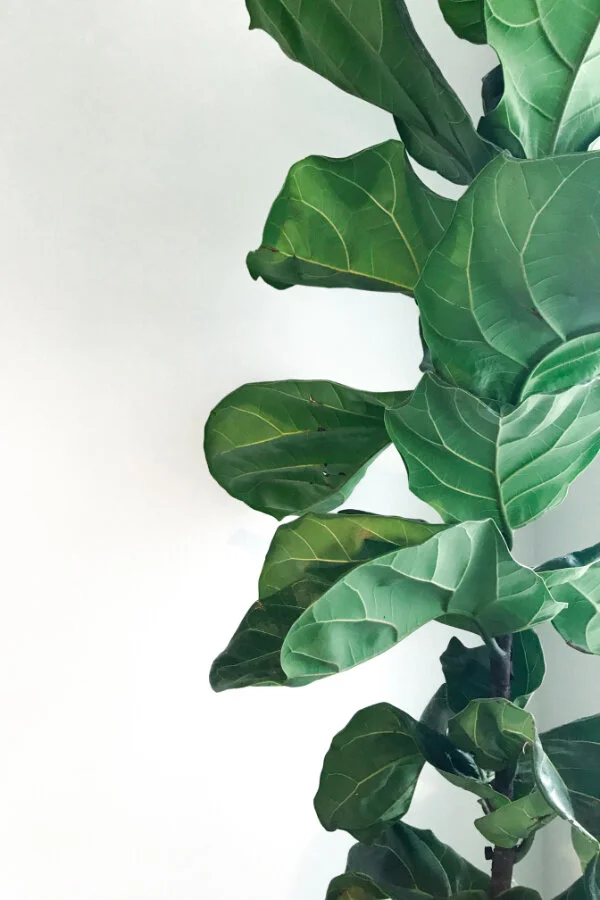
A non-branching fiddle leaf fig (aka Ficus lyrata). Pruning or notching will produce branching and turn it into a tree with a bushy canopy. Source |    Kara Eads    via    Unsplash

A non-branching fiddle leaf fig (aka Ficus lyrata). Pruning or notching will produce branching and turn it into a tree with a bushy canopy. Source | Kara Eads via Unsplash

So if you've decided to prune your fiddle leaf into a tree, there are two methods to do so. One is pruning and the other is notching.

Plant growth backstory - apical dominance

Ever wondered why pruning does what it does? If you're anything like me, I always need to know the why behind what I'm doing. Just knowing what to do isn't enough. So here's a little plant science for you:

The main vertical stem of a plant grows more vigorously over other side stems. This is known as apical dominance. Apical dominance occurs when the main shoot (the apex) inhibits the growth of lateral buds so that the plant may grow vertically.

The reason is that the plant needs to devote energy into upward growth so it can get more light for photosynthesis. Makes sense, right?

The dominant vertical shoot is able to do this through a hormone called auxin. Auxin always moves downward in the dominant vertical shoot to inhibit the growth and development of lateral buds below the apex which would otherwise grow into branches. Again, it's forcing the plant to direct it's energy into upright growth to get more light.
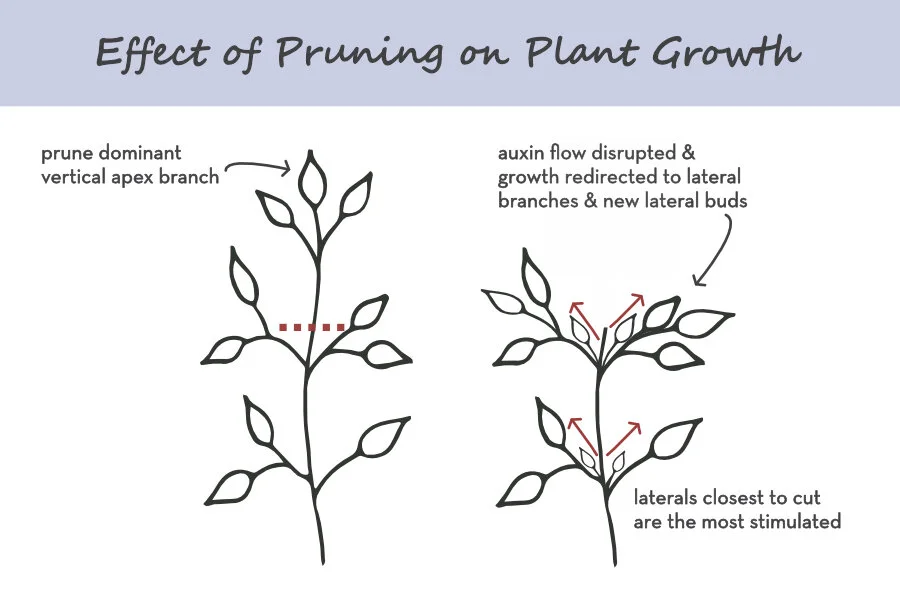
Pruning the apex branch disrupts the flow of growth-regulating auxin so the lower nodes can develop branches. Graphic | Greenhouse Studio

Pruning the apex branch disrupts the flow of growth-regulating auxin so the lower nodes can develop branches. Graphic | Greenhouse Studio

Pruning/Pinching the dominant vertical branch

In the case of your fiddle leaf fig, it's probably the only branch available to take it from a fiddle leaf bush to a fiddle leaf tree. Here are a couple more points to consider before jumping in:

  • The more severe the pruning, the greater the resulting regrowth. This is because the plant is regrowing in an attempt to restore a balance between the shoot system (above soil) and the root system below, which is currently set up to support the plant at it's larger size prior to pruning.

  • The most vigorous shoot growth will usually occur within 6 to 8 inches of the pruning cut.

OK, let's get to it.

Make the cut on your fiddle leaf fig

  1. Decide how much of your Ficus lyrata you want to cut. Again, the longer a section you cut, the more significant the branching will be. (And the more you'll reduce the height of the plant, at least for that shoot.)

    • If you just pinch out the new buds at the top of your fiddle leaf fig with your fingers, it won't be stimulated to produce as many lateral branches off of the main trunk.

      • Pinching is more useful if you want to stimulate a bit of lateral growth to make your plant look fuller near the top.

    • On the other hand, if you prune 12" of shoot off the top, you'll see a lot more branching.

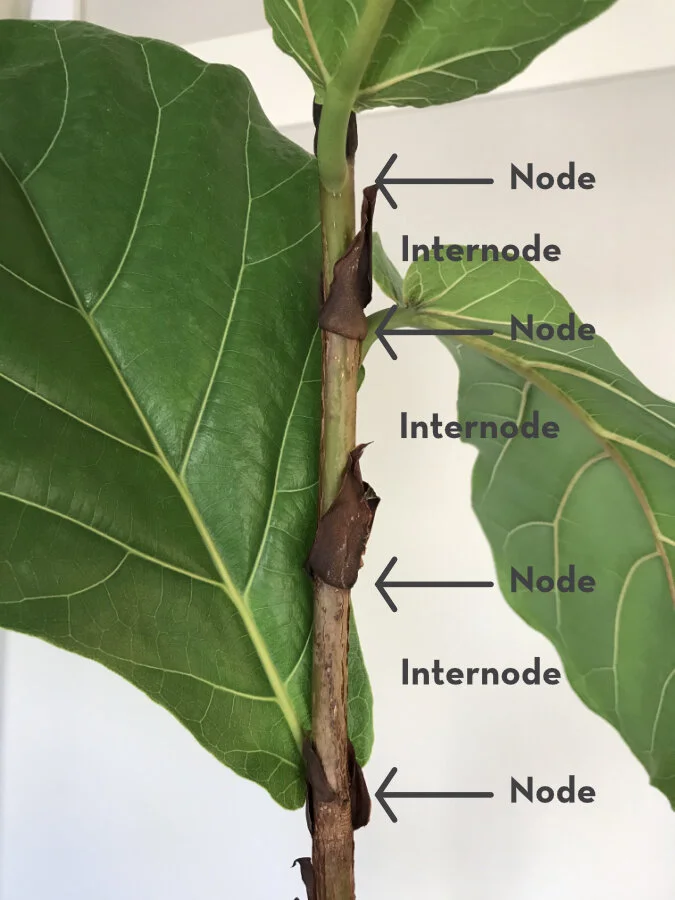
  2. Identify which node you want to cut above. Nodes are found on stems and are the points where leaves, buds, or branches grow. Not all nodes have leaves or branches though - there might just be a mark and slight thickening of the stem. The sections in between the nodes on the stem are called internodes.
fiddle-leaf-fig-node-internode-stem-anatomy.jpg

3. Use a sterile pair of pruners. Make the cut just above the top of your node. Do not cut into the node which would damage it, but just above.

  • Cutting your fiddle leaf fig or any plant in the fig family will produce an oozing, milky, white latex sap. Just don't eat it or get it in your eyes as it can be irritating and don't let it hit the carpet.

4. Final tip - don't strip leaves off the trunk until your fiddle leaf has established it's new branches. Those leaves help grow the new lateral buds, so you want your plant as strong as possible.

(Wondering what to do with your pruned plant parts? Why not grow another fiddle leaf fig?)

That's it! Now wait a few weeks for your new lateral buds which will eventually develop into branches. How long it takes depends on various factors, but your chances of success are better if you do this during spring which is prime growing season rather than winter when fiddle leafs are semi-dormant. New growth will happen faster in spring than if it's done during winter when it will take the plant longer to recover from the wound and to make new buds.
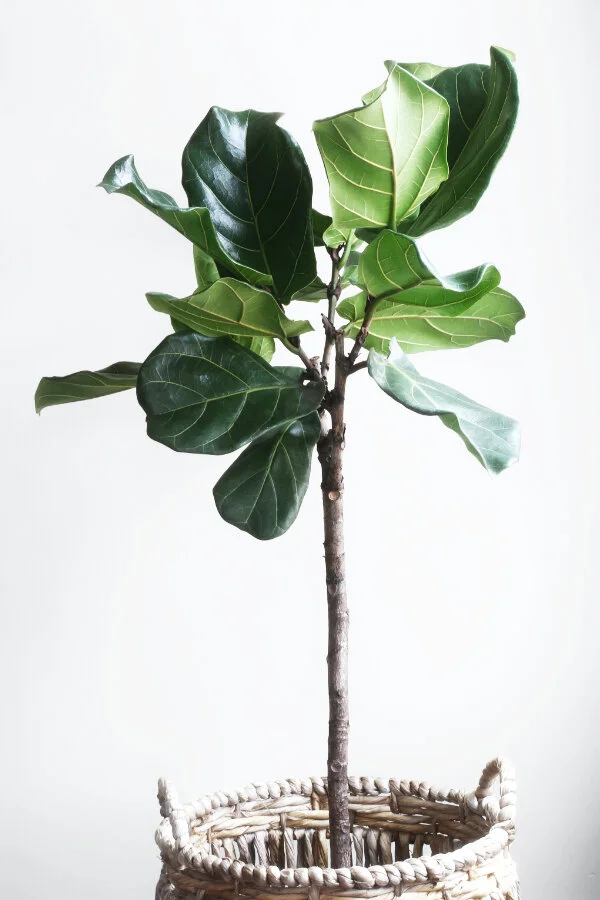
Small, branching fiddle leaf fig tree. Source |  Lauren Mancke  on  Unsplash

Notching

Notching is where instead of pruning the top shoot, you instead make a careful incision above a node. Notching is an advanced technique and the only reason I'd recommend using it over pruning is if you don't want to reduce the height of your fiddle leaf.

Notching also works by disrupting the flow of growth regulator hormones (we're talking auxin again here). Once the wound callouses over, the effect is gone and hormones will flow again.

How to notch your fiddle leaf fig

  • First, notching requires some finesse. You run the risk of cutting off the limb if the incision is too deep. (But hey, even if you accidentally decapitate your ficus, you'll certainly have branching!) Make the incision to shallow, and it might not work.

  • It doesn't produce consistent results like pruning. Consider making a couple more notches than you want branches, although this could possibly give you less than ideal gaps in your fiddle leaf branches. (Again, this is a non-issue with pruning since it works most effectively on the nodes closest to the wound.)

  • It's best done on a woody stem rather than on green growth that is softer and newer.

Here's how to do it:

  1. Use a clean, sharp blade to make an incision above a node. I used the tip-edge of a new X-Acto knife blade. (The kind where you can snap off the old blades.) This gave me good purchase on the internode. Use pruners as most do if you're more comfortable.

  2. Just ABOVE the node, make an incision 1/3 of the way around the stem and no more than 1/3 deep into the stem. You'll see some latex sap which you should wipe up just in case kids or pets decide to lick it since it does look like milk.

    1. The reason for making the incision above rather than below the node is that cutting just above disrupts growth regulating hormones like auxin. Cutting just below a node promotes flowering/fruiting by diverting carbohydrate flow from the vegetative growth into reproductive growth (flowers & fruit).

  3. Leave it alone to heal and hopefully you'll have buds after several weeks that turn into branches. Again, same as with pruning, you will increase your chances of success by doing this during spring or early summer which is prime growing season for your fiddle leaf.

  4. Final tip - don't strip leaves off the trunk until your fiddle leaf has established it's new branches. Those leaves help grow the new lateral buds, so you want your plant as strong as possible.

fiddle-leaf-fig-prune-bush-branch-tree.jpg


~A.

Friday, December 18, 2020

From the Vault: Seaweed Intrigue - Herreshoff Marine Museum

From the Vault: Seaweed Intrigue - Herreshoff Marine Museum
When only the best will do.... See Weed....
https://herreshoff.org/2020/12/from-the-vault-seaweed-intrigue/

From the Vault: Seaweed Intrigue

An Odd Arrest


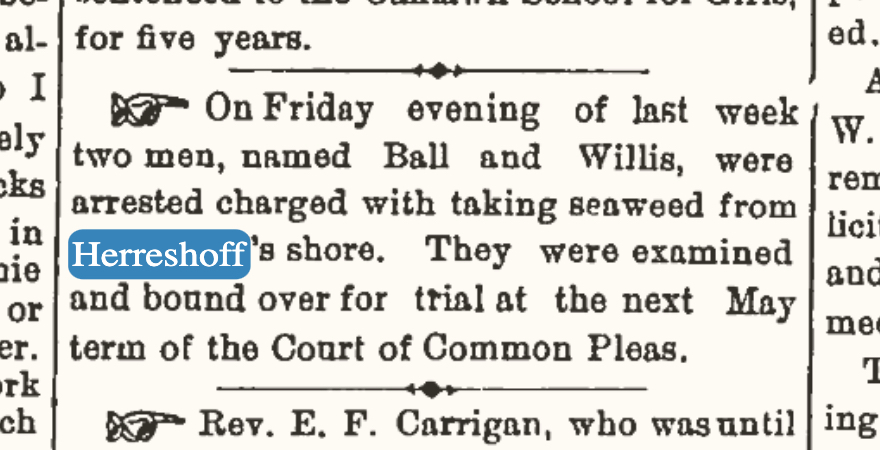
From the Bristol Phoenix, December 14, 1889

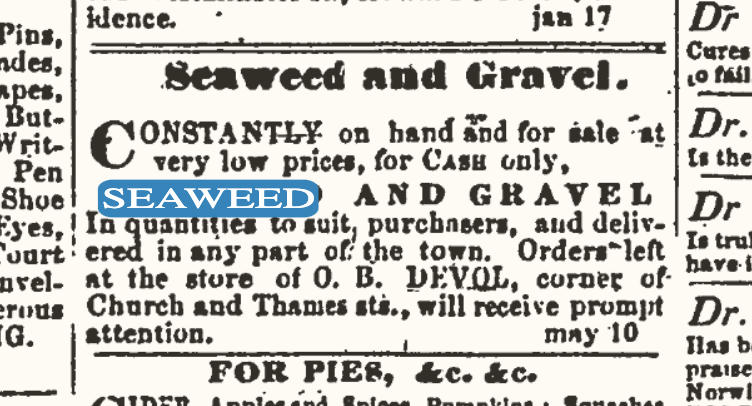
This week's "From the Vault" post was motivated by a brief Bristol Phoenix report published 131 years ago this week (see left). As sometimes happens with these HMCo. mentions in the Phoenix, this piece immediately brought many more questions to mind than answers! So we thought we'd investigate: What significance would "collecting seaweed" have had to the general public and readership of the Phoenix in the 1880s? What did these two men intend to use the seaweed for? Why would anyone collect seaweed in December? Was it worth getting arrested over? What was illegal about all of this? Was "collecting seaweed" code for some other nefarious activity?


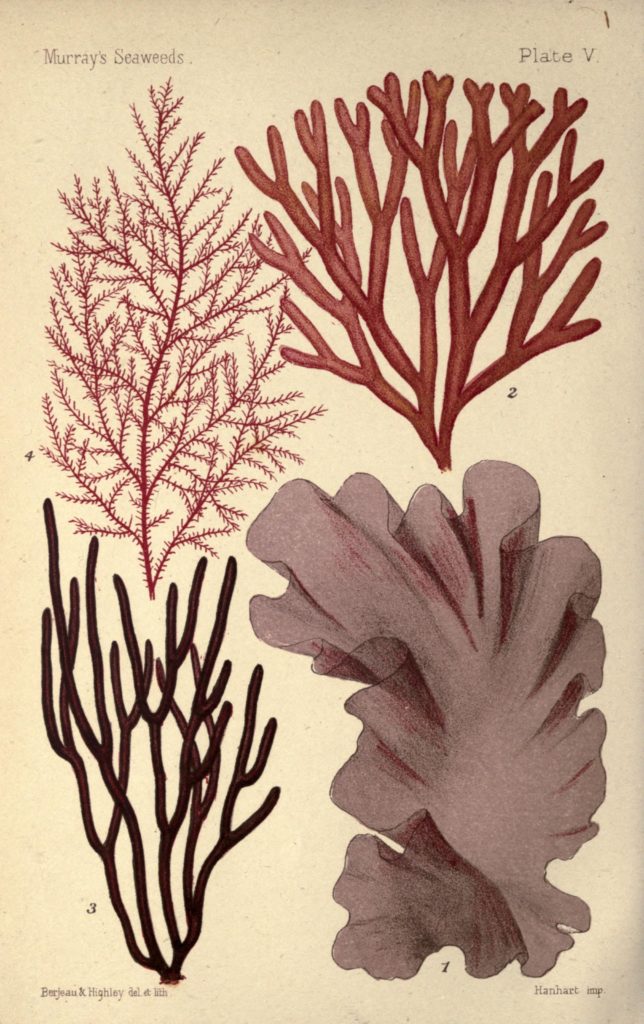
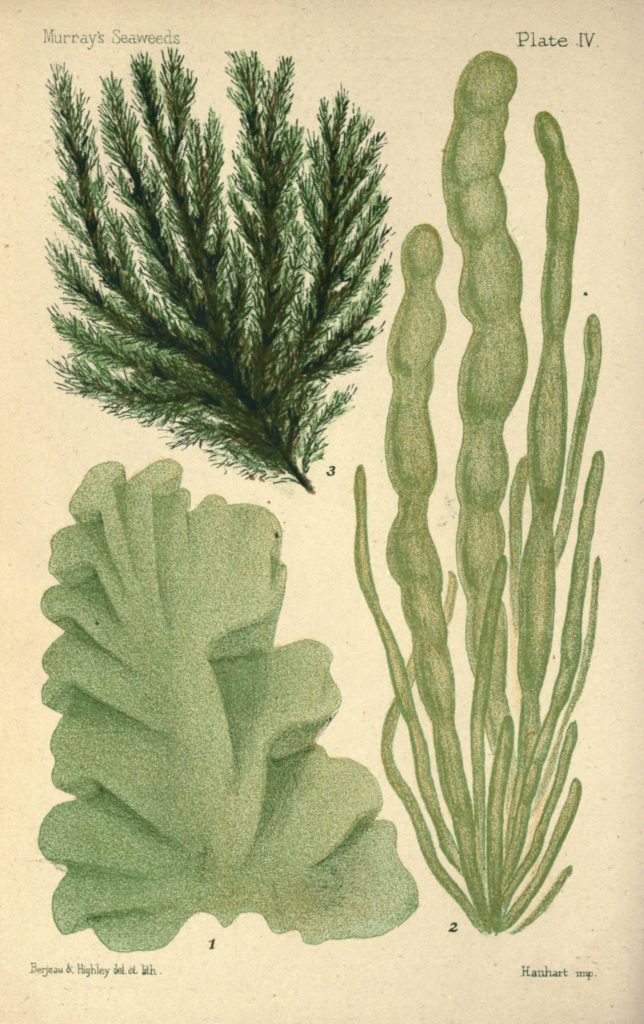
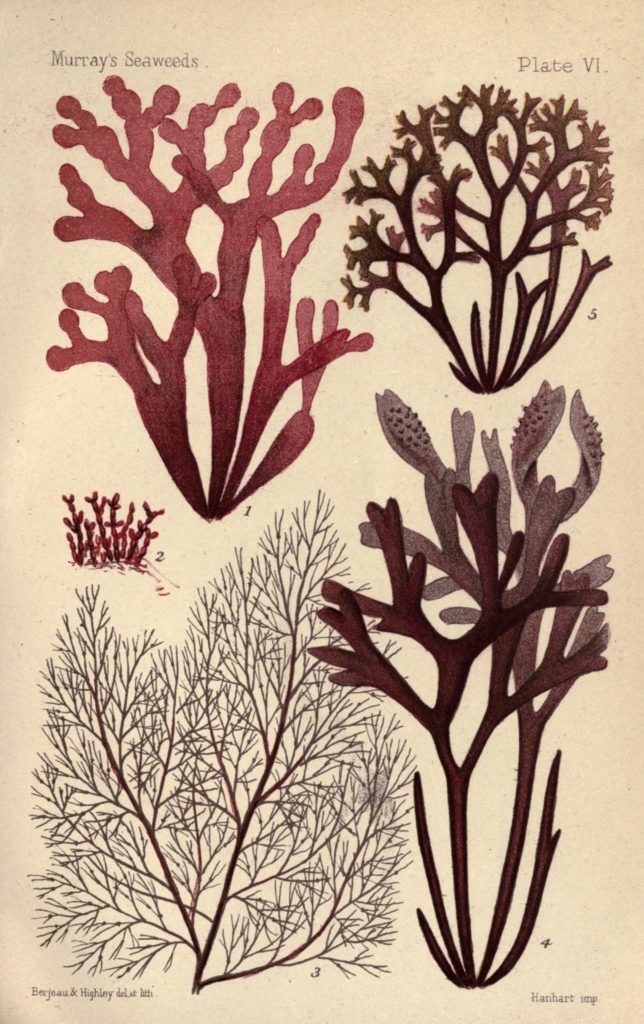
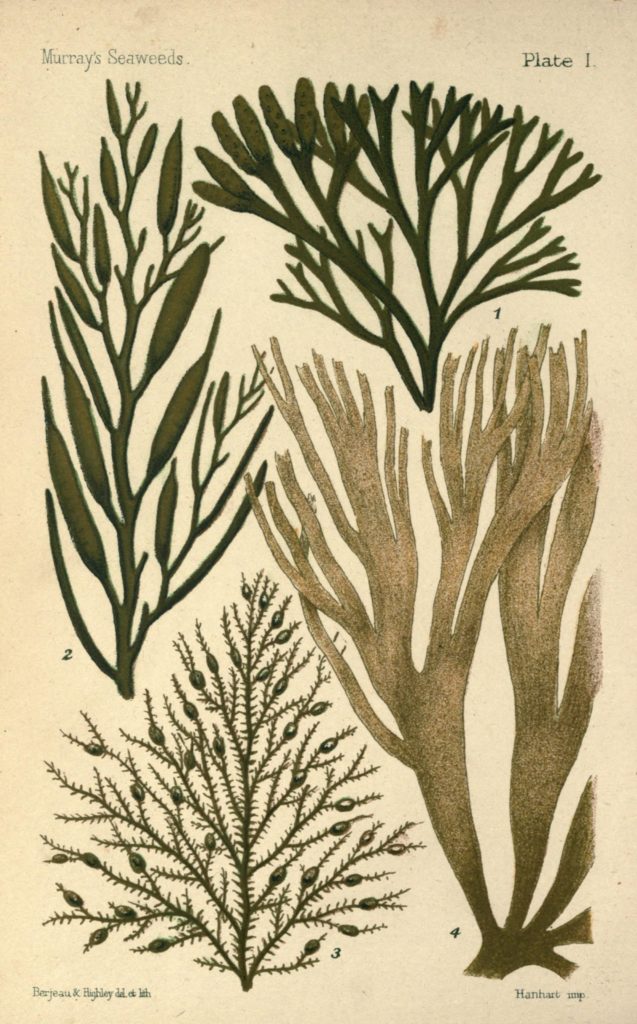
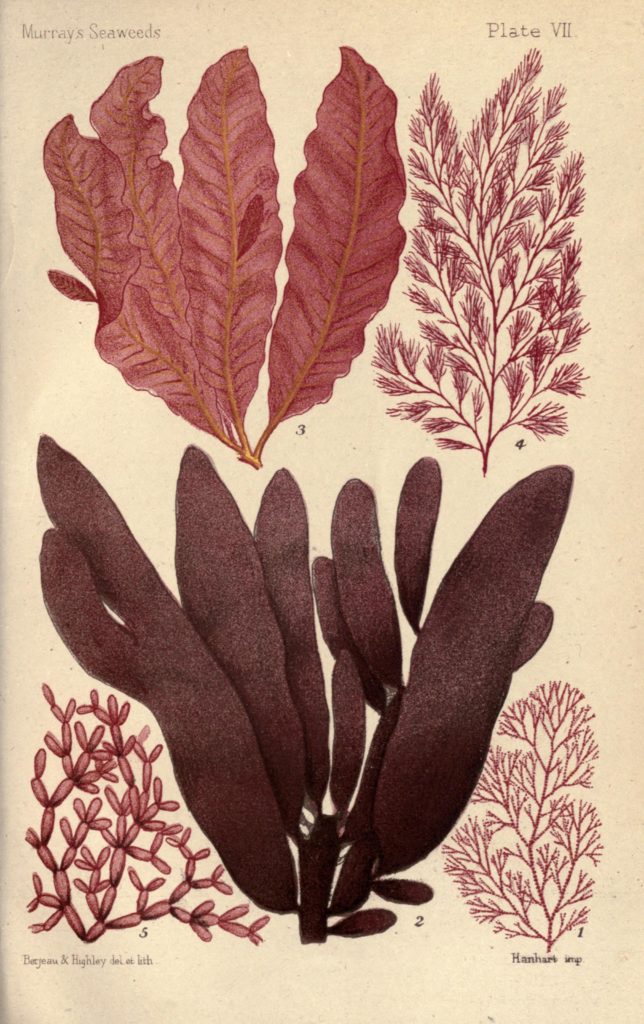
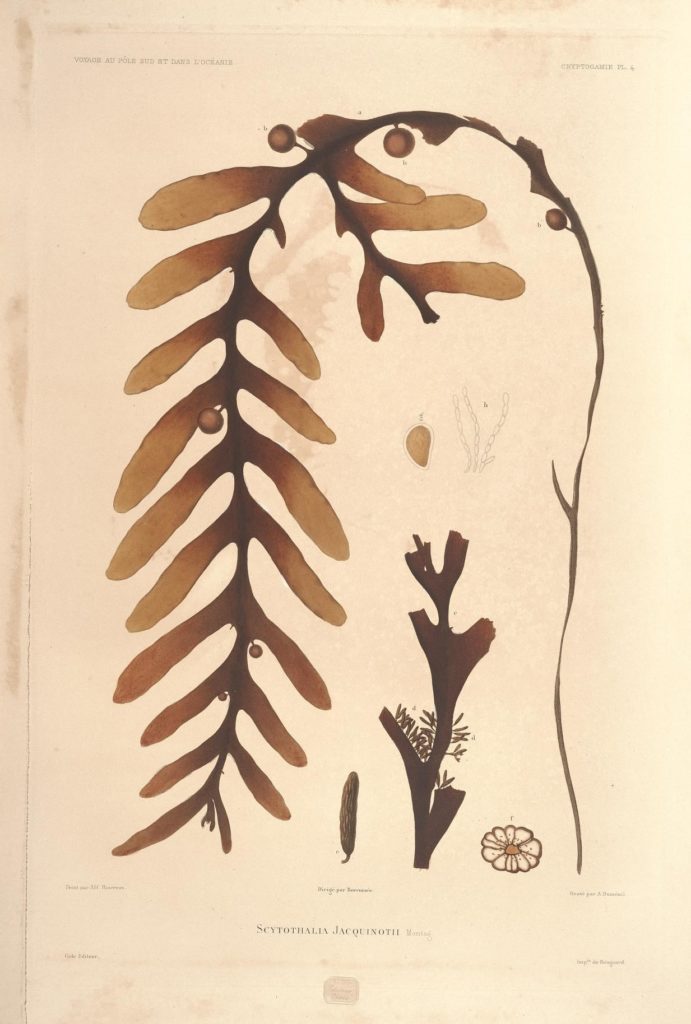
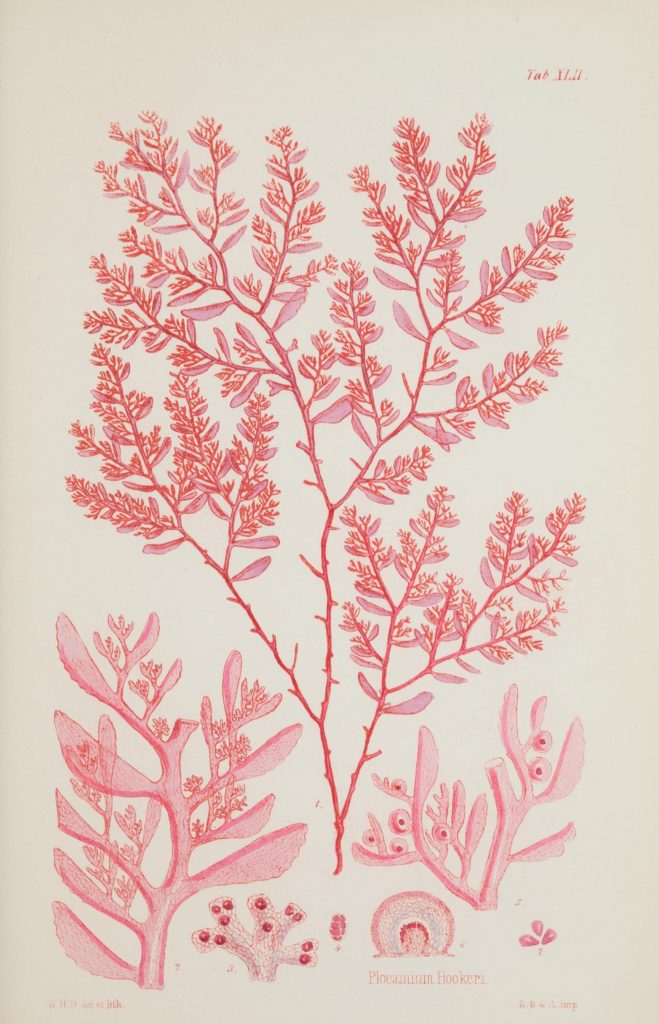
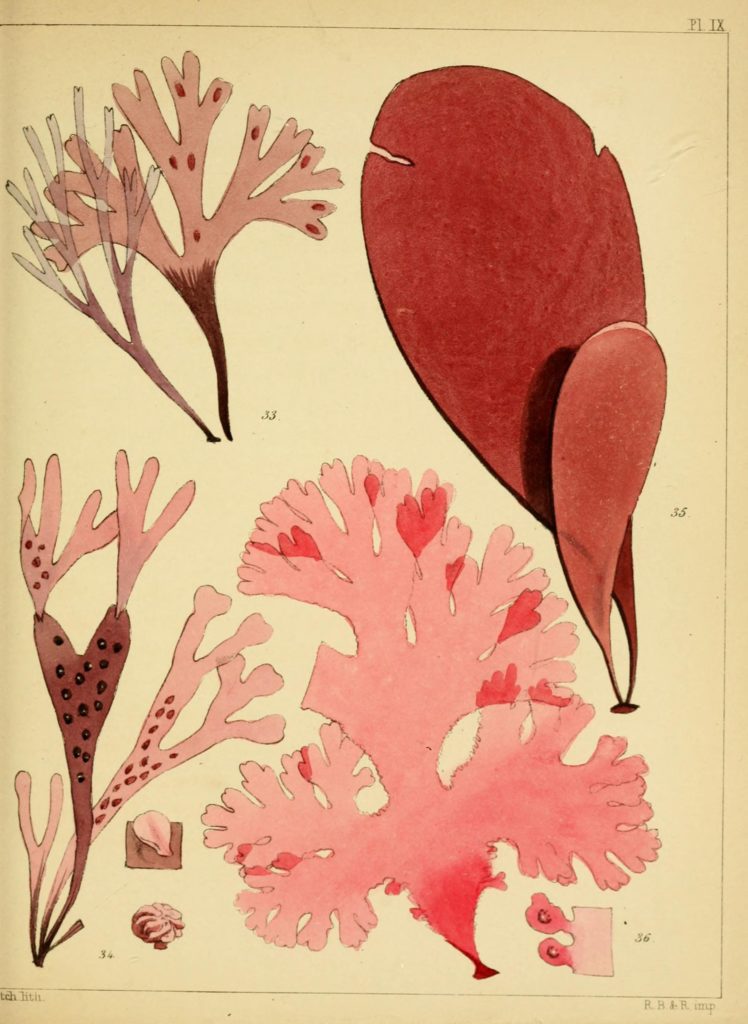
All plates courtesy the Biodiversity Heritage Library

Why Collect Seaweed?


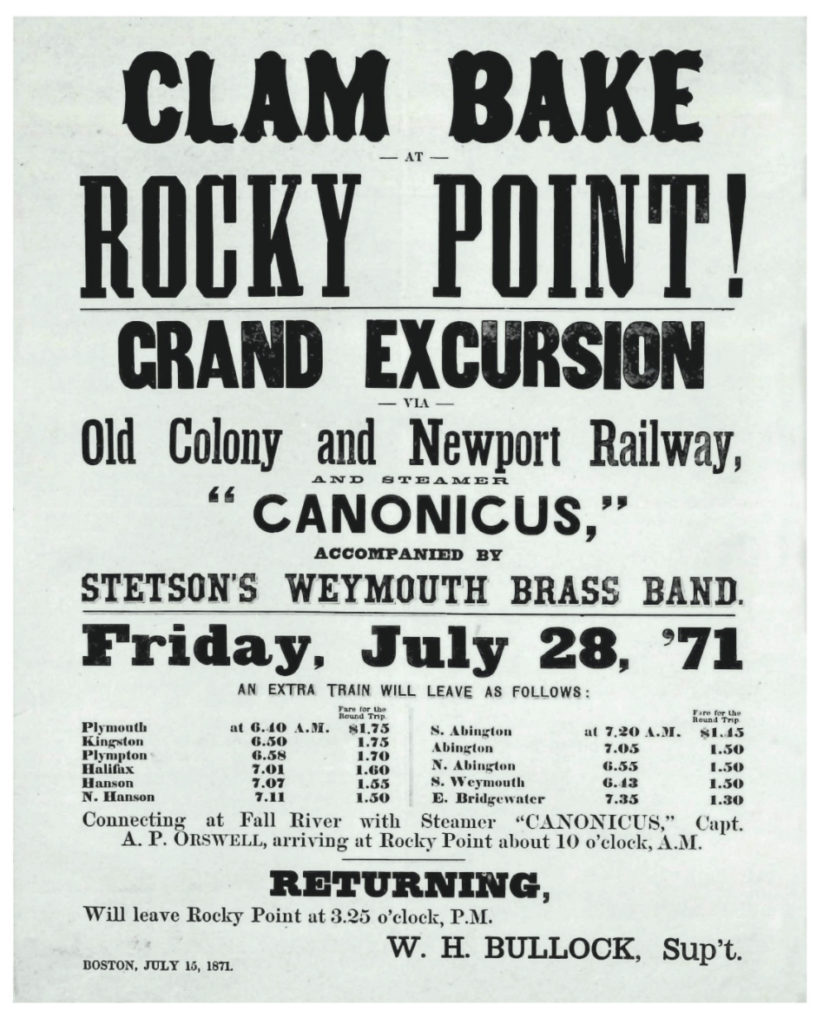
Globally, seaweed has been harvested for thousands of years and for countless purposes. Historically it was used as livestock feed in some regions, while elsewhere it was burned for fuel. Various species have been a dietary staple in numerous cultures around the world throughout history. Seaweed has long been used as a form of cooking technology close to home for us at HMM: the traditional "New England" clambake traces its origins to the cooking traditions of the indigenous coastal tribes that inhabited this region for millennia before the arrival of European settlers. Seaweed's potency as a fertilizer has likewise been known for thousands of years. Potential applications for this ubiquitous commodity only broadened during the Industrial era. Soda formed from burning seaweed was used in European glass and soap production in the 18th century. In the first half of the 19th century, this cheap and accessible source of soda and potash proved key in the production of saltpeter for gunpowder and explosives during the Napoleonic Wars. The discovery of the new element iodine in 1811 was a by-product of seaweed processing for saltpeter production. Within ten years, iodine's antiseptic qualities were identified. Iodine's medicinal properties when ingested were simultaneously under exploration, ranging from the genuinely effective (in the treatment of thyroid disorders, for example) to widely advertised and extremely dubious seaweed-based snake-oil cure-all's. Between 1820 and 1840 iodine was marketed for every conceivable medical application, some more effective than others. There was even a booth in the 1851 Crystal Palace Exhibition dedicated to the substance and its broader chemical applications, such as in early photography.


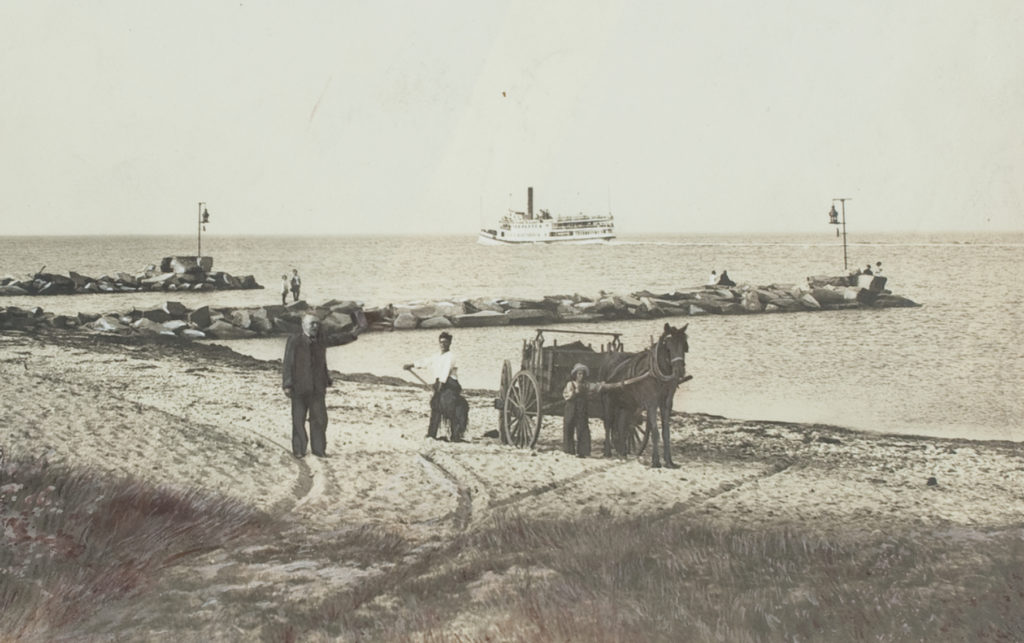
"Gathering seaweed at Oak Bluffs" on Martha's Vineyard; image courtesy Historic New England

All plates courtesy the Biodiversity Heritage Library

"On the Shores of Bognor Regis," courtesy ALEXANDER M. ROSSI/PUBLIC DOMAIN via Atlas Obscura

Apart from its broad industrial, medicinal and dietary uses around the world through the ages, seaweed was enjoying particular popularity in Europe as a focus for recreation in the mid 19th century. For example, documenting coastal specimens was not just a thing for scientists in the Victorian era: it also was in-vogue among the public, and seaweed collection, preservation, and identification really took off with the ladies during this period for… various reasons. (Check out this related "From the Vault" post on the history of cyanotypes and blueprints!) Another form of recreation involving seaweed during the 19th century in the U.S. was the adoption of the increasingly popular "New England" clambake. Though its indigenous origins were a utilitarian and practical form of cooking technology, in the 19th century a clambake was as much a social event as it was a meal – if not more.*


A Brief History of Shore Privilege in RI


Stickier than the question of "what is seaweed good for" is the question of "who has the right to harvest seaweed, where, and how?" It is not unrelated the 19th and early 20th century oyster wars in the northeastern U.S. The sedentary nature of oysters especially lead to all sorts of guerrilla warfare, nighttime skirmishes, and extreme boat design evolutions to patrol and stake out plumb territories in shallow offshore regions that no one could legally own but plenty of folks had a vested interest in. (If you want to learn more, we highly recommend Oystering from New York to Boston by John M. Kochiss ). But that's a whole other story! To greatly simplify the issue of littoral rights in the U.S. – ownership of land under a lake or ocean's surface – nowhere can you own land below the mean low tideline. Who is allowed access to that space between low and high tidelines varies state by state and consequently fisheries rights along the intertidal zone have long been controversial. In the case of seaweed harvesting, where does private property end, and where does public access begin?


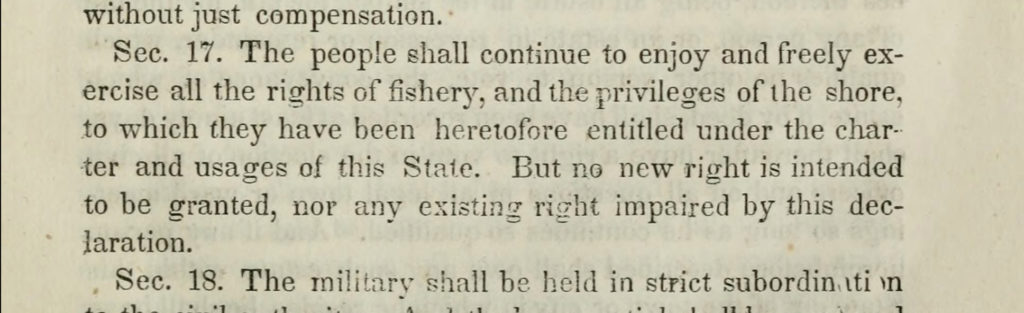
Article 1, Section 17 from Rhode Island's Constitution, adopted in 1843; image courtesy the Internet Archive

In Rhode Island, the history of guaranteeing shore fisheries access goes back to the Colonial period and the original 1663 Charter, which stated that the Colonial government of RI "shall not, in any manner, hinder any of our loving subjects, whatsoever, from using and exercising the trades of fishing upon the coast, in any of the seas thereunto adjoining, or any arms of the seas, or salt water, rivers and creeks, where they have been accustomed to fish; and to build and set up on the waste lands belonging to the said Colony and Plantations, such wharves, stages and workhouses as shall be necessary for the salting, drying and keeping of their fish to be taken or gotten upon that coast." The Charter stood until the adoption of Rhode Island's Constitution in 1843, which referenced the original Charter fisheries clause explicitly in Section 1, Article 17: "The people shall continue to enjoy and freely exercise all rights of fishing and privileges of shore, to which they have been heretofore entitled under the charter and usages of this state…" In 1970 this was amended for a more conservation-focused statement, and in 1986 "usages" was expanded to include "fishing from shore, the gathering of seaweed, leaving the shore to swim in the sea and passage along the shore." You can read more about the history of amendments to RI's Constitution here. Today seaweed gathering is literally a Constitutional right in Rhode Island! But it was not explicitly so in 1889.


Ball and Willis


But back to our pair on the HMCo. shore. Why were they collecting seaweed in December? We can only speculate, but a seaweed scrapbook and a December clambake both seem equally unlikely even if it was unseasonably warm that December as N.G.H.'s diaries suggest. Truthfully, the scrapbooking fad was pretty much done by this time period, and was never as popular with the gentleman anyways. The Bristol Phoenix seaweed snake oil ads had petered out by this time, so they probably weren't aspiring entrepreneurs in that sense. Large quantities are required for iodine and explosives, and alternative sources for potash and soda had been identified by the late 1800s. That leaves collecting material for fertilizer or some kind of fill application as the likeliest conclusions, though both of those still seem like thin explanations – how much could two men collect on HMCo.'s relatively meager length of shoreline? We may be forced to consider that even after all this littoral digging, it is possible that "seaweed collecting" was simply the excuse given to the HMCo. watchman who caught two suspicious characters snooping at the tideline. So what else was going on at HMCo. in December of 1889, that two strangers might be interested in? What would have been nearly completed and poised to launch on January 23, 1890? That's right: HMCo. #152, the one and only CUSHING, Torpedo Boat #1 for the U.S. Navy. Perhaps, despite its many very useful applications, Ball and Willis weren't after seaweed after all?


All plates courtesy the Biodiversity Heritage Library

*For the record, HMM loves clambakes and generally disagrees with all opinions expressed by that author in this Bristol Phoenix article


~A.

Thursday, December 17, 2020

Re Thomas Reilly Dibble IV of Landgrove

Why do I find so many of my heroes after they've gone? - Ahh, Tom
I Just came across 4 of your little sketches upstairs in the shelves of Dad's stuff He picked them out or Mom did, or someone close to them - the story isn't with them but the sentiment is.
The sentiment is still ripe, pungent
, heady 
and a little dusty;

COVID-19 Destroys the Weakest and Poorest

COVID-19 Destroys the Weakest and Poorest

COVID-19 Destroys the Weakest and Poorest

COVID-19 has been called the great equalizer, but nothing could be further from the truth. The disease clearly affects certain groups far worse than others, and the countermeasures implemented to quell the outbreak have been a phenomenal boon for wealthy globalists while decimating the livelihood, and perhaps even the will to live, of the average person. As reported by IPS News:1

"According to the latest ILO reports,2 as job losses escalate due to lockdowns, nearly half of the global workforce is at risk of losing livelihoods, access to food and the ability to survive.

The World Economic Forum states that 'With some 2.6 billion people around the world in some kind of lockdown, we are conducting arguably the largest psychological experiment ever.'3

As governments and corporations tighten political authoritarianism4 and technological surveillance, curtailing privacy and democratic protest, much of humanity is succumbing to anxiety, depression and a sense of powerlessness."

Pandemics Highlight Pre-Existing Health Inequalities

An ever-growing number of doctors, academics and scientists are now questioning the origin of the virus, the validity of using PCR tests to diagnose "cases," the usefulness of face masks, the questionable classification of COVID-19 deaths, the suppression of scientifically verified methods of prevention and treatment, and the safety and usefulness of COVID-19 vaccines.

There are clear problems in all of these areas, yet questions and logical thinking have been, and continue to be, met with harsh resistance and denial.

Those leading the charge in terms of pandemic responses — most notably the World Health Organization, media companies and Big Tech — have not been shy about their censoring of counter-narratives, almost without exception. Even military information warfare units are being deployed in the fight against "anti-vaccine propaganda."5

When it comes to the disease itself, we now know certain comorbidities significantly raise your risk of complications and deaths. Among the top ones are obesity, insulin resistance and vitamin D deficiency.

While these conditions are exceptionally common overall, they're particularly prevalent in Black and indigenous communities, and when combined with inadequate access to health care, these groups also end up being disproportionally affected by COVID-19. As noted by IPS News:6

"The disproportionately higher rates of COVID deaths among American Indians and Alaska Natives,7 for example, are due to higher rates of obesity, diabetes, asthma and heart disease than among more privileged U.S. communities."

Research8 suggests even mild obesity can influence COVID-19 severity, raising the risk of respiratory failure by 2.5 times and the risk of needing intensive care by nearly five times. Inflammation triggered by obesity is also thought to be responsible for the threefold greater risk of pulmonary embolism (blood clots in the lungs) seen in obese COVID-19 patients.9,10

Certain groups — particularly the elderly and those with darker skin — are also far more prone to the illness due to the fact that they're also at highest risk for vitamin D deficiency.

COVID-19, the Great Inequity

While the media and political and economic institutions claim the pandemic narrative is based on scientific consensus, this clearly isn't the case. There's no evidence supporting universal mask use, for example, and there's even less scientific support for lockdowns — a strategy based on a high school project that won third place.11

James Corbett of the Corbett Report discusses this shocking revelation in the video above. As it turns out, the young girl's father is Robert Glass, a senior researcher at Sandia National Laboratories, who worked on pandemic emergency response plans for the U.S. Department of Homeland Security.

His proposal to shut down schools and businesses in the case of an influenza pandemic was published in the November 2006 issue of the journal of Emerging Infectious Diseases.12

Now, as many small businesses are failing thanks to months-long shutdowns and employment opportunities look bleak in many areas, government leaders around the world are suddenly joining the World Economic Forum in calling for a Great Reset of the economy.13

This hardly seems like a random coincidence. This plan, which has been brewing for decades, will further empower and enrich wealthy, unelected powerbrokers while enslaving and impoverishing everyone else.

COVID-19 Is a Class War

The fact that the pandemic has been used to shift wealth from the poor and middle class to the ultra-wealthy is clear for anyone to see at this point. As reported by IPS News:14

"The combined wealth of U.S. billionaires 'surpassed $1 trillion in gains since March 2020 and the beginning of the pandemic,' according to a study by the Institute for Policy Studies.15"

While 45.5 million Americans filed for unemployment, 29 new billionaires were created, the Institute for Policy Studies reported in June 2020,16 and the five richest men in the U.S. — Jeff Bezos, Bill Gates, Mark Zuckerberg, Warren Buffett and Larry Ellison — grew their wealth by a total of $101.7 billion (26%), between March 18 and June 17, 2020, alone.17

Pandemic profiteers include big tech companies like Zoom and Skype, along with some of the largest retailers. Walmart and Target report record sales this year.18 And no wonder, when they've frequently been the only places that haven't been shut down. Online retailers like Amazon19 and Wayfair20 are also boasting record revenues.

The disparity in treatment of big box stores and small retailers is striking — and illogical. Why is it safe to shop with hundreds of people in a Walmart but unsafe to shop in a store that can only hold a fraction of that? Why has the largest retailers been allowed to remain open while mom and pop shops have been forcibly shut down? It makes no sense, yet the targeted destruction of small businesses continues. As noted by IPS News:21

"The COVID pandemic has not been the 'Great Equalizer' as suggested by the likes of New York Governor Andrew Cuomo and members of the World Economic Forum. Rather, it has exacerbated existing inequalities along gender, race and economic class divides across the world.22"

Hypocrisy Abounds

That the COVID-19 pandemic is a form of class war is also evident in the way rules are enforced. While citizens are told what to do, those who lay down the rules repeatedly break them. It's "rules for thee, not for me."

In the eight-minute video above, YouTuber Joey B. Toonz highlights the hypocrisy of government officials who restrict public gatherings but keep a different set of rules for themselves.

From telling people they have to wear masks between bites to closing down indoor gatherings at dining establishments and small businesses across the country, the hypocrisy of different states' governors is blatant.

Threatening criminal citations and even arrest, these governors demand obedience "for the public good." It's all about "saving lives," they say. Yet these same governors continue living life more or less normally, socializing and traveling as they always have, without repercussions. 

White House news reporters don't get off the hook, either, as the video shows how they, too, have one standard for the president and the public and a different set of rules when they think the cameras are off.

The hypocrisy of the ruling class makes the restrictions all the more difficult to bear, as it's becoming increasingly clear that there really are two sets of rules, and they're based on class.

There's the haves and the have nots, and those with meager finances are also disproportionally robbed of their freedom to socialize and travel, which is just as devastating as not being allowed to make a living. The video highlights the case of an elderly woman who asked to be euthanized because she just couldn't take the restrictions any longer.

The Global Restructuring

At this point, it should be obvious for anyone paying attention that the pandemic is being prolonged and exaggerated for a reason, and it's not because there's concern for life. Quite the contrary.

It's a ploy to quite literally enslave the global population within a digital surveillance system23 that is not of our own choosing — a system so unnatural and inhumane that no rational population would ever voluntarily go down that road.

"The 'Great Reset' seeks to … expand corporate control of natural resources and state surveillance of individuals," IPS News writes.24 "In the post-pandemic 'Great Reset,' there would not be much life left outside the technological-corporate nexus dominated by monolithic agribusiness, pharmaceutical, communication, defense and other inter-connected corporations, and the governments and media serving them.

The proponents of the 'Great Reset'25 envisage a Brave New World where, 'You will own nothing. And you will be happy. Whatever you want, you will rent, and it will be delivered by drones.'

But it is more likely that this elite-led revolution will make the vast majority of humanity a powerless appendage of technology with little consciousness and meaning in their lives."

It should also be clear that most if not all pandemic restrictions to freedom are meant to become permanent. Indeed, they're bound to become even more restrictive and invasive once plans for health passports, an all-digital currency, standard basic income, debt forgiveness in return for relinquishing all future rights to private ownership, digital IDs and a social scoring system are fully implemented.

If this is the first time you're hearing any of this, be sure to review "Who Pressed the Great Reset Button?" "The Pressing Dangers of Technocracy," "The Global Takeover Is Underway" and "Coronavirus Fraud Scandal — The Biggest Fight Has Just Begun."

Now's the Time to Fight Back

It's important to understand that now's the time to fight back: to resist any and all unconstitutional edicts. Once the "new world order" is in place, you will no longer be able to do a thing about it.

Your life — your health, educational and work opportunities, your finances and your very identity — will be so meshed with the automated technological infrastructure that any attempt to break free will result in you being locked out or erased from the system, leaving you with no ability to learn, work, travel or engage in commerce.

It sounds far-fetched, I know, but when you follow the technocratic plan to its inevitable end, that's basically what you end up with. The warning signs are all around us, if we're willing to see them for what they actually are. The only question now is whether enough people are willing to resist it to make a difference.

We must keep pushing for transparency and truth. We must insist on medical freedom and personal liberty. Do not allow yourself to be bullied into silence.

And, even more importantly, release the fear. It's a fearful public that allows the technocratic elite to dictate the future and rip away our personal freedoms. It's fear that allows tyranny to flourish. Really look at the data, so you can see for yourself that panic is unwarranted.

For practical strategies on how you can respond in light of all the tyrannical interventions that have been imposed on us, check out James Corbett's interview with Howard Lichtman below. I also recommend reading "Constitutional Sheriffs Are the Difference Between Freedom and Tyranny."

Take Control of Your Health

Last but not least, now is also the time to take control of your own health. Remember, insulin resistance, obesity and vitamin D deficiency top the list of comorbidities that significantly raise your risk complications and death from COVID-19. These are also underlying factors in a host of other chronic diseases, so by addressing them, you'll improve your health overall.


~A.

Tuesday, December 15, 2020

Sharklet (material) - Wikipedia

Sharklet (material) - Wikipedia

Sharklet (material)

Learn more
This article relies too much on references to primary sources.

Sharklet, manufactured by Sharklet Technologies, is a plastic sheet product structured to impede bacterial growth. It is marketed for use in hospitals and other places with a relatively high potential for bacteria to spread and cause infections.[1] Coating surfaces with Sharklet greatly reduces the growth of bacteria, due to the nano-scale texture of the product's surface.

The inspiration for Sharklet's texture came through analysis of the texture of shark skin, which does not attract barnacles or other biofouling, unlike ship hulls and other smooth surfaces. The texture was also found to repel microbial activity.

Contents

History

Sharklet material was developed by Dr. Anthony Brennan, materials science and engineering professor at University of Florida, while trying to improve antifouling technology for ships and submarines at Pearl Harbor.[2]

Brennan realized that sharks do not experience fouling. He observed that shark skin denticles are arranged in a distinct diamond pattern with millions of tiny ribs.[2] The width-to-height ratio of shark denticle riblets corresponded to his mathematical model for the texture of a material that would discourage microorganisms from settling. The first test performed showed an 85% reduction in green algae settlement compared to smooth surfaces.[3]

Texture

Sharklet's texture is a combination of "ridge" and "ravine" at a micrometer scale.

Resistance to bacterial attachment

Sharklet's topography creates mechanical stress on settling bacteria, a phenomenon known as mechanotransduction. Nanoforce gradients caused by surface variations induces stress gradients within the lateral plane of the surface membrane of a settling microorganism during initial contact. This stress gradient disrupts normal cell functions, forcing the microorganism to provide energy to adjust its contact area on each topographical feature to equalize the stresses. This expenditure of energy is thermodynamically unfavorable to the settler, inducing it to search for a different surface to attach to.[4] Sharklet is made, however, with the same material as other plastics.

Environmental surface contamination provides a potential reservoir for pathogens to persist and cause infection in susceptible patients. Microorganisms colonize biomedical implants by developing biofilms, structured communities of microbial cells embedded in an extracellular polymeric matrix that are adherent to the implant and/or the host tissues. Biofilms are an important threat to human health as they may harbor large numbers of pathogenic bacteria. Up to 80% of bacterial infections in humans involve microorganisms from biofilms, and biofilm formation on medical devices can lead to nosocomial infections and potentially higher mortality rate[5].Indwelling of medical devices is associated with high risk of infection, given the abundance of bacterial flora on human skin and the risk of contamination from other sources, The fact that many of the pathogens responsible for these infections are multi-drug-resistant, or even panresistant, has become particularly problematic, with few treatment options being available to Healthcare workers and the industry are seeking safe and effective means to prevent device-associated infections[6].

Learn more
This section contains content that is written like an advertisement. Please help improve it by removing promotional content and inappropriate external links, and by adding encyclopedic content written from a neutral point of view. (August 2020) (Learn how and when to remove this template message)

The Shark-let micro-pattern offers a novel approach to restricting device-associated infections safely and effectively. The Shark-let micro-pattern, inspired by the micro-topography on shark skin, is a diamond-shaped repeating pattern of seven features. Shark-let micro-patterns can be incorporated onto the surfaces of a variety of medical devices during the manufacturing process.This micro-pattern is effective against bio-fouling and microbial attachment. The application of surface micro-patterns therefore has high potential to revolutionize infection control on medical devices such as per-cutaneous devices. Shark-let micro-patterns have been shown to control the bio-adhesion of a wide range of marine microorganisms, pathogenic bacteria and eukaryotic cells. The Shark-let micro-pattern reduces S. aureus and S. epidermidis colonization after exposure to a simulated vascular environment by 70% or greater when compared to smooth controls. This micro-pattern similarly reduces platelet adhesion and fibrin sheath formation by approximately 80%[7].In an in vitro results in a study demonstrate that the Shark-let micro-pattern, a non-toxic surface micro-topography, reduced the colonization of S. aureus and P. aeruginosa bacterial pathogens effectively[8].The bio-inspired micro-patterned surface provides a device interface that controls bacterial colonization and transference through an ordered arrangement of microscopic features . The physical arrangement enhances the hydrophobicity of the device surface such that the bacteria attachment energy is insufficient for adherence and/or colonization . Adherence prevention and translocation restriction have been demonstrated , and are believed to contribute significantly to restricting the risk of device-associated infections. Importantly, this infection control was achieved without the aid of antimicrobial agents. micro-pattern technology offers an effective means to fight against medical device-associated infections.

References

[9][10][11]

  1. Kaluzny, Kasia "How New Tech Fights Hospital Bugs" Hospital News https://hospitalnews.com/new-tech-fights-hospital-bugs/
  2. ^ a b "'Inspired by Nature'". Sharklet Technologies Inc. 2010. Retrieved 6 June 2014.
  3. Alsever, Jennifer (2013-05-31). "Sharklet: A biotech startup fights germs with sharks". CNN.com Money.
  4. Schumacher, J. F.; Long, C. J.; Callow, M. E.; Finlay, J. A.; Callow, J. A.; Brennan, A. B. (2008). "Engineered Nanoforce Gradients for Inhibition of Settlement (Attachment) of Swimming Algal Spores". Langmuir. 24 (9): 4931. doi:10.1021/la703421v. PMID 18361532.
  5. Kim, Eun; Kinney, William H.; Ovrutsky, Alida R.; Vo, Danthy; Bai, Xiyuan; Honda, Jennifer R.; Marx, Grace; Peck, Emily; Lindberg, Leslie; Falkinham, Joseph O.; May, Rhea M.; Chan, Edward D. (2014-09-09). "A surface with a biomimetic micropattern reduces colonization ofMycobacterium abscessus". FEMS Microbiology Letters. Oxford University Press (OUP). 360 (1): 17–22. doi:10.1111/1574-6968.12587. ISSN 0378-1097.
  6. Xu, Binjie; Wei, Qiuhua; Mettetal, M. Ryan; Han, Jie; Rau, Lindsey; Tie, Jinfeng; May, Rhea M.; Pathe, Eric T.; Reddy, Shravanthi T.; Sullivan, Lauren; Parker, Albert E.; Maul, Donald H.; Brennan, Anthony B.; Mann, Ethan E. (2017-11-01). "Surface micropattern reduces colonization and medical device-associated infections". Journal of Medical Microbiology. Microbiology Society. 66 (11): 1692–1698. doi:10.1099/jmm.0.000600. ISSN 0022-2615.
  7. May, Rhea M; Magin, Chelsea M; Mann, Ethan E; Drinker, Michael C; Fraser, John C; Siedlecki, Christopher A; Brennan, Anthony B; Reddy, Shravanthi T (2015-02-26). "An engineered micropattern to reduce bacterial colonization, platelet adhesion and fibrin sheath formation for improved biocompatibility of central venous catheters". Clinical and Translational Medicine. Springer Science and Business Media LLC. 4 (1). doi:10.1186/s40169-015-0050-9. ISSN 2001-1326.
  8. Xu, Binjie; Wei, Qiuhua; Mettetal, M. Ryan; Han, Jie; Rau, Lindsey; Tie, Jinfeng; May, Rhea M.; Pathe, Eric T.; Reddy, Shravanthi T.; Sullivan, Lauren; Parker, Albert E.; Maul, Donald H.; Brennan, Anthony B.; Mann, Ethan E. (2017-11-01). "Surface micropattern reduces colonization and medical device-associated infections". Journal of Medical Microbiology. Microbiology Society. 66 (11): 1692–1698. doi:10.1099/jmm.0.000600. ISSN 0022-2615.
  9. Kim, Eun; Kinney, William H.; Ovrutsky, Alida R.; Vo, Danthy; Bai, Xiyuan; Honda, Jennifer R.; Marx, Grace; Peck, Emily; Lindberg, Leslie; Falkinham, Joseph O.; May, Rhea M.; Chan, Edward D. (2014-09-09). "A surface with a biomimetic micropattern reduces colonization ofMycobacterium abscessus". FEMS Microbiology Letters. Oxford University Press (OUP). 360 (1): 17–22. doi:10.1111/1574-6968.12587. ISSN 0378-1097.
  10. Xu, Binjie; Wei, Qiuhua; Mettetal, M. Ryan; Han, Jie; Rau, Lindsey; Tie, Jinfeng; May, Rhea M.; Pathe, Eric T.; Reddy, Shravanthi T.; Sullivan, Lauren; Parker, Albert E.; Maul, Donald H.; Brennan, Anthony B.; Mann, Ethan E. (2017-11-01). "Surface micropattern reduces colonization and medical device-associated infections". Journal of Medical Microbiology. Microbiology Society. 66 (11): 1692–1698. doi:10.1099/jmm.0.000600. ISSN 0022-2615.
  11. May, Rhea M; Magin, Chelsea M; Mann, Ethan E; Drinker, Michael C; Fraser, John C; Siedlecki, Christopher A; Brennan, Anthony B; Reddy, Shravanthi T (2015-02-26). "An engineered micropattern to reduce bacterial colonization, platelet adhesion and fibrin sheath formation for improved biocompatibility of central venous catheters". Clinical and Translational Medicine. Springer Science and Business Media LLC. 4 (1). doi:10.1186/s40169-015-0050-9. ISSN 2001-1326.

External links


~A.