Friday, November 01, 2019

California Destroys $1 Trillion Gig Economy With New Law

California Destroys $1 Trillion Gig Economy With New Law

California Destroys $1 Trillion Gig Economy With New Law

Creative strategies, engaging workplaces.

More From Forbes

California isn't shy when it comes to making the daily headlines. Often heralded as a progressive utopia, the Golden State recently signed into law Assembly Bill 5 (AB5), which will change the landscape of the gig worker economy. Stemming from the groundbreaking court decision established in Dynamex West Inc. v. Superior Court of Los Angeles, the California Supreme Court found Dynamex's workers were misclassified as independent contractors rather than employees.

In a unique twist, the court shifted the burden to the nationwide courier and delivery service to prove their drivers were not employees by using the "ABC test." Under this new test, an individual is presumed to be an employee, unless the employer can prove all of the following:

(A) the worker is free from the company's control (B) the worker performs work that isn't central to the company's business and (C) the worker has an independent business, trade or occupation in that industry.

This three-part standard will be the deciding factor for AB5 on whether workers are properly classified as independent contractors or need to be reclassified as employees. Many employers view this new law as a nightmare and gig workers feel it's an attack against their freedom and independence. 

According to the Freelancing in America survey, there is a reported 57 million American freelancers contributing an excess of $1 trillion dollars to the economy each year. Recent data shows more than 75% of freelancers are working independently by choice. Due to the accessibility of apps and sites like Upwork, Instacart and Uber, to name a few, people can work on terms they prefer and accept opportunities that feel right for them.

If freelancers are reclassified as employees, they'll have to trade in their freedom for structure, potentially losing their ability to set their own hours. Of course, that's only if the company chooses to continue the relationship and convert them into an employee. Lorena Gonzalez, author of Assembly Bill 5, insists the goal of this law is "to create new good jobs and a livable, sustainable wage job." Supporters emphasize the benefits and protections gig workers will receive such as health care subsidies and a guaranteed $12 state minimum hourly wage, but fail to address the consequences of the new law.

Upwork's survey revealed 51% of freelancers said no amount of money would entice them to return back to or take a traditional job. This is a result of them earning more than 70% of workers throughout the United States with a median hourly rate of $28 per hour, more than half of the state minimum wage. As the labor market strengthens, the next generation of workers are more empowered by the flexibility, pay and opportunities freelancing brings over the benefits of a corporate job.

In fact, the workers of Uber, DoorDash and Lyft are fighting back. Together, they formed a group on behalf of its workers, called Protect App-Based Drivers and Services vowing to overturn portions of AB5 that's expected to pass in January 2020. Unfortunately, this group doesn't carve out an exemption for freelance writers.

Gonzalez defends the bill saying journalists, photographers and writers can submit up to 35 public works to publishers per year before being classified as an employee. However, "public works" isn't clearly defined. It remains unclear if that applies to the subsidiary or the parent company and all of their subsidiaries.

The Hollywood Reporter stated many publications are going to avoid working with California freelancers to avoid potential lawsuits. They've admitted to already seeing SEO, transcription and writing job notices explicitly state California freelancers won't be considered.

Gonzalez fails to understand that some freelancers write around 35 submissions in one month alone. Randy Dotinga, former president of the American Society of Journalists and Authors, protests the law saying, "a lot of freelancers don't want to be employees" because in many cases freelancing is "more stable and lucrative than staff jobs."

With recent lawsuits involving FedEx and Uber misclassifying their independent contractors, it's undeniable workers of the gig economy need more rights, benefits and protection. Instead of passing yet another law, California needs to focus on enforcing the one it already has in effect.

In January 2012, California passed Senate Bill 459 (SB459) making it unlawful for companies to wrongfully classify workers. Those found guilty risk being fined anywhere from $5,000 to $15,000 per violation and $25,000 for repeated offenses. SB459 also empowers the Labor Commissioner to assess civil and liquidated damages against violators. Yet, the law hasn't been used to challenge worker misclassification at any of the gig platform companies such as Uber or Lyft.

Gonzalez' intentions might be good, but the stark reality is hundreds of thousands of independent contractors in California will become employees under the bill. Everyone from manicurists, dancers, journalists, writers, bartenders and delivery drivers will be impacted. Business Insider estimated around 7,200 workers have lost their media jobs this year alone. As media faces major challenges in business, this number will only continue to climb as publications lack the means to bring on more employees.

The vague language of the law creates more concern about its potential impact. As of now, all that's known is, a diverse range of professions will be affected while others will be exempt. Consequently, at least one million workers will be impacted creating more distance in the employer-employee relationship as it regresses back to traditional standards. Former freelancers who once had the taste of freedom will suffer the most.

Follow me on LinkedInCheck out my website


~A.

Thursday, October 31, 2019

Five goals for 5G in Connecticut

Five goals for 5G in Connecticut

Five goals for 5G in Connecticut

CT VIEWPOINTS -- opinions from around Connecticut

We have all heard the promises and potential of the future of 5G. The advance marketing is promising five times faster response and 100 times faster loading time. 5G promises to change the world through virtual and augmented reality applications, connect the "Internet of Things" and allow communication to driverless vehicles. Gov. Ned Lamont has stated that 5G is "a matter of equity and workforce development."

The marketing hype does not mention the probable lack of universal service, cost, or the true danger of broadening the digital divide separating the haves from the have nots. But Connecticut can set an example of how 5G should be deployed. We have an opportunity, even within restrictive Federal Communication Commission guidelines, to ensure that Connecticut residents, regardless of income or zip code, have the availability of 5G service at a cost-competitive level using a shared infrastructure with strong efforts to bridge the current digital divide.

Failure to take action will deprive less densely-populated areas of service and lower-income neighborhoods of 5G benefits, and will produce an unaffordable product for many.

Keith M. Phaneuf :: CTMirror.org file photo

John A. Elsesser, Coventry town manager.

It appears that this issue has the attention of Lamont. One of his first actions was to urge Connecticut to be "First in New England with access to 5G." To this end, the State adopted Public Act 19-163 "An Act Accelerating the Deployment of 5G Wireless Facilities." This Act created the "Council on 5G Technologies" which was charged with preparing a model telecommunication License Agreement on or before Nov. 1, 2019 for use on State property. Section 2 of the Act also required the Council to "… work with municipalities and representatives of the wireless industry to encourage the establishment of streamlined processes for siting small wireless facilities on municipalities, in accordance with any applicable Federal Communication Commission rules, regulations or orders." This specifically includes municipal rights of way.

The Act requires the state Office of Policy and Management to make recommendations on this municipal streamlined processes for siting small wireless facilities on municipal property to the legislative committee having cognizance of matters relating to energy and technology no later than Jan. 30, 2020. Towns are looking forward to this.

Upon signing the bill, Lamont stated, "Access to ultra-fast internet speed is critical to our economic future. I want Connecticut to be ahead of the curve."

I suggest that the state and municipalities adopt five goals in order to ensure the successful deployment of 5G in Connecticut:

1.) Require a high level of universal coverage throughout the state. When cable television franchises were awarded in Connecticut they were required to provide close to universal services. This ensured that both rural and lower-income areas received service.

This has not happened in cellphone or broadband service, as shown by the lack of adequate cellphone services in Northwestern Connecticut and fast broadband in the North End of Hartford and other urban areas. In Connecticut, existing broadband providers are fighting towns and groups of towns regarding the provision of municipal service to our residents. All are awaiting an appeal of a decision by the state Public Utility Regulatory Authority (PURA) which prevents towns from doing so.

The law and regulations concerning 5G service should be so clear that similar obstacles to effective universal coverage are not erected.

2.) Require use of existing fiber networks for 5G and require shared co-location of pole-mounted microwave antennas.

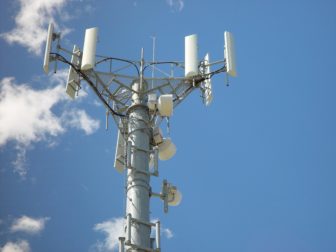
In a recent presentation at the State Commission of Educational Technology, Verizon stated it plans on utilizing proprietary microwave antennas to relay signals to its phones. Industry experts estimate that these antennas will be required every 500 feet and each of these antennas will require a fiber connection. So if we have three major carriers, each with their own microwave antennas, we will have 66 percent more antennas than if they shared use at greater construction and operational cost. The antennas also will produce a lot more high-frequency radiation – a health concern to many.

Section 1(d) (2) (c) of the new Act recognizes the concern of facilities location by stating "the Council (on 5G Technology) shall give preference to the requests that include the co-location of personal wireless service facilities or small wireless facilities with other wireless carriers …"

We need to properly enforce this position to avoid unnecessary costs and possible incompatibility issues between phones. Remember VHS and Beta issues?

There is a precedent in this co-location approach in state law and practice. Cellphone towers were ordered to share space — otherwise there would probably be three times more towers in the state. The sharing of space saved the carriers a lot of money.
Beyond the antennas and tower sharing, the carriers should also be required to share fiber instead of digging up roads and hanging more fiber on poles.

The state runs a robust fiber network called the Connecticut Education Network (CEN) with 2,500 miles of fiber. It is one of only 33 regional connections nationwide which links high-speed, lower-cost Internet 2 service providers to cloud storage, and research and education networks. This use by carriers is available as a result of a condition of a 2009 federal grant (Broadband Technologies Opportunities Program) that required that CEN allow use by non-governmental customers of the network. Currently, 38 business users do, in fact, use CEN fiber.

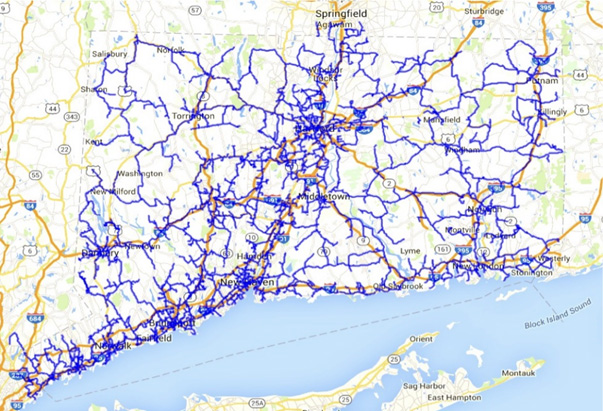
As the map below shows, using the CEN network as the backbone of a 5G network could save money and greatly speed the construction, as well as assist getting coverage in more rural areas.

3.) Incumbent carriers and PURA should allow towns to run their own fiber to fill in the current fiber gaps for Fiber to the Premises (FTP).

This would allow the phone carriers to use the new town fiber networks for 5G instead of installing their own fiber. Vermont adopted laws to allow Communication Union Districts to run broadband and serve residents and businesses. One prominent example is ECFiber (the East Central Vermont Telecommunications District) which is a consortium of 22 towns with over 3,500 connections and growing. This group was formed to step in where the private sector chose not to. It harkens back to the rural electric cooperatives set up to provide electric service in rural areas, which are now also adding broadband across the country.

Bottom line: a cooperative of municipal broadband to the premises would allow competition and allow a sharing of resources to reduce the price of 5G coverage.

4.) To address the growing digital divide, PURA should use the authority empowered in CGS 16-247-e to "…ensure the universal availability of affordable high quality telecommunication services to all residents, regardless of income, disability or location…" Section (1) of the law defines a basic telecommunication service as "… necessary to achieve universal service and meet customer needs." Subsection (b) makes it even clearer that PURA "may, if necessary, establish a universal service program, funded by all telecommunications companies or users on an equitable basis…" to ensure the universal availability of affordable, high-quality basic telecommunications to all residents and businesses throughout the State regardless of location."

To be clear, PURA already has the authority to push for universal service. The question is: Will 5G service be considered a "basic" telecommunication service? I believe the answer is unequivocally yes.

According to a National Regulatory Research Institute article published in April 2019, "State Universal Service Funds 2018" Updating the Numbers," 42 states including Connecticut utilize State Universal Services Funds (SUSF). Connecticut limits these funds to provide only lifeline services for the disabled. It could join 22 other states in providing services under the "High Cost/Connect America (CAF) provision to ensure 5G coverage in rural areas. Broadband access is now the focus of the FCC, spending $4.6 billion in 2017. States also are now focusing on broadband funding, with $81.9 million spent by states from their SUSF. Wisconsin just broadened their program to include broadband.

Currently, Connecticut only assesses SUSF charges on landline and wireless phones. We could start charging interstate voice-over internet protocol (VOIP) phones to make up for the declining landline revenue. Twenty-eight states impose these fees. Expanding broadband could make 5G more financially viable in rural areas since each microwave antenna needs this fiber connection and the 5G carriers could use this public fiber.

5.) The State should also consider a fee of 1 percent or some similarly low charge per mile for using the Public Right of Way. This is common in most states.

Under state law, the utilities are using Town and State land without compensation. These new revenues could be used to expand public access to neighborhood centers, public parks, or even willing restaurants and coffee shops to address the digital divide issue. These hot spots could be created under an Eduroam concept, which currently allows college students to use their student Wi-Fi authorization at these hot spots to instantly and securely join the network without fees.

The Connecticut Conference of Municipalities (CCM) proposed franchise fees for use of municipal rights of way in their recent report, "This Report is Different." According to the report, Connecticut is one of only seven states that do not charge these fees, which average 2.2 percent of total tax revenue nationally. While federal regulations may not allow these fees to be charged for fiber or internet service, it could be charged for current service and produce funding for towns to provide universal service at the local level or to expand local fiber to schools and public buildings, parks, civic buildings or public access in privately-owned but publicly available locations.

When Lamont signed the bill creating the new 5G Council, he stated, "Access to ultra-fast internet speed is critical to our economic future." High-speed broadband is essential for students, home businesses, and all industry. It has been described as a condition of work. If we fail to act promptly, the digital divide will grow in areas without 5G service, creating educational deserts, and reducing rural property values in areas that do not have 5G.

By working together on refining and putting these five goals into action, Connecticut can grow its economy, train tomorrow's workforce, and prepare for a new world of the internet.

John A. Elsesser is Town Manager of the Town of Coventry. He is a member of the Commission of Educational Technology  which oversees CEN, is Chairman of the E-911 Commission and the PSDN Committee.  He is a member of the board of directors of the Council of Small Towns  and the Connecticut Conference of Municipalities.  The opinions expressed here are his own and do not reflect those of any of the organizations he belongs to.

CTViewpoints welcomes rebuttal or opposing views to this and all its commentaries. Read our guidelines and submit your commentary here.


~A.

What to Do if You're Diagnosed With (Breast)any Cancer- GOOD READ!!!


What to Do if You're Diagnosed With Breast Cancer

Approximately 1,663 people will die today from cancer in the United States.1 This is criminal since cancer is a relatively new disease and would rarely occur if you were healthy. The time to use natural medicine, ideally, is before you are diagnosed, but certainly when you are diagnosed.

If you are motivated by fear and run to conventional physicians, they implement therapies like chemo and radiation that will compromise your immune system, which ultimately is responsible for controlling the cancer. Even if they are successful, these approaches will typically kill you from another disease a few years later.

An estimated 1,762,450 Americans are expected to be diagnosed with cancer in 2019.2 The mere words, "You have cancer" is a traumatic blow that can paralyze even the most resilient among us. Panic can easily set in, which has its own ramifications for health and well-being.

Interestingly, most say they thought they were healthy up until they received their cancer diagnosis. However, common sense will tell you that's impossible. Cancer, like many other diseases, does not manifest until you're about 80% of the way down the proverbial hole. 

Most cancers take years, and some even decades, to progress to the point of being diagnosable. As noted by Dr. Nasha Winters, a naturopathic physician who specializes in cancer treatment, cancer is a res ipsa loquitur factor, meaning "the facts speak for themselves."

In other words, you, in some way, were not leading a healthy lifestyle — or you simply failed to counteract the inevitable toxic exposures we're all subject to in today's modern world.

Proactive Measures Can Pay Dividends

Unfortunately, conventional medicine pays little attention to actual prevention of cancer, and few doctors are properly trained in evaluating lab tests that can provide early indications that a problem is brewing, even though such tests are readily available.

In "The Metabolic Approach to Cancer Treatment," Winters reviews several oft-ignored lab tests that can give you a nice overview of how your immune system is doing, and whether you might be at risk for cancer or other chronic disease.

Dr. Leigh Erin Connealy also covers this important topic in "The Cancer Revolution: A Groundbreaking Program to Reverse and Prevent Cancer," which is also the title of her book.

Even if you believe yourself to be in decent health, finding a doctor who can help you assess your risk and provide guidance on how to optimize your health would be an ideal scenario. But what do you do if you've already been diagnosed with cancer? That's the focus of this particular article, although most of the recommendations apply equally to both prevention and treatment.

Addressing Your Emotions

Getting a cancer diagnosis is bound to throw anyone for a loop. Having tools to effectively address the emotional trauma is an important first step. One of my favorite tools for this is the Emotional Freedom Techniques (EFT).

It's noninvasive and easy to learn, and can be done just about anywhere, at any time. In the video above, Julie Schiffman demonstrates how to tap for the emotional (and physical) stress associated with a breast cancer diagnosis.

When faced with a cancer diagnosis, it's easy to panic and lose sight of the big picture. Most people immediately start on conventional treatment, which typically involves chemotherapy, radiation and/or surgery.

Centering yourself with EFT, meditation or any other form of stress relief that you find effective may help you calm down enough that you might consider your alternatives. Most are indoctrinated to think chemo, radiation and surgery are "givens," when in fact there are now many different kinds of alternatives.

Importantly, once you've done chemo or extensive radiation, your chances of remission through alternative methods are slim, as the damage done is too great. I've yet to talk to an expert in alternative cancer treatments that does not agree with this statement.

In order for holistic treatment to work, it needs to be done first. This in turn means you have to be brave enough, and not too panic stricken, to explore your options and give them time to work before jumping into the "cut, poison, burn" paradigm.

You may also find inspiration from Kate Bowler's podcast,3 "Everything Happens." Bowler, a cancer survivor, interviews a wide range of individuals, talking to them about "what they've learned in dark times." Some discussions center around loss and grief, while others tackle living with chronic illness.


Finding Your Way

So, just what are your options? I've written many articles and interviewed many alternative cancer specialists on this very issue. One way to get started is to find a qualified expert that can help guide you through the options.

Winters, for example, is a naturopathic physician who specializes in consulting with clinicians who treat cancer patients. To engage her services, your doctor will need to go to the doctor section on her website, drnasha.com,4 to sign up for a consultation. There you can also find a free guide describing the five steps Winters recommends taking when diagnosed with cancer.

Hope4Cancer,5 which has integrative cancer treatment centers in Mexico, Colombia and Thailand, also offers consultations, and will discuss treatment options with your oncologist if desired.

You can learn more about these facilities in my interview with Hope4Cancer's founder, Dr. Antonio Jimenez. Educational material can be found on Hope4Cancer.com,6 including a printable PDF7 summarizing the seven key principles of cancer therapy that Hope4Cancer is founded on.

A third helpful resource where you can find oncologists who are open to holistic and integrative cancer treatments is the Best Answer for Cancer Foundation.8 It's a hybrid nonprofit that services both integrative physicians and patients with cancer and other chronic disease.

Nutritional Basics

As you might expect, your diet not only can help prevent cancer from developing in the first place, but is also an important piece of the treatment puzzle. Overwhelmingly, the nutritional approach with the strongest scientific support is time-restricted eating, which is restricting your eating window to six to eight hours initially, and eventually down to four hours.

This will help increase metabolic autophagy, lower your insulin resistance, improve your sleep, radically increase your metabolic flexibility, increase ketones, and improve your mitochondrial function — especially if you add exercise in your fasting window.

In my experience, the vast majority of people are adapted to burning carbs as their primary fuel, as opposed to burning fat. One of the most effective strategies I know of to become a fat burner is to fast for 16 to 18 hours each day.

Remember, cancer is a metabolic disease rooted in mitochondrial dysfunction. In a nutshell, cancer cells burn glucose, which generates far more reactive oxygen species than fat and ketones. To burn fat, the cell must be healthy and normal. Cancer cells cannot burn fat, so a high-fat, low-sugar diet essentially starves the cancer while nourishing healthy cells.

To be clear, time-restricted eating and a ketogenic diet can safely and easily be implemented even if you're going through conventional cancer treatment. In fact, it can actually make chemotherapy more effective.

The ChemoThermia Oncology Center in Turkey, for example, specializes in low-dose chemotherapy treatments for late-stage cancers, which are in large part made possible through the implementation of a ketogenic diet.

You can learn more about their general treatment protocol in "Metabolically Supported Therapies for the Improvement of Cancer Treatment." Other strategies used at this cancer center include fasting, hyperthermia and hyperbaric oxygen therapy.

Why Nutritional Ketosis Is so Important

One of the leading researchers in this field is Thomas Seyfried, Ph.D. In my May 2019 interview with Seyfried, he explains how the origin of cancer is damage to the respiratory function of your mitochondria, triggering compensatory fermentation that is run by oncogenes.

To survive, the cancer cells must use fermentation, and the two most available fermentable fuels in the cancer microenvironment are glucose and glutamine (one of the most common amino acids found in proteins).

For this reason, targeting glucose and glutamine is a crucial component of cancer treatment. The simplest approach is to bring the patient into therapeutic ketosis, and then strategically target the availability of glucose and glutamine.

Seyfried's research also sheds much-needed light on how metastatic cancer works, and thus its treatment. According to Seyfried, a metastatic cancer cell is essentially a hybrid mix of a macrophage (an immune system cell) and a dysregulated stem cell.

Macrophages are part of our primary defense system against bacterial infections. They live both in the bloodstream and in tissues, and can go anywhere in the body. When an injury or infection occurs, they immediately move in to protect the tissue.

In the case of metastatic cancer cells, their dysregulated energy and function make them proliferate out of control, spreading unpredictably through the body. Like normal macrophages, metastatic cancer cells are also able to survive in hypoxic environments, which is why most angiogenic therapies are ineffective against metastatic cancer. Seyfried's research suggests that by strategically targeting glutamine, you can effectively kill these metastatic cancer cells.

Hyperbaric Oxygen Therapy and Cryotherapy

Another component that we're starting to see more and more of in holistic cancer treatment programs is the addition of hyperbaric oxygen therapy. As mentioned, it's one of the adjunct therapies used at The ChemoThermia Oncology Center in Turkey.

In 2015, Seyfried and Dominic D'Agostino, Ph.D., another cancer-is-metabolic-disease researcher,9 published a paper10 demonstrating a phenomenal synergy between a ketogenic diet and the use of hyperbaric oxygen for metastasized cancers.

Another oft-ignored alternative discussed in Connealy's book, "The Cancer Revolution: A Groundbreaking Program to Reverse and Prevent Cancer," is cryotherapy, which is where you freeze the cancer cells. Cryotherapy typically works well for breast cancer.

In our interview (hyperlinked above), Connealy recounts treating 9-centimeter breast tumors with cryotherapy in combination with a cocktail of low-dose chemo and hypodermic mistletoe, successfully eliminating the tumor in a single month.

Vitamin D Optimization Is Essential

Optimizing your vitamin D is another foundational move that you should consider regardless of the type of cancer treatment you're opting for. Research shows most cancers occur in people with a vitamin D blood level between 10 and 40 nanograms per milliliter (ng/mL), and the optimal level for cancer protection has been identified as being between 60 and 80 ng/mL.

Generally speaking, research11 has shown that once you reach a minimum serum vitamin D level of 40 ng/mL, your risk for cancer diminishes by 67%, compared to having a level of 20 ng/ml or less. Several studies also show that higher vitamin D levels are protective against breast cancer specifically.

A 2005 study12 showed women with vitamin D levels above 60 ng/mL have an 83% lower risk of breast cancer than those below 20 ng/mL. I cannot think of any other strategy that can offer that kind of risk reduction.

A pooled analysis13 published in June 2018 of two randomized trials and a prospective cohort study came to a near-identical conclusion. Mirroring the 2005 findings, women with vitamin D levels at or above 60 ng/mL had an 82% lower incidence rate of breast cancer than those with levels of 20 ng/mL or less.

Vitamin D also increases your chances of surviving cancer,14,15,16,17 and evidence suggests adding vitamin D to the conventional treatment for cancer can boost the effectiveness of conventional cancer treatment.18

GrassrootsHealth makes testing easy by offering an inexpensive vitamin D testing kit as part of its consumer-sponsored research. You also have the option of getting both your vitamin D and omega-3 index tested.

By signing up, you are helping further vital health research that can help millions in coming years. (All revenues from these kits go directly to GrassrootsHealth. I make no profit from these kits and only provide them as a service of convenience to my readers.)

All women are also encouraged to enroll in the Breast Cancer Prevention project,19 to track your vitamin D level and help prevent an initial cancer occurrence, or, if you've already had it, to help prevent a recurrence.

Other Cancer Treatment Recommendations

As discussed in "Metabolically Supported Therapies for the Improvement of Cancer Treatment" (hyperlinked above), clinical evidence from the ChemoThermia Oncology Center in Turkey shows nutritional ketosis and fasting can radically improve treatment outcomes and minimize the need for chemotherapy, even in advanced-stage and hard to treat cancer cases.

Other strategies, aside from those already discussed, that can help minimize your cancer risk and improve your outcome if added to a comprehensive cancer treatment plan include the following:

Sauna — Detoxification is another crucial component. Most of us are inundated with thousands of toxins each day, many of which have carcinogenic potential. One of the simplest and perhaps safest ways is to use a low-EMF, infrared sauna coupled with a near-infrared light, as your skin is a major organ of elimination.

Cancer cells also have a harder time surviving in high temperatures. I strongly believe that near-infrared, not far-infrared, saunas are the best out there and highly recommend the sauna space sauna.

Exercise — One of the primary reasons exercise works is that it drives insulin resistance down. One of the most recent studies20 looking at exercise for cancer was published online August 5, 2019. It found that women who exercised and lost weight had more favorable breast cancer biomarker profiles than those who exercised but lost no weight.

Minimize your exposure to electromagnetic fields (EMF), including both wireless technologies and household wiring — To learn more about how EMFs affect your health, see "The Harmful Effects of EMFs Explained."

Get eight hours of high-quality sleep each night to optimize your melatonin production — Melatonin (a hormone with antioxidant and anticancer activity) both inhibits the proliferation of cancer cells and triggers cancer cell apoptosis (self-destruction). It also interferes with the new blood supply tumors required for their rapid growth (angiogenesis).

Reduce your exposure to environmental toxins like pesticides, household chemical cleaners, synthetic air fresheners and air pollution.

Boil, poach or steam your foods, rather than frying or charbroiling them to avoid the creation of acrylamide, a known carcinogen. Avoid all processed meats for the same reason.

How to Speak to Someone Who Has Received a Cancer Diagnosis

Last but not least, some advice for friends and family of those who have received a diagnosis of cancer or some other chronic disease. It can be very difficult to talk about a devastating diagnosis, both for the patient and those around them.

A July 2019 article21 in The Atlantic addresses this sensitive issue. Taylor Lorenz tells the story of Kate Bowler, a 35-year-old historian and author. Bowler's cancer diagnosis came like a lightning bolt from a clear-blue sky.

In 2015, she sought treatment for stomach pain. It turned out to be Stage 4 colon cancer, and she was given less than a year to live. The podcast I mentioned earlier, "Everything Happens,"22 was an outgrowth of her journey.

Despite a grim diagnosis, Bowler survived. Today, four years later, her focus has shifted to educating people about how to support people in the midst of their suffering. Her own experiences taught her a lot about this, and many of the things people say turn out to be less than helpful. For example, Bowler suggests that when speaking to someone who is suffering:

  • Don't try to relate to their suffering — While this may sound odd, the way we experience suffering is uniquely our own, so hearing stories about someone else's situation typically isn't helpful. It also shifts the focus away from the patient, making it instead about you.
  • Don't offer solutions and treatment strategies unless asked.
  • Don't tell them their suffering is "part of God's master plan" or has some greater purpose — Randomness happens. Sometimes it's just bad luck. Sometimes, a tragic story will have a happy ending, but it's not guaranteed.
  • Make yourself available and just be present — Lorenz writes,23 "Bowler had friends who faded away from her life after her diagnosis because they didn't know how to confront her tragedy. But the type of person she found most helpful when she was at her lowest, she said, was someone who just 'shows up, doesn't ask for anything, and just knits in front of you."'



CuriousCT: Ask The Day

Questions on the back burner for the Day to get to the bottom of - Soon! I hope!!!

CuriousCT: Ask The Day

I would like to see more transparency in New London's much lauded but "off the radar" blight enforcement Where are the reports? Fine assessments & totals? Active cases? Delinquents? Successes?Submitted 9 months ago by Anonymous

Regarding Riverwalk/Norwich State Hospital, after spending all kinds of Grant Money over the years - When is Mohegan Sun going to take ownership from Preston and actually start development of any kindSubmitted 9 months ago by Anonymous

Hi, I'm really interested in the history of Billard Academy which was down near the lighthouse and Billard Beach. I would love to see photos and maps of the grounds.Submitted 9 months ago by Anonymous

How much money has Connecticut received yearly since 1991 from income, sales, fuel, cigarette and other taxes? How much did it spend on salaries, pensions, funds given to towns, infrastructure, etc.?Submitted 9 months ago by Bill Hakkinen

Just wondering what's going on with the Capitol Theater downtown, history of it, what year it was last opened, and any chance of it coming back?Submitted 10 months ago by Kathy Watford

What'Housing--conversions that looked promising. for examples, what's the progress on St. Mary's School in New London being made into housing? How about the former Haven Health on Rt 156 in WaterforSubmitted 10 months ago by Geraldine Kuenkler

What local pharmacy has the lowest prices for the most commonly used prescriptions? Submitted 10 months ago by Anonymous

What is the new administration doing to advance public transportation - less highway construction & more railways Submitted 10 months ago by Harriet Grayson

Why do we continue to elect Democrats who control the budget but have NO sense of finance??Submitted 10 months ago by Paul Suprin

Shouldn't our state be more wealthy? The casinos brought new funds to our state on a regular basis for 25 years, where did it go? Is there anything to show for it?Submitted 10 months ago by Carolyn Yapchanyk

Illegal immigration: How do they pay taxes? Do they file income tax? Do they get money back? How do they get approved for financial aid at college? Can they buy health insurance? Drivers License? howSubmitted 10 months ago by Carolyn Yapchanyk

Is there a Connection between Coit Street in New London and Coit Tower in San Francisco? "Coit" is an unusual name and both New London and San Francisco are or were maritime hubs.Submitted 10 months ago by Don Blevins

Are state legislators unionized? And if so, what union? What benefits do they receive beyond their salary? If medical insurance is a benefit, who pays the premium?Submitted 10 months ago by Joseh Tycz

Why do senators and members of congress get paid when the government is shut down? They are part of the government so I believe they should not be paid until they do something that makes it better; not a wall.Submitted 10 months ago by Lorraine Elliott

Do Congressmen, both Federal and State, vote in their respective Houses in accordance with constituent input and desires, their own choices and desires, or as dictated by their Party?Submitted 10 months ago by Joseph Tycz

Alewife Cove, between Waterford and New London: We have heard that Alewife Cove was used to hide American ships from the British during the War of 1812. Could the Cove have ever been that deep?Submitted 10 months ago by Anonymous

Is Mary Hall Road in Pawcatuck named for the first female attorney in CT? Why? Submitted 10 months ago by Ben Baldwin

What is the shipping news? What ships are loading/unloading in New London? Does the change in operator at the State Pier mean job loss and/or gain? Other local ports are also newsworthy.Submitted 10 months ago by Ben Baldwin

Can you give information about the Shoreline Village?Submitted 10 months ago by Anonymous

Why are our taxes ALWAYS going up? Our tax base is constantly increasing yet, in my lifetime, I've never seen a reduction of tax rates.Submitted 10 months ago by Jamie Anderson

what do people do for their dogs' birthday in the winter? Submitted 10 months ago by Anonymous

What is the history of local State parks, ie, Rocky Neck, Hammonassett, etc.Submitted 10 months ago by Anonymous

Compared to Pawcatuck CT how many other areas have as many affordable housing units? Perhaps all of Stonington required units are in Pawcatuck?Submitted 10 months ago by Sandra Henderson

History of Latinxs in New London Submitted 10 months ago by Erick Carrión Rivera

I've always heard back in the "Big Band Era" that lots of top name talent visited our area. I'd love to know some of the names and places (I've heard the Morton House, Elms motel") they visited? Submitted 10 months ago by Paul Whitehouse

building demo, Rte 12, Groton, across from KFC: what is going in there?Submitted 10 months ago by Thomas P. cross

How many rental properties are there in old Lyme and what is the average rent? Submitted 10 months ago by Anonymous

What's up with the Fisherman Restaurant on Groton Long Point Rd in Noank?Submitted 10 months ago by Anonymous

I want to study business formation in New London County, CT from 1900 to the present day in 10 year increments. Can THE DAY show me how to measure the number of businesses running at any 10th year? Submitted 10 months ago by Frederick Charles Shakir

What's with the blue signs throughout CT that note 'ATTRACTIONS' and then it's blank. I had a visitor who said "I guess Connecticut doesn't have any attractions" 🤣🙄. What a waste of taxpayer money. Submitted 10 months ago by Anonymous

A good friend works for Electric Boat. Are any or all Emps there working without pay or furloughed?Submitted 10 months ago by Patty ash

Fiscal well being of Conn and by county. What is being done to ensure it or what has happened to for it to be on the decline? Personal stories on how individual households are living week to week. Submitted 10 months ago by Pamela Tates

I'm always curious about political developments: what issues are on the table in various towns, what the General Assembly is doing this week, where elected officials stand on issues, etc.Submitted 10 months ago by Glenn Cheney

Who or which organization is trying to raise money to replace the clock tower at Ocean Beach ?Submitted 10 months ago by Scott Park

We have heard/read so much about the impacts to federal workers, and exceptionally to the USCG Please look into covering this impact to pride of State of Connecticut & the nation; USCG Academy - NLSubmitted 10 months ago by G. Mathanool

Our area ( probably like most American communities) is chock full of oldsters who have lived spectacular lives. We need to guild the Lilly's and hear their stories seeing that twinkle in their eyes.Submitted 10 months ago by Tom

This is a Connecticut question, and it is a two-part question: (1) Why are teachers not part of the Social Security system? (2) Does this benefit Connecticut teachers or not?Submitted 10 months ago by Catherine J. Marshall

What methods do the State Police use to control speeding and reckless driving on the major interstates in southeastern Connecticut? How effective are those methods?Submitted 10 months ago by Al Elms

How will climate change affect SECT communities? What is the timeline? What are State and local legislators doing to address the issues? How will insurance rates impact property values?Submitted 10 months ago by Conrad F. Heede

As a baby boomer having just entered retirement, I've heard a lot about Reverse Mortgages...both positive and negative. I'd like to get an objective analysis. Can you do an objective story on them?Submitted 10 months ago by Anonymous

The route 11 Why did it end there.. Answer, was built to go to a horse racing track at Salem. . But then Salem said did not want the track, so built dog track in Plainfield instead. Submitted 10 months ago by Seth Bendfeldt

What, if anything is being done in public schools and in the community to combat and discuss the addictive and harmful use of Juul? Submitted 10 months ago by Larry Grundy

Which coastal towns are preparing for climate change? How is climate change affecting our shoreline? What are our local and state elected officials helping residents prepare for the effects of climate?Submitted 10 months ago by Chris Johnson


Five goals for 5G in Connecticut

Five goals for 5G in Connecticut

Five goals for 5G in Connecticut

CT VIEWPOINTS -- opinions from around Connecticut

We have all heard the promises and potential of the future of 5G. The advance marketing is promising five times faster response and 100 times faster loading time. 5G promises to change the world through virtual and augmented reality applications, connect the "Internet of Things" and allow communication to driverless vehicles. Gov. Ned Lamont has stated that 5G is "a matter of equity and workforce development."

The marketing hype does not mention the probable lack of universal service, cost, or the true danger of broadening the digital divide separating the haves from the have nots. But Connecticut can set an example of how 5G should be deployed. We have an opportunity, even within restrictive Federal Communication Commission guidelines, to ensure that Connecticut residents, regardless of income or zip code, have the availability of 5G service at a cost-competitive level using a shared infrastructure with strong efforts to bridge the current digital divide.

Failure to take action will deprive less densely-populated areas of service and lower-income neighborhoods of 5G benefits, and will produce an unaffordable product for many.

Keith M. Phaneuf :: CTMirror.org file photo

John A. Elsesser, Coventry town manager.

It appears that this issue has the attention of Lamont. One of his first actions was to urge Connecticut to be "First in New England with access to 5G." To this end, the State adopted Public Act 19-163 "An Act Accelerating the Deployment of 5G Wireless Facilities." This Act created the "Council on 5G Technologies" which was charged with preparing a model telecommunication License Agreement on or before Nov. 1, 2019 for use on State property. Section 2 of the Act also required the Council to "… work with municipalities and representatives of the wireless industry to encourage the establishment of streamlined processes for siting small wireless facilities on municipalities, in accordance with any applicable Federal Communication Commission rules, regulations or orders." This specifically includes municipal rights of way.

The Act requires the state Office of Policy and Management to make recommendations on this municipal streamlined processes for siting small wireless facilities on municipal property to the legislative committee having cognizance of matters relating to energy and technology no later than Jan. 30, 2020. Towns are looking forward to this.

Upon signing the bill, Lamont stated, "Access to ultra-fast internet speed is critical to our economic future. I want Connecticut to be ahead of the curve."

I suggest that the state and municipalities adopt five goals in order to ensure the successful deployment of 5G in Connecticut:

1.) Require a high level of universal coverage throughout the state. When cable television franchises were awarded in Connecticut they were required to provide close to universal services. This ensured that both rural and lower-income areas received service.

This has not happened in cellphone or broadband service, as shown by the lack of adequate cellphone services in Northwestern Connecticut and fast broadband in the North End of Hartford and other urban areas. In Connecticut, existing broadband providers are fighting towns and groups of towns regarding the provision of municipal service to our residents. All are awaiting an appeal of a decision by the state Public Utility Regulatory Authority (PURA) which prevents towns from doing so.

The law and regulations concerning 5G service should be so clear that similar obstacles to effective universal coverage are not erected.

2.) Require use of existing fiber networks for 5G and require shared co-location of pole-mounted microwave antennas.

In a recent presentation at the State Commission of Educational Technology, Verizon stated it plans on utilizing proprietary microwave antennas to relay signals to its phones. Industry experts estimate that these antennas will be required every 500 feet and each of these antennas will require a fiber connection. So if we have three major carriers, each with their own microwave antennas, we will have 66 percent more antennas than if they shared use at greater construction and operational cost. The antennas also will produce a lot more high-frequency radiation – a health concern to many.

Section 1(d) (2) (c) of the new Act recognizes the concern of facilities location by stating "the Council (on 5G Technology) shall give preference to the requests that include the co-location of personal wireless service facilities or small wireless facilities with other wireless carriers …"

We need to properly enforce this position to avoid unnecessary costs and possible incompatibility issues between phones. Remember VHS and Beta issues?

There is a precedent in this co-location approach in state law and practice. Cellphone towers were ordered to share space — otherwise there would probably be three times more towers in the state. The sharing of space saved the carriers a lot of money.
Beyond the antennas and tower sharing, the carriers should also be required to share fiber instead of digging up roads and hanging more fiber on poles.

The state runs a robust fiber network called the Connecticut Education Network (CEN) with 2,500 miles of fiber. It is one of only 33 regional connections nationwide which links high-speed, lower-cost Internet 2 service providers to cloud storage, and research and education networks. This use by carriers is available as a result of a condition of a 2009 federal grant (Broadband Technologies Opportunities Program) that required that CEN allow use by non-governmental customers of the network. Currently, 38 business users do, in fact, use CEN fiber.

As the map below shows, using the CEN network as the backbone of a 5G network could save money and greatly speed the construction, as well as assist getting coverage in more rural areas.

3.) Incumbent carriers and PURA should allow towns to run their own fiber to fill in the current fiber gaps for Fiber to the Premises (FTP).

This would allow the phone carriers to use the new town fiber networks for 5G instead of installing their own fiber. Vermont adopted laws to allow Communication Union Districts to run broadband and serve residents and businesses. One prominent example is ECFiber (the East Central Vermont Telecommunications District) which is a consortium of 22 towns with over 3,500 connections and growing. This group was formed to step in where the private sector chose not to. It harkens back to the rural electric cooperatives set up to provide electric service in rural areas, which are now also adding broadband across the country.

Bottom line: a cooperative of municipal broadband to the premises would allow competition and allow a sharing of resources to reduce the price of 5G coverage.

4.) To address the growing digital divide, PURA should use the authority empowered in CGS 16-247-e to "…ensure the universal availability of affordable high quality telecommunication services to all residents, regardless of income, disability or location…" Section (1) of the law defines a basic telecommunication service as "… necessary to achieve universal service and meet customer needs." Subsection (b) makes it even clearer that PURA "may, if necessary, establish a universal service program, funded by all telecommunications companies or users on an equitable basis…" to ensure the universal availability of affordable, high-quality basic telecommunications to all residents and businesses throughout the State regardless of location."

To be clear, PURA already has the authority to push for universal service. The question is: Will 5G service be considered a "basic" telecommunication service? I believe the answer is unequivocally yes.

According to a National Regulatory Research Institute article published in April 2019, "State Universal Service Funds 2018" Updating the Numbers," 42 states including Connecticut utilize State Universal Services Funds (SUSF). Connecticut limits these funds to provide only lifeline services for the disabled. It could join 22 other states in providing services under the "High Cost/Connect America (CAF) provision to ensure 5G coverage in rural areas. Broadband access is now the focus of the FCC, spending $4.6 billion in 2017. States also are now focusing on broadband funding, with $81.9 million spent by states from their SUSF. Wisconsin just broadened their program to include broadband.

Currently, Connecticut only assesses SUSF charges on landline and wireless phones. We could start charging interstate voice-over internet protocol (VOIP) phones to make up for the declining landline revenue. Twenty-eight states impose these fees. Expanding broadband could make 5G more financially viable in rural areas since each microwave antenna needs this fiber connection and the 5G carriers could use this public fiber.

5.) The State should also consider a fee of 1 percent or some similarly low charge per mile for using the Public Right of Way. This is common in most states.

Under state law, the utilities are using Town and State land without compensation. These new revenues could be used to expand public access to neighborhood centers, public parks, or even willing restaurants and coffee shops to address the digital divide issue. These hot spots could be created under an Eduroam concept, which currently allows college students to use their student Wi-Fi authorization at these hot spots to instantly and securely join the network without fees.

The Connecticut Conference of Municipalities (CCM) proposed franchise fees for use of municipal rights of way in their recent report, "This Report is Different." According to the report, Connecticut is one of only seven states that do not charge these fees, which average 2.2 percent of total tax revenue nationally. While federal regulations may not allow these fees to be charged for fiber or internet service, it could be charged for current service and produce funding for towns to provide universal service at the local level or to expand local fiber to schools and public buildings, parks, civic buildings or public access in privately-owned but publicly available locations.

When Lamont signed the bill creating the new 5G Council, he stated, "Access to ultra-fast internet speed is critical to our economic future." High-speed broadband is essential for students, home businesses, and all industry. It has been described as a condition of work. If we fail to act promptly, the digital divide will grow in areas without 5G service, creating educational deserts, and reducing rural property values in areas that do not have 5G.

By working together on refining and putting these five goals into action, Connecticut can grow its economy, train tomorrow's workforce, and prepare for a new world of the internet.

John A. Elsesser is Town Manager of the Town of Coventry. He is a member of the Commission of Educational Technology  which oversees CEN, is Chairman of the E-911 Commission and the PSDN Committee.  He is a member of the board of directors of the Council of Small Towns  and the Connecticut Conference of Municipalities.  The opinions expressed here are his own and do not reflect those of any of the organizations he belongs to.

CTViewpoints welcomes rebuttal or opposing views to this and all its commentaries. Read our guidelines and submit your commentary here.


~A.