Saturday, February 29, 2020

As Attention Shifts To Coronavirus, Flu Deaths Soar In CT | Patch

Just the REGULAR flu - not COVID19…….

As Attention Shifts To Coronavirus, Flu Deaths Soar In CT

The number of Connecticut residents either killed by the flu or hospitalized from it continues to increase.

CONNECTICUT — The world's focus is on the coronavirus but new data released by the Connecticut Department of Public Health shows that the flu continues to be a major problem, too.

This week, nine Connecticut residents were killed due to the flu, which brings the state flu death toll to 58 this season. Another 321 residents were hospitalized this week for flu-related symptoms and that number has swelled to 2,230 this season.

There has been one reported child death from the flu this year. As of Feb. 22, 10,286 positive influenza tests have been reported. Increased numbers of circulating influenza B viruses have been observed in recent weeks in the state.

Hartford County has the highest number of flu-related cases, followed by New Haven and Fairfield county.

As flu deaths continue to rise here and elsewhere, everyone's focus has turned to the coronavirus and whether we're prepared. Gov. Ned Lamont said that "Connecticut is ready." The director of the Centers for Disease Control's National Center for Immunization and Respiratory Disease that the spread of coronavirus across the U.S. is inevitable.

Lamont said state officials have "hourly communication" with the CDC.

"I feel like Connecticut is a little ahead of the game," Lamont said. "We're moving into the unknown. This thing is moving really, really fast but we want you to feel confident."

At least 80,000 people have been infected and 2,700 people have died from the coronavirus, creating a global pandemic, according to the World Health Organization. It is spreading so quickly overseas that infectious disease experts and scientists warn there may be no way to contain it. Connecticut has had coronavirus scares but no one has tested positive for it.

Back to dealing with the flu

Connecticut DPH Commissioner Renée D. Coleman-Mitchell said earlier this month that the "we are at the height of the flu season. We estimate that 10-15% of Connecticut residents will come down with the flu before the season is over. Please, it is not too late to get a flu shot, and there are measures we can all take that can help keep us healthy this season. I encourage anyone who has questions to contact your primary care provider."

All people can be at risk of developing serious flu complications and exposing others. It is not too late to get a flu shot to protect your health and your loved ones. Flu season generally runs into late March. Getting vaccinated may also protect people around you, including those who are more vulnerable to serious flu illness, like babies and young children, older people, and people with certain chronic health conditions.

Anyone who gets the flu can pass it to someone at high risk of severe illness, including children younger than 6 months who are too young to get a flu vaccine.

People at higher risk of serious flu complications include young children, pregnant women, people with certain chronic health conditions like asthma, diabetes, heart disease or lung disease, and people 65 years and older.

There are other personal precautions that the general public can do to prevent the spread of flu in additional to getting a flu shot. These simple daily efforts can help prevent the spread of flu but other illnesses such as the common cold and other viruses. Cover your cough and wash your hands afterwards.

Wash hands frequently during the day with soap and water. Use hand sanitizer if soap and water is not available. Stay home if you are sick to avoid infecting others. Disinfects frequently touches surfaces in your home: counter tops, doorknobs, faucets.

With reporting by Ellyn Santiago, Patch staff


Connecticut State Parks and Forests

New website: H I K E!

https://portal.ct.gov/DEEP-Beta/State-Parks/Connecticut-State-Parks-and-Forests


~A.

News – Michael Lee Hill Designs - Ancient Anunnaki Technology | 432 Hz Healing Disks

https://www.michaelleehill.net/blogs/news

Cymatics and the Cymascope Device for Sound Research

Hmmmmmmm.....
https://www.cymascope.com/


~A.

Friday, February 28, 2020

SARS test kit instructions....

Transcript for CDC Telebriefing: CDC Update on Novel Coronavirus | CDC Online Newsroom | CDC

Transcript for CDC Telebriefing: CDC Update on Novel Coronavirus | CDC Online Newsroom | CDC
From 2 weeks ago - she says the test wasn't run correctly, resulting in False reading, let patient go... I heard that only 500 tests had been run in the US total since then.
Where are the test kits? Do they work?
Wednesday, February 12, 2020

Transcript for CDC Telebriefing: CDC Update on Novel Coronavirus

Operator:  Welcome and thank you for standing by. At this time, I would like to inform all participants that your lines have been placed on a listen only mode until the question and answer session of today's call. Today's call is also being recorded. If anyone has any objections, you may disconnect at this time. And now I would like to turn the call over to Mr. Benjamin Haynes. Sir, you may begin.

Benjamin Haynes: Thank you Sue. And thank you all for joining us for today's briefing to update you on CDC's 2019 novel coronavirus response. We are joined today by Dr. Nancy Messonnier, Director of CDC's National Center for Immunization and Respiratory Diseases, who will give open remarks before taking your questions. I will now like to turn the call over to Dr. Messonnier.

Dr. Nancy Messonnier: Thank you for joining us.   Today, I would like to provide a few updates on important developments over the last few days. First, I want to extend my condolences to the family of the American who died in China over the weekend. As far as we know, this is the first American to die from this new coronavirus.  Though more than a thousand people in China have died. My sympathy and my thanks go to the people of China, for those who have lost loved ones and those who are on the front lines battling this virus. In China, they are taking aggressive measures just as we are in the United States. Since we briefed you last, there has been one new confirmed novel coronavirus infection detected in the United States. The new confirmed infection is an individual who returned from Wuhan and was quarantined at Marine Corps Air Station Miramar.  This individual was on one of the last Department of State flights out of Wuhan, the epicenter of the outbreak in China.  Given the spread of the virus in Wuhan, it is not surprising to see a positive case among people who recently returned from there.  That is in fact the reason they are being quarantined.  Currently the person has mild illness but is hospitalized.  This brings the total number of confirmed positives in the United States to 13.  I want to clarify some of the reports that have been circulating about this case.  Last Thursday when one of the planes from Wuhan landed at Miramar, a few people were sick and transported to local hospitals for further evaluation.  These people were placed in isolation and samples were taken for testing.  When running laboratory diagnostics for any disease, anywhere in the world, the ability to match the individual to the specimen is key, and is part of the normal procedures put in place to ensure that that matching is done correctly.  But in this situation with this patient, it didn't work correctly, and the patient was misidentified initially as negative.  The issue was identified within 24 hours.  The CDC tested the sample, the positive result was conveyed quickly to the local public health and CDC teams.  The mishap was unfortunate, but we have corrected this from happening again in the future by adding additional quality control.  And it's really important to emphasize that during this time appropriate infection control precautions were taken around everyone, including around this patient who, again, is doing well.  Now I'd also like to update you on our diagnostic test kits.  As you know, this is a dynamic, rapidly evolving situation, and our response continues to be based on the latest science.  We continue to be flexible to meet the public health challenges that the virus presents, and clearly a success is the CDC rapid development of a diagnostic and rapid deployments to the states, which was clearly important to try to bring the testing closer to patients to avoid delays that have been inherent in sending samples to CDC.  When the state receives these test kits, their procedure is to do quality control themselves in their own laboratories.  Again, that is part of the normal procedures, but in doing it, some of the states identified some inconclusive laboratory results.  We are working closely with them to correct the issues and as we've said all along, speed is important, but equally or more important in this situation is making sure that the laboratory results are correct.  During a response like this, we know things may not always go as smoothly as we would like.  We have multiple levels of quality control to detect issues just like this one.  We're looking into all of these issues to understand what went wrong, and to prevent these same things from happening in the future.  Before I take questions, I want to give you a couple more updates.  Since the airport screening began in mid-January, CDC and its partners have screened more than 30,000 passengers from China.  With the temporary restrictions on travel, we are seeing fewer and fewer travelers from China, especially from Hubei province.  Passengers are being funneled through 11 airports, most of these people are coming from parts of mainland China outside of Hubei, show no symptoms and have not been assessed as high risk.  Those who passed the screening continue on to their final destination where they self-monitor their health for 14 days in cooperation with their state and local health departments.  We're asking these people to limit their activities and stay home during that 14-day period.  Our goal is to be as least restrictive as possible while ensuring the safety and health of all Americans.  Since starting our travel restrictions and funneling through airports, we have not detected any cases among returning travelers from China.  Most of the U.S. cases were found before the travel restrictions were put in place among travelers who returned from Wuhan and later sought medical care for their illnesses.  These cases were picked up by astute clinicians and reported to CDC.  We are continually reassessing our recommendations around quarantine and self-monitoring and will continue to work with state and local public health departments to refine and improve this process. Most of the diseases in China, however, we can and should be prepared for this new virus to gain a foothold in the U.S.  The goal of the measures we have taken to date are to slow the introduction and impact of this disease in the United States but at some point, we are likely to see community spread in the U.S.  Or other countries and this will trigger a change in our response strategy.  This will require the effort of all levels of Government, the public health system and our communities as we face these challenges together.  We are focusing now on preparing in other areas, including development of guidance for our health care practitioners, and planning for increased demand on our health care system.  One important aspect of this is taking steps to make sure there are enough supplies and appropriate guidance to prevent the spread of the disease, especially among health care personnel caring for patients.  We understand the importance of providing guidance that health care facilities can implement given the availability of personal protective equipment or PPE supplies.  CDC talks regularly with health care industry partners as well as PPE manufacturers and distributors to assess availability of PPE.  At this time, some partners are reporting higher than usual demand for select N95 respirators and face masks.  CDC does not currently recommend the use of face masks for the general public.  This virus is not spreading in the community.  If you are sick or a patient under investigation and not hospitalized, CDC recommends wearing a face mask when around other people and before entering a health care provider's office, but when you are alone, in your home, you do not need to wear a mask.  People who are in close contact with someone with novel coronavirus, for example, household contacts and care givers of people with known or suspected 2019, I'm sorry, nCoV 2019, we should wear a face mask if they are in the same room as the patient and that patient is not able to wear a face mask.  Health care personnel should wear PPE including respirators when caring for confirmed or possible nCoV patients because they're in direct contact with those patients which increases their risk of exposure.  We will continue to work with our public health partners around the clock to address this public health threat.  Some good news this week is that yesterday the first group of 195 people who returned from Wuhan on a State Department flight completed their 14-day quarantine.  None of those people have this new virus, and all left March Air Reserve Base successfully and happily returned along the way to their families and their communities.  It's important that people understand that these people being released from quarantine pose no health threat to the surrounding communities or the community that they will be returned to.  I want to extend my thanks to them for their cooperation and patience during the quarantine and wish them well as they return to home, work and school.  I also want to thank the men and women on March Air Reserve Base and their families for their graciousness while hosting these guests.  I also want to say that CDC is working in close collaboration with Japanese health authorities to ensure precautions are being taken to prevent the spread of disease on the Diamond Princess cruise ship as well as making sure the American citizens on that cruise ship are safe.  We recognize the continued uncertainty of the current situation. As always CDC public health experts strive to make the best recommendations based on the most up-to-date data.  I would be happy to take questions now.

Operator: Thank you.  We will now begin the question-and-answer session.  In order to provide everyone the opportunity to ask questions, we ask that you limit your questions to one question and one follow up.  If you have further questions, simply reinsert yourself back into the queue and your additional questions will be answered as time permits.  To ask a question, please press star followed by one.  Please ensure your phone is unmuted and record your name clearly when prompted.  Again, that is star followed by 1 to ask a question.  If you need to withdraw your request press star 2.  One moment for the first question.  Our first question is from Richard Harris with NPR.  You may go ahead.

Richard Harris: Thanks very much.  I have a point of clarification and then a question.  And my clarification is based on your description of what happened with the test mix up, it sound as though somebody was misidentified as being positive and this person was misidentified as being negative, right, and then you realized that you had the identities wrong and you switched them.  I want to make sure that I understand that.  Let me ask my question also, which is a little more in-the-weeds, but I'm interested to know what the status is of being able to have a stereological test to identify people who have been exposed but haven't shown signs of disease.  Where is that right now?

Dr. Nancy Messonnier: The answer of the first question is thanks for asking me to clarify because no, that is not exactly right.  Because of the problem with identification of the patient, the initial run didn't include that.  You know, as you can imagine, at CDC, there are a large number of specimens being processed, coming in and out, and it's important that they be identified appropriately so that they're prioritized. Because of the way that sample was identified, it wasn't run in that first run.  Therefore, it was when the second run was done that we found that it was positive, so it isn't that somebody else was identified as positive.  The sample wasn't initially run.  And the answer to your second question is clearly a stereological test is important in the United States we want to be able to look to see if people zero converted but especially hopefully we'll be able to help the Chinese look.  That test would be really helpful to be able to understand the spectrum of illness that is are there people who are either asymptomatic or mildly symptomatic that have stereological evidence of being exposed to pathogens.  We have the beginnings of the stereological tests, because we now have patients in the United States, we're able to collect additional specimens but we have to collect them over time so that we can have the appropriate timing of specimens to make sure that we understand what the immune response looks like.  Once we complete the gathering of those specimens from the patients we'll be able to pretty rapidly, I would say within a couple of weeks, three weeks, four weeks, be able to have a test available but right now, we're still in the range of testing of gathering the appropriate specimens from the patients in the U.S. Next question.

Operator: thank you, the next question is from Ivan Couronne with "AFP," you may go ahead.

Ivan Couronne:  Thank you.  Have any of the test kits already been actually shipped outside of the U.S.?  And if so, which country?

Operator: One moment, please stand by.

Dr. Nancy Messonnier: I'm here.  Thank you, I'm sorry.  I didn't get off mute, so excuse me.  We have shipped the test kit internationally.  I don't have the specific list of countries in front of me.  On last count and this is a couple of days ago, it was somewhere more than 30 countries.  It's important to recognize that this is part of a normal procedure that CDC uses for exactly this kind of reason, to get help make test kits available to other countries who may not have easy access to the same reagents and resources that CDC does, so it's test kits and each of those countries that are receiving it will go through the same procedures that the recipients in the U.S. are, which is they would do an internal validation verification process before they'd be using those kits, so I also don't know yet, and we can follow up on this whether any country that has received the kits has gone through that process yet, and whether countries have actually used it.  I just don't have that in front of me.  Next question.

Operator:  Thank you, the next question is from Hillary Bourke with "Business Insider," you may go ahead.

Hillary Bourke: Yeah, thanks for taking my call.  I had a question about the incubation period.  I'm wondering what you think about the new paper that  suggests it's possible the virus might incubate for as long as 24 days in some cases.  Have you seen any evidence to support that idea so far?

Dr. Nancy Messonnier: Yeah, so, it's a really interesting report that has come out.  As you can imagine, there is a lot of data coming out and a lot of scientists appropriately are rushing to make sure that any data that they have is in the public realm where all the rest of the scientific community can make use of it.  I applaud everyone's efforts.  We have seen in some situations the rush to get data published hasn't necessarily led to there being the usual level of oversight to make sure that each of the findings is quality controlled, frankly.  So, we're looking at that data closely, but we're frankly looking at all the other data that's available that looks at incubation periods.  I would say the incubation period is obviously really important for us as we look to make sure that we're releasing these people safely from quarantine, but the abundance of data, that is available still is consistent with our current stance, which is to use 14 days as the end of that incubation period.  I also would say that this is a confusing situation because there may be patients that have mild or even asymptomatic disease that isn't recognized and when you look at incubation period, you're starting at the point where a patient is exposed and then counting the days until that patient mounts symptoms.  But if there is widespread community spread, for example, it may be that some of those initial exposures aren't detected and it makes it hard to be sure about the actual incubation period.  Our CDC staff there actually are something like 50 separate modeling groups in the United States that are working with us on exactly these issues.  It's important that we work with all of these modelers because they have different symptoms than we do, but we're working with all of the greatest minds in the country and globally try to pin down these facts as much as we can, and we still think that for today, for now, 14 days is the right interval to use.  Next question.

Operator: Thank you.  The next question is from Mike Stobbe with the "Associated Press," you may go ahead.

Mike stobbe: Hi, thank you for taking my call.  My initial question is I need to ask about this, the reports out of China, the cases reported dropped down significantly the last couple of days.  I know it's just two days, but they were in the 3,000 range and now they're 2,478 and 2,050, that dropped, what if anything do you make of that, and my follow-up question is about you discussed the kits going out to the states, could you say a little  more about did kits go to all 50 states and were you expecting that they'd be up and running this week but now it means it's going to be two weeks from now.  Could you help us better understand the impact of what's going on and what kind of delay it entails, thank you.

Dr. Nancy Messonnier:  Sure.  It's only two questions this time.  Good.  So, the Chinese cases dropping down, I'm going to be optimistic that that is a sign that their aggressive efforts have been effective, but I really do think it's too soon to say that for sure, not having hands on the data ourselves.  There is a WHO advanced team in China now, and I'm hopeful that they will have access to the data themselves and be able to validate those findings.  It would certainly be reassuring if we were now seeing at least a slowdown of this outbreak in China.  So that's the first question.  The second question is a little complicated but what I would say is that of course we hoped that everything would go smoothly as we rushed through this, you know.  We moved quickly, that's appropriate under these circumstances but it's equally appropriate to do quality control which is what we do, and where these — where this issue was caught, it is part of the normal procedures.  Of course, I hoped that this week every state — and every state did receive a kit — every state would be up and running.  How long is it going to take?  I can't tell you that for sure because I understand that not every state has completed their verification yet.  And it won't be until we have results from every state that we know which states can continue and which states we need to — we need to get new reagents to.  We're working closely with FDA.  Again, we do expect this week that some states may move forward.  Other states may need to get additional reagents from CDC, and I don't have an estimate yet from our laboratory staff as to how long that takes, and when we do, we will definitely be, first, letting the states know and then letting you all know.  Next question.

Operator:  Thank you.  The next question comes from Denise Grady with "New York times."  You may go ahead.

Denise Grady: Hi, thank you very much.  I'll ask you both questions.  One is could you please go over the criteria, so we understand exactly who is being tested, who's qualified for testing and then if the result is negative, does it mean anything?

Dr. Nancy Messonnier: I'm sorry, I'm going to just pause because there's an ambulance going through.  Just wait.  Okay.  So, let's see, the criteria for testing in the United States focuses on people who are ill with the spectrum of symptoms that we have associated with this, which is fever, respiratory symptoms, cough, shortness of breath who have had appropriate travel history or who have been identified as contacts of a confirmed patient.  And so, in each of the states where these cases have been identified, we've been looking at potential contacts of patients as to look to see if it spread, that contact tracing did identify the two cases that we say weren't directly associated with travel.  Those are in close contacts of two patients who traveled but outside of those close contacts around confirmed cases, our focus right now is on people who have a travel history that is consistent with where this outbreak is spreading.  And we're comfortable with that as the basic criteria because so far, we are not seeing widespread community spread in the United States.  That is that the cases we're seeing are all directly linked with travel to Hubei and China.  It is also true that we did some testing of asymptomatic people, but it wasn't in the setting of trying to make a clinical diagnosis.  It was in the setting of using that to try to learn more about how this is being spread, and I think people may have misunderstood it.  We did that in the first 195 people who were repatriated into the United States, but we have not been testing asymptomatic people who have returned on the other repatriation flights.  And that relates to this question of what being negative means.  If we have a patient who is symptomatic and has the right travel history, a negative means that at least at that point we don't think they have disease.  If a patient is at very high risk in clinical discussions with their health care provider and health department, they may be tested again.  If they're at very high risk.  But in general, in a symptomatic patient, a negative, we think means that they're negative.  The difference is that when we were using it at march air force base to learn more about how this was being spread, it is possible that someone could be negative and still be incubating the virus and therefore we, in that setting, didn't judge a negative to let us be confident that somebody was able to be released from quarantine.  So that's the distinction that we're making.  Next question.

Operator: Thank you.  The next question comes from Julie Steenhuysen with "Reuters," you may go ahead.

Julie Steenhuysen: Thanks, I have a couple of questions.  First off, we know now that the w.h.o. Has a team in China.  Are you — are any representatives from the CDC a part of that team?  And can you say a little bit more about what kinds of problems the state labs encountered in validating the tests and why you need to send new reagents and finally are there any more flights expected from China carrying U.S. citizens?  Thanks.

Dr. Nancy Messonnier:  Okay.  The advance team is three WHO staff.  They're staff that are well known to us.  They have a lot of experience.  They are being articulated as an advance team, and I heard a report from them this morning.  They're getting access to data, and doing the things you would expect them to do and as you all know, CDC stands ready to send staff to the affected areas in China to work on this investigation and as soon as we're given the invitation, we are happy to do that, but we haven't been invited yet.  More planes, I think there is continued conversation that Americans who are still in Wuhan or other parts of China, so those conversations are ongoing, and I don't have any specific information right now as to whether there will be additional folks repatriated in groups like we saw with these planes.  So, I don't have any specific information on that.  In terms of the test problems, it gets a little weedy, but I can give you a little more detail.  When a state gets the test kits, they have to verify that it works the same in their lab that it worked at CDC.  And when some states were doing this, we received feedback that they weren't — that it wasn't working as expected, specifically some public health labs at states were getting inconclusive results and what that means is that test results were not coming back as false positive or false negatives, but they were being read as inconclusive.  Now, these were not tests being run on actual clinical specimens from potential patients.  These were part of the verification process, and because of that we are — when we evaluated what the issue is, we think that there might be an issue with one of the three assays and we think that maybe one of the reagents wasn't performing consistently, so it's a long story to say that we think that the issue at the states can be explained by one reagent that isn't performing as it should consistently and that's why we are re-manufacturing that reagent, obviously a state wouldn't want to be doing this test and using it to make clinical decisions if it isn't working as well as perfectly at the state as it is at CDC, so this is part of a normal process and procedure and redoing the manufacturing is the next step.  Next question.

Operator:  Thank you.  The next question comes from Erika Edwards with NBC news.  You may go ahead.

Erika Edwards:  Yeah, just to follow up on that, are all the tests still coming through the CDC in Atlanta for conclusive results while the states work out their issues?  And separately, I just wanted to learn more about your thoughts on that growing number of cases on the cruise ship docked in japan.  I mean, is there anything that CDC is even able to do to help the Americans on board?  Thanks.

Dr. Nancy Messonnier:  Yeah, thanks for the clarification and yes, all clinical specimens are still being sent to CDC for validation.  I think you would expect nothing less from us as obviously the results of this test are so meaningful, and we'll continue to provide that backstopping frankly even after states are up and running.  I would ask that you — that the right language wouldn't be a problem with the states.  It's a collective problem, so I don't want this to be seen as something that the states are doing incorrectly.  That is certainly not the situation here.  This is really part of a normal process and procedure, and, you know, we have the quality control set up specifically to allow us to identify these kinds of problems.  In terms of the cruise ship, I know that there are Americans on board, there are certainly Americans that are ill and it's certainly concerning the high number of cases on that cruise ship.  We are working closely with the embassy in japan, and the state department to help with thinking through what's the right actions.  Somebody from the state department may be on the phone, and if so, I'll ask them if they want to make a comment on this.  Ben, is somebody there?

Benjamin Haynes: No, Nancy, sorry, nobody from —

Dr. Nancy Messonnier:  Okay.  So, I guess they're probably not on the phone because they're helping — working with us to think through what to do.  Obviously, it's a high priority to make sure that the people that are already sick or the people that are still on the ship and asymptomatic are getting the best care possible.  We want to protect their health, and we're working closely, again, through the embassy on thinking through what the right next steps are, and when there's more information, we will clearly make that available as quickly as possible.  Next question.

Operator:  Thank you.  The next question comes from Tom Howell with the "Washington Times."  You may go ahead.

Tom Howell:  Hi, thanks for doing the call.  Just branching off the question about the cruise ship, do you have any numbers of how many Americans are on board and how many of them might be infected if any?

Dr. Nancy Messonnier:  I actually don't have those numbers in front of me but what I would say is there are definitely Americans on board who have been diagnosed with and now I have to get this name right, nCoV 19.  Excuse me for not getting it right.  I'm still working on it.  There are Americans on board that have been diagnosed with nCoV 19, but I don't have the numbers on me right now, and we can certainly follow up.  Next question.

Operator:  Thank you, the next question comes from Nate Wetzel with "The Hill," you may go ahead.

Nate Wetzel:  Hi, thanks for doing this call.  I'm just wondering, there have been reports that the virus might either weaken or sort of die out as the weather gets warmer.  Do you have any evidence for that?  Has that been officially confirmed?

Dr. Nancy Messonnier:  So, I think I would caution overinterpreting that hypothesis.  I think what folks are saying, which I think is a valid point is that most viral respiratory diseases are seasonal, and we'll use as an example influenza.  Influenza has a season.  It can alter a little bit but it's generally, we know what time of year is going to be the peak of influenza and in general, as we head towards spring and summer, we expect the cases of influenza in the United States to fall off.  That's true for other viral respiratory diseases also that have a winter season.  So, if this behaves similarly, it may be that as we head towards summer and, I guess, spring and summer, the cases would go down, but this is a new disease.  We haven't even been through six weeks of it, much less a year, and so I certainly would, I mean, I'm happy to hope that it goes down as the weather warms up, but I think it's premature to assume that, and we're certainly not using that to sit back and expect it to go away.  The aggressive actions were taken or we're taking are because we don't think we can count on that since again, we haven't been through even a single year with this pathogen.  Next question.

Benjamin Haynes:  Sue, we have time for one more question, please.

Operator:  Thank you.  Our last question comes from Steve Baragona with "voice of America," you may go ahead.

Steve Baragona:  Hi, thanks for doing the call.  You mentioned a couple of times about information you're getting from the Chinese.  I know that's been an issue throughout this outbreak.  How is your access to data?  Are you getting all the information you need, and if not, what's the hold up?  What impact does that have on your ability to respond?

Dr. Nancy Messonnier:  I'm happy to talk about this.  I'll start by saying there's nothing really new in this space compared to what we have said previously.  There has been a lot more data coming out of China in the recent weeks, compared to perhaps from the very beginning, and there have been meetings, for example, hosted by w.h.o.  Where Chinese authorities have presented their data.  As an epidemiologist seeing a graph that somebody else produced is never as good as touching the data yourself.  Being able to look at it yourself and being able to ask the questions and run the data directly, so having that distance from the actual ongoing investigation in China or anywhere is never the best way for us to be able to be completely confident that we understand the situation.  That is the — part of the reason that we want to have folks on the ground.  I'm working specifically on this investigation, the other is that I would say that CDC scientists are certainly some of the best in the world and our scientists have a lot to offer in terms of looking at what's going on right now in terms of the analysis.  We also find that when you're in the midst of doing an investigation yourself, sometimes it's hard to step back and folks coming from outside who haven't been so enmeshed in the day-to-day sometimes can pick up things you didn't think of or have a different perspective.  That's the other reason that it would be helpful to have a broader set of folks being able to look at the data itself.  I have nothing new to say in terms of the data coming out.  There is more coming out in the published literature but CDC staff themselves haven't yet gained direct access to the data and we continue to be hopeful that we'll be invited to do that.  Thank you.

Benjamin Haynes:  Thank you, Dr. Messonnier, and thank you all for joining us for today's briefing.  Please check CDC's 2019 novel coronavirus web site for the latest updates on CDC's response efforts and if you have further questions, please call the main media line at 404-639-3286 or e-mail media@cdc.gov, thank you.

Operator:  Thank you, that does conclude today's conference.  Thank you all for participating.  You may now disconnect.

CDC works 24/7 protecting America's health, safety and security. Whether disease start at home or abroad, are curable or preventable, chronic or acute, or from human activity or deliberate attack, CDC responds to America's most pressing health threats. CDC is headquartered in Atlanta and has experts located throughout the United States and the world.


~A.

2/27/20-2019 Novel Coronavirus (2019-nCoV) Situation Summary | CDC

2019 Novel Coronavirus (2019-nCoV) Situation Summary | CDC

Coronavirus Disease 2019 (COVID-19)

This is an emerging, rapidly evolving situation and CDC will provide updated information as it becomes available, in addition to updated guidance.

Updated February 27, 2020

Background

CDC is responding to an outbreak of respiratory disease caused by a novel (new) coronavirus that was first detected in Wuhan City, Hubei Province, China and which has now been detected in 50 locations internationally, including cases in the United States. The virus has been named "SARS-CoV-2" and the disease it causes has been named "coronavirus disease 2019" (abbreviated "COVID-19").

On January 30, 2020, the International Health Regulations Emergency Committee of the World Health Organization declared the outbreak a "public health emergency of international concern" (PHEIC). On January 31, 2020, Health and Human Services Secretary Alex M. Azar II declared a public health emergency (PHE) for the United States to aid the nation's healthcare community in responding to COVID-19.

Source and Spread of the Virus

Coronaviruses are a large family of viruses that are common in many different species of animals, including camels, cattle, cats, and bats. Rarely, animal coronaviruses can infect people and then spread between people such as with MERS-CoV, SARS-CoV, and now with this new virus (named SARS-CoV-2).

The SARS-CoV-2 virus is a betacoronavirus, like MERS-CoV and SARS-CoV.  All three of these viruses have their origins in bats. The sequences from U.S. patients are similar to the one that China initially posted, suggesting a likely single, recent emergence of this virus from an animal reservoir.

Early on, many of the patients in the COVID-19 outbreak in Wuhan, China had some link to a large seafood and live animal market, suggesting animal-to-person spread. Later, a growing number of patients reportedly did not have exposure to animal markets, indicating person-to-person spread. Person-to-person spread has been reported outside China, including in the United States and other locations. Chinese officials report that sustained person-to-person spread in the community is occurring in China. In addition, other destinations have apparent community spread, meaning some people have been infected who are not sure how or where they became infected. Learn what is known about the spread of newly emerged coronaviruses.

On This Page

  • Background
  • Source and Spread of the Virus
  • Situation in U.S.
  • Illness Severity
  • Risk Assessment
  • What May Happen
  • CDC Response
  • Highlights of CDC's Response
  • CDC Recommends
  • Other Available Resources

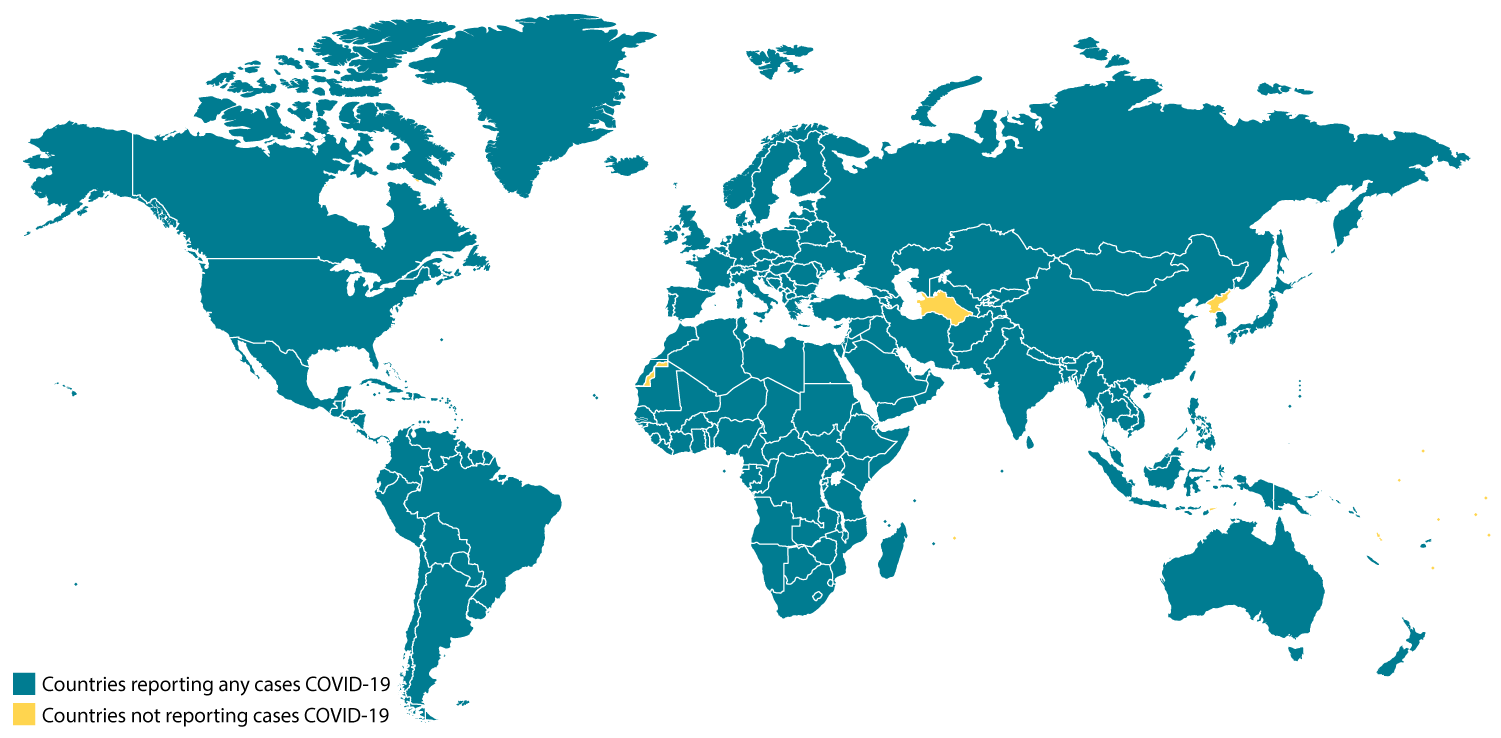
Confirmed COVID-19 Cases Global Map

Situation in U.S.

Imported cases of COVID-19 in travelers have been detected in the U.S. Person-to-person spread of COVID-19 also has been reported among close contacts of returned travelers from Wuhan. On February 25, CDC confirmed COVID-19 in a person who reportedly did not have relevant travel history or exposure to another known patient with COVID-19 (unknown exposure). At this time, this virus is NOT currently spreading in the community in the United States.

Illness Severity

Both MERS-CoV and SARS-CoV have been known to cause severe illness in people. The complete clinical picture with regard to COVID-19 is not fully understood. Reported illnesses have ranged from mild to severe, including illness resulting in death. Learn more about the symptoms associated with COVID-19.

There are ongoing investigations to learn more. This is a rapidly evolving situation and information will be updated as it becomes available.

Risk Assessment

Outbreaks of novel virus infections among people are always of public health concern. The risk from these outbreaks depends on characteristics of the virus, including how well it spreads between people, the severity of resulting illness, and the medical or other measures available to control the impact of the virus (for example, vaccine or treatment medications). The fact that this disease has caused illness, including illness resulting in death, and sustained person-to-person spread is concerning. These factors meet two of the criteria of a pandemic. As community spread is detected in more and more countries, the world moves closer toward meeting the third criteria, worldwide spread of the new virus.

The potential public health threat posed by COVID-19 is high, both globally and to the United States.

But individual risk is dependent on exposure.

  • For the general American public, who are unlikely to be exposed to this virus at this time, the immediate health risk from COVID-19 is considered low.
  • Under current circumstances, certain people will have an increased risk of infection, for example healthcare workers caring for patients with COVID-19 and other close contacts of persons with COVID-19. CDC has developed guidance to help in the risk assessment and management of people with potential exposures to COVID-19.

However, it's important to note that current global circumstances suggest it is likely that this virus will cause a pandemic. In that case, the risk assessment would be different.

What May Happen

More cases are likely to be identified in the coming days, including more cases in the United States. It's also likely that person-to-person spread will continue to occur, including in the United States. Widespread transmission of COVID-19 in the United States would translate into large numbers of people needing medical care at the same time. Schools, childcare centers, workplaces, and other places for mass gatherings may experience more absenteeism. Public health and healthcare systems may become overloaded, with elevated rates of hospitalizations and deaths. Other critical infrastructure, such as law enforcement, emergency medical services, and transportation industry may also be affected. Health care providers and hospitals may be overwhelmed. At this time, there is no vaccine to protect against COVID-19 and no medications approved to treat it. Nonpharmaceutical interventions would be the most important response strategy.

CDC Response

Global efforts at this time are focused concurrently on containing spread of this virus and mitigating the impact of this virus. The federal government is working closely with state, local, tribal, and territorial partners, as well as public health partners, to respond to this public health threat. The public health response is multi-layered, with the goal of detecting and minimizing introductions of this virus in the United States so as to reduce the spread and the impact of this virus. CDC is operationalizing all of its pandemic preparedness and response plans, working on multiple fronts to meet these goals, including specific measures to prepare communities to respond local transmission of the virus that causes COVID-19. There is an abundance of pandemic guidance developed in anticipation of an influenza pandemic that is being repurposed and adapted for a COVID-19 pandemic.

Highlights of CDC's Response

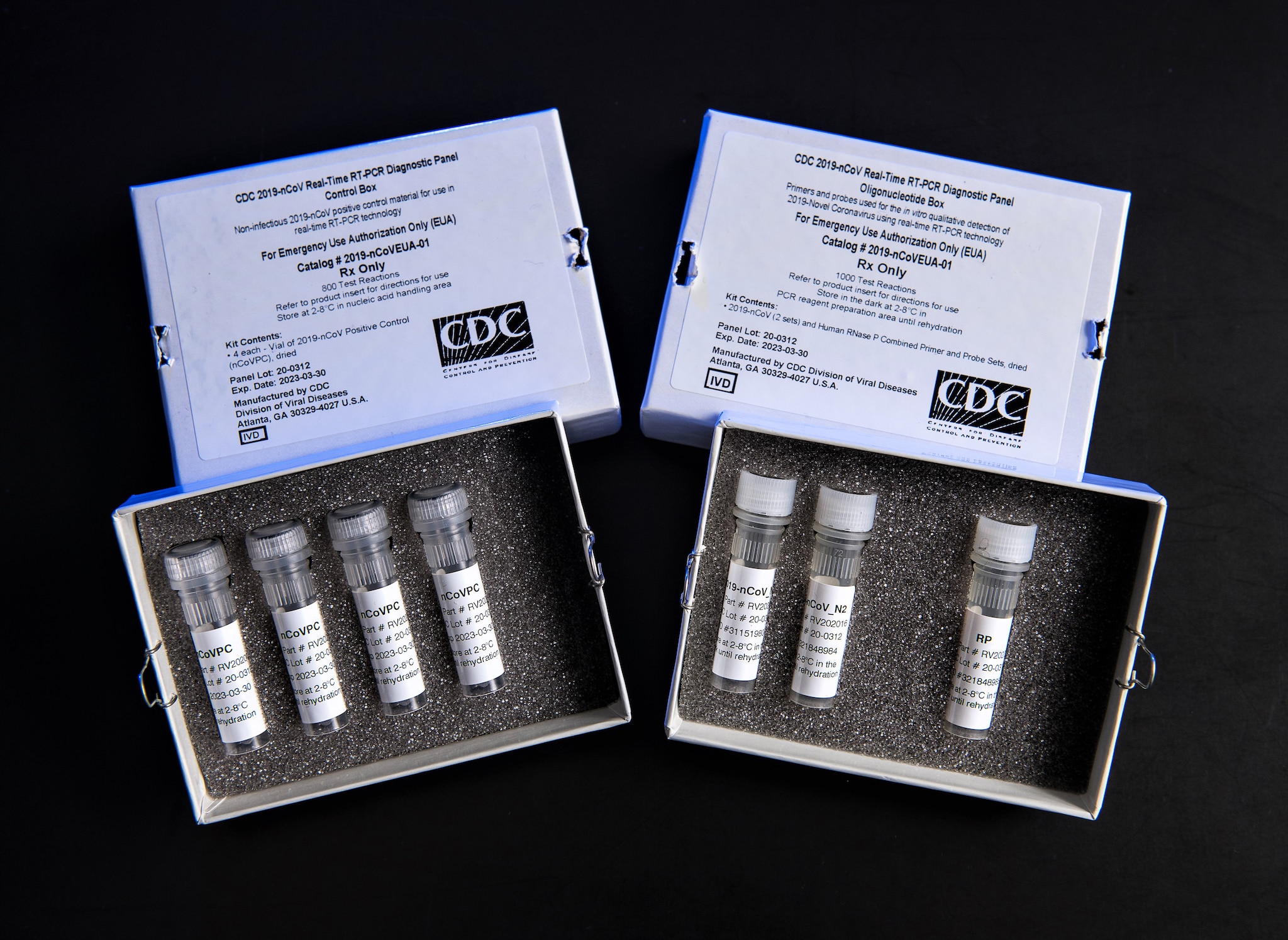
This is a picture of CDC's laboratory test kit for the severe acute respiratory syndrome coronavirus 2 (SARS-CoV-2). CDC is shipping the test kits to laboratories CDC has designated as qualified, including U.S. state and local public health laboratories, Department of Defense (DOD) laboratories and select international laboratories. The test kits are bolstering global laboratory capacity for detecting SARS-CoV-2.

This is a picture of CDC's laboratory test kit for severe acute respiratory syndrome coronavirus 2 (SARS-CoV-2). CDC is shipping the test kits to laboratories CDC has designated as qualified, including U.S. state and local public health laboratories, Department of Defense (DOD) laboratories and select international laboratories. The test kits are bolstering global laboratory capacity for detecting SARS-CoV-2.

  • CDC laboratories have supported the COVID-19 response, including:
    • CDC has developed a real time Reverse Transcription-Polymerase Chain Reaction (rRT-PCR) test that can diagnose COVID-19 in respiratory samples from clinical specimens. On January 24, CDC publicly posted the assay protocol for this test.
    • On February 26, CDC and FDA developed a protocol that uses two of the three components of the original CDC test kit to detect the virus that causes COVID-19. This will allow at least 40 public health laboratories to be able to begin testing.
    • CDC has been uploading the entire genome of the viruses from reported cases in the United States to GenBank as sequencing was completed.
    • CDC has grown the COVID-19 virus in cell culture, which is necessary for further studies, including for additional genetic characterization. The cell-grown virus was sent to NIH's BEI Resources Repository for use by the broad scientific community.

CDC Recommends

  • While the immediate risk of this new virus to the American public is believed to be low at this time, everyone can do their part to help us respond to this emerging public health threat:
    • It's currently flu and respiratory disease season and CDC recommends getting a flu vaccine, taking everyday preventive actions to help stop the spread of germs, and taking flu antivirals if prescribed.
    • If you are a healthcare provider, be on the look-out for people who recently traveled from China and have fever and respiratory symptoms.
    • If you are a healthcare provider caring for a COVID-19 patient or a public health responder, please take care of yourself and follow recommended infection control procedures.
    • If you have been in China or have been exposed to someone sick with COVID-19 in the last 14 days, you will face some limitations on your movement and activity. Please follow instructions during this time. Your cooperation is integral to the ongoing public health response to try to slow spread of this virus. If you develop COVID-19 symptoms, contact your healthcare provider, and tell them about your symptoms and your travel or exposure to a COVID-19 patient.
    • For people who are ill with COVID-19, please follow CDC guidance on how to reduce the risk of spreading your illness to others.

Other Available Resources

The following resources are available with information on COVID-19


~A.

Thursday, February 27, 2020

Coronavirus COVID 19 - 9.6 Million Deaths? You might be SHOCKED

Facts and figures tell the whole/Big picture. Loook

https://youtu.be/9Tf8UYFs9tM


~A.

CORONAVIRUS UPDATE COMMUNITY SPREAD NOW IN USA

https://youtu.be/8De-0jPL2i8
Real - fuckedu-.

~A.

Five things to know about coronavirus and what CT is doing to prepare

Five things to know about coronavirus and what state is doing to prepare

Five things to know about coronavirus and what the state is doing to prepare

With federal officials warning there will be a rapid spread of the coronavirus in the U.S., there were heightened concerns in Connecticut Wednesday about the state's readiness to respond to the virus.

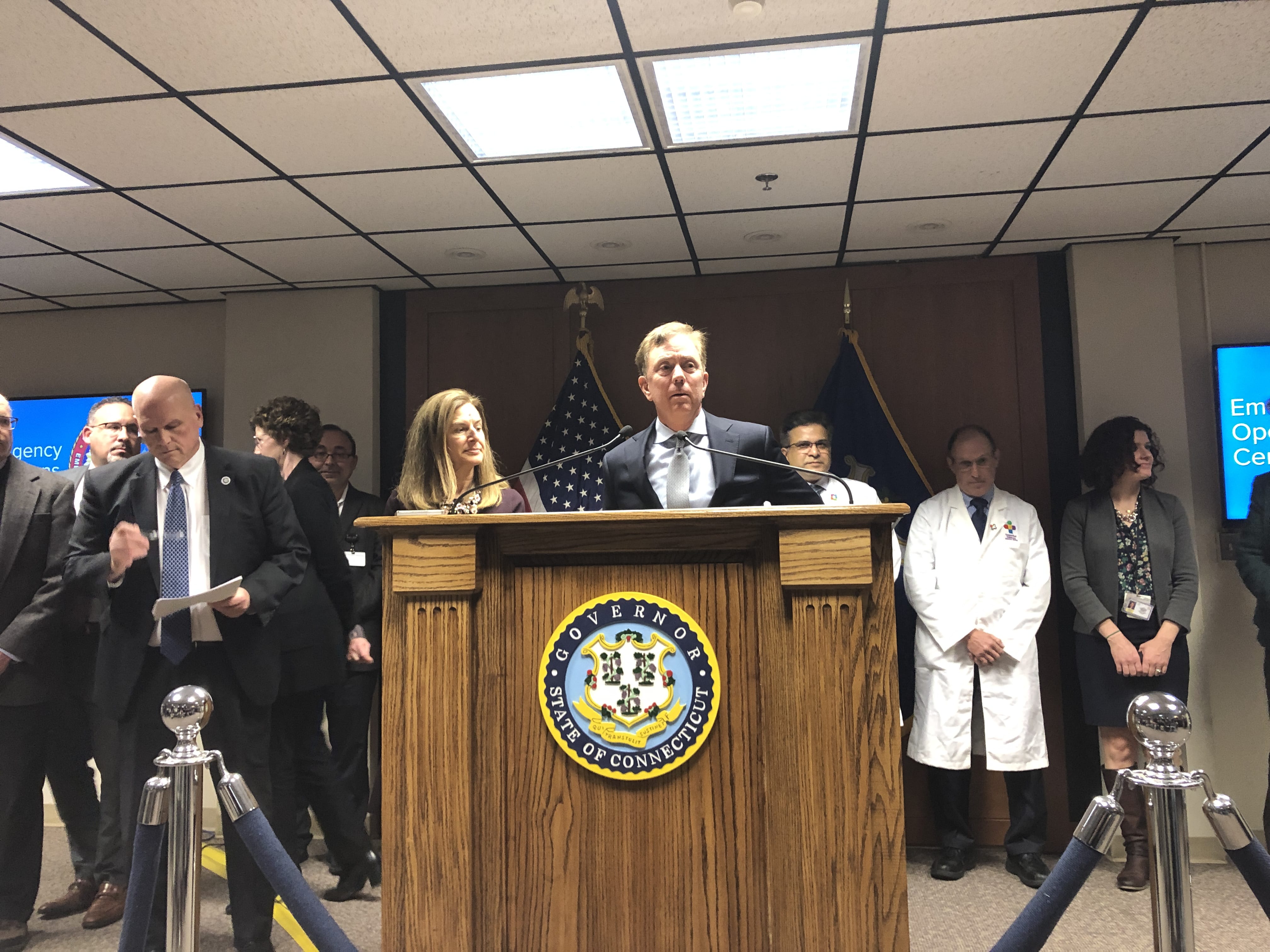
Gov. Ned Lamont held a news conference, flanked by state and health care officials, late Wednesday afternoon in an attempt to allay residents' fears about the epidemic.

Here are five things you should know about the virus and the state's response:

State is prepared, governor says

"Connecticut is ready, and we've been ready for a while," Lamont said.

The governor said the Department of Public Health and other state agencies are in constant contact with the Centers for Disease Control and Prevention, and will be regularly updating the state website as new information comes in.

There have been no confirmed cases of coronavirus in Connecticut yet.

"This is not a call to make you nervous, it's a call to give you confidence that we're ready for what's going forward here," said Lamont. "Right now I feel like Connecticut is a little ahead of the game, in terms of our preparation going forward."

Earlier Wednesday, the Connecticut Emergency Management Association wrote a letter to Lamont expressing concerns about an "extreme shortage" of personal protection equipment, asking the governor to take immediate action to ensure health care and public safety providers have the materials they need.

The association also asked the governor to partially activate the state's emergency Operation Center and launch plans to respond to a pandemic.

Kelan Lyons :: CT Mirror

Gov. Ned Lamont briefs reporters on the prevention measures state officials are undertaking to prepare for the coronavirus.

Lamont acknowledged "there's a scramble" to find medical equipment given the global spread of the disease, but he said hospitals are ready to start accepting patients, and that officials are looking for other protective equipment "wherever we can find it. That's true of every state in the country."

Hartford HealthCare routinely prepares for emergencies like the coronavirus, said Dr. Ajay Kumar, chief medical officer for the hospital system, which activated its Emergency Preparedness Plan in early January.

Kumar said Hartford HealthCare currently has a more than 30-day supply of the necessary medical equipment, but would continue to monitor that supply as the situation evolves.

"This is always a concern for us," Kumar said. "We keep a constant watch on that. Obviously things can change very rapidly, but we feel very well prepared on that at this time."

Jennifer Jackson, CEO of the Connecticut Hospital Association, said the state's hospitals are prepared to care for patients with the virus.

"This is what hospitals do. We regularly prepare, we plan, we train for outbreaks of disease," Jackson said, noting hospitals are working with the Department of Public Health and other state agencies and are in regular communication with each other as they learn more about the virus, also called COVID-19.

Concern is rooted in uncertainty about the virus

The mystery surrounding this new virus, and what could happen if a hotspot forms in the U.S., has driven the public attention — and fear, said UConn Assistant Professor in Pathobiology Steven M. Szczepanek.

"People's responses to these viruses, I think, is about the novelty. Every time we see a new virus pop up we see this happen. We had similar kind of scares with MERS, and that kind of died out. We had a lot of uncertainty with Zika. And now people are concerned with COVID-19," he said.

Szczepanek contrasted the public's focus on coronavirus with its response to influenza.

"The flu, we're used to it. We see it every year and the numbers are staggering and the numbers are so much more impactful – and yet the flu hasn't caused millions of people to be quarantined, it hasn't caused substantial losses in the stock market the way that COVID-19 is."

It is unclear if coronavirus is more fatal than the flu

The almost 2% mortality rate of those infected with COVID-19 that has been widely reported is flawed, according to Szczepanek.

Reflections 300 x 250 Sidebar - February

It is likely that many people are contracting mild versions of COVID-19, or that they are even asymtomatic carriers and are spreading the virus, but these are unconfirmed cases that are not factored into that 2% mortality rate. If they were, the percentage would be much smaller, the professor said.

"That number is somewhat artificially inflated," he said. "I think when we look back on this several years from now, we are going to see that it is not as virulent as is being reported."

By comparison, the flu is extremely widespread and deadly. Tens of thousands of people have died from the flu already this winter.

"I think a lot of the hysteria around this is associated with the newness of the virus," he said.

Trying to avoid it? Face masks won't help.

"A lot of people buy [masks] thinking that they are protected, but that does not stop respiratory droplets from getting into your face,"  said Szczepanek. "They essentially provide no protection. A lot of people think they do. I won't say that it won't help you absolutely at all. But they are nearly useless at protecting you from someone else who is sick."

Even the N95 respirator mask, which is recommended for health professionals and is designed to fit tightly and filter out small particles, doesn't completely eliminate the risk of contracting the illness.

Symptoms of coronavirus include cough, shortness of break, fever and breathing difficulties. In more severe cases, infection can cause pneumonia, severe respiratory syndrome, kidney failure and even death.

Masks should be worn by those who do have the virus, however, to protect others from the spread of germs, Szczepanek and health care professionals said.

To protect yourself from the coronavirus, follow the basic hygiene guidelines you learned as a child: wash your hands often and thoroughly, and sneeze and cough into a tissue.

"People tend to dismiss things that sound simple," said Jackson, of the hospital association. "It sounds simple, but it works, and it's going to be one of the biggest weapons that we have against this."

Matt Carter, the state's epidemiologist, said because the disease isn't currently spreading throughout the state, new recommendations could come later.

"There will be other social distancing measures that come into play later on," Carter said, like standing six feet apart from others or cancelling large group gatherings. "These kinds of activities may well be recommended, and something that we've actually never seen in the 35 years that I've been here."

If you get coronavirus, there's not much you can do but self-isolate

There are no vaccines or antivirals to treat this virus, yet.

"You can't really stop it," Szczepanek said. "If it does transmit, then the virus is going to spread like wildfire. This virus seems very difficult to contain, so I wouldn't be surprised if it becomes almost impossible to contain. It will require herculean efforts to contain."

It is recommended that those who test positive stay home to avoid spreading the disease. Research into the first 425 confirmed cases of the virus by Edward H. Kaplan, a Yale Professor of Public Health at the Yale School of Medicine, showed that isolation will quell outbreaks.

"The good news is that, in principle, case isolation alone is sufficient to end community outbreaks of [COVID-19] transmission, provided that cases are detected efficiently,"Kaplan wrote.

Get in touch and Stay in touch, this is a doozy.~A.

Wednesday, February 26, 2020

A Great How to Approach the Virus - WATCH!!!

https://youtu.be/fEYlYXh58X8


~A.

What I Bought to Prep for a Wuhan Coronavirus Lockdown - The Organic Prepper

Incase you didn't find it elsewhere - here's THE LIST!  Get a move on….

What I Bought to Prep for a Wuhan Coronavirus Lockdown

(Psst: The FTC wants me to remind you that this website contains affiliate links. That means if you make a purchase from a link you click on, I might receive a small commission. This does not increase the price you'll pay for that item nor does it decrease the awesomeness of the item. ~ Daisy)

by Daisy Luther

Panic over the coronavirus that originated in Wuhan, China is becoming more widespread and people are frantically getting prepared in case this thing goes bad.  Things like N95 masks and other PPE are pretty much sold out in stores across the nation and also on Amazon. (Here are some places you may still be able to find masks and PPE that are not yet sold out.)

In light of this, the most common question I've been asked lately by readers is, "What do I need to buy?"

Here's what we know about the Wuhan Coronavirus.

First things first, more important than purchasing a whole bunch of stuff is understanding the virus itself. You need to know how it spreads, what the incubation period is, and who is the most at risk. This article has information about what we know right now to be true.

Now, keep in mind that what we currently "know" is being filtered by the Chinese government. We have a lot of reasons to believe that they aren't being fully open with the rest of the world. For example, the numbers they're reporting don't really align with the complicated and expensive steps that China has taken to quarantine people and restrict their travel. But – we do have a small set of facts to work with and as we get more information, we'll be able to add it to our plan and adjust our preparedness strategies accordingly.

Here's what appears to be true:

  • Most of the people who are dying are elderly or had pre-existing health conditions.
  • The symptoms are flu-like, but what kills people is when it turns into pneumonia.
  • It is spread person-to-person – it can be airborne on droplets from coughing and sneezing.
  • It has been transmitted to at least one person who has not been to Wuhan.
  • The incubation period is anywhere from 2-14 days and people are contagious before they show symptoms.
  • The death rate is around 3% if what we're being told is accurate.

There's a lot of information we can glean from the facts above, assuming they're accurate.

The most important thing is that the best method to avoid becoming ill is social isolation, also called "lockdown" or "self-quarantine." There's a lot of information about that in this book written by best-selling author Cat Ellis specifically about this particular pandemic. You can also check out this article. The other most important thing is to wash your hands, thoroughly and often.

So, how do we prep for this? How do we get ready to go into lockdown?

What does it mean to go into lockdown?

If you are self-quarantining or going into lockdown, what does that mean exactly? It means no one goes out and no one comes in. Below is an excerpt from an article I wrote during the Ebola scare of 2014 that explains the rules of lockdown.

Avoiding contact with people who have the illness is the only way to prevent getting it. Isolating yourselves is the best way to stay safe and healthy.

This is the tricky part: How do you know that the time has come to get the family inside and lock the doors behind you?

Lizzie Bennett, a retired medical professional, wrote an incredibly helpful article over on her website Underground Medic, which unfortunately is no longer up and running.  Bennett recommends social distancing as the only effective way to protect yourself and your family from an outbreak of disease.

How long you should remain isolated depends primarily on where you live. For those in towns and cities it will be for much longer than those living in rural retreats where human contact is minimal. Though those fortunate enough to live in such surroundings should remember that if the situation is dire enough, people will leave the cities looking for safety in less populated areas. In large centres of population there will be more people moving around, legally or otherwise, each of these individuals represents a possible uptick in the disease rates, allowing the spread to continue longer than it would have they stayed indoors and/or out of circulation. Even when the initial phase is on the wane, or has passed through an area, people travelling into that area can bring it back with them triggering a second wave of disease as people are now emerging from their isolation…

One hundred miles is my buffer zone for disease, of course it could already be in my city, but practicalities dictate that I will not stay away from people because hundreds in Europe are dropping like flies. Maps of disease spread look like a locust swarm moving across the country and this allows disease spread to be tracked on an hour by hour basis. One of the few instances where mainstream media will be useful.

Once you've gone into lockdown, how long you must stay there is dependent on the spread of the illness. Times will vary.  Bennett suggests these guidelines:

Once the doors were locked we would stay there for at least two weeks after the last case within 100 miles is reported. A government all clear would be weighed against how long it had been since the last case was reported in the area I have designated as my buffer zone. There is of course still the chance that someone from outside the area will bring the disease in with them causing a second wave of illness. You cannot seal off cities to prevent this. Going out after self-imposed isolation should be kept to a minimum for as long as possible, and if you don't have to, then don't do it. Far better to let those that are comfortable being out and about get on with it and see if any new cases emerge before exposing yourself and your family to that possibility.

If the situation hits close enough to home that you decide to go it's time to isolate yourselves, the rules to this are intractable.

No one goes out. No one comes in.

I know this sounds harsh, but there are to be no exceptions. If you make exceptions, you might as well go wrestle with runny-nosed strangers at the local Wal-Mart and then come home and hug your children, because it's the same thing.

Once you have gone into lockdown mode, that means that the supplies you have on hand are the supplies you have to see you through.  You can't run out to the store and get something you've forgotten.

That means if a family member shows up, they have to go into quarantine for at least 2 weeks, during which time they are not allowed access to the home or family, nor are they allowed to go out in public.  Set up an area on your property that is far from your home for them to hang out for their month of quarantine. If at the end of the two weeks they are presenting no symptoms, then they can come in.

Now is the time to plan with your preparedness group how you intend to handle the situation. Will you shelter together, in the same location, and reserve a secondary location to retreat to if the situation worsens further or if someone becomes ill? Will you shelter separately because of the nature of the emergency?

Decide together on what event and proximity will trigger you to go into lockdown mode. Make your plan and stick to it, regardless of pressure from those who think you are over-reacting, the school that your children have stopped attending, and any other external influences. If you've decided that there is a great enough risk that you need to go into lockdown, you must adhere to your plan.

Check out this article. It was written for an Ebola lockdown but the rules remain the same, aside from the length of time for people to become symptomatic. And grab this book for even more in-depth information about lockdown.

A shopping trip to prep for Wuhan Coronavirus

I'm currently visiting one of my daughters and we went out to shop for a potential pandemic. In the area where she lives, the coronavirus isn't really on most people's radar yet, so we had our choice of supplies.

Here are the things you may need and the items we purchased ourselves. You probably have a lot of these things already, so check your inventory before going shopping.

PPE

While you want to have some personal protection equipment supplies, I recommend that instead of spending hundreds (if not thousands) of dollars on PPE, you focus the majority of your money on other things. PPE is only necessary for two reasons:

  • If you have to leave the house in the midst of an outbreak, you'll want PPE. (But your goal should be not to leave the house)
  • If someone in the family becomes ill, you'll want PPE for taking care of them.

If you prep carefully enough and manage to avoid contracting the virus, your need for PPE will be limited. That being said, having at least a few masks and gloves is a good idea in the event that you must leave the house or if you have a sick family member.

As far as PPE goes, obviously you want the best quality you can get your hands on, but remember that some protection is better than no protection. That isn't to say you'll be totally protected with a bandana – you won't – but it's better than going to some germ-laden place completely unprotected. Again, many places are sold out, but here are some places that still have PPE and masks available as of 2/3/20.

We did not purchase any additional PPE because we were already pretty well-set with pandemic supplies like gloves and masks. (We stocked up heavily during the Ebola scare back in 2014.)

Medical supplies

There are other medical supplies you may want to stock up on. We particularly focused on things that boost the immune system and medicine cabinet basics.

  • Vitamins (a good multivitamin, B-complex, C, D3, and Zinc lozenges. Emergen-C is also a worthwhile purchase)
  • Cold and flu meds – if someone gets sick, you'll be able to treat the symptoms at home
  • Elderberry syrup – I recommend Sambucol because it has been rigorously tested – learn more about elderberry for the flu here and learn how to make your own elderberry syrup here.
  • Cough drops or lozenges
  • Peppermint tea and other herbal teas
  • Basic OTC medications you might need over the period of a month without going to the store – think about what your family uses regularly (heartburn meds, ibuprofen, antidiarrheals, etc.)
  • Wound care supplies – if it's reasonable to do so, you'll want to treat wounds at home instead of sitting in a germ-filled emergency room. Here's an article about building your first aid kit.
  • A couple of months' worth of essential prescription medications.

So, you get the idea – things to keep you healthy and things to make you feel better if you do get sick. One of the things Selco noted in his article about pandemics is the breakdown in services and the system that can occur during a panic, and the scenes we're seeing from China certainly back up what he had to say. Having the supplies to treat your own medical issues is very important.

Cleaning supplies

We also picked up some cleaning and sanitation supplies.

  • Lysol spray
  • Lysol wipes
  • Bleach
  • Hand sanitizer
  • Antibacterial soap

Even if you never use things like bleach or Lysol, this might be the time that you'll want to do so. Sometimes situations call for natural remedies, but sometimes they call for chemical ones or a combination of the two.

Particularly if a family member becomes ill, you're going to want products that kill 99% or more of viruses and bacteria. During the outbreak, focus on wiping commonly touched surfaces like light switches, doorknobs, drawer pulls, and the refrigerator handle multiple times per day.

Food and other supplies

The next things you'll want are the food and supplies that will allow you to stay home for one to two months if things go totally sideways here in the US. Longer is always better, but at a minimum, be prepared for 30-60 days. It's most likely you'll have power and water throughout this crisis, but be prepared for the possibility that essential services might not be available, just in case.

Choose things that are easy to prepare for several reasons.

  • If you get sick, you aren't going to want to slave over a hot stove for 4 hours before you have something to eat.
  • If the power goes out, you'll use less fuel if you cook items that just need some boiling water.

Choose items with a lot of nutritional bang for their buck. Remember, your goal is to stay healthy and keep your immune system ticking along. Make sure to include plenty of produce options to give yourself lots of nutrients. A few of the things we got (and this list is general – go with what your family will actually eat):

  • Canned goods
  • Crackers
  • Peanut butter
  • Pasta
  • Frozen fruits and vegetables
  • Dehydrated soups
  • Jerky
  • Meat for the freezer
  • Powdered milk
  • Granola
  • Dried fruit
  • 100% fruit juices
  • V-8 or other vegetable juices (use these instead of water to rehydrate your dehydrated soups)
  • Potatoes
  • Sweet potatoes
  • Carrots

Again, this is a starting point. Check out my PDF book, The Stockpile Cafe for more ideas on meals you can create with shelf-stable foods. We also have buckets of freeze-dried food to fall back on if we were to go through all of these supplies. If you've waited too long and the shelves are nearly bare, here are some ideas for the last-minute shopper.

Keep plenty of water on hand, too, just in case. If you go into lockdown, as you use up water, refill the container from the tap.

If you have pets, don't forget to get at least a one-month supply of goods for them, also.

  • Pet medications
  • Pet food
  • Kitty litter or other sanitation supplies they'll need

If you have livestock, you'll want to do a big run to the feed store for them too. Include bedding, food, hay, and any meds you might need for them.

And be sure to have any personal hygiene supplies you might need over the course of a couple of months. It would be awful to have to go out in the middle of a pandemic because you ran out of shampoo.

  • Soap
  • Feminine hygiene supplies
  • Shampoo and conditioner
  • Lotion and skincare products
  • Toilet paper
  • Razors
  • Shaving cream
  • Toothpaste
  • Baby supplies
  • Deodorant

And of course, add whatever other products your family uses on a regular basis.

How are you prepping for the Wuhan Coronavirus?

The most important thing that I can express right now is how essential it is NOT to panic. This is the time to calmly prepare, to top up your supplies, and to be watchful.

Think of it like a hurricane watch. We first get informed it may be coming while it's still safely out at sea. This gives us time to stock up, get the supplies for boarding up our windows, and prepare our property for a potential onslaught. Then, sometimes that hurricane turns out to sea or hits someplace else instead of us. And sometimes it comes straight for us. The thing is, we can't know this soon which it will be.

So pay attention but try not to fall for the hype and the drama. When you're scared, you can become paralyzed or make poor spending decisions. Find some reliable sources and focus on those.  Zero Hedge has been my number one source for information on this outbreak.

What are you purchasing to prepare for the Wuhan Coronavirus? What do you recommend to people who are just getting started? Share your ideas, thoughts, and questions in the comments.

About Daisy

Daisy Luther is a coffee-swigging, globe-trotting blogger who writes about current events, preparedness, frugality, voluntaryism, and the pursuit of liberty on her website, The Organic Prepper. She is widely republished across alternative media and she curates all the most important news links on her aggregate site, PreppersDailyNews.com. Daisy is the best-selling author of 4 books and runs a small digital publishing company. You can find her on FacebookPinterest, and Twitter.