Saturday, February 08, 2014

This Infographic Shows You What Documents to Shred, Scan, or Store

This Infographic Shows You What Documents to Shred, Scan, or Store

This Infographic Shows You What Documents to Shred, Scan, or Store

It's tempting to just save all your documents, or at least scan them before you get rid of them. Unfortunately, the choice isn't quite that easy. There are some documents it's important to keep as a hard copy (at least for a while), some it's okay to keep digital copies of, and some you can go ahead and shred. This graphic from Women & Co. is a handy guide to making those decisions.

This Infographic Shows You What Documents to Shred, Scan, or Store

Shred, Scan, or Store? [Infographic] | Women & Co.


~A.

Climate Change | New Scientist

Climate Change | New Scientist:
plug er in, (seethe) change!?

USGS Multimedia Gallery: (Video)--Exploring US Topo GeoPDF’s

USGS Multimedia Gallery: (Video)--Exploring US Topo GeoPDF's

Information presented is factual at the time of creation.
If no transcript and/or closed-caption is available, please notify us.
Mobile use: In some cases, you can scroll through the below transcript using two-finger scrolling.
In this Video, We will learn about USGS US Topo map products. I will give you some background information about US Topo, show you where it can be accessed, and also show you the GeoPDF functionality and Terrago tools available for use with the GeoPDF. Digital USGS Topographic Maps are modeled on the standard 7.5 minute USGS quads. The newer digital maps are published using Adobe Systems Inc. Portable Document Format (PDF) with a geospatial extension called GeoPDF utilizing TerraGo technologies. GeoPDFs can be opened in Adobe Acrobat Reader or Adobe Professional. The free version of Adobe is available for download on the Adobe website, www.adobe.com . USTopo maps are layered, and have an Orthoimage base. They are produced on a three year cycle so that the imagery you see in the map is never older than three years across the country. Most importantly, these maps can be downloaded for free on the web, or for a small fee, USGS will mail you a printed map. There are a couple of different ways that you can download a map. You can access USTopo GeoPDF's through the USGS Map Store or by going to The National Map Viewer. The USGS Map store and TNM viewer allow you to download all the topographic maps ever produced by the USGS, including historic maps. The TNM Viewer additionally has the capability for downloading many of the data layers shown on the GeoPDF's as GIS data. The difference between the two viewers is that the GeoPDF's from the Map store are available for immediate download while the GeoPDF's from the viewer will send you an email with the download ftp location. Once you download a map, you may wish to install the TerraGo Toolbar for enhanced geospatial tools, however you do not need the TerraGo Toolbar to use a map. You can download these free tools from the TerraGo website.Let's take a look at a US Topo GeoPDF. This is the Frankfort East, KY Quad. This Quad is 1:24,000 scale, like many USGS maps. In the lower right hand corner of the map you will see your curser location coordinate display. There are many data layers included in the table of contents on the left hand panel of the Map. Let's take a look at these layers. Some of the vector layers that you may immediately notice are the Roads, Hydrography, and Contours. Other features shown on the map are Structures, Boundaries, Public Land Survey System grids, and Woodland land cover. The source information may be found in the attached metadata file. We will look at this map's metadata in more detail later on in the tutorial. Underlying these vector layers are imagery and shaded relief layers. You can turn any layer visibility on or off by clicking the eye icon next to the layer name. Let's explore the map's layers and features in more detail. Notice in the table of content that the features are organized in different folders and are layered in the same way that they are layered within the map. At the highest level in the table of contents, features are broken up into three folders including Map Collar, Map Frame, and Images. As we expand some of these folders, you will see that the features within them may be defaulted to be turned off. The Map Frame contains all the features that are found within the map. Let's zoom in to an area in the map where we can clearly see some of these map features. You will probably immediately notice the contours in the map. The contour interval will be shown in the collar at the bottom of the map. In this map, the interval is 40 feet. At 200 ft increments, the contour lines will be thicker in width and be labeled. The transportation features are another important feature on the map. These roads are symbolized using a functional road classification. For example, the expressways are symbolized with a thick red line with a brown border whereas the local roads are a light gray. You will also notice the hydrographic features such as streams, lakes, inundation areas, and others. Take a look at the legend to learn more about how these features are symbolized. If you installed the TerraGo toolbar, you will notice that there are many TerraGo tools available for use with the US Topo GeoPDF. To open the TerraGo Tools go to the TerraGgo Tab in the Adobe Navigation Panel. These tools are useful for exploring and making measurements on the map.Included as attachments with the GeoPDF are a legend as well as an xml metadata file. The legend will show how each feature is represented on the map. The Metadata is best viewed with Internet Explorer but can also be viewed in other browsers. Note that the XML document shows bold and colored text, and indentations for ease in identification of the different sections of the document. USTopo Maps are regularly updated electronic topographic maps that provide customizable, highly detailed, interactive features with information layering capabilities that will become richer in detail with each revision cycle. These digital maps are free and can be downloaded from the USGS store or the National Map viewer.


~A.

Resource: Mathematics Illuminated

Resource: Mathematics Illuminated

VOD1. The Primes
The properties and patterns of prime numbers — whole numbers that are divisible only by themselves and one — have been a source of wonder across cultures for thousands of years, and the study of prime numbers is fundamental to mathematics. This unit explores our fascination with primes, culminating in the million-dollar puzzle of the Riemann Hypothesis, a possible description of the pattern behind the primes, and the use of the primes as the foundation of modern cryptography. Go to this unit.

VOD2. Combinatorics Counts
Counting is an act of organization, a listing of a collection of things in an orderly fashion. Sometimes it's easy; for instance counting people in a room. But listing all the possible seating arrangements of those people around a circular table is more challenging. This unit looks at combinatorics, the mathematics of counting complicated configurations. In an age in which the organization of bits and bytes of data is of paramount importance — as with the human genome — combinatorics is essential. Go to this unit.

VOD3. How Big Is Infinity?
Throughout the ages, the notion of infinity has been a source of mystery and paradox, a philosophical question to ponder. As a mathematical concept, infinity is at the heart of calculus, the notion of irrational numbers — and even measurement. This unit explores how mathematics attempts to understand infinity, including the creative and intriguing work of Georg Cantor, who initiated the study of infinity as a number, and the role of infinity in standardized measurement. Go to this unit.

VOD4. Topology's Twists and Turns
Topology, known as "rubber sheet math," is a field of mathematics that concerns those properties of an object that remain the same even when the object is stretched and squashed. In this unit we investigate topology's seminal relationship to network theory, the study of connectedness, and its critical function in understanding the shape of the universe in which we live. Go to this unit.

VOD5. Other Dimensions
The conventional notion of dimension consists of three degrees of freedom: length, width, and height, each of which is a quantity that can be measured independently of the others. Many mathematical objects, however, require more — potentially many more — than just three numbers to describe them. This unit explores different aspects of the concept of dimension, what it means to have higher dimensions, and how fractional or "fractal" dimensions may be better for measuring real-world objects such as ferns, mountains, and coastlines. Go to this unit.

VOD6. The Beauty of Symmetry
In mathematics, symmetry has more than just a visual or geometric quality. Mathematicians comprehend symmetries as motions — motions whose interactions and overall structure give rise to an important mathematical concept called a "group." This unit explores Group Theory, the mathematical quantification of symmetry, which is key to understanding how to remove structure from (i.e., shuffle) a deck of cards or to fathom structure in a crystal. Go to this unit.

VOD7. Making Sense of Randomness
Probability is the mathematical study of randomness, or events in which the outcome is uncertain. This unit examines probability, tracing its evolution from a way to improve chances at the gaming table to modern applications of understanding traffic flow and financial markets. Go to this unit.

VOD8. Geometries Beyond Euclid
Our first exposure to geometry is that of Euclid, in which all triangles have 180 degrees. As it turns out, triangles can have more or less than 180 degrees. This unit explores these curved spaces that are at once otherwordly and firmly of this world — and present the key to understanding the human brain. Go to this unit.

VOD9. Game Theory
Competition and cooperation can be studied mathematically, an idea that first arose in the analysis of games like chess and checkers, but soon showed its relevance to economics and geopolitical strategy. This unit shows how conflict and strategies can be thought about mathematically, and how doing so can reveal important insights about human and even animal behaviors. Go to this unit.

VOD10. Harmonious Math
All sound is the product of airwaves crashing against our eardrums. The mathematical technique for understanding this and other wave phenomena is called Fourier analysis, which allows the disentangling of a complex wave into basic waves called sinusoids, or sine waves. In this unit we discover how Fourier analysis is used in creating electronic music and underpins all digital technology. Go to this unit.

VOD11. Connecting with Networks
Connections can be physical, as with bridges, or immaterial, as with friendships. Both types of connections can be understood using the same mathematical framework called network theory, or graph theory, which is a way to abstract and quantify the notion of connectivity. This unit looks at how this branch of mathematics provides insights into extremely complicated networks such as ecosystems. Go to this unit.

VOD12. In Sync
Systems of synchronization occur throughout the animate and inanimate world. The regular beating of the human heart, the swaying and near collapse of the Millennium Bridge, the simultaneous flashing of gangs of fireflies in Southeast Asia: these varied phenomena all share the property of spontaneous synchronization. This unit shows how synchronization can be analyzed, studied, and modeled via the mathematics of differential equations, an outgrowth of calculus, and the application of these ideas toward understanding the workings of the heart. Go to this unit.

VOD13. The Concepts of Chaos
The flapping of a butterfly's wings over Bermuda causes a rainstorm in Texas. Two sticks start side by side on the surface of a brook, only to follow divergent paths downstream. Both are examples of the phenomenon of chaos, characterized by a widely sensitive dependence of the future on slight changes in a system's initial conditions. This unit explores the mathematics of chaos, which involves the discovery of structure in what initially appears to be randomness, and which imposes limits on predictability. Go to this unit.


Math, fun?and beautiful....
~A.

NOAA to End Paper Charts | Mystic Seaport

NOAA TO END PAPER CHARTS

NOAA Charts

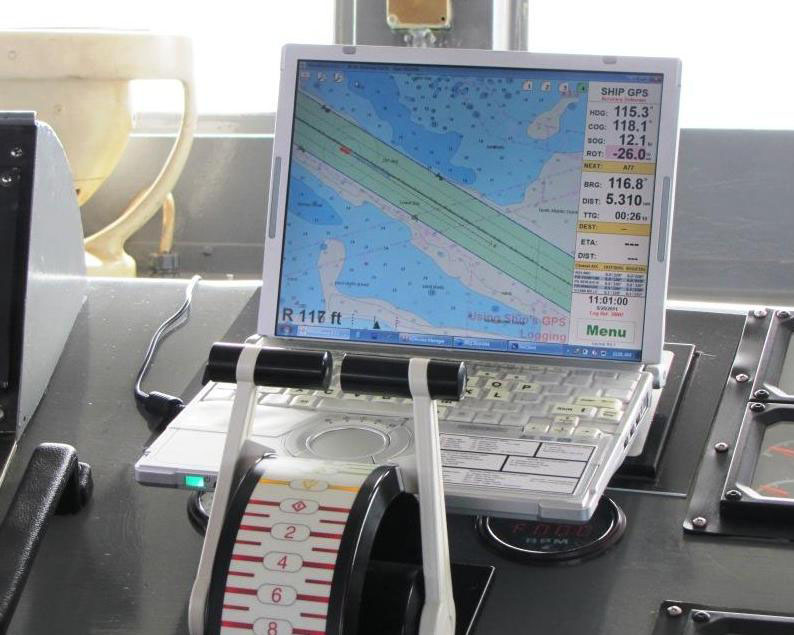
NOAA will cease the printing of traditional paper charts in April 2014. Photo: NOAA

WASHINGTON — NOAA's Office of Coast Survey, which creates and maintains the nation's suite of over a thousand nautical charts of U.S. coastal waters, today announced major changes ahead for mariners and others who use nautical charts. Starting April 13, the federal government will no longer print traditional lithographic (paper) nautical charts, but will continue to provide other forms of nautical charts, including print on demand charts and versions for electronic charting systems.

"Like most other mariners, I grew up on NOAA lithographic charts and have used them for years," said Rear Admiral Gerd Glang, director of NOAA's Office of Coast Survey in a pres release. "We know that changing chart formats and availability will be a difficult change for some mariners who love their traditional paper charts, but we're still going to provide other forms of our official charts."

Since 1862, those lithographic nautical charts — available in marine shops and other stores — have been printed by the U.S. government and sold to the public by commercial vendors. The decision to stop production is based on several factors, including the declining demand for lithographic charts, the increasing use of digital and electronic charts, and federal budget realities.

"With the end of traditional paper charts, our primary concern continues to be making sure that boaters, fishing vessels, and commercial mariners have access to the most accurate, up-to-date nautical chart in a format that works well for them," said Capt. Shep Smith, chief of Coast Survey's Marine Chart Division. "Fortunately, advancements in computing and mobile technologies give us many more options than was possible years ago."

NOAA ENC

The future: A NOAA ENC chart display. Photo: NOAA

Remarking on a change in technology that dates back to the time of Prince Henry the Navigator, Mystic Seaport Vice President for Collections and Research Paul O'Pecko observed, "Charts have not only directed sailors to their next port, but kept them safely off of rocks and shoals, told them probable wind and current directions and the likely locations of whale populations, and more. As with books, hundreds of years of tradition will pass in the blink of an eye to digital, mechanized formats for the sake of ease of use. Will that-chart reading ability, like handwriting, become a lost art? Time – digital of course – will tell."

NOAA will continue to create and maintain other forms of nautical charts, including the increasingly popular Print on Demand (POD) charts, updated paper charts available from NOAA-certified printers. NOAA electronic navigational charts (NOAA ENC®) and raster navigational charts (NOAA RNC®), used in a variety of electronic charting systems, are also updated weekly and are available for free download from the Coast Survey website. NOAA will also announce a new product full-scale PDF (Portable Digital Format) nautical charts, available for free download on a trial basis online.

Posted in Maritime History on October 22, 2013.


 Eppur si muove...
~A.

Friday, February 07, 2014

10 Popular Energy-Draining, Weight-Boosting Foods

10 Popular Foods That Drain Energy and Add Extra Pounds

For an activity that most people do multiple times each and every day, eating is embroiled in confusion and controversy. Or rather, not the act of eating, but the choice of what to eat. With each meal and snack, you have an opportunity to give your body adequate and even extra nutrition. But many fall short of this goal.

To be honest, the cards are very much stacked against you. Food advertising is everywhere and it promotes the most profitable products, which are typically not one in the same with the healthiest food choices.

Processed foods in particular are literally designed to addict you and keep you eating more. At the same time, even public health guidelines on nutrition are entirely misguided – causing most people to shun healthful foods, like saturated fats, in favor of grains (which most eat far too much of).

The end result is nothing less than a nutritional disaster, evidenced by some of the most popular foods eaten by Americans on a daily basis. Worse still, many have been lead to believe that these foods are healthy when, in fact, they're only going to drain your energy and make you fat.

The first step to eating better is knowledge – knowledge of which foods you're better off "breaking up with" starting today. Personal trainer and weight loss coach Traci Mitchell recently shared 10 such foods on Get Fit Chicago, and you know what? They're right on track.

Take a minute to review your typical daily diet, and if the following 10 foods make more than a very occasional appearance, it's time to do some major tweaking. These are 10 major food offenders that will only zap your energy and make you fat. You can eat better, get healthy, and feel great, and doing so starts with ditching these 10 popular foods.

1. Bagels

Bagels are nothing more than a very large serving of bread. One bagel can contain 45 grams or more of refined carbohydrates, which quickly break down to sugar, increase your insulin levels, and cause insulin resistance, which is the number one underlying factor of nearly every chronic disease known to man, including cancer and heart disease.

2. Specialty Coffee Drinks

Coffee drinks are typically loaded with syrups and sugar, while the "skinny" versions will contain artificial sweeteners. While a cup of black coffee is an acceptable, even healthful, way to start your day, a medium mocha coffee drink from one popular chain can contain 35 grams of sugar. That's nearly nine teaspoons before your morning is over.

3. Cereal

Most cereal is a combination of high-fructose corn syrup, sugar, and genetically modified (GM) corn, and cereals marketed to children are the worst offenders. However, even "healthy" adult cereals are better off avoided, as they're nothing more than refined carbohydrates. I don't recommend eating cereal, even if it doesn't have any added sugars.

4. Soda (Diet or Regular)

Most sodas contain far too much sugar, or even worse, artificial sweeteners. For instance, the chemical aspartame, often used as a sugar substitute in diet soda, has over 92 different side effects associated with its consumption including brain tumors, birth defects, diabetes, emotional disorders, and epilepsy/seizures. Plus, each sip of soda exposes you to:

  • Phosphoric acid, which can interfere with your body's ability to use calcium, leading to osteoporosis or softening of your teeth and bones.
  • Benzene. While the federal limit for benzene in drinking water is 5 parts per billion (ppb), researchers have found benzene levels as high as 79 ppb in some soft drinks, and of 100 brands tested, most had at least some detectable level of benzene present. Benzene is a known carcinogen.
  • Artificial food colors, including caramel coloring, which has been identified as carcinogenic. The artificial brown coloring is made by reacting corn sugar with ammonia and sulfites under high pressures and at high temperatures.
  • Sodium benzoate, a common preservative found in many soft drinks, which can cause DNA damage. This could eventually lead to diseases such as cirrhosis of the liver and Parkinson's.

5. Commercial Yogurt

Traditionally fermented yogurt is chock full of healthful bacteria (probiotics). In ancient times, food preservation was accomplished through lacto-fermentation, a process that adds a host of beneficial micro-organisms to food. This makes them easier to digest, and increases the healthy flora in your intestinal tract.

But don't expect to be able to pick up the real deal in your local supermarket. Pasteurized yogurts in most supermarkets will not provide you with these health benefits, as the pasteurization process destroys most of the precious enzymes and other nutrients.

Further, most commercial yogurt contains added sugar or artificial sweeteners. For healthier yogurt, try plain raw yogurt and add in your own flavoring, such as stevia, cinnamon, or fresh berries.

6. Submarine Sandwiches

Large submarine sandwiches are heavy on bread (more refined carbs) and typically contain processed-meat lunchmeat that may contain sodium nitrite and other additives like MSG, high-fructose corn syrup, preservatives, artificial flavors, or artificial colors. While sub sandwiches are often viewed as a healthier alternative to fast-food hamburgers, they're virtually just as bad.

7. Orange Juice

Some orange juice contains high-fructose corn syrup, added sugar, and artificial flavors and colors. But even natural brands contain far too much fructose without any of the fiber, antioxidants, and health-promoting phytochemicals found in whole fruit.

Previous studies have already clearly demonstrated that drinking large amounts of fruit juice dramatically increases your risk of obesity. Even freshly squeezed fruit juice can contain about eight full teaspoons of fructose per eight-ounce glass, which will cause your insulin to spike and may counter the benefits of the antioxidants. If you suffer from type 2 diabetes, hypertension, heart disease, or cancer, you'd be best off avoiding fruit juices altogether until you've normalized your uric acid and insulin levels.

8. Muffins

Most muffins are high in sugar and refined carbs and low in nutrition. This is true even if they're "low-fat" or contain healthy-sounding elements like bran or carrots. Eating a muffin is no different than eating a bagel or plate of pancakes. It will cause your blood sugar and insulin levels to spike, followed by an energy-draining crash. This is true of any food high in refined sugar and carbs, so you'll want to avoid doughnuts,

9. Potato Chips

Potato chips are nothing more than refined carbs and unhealthy fats, tossed with too much processed sodium. Plus, when carbohydrate-rich foods like potatoes are cooked at high temperatures, as all potato chips are, acrylamide -- a tasteless, invisible chemical byproduct -- is formed. Animal studies have shown that exposure to acrylamide increases the risk of several types of cancer, and the International Agency for Research on Cancer considers acrylamide a "probable human carcinogen."

10. Fruit Smoothies

Fruit smoothies are often touted as a convenient strategy to boost your fruit and veggie intake. Unfortunately, they too contain excessive amounts of fructose, and perhaps even added sugars on top of that. While it's possible to make a healthful fruit smoothie at home, provided you go easy on the fruit and add in healthful additions like spinach and coconut oil, store-bought smoothies are virtually always high-sugar nutritional disasters.


~A.

» U.S. Postal Service Announces Giant Ammo Purchase


U.S. Postal Service Announces Giant Ammo Purchase

Post Office joins other federal agencies stockpiling over two billion rounds of ammo

Kit Daniels
Infowars.com
February 5, 2014

The U.S. Postal Service is currently seeking companies that can provide "assorted small arms ammunition" in the near future.

The U.S. Postal Service joins the long list of non-military federal agencies purchasing large amounts of ammunition.

The U.S. Postal Service joins the long list of non-military federal agencies purchasing large amounts of ammunition.

On Jan. 31, the USPS Supplies and Services Purchasing Office posted a notice on the Federal Business Opportunities website asking contractors to register with USPS as potential ammunition suppliers for a variety of cartridges.

"The United States Postal Service intends to solicit proposals for assorted small arms ammunition," the notice reads, which also mentioned a deadline of Feb. 10.

The Post Office published the notice just two days after Sen. Rand Paul (R-Ky.) announced his proposal to remove a federal gun ban that prevents lawful concealed carry holders from carrying handguns inside post offices across the country.

Ironically the Postal Service isn't the first non-law enforcement agency seeking firearms and ammunition.

Since 2001, the U.S. Dept. of Education has been building a massive arsenal through purchases orchestrated by the Bureau of Alcohol, Tobacco and Firearms.

The Education Dept. has spent over $80,000 so far on Glock pistols and over $17,000 on Remington shotguns.

Back in July, the National Oceanic and Atmospheric Administration also purchased 72,000 rounds of .40 Smith & Wesson, following a 2012 purchase for 46,000 rounds of .40 S&W jacketed hollow point by the National Weather Service.

NOAA spokesperson Scott Smullen responded to concerns over the weather service purchase by stating that it was meant for the NOAA Fisheries Office of Law Enforcement for its bi-annual "target qualifications and training."

That seems excessive considering that JHP ammunition is typically several times more expensive than practice rounds, which can usually be found in equivalent power loadings and thus offer similar recoil characteristics as duty rounds.

Including mass purchases by the Dept. of Homeland Security, non-military federal agencies combined have purchased an estimated amount of over two billion rounds of ammunition in the past two years.

Additionally, the U.S. Army bought almost 600,000 Soviet AK-47 magazines last fall, enough to hold nearly 18,000,000 rounds of 7.62x39mm ammo which is not standard-issue for either the U.S. military or even NATO.

It would take a Lockheed Martin C-5 Galaxy, one of the largest cargo aircraft in the world, two trips to haul that many magazines.

A month prior, the army purchased nearly 3,000,000 rounds of 7.62x39mm ammo, a huge amount but still only 1/6th of what the magazines purchased can hold in total.

The Feds have also spent millions on riot control measures in addition to the ammo acquisitions.

Earlier this month, Homeland Security spent over $58 million on hiring security details for just two Social Security offices in Maryland.

DHS also spent $80 million on armed guards to protect government buildings in New York and sought even more guards for federal facilities in Wisconsin and Minnesota.

While the government gears up for civil unrest and stockpiles ammo without limit, private gun owners on the other hand are finding ammunition shelves empty at gun stores across America, including shortages of once-common cartridges such as .22 Long Rifle.

UPDATE: Since the publication of this article, the USPS has amended its pre-solicitation, claiming that the ammunition is a "standard purchase" for the Postal Police. This does not explain, however, why the Postal Police was not listed in the original notice if this is standard. As the federal government grows larger, more and more federal agencies such as the Dept. of Education and NOAA are forming and arming their own "law enforcement divisions" with hundreds of thousands spent on full-blown arsenals. Even the EPA has its own SWAT teams conducting raids on peaceful Americans. Expect to see more large-scale firearm and ammunition purchases by these bureaucracies as they become even more militarized.

This article was posted: Wednesday, February 5, 2014 at 1:36 pm


Thursday, February 06, 2014

Duke Energy plant reports coal-ash spill | CharlotteObserver.com

Duke Energy plant reports coal-ash spill

Duke Energy said Monday that 50,000 to 82,000 tons of coal ash and up to 27 million gallons of water were released from a pond at its retired power plant in Eden into the Dan River, and were still flowing.

Duke said a 48-inch stormwater pipe beneath the unlined ash pond broke Sunday afternoon. Water and ash from the 27-acre pond drained into the pipe.

"We've had some temporary solutions that have intermittently worked at times during the day, but we are still working on a short-term solution and the long-term repair," spokeswoman Erin Culbert said shortly after 9 p.m. Monday.

The pond has a liquid capacity of 155 million gallons when full, according to a recent inspection report, but was at a lower level because the Dan River power plant's coal-fired units were retired in 2012. It's not known how much ash was in the basin, but Culbert said most of it appears to still be in the pond.

Duke said it notified local emergency managers and the N.C. Department of Environment and Natural Resources, which last year sued Duke over its ash handling, on Sunday afternoon. The first public notice of the spill came from Duke at 4:03 p.m. Monday.

Environmental groups that have filed lawsuits in an effort to force Duke and other utilities to remove ash stored near waterways quickly pointed out the lapse in time before public notification.

The Dan River plant is about 130 miles northeast of Charlotte near the Virginia line.

The North Carolina environmental agency said it notified downstream water districts of the spill. The nearest municipality that draws water from the Dan River, Danville, reported no problems with its water.

Duke and the North Carolina agency took water samples from the river but said results are not yet back. Coal ash contains metals that can be toxic in high concentrations.

The pond's dam beside the river "remains secure," Duke said. Some erosion has occurred on the side of a berm farthest from the river, it said, and engineers are working to stabilize it.

Independent engineers who inspected the pond's dam in 2009 for the Environmental Protection Agency found it in good condition, but they noted some seepage and recommended a stability study on the structure's river side. Built in 1956, it was divided into two ponds in the 1970s.

The report said the dam had "significant hazard potential" if it were breached, mainly for property and environmental damage.

A security guard spotted an unusually low water level in the ash pond about 2 p.m. Sunday, Culbert said, leading to the discovery of the pipe break.

Ash was visible on the banks of the Dan River on Monday, and the water was tinted gray.

"While it is early in the investigation and state officials do not yet know of any possible impacts to water quality, staff members have been notifying downstream communities with drinking water intakes," the North Carolina environmental agency reported late Monday afternoon.

Danville, Va.'s water intake is about 6 miles downstream of the pond.

Barry Dunkley, the city's water director, said in a release that "all water leaving our treatment facility has met public health standards. We do not anticipate any problems going forward in treating the water we draw from the Dan River."

A 1-billion gallon spill of ash slurry at a Tennessee Valley Authority power plant in Tennessee in 2008 ignited national debate over coal ash.

Last week the EPA, which had been sued by two North Carolina environmental groups among others, said it would issue the first federal rules on ash-handling by December.

Duke has closed seven of its 14 North Carolina coal-fired power plants, including Dan River, and is evaluating ways to close the ash ponds at those sites. Groundwater contamination has been found around all 14 of its unlined ash ponds, although much of the contamination may occur naturally.

Ash ponds are at the Allen power plant in Gaston County near Belmont and at the Riverbend plant on Mountain Island Lake near Mount Holly.

North Carolina environmental officials, pressured by advocacy groups, sued Duke last year over ash handling at all its coal plants. Environmentalists say Duke should remove the ash from the retired ponds, as utilities in South Carolina have agreed to do.

The Charlotte Observer welcomes your comments on news of the day. The more voices engaged in conversation, the better for us all, but do keep it civil. Please refrain from profanity, obscenity, spam, name-calling or attacking others for their views.


The pictures are u-gly.  :-(
~A.

Metabolic bone disease and Vitamin D....IMPORTANT

Epidemic of Infantile Rickets May have Put Thousands of Innocent Parents in Jail for Child Abuse.... ( this is real and so sad,)

(Partial How Metabolic Bone Disease in Infants Gets Confused with Child Abuse

Whenever rickets occurs in the first couple of months of life, it's not really an infantile issue per se; it actually originates in the mother. Therefore, you have to look carefully at the mother's characteristics. According to Dr. Ayoub, mothers of children who end up displaying fractures due to infant rickets have a variety of signs and symptoms in common, including the following:

Most live in northern latitudes, where the population tends to have lower vitamin D levels. The average vitamin D level in this maternal population was about 18-19 ng/ml, which is a  significant deficiency stateTwin pregnancies are overrepresented, which is another risk factor. The risk of rickets in a twin pregnancy is 25 times higher than in a single pregnancy
More often than not, she was pregnant during early spring, when vitamin D levels tend to be at their lowest (March-May)Higher than background rates of gestational diabetes and difficult labor
80 percent of the mothers Dr. Ayoub reviewed had a body mass index of 30 or greater. Overweight or obesity is yet another risk factor for vitamin D deficiencyHalf of the mothers he reviewed had severe musculoskeletal symptoms that were undiagnosed by their clinicians. Some were even on narcotic drugs because of severe musculoskeletal pain, which is a feature of adult rickets (osteomalacia)
About 30 percent smoked cigarettes prior to or during pregnancyDebilitating acid reflux was very common in these pregnant women, and about 75 percent of the mothers were taking excessive amounts of TUMS, which is a calcium carbonate-based antacid that binds phosphate and makes bone density MUCH worse


Oddly enough, a significant percentage of the mothers in these cases are also diagnosed with Ehlers-Danlos syndrome (EDS), a connective tissue disease characterized by hypermobile skin and hypermobile joints. Dr. Ayoub notes that vitamin D deficiency can actually mimic Ehlers-Danlos as well, because it's associated with joint hypermobility.

"We know that collagen requires vitamin D as well. We didn't know that traditionally, but research in the last 10 years has shown it's important for collagen pathways, just like vitamin C is. It may just be a manifestation of vitamin D deficiency, or it may be a comorbidity. But it's useful for the mother to get worked up for metabolic bone disease as well," he says.

Pregnant Women: Beware of Taking TUMS!.............(and so much more relevant Vit D info.)...

The WHOLE transcript is here.... Do your best to listen or read the whole article, so pertinant to our time...

://mercola.fileburst.com/PDF/ExpertInterviewTranscripts/Ayoub-transcript.pdf


Wednesday, February 05, 2014

The Maine Reef: Pink Anemone Oasis Pattern for the Maine Crochet Reef Project

Pink Anemone Oasis Pattern for the Maine Crochet Reef Project

Here is my  newest creation and one I was able to keep track of as I made it so I can pass it on to you.
I love this little piece! It stands a little over 8" tall and the base is about 6" across.

As with all of my pieces, I have mostly been using my mom's leftover yarn stash that has been building for years. This is sport weight acrylic baby yarn in pink. The turquoise is also acrylic in worsted weight and the trim is #10 cotton crochet thread.

The anemone's are done using a G hook and the base with a J hook.

Tall Skinny One
- Ch 30 & join to make a circle
- sc in ea st til it measures 1 1/2"
- Dec 3 evenly in the next rnd
- Sc in ea st til it measures 3"
- Dec 3 evenly in the next rnd
- Sc in ea st til it measures 4 1/2"
- Dec 3 evenly in the next rnd
- Sc in ea st til it measures 5 1/2"
- Dec 3 evenly in the next rnd
- Sc in ea st til it measures 6"
- Dec 3 evenly in the next rnd
- Sc in ea st til the piece measures 6 1/2"
- 2 sc in ea outside loop of hte next rnd
- 2 sc in ea sc until it is ruffled as much as you like ( I did 5 rows) and tie off
-  Join the cotton thread and sc in ea st around. You can do 2 in some sts to ease it if you want to.
- Tie off

Mid Sized Fat One

-  Follow directions as for the tall skinny one until the piece measures 4 1/2"
-  pick up the directions just after "measures 6 1/2" in the tall version
- Continue the 2sc in ea st for 5 rows and tie off
-  Finish off with a round of cotton thread as before and tie off

Baby One

- ch 20 st and join to make a ring
-  sc in ea st for 1"
-  Dec 3 evenly in the next rnd
-  Sc til the piece measures 2"
-  Dec 3 evenly in the next rnd
-  Sc til the piece measures 3"
-  sc til the piece measures 4"
-  pick up the directions just after "measures 6 1/2" in the tall version

- Continue the 2sc in ea st for 3 rows and tie off

-  Finish off with a round of cotton thread as before and tie off


The Island

I used worsted weight yarn and a J hook

-  ch 5 and join

-  14 dc in the center and join

-   ch 2, dc in the same space, *dc in the nxt sp, 2dc in the nxt sp* to the end of the rnd

-   Join and ch 2, *3dc in the nxt sp, 1dc in the nxt sp, 2dc in the nxt sp, 1dc in the next sp* repeat to the   

    end of the rnd, join, ch 2 

-   2dc in ea st around and join.

-  ch5, join to the nxt st all around and tie off


Stuff the anemone's lightly with fiber or polyfil and stitch them to the base with matching yarn.


That's it! Good luck.....

Check out my Eco Friendly product line of hand mades called WOOL-RENU™ at my Etsy Shop!  


~A.

The Maine Reef: Crochet Pseudoshpere Pattern for the Maine Reef

Crochet Pseudoshpere Pattern for the Maine Reef

This is posting number two of basic patterns for the Maine Crochet Reef project. Just as simple as the first, and again no need for special yarn or even yardage! How great is that!


Ok so what is a psuedosphere? It's a geometric term for something that looks like the opening of a trumpet as in Lillies and other flowers. Some Coral found in the Great Barrier Reef  has a similar geometry as well and why it is included in the Crochet Reef project.


The pseudosphere on the left is turned upside down to show you the cone like tail. Each of these use the same pattern but with more frequent increases.


Choose your Materials:

YARN: Any leftover yarn made of any fiber. Acrylics will create a more rigid piece and be less expensive and although the Fiber Center usually focuses on natural fibers, the nature, size and scope of this project is allowing the use of any synthetics in addition to natural fibers. Any color can be used and feel free to change colors at any time

HOOK: I recommend using a medium sized  hook, G or H for your first attempts. Any size will work but smaller will be harder for beginners to use if using Worsted weight yarns. If you are using lighter weight yarn, you can use a smaller hook, larger if you are using heavier yarn.  Try different combinations to find what is comfortable for you.


To make the less ruffled piece on the left, follow these simple instructions:


- Chain 15
- 4 sc in the last ch 
- slip st to the 1st sc to form a ring ( you will be left with a tail hanging)
- sc in the round - sc in the next 3 sts, 2 sc in the next st, repeat until the piece is as large as you want it   
  to be. 


To make the more ruffled piece on the right:


- Begin the piece exactly as you do for the less ruffled piece .
- Once you begin to sc in the round, increase in every other stitch instead of every 4th.


That's it! Easy peasy....


The larger you make these, the more ruffled they will be. However the 2nd one will always be more ruffled than the first one. 


Feel free to experiment and use up ends of yarn by changing colors if and when you want to. But most of all, have fun!


Until next time

Check out my Eco Friendly product line of hand mades called WOOL-RENU™ at my Etsy Shop!  


~A.

The Maine Reef: Basic Hyperbolic Crochet Patterns

Basic Hyperbolic Crochet Patterns

In case you are unsure about how to begin, or if you think you can't do it, think again!

Most of the Reef project will be made up of small pieces. All you need to know is how to chain and single crochet to complete these small and simple pieces. If you don't know how and would like to learn, click on our patterns page and go to the Lions Brand how to crochet video for a great quick study tutorial.

In the first picture are two examples of easy to make hyperbolic planes. The second one shows them photographed together.


 To make the hyperbolic plane on the left in this first photo, follow these simple instructions:

Choose your Materials:

YARN: Any leftover yarn made of any fiber. Acrylics will create a more rigid piece and be less expensive and although the Fiber Center usually focuses on natural fibers, the nature, size and scope of this project is allowing the use of any synthetics in addition to natural fibers. Any color can be used and feel free to change colors at any time

HOOK: I recommend using a medium sized  hook, G or H for your first attempts. Any size will work but smaller will be harder for beginners to use if using Worsted weight yarns. If you are using lighter weight yarn, you can use a smaller hook, larger if you are using heavier yarn.  Try different combinations to find what is comfortable for you.


Pattern:
Row 1: Chain 15.
Row 2: - Begin with a Single crochet in the 3rd chain from the hook.
             - Single crochet in the next 4 stitches.
             - In the next chain, increase a stitch by doing 2 single crochets in the same chain.
             - Single crochet in the next 5 chains and increase in the 6th and repeat  
               to the end of the row ( don't worry when you get the end and don't have enough stitches to  
               do another increase.
             - Chain 2 and turn your work so you can work the next row from right to left
Row 3: - Single crochet in the 2nd single crochet from the hook.
            -  single crochet in the next 4 stitches.
            - In the next chain, increase a stitch by doing 2 single crochets in the same chain.

             - Single crochet in the next 5 chains and increase in the 6th and repeat    

               to the end of the row ( don't worry when you get the end and don't have enough stitches to    

               do another increase.

             - Chain 2 and turn your work so you can work the next row from right to left


Repeat Row 3 until the piece is as big as you want it to be or until you run out of yarn. The piece in the photo is 14 rows and measures about 3" H x 7" W.


Be sure you tie off your end and weave in the tails.


To make the Hyperbolic Plane on the right in the first photo, make it exactly like the first one but, instead of increasing every 6th stitch, increase every 4th stitch.


To make your own Hyperbolic pattern simply change the rate of stitch increases. The more often you increase the more crenelated or curled it will be. The less frequent your increases, the less  curly it will be.


Experiment and have fun! 


Watch for other patterns to come soon......


Until next time........

Check out my Eco Friendly product line of hand mades called WOOL-RENU™ at my Etsy Shop!  


~A.

Tuesday, February 04, 2014

DING.m4a

Gallery: 20 Terrifying Trails Around The World | The Fix

http://www.activejunky.com/thefix/gallery-10-terrifying-trails-around-the-world-article371?utm_source=taboola&utm_medium=cpc&utm_campaign=Outdoorhub&utm_term=patch-stonington&ajmed=cpc&ajsrc=taboola&ajcamp=Outdoorhub#11


~A.

29 Awesome Things You Didn't Know About Google (But Should)

29 Awesome Things You Didn't Know About Google (But Should)

Sara BoboltzThe Huffington Post02/03/14 03:11 PM ET

What would the internet be without Google? Sure, there are other search engines out there, but the world's biggest and arguably its best one serves up over one billion results out of Mountain View, Calif., every day to people in 146 countries.

Its founders' mission back in 1995 -- aside from not being evil -- was to implement a page ranking system based on the rules of academic citation. In academia, citations are like currency. Your publication will stand in higher esteem the more other publications cite it. As graduate students at Stanford University, Larry Page and Sergey Brin created their search algorithm with the idea of ranking pages based on how often other pages "cite" them -- or, in this case, link back to them.

And that's the very, very basic premise of the site that few of us could do without. But are you really getting the most out of it? Take a look below to find out!

1. Google indexes 60 trillion individual webpages...

Can you imagine that number? 60 trillion seconds is 1,892,760 years. 60 trillion dollars is almost 3.5 times the U.S. national debt. 60 trillion red blood cells is three times the number in your body. Maybe that's not helpful. Just know it's a lot.

2. And sometimes turns them into a game.

atari breakout

Type "Atari Breakout" into the search bar, and you'll see this easter egg created in honor of the game's 37th anniversary last month. Use your directional keys to control the paddle. When you advance to the next level, Google will perform a random search, using those images as bricks.

3. Find more about a certain picture by clicking the camera icon on Google Images. It brings up this box:

google image

This gives you the option to upload an image from your computer or insert an image URL. If you're using Chrome, right-clicking on a picture will also give you an option to "Search Google for this image."

So next time you see an adorable dress on Pinterest with no credit information, use Google to track it down.

4. You can also narrow down an image search by clicking the "Search Tools" menu.

sloth image search

Looking for a black and white cityscape? Drawings only? Most recent photos of Beyonce's hair? You can even use Google to look for GIFs -- just select "Animated" under the "Type" menu.

5. If you're on a site with a terrible search function, make Google do the work for you.

site search

Maybe you're spending a half hour searching for basic information on your school's crappy website. Typing in "site:harvard.edu," for example, before your query will give you results from harvard.edu only.

6. It can also help you filter out some other riffraff...

paris minus kardashian

Use a dash, or "minus," to help filter out any unwanted search results. Typing "Paris -Kardashian" will make sure the gossip on Kimye's wedding plans stays out of your way as you plan a vacation.

7. And locate files to download.

filetype sloths

Entering "filetype:pdf" before your search query, for example, will give you only PDF documents. Other common ones are .docx, .pptx and .xlsx. (Music files are a bit harder to look for, sorry!)

8. Here's some next-level Googling: A search for a recent New York Times article on endangered South American species.

epic google search

Enter "site:nytimes.com" to specify The New York Times. Enter "south american" -- in quotes -- for that phrase specifically, then "endangered" normally and "~species" to search related words, too, like "animals." Finally, "2010..2014" -- with two periods -- will give you results published only within that timeframe.

9. If a certain webpage is down, just search for it within Google's cache.

Say you need information on sloths. Because reasons. Entering "cache:en.wikipedia.org/wiki/Sloth" into the Google search bar will give you the static snapshot of the Wikipedia page Google has saved on its servers. That snapshot may be a little old, however, so if you're looking for up-to-the-minute news, the cache won't really help.

10. Google's your best friend when you need to get around paywalls...

translate webpage

And don't want to, you know, pay. Trick the site with Google Translate by dropping a page URL into the translate box, setting the translated language to English and the source language to anything other than English, say, Japanese. Then just click the new link in the translated section.

Alternatively, you can use Google Mobilizer or Modules.

11. Or reminisce about the year 1998.

google 1998

Typing "Google in 1998" into the search bar brings up a retro version of the site. Sadly, it doesn't actually function -- entering any other query into the old-school search bar will bring you back to the present.

12. It'll quickly tell you what time it is in Brazil...

Just type "time Sao Paolo" into the search bar and stop doubting your skills in basic addition or subtraction. (It works with any city, too!)

Speaking of times, if you want to know showtimes for movies nearby, just type a movie currently in theaters with "showtimes" and Google will bring up some options.

13. Or when the sun will set...

Or rise. Type "sunset Sao Paolo" or "sunrise Sao Paolo," for example, to find out.

14. Or which team is winning the game right now.

google game score

Typing the name of your team or "Seahawks vs. Broncos," for example, will give you the score. Google pulls the information from Stats LLC.

15. Speaking of games, here's another one you can play when you're bored.

zerg rush

Type "Zerg rush" into Google. A Zerg rush, for the uninitiated, is what it's called in the game StarCraft when you gather forces of alien arthropods known as Zergs to decimate the enemy. Double-clicking turns your cursor into a weapon against the oncoming Os -- Google's version of Zergs.

16. Listen to your fav musician right on your search results page.

songs by lorde

Searching for "songs by Lorde" brought up the list above, along with a brief bio of the New Zealander. Clicking on individual tracks brings up YouTube music videos, with some songs available to play just through Google.

17. The "I'm Feeling Lucky" button is estimated to cost Google $110 million in lost ad revenue each year.

The button skips over the search results page, and all its paid advertisements. In 2007, former Google executive Marissa Mayer expressed reluctance to kill the button completely, since "it's possible to become too dry, too corporate, too much about making money."

18. Originally, the site was named BackRub.

BackRub? What? In 1996, Page and Brin created what they called a "web crawler" that operated on Stanford University's servers until it took up too much bandwidth.

19. And its homepage design is so sparse because Page and Brin didn't know too much HTML.

It wasn't because the two were proponents of minimalism -- until the "Submit" button was added, users had to hit their return key to perform a search, Mayer once explained in a 2005 talk. The copyright line at the bottom was only added after the site founders observed users staring at the sparse homepage "waiting for the rest of it to load," Mayer told Businessweek. It serves as a sort of signal that the page is ready to go.

20. But nowadays, Google can even solve all your math problems...

calculator

Do you even own a calculator anymore? Never fear -- type "calculator" into Google's search bar and this spiffy one will be provided to you. You can also just type in basic math into the search bar, like "60 x 12 million," and you'll get a numerical answer. (720 million!)

21. Including conversions.

celsius converted

Typing "Celsius to Fahrenheit" gets you the handy converter above. Google can convert measures of mass, volume, speed, area, temperature and digital storage. It will also tell you the going rate of conversion between U.S. dollars and Indian rupees (or between any other currencies).

22. And show you what movies that one actor has been in...

jlaw movies

Typing "Jennifer Lawrence movies" into Google will bring up a nifty little slideshow of her filmography. Same goes for musicians' discographies -- try searching for "The Beatles albums."

23. Including their Bacon number!

jlaw bacon no

Typing any actor's name plus "Bacon number" gives you their degree of separation from being in a movie with Kevin Bacon -- a game borne out of the "six degrees of separation" theory that any two people are linked by the acquaintances of no more than six others.

24. Use Google to show you the weather...

Just type "weather" plus your city into the search bar, and Google will compile the weather forecast from other sites in one neat package.

25. Or to define a word for you...

sloth definition

Typing "define:" before any word will get you a definition of that word, neatly spelled out as seen above. Pretty useful when you read everything online now anyway. Google also serves as a thesaurus -- just type "~" before a word -- and a spell checker. It will kindly ask "Did you mean...?" if you've spelled something wrong. Typing a word and "etymology" will give you the linguistic origins of that word.

26. Or to find pizza nearby.

pizza google

Type "pizza" plus your zip code. You can also search for other types of takeout foods, restaurants by cuisine, bars or locate retail establishments like the nearest grocery or convenience store.

27. It's estimated that an ad on Google's homepage would cost $10 million.

But it's not for sale, Mayer once told Businessweek.

28. You can also set your Google homepage language to Klingon.

Or Latin. Or Pirate. Or one of the over 150 other languages available under the "Language" tab on your Settings page.

29. And finally, here was Google's first official tweet:

That's "I'm feeling lucky," for anyone who doesn't read binary.

Correction: An earlier version of this article incorrectly stated the product of 60 multiplied by 12 million. That'd be 720 million, not 72 million.


Cool.
~A.

The Alpha Publishing House

Welcome

Alpha Publishing House Books

The Alpha Publishing House issues books by Richard W. Wetherill and about Nature's Behavioral Law of Absolute Right that he had identified in the past century.

This natural law calls for people to be rational and honest when dealing with the events of life and to be rational and honest with one another.

Experience the dramatic changes provided by obedience to Nature's Law of Right Action. We welcome you to read our Natural-law Essays and download our eBooks FREE.

Featured Books
Natural-law Essay
Read or download Free!
To read simply click on the book image 
For more details click on the book title

Tower of BableTower of Babel
by Richard W Wetherill 

Today our world unknowingly suffers from warped and twisted thinking caused by what Wetherill called distortions of logic. Those distortions are unconscious-level fixed, inflexible tools of thought, causing all of our mistakes. This book exposes the exact nature of those distortions. It shows their causes, their results, and their remedies.

Read now or more details


This book, explains how to eliminate the dilemmas and difficulties of life. Problems and trouble will cease to be a compelling force in your life. The information has been tested and is in daily use by successful business leaders and private citizens. It reveals a dynamic lifestyle based on a natural law of behavior.

Read now or more details


Right is MightRight is Might
by Richard W Wetherill

You can discover why Right really is Might and how the natural laws of the universe make it a reality. This book is based on thirty years of research and experience, explaining the negative consequences of unethical behavior in both personal and public life. The book also explains how ethical behavior creates emotional health, personal joy and professional success.

Read now or more details


For our complete book listing click here

Radical Current EventsThis natural-law Essay presents meaningful answers to deal with the vicissitudes of life.

In general, people know that natural laws truly are infallible. Researchers have proved that if obeyed, natural laws provide life-giving results to people of every age, gender, race, or creed--despite any beliefs to the contrary.

One law well known by most people is the force of gravity. Nobody on earth has contradicted that force without regretting their mistake. Even toddlers unknowingly learn to obey it, when unassisted they can stand erect, walk, and run.

Decades ago Richard W. Wetherill identified a natural law that requires people's behavior to be rational and honest. Unfortunately mankind's behavioral records display the flawed behavior of many people who consistently continue to contradict nature's Law of Right Action and finally depart this life.

But, be of good cheer, the creator's law of behavior responds with rational, honest results to people who meet its requirements. So if our past-life behavior has not permanently harmed us, we can eliminate any further debilitating results by adhering to the creator's LAW OF RIGHT ACTION and survive!


For our complete list of natural law essays click here 


~A.

Favorites

http://www.eldercarelink.com/downloads/Senior_living_conversation_guide_One_Page.pdf


~A.

Monday, February 03, 2014

60 Things to help get you there.

1. Remember you only have (this) one life -- this is not a dress rehearsal.
(This is the apex of all earthly experiences, we are the bleeding edge.)

2. Try to stay positive and look for the good in every life experience
3. Keep an eye on the here and now
4. Live each day fully because you don't what's around the corner
5. Remember that life can change in an instant
6. Love all the stages of your life and fear none, because they are all magical
7. Learn to live in the moment. If you master this when you are young, it will help in your 60s
8. Life's too short to be worrying about something that will happen in the future -- live for today
9. Get outdoors and enjoy nature!
10. Find a hobby or a profession that will take you through all your different stages
11. Be yourself. Age with grace
12. Focus on positive aging instead of anti-aging
13. Accept the changes in your body and mind as you get older
14. Always be true to yourself... it's a long learning process but it pays off
15. Make memories but always keep a soft landing place
16. Virginia Wolff was right -- a woman needs a room of her own and $500
17. Forget about society's stereotypes about aging
18. Don't worry about getting older, worry about being boring
19. Age is only a number -- it does not define who you are
20. Age will happen whether you're afraid of it or not, so get living!
21. Never cease to be inspired.
22. Live simple but save hard. Exercise, educate, read, and travel
23. Buy classic clothes -- they will always be in style
24. Don't waste money on shoes -- men are not looking at your feet
25. Don't carry rubbish through your life!
26. Be yourself -- shine your light. Be present, the real you, aware and alive in every moment
27. Don't obsess about wrinkles. When the lines start to show on your face, think of them as the roadmap of your life
28. Live with passion and love with your eyes and heart wide open. Just be happy
29. Live for the present -- don't worry about getting older -- the best is yet to come!
30. Treasure the simple things in your life -- don't overcomplicate things
31. Love and respect your partner and children the way you want them to love and respect you
32. Give your love freely and unconditionally
33. Have children when you want them -- there is never a perfect time
34. Have empathy for yourself as well as others
35. Take lots of photos -- you will celebrate them when people you love are gone
36. Learn to forgive at a younger age
37. Let go of your anger and let gratitude and joy flood into your life
38. Keep a close circle of lady friends, it's essential
39. Value your family. They will be there when others are not. They will sustain you throughout your life journey
40. Never go to sleep angry with yourself or someone else
41. Tell your partner, friends and family that you love them every single day
42. At 30 you become a woman. Appreciate how beautiful you are
43. Don't waste time worrying about the things you can't change but change the things you can
44. Get out of a bad relationship fast -- you can't change another person
45. Take care of your skin! Smile often
46. Trust your instincts and never speak badly about yourself
47. Be kind to yourself. Let go off what you can't control. If it feels wrong, don't do it
48. Learn to laugh at yourself. Don't be so serious!
49. Give yourself some "me" time every day and laugh and smile all the time
50. Just be you. Don't strive for perfection
51. If you have children, love them, but, don't try to be a perfect mother
52. Let your child be your teacher
53. Be a warrior -- learn to be resourceful and self-sufficient
54. Never let fear get the upper hand
55. Never stop learning and enhancing yourself mentally, physically and spiritually
56. Be grateful for every day, even bad days -- there's always a lesson to learn
57. Embrace the positive aspect of aging -- like having less responsibility and more freedom
58. Many struggles actually become easier with age
59. Don't let anyone tell you that you are too old to do anything! Or too young for that matter
60. Don't be afraid. When you get there you will be ok. Life and nature prepare you for each phase of life


Pass it on....
~A.