On the fringes of the wild Okavango Delta World Heritage Site in northern Botswana, keeping cattle is not easy. The region's farmers often encounter scenes of bloody slaughter in their pastures, knowing it was likely wrought by a marauding lion or leopard. In retaliation, the farmers may kill the predators with guns or poison, conspiring with habitat loss and other threats to drive their decline.
Now, a new study, published last week in the journal Communications Biology, confirms prior research indicating that painting eyes on the backsides of cattle may help deter predators, potentially saving lives of cows and lions alike, reports Katie Camero for the Miami Herald.
The basic concept is simple enough: Lions and leopards are what ecologists call ambush predators, meaning they prefer to sneak up on unwitting prey. The element of surprise is so valuable that if these predators think they've been spotted, they will often abandon their hunt entirely, lead researcher Neil Jordan, an ecologist with the University of New South Wales and Taronga Western Plains Zoo, says in a statement.
"We tested whether we could hack into this response to reduce livestock losses, potentially protecting lions and livelihoods at the same time," Jordan explains.
After a small-scale initial study showed the "eye-cow technique" might work, Jordan and his colleagues embarked on a larger four-year effort, reports Jennifer Oullette for Ars Technica.
In Botswana, the researchers painted hundreds of cows with eyespots, others with two cross marks and left a third group au naturel. A total of 2,061 cattle from 14 herds participated in the study.
Though all the cattle were exposed to similarly risky foraging grounds during the day—at night they were kept in predator-proof enclosures—the group who appeared to have an extra pair of eyes was most likely to survive, the researchers write in the Conversation.
Of the 683 cows with eyes painted on their bums, zero were killed by predators during the four year study. On the other hand, 15 of the 835 unpainted and four of the cross-painted cattle met bloody ends. Lions were by far the deadliest predators in the study, killing 18 cows.
The biggest caveat to the study's findings is that the eye-marked cows were always alongside cows with more traditional looking backsides. Jordan called these cows "proverbial sacrificial lambs," noting that future studies will be needed to probe whether an entire herd of four-eyed cows would still go unscathed. The other question is whether the watchful bovine butts might lose their efficacy over time.
But Jordan says any protection offered by something as simple and low cost as painted eye marks is worth exploring when it comes to reducing conflicts between predators and people's livestock.
"Protecting livestock from wild carnivores–and carnivores themselves–is an important and complex issue that likely requires the application of a suite of tools, including practical and social interventions," Jordan says in the statement. "The eye-cow technique is one of a number of tools that can prevent carnivore-livestock conflict–no single tool is likely to be a silver bullet."
The researchers are hopeful that their work might one day help lions and people live in greater harmony.
Buyers drawn by laid-back charm are pushing up home prices
Most beach-loving New Yorkers know Mystic, Connecticut, as just another road sign on the way to Nantucket or Martha's Vineyard. It's getting a lot more second looks now.
City-dwellers are clamoring to find getaway homes in the seaside village, best known as the humble, working-class town in the 1988 Julia Roberts movie "Mystic Pizza." It may not have the prestige of those other New England resorts, or the party scene of New York's Hamptons, but that's the attraction.
"It has amazing charm and personality," said Jerry Upright, a 33-year-old talent consultant who rents in Manhattan and is looking to buy a place in Mystic for $800,000 to $1 million. "It gives you a much more country, laid-back feel."
He has plenty of competition. The pandemic has sent New Yorkers in search of space, for working from home or just breaking away from the crowds. That's spurred bidding wars in spots like Mystic, which offers an escape while being relatively affordable for a Northeast waterfront community.
The trouble is there aren't enough properties to go around, said Judi Caracausa, owner of a local real estate brokerage.
Homes in Mystic spent a median of 38 days on the market before finding buyers in June, the fastest pace since 2016, and inventory fell 36% from a year earlier, data from Redfin Corp. show. The median sale price jumped 7.9% to $340,000.
With owners reluctant to list their homes at such a chaotic time, the race to buy up what is on the market is fierce.
The more-attractive houses, with views of Long Island Sound or the Mystic River, are regularly drawing three to five bids by New Yorkers and Bostonians, said Larry Burns, an agent at brokerage Lila Delman.
"It's one of the busiest markets I've ever seen," rivaling the boom years of 2006 and '07, said Burns.
Mystic Appeal
The Connecticut village's supply of homes has tumbled
Source: Redfin Corp.
For Upright, who can do his job from anywhere, there's a sense of urgency that's just partly because of rising prices. He finds Manhattan depressing nowadays, and the 700-square-foot Upper East Side apartment where he lives with his girlfriend and their French bulldog felt like a prison during the lockdown, he said.
Mystic was an easy choice: His family has spent summers there, and last year, he bought a commercial building with a lively restaurant, Chapter One, at the base and two apartments above that he plans to rent out.
"If I had my druthers, I would ideally live in Mystic full time," said Upright, but his girlfriend's job as an emergency room nurse keeps them anchored to New York.
The once-sleepy village has attracted wealthy second-home buyers over the decades. But with a big influx of New Yorkers, it may start feeling more like the Hamptons, where homes sold for a median of $1.08 million in the second quarter.
Already, the boats are getting bigger and the cars are getting flashier, said Caracausa, owner of Market Realty LLC.
"We're seeing more Rolls-Royces and Bentleys," she said. "We've always really been undervalued."
Schengen Area – The World's Largest Visa Free Zone
Schengen Area, signifies a zone where 26 European countries, abolished their internal borders, for the free and unrestricted movement of people, in harmony with common rules for controlling external borders and fighting criminality by strengthening the common judicial system and police cooperation.
Schengen Area covers most of the EU countries, except Ireland and the countries that are soon to be part of: Romania, Bulgaria, Croatia and Cyprus. Although not members of the EU, countries like: Norway, Iceland, Switzerland and Lichtenstein are also part of the Schengen zone.
Four of them – members of the EFTA, implement Schengen acquis through specific agreements related to the Schengen agreement.
Iceland, Norway, Switzerland and Lichtenstein are associate members of the Schengen Area but are not members of the EU.
Monaco, San Marino, and Vatican City have opened their borders with, but are not members of the visa free zone.
The Azores, Madeira, and the Canary Islands are special members of the EU and part of the Schengen Zone even that they are located outside the European continent.
There are five more EU members, that have not joined Schengen zone: Ireland – that still maintains opt-outs and Romania, Bulgaria, Croatia, and Cyprus – that are seeking to join soon.
The external borders of the Schengen Zone reach a distance of 50,000 km long, where 80% of it is comprised of water and 20% of land. The area counts hundreds of airports and maritime ports, many land crossing points, an area of 4,312,099 km2, and a population of 419,392,429 citizens.
Note: Although most of the Schengen countries are in the European Union, you should not confuse the Schengen Area with the EU.
Visa Information for Schengen countries
A holder of a Uniform Schengen visa can travel to all 26 member countries of the Schengen Area:
Austria
Hungary
Norway
Belgium
Iceland
Poland
Czech Republic
Italy
Portugal
Denmark
Latvia
Slovakia
Estonia
Liechtenstein
Slovenia
Finland
Lithuania
Spain
France
Luxembourg
Sweden
Germany
Malta
Switzerland
Greece
Netherlands
Map of the Schengen and EU Countries
Austria
One of the richest countries in the world by per capita GDP terms, Austria, has an area of 83,871km2, and is inhabited by 8,712,137 residents. The country signed the Schengen agreement on 28 April 1995. However, it started its implementation more than two years later on 1 December 1997.
Austria is located in the central Europe, and is bordered by 8 countries, more than most of the other European countries. Its capital, Vienna, remains one of the top European destinations for travelers.
In 2017 alone, the Austrian embassies around the world received a number of 304,556 visa applications.
Belgium is one of the five first countries that signed the Schengen agreement on 14 June 1985, and started its implementation on 26 March 1995. It is a small and densely populated country, with an area of 30,528km2 and a number of 11,358,379 residents.
Located in Western Europe the country is bordered by France, the Netherlands, Germany and Luxembourg. Its capital, Brussels, is the administrative center of the European Union, which is often referred to as the EU's capital city.
A number of 231,437 travelers from all around the world applied for a visa to Belgium in 2017.
Shortly known as Czechia, the country was founded as late as in 1993, with the peaceful dissolution of Czechoslovakia. The central European country has an area of 78,866km2 and is bordered by Germany to the west, Austria to the south, Slovakia to the east and Poland to the northeast.
It has a population of 10,610,947, 64.3% of which are Czechs while the rest are Slovaks, Moravians, Ukrainians and others. The country has a considerable income from tourism, with Prague listed as the fifth most visited cities located in the old continent.
The Czech Republic signed the Schengen agreement on 16 April 2003 and started its implementation years later, on 21 December 2007.
Last year, 623,255 foreigners in need of a visa, applied for one at the Czech embassies around the world.
Denmark is the southernmost country of the Scandinavian countries. It has an area of 43,094 km2 and is located in the south-west of Sweden and south of Norway. Whereas, to the south it is bordered by Germany.
The Danish government signed the Schengen agreement on 19 December 1996 and started its implementation on 25 March 2001. However, Denmark is currently one of the six Schengen countries with reintroduced border checks due to the security situation in Europe and threats resulting from the continuous significant secondary movements.
The Nordic country has a population of 5,785,864 residents who have one of the highest standards of living, not only in Europe, but in the whole world as well.
In 2017, it received 152,467 visa applications. Figures show that Denmark has received 1 million more tourists in 2017, in comparison to 2014.
The northern European Republic of Estonia is bordered to the west by the Baltic Sea, to the south by Latvia, to the north by the Gulf of Finland and to the east by Lake Peipus and Russia. With an area of 45,338 km2 and 1,312,442 residents, it is one of Europe's least crowded countries. This flatland country also consists of 2,222 islands and islets in the Baltic Sea.
Throughout the centuries, the territorial area of today's Estonia has been ruled by the Danish, the Swedish and recently by the Soviet Union. Its government signed the Schengen agreement on 16 April 2003 and started its implementation on 21 December 2007.
In 2017, the country received 138,249 visa applications. However, figures show that 3.54 million foreigners stayed overnight in Estonia, 6.6% more than in the previous year.
Officially known as the Republic of Finland, the Nordic country is bordered by Norway to the north, Sweden to the northwest, and Russia to the east. It is famous for its educational system, and for being one of the safest and most eco-friendly countries on earth. Its 5,503,132 residents populate the happiest country in the world.
Finland has an area of 338,145 km2. It signed the Schengen agreement on 19 December 1996 and started its implementation on 25 March 2001.
It remains one of the most visited Schengen countries, since last year alone, it received 827,520 visa applications. Statistics show that out of around 3,1 million tourists that entered Finland in 2017, 1,5 million of them were from the EU states.
The most visited country in Europe, France, is not all about the Eiffel Tower. Known for its fine wine, sheer diversity, heritage sites and luxury skiing resorts, the country lured 85.7 million foreign tourists in 2013, the highest number ever.
The 551,695km2 country borders eight European countries: Belgium and Luxembourg in the northeast, Germany and Switzerland in the east, Italy and Monaco in the southeast, and Andorra and Spain in the south and southwest.
It is home to 64,720,690 residents, who can move freely within the Schengen Area, since the country is one of the five founding countries of the Schengen Zone on 14 June 1985. The implementation of the agreement in France started on 26 March 1995.
The land of invention and innovation and the second most visited Schengen country, Germany, consists of an area of 357,386km2 and 16 constituent states. The most populous EU member is also the European country that borders most other countries.
It is located in Western and Central Europe, with Denmark bordering to the north, Poland and the Czech Republic to the east. It has Austria to the southeast, Switzerland to the south-southwest, France, Luxembourg and Belgium lie to the west, and the Netherlands to the northwest.
The German passport is amongst the top three most powerful passports in the world, since its 81,914,672 residents can visit 188 countries visa-free.
Germany is one of the five founding countries of the Schengen agreement, signed on 14 June 1985. It started its implementation year later on 26 March 1995.
The cradle of Western civilization, Greece, is located at the crossroads of Europe, Asia, and Africa. The Hellenic Republic is considered as the birthplace of democracy, western literature, historiography, political science, Olympic games, etc.
Despite of the fact that its borders have changed throughout the year, today Greece shares land borders with Albania in the northwest, North Macedonia and Bulgaria to the north, and Turkey in the northeast. Despite that Greece signed the Schengen agreement on 6 November 1992 and started its implementation on 1 January 2000, none of its neighbors have joined the area yet.
The country has an area of 131,990 km2 and 11,183,716 residents. Greece has a unique cultural heritage, beautiful island and beaches, which makes it a favorite destination for many travelers.
In 2017, it received 1,029,564 visa applications from travelers worldwide, what makes it the fifth Schengen country with most applications received.
Located in Central Europe, Hungary has an area of 93,030 km2 and is home to 9,753,281 residents. It shares land borders with Slovakia in the north, Ukraine in the northeast, Austria in the northwest, Romania in the east, Serbia in the south, Croatia in the southwest, and Slovenia in the west.
A high number of travelers visit the country each year. In 2017, it received 263,940 visa applications. When it comes to tourism, Hungary is one of the main medical tourism destinations in Europe. In dental tourism alone, it has a share of 42% in Europe and 21% worldwide.
It signed the Schengen agreement on 16 April 2003 and started its implementation on 21 December 2007.
The Nordic island country is located in the North Atlantic and is volcanically and geologically active. It has a population of 348,580, two-thirds of which reside in the capital of Reykjavik and the surrounding area. The country has an area of 103,000 km2.
Ecotourism and whale-watching are amongst the top tourist attractions in Iceland. However, in 2017, the country received 7,610 visa applications, least among all other states.
It first signed the Schengen agreement on 19 December 1996. It signed a second agreement, which replaced the first, on 18 May 1999 following the incorporation of the agreement into EU law by the Treaty of Amsterdam. Iceland finally started the implementation of the agreement on 25 March 2001.
The sovereign state of the Italian Republic is located in the heart of the Mediterranean Sea. It has an area of 301,318 km2and is bordered by France, Switzerland, Austria, Slovenia, San Marino, and the Vatican City. With 59,429,938 residents, it is the fourth most populous EU member.
Italy is the successor of what was known as the enormous Roman Empire, that left behind a rich history and a lot of cultural attractions, what have affected Italy to become one of the top destinations in Europe. Italy is also the country that gave the world some of the most famous scholars, artists and polymaths as Michelangelo, Leonardo da Vinci, Raphael, Galileo and Machiavelli.
It started the implementation of the Schengen agreement on 26 October 1997 after having signed it previously on 27 November 1990.
In 2017, it was the third Schengen state with most visa applications received (1,850,260).
The Republic of Latvia shares borders with Estonia in the northern region, Lithuania in the south, to the east is Russia, and Belarus to the southeast. The 64,589km2 country has a population of 1,970,530 inhabitants.
Latvia is currently a member of the European Union, NATO, the Council of Europe, the United Nations, CBSS, the IMF, NB8, NIB, OECD, OSCE, and WTO. It signed the Schengen agreement on 16 April 2003, and started its implementation on 21 December 2007, thus becoming part of the European borderless territory.
Its capital, Riga is known for its architecture, multicultural heritage, and the Old Town, which is a UNESCO World Heritage Site. Riga was named the European Capital of Culture for 2014.
Principality of Liechtenstein is a doubly landlocked German-speaking microstate in Central Europe. It has an area of only 160 km2 and 37,666 residents, what makes it the fourth smallest European country.
Liechtenstein shares borders with Switzerland to the west and south, and Austria to the east and north. The country is mainly mountainous, thus an alluring winter sport destination.
It is the last country that joined the border-free Schengen area, after it signed the agreement io
The 65,300km2 country is bordered by Latvia to the north, Belarus to the east and south, Poland to the south, and Kaliningrad Oblast (a Russian exclave) to the southwest. It has a population of 2,908,249 residents, and uses EUR as its currency.
Lithuania
Lithuanian is one of the oldest languages in the world today. And along with Latvian, it is also one of only two living languages in the Baltic branch of the Indo-European language family.
Lithuania signed the Schengen agreement on 16 April 2003 and started its implementation later on 21 December 2007.
In 2017, Lithuania received 413,966 visa applications, which is more than countries like Austria, Portugal, Sweden, Denmark, or Norway. There are three UNESCO World Heritage Sites in Lithuania.
Luxembourg is a country of 2,586 km2 and has a population of 575,747 residents. It is one of the founding states of the Schengen agreement, which was signed on 14 June 1985 in the village of Schengen in Luxembourg. Its capital, Luxembourg City, is one of the three official capitals of the European Union.
Ranked by its GDP, Luxembourg is the second richest country in the world. It has the highest minimum wage in the EU while also being one of the safest countries in the world.
The motto of the country is 'mir wëllebleiwewatmirsinn', which means 'we want to remain what we are'.
Malta
The Southern European island country consists of an archipelago in the Mediterranean Sea, with an area of 316 km2 and a population of 429,362 residents.
Despite of its small area, the country received a number of 37,881 visa applications is 2017. In tourism terms, it is mostly known for its sun, sea and beaches. Some of its most alluring destinations for travelers are also ancient wonders as the 5,000 years old Hagar Qim or the 4,000 years old Hal Saflieni Hypogeum.
Malta signed the Agreement on 16 April 2003 and started its implementation on 21 December 2007.
Mostly known for the colorful tulips, numerous windmills and delicious cheese, the Netherlands consists of twelve provinces. The country borders Germany to the east, Belgium to the south, and the North Sea to the northwest. It has an area of 41,526 km2 and 16,987,330 residents.
It is a founding member of the EU, Eurozone, G10, NATO, OECD, and WTO. Moreover, it is one of the five founding states of the Schengen agreement, signed on 14 June 1985.
The largest port in Europe and world's largest port outside Asia, the Port of Rotterdam, is located in the Netherlands. This Western European country has the highest English-proficiency in the world and it is the world's second biggest beer exporter, after Mexico.
The land of the midnight sun, Norway, has an area of 385,155 km2. It has a population of 5,254,694 residents known as Norwegians. It is bordered by Finland and Russia to the northeast, and the Skagerrak strait to the south, with Denmark on the other side.
The country attracts visitors mainly because of its stunning fjords and its Viking heritage. In 2017, the Norwegian embassies around the world received 196,082 visa applications.
Norway signed the Schengen agreement on 19 December 1996. A second agreement, which replaced the first, was signed on 18 May 1999 following the incorporation of the agreement into EU law with the Treaty of Amsterdam. Norway started the implementation of the agreement on 25 March 2001.
It is known as the land of the midnight sun because certain areas of the country get 24 hours of sunlight for part of the summer.
Poland is an EU country located in the Central Europe. It is divided on 16 administrative subdivisions and has an area of 312,683 km2. Home to 38,224,410 residents, the country shares border land with Germany, Russia, Lithuania, Ukraine, Slovakia, the Czech Republic, and Belarus.
Its most famous and visited cities are Warsaw, the medieval town of Malbork, Lublin, Torun, Krakow and Poznan. Poland is also known for the Tatra National Park and the Bialowieza Forest. Figures show that most of the visitors are from Germany, followed by Britons and Russians.
In 2017, Poland received 823,101 visa applications, what makes it the seventh country with most applications received. The country signed the agreement on 16 April 2003 and started its implementation in the late 2007.
The westernmost European country, Portugal, shares borderland only with Spain, to the north and east. It has an area of 92,391 km2 and 10,371,627 residents.
It is the oldest state on the Iberian Peninsula and one of the oldest in Europe. Known for football, beautiful beaches and historic sites, the country manage to allure many visitors throughout the whole year. Most visited Portuguese spots are the capital of Lisbon, the subtropical island of Madeira, the second largest city – Porto, the small fishing village of Ericeira, and Óbidos – which is known for its many medieval castles.
Portugal signed the Schengen agreement alongside with its only neighbor Spain, on 25 June 1991 and started its implementation on 26 March 1995.
A landlocked country in Central Europe, Slovakia has a territory of 49,037km2. Its 5,444,218 residents are known as Slovak who speak the Slovak language. The country shares borders in the north with Poland, Ukraine to the east, the Czech Republic to the west, Hungary to the south, and Austria in the southwest.
Slovakia became an independent country after the peaceful dissolution of Czechoslovakia on 1 January 1993. Ten years later, on 16 April 2003 it signed the Schengen agreement. On 21 December 2007, it started the execution of this convention.
Slovakia has the world's highest number of castles and chateaux per capita. The Spiš Castle, which is part of the UNESCO List of World's Cultural and Natural Heritage, is one of the most famous.
Slovenia has a territory of 20,273 km2 and a population of 2,077,862. It is bordered by Italy to the west, Austria to the north, Hungary to the northeast, Croatia to the southeast,
After Liechtenstein, Luxembourg and Malta, Slovenia is the smallest Schengen state. The country joined the Schengen Area on 16 April 2003, and started the full implementation of the convention four years later on 21 December 2007.
Slovenia is known for the scenic Lake Bled, the Postojna Cave, Triglav National Park and its many castles. In 2017, Slovenian embassies and consulates around the world received 29,257 visa applications.
Spain has an area of 510,000 km2 and shares land borders in the north and northeast with France, Andorra, and the Bay of Biscay; and to the west and northwest with Portugal. It is the second largest country in the EU bloc with a population of 46,347,576 residents.
The Spanish cities, Madrid and Barcelona, are some of the cities that allure most foreign visitors in Europe. Bullfights, La Tomatina festival and Ibiza's Parties are among the best-known and attended events in Spain.
Spain signed the agreement alongside with Portugal, on 25 June 1991 and both of them started its implementation on 26 March 1995.
Sweden is a Scandinavian country located in Northern Europe. It has an area of 449,964 km2 and shares land borders with Norway and Finland. The country connects with Denmark by a bridge-tunnel across the Öresund, a strait at the Swedish-Danish border. Its 9,837,533 residents are known as Swedish or Swedes.
Sweden signed the agreement on 09 December 1996 and started implementing it later on 25 March 2001.
In 2017, Swedish embassies around the world received and processed 248,347 visa applications.
The non-EU country, Switzerland, became part of the Schengen area after it signed the agreement on 26 October 2004 and started its implementation on 12 December 2008.
The country is landlocked between Italy to the south, France to the west, Germany to the north, and Austria and Liechtenstein to the east. It has an area of 41,285 km and four national languages: French, German, Italian and Romansh.
Switzerland has one of the most powerful European economies and its 8,401,739 citizens have one of the highest living standards in the world.
In 2017, Switzerland received 517,010 visa applications. This makes it the tenth Schengen state with most applications received, despite of having a smaller territory than most of the other member states.
The abolition of borders between European countries has resulted with:
Nationals of any world country, when in the Schengen Area, to liberally cross the internal borders of the state members, free from border checks
Shared standards for crossing the external borders
Harmonized entry and short-stay visa conditions for all state members
Improved collaboration between the police of member countries
Privileged judicial collaboration between members, including a faster extradition of criminals, and easier relocation for execution of criminal verdicts
An advanced shared database, assisting member countries to quickly exchange information about people and goods between them, known as SIS
Despite the extent of the freedom guaranteed by the Schengen Area, the police enjoys the authority to carry out checks at internal borders and in border areas, in specific circumstances, but this is not considered a border check. The police can require information from people at internal borders about the stay in Schengen Zone and additional associated questions
If lacking to have a complete internal security due to a serious threat, a member country can temporarily reintroduce border checks at its internal borders, but for not more than 30 days
The Criteria to Become a Schengen Member Country
Many European countries possess the determination to be part of or to join the Schengen Area, but not all essentially can do this instantly. This for the fact that there are some pre-conditions or criteria that countries willing to join must have the capacity, or, need further preparation, to deal with, such as:
To be able, that on behalf of other member countries, to control the external borders of the Area as well as to issue Uniform Schengen Visas
To possess the competence that after the abolishment of border controls between member states, to capably collaborate with other member countries' law enforcement agencies for a greater level of security
To be equipped in applying "Schengen Acquis" or rules for controlling land, sea and air borders, issuing short-stay visas, police collaboration as well as protection of personal data
*Note: Before joining the visa free Area, the aspirant country is prone to a Schengen Evaluation. Afterwards, a member country undergoes a periodical evaluation to ensure the appropriate application of Schengen Acquis.
Which Are the Non-Schengen Countries in Europe?
The European countries that are not part of the Schengen zone are: Albania, Andora, Armenia, Azerbaijan, Belarus, Bosnia & Herzegovina, Croatia, Cyprus, Georgia, Ireland, Kosovo, North Macedonia, Moldova, Monaco, Montenegro, Romania, Russia, San Marino, Serbia, Turkey, Ukraine, The United Kingdom and Vatican City.
Frequently Asked Questions
Is UK part of the Schengen Area? No. United Kingdom is not part of the Schengen zone and therefore you are not allowed to enter the UK with a Schengen visa.
What is the Schengen Borders Agreement? The Schengen Borders Agreement permits people to travel freely within the area, if the traveler otherwise qualifies to enter the Schengen Zone, by crossing an official external border during regular hours of operation and obtaining an entry stamp in the passport.
Am I able to travel within the Schengen Area with the residence permit? The residence permit allows you to freely travel throughout the whole Schengen Area, without any additional documents needed. The residency permit is stamped in your passport. However, you have to notify the authorities if you intend to make trips in and out of the Schengen space.
Can I travel to more than one member country with the same Schengen visa? Yes, once you are issued the visa you can travel within the Schengen Zone as long as you don't exceed the timeframe granted your visa.
Take a tour around BlueCity, Rotterdam's centre of circular experiments
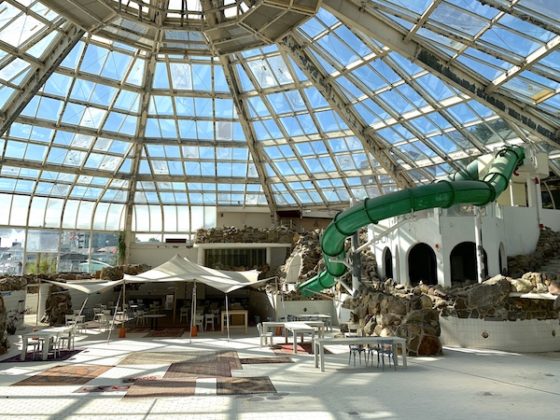
The old aquapark area serves as an event centre. Photo: Zuza Nazaruk
A circular innovation hub housed in a former swimming pool, Rotterdam's BlueCity is setting trends in the Dutch sustainability scene. The aim is to prove that waste, be it a building or coffee grounds, is a useful resource.
A visit to BlueCity begins with a sensorial experience: the building smells better than the finest cosmetics shop. A fresh mixture of fruity and herbal scents penetrates every corner.
'Today one of our entrepreneurs is making soap,' explains BlueCity's communications manager Diana van Ewijk. 'The smell varies depending on who is making what that day. Some days it is not so pleasant.'
Located in a repurposed swimming pool complex, Rotterdam's BlueCity is a hub for entrepreneurs committed to radically rethinking production. The linear economy leaves tremendous amounts of waste behind. While the world's resources are shrinking, BlueCity's entrepreneurs are taking a a circular approach that treats waste as 'just a misplaced resource,' as Van Ewijk puts it.
Home to 'bioneers', designers, upcyclers and bio-engineers, BlueCity has created its own ecosystem. The innovators come up with ways to reuse each other's waste streams in symbiosis and the result, at times, resembles biological sci-fi rather than reality.
Valuable leftovers
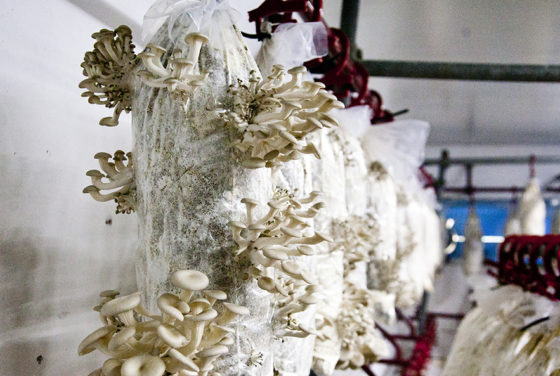
Flagship BlueCity's enterprise, RotterZwam, created a feeding ground for oyster mushrooms from leftover coffee grounds. BlueCity collects its coffee waste and transfers it to RotterZwam.
Oyster mushrooms growing on leftover coffee ground. Photo: BlueCity
Vet and Lazy, a circular beer brewery, has used the mushrooms to brew a special edition beer with an 'earthy taste'. The special editions vary, depending on what is currently available in the hub. The beers may be brewed with some of the leftover fruit that Fruitleather, a bio designer, uses to produce a vegan alternative to leather.
Beer production creates beer effluent that conventionally goes to waste. UnPlastic, a project developed by Outlander Materials, repurposes the effluent into an edible alternative to plastic. The idea is still under development but it has already gained the interest of city officials.
Waste-free ecosystem
Kusala Gifts, a soap maker responsible for my aromatic sensations, uses both the beer effluent and the coffee grounds to make 'circular soaps'. Some of the soaps supply BlueCity's toilets.
LoopedGoods, an upcycling designer, creates 'coffee-based' plant pots and notebooks. While coffee grounds seem to have an almost infinite variety of uses, BlueCity's entrepreneurs actively seek ways to reuse as much of various waste streams as possible.
De Krekerij, a revolutionary catering company, feeds its crickets with residual crops or grass from marginalized land. Cricket flour is the basis of De Krekerij's burgers and bitterballen, a traditional Dutch meat-based snack. The company hopes to revolutionise the food industry with a high-protein, minimum-impact alternative to meat.
Tropical, circular, collaborative
Original practicality is key to BlueCity's design. BlueCity moved into the building a few years after Tropicana, a popular Rotterdam's aquapark, closed down. SuperUse , a sustainable architectural firm, was part of the redesign project.
'We managed to transform a building that was likely to be demolished because of its mono-functional nature into a thriving ecosystem of startups and scale-ups,' says Jos de Krieger, SuperUse partner. The result is a building that complements the circular mission of the hub and intrigues visitors at the same time.
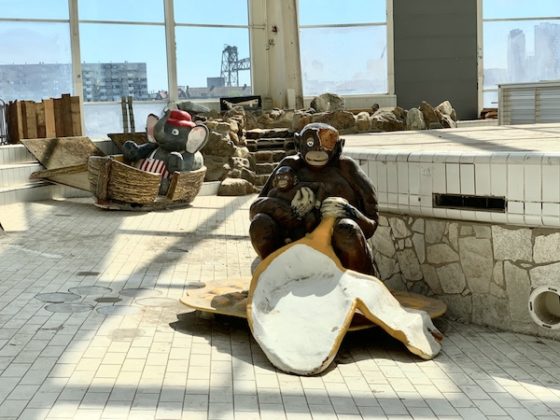
Leftover sculptures add a humorous touch. Photo: Zuza Nazaruk
Some of the aquapark elements still bring a touch of humour to the building. The outdoor slides, as well as a big 'Tropicana' banner, confuse visitors to this day. 'We still get families in swimsuits turning up sometimes,' Van Ewijk smiles.
The office spaces are mostly made from windows rescued from former courtyard. The windows were too big, so SuperUse created glass cubicles with the windows, slanting them so that they could fit. Okkehout, a furniture upcycler, produced tables for the meeting rooms using old furniture.
Having so many circular entrepreneurs working together in an almost-transparent building is also stimulating new ideas. 'You hear of new developments in fields besides your own before the public does, which helps to develop and sharpen your thoughts about what's going on in your own field,' says De Krieger.
Collaboration not only boosts innovation but is also a sustainable solution on its own: BlueCity's new project, FoodHub, has a shared walk-in freezer, saving resources and increasing energy efficiency, as well as opening doors for joint initiatives.
Upscaling the impact
Later this year, BlueCity will celebrate its fifth anniversary and is working on a new five year plan with a focus on increasing its reach.
BlueCity receives funding from its entrepreneurs and offers access to its network of investors, both external and in-house, in return. Ifund, an impact-first investment foundation, was one of the first BlueCity's investors and remains located in the hub until today.
While such a structure helps the 'bioneering' start-ups to scale up, BlueCity now wants to collaborate with the biggest actors on the market.
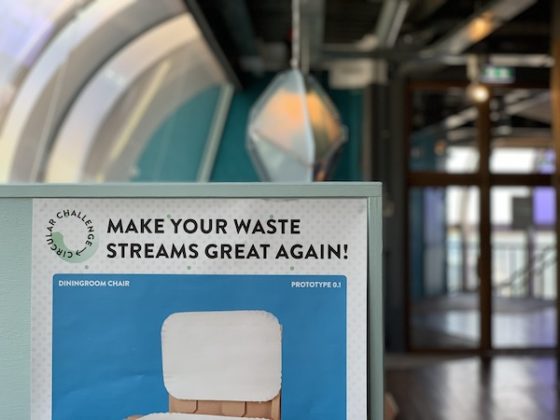
A poster promoting the Circular Challenge. Photo: Zuza Nazaruk
'You can make a bigger impact when you work with bigger clients,' says BlueCity's PR spokeswoman Manon Dijkhuizen. Changes implemented by big players, for example the city authorities or the port, are likely to have a substantial positive effect.
'Shopping window' for circularity
The outbreak of the COVID-19 pandemic presented an opportunity to expand the online public programming alongside the already planned expansion of a dry and a wet lab. BlueCity is currently looking for more entrepreneurs, specifically but not exclusively for the FoodHub where the newcomers could transform waste streams into delicious edibles.
The hub's companies also recognise the changed post-Covid-19 reality and aim to respond by turning increasingly digital. BlueCity is now working on building an under-the-dome recording studio that will allow them to stream their events worldwide and establish themselves as a knowledge-sharing platform.
'What we do here in BlueCity speaks to people's imagination', Dijkhuizen says. 'In some ways we are a shop window displaying what a circular economy could look like. Circularity is a complicated concept, but in BlueCity it becomes touchable and solid.'
The DutchNews.nl team would like to thank all the generous readers who have made a donation in recent weeks. Your financial support has helped us to expand our coverage of the coronavirus crisis into the evenings and weekends and make sure you are kept up to date with the latest developments.
DutchNews.nl has been free for 14 years, but without the financial backing of our readers, we would not be able to provide you with fair and accurate news and features about all things Dutch. Your contributions make this possible.
Not too big Cargo: not a lot of storage Conversion: a bit more storage Not a lot of floor surface & curved walls
Euro: Can be pretty large Especially the 170" wheelbase Lot's of floor surface, curved walls Box: more space than you know what to do with
Recreational: small, not a lot of storage Little floor surface & curved walls Industrial: large, plenty of storage A lot of floor surface Mostly straigt walls (boxy)
Price
Cheap
Expensive
Expensive
Technical state
Plenty of good vans available, thanks to commercial fleet use
Plenty of good vans available,thanks to commercial fleet use
You can find well-maintained ones
Maintenance
Cheap Mechanics not too complex Durable You can do your own maintenance All mechanics can work these
Expensive Very complex mechanics Are notorious for failing electrical systems Not everyone can do their own maintenance Lot's of electrics involved Only dealers can work these
Cheap Very simple Durable Easy to maintain yourself
Need a lot of work All mechanics can work these
Availability
Widely available
US: not widely available EU: widely available
Are less readily available
Parts
Parts are widely available Share a lot of parts with other vans Huge aftermarket for parts
Parts are widely available, though not in remote places Large aftermarket
Parts are mostly available
Mileage
Not the best
Very good
Terrible
Safety
Decent, if the van's not too old (> 1990)
Good
Terrible
Looks
Doesn't look very good
Euro: Looks great Box: Front looks as great, box van in forest looks odd
Best looks you can get
Narrow it down
Now we get into the elimination process. Yes, this is definitely my favorite part of any decision.
Pick your top two priorities, and find which vans suit them best based on the table above.
For example, my main priorities are size and low maintenance. The best picks for these two are
size: Classic Industrial van
low maintenance: US Cargo van
Now, some questions:
Old or new?
There are typically two large eliminating points in the decision of going classic or modern.
The level of comfort you need. If this is above average, all classic and old cars are no longer an option.
Your maintenance budget & method. If you want to do it yourself, definitely consider a classic car. If you don't want to do it yourself, but don't want to spend a lot, get a fairly simple car that isn't too old.
So now you know whether or not you will buy an old car, a new car, or an average car. Great. That narrows it down quite a lot.
4 Buying tips
I won't go into detail on the more basic buying tips, as there are many out there already doing a great job of summing up all the things you need to check (tires, suspension, damage, and so on). Instead, I will try to give you some new tips and a fresh perspective.
Engine health
The most expensive part of any car is the engine, which is why you want to make sure the engine is worthwhile. There
Basic buying tips
To give you a complete overview, these are the most important basic checks:
Check for leakages in the engine compartment. With older engines, some oil is acceptable.
Also check the oil cap. If there's a thick white substance in it, it's most likely an indication of a head gasket leak. You don't want that.
Check the fluids: your oil should be at the proper level. If it's black, it's old oil, which is an indication that the owner doesn't maintain the car very well. Also check the coolant fluid (with a cold engine). The coolant should be a bright red, yellow, blue or green.
Check how the car starts and runs, listen for a healthy engine sound. There shouldn't be any nocks, ticks, or clicks. Top tip: check the engine type on Youtube to listen to a healthy sound.
Check if the chassis is straight, and if the engine is at a straight angle to the frame. If not, the car might've been in an accident.
Check the state of the tires and suspension.
Buying based on trust
Nobody can check inside the engine, not even mechanics. So buying a van is based on trust to at least some extent. You have to look the seller in the eye and check if you trust him or her. If you have terrible people skills, bring someone who can read people.
Don't be naive about it, but also don't ignore it if someone is telling the truth (which most people are most of the time).
Don't fall in love with a van you haven't driven yet
If you haven't driven it, you don't know it. You have no clue what's going on. Don't become invested in any vehicle before properly inspecting and test driving it. Be stoic about it, is my best advice.
Easily check the engine compression
You'll want to know how good the engine compression is. A simple DIY trick you can do on the spot, is opening the oil fill cap, and starting the engine. The more the cap bounces around, the worse the compression.
/https://public-media.si-cdn.com/filer/94/79/94794119-796b-47da-989c-cde8cf921777/200807_eyecow_ben_yexley_3.jpg)