Saturday, February 06, 2016

Apollo 14 astronaut (and UFO seeker) Edgar Mitchell dies

Apollo 14 astronaut (and UFO seeker) Edgar Mitchell dies

Apollo 14 moonwalker (and UFO seeker) Edgar Mitchell dies at the age of 85

Edgar Mitchell
Apollo 14 astronaut Edgar Mitchell sits for his official portrait in 1970. Mitchell's crewmates on the mission in 1971 were Alan Shepard and Stuart Roosa. (Credit: NASA)

Apollo 14 astronaut Edgar Mitchell has died at the age of 85 after a months-long illness, according to reports that emerged on the 45th anniversary of his first moonwalk.

Members of Mitchell's family spread the word today in obituaries published by news outlets in Palm Beach, Fla., where the former astronaut lived. The Palm Beach Post quoted his daughter, Kimberly Mitchell, as saying he died at a local hospice at about 10 p.m. ET Thursday.

"As a member of the Apollo 14 crew, Edgar is one of only 12 men to walk on the moon, and he helped to change how we view our place in the universe," NASA Administrator Charles Bolden said in a statement.

Edgar Mitchell took part in the first lunar mission to follow 1970's nearly disastrous flight of Apollo 13, and became the sixth human to set foot on the moon.

Mitchell and Apollo 14 commander Alan Shepard landed on the lunar surface on Feb. 5, 1971, and conducted two moonwalks. "Our task was to start to do the science," he told me in a 2014 interview. "And we did that. We did it well. We brought back the first real samples from the moon."

The experience was life-changing for Mitchell. While he was on the moon, he felt an ecstatic sense of oneness with the universe. "What the heck is happening to me?" he recalled asking himself. After leaving NASA in 1972, he founded the Institute of Noetic Sciences and devoted himself to the study of consciousness.

Mitchell also delved into the issues surrounding extrasensory perception and UFO sightings, including the 1947 Roswell incident in New Mexico. Based on his discussions with witnesses and their associates, he came to believe there was "adequate proof that the Roswell incident was a real thing."

In 2011, Mitchell was caught up in a controversy over a 16mm camera that he kept for decades after its use on the moon. After initially making plans to sell the camera in an auction, he agreed to hand it over to the Smithsonian's National Air and Space Museum. Since then, a law was enacted to grant Mercury, Gemini and Apollo astronauts full ownership rights to the artifacts they saved as souvenirs.

Mitchell was born in Texas and received his Ph.D. in aeronautics and astronautics from MIT. He was a Navy pilot during the 1950s, and served in the Navy Field Office for Manned Orbital Laboratory in the early 1960s. In 1966, he was selected for astronaut training. Apollo 14 was his only spaceflight.

In addition to founding the Institute of Noetic Sciences, Mitchell was a co-founder of the Association of Space Explorers. He was the fifth of the 12 Apollo moonwalkers to pass away. The others are Apollo 11's Neil Armstrong, Apollo 12's Pete Conrad, Apollo 14's Alan Shepard and Apollo 15's James Irwin.

Mitchell was married and divorced three times. He is survived by five children, nine grandchildren and one great-grandchild, according to TCPalm.com. Funeral arrangements are pending.


~A den Tex

Looking for Love in All the Wrong Places: The Real Reason Relationships End in Heartache | Wake Up World

Looking for Love in All the Wrong Places: The Real Reason Relationships End in Heartache | Wake Up World

Looking for Love in All the Wrong Places: The Real Reason Relationships End in Heartache

Looking for Love in All the Wrong Places: The Real Reason Relationships End in Heartache

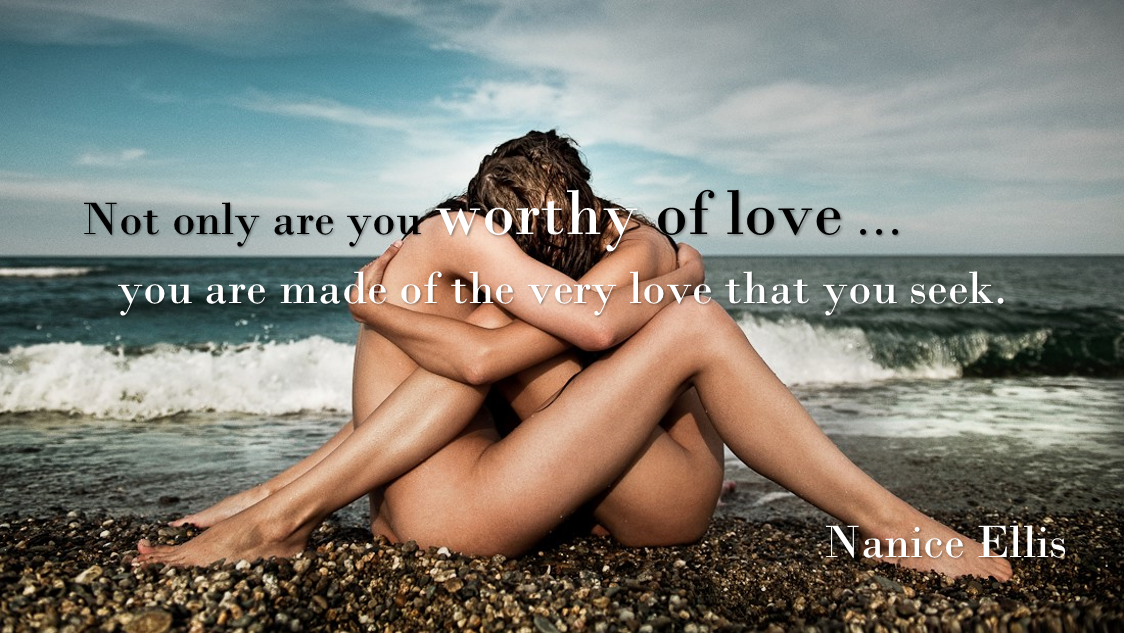
By Nanice Ellis

Contribution Writer for Wake Up World

Have you ever wondered why so many relationships end in heartache? Even relationships that begin with incredible love, faithful promises and the best of intentions often come to a bitter end. If love is all you need, why does it all go so wrong?

What if I told you, there is a single core issue responsible for almost every break up and break down, and, not just in our romantic relationships, but in all our relationships?

As a relationship coach for almost twenty years, I share this insight with you now so that you can gain the wisdom and power to find love in all the right places.

Humanity's Invisible Wound

Most of humanity is silently suffering from the invisible wound of unworthiness. Because we have amnesia of our true selves, and we have forgotten that we are unconditionally loved by an All Loving Source, we come into this world asking, "Am I worthy of love?" From our first breath, we seek this answer, not knowing that the life-long quality of our relationships, prosperity and health all depend on our immature interpretation of the signs.

In most cases, this pivotal answer is, "I am worthy if…." Until we awaken, Conditional Worthiness is the foundational belief for almost every human being on this planet, and the core belief that every other belief is based upon. If you believe that you are fundamentally unworthy of love unless you meet certain conditions, you will construct a reality built on this false premise, and, as a result, you will embark on this game of life, seeking love outside yourself, and building unsustainable relationships upon that search.

Most people spend their entire lives trying to prove that they are worthy of love, never considering that the quest for worthiness is impossible to fulfill, nor understanding, that this impossible quest covertly sabotages virtually every loving relationship.

The Core Wound

If you look deep, you will find that the core wound of all emotional wounds is the belief of unworthiness or conditional worthiness. This belief is so painful because it is completely untrue, but since our parents, teachers and peers all suffer from the same debilitating belief, it seems perfectly normal.

As a way to cope with the emotional wound of unworthiness, the well-meaning ego selects a "primary emotional need," that when met, temporarily fills this wound. The "primary emotional need" is specific to you and your life experiences, with the most common emotional needs including: appreciation, approval, acceptance, understanding and being heard, but there are many more, as well. This means that if your primary emotional need is acceptance, you must somehow get others to accept you, again and again, in order to feel worthy of love. Our personalities become molded according to this need and our unconscious strategies to get this need met, influencing our choice of careers, friends, clothes, interests and just about everything else.

Although we are usually unaware of this primary emotional need, there is a part of us who is constantly tracking for the fulfillment of this need, and, consequently, altering our behavior in order to get it met.

We might sacrifice our desires for approval, compromise our values for appreciation or hide behind a false self in exchange for being understood. Without knowing it, your primary emotional need runs your life, making you do things you don't really want to do, and keeping you from expressing your true self. It is an invisible prison of your own making, and, even if you can get others to meet this emotional need, it is never enough to fill this bottomless pit of unworthiness.

Romantic Chemistry — A Trick in Disguise?

In an unconscious attempt to heal this wound, many of us search for that one special person who can love us enough to make us whole, but we fail to take into account that the wise Universe has another plan.

A substantial component of what we call romantic chemistry is the unconscious pull towards someone who will not meet our primary emotional need, and, as a result, trigger our emotional issues. Of course, when we first get to know this person, and we feel attracted, we usually believe that he/she will provide us with what we need emotionally, even if we are not sure what that is – which is generally the case. So, we open our hearts and we let this person in, totally expecting the relationship to grow and flourish, but within days, weeks, months or years, we recognize that we feel hurt and unloved because our partner is not giving us what we need emotionally, and then we blame him/her for withholding love. Our love language is really a language of emotional needs. No matter how much your partner says, or does, the "right" things, if he/she doesn't meet your primary emotional need, you will likely feel unloved and unsatisfied.

This is the cause of dysfunction in virtually every problematic relationship. When our partner is not meeting our primary emotional need, we either sacrifice ourselves to do whatever it takes for our partner to love us in the way that we desire, be that through appreciation, approval or understanding, etc…, and if our partner still does not meet this emotional need, we defend ourselves with anger, resentment, resistance or we just shut down. We withhold love from our partner by denying him or her their primary emotional need in return. Of course, this is all orchestrated, by us, without our awareness. We just feel hurt and unloved, and, so, we try to protect ourselves.

Your Love Receptors

If you unconsciously believe that you are only worthy of love if your primary emotional need is met, your love receptors will only turn on when you perceive that this condition is satisfied, but, as soon as the condition is no longer satisfied, the receptors turn off. Your condition must also be met by a certain type of person, or a specific person. You might also have self- imposed conditions, for example, if you don't look a certain way, even if your partner is meeting your emotional need, you won't feel loved because your love receptors are turned off. This means that even a "bad hair day" can negatively impact a relationship.

The bottom line is, even if someone truly loves us, if our conditions are not met, we unconsciously block love. Conditions don't bring us love – conditions block love.

Looking for Love in All the Wrong Places - The Real Reason Relationships End in Heartache

On the surface, challenging relationships that our based on the "worthiness game" might seem like a waste of time, but, by no small means, this dynamic is by Divine Design. On a higher level, our true selves are playing the healing game. No matter the facts, details or history, the greater part of us is conspiring for our awakening. We don't attract people who will meet our emotional needs because if those needs were met by others, we would remain oblivious to the deeper wound, which is not feeling worthy of love, and that wound would go forever unhealed, keeping us out of alignment with our true spiritual nature. We need someone (important to us) who will withhold the very thing we believe we need most, so that the pain and suffering associated with not getting this need met, will alert us to this wound, in such a way, we cannot ignore.

Relationships are meant to trigger issues so that we know that they exist within us, and we have the opportunity to heal, and free ourselves.

Many years ago, I found myself in a long term relationship where I felt completely unappreciated. I bent over backwards and even sacrificed my own integrity in order to receive morsels of appreciation, but no matter what I did, I still felt unappreciated. I requested, I demanded, I whined – still, less than nothing. As I grew resentful that my partner withheld appreciation, I began to withhold understanding. The key nuggets of our frequent arguments were, "You don't appreciate me" versus "You don't understand me." As I felt unappreciated, I also felt unworthy of love, and as the pain grew with the passing of time, I arrived at the point where I was done seeking appreciation because it was just too painful.

The true purpose of emotional pain is to wake us up, and make us pay attention to the false belief(s) that is causing the pain in the first place.

Of course, you can ignore this pain through methods of distraction, addiction, rationalization, etc… but pain is designed to grow stronger the longer you ignore it, requiring greater and greater methods of avoidance. Depending on your ability to tolerate emotional pain, eventually, there will come a point, where the only way to be free of this pain is to uncover its true source and pull it up from the roots.

Finally, I stopped looking outside myself and I looked within. I began to see a hidden history revolving around my need for appreciation that began with my mother in childhood. I could see that my need for appreciation was a symptom of trying to prove that I was worthy of love. I could also see that there was an empty space inside me where my own self-love was missing. It became perfectly clear that in this unconscious game of trying to prove my worth, the cards were stacked against me.

Relationships cannot prove your worth. Relationships can only demonstrate whether or not you believe that you are worthy.

Until we are fully awake in our lives, the purpose of relationships, and especially intimate ones, is to alert us to our disempowering beliefs, so that we can heal and wake up. Other people, we call family, lovers and friends unknowingly act out our false beliefs and trigger our issues so that we have the opportunity to recognize and release these false beliefs and heal our wounds. Therefore, if I believe that my worth is conditional and I must prove that I am worthy, my partner can only reflect this belief by unconsciously offering behavior (withholding my primary emotional need) that activates my feelings of unworthiness.

If you don't love yourself, you will need others to behave certain ways so that you feel worthy of love, but others can only demonstrate your belief that you don't feel worthy of love.

In addition, because worth is intrinsic and unconditional, it cannot be proven or disproven. The mere act of trying to prove that you are worthy or getting others to treat you a certain way so that you feel worthy, comes from a belief that you are not worthy. If you know that you are unconditionally worthy of love, you don't need proof.

Continue to Page: 1 2


~A.

Wednesday, February 03, 2016

Professor Who Exposed Flint Crisis Says Greed Has Killed Public Science | Common Dreams | Breaking News & Views for the Progressive Community

Professor Who Exposed Flint Crisis Says Greed Has Killed Public Science | Common Dreams | Breaking News & Views for the Progressive Community

Professor Who Exposed Flint Crisis Says Greed Has Killed Public Science

"Academic research and scientists in this country are no longer deserving of the public trust," declared Marc Edwards, the Virginia Tech civil engineering professor who helped expose the Flint water crisis.

In an interview published in the Chronicle of Higher Education on Tuesday, Edwards explained how the pressures put on academics to secure funding are forcing scientists to abandon work done in the public interest and that similar financial motives are causing government science agencies to ignore inconvenient truths—like high levels of lead in public drinking water.

He said he's "very concerned about the culture of academia in this country and the perverse incentives that are given to young faculty." Edwards describes the culture as a "hedonistic treadmill," with "extraordinary" pressures to pursue funding, publication, and academic clout. Meanwhile, he said, "the idea of science as a public good is being lost."

Edwards, whose research also uncovered high levels of lead in the Washington, D.C. water supply in 2003, was tapped by Flint residents to help test their water after officials with both the U.S. Environmental Protection Agency (EPA) and the Michigan Department of Environmental Quality (MDEQ) ignored their concerns.

The cases of Flint and Washington, Edwards explained, illustrate how the failure of government scientists to acknowledge a problem, coupled with academia's refusal to question their judgement, can drive serious public health crises.

He said:

In Flint the agencies paid to protect these people weren't solving the problem. They were the problem. What faculty person out there is going to take on their state, the Michigan Department of Environmental Quality, and the U.S. Environmental Protection Agency? 

I don't blame anyone, because I know the culture of academia. You are your funding network as a professor. You can destroy that network that took you 25 years to build with one word. I've done it. When was the last time you heard anyone in academia publicly criticize a funding agency, no matter how outrageous their behavior? We just don't do these things.

If an environmental injustice is occurring, someone in a government agency is not doing their job. Everyone we wanted to partner said, Well, this sounds really cool, but we want to work with the government. We want to work with the city. And I'm like, You're living in a fantasy land, because these people are the problem.

Edwards said that practicing "heroism" within the scientific community can be a lonely pursuit and that he has "lost friends" simply by asking questions.

"I grew up worshiping at the altar of science, and in my wildest dreams I never thought scientists would behave this way," he said of the Centers for Disease Control's widespread misreporting of lead levels in Washington D.C.

"When I realized what they had done, as a scientist, I was just outraged and appalled," he continued. "The only way I can construct a worldview that accommodates this is to say, These people are unscientific. Science should be about pursuing the truth and helping people. If you're doing it for any other reason, you really ought to question your motives."

Edwards, who testified along with Flint residents before the House Oversight Committee on Wednesday, was recently appointed to a task force to help address the ongoing crisis. 

This work is licensed under a Creative Commons Attribution-Share Alike 3.0 License


~A.

Tuesday, February 02, 2016

Neuroscientist Shows What Fasting Does To Your Brain & Why Big Pharma Won’t Study It | Collective-Evolution

Neuroscientist Shows What Fasting Does To Your Brain & Why Big Pharma Won't Study It | Collective-Evolution

Neuroscientist Shows What Fasting Does To Your Brain & Why Big Pharma Won't Study It

Below is a TEDx talk given by Mark Mattson, the current Chief of the Laboratory of Neuroscience at the National Institute on Aging. He is also a professor of Neuroscience at The Johns Hopkins University, and one of the foremost researchers in the area of cellular and molecular mechanisms underlying multiple neurodegenerative disorders, like Parkinson's and Alzheimer's disease.

I chose to include 'Big Pharma' in the title because that's exactly what it is. There have been countless examples of the manipulation of published research at the hands of pharmaceutical companies in recent years. This is why Harvard Professor of Medicine Arnold Symour Relman told the world that the medical profession has been bought by the pharmaceutical industry. It's why Dr. Richard Horton, Editor in Chief of The Lancet, recently stated that much of the sceintific literature published today is simply untrue. It's why Dr. Marcia Angell, former Editor in Chief of The New England Journal of Medicine, said that the "pharmaceutical industry likes to depict itself as a research-based industry, as the source of innovative drugs. Nothing could be further from the truth." And it's why John Ioannidis, an epidemiologist at the Stanford University School of Medicine, published an article titled "Why Most Published Research Findings Are False" which subsequently became the most widely accessed article in the history of the Public Library of Science (PLoS).

I also chose to mention 'Big Pharma' because of Dr. Mattson's comments towards the end of the video.

"Why is it that the normal diet is three meals a day plus snacks? It isn't that it's the healthiest eating pattern, now that's my opinion but I think there is a lot of evidence to support that. There are a lot of pressures to have that eating pattern, there's a lot of money involved. The food industry — are they going to make money from skipping breakfast like I did today? No, they're going to lose money. If people fast, the food industry loses money. What about the pharmaceutical industries? What if people do some intermittent fasting, exercise periodically and are very healthy, is the pharmaceutical industry going to make any money on healthy people?" 

Main Points Of The Lecture Above & The Science To Go With It

Mark and his team have published several papers that discuss how fasting twice a week could significantly lower the risk of developing both Parkinson's and Alzheimer's disease.

"Dietary changes have long been known to have an effect on the brain. Children who suffer from epileptic seizures have fewer of them when placed on caloric restriction or fasts. It is believed that fasting helps kick-start protective measures that help counteract the overexcited signals that epileptic brains often exhibit. (Some children with epilepsy have also benefited from a specific high-fat, low-carbohydrate diet.) Normal brains, when overfed, can experience another kind of uncontrolled excitation, impairing the brain's function, Mattson and another researcher reported in January in the journal Nature Reviews Neuroscience."(source)

Basically, when you take a look at caloric restriction studies, many of them show a prolonged lifespan as well as an increased ability to fight chronic disease.

"Calorie restriction (CR) extends life span and retards age-related chronic diseases in a variety of species, including rats, mice, fish, flies, worms, and yeast. The mechanism or mechanisms through which this occurs are unclear."

The quote above is from a review of the literature that is more than 10 years old. The work presented here is now showing some of these mechanisms that were previously unclear.

Fasting does good things for the brain, and this is evident by all of the beneficial neurochemical changes that happen in the brain when we fast. It also improves cognitive function, increases neurotrophic factors, increases stress resistance, and reduces inflammation.

Fasting is a challenge to your brain, and your brain responds to that challenge by adapting stress response pathways which help your brain cope with stress and risk for disease. The same changes that occur in the brain during fasting mimic the changes that occur with regular exercise. They both increase the production of protein in the brain (neurotrophic factors), which in turn promotes the growth of neurons, the connection between neurons, and the strength of synapses.

"Challenges to your brain, whether it's intermittent fasting [or] vigorous exercise . . . is cognitive challenges. When this happens neuro-circuits are activated, levels of neurotrophic factors increase, that promotes the growth of neurons [and] the formation and strengthening of synapses. . . ." 

Fasting can also stimulate the production of new nerve cells from stem cells in the hippocampus. He also mentions ketones (an energy source for neurons), and how fasting stimulates the production of ketones and that it may also increase the number of mitochondria in neurons. Fasting also increases the number of mitochondria in nerve cells; this comes as a result of the neurons adapting to the stress of fasting (by producing more mitochondria).

By increasing the number of mitochondria in the neurons, the ability for nerons to form and maintain the connections between each other also increases, thereby improving learning and memory ability.

"Intermittent fasting enhances the ability of nerve cells to repair DNA." 

He also goes into the evolutionary aspect of this theory – how our ancestors adapted and were built for going long periods of time without food.

A study published in the June 5 issue of Cell Stem Cell by researchers from the University of Southern California showed that cycles of prolonged fasting protect against immune system damage and, moreover, induce immune system regeneration. They concluded that fasting shifts stem cells from a dormant state to a state of self-renewal. It triggers stem cell based regeneration of an organ or system. (source)

Human clinical trials were conducted using patients who were receiving chemotherapy. For long periods of time, patients did not eat, which significantly lowered their white blood cell counts. In mice, fasting cycles "flipped a regenerative switch, changing the signalling pathways for hematopoietic stem cells, which are responsible for the generation of blood and immune systems."

This means that fasting kills off old and damaged immune cells, and when the body rebounds it uses stem cells to create brand new, completely healthy cells.

"We could not predict that prolonged fasting would have such a remarkable effect in promoting stem cell-based regeneration of the heatopoietic system. . . . When you starve, the system tries to save energy, and one of the things it can do to save energy is to recycle a lot of the immune cells that are not needed, especially those that may be damaged.  What we started noticing in both our human work and animal work is that the white blood cell count goes down with prolonged fasting. Then when you re-feed, the blood cells come back. " – Valter Longo, corresponding author (source)

A scientific review of multiple scientific studies regarding fasting was published in The American Journal of Clinical Nutrition in 2007. It examined a multitude of both human and animal studies and determined that fasting is an effective way to reduce the risk of cardiovascular disease and cancer. It also showed significant potential in treating diabetes. (source)

Before You Fast

Before you fast, make sure you do your research. Personally, I've been fasting for years, so it is something that comes easy for me.

One recommended way of doing it — which was tested by the BBC's Michael Mosley in order to reverse his diabetes, high cholesterol, and other problems that were associated with his obesity — is what is known as the "5:2 Diet." On the 5:2 plan, you cut your food down to one-fourth of your normal daily calories on fasting days (about 600 calories for men and about 500 for women), while consuming plenty of water and tea. On the other five days of the week, you can eat normally.

image

Another way to do it, as mentioned above, is to restrict your food intake between the hours of 11am and 7pm daily, while not eating during the hours outside of that time.

Bottom line, how you think about you're diet is, in my opinion, one of the most, if not the most important part of staying healthy. How you think about what you are putting in your body is important, and I believe this will eventually be firmly established in the untainted, unbiased, uninfluenced medical literature of the future.

Not Below is a video of Dr. Joseph Mercola explaining the benefits of intermittent fasting. Here is a great article by him that explains how he believes intermittent fasting can help you live a healthier life.


~A.

Monday, February 01, 2016

Sunday, January 31, 2016

Edward Tufte: Courses

Edward Tufte: Courses
A course I have always wanted to take, tell me if you know anything about it!
http://www.edwardtufte.com/tufte/courses


Edward Tufte: Courses

A new, widely-adopted method for presentations:
meetings are smarter, more effective, 20% shorter.
Fundamental design strategies for all information
displays: sentences, tables, diagrams, maps, charts,
images, video, data visualizations, and randomized
displays for making graphical statistical inferences.
New ideas on spectatorship, consuming reports.
How to assess the credibility of a presentation
and its presenter, how to detect cherry-picking,
how to reason about alternative explanations.
Standards of comparison for workaday and for cutting
edge visualizations. How to identify excellent
information architectures and use them as models and
comparison sets for your own work and for the work
of your contractors. Monitoring the designs of others.
The future of information displays: 4K, 6K, 8K video
maps moving in time.
Practical examples are from everywhere: science, social
science, music, business, finance, sports, art, medicine,
architecture, NASA, government reports.
The entire course is taught by Edward Tufte.
The fee for the one-day course is $420 per person. This fee includes all four books, Visual Explanations, Envisioning Information, The Visual Display of Quantitative Information, and Beautiful Evidence. Groups of 10 or more, registering simultaneously, receive a 20% discount.
For full-time teaching faculty, students, postdocs, the fee is $220. To register, follow the instructions online and document your status with the following information:
(1) Image of your current student, faculty, postdoc ID
AND
(2) A direct phone number of a registrar or department office that can verify your status, or a direct link to an institutional website that shows your position.
There are no other discounts.
Graphics Press federal tax ID number: 06-1637582
Hours for the course
The one-day course meets from 10.00 am to 4.00 pm.
Registration begins at 8:45 am. Lunch is on your own.
Dress is informal.
Call 800 822-2454 or 203 250-7007 between 9.00 am
and 5.00 pm EST.


~A den Tex