Friday, August 14, 2020

Mind your Ps: Amsterdam installs plant pot street urinals to improve toilet manners - DutchNews.nl


Mind your Ps: Amsterdam installs plant pot street urinals to improve toilet manners

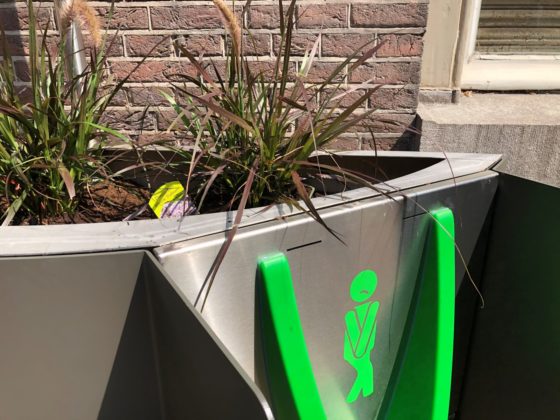
A GreenPee with a Pennisetum plant   Photo: S. Boztas

It erodes historic walls, creates a stench and may even lead to the deaths of several young men a year, who try to use a canal late at night. So now Amsterdam is trying to make 'wildplassen' – urinating outdoors ­­­­­– better for humans and for the environment by investing in a set of GreenPee urinals.

From Friday evening, late night drinkers in the red light district, Leidseplein and Rembrandtplein will be able to use 12 new facilities which are plant pots during the day and urinals at night. The urine will be harvested for its phosphates and recycled as clean water, while the hardy plants are fed only by rainwater thanks to a reservoir and a series of wicks inside the soil.

'My ambition is to place these in different cities and carry on innovating,' Richard de Vries, inventor of the GreenPee, told DutchNews.nl. 'We can make electricity with urine and it would be good if it could power a light. Maybe it could be a city announcement board for public health messages too.'

Positive behaviour

De Vries describes himself as an environmental psychologist who tries to 'stimulate positive behaviour in the public domain' and combat nuisance such as littering, noise and public urination.

'If you want a solution to wild peeing, cities try to create ownership and a feeling that someone is watching you,' he said. 'That works, but the need for peeing stays. We came up with the idea of a planter to help green the city, have something that looks nicer, but is also a urinal. It's also circular as we make fertiliser from the urine and also green water.'

Four models were temporarily placed in and around the Rembrandtsplein last year, and an independent study suggested that in one street, the Schapensteeg, public urination decreased by 49%.

'A study showed that GreenPees don't create smell problems, and we will monitor whether that continues to be the case,' said Amsterdam city in a press release. 'The new GreenPees have also been further developed…and improved in terms of sustainability, user privacy, recognition and discoverability.'

A GreenPee, with Richard de Vries  Photo S. Boztas

Nuisance

Single units cost €4,000 and doubles €5,000 and there are ongoing maintenance costs for collecting the urine, cleaning it and delivering fertiliser for local green products. The city, which according to a spokeswoman is funding the new urinals under a package of measures to reduce nuisance associated with city centre nightlife, will monitor the effects of the GreenPees and investigate whether the facility could be extended to women.

The initiative is an extension of previous Dutch trials to farm fertiliser from toilet visits. Arts centre Mediamatic has cleaned and used urine from five urinals as part of the 'pure gold' display, while urine was also temporarily collected on King's Day by the Dutch water board in 2016. The GreenPee is thought to be the first attempt to make this recycling a permanent fixture of city life.

Saïd Arabi, who runs Euro Super Clean facilities company and helped install the devices this week, is a great advocate. 'It's a good solution to wild peeing,' he said. 'The city of Arnhem is also interested. It's a plant pot and the urinal is only open in the evening when it's dark. It's perfect.'

Permanent

Ivo Thonon, spokesman for the Dutch 'toilet alliance' which campaigns for more public facilities, was also enthusiastic. 'There's a serious problem in Amsterdam with wild peeing and this is a good solution so men don't do it in a corner but in a plant pot, which is better,' he said. 'We are also happy they are putting temporary toilets in parks for the summer, but this all should become permanent.'

But one resident of the Lange Leidesedwarsstraat, who did not want to give her name, was less keen. As DutchNews.nl watched the GreenPee team water their first Pennisetum advena 'Rubrum' plant, she said she would be making a formal complaint.

'We don't want piss on our street – full stop!' she said.

Thank you for donating to DutchNews.nl

The DutchNews.nl team would like to thank all the generous readers who have made a donation in recent weeks. Your financial support has helped us to expand our coverage of the coronavirus crisis into the evenings and weekends and make sure you are kept up to date with the latest developments.

DutchNews.nl has been free for 14 years, but without the financial backing of our readers, we would not be able to provide you with fair and accurate news and features about all things Dutch. Your contributions make this possible.

If you have not yet made a donation, but would like to,
you can do so via Ideal, credit card or Paypal. 

Message From Mystic Family's Little Herd: 'We Goat This' | Stonington, CT Patch

I love this

Message From Mystic Family's Little Herd: 'We Goat This'

It's hard to pass by Stacy Zujus' herd of six Miniature Nubian goats and not stop and smile. Now, stop and get soap from "goats you know."

Kids just want to have fun.
Kids just want to have fun. (Photo courtesy of Stacy Zujus)

MYSTIC, CT — Stacy Zujus has a thing for long, floppy ears. On her Miniature Nubian goats, that is.

In 2016, the Mystic mom of two adult sons, whose day job is dispatcher for SEAT buses, was gifted on her birthday with Flying Jenny by her husband Greg. Though she'd owned goats before, back then, she was a newbie with a lot to learn.

This time around, Stacy has this down.

"We had Tennessee Fainting Goats back in 2005, and they were a lot of fun, but we were new then and didn't know how to take care of goats," she said. "And there were not many goat vets around here, surprisingly."

She now has a "dedicated" veterinarian she loves, BC Large Animal Clinic's Dr. Alice Ennis, "is wonderful."

Bramble Barn Farm

At the Zujus home on North Stonignton Road, a small red barn is set back from the roadway, with a herd of Miniature Nubian goats, roaming, and frolicking contentedly. On a recent drive by, a reporter slowed down, and so did another car, to get a glimpse of the four-legged residents at Bramble Barn Farm.

"This time around we chose a dairy goat breed but didn't want a large animal, so we settled on the Miniature Nubian, we have 6 total now 1 buck and 5 does," Stacy said. "I love the long floppy ears."
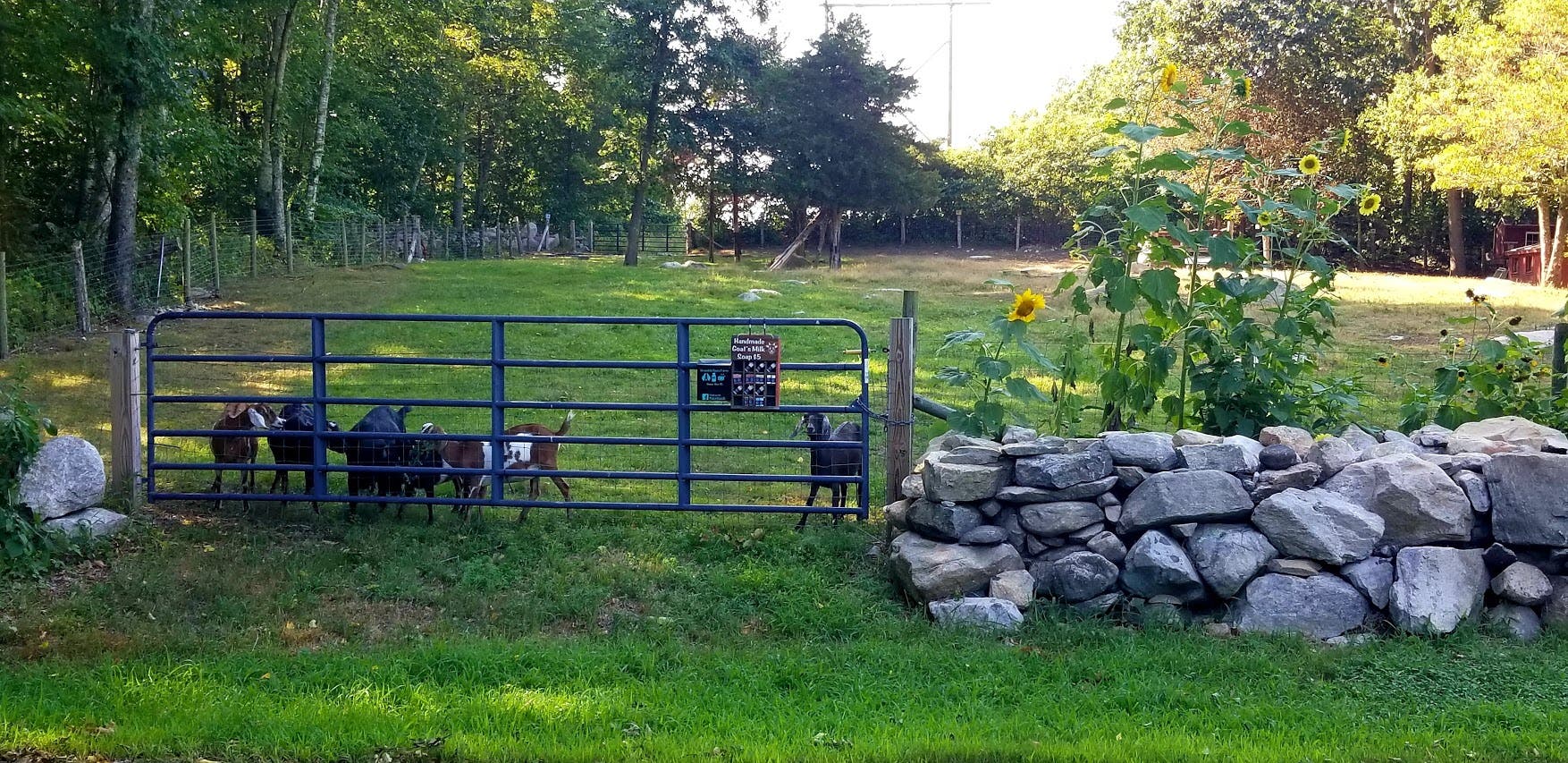
Photo courtesy of Stacy Zujus

Stacy said the goats are a "fairly new breed and all are registered with the Miniature Dairy Goat Association."

The Zujus' have travelled to North Carolina, Pennsylvania, and Virginia to but their most of their herd, "and even kept a couple that have been born at Bramble Barn."

"I don't know why but I've always had an affinity for goats," she said. "Over the years we have had sheep, pigs, chickens, turkeys, bees and even peacocks."

But it's more than just fun and games with Stacy's goats, they're so productive!

"After they have kids, and the kids are eating on their own, we milk the does and I use the milk to make soap," Stacy said, and her husband has made cheese, and, "This year he tried yogurt. Goat's milk has a much creamier taste than cow's milk."

When asked about what her goats munch on in the farm-yard, she said, "Goats will eat a lot of things, but not necessarily what is good for them, some landscaping plants can be toxic for them. Our goats have their own pasture they can graze, and they get food and hay every night."

Stacy said folks often stop to visit her Bramble Barn Farm goats.

"My goats are super friendly, but some like attention more than others," she explained, and bonded to her. "Jack is always at my side when I'm in the pen."

Stacy said that she and her husband mostly tend to the herd: "I have one son that is allergic to the goats and the other son is allergic to hay so...that leaves them out."

Photo courtesy of Stacy Zujus

One morning, in the early days of the pandemic, her son Nick Zujus serenaded the herd.

Soap from goats you know
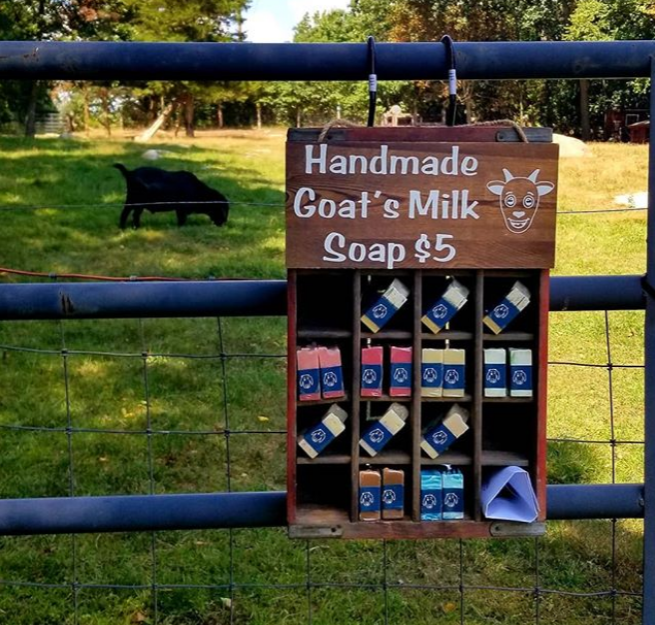
Photo courtesy of Stacy Zujus

"I would call us a hobby farm since we don't depend on it for income. I did just start selling soap from the house, I've made beer soap and sold that at Beer'd Brewing for three years now," she said.

Bramble Barn Farm handmade goats-milk soap is for sale outside the little farm. On the honor system.

"We have people that stop daily to see the goats," she said, "So I figured that maybe people would like to use a soap from the goats they know."

Hanging out with all her 'kids 'during a pandemic

Stacy works a tough gig helping to make sure SEAT buses run smoothly all over New London County. And though the pandemic, she took inspiration from her herd of kids.




Thursday, August 13, 2020

Heal Your Inner Child for Emotional Freedom with Ayurvedic Neuroplasticity Techniques | John Douillard's LifeSpa | Ayurveda + Natural Health

A lot happened in those first 5 years...

Heal Your Inner Child for Emotional Freedom with Ayurvedic Neuroplasticity Techniques

In This Article:

The Inner Child
Rites of Passage
Old Emotions Stored + Recorded
Nasya, Herbs + Pranayama for Emotional Transformation
Steps to Becoming Conscious
Using Biophotons + Intention to Heal

The Inner Child 

Do you ever feel like your brain has been hijacked by a child? Studies suggest 95% of the things we say and do as adults comes from impressions we felt during the first five years of life.1   

Based on these data, we live most of our lives in a somewhat unconscious state 95% of the time. Thousands of years ago, Ayurveda recognized this and designed an entire system of medicine to help us become conscious.1 

lifespa image, food combining, fruit, small child eating red apple, chew slowly

Sadly, as unconscious beings, we carry protective emotions, created predominately in childhood, into our adult lives, which encourage us to make the same mistakes or react to the same stresses in the same ways over and over again. 

Rites of Passage 

In our formative years, we are all hard-wired to need, and sometimes demand, the approval and attention of our parents. This is a natural survival instinct alive and well in every child. If a child does not care or need their parent's attention, they could easily wander off into unsafe situations that could put their survival at risk. 

As children, we are completely dependent on our parents for survival. A parent keeping one eye on their child at all times ensures the safety of that child. Over time, the child naturally becomes attached to their mom and dad's watchful eyes, love, and attention. 

Leopard beast image

In the animal kingdom, this happens in much the same way. A baby leopard cub will depend on its mother for all its needs, but one day (at around 12-18 months of age), when mom feels the young leopard is able to survive on its own, mom will separate from the young leopard with no plans to meet again. Like a rite of passage, the young leopard, now on its own, cannot rely on someone else to survive and therefore naturally lets go of the need for external approval. 

It is forced to become, in a sense, "conscious," by breaking the unconscious need to be loved, approved of, and watched over. 

Traditional cultures around the world imposed grueling and sometimes even life-threatening rites of passage to transition children into adults, but most of these traditions are now long-gone. We are allowed to stay children, to stay unconscious, for far too long. Instead of being forced to shed our need for approval in our adolescent years, we replace parental approval and attention with other means of external validation and satisfaction. 

lifespa-image-cell-phone-dangers-brain-cancer-girl-holding-smartphone

From ice cream cones and candy to new bicycles, video games, and cell phones, children seek satisfaction and fulfillment in the form of sensory stimulation. As we grow up further, we find fulfillment and contentment in the safety and approval of a boyfriend or girlfriend. The brain quickly replaces parental approval with material gains and sensory stimulation, such as a new job, more money, a new car, a bigger house, and recognition from a boss or spouse. 

These factors drive us to continue to seek approval and the feeling of reward that comes with it. 

Old Emotions Stored + Recorded 

Ayurveda describes how emotional impressions are recorded in our brains as a way of protecting us and the species from possibly life-threatening traumas. Emotional traumas are felt by the sadhaka pitta aspect of the heart, then carried to the brain via the prana vata, and are finally recorded in the brain's white-matter myelin sheaths, called tarpaka kapha.2 

brain size tree in human heads silhouette image

Tarpaka means to record. Tarpaka kapha records by allowing prana vata to etch emotional impressions onto the waxy myelin sheaths of the nerves deep within our brains. One of the main goals of Ayurveda is to erase old impressions and rewrite new impressions in the brain's white matter, thereby freeing ourselves from old traumas. 

To accomplish this, the brain's detox pathways must be optimal, as they too are governed by tarpaka kapha. These pathways are the ventricles of the brain, where cerebral spinal fluid acts as brain-washing fluid. Studies suggest that some three pounds of toxic chemicals and plaque are detoxified from the brain each year during sleep through the brain's lymphatic system, which Ayurveda calls tarpaka

Nasya, Herbs + Pranayama for Emotional Transformation 

Ayurveda discovered the brain's lymphatic system thousands of years ago and also designed therapies to flush brain lymph. When Western science recently discovered the brain's glymphatic system, they also found that 40% of brain toxins dump into the paranasal lymphatics from the glymphatic system.3  

nasya oil

To cleanse the brain lymphatic system or tarpaka, Ayurveda employs a technique called nasya, an elaborate procedure involving a deep head massage and nasal inhalation of detoxifying herbs and oils, such as eucalyptus. I administered this technique in my panchakarma practice for 26 years and found it to be the most transformational technique for my patients on their journey to becoming conscious. 

lymph cleanse

The long-term success of cleansing the brain's glymphatic system is supported with Ayurvedic herbs, such as manjisthabrahmi, Lymph Vein HP, and LifeSpa's Lymph Cleanse. Nasal breathing exercise and yoga are also important therapies to increase cerebral spinal fluid flow and effective detoxification of the brain's lymph. 

Pranayama breathing techniques are well-documented to support healthy brain lymph and cerebral spinal fluid circulation, but perhaps they are most effective in erasing old unwanted impressions scribbled into the tarpaka kapha, or white matter, of the brain. 

Steps to Becoming Conscious  

  1. First, support healthy detoxification of the brain's glymphatic system, aka tarpaka kapha. This can be done with nasya, herbs, and pranayama. 
  2. Once the brain's lymph is moving, vibrational techniques, such as pranayama, humming, chanting, and meditation4, along with breath-retention pranayama techniques5 are used to erase impressions written into the white matter. Like words written in sand can be erased by vibrating the sand, it turns out these Vedic vibrational therapies have been used for thousands of years to erase old impressions and become conscious. 
  3. Finally, using these same therapies with intention, a higher vibrational frequency can be established, allowing the brain to access very slow delta and gamma waves, considered brainwaves for enhanced neuroplasticity and the perception of expanded consciousness.13 

Using Biophotons + Intention to Heal 

Recently, researchers discovered subtle energy particles, called biophotons or bioelectrons, which are the body's subtle energy information carriers. Many researchers believe biophotons make up the body's energy system and are the mechanism for energetic healing and prayer.6 Biophotons, or ultraweak photon emissions (UPEs), are light particles emitted from most living systems. 

Studies find biophotons can be altered with intention, which may explain distance healing, prayer, laying on of hands, and many other modalities once considered "faith healings" lying outside the realms of science. 

According to what is called Bókkon's hypothesis, intention can produce biophysical images in the brain associated with increased emission of ultraweak biophotons.7 

albert einstein

According to the theory, biophotons emitted from the body with intention can interact with other biophotons at great distances related or entangled with that intention.8 This is related to Einstein's theory of "spooky action at a distance," in which entangled photons change instantaneously over very large distances. 

Human skin has been found to be a UPE-trapping system, suggesting humans both emit and receive biophotons, which we now know can be changed or altered by intention and carried over long distances. These UPEs can have therapeutic effects when intention is applied, as seen in studies on yoga and meditation.9-12 

There is much to learn about the power of intention, moving prana, and biophotons, as they all seem to function at the junction where frequencies and quantum particles meet. With intention, I believe Ayurveda's vibrational therapies can erase emotional patterns from the storage centers of the brain and rewrite new impressions without the weight of a lifetime of emotional baggage. 

Want to dive deeper into this knowledge? Don't miss Dr. John discussing these topics in-depth in The Plant Medicine Summit with herbalist David Crow. 

plant medicine summit

Dr. John Douillard, DC, CAP is the author of seven health books (including bestselling Eat Wheat and The 3-Season Diet), seven online courses (including new Yoga Journal course Ayurveda 201 on Ayurvedic Psychology), and numerous free eBooks. He is a former NBA nutritionist and creator of LifeSpa.com—with thousands of free articles, resources, and videos. LifeSpa is a leading wellness resource, with nine million+ YouTube views and over 130k newsletter subscribers.

Wednesday, August 12, 2020

Scientists Think They Found the Coronavirus’ Weak Spot

Scientists Think They Found the Coronavirus' Weak Spot

Scientists Think They Found the Coronavirus' Weak Spot

Critical hit!

Scientists think they've identified a weak point in SARS-CoV-2, the coronavirus that causes COVID-19. And just like shooting torpedoes down the Death Star's exhaust shaft, they think they can exploit this critical weakness to make new treatments.

It all comes down to a tiny region right next to the virus's spike proteins, which latch onto new host cells, according to research published last week in the journal ACS Nano. Explaining the weakness requires a little bit of a primer on biochemistry, so bear with us, but the Northwestern University scientists suggest targeting this weak point could render the virus inert.

Here goes: It can be difficult to conceptualize, but the microscopic interactions among molecules, proteins, and cells interact really boil down to electrostatics. Opposite charges attract and like charges repel each other, just like on a magnet. Well, this tiny region on the coronavirus, located just 10 nanometers from the part of the spike protein that gloms onto a victim's cells, has a positive charge.

Because the receptors on our cells that the virus targets have a negative charge, the two are pulled together by this electrostatic force and create a tight bond that ultimately allows the virus to infect the cell. This weak-spot region had been hiding in plain sight: 10 nanometers is impossibly small to humans but a fairly large clearing when it comes to electrostatic interactions, so other researchers may have assumed it was just too far away to matter.

The scientists behind the discovery tested their work by blocking the region with a negatively-charged molecule, which then prevents the coronavirus from being able to target a host cell. But unfortunately, turning that molecule into an actual treatment will be time-consuming and tricky work.


~A.

Tuesday, August 11, 2020

Vit D, Magnesium and B12 Significantly Improve COVID Outcomes

Vit D, Magnesium and B12 Significantly Improve COVID Outcomes

Vit D, Magnesium and B12 Significantly Improve COVID Outcomes

You know I have been passionate about how useful optimal levels of vitamin D can be in lowering your COVID-19 risk. For the last few months I have been working on a campaign that I really need your help on. The new site is StopCOVIDCold and you can reach it by clicking the button below.

New Campaign to Spread the Word About Vitamin D

stopcovidcold

Once you are on the site, there is a quiz you can take that will help you determine your risk for getting COVID-19 by answering a few questions that will only take you a few minutes. There is also an opportunity to upload a Facebook frame to your Facebook profile picture to help spread the word.

The media has failed miserably in educating the public on how to improve their immune system and has instead relied on the false hope of drugs, vaccines, social distancing and masks, all of which do nothing to improve your immune system.

We need your help in sharing this information with the elderly, and Blacks, who are most at risk of vitamin D deficiency.

The goal is to get this information out to tens, if not hundreds of millions of people. I simply can't do it without your help. We plan on launching this information to 50-100 sites and I am giving readers of this site the first opportunity to participate in this process. I would deeply appreciate it if you could provide your feedback in the comment section below.

Vitamin D Deficiency Linked to More Severe COVID-19

Vitamin D, in particular, has emerged as an essential nutrient in the fight against COVID-19. In a letter to the editor published by Clinical Endocrinology, Dr. Grigorios Panagiotou, a clinical fellow in endocrinology and diabetes at the U.K.'s Newcastle upon Tyne Hospitals, found that COVID-19 patients admitted to intensive treatment units (ITUs) were more likely to be vitamin D deficient than those who were managed in medical wards.

Specifically, "only 19% of the ITU COVID-19 patients had 25(OH)D (vitamin D) levels greater than 50 nmol/L (20 ng/mL) versus 39.1% of non-ITU patients."1

"Vitamin D receptors are highly expressed in B- and T-lymphocytes, suggesting a role in modulating innate and adaptive immune responses," Panagiotou said in a news release. "[Vitamin D] levels reach their nadir at the end of winter, and low levels are associated with increased risk of acute respiratory tract infections during winter [and are] mitigated by vitamin D supplementation."2

While this study did not find an association between vitamin D and COVID-19 fatality, it could be due to the small sample size and quick diagnosis and treatment of vitamin D deficiency.3 In fact, other research has linked vitamin D to increased death rates.

Researchers in Indonesia, who looked at data from 780 COVID-19 patients, found those with a vitamin D level between 21 ng/mL (52.5 nmol/L) and 29 ng/mL (72.5 nmol/L) had a 12.55 times higher risk of death than those with a level above 30 ng/mL.4 Having a level below 20 ng/mL was associated with a 19.12 times higher risk of death.

Even the French National Academy of Medicine released a press release in May 2020 detailing the importance of vitamin D for COVID-19.5 For COVID-19 patients over 60, they recommend vitamin D testing and if deficiency is found, a bolus dose of 50,000 to 100,000 IU. For anyone under the age of 60 who receives a positive COVID-19 test, they advise taking 800 IUs to 1,000 IUs of vitamin D per day.

A vitamin D review paper published in the journal Nutrients in April 2020 recommends higher amounts, stating:6

"To reduce the risk of infection, it is recommended that people at risk of influenza and/or COVID-19 consider taking 10,000 IU/d of vitamin D3 for a few weeks to rapidly raise 25(OH)D concentrations, followed by 5000 IU/d.

The goal should be to raise 25(OH)D concentrations above 40–60 ng/mL (100–150 nmol/L). For treatment of people who become infected with COVID-19, higher vitamin D3 doses might be useful."

The best way to know how much vitamin D you need is to have your levels tested. Data from GrassrootsHealth's D*Action studies suggest the optimal level for health and disease prevention is between 60 ng/mL and 80 ng/mL, while the cutoff for sufficiency appears to be around 40 ng/mL. In Europe, the measurements you're looking for are 150 to 200 nmol/L and 100 nmol/L respectively.

I recently published a comprehensive vitamin D report in which I detail vitamin D's mechanisms of action and how to ensure optimal levels. I recommend downloading and sharing that report with everyone you know, as the time to optimize your vitamin D level is now — before the fall and winter.

Click here to read more

Additional Nutrient Strategies to Combat COVID-19

As with many viral infections, COVID-19 appears to have a nutritional component, by which you may lower your risk of severe outcomes by using vitamins and minerals therapeutically. Considering that current COVID-19 treatments are few and far between, and even "standard" therapies like mechanical ventilation appear to be backfiring,7 the use of natural solutions has caught the eye of numerous researchers.

Among them are researchers with the Singapore General Hospital and Duke-NUS Medical School, who set out to determine if a combination of vitamin D, magnesium and vitamin B12 would improve outcomes among COVID-19 patients aged 50 and older. Their basis was to attack the inflammatory component of the infection, noting:8

"A broad theme of immune hyper-inflammation has emerged as a key determinant of patient outcome with uncontrolled immune response postulated as a pathophysiologic factor in disease severity. Intuitively, immunomodulation becomes an attractive potential treatment strategy."

Vitamin D, Magnesium, B12 Combo Improves COVID Outcomes

The cohort study involved 43 COVID-19 patents who were admitted to the Singapore General Hospital between January 15, 2020, and April 15, 2020. Seventeen of the patients received oral vitamin D3 (1,000 IU), magnesium (150 milligrams (mg)) and vitamin B12 (500 mcg) — together known as DMB — upon admission for a median of five days while 26 patients who did not receive DMB served as the control group.9

Significant benefits were seen among the DMB group, with only 17.6% requiring initiation of oxygen therapy during their hospitalization, compared to 61.5% of those in the control group. The requirement for oxygen is associated with an increased risk of needing intensive care, and the DMB group also benefited in this area.

Among those in the DMB group who required supplemental oxygen (three out of the 17 patients), two required ICU admission while one did not. Among the control group, all of those who needed supplemental oxygen required further ICU support. Nine of the DMB patients were given the combination within the first week of the onset of symptoms, and only one among them required oxygen therapy.

Overall, only three of the DMB patients deteriorated, two of whom deteriorated within 24 hours and may not have had enough time for the combo to work. The third case was started on DMB after seven days from onset of symptoms, and the researchers believe starting earlier in the course of the infection may be important.10

Further, DMB was protective even after accounting for other risk factors, including age and high blood pressure:11

"On univariate analysis, increasing age and hypertension demonstrated significantly higher odds ratio for oxygen therapy, while exposure to DMB therapy was associated with a significantly improved odds ratio. Multivariate analysis showed that DMB remained a significant protective factor against clinical deterioration after adjusting for age or hypertension separately."

Combo Targets the Inflammatory Response

The researchers noted that many current therapeutics are focused on viral elimination instead of modulating the hyper-inflammation often seen in the disease. In fact, uncontrolled immune response has been suggested as a factor in disease severing, making immunomodulation "an attractive potential treatment strategy."12 

For example, cytokines are a group of proteins that your body uses to control inflammation. If you have an infection, your body will release cytokines to help combat inflammation, but sometimes it releases more than it should.

If the cytokine release spirals out of control, the resulting "cytokine storm" becomes dangerous and is closely tied to sepsis, which may be an important contributor to the death of COVID-19 patients.13

"COVID-19 is therefore a multi-organ phenomenon and it is becoming evident that appropriate systemic inflammatory control is necessary for overall survival benefit," the researchers explained, writing how vitamin D, magnesium and vitamin B12 present a unique three-pronged approach for tackling COVID-19:14 

"Vitamin D, through its effect on NFkB and other pathways, can attenuate various proinflammatory cytokine mediating the uncontrolled cytokine storm seen in severe COVID-19 with deficiency associated with severe COVID-19.

Magnesium is critical in the synthesis and activation of vitamin D, acting as a cofactor in many of the enzymes involved in vitamin D metabolism. Vitamin B12 is essential in supporting a healthy gut microbiome which has an important role in the development and function of both innate and adaptive immune systems.

This could be pivotal in preventing excessive immune reaction especially in COVID-19 patients with microbiota dysbiosis which were associated with severe disease."

No side effects or adverse events occurred after DMB administration, which also provides an inexpensive, readily available solution that could be easily administered in doctor's offices at the first onset of symptoms or even taken prophylactically among high-risk populations during outbreaks. There may even be benefit against other viral infections:15

"As all agents in this combination are readily available, safe and inexpensive, DMB can benefit a large swath of the world population especially in economically-challenged countries with limited or late access to vaccines and other therapies. DMB may also exhibit a generic efficacy against other viral infections with similar pathological mechanism."

Magnesium Works in Concert With Vitamin D

Magnesium, which is required for the conversion of vitamin D into its active form, is important to ensure you're properly utilizing the vitamin D you're taking.

Research by GrassrootsHealth, based on data from nearly 3,000 individuals, reveals you need 244% more oral vitamin D if you're not also taking magnesium and vitamin K2, which also works synergistically with vitamin D and helps prevent complications associated with excessive calcification in your arteries.16

What this means in practical terms is that if you take all three supplements in combination, you need far less oral vitamin D in order to achieve a healthy vitamin D level. This is also part of the success of the featured study's DMB combination, which combines vitamin D with magnesium.

Importantly, a study published in October 2019 in the online issue of Diabetes Research and Clinical Practice also linked to low magnesium levels with both diabetes and high blood pressure, both of which are risk factors for severe COVID-19 outcomes.17

Dark green leafy vegetables are a good source of magnesium, and juicing your greens is an excellent way to boost your intake, although supplementation may also be necessary for some people.

If your magnesium intake from food is lacking, it would certainly be wise to supplement, either orally or topically. For oral supplementation, my personal preference is magnesium threonate, as it appears to be the most efficient at penetrating cell membranes, including your mitochondria and blood-brain barrier.

As a general rule, I recommend starting out on a dose of 200 mg of oral magnesium citrate per day, gradually increasing your dose until you develop slightly loose stools. To use this method, you need to use magnesium citrate, as it's known for having a laxative effect. Once you know your cutoff, you can switch to other forms if you like. These include:

  • Magnesium glycinate, a powder with low solubility. Glycine is an important amino acid and precursor for glutathione.
  • Ionic magnesium found in molecular hydrogen tablets. Each water-soluble tablet has about 80 mg of highly bioavailable unbound magnesium ions, which is about 20% of the recommended daily allowance.
  • Magnesium threonate is another excellent choice as it seems it can efficiently penetrate the blood-brain barrier.
  • Magnesium malate, which dissolves very well in water. Malate is an intermediary in the Krebs cycle, so it likely contributes to ATP production.
  • Magnesium bisglycinate, which has high bioavailability.

As for vitamin B12, the third component of DMB, increasing B12-rich foods, such as grass fed beef liver, wild rainbow trout and wild sockeye salmon, in your diet can help, but for more serious deficiency you may need weekly shots of vitamin B12 or daily high-dose B12 supplements.

It's encouraging, however, that simple and readily available nutrients such as these are showing such significant promise against COVID-19, and highlights the importance of optimizing your nutrient intake year-round to stay healthy and help ward off infectious disease.


~A.