Saturday, November 30, 2013

Monsanto Targets the Heart of Science: The Goodman Affair

Monsanto Targets the Heart of Science: The Goodman Affair

Monsanto Targets the Heart of Science: The Goodman Affair

by Claire Robinson and Jonathan Latham, PhD

Richard Smith, former editor of the British Medical Journal, has jested that instead of scientific peer review, its rival The Lancet had a system of throwing a pile of papers down the stairs and publishing those that reached the bottom. On another occasion, Smith was challenged to publish an issue of the BMJ exclusively comprising papers that had failed peer review and see if anybody noticed. He replied, "How do you know I haven't already done it?"

As Smith's stories show, journal editors have a lot of power in science – power that provides opportunities for abuse. The life science industry knows this, and has increasingly moved to influence and control science publishing.

The strategy, often with the willing cooperation of publishers, is effective and sometimes blatant. In 2009, the scientific publishing giant Elsevier was found to have invented an entire medical journal, complete with editorial board, in order to publish papers promoting the products of the pharmaceutical manufacturer Merck. Merck provided the papers, Elsevier published them, and doctors read them, unaware that the Australasian Journal of Bone and Joint Medicine was simply a stuffed dummy.

Fast forward to September 2012, when the scientific journal Food and Chemical Toxicology (FCT) published a study that caused an international storm (Séralini, et al. 2012). The study, led by Prof Gilles-Eric Séralini of the University of Caen, France, suggested a Monsanto genetically modified (GM) maize, and the Roundup herbicide it is grown with, pose serious health risks. The two-year feeding study found that rats fed both suffered severe organ damage and increased rates of tumors and premature death. Both the herbicide (Roundup) and the GM maize are Monsanto products. Corinne Lepage, France's former environment minister, called the study "a bomb".

Subsequently, an orchestrated campaign was launched to discredit the study in the media and persuade the journal to retract it. Many of those who wrote letters to FCT (which is published by Elsevier) had conflicts of interest with the GM industry and its lobby groups, though these were not publicly disclosed.

The journal did not retract the study. But just a few months later, in early 2013 the FCT editorial board acquired a new "Associate Editor for biotechnology", Richard E. Goodman. This was a new position, seemingly established especially for Goodman in the wake of the "Séralini affair".

Richard E. Goodman is professor at the Food Allergy Research and Resource Program, University of Nebraska. But he is also a former Monsanto employee, who worked for the company between 1997 and 2004. While at Monsanto he assessed the allergenicity of the company's GM crops and published papers on its behalf on allergenicity and safety issues relating to GM food (Goodman and Leach 2004).

Goodman had no documented connection to the journal until February 2013. His fast-tracked appointment, directly onto the upper editorial board raises urgent questions. Does Monsanto now effectively decide which papers on biotechnology are published in FCT? And is this part of an attempt by Monsanto and the life science industry to seize control of science?

To equate one journal with "science" may seem like an exaggeration. But peer-reviewed publication, in the minds of most scientists, is science. Once a paper is published in an academic journal it enters the canon and stands with the discovery of plate tectonics or the structure of DNA. All other research, no matter how groundbreaking or true, is irrelevant. As a scientist once scathingly said of the "commercially confidential" industry safety data that underpin approvals of chemicals and GM foods, "If it isn't published, it doesn't exist."

Monsanto Targets the Heart of Science: The Goodman Affair

photo: Richard E Goodman, University of Nebraska

Goodman's ILSI links
The industry affiliations of FCT's new gatekeeper for biotechnology are not restricted to having worked directly for Monsanto. Goodman has an active and ongoing involvement with the International Life Sciences Institute (ILSI). ILSI is funded by the multinational GM and agrochemical companies, including Monsanto. It develops industry-friendly risk assessment methods for GM foods and chemical food contaminants and inserts them into government regulations.

ILSI describes itself as a public interest non-profit but its infiltration of regulatory agencies and influence on risk assessment policy has become highly controversial in North America and Europe. In 2005 US-based non-profits and trade unions wrote to the World Health Organization (WHO) protesting against ILSI's influence on international health standards protecting food and water supplies. As a result, the WHO barred ILSI from taking part in WHO activities setting safety standards, because of its funding sources.  And in Europe in 2012, Diana Banati, then head of the management board at the European Food Safety Authority (EFSA), had to resign over her undisclosed long-standing involvement with ILSI (Robinson et al. 2013).

Goodman's appointment to FCT is surprising also for the fact that the journal already has expertise in GM food safety. Of the four senior editors, José L. Domingo is a professor of toxicology and environmental health and author of two comprehensive reviews of GM food safety studies (Domingo  2007; Domingo and Bordonaba 2011). Both reviews expressed skepticism of the thesis that GMOs are safe. Consequently, it is far from clear why FCT needs an "associate editor for biotechnology", but it is clear why Monsanto would have an interest in ensuring that the "Séralini affair" is never repeated.

Editing the scientific record: The case of Paul Christou
FCT is not the only academic journal that appears to have been captured by commercial interests. After the initial campaign failed to get FCT to retract the Séralini study, the journal Transgenic Research published a heavy-handed critique of the study and of the researchers themselves (Arjo et al., 2013). The lead author of that critique was Paul Christou.

Christou and co-authors castigated the editor of FCT for publishing the study, calling it "a clear and egregious breach of the standards of scientific publishing". They insisted that the journal editor retract the study "based on its clearly flawed data, its breaches of ethical standards, and the strong evidence for scientific misconduct and abuse of the peer-review process". "Even a full retraction of the Séralini article" wrote Christou, "will not cleanse the Internet of the inflammatory images of tumorous rats."

The same writers further implied that the Séralini study was "fraudulent", that the researchers failed to analyse the data objectively, and that the treatment of the experimental animals was inhumane.

This is not the first time Christou has attacked scientific findings that have raised doubts about GM crops. In 2001 Ignacio Chapela and David Quist of the University of California, Berkeley, reported in the journal Nature that indigenous Mexican maize varieties had become contaminated with GM genes (Quist and Chapela, 2001). This issue was, and remains, highly controversial since Mexico is the genetic centre of origin for maize. In an exact parallel with the Séralini study, an internet campaign was waged against Chapela and Quist demanding that the journal retract the study. Then Christou, just as he was later to do with the Séralini study, attacked Chapela and Quist's paper in an article in Transgenic Research. The title said it all: "No credible scientific evidence is presented to support claims that transgenic DNA was introgressed into traditional maize landraces in Oaxaca, Mexico" (Christou, 2002).

Responding to the campaign, Nature editor Philip Campbell asked Chapela and Quist for more data, which they provided, and arranged another round of peer review. Only one reviewer in the final group of three supported retraction, and no one had presented any data or analysis that contradicted Chapela and Quist's main finding. Nevertheless, Nature asserted, "The evidence available is not sufficient to justify the publication of the original paper". Some subsequent investigations, testing different samples, reported finding GM genes in native landraces of Mexican corn (Pineyro-Nelson et al. 2009), while others did not (Ortiz-Garcia et al. 2005).

Paul Christou, in contrast, probably did not have much trouble getting either of his critiques published in Transgenic Research. He is the journal's editor-in-chief. And, like Goodman, Christou is connected to Monsanto. Monsanto bought the GM seed company Agracetus (Christou's former employer) and Monsanto now holds patents for the production of GM crops on which Christou is named as the inventor.  It is normal practice to declare inventor status on patents as a competing interest in scientific articles, but Christou did not disclose either conflict of interest – his editorship of the journal or his patent inventor status – in his critique of the Séralini study.

The Ermakova affair: Preemptive editing of the scientific record
Not only can journal editors prevent the publication of research showing problems with GM crops in their own journals – they can effectively prevent publication elsewhere. In 2007, the leading academic journal Nature Biotechnology featured an extraordinary attack on the work of Russian scientist, Irina Ermakova (Marshall, 2007). Her laboratory research had found decreased weight gain, increased mortality, and decreased fertility in rats fed GM Roundup-tolerant soy over several generations (Ermakova, 2006; Ermakova, 2009).

The editor of Nature Biotechnology, Andrew Marshall, contacted Ermakova, inviting her to answer questions about her findings, which she had only presented at conferences. He told her it was "an opportunity to present your own findings and conclusions in your own words, rather than a critique from one side". Ermakova agreed.

The process that followed was as deceptive as it was irregular. The editor sent Ermakova a set of questions about her research, which she answered. In due course she was sent a proof of what she thought was to be 'her' article, with her byline as author.

However, the article that was finally published was very different. Ermakova's byline had been removed and Marshall's substituted. Each of Ermakova's answers to the questions was followed by a lengthy critique by four pro-GM scientists (Marshall, 2007). The proof sent to Ermakova, now revealed as a 'dummy proof', had not included these critical comments. Consequently, she was denied the chance to address them in the same issue of the journal. And in the final article the editor had preserved the critics' references but removed many of Ermakova's, with the effect that her statements appeared unsubstantiated.

Continue to Page 2

Disclaimer: This article is not intended to provide medical advice, diagnosis or treatment. Views expressed here do not necessarily reflect those of GreenMedInfo or its staff.


~A.

Sunday, November 24, 2013

Ta da

Don’t Clean Your Jeans: The Smart Way to Care for Denim - Reviewed.com Laundry

Freeze your jeans.

Got an impromptu date and need to quickly freshen up your luscious raw denim? Stick your pants in the freezer for a few hours to temporarily eliminate odors.

selvedge.jpg
[Credit: Flickr user "Robert Sheie"]
Raw, or "dry" denim is denim that hasn't been washed after dye is applied. The appeal of these jeans is their unique way their aesthetic develops over time. The rule of thumb for raw denim is to not wash them for six months. Washing will fade the dye too quickly; wearing them for an extended period of time will naturally fade certain areas and distress others. In other words, given enough time, raw denim becomes totally you.

Since water is the last thing you want to touch these types of jeans, you can freeze them for a quick refresh. Freezing kills some bacteria, and bacteria are the prime cause of unpleasant odors. This isn't a sure-fire fix, though—plenty of other bacteria must be heated if you want them to go away.


~A.

Saturday, November 23, 2013

Quake at Hanford. Uhhh....check THIS out

Nonspec

http://nonspec.org/


~A.

Faster Than Light: Part One | thunderbolts.info

Faster Than Light: Part One

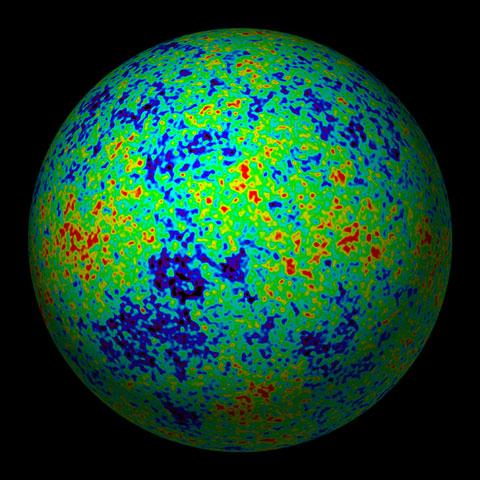
Cosmic microwave background (CMB) radiation projected onto a sphere. Credit: NASA/WMAP

Cosmic microwave background (CMB) radiation projected onto a sphere. Credit: NASA/WMAP

Nov 19, 2013

How big is the Universe? How old is it?

Today, cosmology is dominated by the Big Bang theory. The theory's major premise is that there was once a void containing no matter, no space, and no time. For some reason not explained by the scientists who support the theory, an irruption of energy from another realm of existence replaced the void with what eventually became the present Universe.

The Big Bang theory was postulated because the astronomer Edwin Hubble, using the 100-inch telescope at Mt. Wilson observatory, believed that he had observed remote galaxies receding from the Milky Way. The most surprising piece of his recorded data was not the recession itself, but the high velocities associated with his measurements. According to his calculations, some galaxies were traveling away from his observatory at thousands of kilometers per second.

Hubble arrived at his conclusion because of what was later to be called the "redshift" of light frequencies in spectrograms from his galactic images. Adapting the Doppler effect (named for the Austrian physicist Christian Doppler, who came up with the idea in 1842) to the spectra of various galaxies, Hubble thought that the change in location of particular elemental signatures called Fraunhofer lines (for the German physicist Joseph von Fraunhofer) indicated that the lightwaves had been shifted toward the red end of the spectrum by an apparent recessional velocity.

Fraunhofer lines are supposed to occur at specific frequencies identified in the spectrum by the kind of element that is absorbing the light. If they are in a different location, then they have been Doppler-shifted because of the element's acceleration. This forms the backbone of galactic-scale distance calculations and the supposed speed of recession that the galaxies display. Using this system of "redshift" some galaxies are measured to be moving away from Earth at an unbelievable 90 percent of light-speed.

All that we see and experience is supposed to have been born in the Big Bang explosion, so the original inertia imparted to the Universe came from that preternatural event. Since the distances and the recessional velocities of objects are correlated with a time-scale, something like a galaxy or a quasi-stellar object (QSO) that is 10 billion light-years away is also thought to be as it was 10 billion years ago. Astronomers are seeing ancient light that has been traveling through space for 10 billion years before finally impinging on their detectors.

The current estimate for the age of the Universe is 13.7 billion years, based on data from powerful telescopes that are supposed to be capable of detecting galaxies that approach that distance from Earth. As mentioned, distance and time are thought to be related to each other because of redshift, so as far as we can see into the Universe provides information that determines how old we perceive it to be. In other words, the diameter of the observable Universe should be approximately 27.4 billion light-years.

There is a conundrum associated with that figure, however. According to a current press release, the Universe is thought to be 156 billion light-years in diameter and not 27.4 billion! How can this be? The answer, according to theoretical physicists, is inflation.

Astrophysicists of the recent past were dismayed when their observations seemed to indicate greater complexity in the early Universe than should exist. As the principle of inflation states, though, it is not merely the acceleration from the Big Bang that is affecting the spectra of remote galaxies and QSOs, but that the space in which they are embedded is expanding.

If it requires X amount of time for a galaxy to form and the Universe is Y years old, then a galaxy should not exist at time-distances less than Y minus X. When such formations were seen, as far as the relevant theories are concerned, some other explanation had to be added to the Big Bang hypothesis to account for them.

So, objects that appear to be redshifted to extreme distances may not be as old as their spectra suggest: they are moving along with the expansion of space. Indeed, as the inflationary theory proposes, they are not as old as they appear to be, they are simply "farther away." This dichotomy seems to demand that the early Universe was expanding faster than the speed of light, since its "size" is more than 11 times greater than its age.

Edwin Hubble's observations of galactic distances versus speed of recession led to another quandary: galaxies that are far enough away would move so fast that their velocities would exceed the speed of light. This is known as the universal horizon, or the Hubble radius. It is the point beyond which our instruments can never see, because the light from over that horizon will never catch up to the greater than light speed expansion of space.

The theory of Special Relativity (SR) does not allow any object to reach the speed of light, let alone exceed it, so how do space scientists deal with the dilemma? They do so by ignoring the restrictions of SR and resorting instead to the General Theory of relativity where such restrictions do not exist. Since no information can be transmitted from beyond the Hubble radius, no violation of relativity occurs.

How did these twists and turns in ideas, as well as the warping of time and space come about? They are the direct result of the assumption that redshift correlates with distance. Modern cosmological systems are all built, without exception, on that assumption. What if Hubble's original premise was flawed? What if redshift is really a red herring? Where then shall we turn for an explanation of what we observe? We turn to the work of Halton Arp, an astronomer whose reputation should be at least the equal of Edwin Hubble's.

Stephen Smith

Red Herring, indeed.


~A.

Fwd: Space News: Asteroid becomes 6-tailed Comet, baffles Astronomers

Begin forwarded message:

From: Dave Talbott <dtalbott@teleport.com>

Thunderbolts Update: Asteroid becomes 6-tailed Comet, baffles Astronomers
...who don't understand comets, or asteroids (or Astronomy)
View this email in your browser
November 22, 2013.
Greetings, Friends!

Recently, astronomers were astonished to observe an asteroid sprouting six comet-like tails.  Without explanation, the tails remained coherent while the comet rotated like a sprinkler.  In this week's Space News, Wal Thornhill challenges the conventional distinction between asteroids and comets. It is electrical conditions that can make a "comet' out of a former "asteroid."

Our conference planning is moving along with more speakers being posted weekly. We're also excited to have students inspired by the Electric Universe joining us again at EU2014.  Please take a look at our Conference Scholarship Webpage. These scholarships are possible only through private contributions, and your help could make the difference in the life of a future scientist.

- Dave Talbott


FEATURED YOUTUBE VIDEO FOR THE WEEK
SPACE NEWS | Astonishing Asteroid Becomes a Comet 

Astronomers working with the Hubble Space Telescope are expressing their complete bafflement over a recently observed asteroid, P2013/P5, which has astonished scientists with its unprecedented display of six cometary-like tails.  Adding further surprise, the astronomers watched as the object's tail structures dramatically changed over just 13 days. 

EU2014 CONFERENCE PREVIEW 

EU2014 Conference Scholarship Program

Because of generous contributions from those interested in reigniting student interest in science, thirteen EU2013 student conference scholarships were awarded.  For the upcoming conference in 2014, we plan to award  fifteen scholarships covering travel, room expense and the conference registration fee. To reach this goal, we have launched a fund raising campaign.  Click here to learn more about how you can help students get to the conference. 
 
FOR MORE EU2014 INFORMATION, CLICK ON THE IMAGE BELOW!
THUNDERBOLTS PICTURE OF THE DAY
Cosmic Accelerator
Nov 22, 2013

Observations suggest that cosmic rays are not produced by supernova explosions. Cosmic rays are ionized particles, or fragmented atoms. Electrons are stripped from atoms, leaving them free to move, with positively charged nuclei remaining. The majority of cosmic rays are single protons (hydrogen ions), but uranium and other massive ions have also been detected.

Martian Water?
Nov 21, 2013

Structures on Mars that resemble Earth's hydrothermal vents or eroded mounds have sparked renewed interest in water flowing over the Red Planet. Mounds on Mars are thought to be the remains of ancient hydrothermal vents because they have a similar appearance to fossilized "mound springs" in the Australian Outback . . . 

Faster Than Light: Part Two
Nov 20, 2013

If distance calculations based on redshift are inaccurate, what does that mean for the consensus opinion about the age or the size of the Universe? In the 1960s astronomers discovered quasi-stellar objects, better known as quasars. They have extremely large redshifts, implying that they are located near the farthest edge of the observable Universe.
Faster Than Light: Part One
Nov 19, 2013

How big is the Universe? How old is it? Today, cosmology is dominated by the Big Bang theory. The theory's major premise is that there was once a void containing no matter, no space, and no time. For some reason not explained by the scientists, an eruption of energy from another realm of existence replaced the void with what eventually became the present Universe.
Lunar Crater Anomalies
Nov 18, 2013

Elongated craters on the Moon are said to come from "grazing impactors." In one of the earliest Pictures of the Day by the late Amy Acheson, the question was asked, how do you make a crater? When astronomers began to observe the Moon centuries ago, the craters there were considered to be the remains of volcanic vents. 


The Thunderbolts Project is supported by donors.  If you would like to help,  DONATE HERE.

THUNDERBOLTS FORUM -- HIGHLIGHTS


Electric Universe - Planetary Science
Venus Ashen Light
Electrical effects in the ionosphere account for the faint illumination on the night side of Venus.

Electric Universe - Planetary Science
The Lightning-Scarred Planet Mars
Here is a wealth of information pertaining to the theorized recent resurfacing of the Red Planet.


Electric Universe - Planetary Science
New Planet that Cannot Exist 
A terrestrial type exoplanet presents a problem for the consensus model of solar system formation.

Electric Universe
Unknown Forces Causing Milky Way to Flutter Like a Flag
The gravity only assumption hinders the understanding of galactic motion.

Electric Universe
Cosmic Background Radiation PROVES Big Bang... Or Does It?
Does data from the WMAP support the standard cosmological model?

Electric Universe
IBEX Discovers Heliotail
Our solar system's heliosphere has a cometary type of tail.

Electric Universe
Electricity and Plasma, from Micro to Macro and Beyond...
This thread outlines an assortment of plasma processes from the subatomic to galactic scale.


Electric Universe
Electron Beams and Radio Signals from the Surface of the Sun
Radio waves emitted by the Sun offer a clue as to what is happening on the solar surface.

Note: The opinions expressed by forum members do not necessarily reflect those of The Thunderbolts Project(TM) staff.

Copyright © 2013 thunderbolts.info, All rights reserved.
You are receiving this email because you opted in at thunderbolts.info or have purchased items at Mikamar Publishing.

Our mailing address is:
thunderbolts.info
14258N Mosbaek Rd.
Cable, Wisconsin 54821

Add us to your address book


unsubscribe from this list    update subscription preferences 

Wednesday, November 20, 2013

Four

Credits due....
Current pleasure.

duck,duck,......duck.

Water Fluoridation Infographic

Water Fluoridation Infographic


Water Fluoridation Infographic

Water Fluoridation

Is This Toxic Menace Lurking in Your Water Supply?

Fluoride has long been heralded as the solution to tooth decay, and is added to many oral hygiene products like toothpaste and mouthwash. It is also used by many dentists in hopes of protecting against cavities.

But with water fluoridation, it's an entirely different story.

Water fluoridation is the practice of adding fluoride to the water supply. Over 60 percent of the U.S. water supply is currently fluoridated, with 170 million Americans ingesting fluoride on a daily basis.

Water fluoridation operates on the principle that the fluoride from the water supply will provide people with "dental decay protection."

But nothing can be further from the truth.

I believe that water fluoridation is one of the most unnecessary and severely health-damaging practices we are exposed to today.

The Deceptive History of Fluoridation

The beginning of water fluoridation goes back to the Second World War, when massive amounts of toxic fluoride were manufactured for the bomb-making process. When fluoride waste products were released into the environment by the aluminum industry, they ended up killing entire orchards and herds of cattle.

Both the aluminum industry and the Manhattan Project realized they had a major toxic waste problem on their hands that would cost a lot of money to dispose of properly. So they declared fluoride not only safe, but beneficial, and sold the troublesome waste to municipalities across the U.S.

Can Fluoride Really Help Prevent Tooth Decay?

Fluoride was introduced to the water supply under the notion that it can reduce the incidence of dental caries in children. Advocates of fluoridation even claim that fluoridated water has been helping reduce tooth decay incidents since the 1950s.

But the facts don't add up. For instance, in 1999, the Centers for Disease Control and Prevention (CDC) claimed that dental caries declined during the second half of the 20th century. But what they didn't mention is that tooth decay rates declined in ALL Western countries, regardless of whether or not fluoridation was used. In fact, most of these countries did NOT fluoridate!

The truth is that there is practically NO difference between the rates of tooth decay in fluoridated countries and non-fluoridated countries. There is also no difference between states with a high or low fluoride percentage in their water.

What's more, the benefits of fluoride can only potentially be obtained when applied topically, and not ingested.

The Alarming Health Effects of Fluoride

The dangers that fluoride pose on your health are so severe that they far outweigh any potential benefits to your teeth. There is growing research that reveals fluoride's damaging effects to your health.

Fluoride toxicity has been linked to many health problems, such as:

  • Dental fluorosis, a condition where tooth enamel becomes discolored and mottled
  • Increased lead absorption
  • Collagen synthesis disruption
  • Poor thyroid function and thyroid disease
  • Arthritis, bone fractures, and bone cancer (osteosarcoma)
  • Dementia
  • Hyperactivity or lethargy
  • Inhibition of enzyme and antibody formation
  • Immune system disruption
  • Increased risk of cancer
  • Muscle disorders

Help Spread the Word on the Dangers of Water Fluoridation!

It's time to put an end to the deception surrounding water fluoridation.

Although the number of anti-fluoridation supporters in the United States and Canada increase every day, millions of people are still unaware of the dangers of fluoride.

I urge you to help spread the word on the dangers of fluoride. Read this infographic Water Fluoridation: 6 Facts You Need to Know, which highlights important information about fluoride in drinking water, and how it can affect your health and the environment.

This infographic can also be embedded on your web site, at no additional cost.

Please don't ignore this important warning about the dangers associated with water fluoridation. Encourage your friends and loved ones, too, to spread the word about fluoride dangers.


~A.