Friday, December 06, 2013

"1945-1998" Atomic Explosion Timeline Spectacular (i cant watch it all : ( Its not over yet.)

(http://www.ctbto.org/specials/1945-1998-by-isao-hashimoto/)

"1945-1998" BY ISAO HASHIMOTO

Multimedia artwork

"2053" - This is the number of nuclear explosions conducted in various parts of the globe.*

Profile of the artist: Isao HASHIMOTO

Born in Kumamoto prefecture, Japan in 1959.

Worked for 17 years in financial industry as a foreign exchange dealer. Studied at Department of Arts, Policy and Management of Musashino Art University, Tokyo.

Currently working for Lalique Museum, Hakone, Japan as a curator.

Created artwork series expressing, in the artist's view, "the fear and the folly of nuclear weapons":

  1. "1945-1998" © 2003
  2. "Overkilled"
  3. "The Names of Experiments"

About "1945-1998" ©2003

"This piece of work is a bird's eye view of the history by scaling down a month length of time into one second.  No letter is used for equal messaging to all viewers without language barrier.  The blinking light, sound and the numbers on the world map show when, where and how many experiments each country have conducted.  I created this work for the means of an interface to the people who are yet to know of the extremely grave, but present problem of the world."

~A.

Thursday, December 05, 2013

Honey bees can be trained to detect cancer "in ten minutes" | design

Honey bees can be trained to detect cancer "in ten minutes" says designer

Dutch Design Week 2013: Portuguese designer Susana Soares has developed a device for detecting cancer and other serious diseases using trained bees ( + slideshow).

Dezeen_Susana_Soares_Bees_Design_2

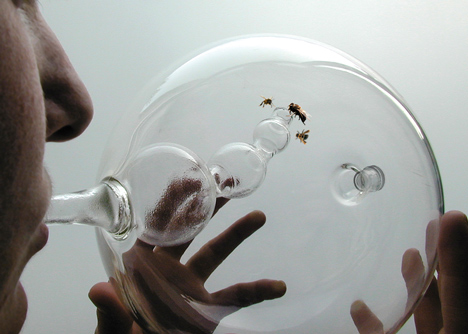
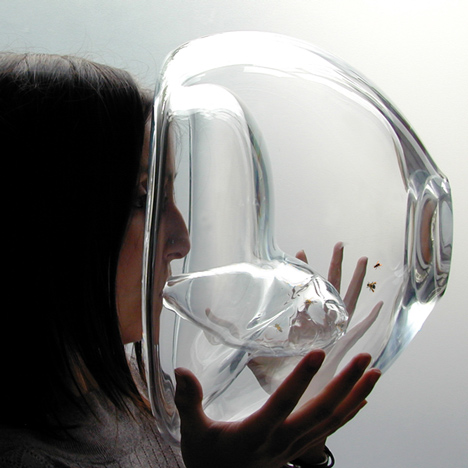
The bees are placed in a glass chamber into which the patient exhales; the bees fly into a smaller secondary chamber if they detect cancer.

"Trained bees only rush into the smaller chamber if they can detect the odour on the patient's breath that they have been trained to target," explained Soares, who presented her Bee's project at Dutch Design Week in Eindhoven last month.

Dezeen_Susana_Soares_Bees_Design_1SQ

Scientists have found that honey bees - Apis mellifera - have an extraordinary sense of smell that is more acute than that of a sniffer dog and can detect airborne molecules in the parts-per-trillion range.

Bees can be trained to detect specific chemical odours, including the biomarkers associated with diseases such as tuberculosis, lung, skin and pancreatic cancer.

Bees have also been trained to detect explosives and a company called Insectinel is training "sniffer bees" to work in counter-terrorist operations.

Dezeen_Susana_Soares_Bees_Design_3

"The bees can be trained within 10 minutes," explains Soares. "Training simply consists of exposing the bees to a specific odour and then feeding them with a solution of water and sugar, therefore they associate that odour with a food reward."

Once trained, the bees will remember the odour for their entire lives, provided they are always rewarded with sugar. Bees live for six weeks on average.

"There's plenty of interest in the project especially from charities and further applications as a cost effective early detection of illness, specifically in developing countries," Soares said.

Dezeen_Susana_Soares_Bees_Design_4

Here is a project description by Susana Soares:


Bee's / Project

Bee's explores how we might co-habit with natural biological systems and use their potential to increase our perceptive abilities.

The objects facilitate bees' odour detection abilities in human breath. Bees can be trained within 10 minutes using Pavlov's reflex to target a wide range of natural and man-made chemicals and odours, including the biomarkers associated with certain diseases.

The aim of the project is to develop upon current technological research by using design to translate the outcome into systems and objects that people can understand and use, engendering significant adjustments in their lives and mind set.

How it works

The glass objects have two enclosures: a smaller chamber that serves as the diagnosis space and a bigger chamber where previously trained bees are kept for the short period of time necessary for them to detect general health. People exhale into the smaller chamber and the bees rush into it if they detect on the breath the odour that they where trained to target.

What can bees detect?

Scientific research demonstrated that bees can diagnose accurately at an early stage a vast variety of diseases, such as: tuberculosis, lung and skin cancer, and diabetes.

Precise object

The outer curved tube helps bees avoid from flying accidentally into the interior diagnosis chamber, making for a more precise result. The tubes connected to the small chamber create condensation, so that exhalation is visible.

Detecting chemicals in the axilla

Apocrine glands are known to contain pheromones that retain information about a person's health that bees antennae can identify.

The bee clinic

These diagnostic tools would be part of system that uses bees as a biosensor.

The systems implies:
- A bee centre: a structure that facilitates the technologic potential of bees. Within the centre is a beefarm, a training centre, a research lab and a healthcae centre.

- Training centre: courses can be taken on beetraining where bees are collected and trained by beetrainers. These are specialists that learn beetraining techniques to be used in a large scope of applications, including diagnosing diseases.

- BEE clinic: bees are used at the clinic for screening tests. These insects are very accurate in early medical diagnosis through detection on a person's breath. Bees are a sustainable and valuable resource. After performing the diagnose in the clinic they are released, returning to their beehive.

Bee training

Bees can be easily trained using Pavlov's reflex to target a wide range of natural and man-made chemicals odours including the biomarkers associated with certain diseases. The training consists in baffling the bees with a specific odour and feeding them with a solution of water and sugar, therefore they associate that odour with a food reward.


~A.

Easy to use customization and design apps for 3D printing with Shapeways

http://www.shapeways.com/creator?utm_medium=email&utm_source=sw-email-1&utm_campaign=120413&utm_content=p14&ca=email&ct=120413&cr=p14


~A.

Ecological house with a glass box above the landscape | architecture

Ecological house with a glass box above the landscape | architecture

One half of this energy-efficient house in the Netherlands by Paul de Ruiter Architects is raised above the landscape in a glazed box, while the other half is buried underneath a pool of water (+ slideshow).

Villa Kogelhof by Paul de Ruiter Architects

Amsterdam firm Paul de Ruiter Architects was asked to design a home that would provide a comfortable environment all year round while minimising its energy use and impact on a site in a protected ecological area.

"It was an important wish from our client to create a simple, abstract, yet spectacular villa," said the architects. "The result is a composition; consisting of two square stacked volumes: one underground and one floating above ground."

Villa Kogelhof by Paul de Ruiter Architects

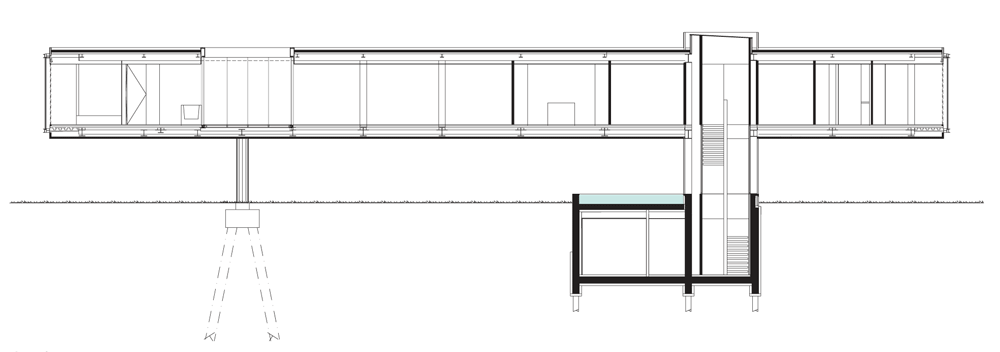
The house's upper storey seems to hover above the landscape, supported by a V-shaped steel frame at one end and a glazed box at the other containing a staircase that links it with the underground space.

Villa Kogelhof by Paul de Ruiter Architects

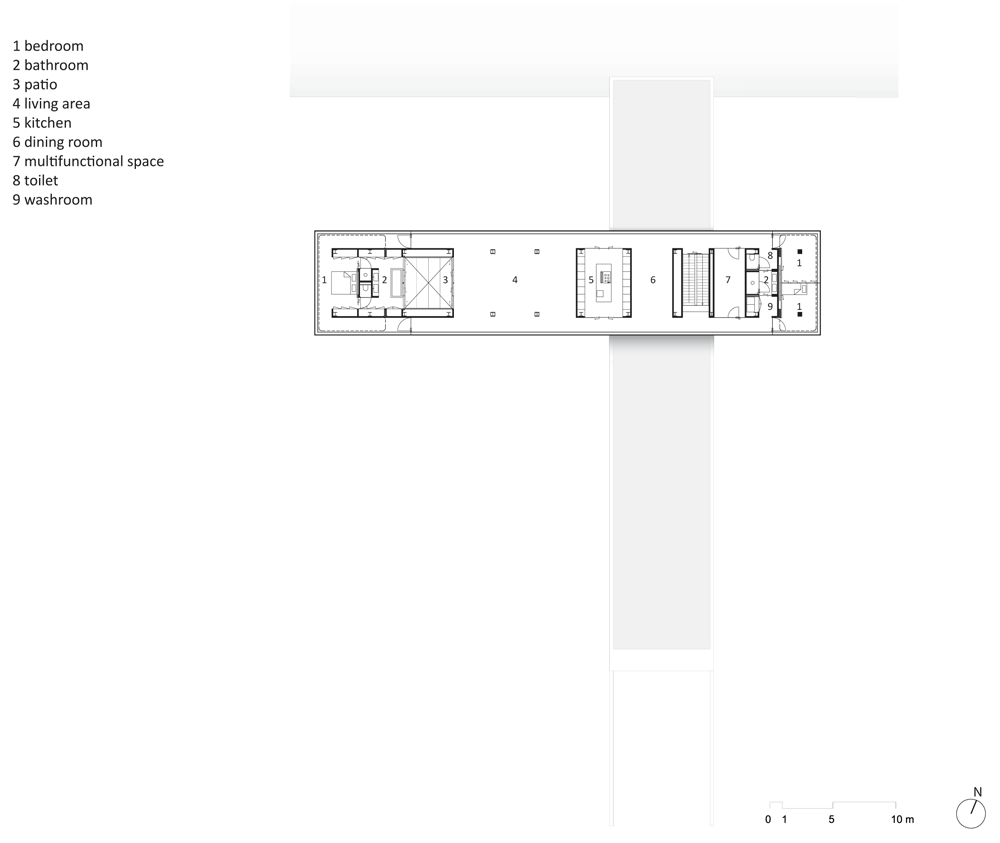
The main living area, kitchen, three bedrooms, bathrooms and a multifunctional space are housed in the elongated volume above ground. Glass doors and partitions separate the various spaces on this level, including a walled-in patio with the living space and the master bedroom on either side.

Villa Kogelhof by Paul de Ruiter Architects

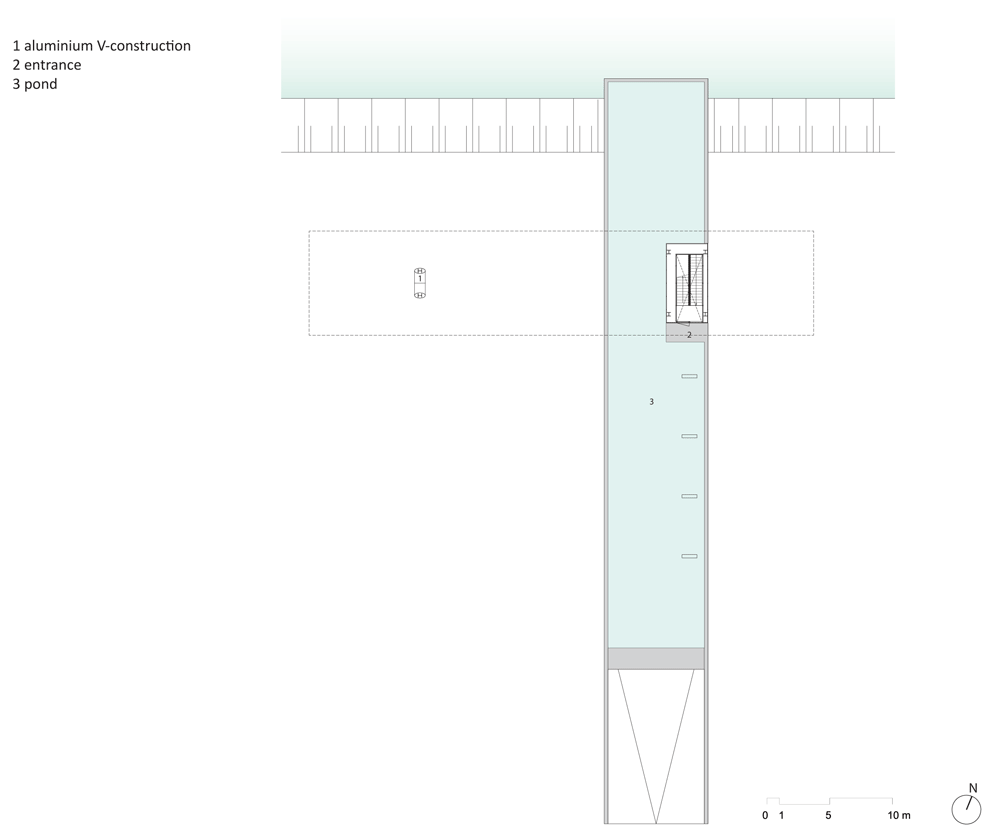
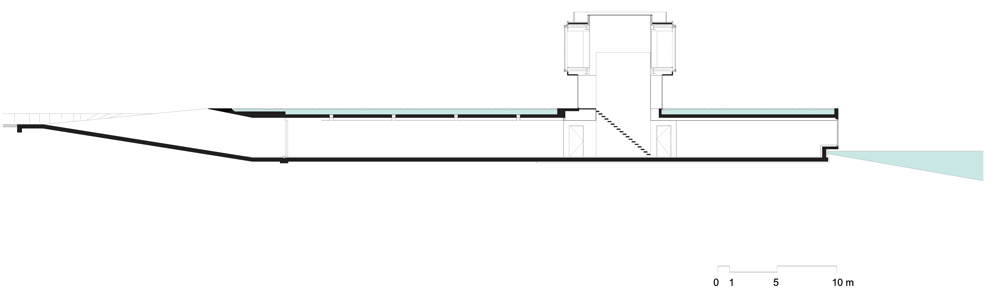
Below ground, another rectangular box arranged perpendicular to the upper storey houses a huge garage, as well as storage, a bathroom and an office. A large picture window at the end of the office overlooks an artificial lake and the flat Dutch landscape beyond.

Villa Kogelhof by Paul de Ruiter Architects

Throughout the interior, white walls and epoxy floors contribute to a clean and minimal environment that focuses attention on the views provided by the full-height glazing.

Villa Kogelhof by Paul de Ruiter Architects

In order to build on the site, which is a habitat for many plants and animals, the owners were required to return what had previously been farmland to its original pre-agricultural state. They planted 71,000 young trees that will eventually obscure the house from view and added a rectangular pond above the underground storey.

Villa Kogelhof by Paul de Ruiter Architects

Energy-saving techniques employed in the building include a fabric screen built into the insulated glazed facade that can be rolled down to reflect the sun, and create a void between the glass and the screen through which ventilation flows.

Villa Kogelhof by Paul de Ruiter Architects

Wood from the private forest will be burned to heat water for the house once the trees have matured, while photovoltaic cells on the roof and a planned windmill will generate electricity.

Photography is by Jeroen Musch.

Here's a project description from the architects:


Villa Kogelhof

Villa Kogelhof is designed based on complete autarky: therefore the house will be energy neutral. By using several techniques, the villa has a comfortable climate all seasons, whilst being extremely energy efficient. It was an important wish from our client to create a simple, abstract, yet spectacular villa. The result is a composition; consisting of two square stacked volumes: one underground and one floating above ground. It is designed as an uncompromising glass box, supported by a steel V-frame.

Villa Kogelhof by Paul de Ruiter Architects
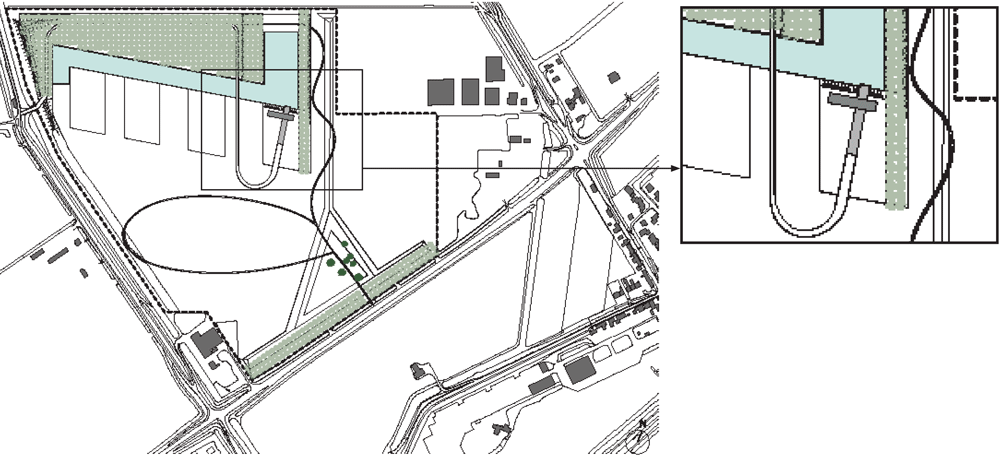
Site plan - click for larger image

Contemporary estate

The 25 hectare estate is part of a larger program initiated by the government, which aims to connect regional ecological zones throughout the country. The current owner bought the site, once farmland, in 2006. It is a protected habitat for animals and plants and a major tourist draw in the area, open to the public.

Villa Kogelhof by Paul de Ruiter Architects
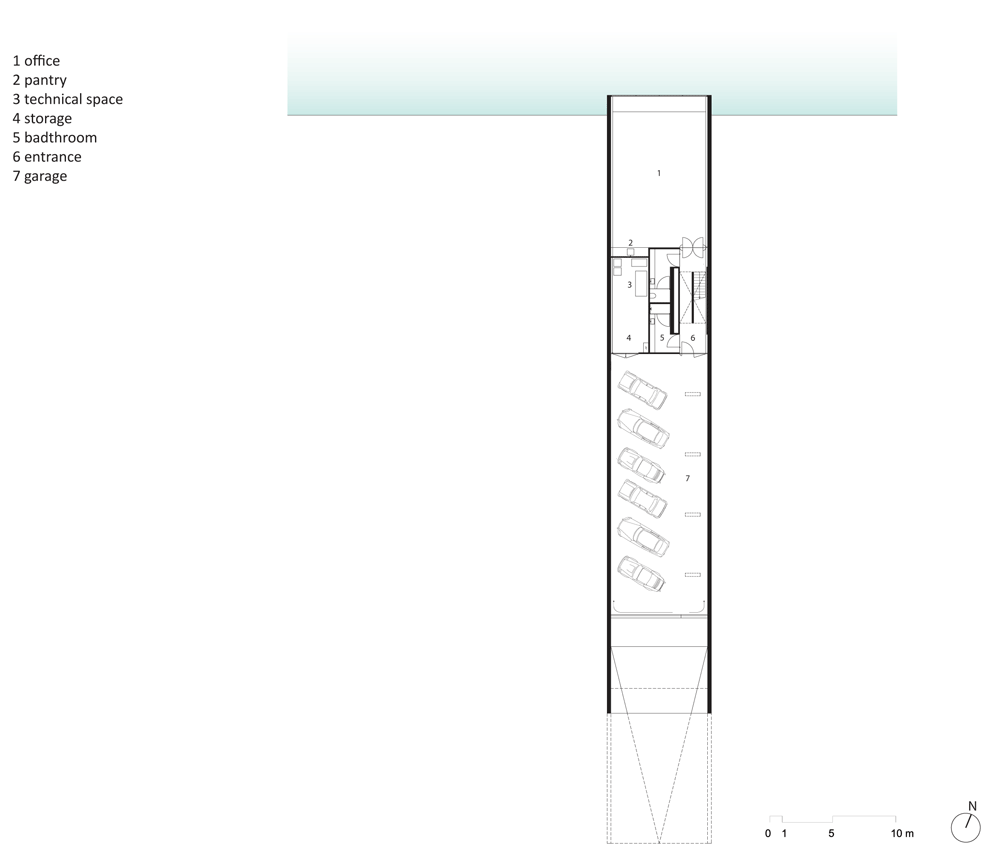
Basement plan - click for larger image

Permission to build a house on the land was given only on condition that it was returned to its pre-agricultural state. The planning of some 71,000 six-year-old trees hint at the future of the estate as 'a villa in the woods' and were planted already in 2006. A rectangular pond was dug, requiring the removal of 70,000 cubic metres of soil.

Contrast

The underground volume of the house consists the entrance, parking (for 6 cars and a tractor), storage, bathroom and a workspace which looks out over the pond. The living area is situated in the floating glass box above ground. It's floor plan is completely open, except for some subtle glass room dividers.

Villa Kogelhof by Paul de Ruiter Architects
Ground floor - click for larger image

There are several separate volumes for the kitchen, bedrooms, bathroom and a multifunctional room. The patio has glass doors on both sides, so that it's both accessible through the living room and the bathroom. The entire floor is covered with white epoxy and the furniture consists of designer classics from Le Corbusier and Eileen Grey. The façade is completely made out of glass and offers a spectacular view over the surrounding landscape.

Villa Kogelhof by Paul de Ruiter Architects
First floor plan - click for larger image

Self sufficient

One of the main principles of Villa Kogelhof was to translate luxury into the happiness of independence. The goal for the villa was to be self-sufficient; to generate its own energy, to heat its own water and to recycle the garbage.

Villa Kogelhof by Paul de Ruiter Architects
Long section - click for larger image

To make sure Villa Kogelhof is energy neutral, the façade offers an important contribution. This so called climate-façade is composed of an outer layer of clear insulated glass from floor to ceiling and an inner layer of sun-reflecting fabric that can be rolled up and unrolled. When the fabric is lowered, an air cavity is formed in which the air from the villa is extracted of a central ventilation system.

Villa Kogelhof by Paul de Ruiter Architects
Cross section - click for larger image

The house is heated by a central heating system in combination with an air pump. Warm water will in the near future be generated by using a range stove, in which wood will be fired from the trees out of the private forest of the estate. Electricity is generated from the PV-cells on the roof and also from the planned windmill.


~A.

Monday, December 02, 2013

Nut Consumption Associated with Life Extension

Tree Nuts, Chockfull of Healthful Fats, May Help You Live Longer

Many people needlessly shun raw nuts from their diet, believing their fat content contributes to weight gain. But mounting research suggests nuts such as pecans and macadamias may actually help you live longer—and help you lose weight to boot.

This isn't so surprising considering the fact that tree nuts are high in healthful fats that, contrary to popular belief, your body needs for optimal function. Also, to optimize your health, weight, and longevity, you'll want to shift your body from sugar-burning mode to fat-burning mode. One of the simplest and most effective ways to do this is to implement intermittent fasting.

In order for your body to begin burning fat as your primary fuel instead of sugar,it is helpful to swap non-vegetable carbohydrates like sugar and grains in your diet with high-quality healthful fats. Raw nuts are one source of such fats.

Nut Consumption Associated with Life Extension

A recent study published in NEJM was a large-scale, 30-year long study done at Harvard.1, 2, 3, 4 It found that people who regularly ate a small handful of nuts at least seven times per week were 20 percent less likely to die for any reason, compared to those who largely avoided nuts in their diet.

They also tended to eat more fruits and vegetables, and were leaner than their nut-eschewing counterparts. Nut eaters were more likely to exercise and take dietary supplements. As reported by the Washington Post:

"Even those who ate nuts less than once a week had a seven percent reduction in risk. Consuming nuts at least five times a week corresponded to a 29 percent drop in mortality risk for heart disease, a 24 percent decline for respiratory disease and an 11 percent drop for cancer."

The study does have its weaknesses. For example, participants only filled out dietary questionnaires once every two to four years. They also included all types of nuts (including peanut, which is not a nut but a legume and not nearly as health promoting as tree nuts).

The study also didn't differentiate how they were prepared (i.e. raw or roasted, for example). That said, the result of the featured study has added support from previous research.

For example, a study published in the Annals of Internal Medicine earlier this year found that middle-aged women who followed a Mediterranean-style diet rich in nuts and vegetables were approximately 40 percent more likely to survive into later decades without developing some form of chronic disease—including age-related memory deterioration.

Healthful fats and antioxidants, obtained from nuts and vegetables respectively (although nuts also contain beneficial antioxidants, by the way), are both critical factors for brain health. Lead researcher of the featured study, Dr. Ying Bao, told Boston.com:

"I'm fairly confident in our results. We have long known that nuts are nutritious foods filled with folate, potassium, fiber, good monounsaturated fats, and antioxidants."

Tree Nuts—Good Sources of Healthful Fats

All nuts are not necessarily created equal, and tree nuts are, from a nutritional stand point, far preferable to peanuts, which is technically a legume. My main objections to peanuts are that they tend to:

  • Distort your omega-3 to omega-6 ratio as they are relatively high in omega-6
  • Be frequently contaminated with a carcinogenic mold called aflatoxin
  • Be one of the most pesticide-contaminated crops

My favorite nuts are macadamia and pecans, as they provide the highest amount of healthy fat while being on the lower end in terms of carbs and protein. Most nuts' nutritional makeup closely resemble what I consider to be an ideal ratio of the basic building blocks—fat making up the greatest amount of your daily calories, followed by a moderate amount of high-quality protein and a low amount of non-vegetable carbs.

The main fatty acid in macadamia nuts is the monounsaturated fat oleic acid (about 60 percent). This is about the level found in olives, which are well known for their health benefits.

I have been consuming macadamia nuts and pecans almost daily since I started lowering my overall protein intake about a year ago. I primarily use raw macadamia nuts, but also enjoy pecans. They provide a great source of calories and are a phenomenal snack alternative.

To gain a better idea of what I'm talking about, please refer to my Food Pyramid for Optimal Health.

In the featured study, those who ate a one-ounce serving seven times or more per week appeared to benefit the most. One ounce of nuts equates to just over 28 grams, or about a small handful. The following list shows the nutrition facts in grams per one ounce for your most common tree nuts:

Tree Nut
Numbers are grams per ounce

Fat

Protein

Carbohydrates
Macadamias 22 2 4
Pecans 20 3 4
Pine nuts 20 4 4
Brazil nuts 19 4 3
Walnuts 18 4 4
Hazelnuts 17 3 5
Cashews 13 4 9
Almonds 14 6 6
Pistachios 13 6 8

More Nutritional Facts

Generally speaking, each type of nut will offer a slightly different mix of nutrients for your health, so it's a good idea to include a variety of nuts rather than sticking to one at the exclusion of all others. For instance:

  • Raw macadamia nuts are a powerhouse of a nut, containing a wide variety of critical nutrients including high amounts of vitamin B1, magnesium, manganese, and healthful monounsaturated fat, just to name a few.
  • Pecans: Pecans contain more than 19 vitamins and minerals, and research has shown they may help lower LDL cholesterol and promote healthy arteries. One of my favorite treats is candied pecans in a salad at a restaurant. I know they have sugar, but a few grams or less a day is not going to cause a major problem provided you're eating a healthy whole food diet, opposed to processed foods (which are loaded with hidden fructose).
  • Walnuts: Walnuts are good sources of plant-based omega-3 fats, natural phytosterols, and antioxidants that are so powerful at free-radical scavenging that researchers have called them "remarkable." Plus, walnuts may help reduce not only the risk of prostate cancer, but breast cancer as well. They've also been shown to reverse brain aging in rats and boost heart health in people with diabetes.
  • Almonds: One of the healthiest aspects of almonds appears to be their skins, as they are rich in antioxidants including phenols, flavonoids, and phenolic acids, which are typically associated with vegetables and fruits. A study in the Journal of Agricultural and Food Chemistry even revealed that a one-ounce serving of almonds has a similar amount of total polyphenols as a cup of steamed broccoli or green tea. Be careful not to overeat almonds though as they are high in protein, nearly one gram per almond.
  • Brazil Nuts: Brazil nuts are an excellent source of organic selenium, a powerful antioxidant-boosting mineral that may be beneficial for the prevention of cancer.

To Become an Efficient Fat Burner—Eat More Healthful Fats

As mentioned earlier, one of the keys to optimal health is to switch your body from burning sugar to burning fat as its primary fuel. This requires a shift in diet, away from non-starchy vegetable carbohydrates toward foods that are high in healthful fats—such as those found in tree nuts. Many would benefit from getting as much as 50-85 percent of their daily calories from fats. Although this sounds like a lot, by volume the largest portion of your plate would be vegetables because they have so few calories. Examples of healthful fats would be:

Avocados Butter made from raw grass-fed organic milk Raw dairy Organic pastured egg yolks
Coconuts and coconut oil Unheated organic nut oils Raw nuts, such as almonds, pecans, macadamia, and seeds Grass-fed meats

Besides making sure you're eating the right foods, intermittent fasting can be quite helpful for achieving this metabolic shift, and here's why: It takes about six to eight hours for your body to burn the sugar stored in your body as glycogen. However, most of us never deplete our glycogen stores because we eat three or more meals a day. This teaches your body to burn sugar as your primary fuel and effectively shuts off your ability to use fat as a fuel.

Most people need several weeks of intermittent fasting, but some may need several months to teach their body to turn on the fat burning enzymes to effectively use fat as their primary fuel. It is important to understand though that once you teach your body to burn fat effectively and you are normal body weight without high blood pressure, diabetes or high cholesterol, you only need to do intermittent fasting occasionally. You can go back to eating three meals a day as long as you keep your ideal body weight.

I prefer to think of intermittent fasting as a lifestyle rather than a diet. You could even think of it as intermittent eating rather than intermittent fasting, as all you're doing is restricting your eating to a smaller window of time each day rather than grazing from early morning to late at night. I restricted my eating to a 6- to 7-hour window each day until I became fat adapted and lost about 10 pounds. Now, I still rarely ever eat breakfast but will have some nuts. Many days I only eat one meal around 2-4 PM, but several days a week, I will have two meals.

Weight loss is not the only beneficial side effect of intermittent fasting. It has also been shown to generally extend lifespan much in the same way calorie restriction and extended fasting, but without the suffering that goes along with those methods. It is likely that calorie restriction works to increase longevity by improving insulin and leptin resistance and also inhibiting the mTOR pathway by protein restriction. Healthful fat does not impair any of these pathways and appears to be the solution to having a regular calorie diet and still reap the rewards of calorie restriction.

Reasons to Give Intermittent Fasting a Try

If you're ready to start intermittent fasting, consider skipping breakfast, make sure you stop eating three hours before you go to sleep, and restrict your eating to an 8-hour (or less) time frame every day. In the 6-8 hours that you do eat, have a moderate amount of healthy protein, eliminate or severely minimize carbs like pasta, bread, and potatoes, and exchange them vegetables and  plenty of healthful fats. As already mentioned, this includes raw nuts and other foods like butter, eggs, avocado, coconut oil, and olive oil.

Remember, it will take a few weeks to a few months for your body to make the transition to fat burning mode, and you will need to exercise some willpower and self-discipline to get there. Just gradually extend the time that you start your first meal until it is in the afternoon.

Once your body has made the shift from carb burning to fat burning mode, you can expect cravings for sweets and food in general to rapidly decrease. This is a huge boon for most people, I'm sure. I know it was for me. For many, the desire for sweets and junk food will disappear entirely. Remember, it will typically take a few weeks, and you have to do it gradually, but once you succeed to switch into fat burning mode you'll be easily able to go without food for 18 hours and not be bothered by hunger.

Another phenomenally beneficial side effect that occurs is that you will radically improve the beneficial bacteria in your gut.

Supporting healthy gut bacteria, which actually outnumber your cells 10 to one, is one of the most important things you can do to improve your immune system so you won't get sick, or get coughs, colds, and flus. You will sleep better, have more energy, have increased mental clarity and concentrate better. Essentially every aspect of your health will improve as your gut flora becomes balanced.

Based on my own experience with intermittent fasting, I believe it's one of the most powerful ways to shift your body into fat burning mode and improve a wide variety of biomarkers for disease. The effects can be further magnified by exercising while in a fasted state. For more information on that, please see my previous article "High-Intensity Interval Training and Intermittent Fasting - A Winning Combo." Clearly, it's another powerful tool in your box to help you and your family take control of your health, and an excellent way to take your fitness to the next level.

When Buying Nuts, Consider These Facts

To increase the positive impacts on your health, look for nuts that are organic and raw, not irradiated or pasteurized. If you choose to use almonds (remember that they are relatively high in protein), be aware that pasteurized almonds sold in North America can still be labeled "raw" even though they've been subjected to one of the following pasteurization methods:

  • Oil roasting, dry roasting, or blanching
  • Steam processing
  • Propylene Oxide (PPO) treatment (PPO is a highly toxic flammable chemical compound, once used as a racing fuel before it was prohibited for safety reasons)

There are generally no truly "raw" almonds sold in North America, so don't be misled. It is possible to purchase raw almonds in the US, but it has to be done very carefully from vendors selling small quantities that have a waiver from the pasteurization requirement. The key is to find a company with the waiver that is not pasteurizing them. When consumed with these guidelines in mind, raw, organic nuts are a convenient and enjoyable superfood to add to your diet. And this is precisely why they're recommended as one of the best sources of healthy fats in my nutrition plan.


~A.

Sunday, December 01, 2013

Reminder: Live view - AXIS 215 PTZ Network Camera (daylight only!)

http://avptcam.uconn.edu/view/index.shtml

thingCHARGER! & AIRTAME - gotta haves....


Google: Digital Attack Map - LIVE!

(old) interesting quotes...

Interesting quotes...

I had a rose named after me and I was very flattered. But I was not pleased to read the description in the catalog: - 'No good in a bed, but fine against a wall.'
- Eleanor Roosevelt 

Last week, I stated this woman was the ugliest woman I had ever seen. I have since been visited by her sister, and now wish to withdraw that statement.
- Mark Twain

The secret of a good sermon is to have a good beginning and a good ending; and to have the two as close together as possible.
- George Burns

Santa Claus has the right idea. Visit people only once a year.
- Victor Borge

Be careful about reading health books. You may die of a misprint.
- Mark Twain

By all means, marry. If you get a good wife, you'll become happy; if you get a bad one, you'll become a philosopher.
- Socrates

I was married by a judge. I should have asked for a jury.
- Groucho Marx

My wife has a slight impediment in her speech. Every now and then she stops to breathe.
- Jimmy Durante

I have never hated a man enough to give his diamonds back.
- Zsa Zsa Gabor

Only Irish coffee provides in a single glass all four essential food groups: alcohol, caffeine, sugar and fat.
- Alex Levine

My luck is so bad that if I bought a cemetery, people would stop dying.
-Rodney Dangerfield

Money can't buy you happiness .. But it does bring you a more pleasant form of misery.
- Spike Milligan

Until I was thirteen, I thought my name was SHUT UP.
- Joe Namath

I don't feel old. I don't feel anything until noon. Then it's time for my nap.
- Bob Hope

I never drink water because of the disgusting things that fish do in it.
- W. C. Fields

We could certainly slow the aging process down if it had to work its way through Congress.
- Will Rogers

Don't worry about avoiding temptation. As you grow older, it will avoid you.
- Winston Churchill

Maybe it's true that life begins at fifty .. But everything else starts to wear out, fall out, or spread out.
- Phyllis Diller

By the time a man is wise enough to watch his step, he's too old to go anywhere.

- Billy Crystal

job: bank of international settlements, hurry, please

News archive - 2013

Date 
29 Nov 2013
Vacancies:

Settlement Officer

The BIS seeks a Settlement Officer for its Representative Office for Asia and the Pacific in Hong Kong SAR (100%). Fixed-term for 14 months. Application deadline: 20 December 2013.

Saturday, November 30, 2013

Monsanto Targets the Heart of Science: The Goodman Affair

Monsanto Targets the Heart of Science: The Goodman Affair

Monsanto Targets the Heart of Science: The Goodman Affair

by Claire Robinson and Jonathan Latham, PhD

Richard Smith, former editor of the British Medical Journal, has jested that instead of scientific peer review, its rival The Lancet had a system of throwing a pile of papers down the stairs and publishing those that reached the bottom. On another occasion, Smith was challenged to publish an issue of the BMJ exclusively comprising papers that had failed peer review and see if anybody noticed. He replied, "How do you know I haven't already done it?"

As Smith's stories show, journal editors have a lot of power in science – power that provides opportunities for abuse. The life science industry knows this, and has increasingly moved to influence and control science publishing.

The strategy, often with the willing cooperation of publishers, is effective and sometimes blatant. In 2009, the scientific publishing giant Elsevier was found to have invented an entire medical journal, complete with editorial board, in order to publish papers promoting the products of the pharmaceutical manufacturer Merck. Merck provided the papers, Elsevier published them, and doctors read them, unaware that the Australasian Journal of Bone and Joint Medicine was simply a stuffed dummy.

Fast forward to September 2012, when the scientific journal Food and Chemical Toxicology (FCT) published a study that caused an international storm (Séralini, et al. 2012). The study, led by Prof Gilles-Eric Séralini of the University of Caen, France, suggested a Monsanto genetically modified (GM) maize, and the Roundup herbicide it is grown with, pose serious health risks. The two-year feeding study found that rats fed both suffered severe organ damage and increased rates of tumors and premature death. Both the herbicide (Roundup) and the GM maize are Monsanto products. Corinne Lepage, France's former environment minister, called the study "a bomb".

Subsequently, an orchestrated campaign was launched to discredit the study in the media and persuade the journal to retract it. Many of those who wrote letters to FCT (which is published by Elsevier) had conflicts of interest with the GM industry and its lobby groups, though these were not publicly disclosed.

The journal did not retract the study. But just a few months later, in early 2013 the FCT editorial board acquired a new "Associate Editor for biotechnology", Richard E. Goodman. This was a new position, seemingly established especially for Goodman in the wake of the "Séralini affair".

Richard E. Goodman is professor at the Food Allergy Research and Resource Program, University of Nebraska. But he is also a former Monsanto employee, who worked for the company between 1997 and 2004. While at Monsanto he assessed the allergenicity of the company's GM crops and published papers on its behalf on allergenicity and safety issues relating to GM food (Goodman and Leach 2004).

Goodman had no documented connection to the journal until February 2013. His fast-tracked appointment, directly onto the upper editorial board raises urgent questions. Does Monsanto now effectively decide which papers on biotechnology are published in FCT? And is this part of an attempt by Monsanto and the life science industry to seize control of science?

To equate one journal with "science" may seem like an exaggeration. But peer-reviewed publication, in the minds of most scientists, is science. Once a paper is published in an academic journal it enters the canon and stands with the discovery of plate tectonics or the structure of DNA. All other research, no matter how groundbreaking or true, is irrelevant. As a scientist once scathingly said of the "commercially confidential" industry safety data that underpin approvals of chemicals and GM foods, "If it isn't published, it doesn't exist."

Monsanto Targets the Heart of Science: The Goodman Affair

photo: Richard E Goodman, University of Nebraska

Goodman's ILSI links
The industry affiliations of FCT's new gatekeeper for biotechnology are not restricted to having worked directly for Monsanto. Goodman has an active and ongoing involvement with the International Life Sciences Institute (ILSI). ILSI is funded by the multinational GM and agrochemical companies, including Monsanto. It develops industry-friendly risk assessment methods for GM foods and chemical food contaminants and inserts them into government regulations.

ILSI describes itself as a public interest non-profit but its infiltration of regulatory agencies and influence on risk assessment policy has become highly controversial in North America and Europe. In 2005 US-based non-profits and trade unions wrote to the World Health Organization (WHO) protesting against ILSI's influence on international health standards protecting food and water supplies. As a result, the WHO barred ILSI from taking part in WHO activities setting safety standards, because of its funding sources.  And in Europe in 2012, Diana Banati, then head of the management board at the European Food Safety Authority (EFSA), had to resign over her undisclosed long-standing involvement with ILSI (Robinson et al. 2013).

Goodman's appointment to FCT is surprising also for the fact that the journal already has expertise in GM food safety. Of the four senior editors, José L. Domingo is a professor of toxicology and environmental health and author of two comprehensive reviews of GM food safety studies (Domingo  2007; Domingo and Bordonaba 2011). Both reviews expressed skepticism of the thesis that GMOs are safe. Consequently, it is far from clear why FCT needs an "associate editor for biotechnology", but it is clear why Monsanto would have an interest in ensuring that the "Séralini affair" is never repeated.

Editing the scientific record: The case of Paul Christou
FCT is not the only academic journal that appears to have been captured by commercial interests. After the initial campaign failed to get FCT to retract the Séralini study, the journal Transgenic Research published a heavy-handed critique of the study and of the researchers themselves (Arjo et al., 2013). The lead author of that critique was Paul Christou.

Christou and co-authors castigated the editor of FCT for publishing the study, calling it "a clear and egregious breach of the standards of scientific publishing". They insisted that the journal editor retract the study "based on its clearly flawed data, its breaches of ethical standards, and the strong evidence for scientific misconduct and abuse of the peer-review process". "Even a full retraction of the Séralini article" wrote Christou, "will not cleanse the Internet of the inflammatory images of tumorous rats."

The same writers further implied that the Séralini study was "fraudulent", that the researchers failed to analyse the data objectively, and that the treatment of the experimental animals was inhumane.

This is not the first time Christou has attacked scientific findings that have raised doubts about GM crops. In 2001 Ignacio Chapela and David Quist of the University of California, Berkeley, reported in the journal Nature that indigenous Mexican maize varieties had become contaminated with GM genes (Quist and Chapela, 2001). This issue was, and remains, highly controversial since Mexico is the genetic centre of origin for maize. In an exact parallel with the Séralini study, an internet campaign was waged against Chapela and Quist demanding that the journal retract the study. Then Christou, just as he was later to do with the Séralini study, attacked Chapela and Quist's paper in an article in Transgenic Research. The title said it all: "No credible scientific evidence is presented to support claims that transgenic DNA was introgressed into traditional maize landraces in Oaxaca, Mexico" (Christou, 2002).

Responding to the campaign, Nature editor Philip Campbell asked Chapela and Quist for more data, which they provided, and arranged another round of peer review. Only one reviewer in the final group of three supported retraction, and no one had presented any data or analysis that contradicted Chapela and Quist's main finding. Nevertheless, Nature asserted, "The evidence available is not sufficient to justify the publication of the original paper". Some subsequent investigations, testing different samples, reported finding GM genes in native landraces of Mexican corn (Pineyro-Nelson et al. 2009), while others did not (Ortiz-Garcia et al. 2005).

Paul Christou, in contrast, probably did not have much trouble getting either of his critiques published in Transgenic Research. He is the journal's editor-in-chief. And, like Goodman, Christou is connected to Monsanto. Monsanto bought the GM seed company Agracetus (Christou's former employer) and Monsanto now holds patents for the production of GM crops on which Christou is named as the inventor.  It is normal practice to declare inventor status on patents as a competing interest in scientific articles, but Christou did not disclose either conflict of interest – his editorship of the journal or his patent inventor status – in his critique of the Séralini study.

The Ermakova affair: Preemptive editing of the scientific record
Not only can journal editors prevent the publication of research showing problems with GM crops in their own journals – they can effectively prevent publication elsewhere. In 2007, the leading academic journal Nature Biotechnology featured an extraordinary attack on the work of Russian scientist, Irina Ermakova (Marshall, 2007). Her laboratory research had found decreased weight gain, increased mortality, and decreased fertility in rats fed GM Roundup-tolerant soy over several generations (Ermakova, 2006; Ermakova, 2009).

The editor of Nature Biotechnology, Andrew Marshall, contacted Ermakova, inviting her to answer questions about her findings, which she had only presented at conferences. He told her it was "an opportunity to present your own findings and conclusions in your own words, rather than a critique from one side". Ermakova agreed.

The process that followed was as deceptive as it was irregular. The editor sent Ermakova a set of questions about her research, which she answered. In due course she was sent a proof of what she thought was to be 'her' article, with her byline as author.

However, the article that was finally published was very different. Ermakova's byline had been removed and Marshall's substituted. Each of Ermakova's answers to the questions was followed by a lengthy critique by four pro-GM scientists (Marshall, 2007). The proof sent to Ermakova, now revealed as a 'dummy proof', had not included these critical comments. Consequently, she was denied the chance to address them in the same issue of the journal. And in the final article the editor had preserved the critics' references but removed many of Ermakova's, with the effect that her statements appeared unsubstantiated.

Continue to Page 2

Disclaimer: This article is not intended to provide medical advice, diagnosis or treatment. Views expressed here do not necessarily reflect those of GreenMedInfo or its staff.


~A.

Sunday, November 24, 2013