Friday, April 15, 2016

Volcanoes Do Not Emit 10,000 Times More Carbon Dioxide Than Humans : snopes.com

Volcanoes Do Not Emit 10,000 Times More Carbon Dioxide Than Humans : snopes.com

Joes vs. the Volcano


Claim: A single eruption from a volcano puts more than 10,000 times the amount of carbon dioxide into the atmosphere than all of mankind has produced.

Example: [Collected via Facebook, December 2015]

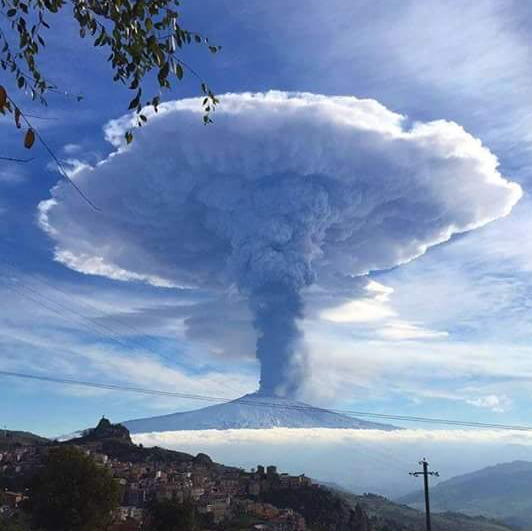
That one little burp by Mt Etna has already put more than 10,000 times the Co2 into the atmosphere than mankind has in our ENTIRE time on earth but don't worry a scam is in the works to tax you your minuscule footprint....

volcano

Origin:On 11 December 2015, Facebook user Thomas Gunn spread a longstanding myth that volcanoes produce vastly more carbon dioxide (CO2) than human activities, writing that a single volcanic eruption causes more than 10,000 times the CO2 emissions than mankind has generated in our entire time on Earth.

Similar claims have circulated for several years among climate change skeptics. In 2009, geologist Ian Plimer wrote in his book Heaven and Earth: Global Warming — The Missing Science that "volcanoes add far more carbon dioxide to the oceans and atmosphere than humans," while others have revised the claim to state that volcanoes emit more carbon dioxide than cars do. While these latter claims are more reasonable than Gunn's assertion that a single volcanic eruption generates more CO2 than humans have in the history of mankind, researchers have found that annual anthropogenic CO2 emissions "dwarf" annual volcanic CO2 emissions.

The Hawaiian Volcano Observatory explained how much CO2 is generated by volcanoes in a 2007 article:

Carbon dioxide is released when magma rises from the depths of the Earth on its way to the surface. Our studies here at Kilauea show that the eruption discharges between 8,000 and 30,000 metric tonnes of CO2 into the atmosphere each day. Actively erupting volcanoes release much more CO2 than sleeping ones do.

Gas studies at volcanoes worldwide have helped volcanologists tally up a global volcanic CO2 budget in the same way that nations around the globe have cooperated to determine how much CO2 is released by human activity through the burning of fossil fuels. Our studies show that globally, volcanoes on land and under the sea release a total of about 200 million tonnes of CO2 annually.

While 200 million tonnes of CO2 may seem like an extraordinary large amount, the United States Geological Survey (USGS) found that the estimated amount of CO2 generated annually by human activity is 135 times higher:

Do the Earth's volcanoes emit more CO2 than human activities? Research findings indicate that the answer to this frequently asked question is a clear and unequivocal, "No." Human activities, responsible for a projected 35 billion metric tons (gigatons) of CO2 emissions in 2010 (Friedlingstein et al., 2010), release an amount of CO2 that dwarfs the annual CO2 emissions of all the world's degassing subaerial and submarine volcanoes (Gerlach, 2011).

The published estimates of the global CO2 emission rate for all degassing subaerial (on land) and submarine volcanoes lie in a range from 0.13 gigaton to 0.44 gigaton per year (Gerlach, 1991; Varekamp et al., 1992; Allard, 1992; Sano and Williams, 1996; Marty and Tolstikhin, 1998). The preferred global estimates of the authors of these studies range from about 0.15 to 0.26 gigaton per year. The 35-gigaton projected anthropogenic CO2 emission for 2010 is about 80 to 270 times larger than the respective maximum and minimum annual global volcanic CO2 emission estimates. It is 135 times larger than the highest preferred global volcanic CO2 estimate of 0.26 gigaton per year (Marty and Tolstikhin, 1998).

In 2010, volcanologist Terrence Gerlach wrote an article for Earth magazine in response to Ian Plimer's book and his claim volcanoes produce far more CO2 than humans:

Although discussions of volcanic carbon dioxide emissions make up less than 5 percent of "Heaven and Earth's" text, the alleged predominance of volcanic over human carbon dioxide emissions is one of its most publicized takeaway messages. And one that will reverberate in the media and blogosphere — no matter how vociferously professionals who investigate volcanic carbon dioxide emissions bristle and huff about how appallingly at odds Plimer's claim is with our research findings.

The treatment of volcanic versus anthropogenic carbon dioxide emissions in this book illustrates one of the pathways by which myths, misrepresentations and spurious information get injected into the climate change debate. Like several climate skeptic publications, blogs and websites, "Heaven and Earth" does not provide the published estimates of the present-day global carbon dioxide emission rate from volcanoes. These estimates are, ironically, "the missing science" of a book professing to rectify supposed excesses of missing science — a book that appears impressively authoritative by citing a mountain of scientific literature.

Last updated: 16 December 2015

Originally published: 16 December 2015

Dan Evon is a Chicago-based writer and longtime truth enthusiast. His work has appeared somewhere, and he earned a degree at the University of His Choosing. His exploration of Internet truth has been supported by grants from the Facebook Drug Task Force.


~A.

NYTimes: What Is Inspiration? By David Brooks...

Fab...
http://www.nytimes.com/2016/04/15/opinion/what-is-inspiration.html?smprod=nytcore-ipad&smid=nytcore-ipad-share

That moment when mind and spirit take flight stands apart from normal life.

For decades, Anders Ericsson has reminded us of the value of hard work. The Florida State psychologist did the research that led to the so-called 10,000-hour rule. In his informative new book, "Peak," he and co-author Robert Pool downplay the importance of native-born genius (even in people like Mozart) and emphasize the importance of deliberate practice — painstaking exercises to perfect some skill.
Anybody who has observed excellence knows that Ericsson is basically right. Dogged work is the prerequisite of success. Yet there are some moments — after much steady work and after the technical skills have been mastered — when the mind and spirit take flight. We call these moments of inspiration. They kind of steal upon you, longed for and unexpected.
Inspiration is a much-used, domesticated, amorphous and secular word for what is actually a revolutionary, countercultural and spiritual phenomenon. But what exactly is inspiration? What are we talking about when we use that term?
Well, moments of inspiration don't quite make sense by normal logic. They feel transcendent, uncontrollable and irresistible. When one is inspired, time disappears or alters its pace. The senses are amplified. There may be goose bumps or shivers down the spine, or a sense of being overawed by some beauty.
Inspiration is always more active than mere appreciation. There's a thrilling feeling of elevation, a burst of energy, an awareness of enlarged possibilities. The person in the grip of inspiration has received, as if by magic, some new perception, some holistic understanding, along with the feeling that she is capable of more than she thought.
Vladimir Nabokov believed that inspiration comes in phases. First, he wrote, there's the "prefatory glow," the feeling of "tickly well-being" that banishes all awareness of physical discomfort. The feeling does not yield its secret just yet, but a window has been opened and some wind has blown in.
Then, a few days later, Nabokov continued, the writer "forefeels what he is going to tell." There's an instant vision, the lightning bolt of inspiration, that turns into rapid speech, and a "tumble of merging words" that form the nucleus of a work that will grow from it over the ensuing months or years.
Inspired work stands apart from normal life. In the first place it's not about self-interest as normally understood. It's not driven by a desire for money or grades or status. The inspired person is driven intrinsically by the work itself. The work takes hold of a person.
Inspiration is not earned. Your investment of time and effort prepares you for inspiration, but inspiration is a gift that goes beyond anything you could have deserved.
Inspiration is not something you can control. People who are inspired have lost some agency. They often feel that something is working through them, some power greater than themselves. The Greeks said it was the Muses. Believers might say it is God or the Holy Spirit. Others might say it is something mysterious bursting forth deep in the unconscious, a new way of seeing.
Inspiration does not happen to autonomous individuals. It's a beautiful contagion that passes through individuals. The word itself comes from the Latin inspirare, meaning "to breath into." One inspiring achievement — say, the space program — has a tendency to raise the sense of possibility in others — say, a little boy who dreams of being an astronomer. Then the one who is inspired performs his own feats and inspires others, and so on down the line.
Inspiration is not permanent and solid. It's powerful but ephemeral, which is why so many people compare it to a gust of wind. And when it is gone people long for its return.
The poet Christian Wiman wrote that inspiration is "intrusive, transcendent, transformative, but also evanescent and, all too often, anomalous. A poem can leave its maker at once more deeply seized by existence and, in a profound way, alienated from it, for as the act of making ends, as the world that seemed to overbrim its boundaries becomes, once more, merely the world, it can be very difficult to retain any faith at all in that original moment of inspiration. That memory of that momentary blaze, in fact, and the art that issued from it, can become a kind of reproach to the fireless life in which you find yourself most of the time."
Most important, inspiration demands a certain posture, the sort of posture people feel when they are overawed by something large and mysterious. They are both humbled and self-confident, surrendering and also powerful. When people are inspired they are willing to take a daring lark toward something truly great. They're brave enough to embrace the craggy fierceness of the truth and to try to express it in some new way.
Yes, hard work is really important for achievement. But life is more mysterious than just that.

Thanks, David.
~A den Tex

Tuesday, April 12, 2016

Thank You! Cancer or Not!

Thank You!

Thank You!

Thanks for taking the quiz. Your full quiz results and bonus ebook, 22 Ways to Cancer-Proof Your Life Today,  are being emailed to you within 30 minutes from The Truth About Cancer (support@thetruthaboutcancer.com). Please check your spam folder (or Promotions tab in Gmail) if you don't see it in the next 30 minutes.

In the meantime, check out your quiz score and the three most missed quiz questions below. Trust me, Big Pharma has been trying to hide these truths from you for years..

Hey Adt, it's Ty (founder of The Truth About Cancer).

Thank you so much for taking this Cancer "IQ" test! You have no idea how much it means to me when people take the time to learn the real truth about this terrible disease and what really can be done to not only treat, but prevent and beat cancer once and for all!

In addition to your score, I've broken down the three (3) most thought-provoking cancer questions below that sadly most people miss (and quite often know nothing about).

AND, I've included next step actions you can take to further your knowledge about cancer and what you can do TODAY to more effectively prevent cancer. :-)

Just FYI — at the very bottom of this page, just below my picture, I've included citations and resource links for all of the compelling (and quite shocking) research I used to build this amazing knowledge assessment test.

Don't worry, I won't be offended if you do your due diligence and fact check everything in this quiz. I HIGHLY encourage you to discover the shocking truth about cancer for yourself.

Last but not least, if you appreciated this, please share this with others so they too can experience this first-hand.

Because we're on a mission to share with the world all that can really be done to prevent and beat cancer -- not just want Big Pharma wants people to believe -- and it's through your "word-of-mouth" that we will accomplish this!

So without further ado, here's a full breakdown of what you scored and WHY you scored what you did...

Without further ado, here's a full breakdown of what you scored and WHY you scored what you did…

Your Score: 80%

(If at any point you have any questions, please feel free to reach out to our friendly, informative team at support@thetruthaboutcancer.com)

QUESTION #4: [True or False] LESS than 5% of all cancer is hereditary.

Correct Answer ---> (A) True
(B) False

Your Answer: True

Explanation: Contrary to what most "cancer experts" lead you to believe, only a very small percentage of cancers are in fact linked from one family member to the next (less than 5%).

Although a traditional hereditary link is quite slim, social heredity (habitually doing the things your family has done) plays a big factor for many people and should be seriously reconsidered, especially if those habits are detrimental to your health.

QUESTION #6 [True or False] When exposed to the sun, your risk for skin cancer is HIGHER when you apply sunscreen.

Correct Answer ---> (A) True
(B) False

Your Answer: True

Explanation: The chemicals in sunscreen are actually responsible for more skin cancers than the sun. In 2014, the Environmental Working Group (EWG) reviewed over 2000 sunscreens and over 257 brands. They found more than 75% of the sunscreens contained toxic chemicals that can increase your risk of cancer and other health issues.

QUESTION #11: A group of Oncologists were asked in a McGill Cancer Center survey what they would do if they were diagnosed with cancer. What PERCENTAGE of these Oncologists chose chemotherapy as their main form of treatment?

(A) 4%
(B) 11%
Correct Answer ---> (C) 19%
(D) 32%
(E) 39%

Your Answer: 4%

Explanation: McGill Cancer Center surveyed 118 Oncologists (all doctors specializing in lung cancer) to determine the level of trust they had in the therapies they were applying. All were asked to imagine that they themselves had contracted the disease and which of the six current experimental therapies they would choose.

Of the 118 only 79 responded. 64 of them said that they would not consent to undergo any treatment containing cis-platinum – one of the common chemotherapy drugs they used – while 58 out of 79 believed that all the experimental therapies above were not accepted because of the ineffectiveness and the elevated level of toxicity of chemotherapy. (Philip Day, "Cancer: Why we're still dying to know the truth", Credence Publications, 2000)

Can you believe that the cancer docs prescribing these treatments refuse to do them themselves??

Crazy, right?


So… what now?

So you're probably wondering, what can I do now?

I hate to say this but the shocking facts and research above is only a tiny percent of the tip of the MAMMOTH iceberg of misinformation out there.

Taking this quiz and assessing your cancer knowledge is a tremendous first step in the right direction but now it's time to take action.

Take action for yourself, your health, your family, and most importantly your future fight against cancer.

...Because the only person that can save your life is you.

You Absolutely Can Prevent Cancer

38,356 people worldwide will learn they have cancer today.

"I'm sorry, there's nothing else we can do…" most of them will end up hearing.

21,918 people will die from cancer today.

This means that at least thirty (30!) people will have passed away by the time you finish reading this page.

It's horrifying, and I'm here to tell you that it doesn't have to be this way.

I'm going to share with you the best things to do starting TODAY to more effectively prevent cancer. :-)

All across the world, families are forced to accept this answer of "I'm sorry…" and watch helplessly as this horrific disease slowly steals the life from their closest loved ones.

If you've experienced this first-hand, you've likely already experienced just sitting by the wayside and wondering — how can this be?? Isn't there something else we can do?

Most doctors will look at you and in more words or less say… No.

However, deep down, you don't believe it. Intuition tells you it can't be true.

And here's why: Because it's not true.

You are not helpless — you can save yourself from cancer and I'm going to show you how!

There are proven cancer remedies that MOST doctors don't know about, or even care to know about.

(Why? I can answer in a few words: the influence of Big Pharma and their multi-billion profit machine.)

Take it from me, many oncologists are very close-minded to "alternative" remedies to drugs and chemo and surgery, especially if it's not their "specialization"…

Unfortunately, I had to learn this the hard way.

My first introduction to cancer came from my father and (what seemed to be) a minor stomach ache in the summer of 1996.

Doctors diagnosed his "ache" as cancer and insisted we remove his intestines immediately — so we did.

In 25 days, my father bled to death because of the surgery.

My whole family and I were devastated.

Then, the unthinkable happened…

Over the next 7 years, I lost both grandfathers, my grandmother, uncle, cousin, and finally in 2004, my mother, all to cancer and conventional cancer-related treatments. I watched this unfold right before my eyes and all I could think and feel was — there has to be something I can do.

There has to be a better way… and I was committed to finding it (even if it meant going to the ends of the earth).

During this nearly crippling time in my life, I accumulated thousands of hours of research to find a more healthy approach to preventing and treating cancer.

These experiences would eventually inspire me to lead the creation of a cutting-edge and a content-packed series of documentaries detailing the "untold truths" about cancer… from the industry's foremost experts themselves.

This 9-Part docu-series "The Truth About Cancer: A Global Quest" will change everything…

And I can't wait to share it with you.

Starting April 12th (for limited time), we will be releasing this absolutely amazing 9-part docu-series for FREE.

Here's our Broadcasting Schedule
(Be sure to save this)

Episode 1:

The True History of Chemotherapy & The Pharmaceutical Monopoly
(April 12th 9:00PM Eastern US time)

Episode 2:

Cancer Facts and Fictions, Breast Cancer, Hormones, Skin Cancer & Essential Oils
(April 13th 9:00PM Eastern US time)

Episode 3:

Cancer-Killing Viruses, Cancer Stem Cells, GMOs, Juicing & Eating the Rainbow
(April 14th 9:00PM Eastern US time)

Episode 4:

Excitotoxins that Fuel Cancer, Nature's Pharmacy and Healing Cancer with Sound & Light
(April 15th 9:00PM Eastern US time)

Episode 5:

Cancer Causing Blindspots, Toxic Vaccines, Homeopathy & The Power of Emotions
(April 16th 9:00PM Eastern US time)

Episode 6:

The NOCEBO Effect, Healing Vaccines, Advanced Detoxing & Going Inside A German Cancer Clinic
(April 17th 9:00PM Eastern US time)

Episode 7:

Heal Cancer with Clean Electricity, Unique Water, Natural Sunlight & Combining Superfoods
(April 18th 9:00PM Eastern US time)

Episode 8:

Cannabis, Nature's Epigenetic Switches, Peptides & Healing with Micronutrient Therapy
(April 19th 9:00PM Eastern US time)

Episode 9:

Cancer Conquerors & Their Powerful Stories of Victory
(April 20th 9:00PM Eastern US time)

All episodes start airing at 9:00PM Eastern US time on the date listed above and will be available for approximately 23 hours, after which time the next episode will be loaded onto our site for your viewing pleasure : )

Be sure to keep an eye out for emails coming from us (The Truth About Cancer) as I will send you a reminder for each episode moving forward and the private link where you can watch it.

In this docu-series, today's most prolific industry experts from all around the world (27 countries total) share exactly how to prevent, treat, and beat cancer — Period.

It's true!

We're pulling back the curtain and revealing some facts about cancer that will literally blow your mind.

Did you know:

  • Studies show that chemotherapy actually enriches  Cancer Stem Cells (which are the cells that "give birth" to cancer cells). Knowing this, why is chemo so widely used to treat and prevent cancer when it's causing more cancer in the process??
  • According to the American Cancer Society, despite popular belief, less than 5% of cancers are genetic / hereditary. So much for it being mom or dad's fault!
  • Although most oncologists tell chemo patients not to eat foods high in antioxidants believing it will "counteract" the chemotherapy treatments, studies actually indicate the exact opposite. Believe it or not, antioxidants can actually help chemo work even better.
  • And much much more

Listen, I'd keep writing forever on this page about cancer and the critically important things you need to do to fight and prevent this horrible disease, instead I invite you back to come watch this docu-series.

Whether you, your family, your friends, or even your neighbor down the street has been affected by cancer, this is something you won't want to miss.

In fact, why don't you share it with them right now. It'll only take a second and you never know, you might just save someone's life.

Just imagine…

What if, in just a few short years, cancer was eradicated from the face of the earth.. and YOU were a part of making that happen?

The first step to making this happen is awareness. The more you know, the more prepared you will be to fight the fight.

Thank you for your time and consideration and remember…

You really can prevent cancer. And if you or someone you care about has it, cancer doesn't need to be a death sentence.


Ty Bollinger


Resource links:
– http://articles.mercola.com/sites/articles/archive/2012/06/16/emf-safety-tips.aspx
– http://www.cdc.gov/cancer/dcpc/resources/features/worldcancerday/
– http://www.sciencedirect.com/science/article/pii/S1756239209001323
– http://www.cancer.org/acs/groups/content/@epidemiologysurveilance/documents/document/acspc-036845.pdf
– http://www.ncbi.nlm.nih.gov/pubmed/17283738
– http://www.cancer.org/cancer/cancercauses/othercarcinogens/athome/teflon-and-perfluorooctanoic-acid–pfoa
– http://www.webmd.com/food-recipes/healthy-cooking-oils-buyers-guide?page=2
– http://thetruthaboutcancer.com/cancer-causing-foods-2/
– http://www.greenmedinfo.com/blog/simply-green-washing-are-you-using-toxic-cleaner


~A den Tex

Saturday, April 09, 2016

EDWARDS: Tidal wave US recession coming

EDWARDS: Tidal wave US recession coming

ALBERT EDWARDS: A 'tidal wave' is coming that will throw the US into recession

wavePhilip Massie/REUTERSGiant waves crash over onlookers at Cape Town's Kalk Bay harbor on August 27, 2005.

A tidal wave is coming to the US economy, according to Albert Edwards, and when it crashes it's going to throw the economy into recession.

The Societe Generale economist, and noted perma-bear, believes that the profit recession facing American corporations is going to lead to a collapse in corporate credit.

"Despite risk assets enjoying a few weeks in the sun our fail-safe recession indicator has stopped flashing amber and turned to red," wrote Edwards in a note to clients on Thursday.

He continued (emphasis added):

Whole economy profits never normally fall this deeply without a recession unfolding. And with the US corporate sector up to its eyes in debt, the one asset class to be avoided — even more so than the ridiculously overvalued equity market — is US corporate debt. The economy will surely be swept away by a tidal wave of corporate default.

Edwards said that many economic researchers discredit profits as a measure of the business cycle, and it is one of the reasons why they are so bad at predicting recessions.

Profits are on the decline for two reasons, according to Edwards. On the one hand, they are dropping because of margin pressure from rising labor costs. But this sort of decrease because of higher wages does not always signal a recession, like in 1986. Additionally, much like the mid-1980s decline, an oil-price crash is disproportionately dragging down profits.

The second reason is because companies cannot pass on these increasing wage pressures to consumers through prices. In turn, they decrease spending and hiring, and the most vulnerable cannot make debt payments.

Screen Shot 2016 04 07 at 3.25.07 PMSociete Generale

Edwards enumerated three reasons why this time around is a recessionary decrease, not a 1986-style aberration. They are:

  1. "When the oil price slumped in 1986 the economy was steaming ahead at a 4% pace and so withstood the downturn in business investment."
  2. "In 1986 Fed Funds were cut from over 8% to less than 6% at a time when the consumer was re-leveraging, i.e. not debt averse as now."
  3. "Finally, companies in 1986 were not up to their necks in debt as they currently are, and their solvency now is far more vulnerable to a profits downturn."

So this time will not be a quick, oil-driven recovery. The US is in for a full-blown end to the economic cycle.

Edwards did include some advice to investors on how to weather the coming wave, though.

"And if I had to pick one asset class to avoid it would be US corporate bonds, for which sky high default rates will shock investors," he wrote.

You've been warned.


Travel safely 
~A.

Thursday, April 07, 2016

Fuel Cost Comparison, Part 3 | Blog | Sensible Energy

Fuel Cost Comparison, Part 3 | Blog | Sensible Energy

Cost Comparison: Gas vs. Oil vs. Electricity, Part 3

In Part 1 of this article, we calculated the approximate prices below for three popular types of heating fuel:

Cost of natural gas = $1.10 for 100,000 BTU
Cost of electricity = $2.93 for 100,000 BTU
Cost of heating oil = $2.50 for 100,000 BTU

In Part 2, we settled on a representative figure for the heating load of a moderate-size house in the Portland metro area with so-so insulation. You might need to add 60,000,000 BTU of heat per hear to this house to heat it adequately.

To finish out our comparison of the cost of heating with gas, oil, and electricity, we also need to talk about the efficiency of the equipment itself.

With gas, plenty of affordable models heat with an efficiency of 90% to 97%, though 80% AFUE models are still available. For comparison purposes here, let's us an efficiency of 90% with gas. Here is how we calculate the cost of heating our representative house with natural gas:

Annual energy required with natural gas = 60,000,0000 BTU / 0.90 = 66,666,667 BTU

Annual cost with natural gas = 66,666,667 BTU * $1.10/100,000 BTU

Annual cost with natural gas = $733

If you heat with oil, you may have an old burner that operates at 70% efficiency or worse, but newer models boast efficiencies above 85%. Let's go with 80% for oil.

Annual energy required with oil = 60,000,000 BTU / 0.8 = 75,000,000 BTU

Annual cost with oil = 75,000,000 BTU * $2.50/100,000 BTU

Annual cost with oil = $1,875

Things really get interesting with electricity, thanks to the heat pump. With electrical resistance heating such as wall heaters and baseboard heaters, you can assume an efficiency of 100 percent.

Annual cost with electrical resistance heating = 60,000,000 BTU * $2.93/100,000 BTU

Annual cost with electrical resistance heating = $1,758

With electric heat pumps, efficiency is actually well over 100 percent, thanks to a clever use of thermodynamics. (That's a blog post in the making, but the short explanation is that heat pumps are so efficient because they move heat from one place to another rather than generating it from energy.) Ductless heat pumps can approach 300 percent efficiency, but to be conservative, let's run the numbers using an efficiency of 250%.

Annual energy required with ductless heat pump = 60,000,000 BTU / 2.5 = 24,000,000 BTU

Annual cost with ductless heat pump = 24,000,000 BTU * $2.93/100,000 BTU

Annual cost with ductless heat pump = $703

Ranked from less expensive to more, then, here's where we ended with annual heating costs for our representative moderate-size, mid-efficiency Portland home:

Electricity with ductless heat pump:           $     703
Natural gas with 90% AFUE furnace:           $     733
Electric resistance heating:                              $ 1,758
Oil with 80% AFUE burner:                               $ 1,875

Now we have a pretty good comparison of the cost of providing 60,000,000 BTU of heat with two types of electric equipment, a 90% AFUE gas furnace, and an 80% AFUE oil furnace. Continue on to the final installment of this article—Part 4—for some final thoughts about applying this information in the real world. 

Join The Discussion

Posted by Don on Nov 19th, 2013

Looking to install a heat pump. Currently heating with a oil fired 10 year old hot water boiler. Contractor says electric back up is more efficient than oil. Do you agree?

Posted by Mitt Jones on Nov 19th, 2013

Hi, Don. The scenario you mention brings a few questions to mind about your specific situation. For instance, am I right to assume that you heat with hot-water radiators now? If so, are you adding a ductless heat pump or installing a duct system along with a conventional, unitary heat pump?

Regardless, to answer your question: Based on the analysis we walked through here, electric resistance heating should be marginally less costly to operate than an 80% AFUE oil-fired heat source, and strictly speaking it would also be more efficient. Also, the oil-fired system would require maintenance that electric resistance backup heat would not.

That said, there is expense and energy use involved any time you replace a piece of equipment. If there is a practical way to use your existing oil-fired system as a backup heat source and if you like the idea of keeping it, then that's a perfectly valid choice.

Hope this helps. -- Mitt

Posted by Nick on Aug 27th, 2014

The gas and oil options also have an extra cost which is the electricity used to run blowers (for forced air systems) and pumps (hydronic systems). This extra cost isn't huge but it does add up to something worth considering and could be pivotal in the gas-vs-ductless comparison.

Posted by Mitt Jones on Sep 21st, 2014

Hi, Nick. The air handlers definitely use some energy, which is not factored into the efficiency ratings. On the other hand, this energy use would have to be factored in for conventional, unitary heat pumps, electric forced-air furnaces, gas furnaces, or oil furnaces, so it's a common additional cost.

Unitary heat pumps need to move more air across the heat exchanger to deliver the same amount of heat, and with today's high-efficiency, ECM fan motors, having to push more air results in significantly higher power requirement, so adding the energy usage of the air handler impacts unitary heat pumps more than the other choices. If you're heating with a furnace older than about 10 years or so, your system likely still uses a PSC fan motor, which uses a good bit of energy regardless of the required airflow.

We'll address air handler energy use in a future blog post -- there is a lot to discuss here -- but an ECM fan motor in a typical residential gas furnace might use 80 to 100 watts of power when the furnace is on. It's not a huge additional expense, but it's there.

Thanks for posting your comment!

Posted by Rob on Nov 19th, 2014

Hi Mitt,

I appreciate this blog and the data you've posted, but I'm very curious about historical price data. I was on a local oil delivery company's web site, and they claimed that oil heat has been cheaper than natural gas for home heating for 5 of the last 7 years. Of course, I understand they have a huge bias, but I'd love to see the facts for myself. Maybe a longer term set of data would be nice to look at. Do you have any light you can shed on the subject? My googling is not revealing too much. I did find some historical prices on the eia web site (http://www.eia.gov/dnav/pet/pet_pri_wfr_dcus_nus_w.htm), but it's not quite what I want. (It doesn't give price per BTU, for one thing, but rather per gallon.)

Much appeciated,
Rob

Posted by Mitt Jones on Nov 22nd, 2014

Hi, Rob. I don't know of another source for historical data. Maybe one of our readers will chime in a with a good suggestion. It sounds like there are more issues for you with the EIA data than pricing units, but in case this helps a gallon of oil equates to roughly 140,000 BTU.

Thanks for posting your question1

Posted by Zulikha on Feb 13th, 2015

HI Mitt Jones,

Thanks for this helpful information. I am sure most readers already have heard that deregulation of Gas and Electricity has passed in congress and its just taking time for several states to abide and allow other energy service providers such as Fatah Energy Solutions (powered by Ambit) to offer cheaper rates to their residents

I own Fatah Energy Solutions. We service many zipcodes in many states, the delivery method of how gas and electricity is connected to your home is not changed, thus there are two names on each bill, one is your delivery company and one is your service provider. If you do not see two names on your bill it possibly means that your state has not conformed yet to the deregulation or you have chosen not to shop around for a better rate. www.fes.joinambit.com - is the website to see if we offer gas and electricity service in your area. visit our website at www.fes.joinambit.com. Learn how you can save money or even get your electricity and gas for free month after month. Many of my customers have save $60 per month on their bill and others are paying nothing at all. Contact us and we will show you how to read your bill and what you are truly getting charged for. Consultation is free, Fatah Energy Solutions.

Posted by BILL SCHNEEBELI on Mar 5th, 2015

HAVE ELECTRIC HEAT. PRICE HAS DOUBLED IN 2 YEARS

Posted by DUFFY HEARRELL on Apr 23rd, 2015

My wife and I bought a home in January, 2015. We now have a pool. I am going to buy a heater for the poo.
I am trying to figure out whether to go with electric or propane? I have both on the property. I have done the research on both and can't make up my mind, for long term???? HELP...

DUFFY LURAY VIRGINIA..

Posted by th on Sep 6th, 2015

Your 9 cents/Kwh is before obama, it's close to double that in the largest populated areas, for most people resistance heat is the worst choice by far, ductless and cold climate heat pumps are expensive up front and many heating contractors except for the northern US actually discourage their use.
Leave a Reply

In Part 3 of this article, we calculated the annual heating costs for a moderate-size, mid-efficiency Portland-area home:

Electricity with ductless heat pump:          $    703
Natural gas with 90% AFUE furnace:          $    733
Electric resistance heating:                             $ 1,758
Oil with 80% AFUE burner:                              $ 1,875

These numbers are probably pretty close for a house with all of its ducting in a basement or internal walls. If your ducts run through an unconditioned attic or crawlspace, you should factor in at least a 10 percent loss in efficiency for the gas and oil furnaces. If your duct system is more on the leaky side, the efficiency of your system as a whole could be 20 to 30 percent less than our assumed efficiency here.

Let's say your ducts run through your crawlspace and are kind of leaky. If we estimate overall system efficiency at 75% with a gas furnace, including duct losses, your estimated annual fuel cost would be $880.

On the other hand, a ductless heat pump with a only one or two heads—which is the recommended configuration—may well require backup heat in some areas of of the house, especially during extreme weather. Let's say two thirds of your 60,000,000 annual heating load could be provided by a ductless heat pump and the other 20,000,000 will be provided by electric resistance heating. This would bump up your estimated heating costs for the year to about $1,055.

For most people, the right answer to what type of system to install flows fairly naturally from a few basic questions:

1) Do you already have a reasonably sound duct system?
2) Is natural gas available in your area?
3) Do you need air conditioning?

If your answer to question 1 is yes, then sticking with a ducted system probably makes sense. A natural gas furnace should prove much less expensive to run and is also typically easier to maintain. And you don't have to worry about running out of oil.

To keep things simple (sort of), so far we've ignored another popular electrical heating choice—the conventional, air-source heat pump. If you have a duct system but don't have access to natural gas, then a ducted heat pump system may be just what you need. A ducted heat pump is also a good option if air conditioning is a priority. One caveat: Not all duct systems are big enough to handle the higher airflow requirements of heating with a heat pump. Another: Conventional air-source heat pumps lose efficiency as temperatures drop, and the great majority of installations will require some sort of back-up heat to kick in when temperatures drop much below freezing.

To ballpark annual heating costs with a conventional heat pump, assume an overall efficiency of about 230 percent before duct losses. (To calculate the heating efficiency of a given heat pump, divide the HSPF by 3.413.) That would give you an estimated cost per year of $764 for our hypothetical Portland house.

Installation cost is often a deciding factor, all else being equal. For instance, while you might be able to replace your furnace with a high-efficiency gas model for around $5,000, installing a conventional heat pump might cost twice that. And if you don't already have a duct system, installing one will be pricey—probably $3,000 to $5,000.  

Join The Discussion

Posted by Clzwld on Dec 16th, 2013

Hi.
Couple of comments.
Not sure of the time as I read the links?
Nice webstie. Very crisp and uncluttered. Easy to navigate and just a pleasure to use.
I'm in Utah and not sure of the timeline on your examples but looking at my gas bill I'm ? pretty pissed at thinking about it.
The current therm rate is 8.64. So with that # it puts lots of stuff out of balance. I do think the true cost per therm to the Gas co is ? 1.40-1.80 per therm. But if at 1.50 we are talking 576% margin. OUTRAGIOUS!
Later.
Clz

Posted by mzdda on Jun 4th, 2014

I believe you are looking at a decatherm cost. I am in Utah as well and the cost for a dth (decatherm) is $8.50442 which equates to $.8

Posted by mzdda on Jun 4th, 2014

Sorry, that is $.85 per therm

Posted by Rachel Heagney on Mar 2nd, 2015

I couldn't disagree with your post. I however, use ducted heating system at home and so far I see no reason to have it change and/or replace. Thanks to this blog it gives me a clearer idea now http://goo.gl/h413n9

Posted by dokkk on Sep 6th, 2015

thank.
لامپ کم مصرف

Posted by kare gallagher on Sep 14th, 2015

i am in a class and could not figure out what the difference between the fuel price/mill BTU and fuel cost/mill btu

Q.# 2: this is the question the average home in ohio uses 70 million BTU per year. approx. how much does it cost to heat with fuel ole for one year? if the fuel oil price is 2.89 per gallon how doe you figure this problem our:
fuel oil 2.89 per gallon , fuel price 20.84 per mill btu, fuel cost 26.72 per mill. btu

Posted by robert on Oct 2nd, 2015

Wondering & almost stressed out about this . Presently have oil furnace with ducts throughout house that was built in 1949. Water tank is also heated by oil. Now oct 2 2015 & where we live here in nfld island canada we have long cold winters. from nov to april. Thinking of converting from ducted oil to ducted forced air electric furnace with electric hot water furnace because oil here is now down to 70 cents a litre & i have outside 200 gal (canadian) oil tank that is due to be replaced in march of 2016 with new regulations at a cost of $2800 canadian where as my furnace is only 10 years old & in perfect condition & my water heater is only 4 yrs old with 6 yrs left on warranty. I was & still am worried by oil leak outside of home & wondered if less risk with electric furnace which will cost me $ 5000 can. to install. Used $3200 can last year for oil which includes furnace protection which covers any problems for year with furnace plan which covers. House is 1200 total sq ft with basement & main floor & top floor with 2 bedrooms . Presently installing new vinyl siding with styro foam with r5 factor under siding & house being old is not 100% factored for insulation but maybe 75% . New electric furnace would be 18 kw which would be around 27000btu,s i think. Am desperate looking for info on way to go. Would appr. reply asap on your opinion. Thanks so much . "BOB".
Leave a Reply


~A.

Tuesday, April 05, 2016

Your Healthy Lifestyle Won’t Necessarily Make You Healthier | WIRED

Your Healthy Lifestyle Won't Necessarily Make You Healthier | WIRED

WIRED OPINION

Before you read this, take a moment to Google "lifestyle and health." If you do, you will be confronted by over a half-billion results. That figure is mind-boggling—but it's not surprising when you consider how central the notion of "lifestyle" is to our conception of health. From diet books to fitness programs to government initiatives like the First Lady's "Let's Move!" campaign, our society is strongly invested in the belief that you can safeguard your wellbeing—if only you take personal responsibility for it.

About

Dr. Sandro Galea (@sandrogalea) is a physician, epidemiologist, and dean of the Boston University School of Public Health


Recently, a study in Mayo Clinic Proceedings reported that, despite our collective fixation on health, less than 3 percent of Americans actually live a healthy lifestyle. How problematic are these findings? Certainly they are not ideal. The study defined a "healthy lifestyle" as the sum of four particular components: exercise, eating nutritious foods, maintaining a body fat percentage of under 20 percent for men and 30 percent for women, and being a nonsmoker. The vast majority of Americans fall short of those benchmarks, and that's a problem. However, even if you meet all four, your achievement carries no guarantee of improved health. To truly better the health of populations, we must reevaluate our emphasis on lifestyle at the expense of other, often vital, considerations.

Over time, public health has increased its emphasis on the individual risk factors that can create poor health. In 2010, the United Nations referred to chronic conditions as "lifestyle diseases," spotlighting smoking, physical inactivity, and a poor diet as factors that cause such illnesses. In the US, this kind of thinking goes back more than 50 years. In 1948, the Framingham Heart Study began to examine the role that a person's behavior plays in causing heart disease. The centrality of lifestyle to our thinking about health began to coalesce in the 1960s, as research focus moved from infectious to chronic conditions.

But today, public health researchers are beginning to see that changes in how you live are no guarantee of changes in your health. In 2001, a trial conducted by the National Institutes of Health followed more than 5,000 type 2 diabetic adults for eleven years. The goal of the study was to see if "an intensive lifestyle intervention" aimed at reducing body weight would diminish the chance of cardiovascular complications that can accompany type 2 diabetes. Over the course of the study, the participants did lose weight. But their rate of heart trouble didn't decrease.

This mismatch between lifestyle and health outcomes can also be seen in other areas. Say that you suffer from acid reflux disease. You may have heard that changes in your eating habits, the position in which you sleep, and your weight can bring relief. It would be nice if this was true, but a systematic review of the medical literature associated with the condition suggests that it is likely not.

The idea that lifestyle modification can lead to a better, more illness-free existence is a seductive one. It seems to offer a way of taking real ownership of your health. It implies that, with the right knowledge, you can predict which maladies you stand the greatest chance of facing. This makes prevention seem simple: If you can see the train coming, in order to preserve life and limb, you need only step off the tracks. This is not, however, how disease actually works.

Our capacity to predict the "odds" of a particular person getting a particular disease is extremely limited. The hazard of illness is the result of a host of factors—social, environmental, even economic and political. That is why it's easier to accurately gauge the health of populations than it is to forecast the health of any one person.

For example, it is difficult—perhaps impossible—to predict whether you will develop asthma in your life. However, if you are, say, an African American child, and you live in the United States, you are about 6 percent more likely to suffer from it than your white peers. That probability has to do with the underlying structural drivers that have historically shaped the health of the black community in the US for centuries. Though predicting individual health remains problematic, when it comes to the wellbeing of populations, there are many afflictions we can see coming. In order to do something about these dangers, we must be willing to tackle the root causes of disease.

This means shifting our focus away from research that aims to simply cure disease, towards investing in the research that can protect the health of populations. Take, for instance, the work of Art beCAUSE, an organization dedicated to eliminating breast cancer. Their approach is to raise money for research that seeks to pinpoint the environmental factors that lead to the disease, so they can lower the incidence of cancer among populations.

There are, of course, a number of lifestyle conditions that can increase your risk of getting cancer. They include being obese, smoking, drinking alcohol, and not wearing sunscreen. However, while individuals can reduce their personal risk of cancer if they are thin, do not smoke, do not drink, and always use sunscreen, living in a world full of carcinogenic smoke obviates any potential benefit from those lifestyle changes. As long as factors outside of the individual are part of the causal chain that produces health, unless we do something about these factors, no amount of lifestyle modification is going to prevent and lower the burden of disease in populations.

In 2009, author Dan Buettner gave a TED Talk entitled "How to Live to Be 100+." It emphasized the search for "the optimal formula for longevity"—of achieving the kind of lifestyle that will dramatically increase your chances of living well and longer. This talk has since been viewed online over 2.5 million times. It's good that so many people are interested in self-improvement. The desire to get and stay healthy is admirable, and no one should ever be dissuaded from taking steps in the direction of greater wellness. But the fact that only about 3 percent of Americans seem to be doing so is not as discouraging as the fact that, by prioritizing lifestyle over the fundamental causes of disease, we risk ignoring the factors that are genuinely, and on a massive scale, making people sick.


~A.