Sunday, January 15, 2017
This Is What A Perfect Resume Looks Like | Lifehacker Australia
Wednesday, December 28, 2016
Islamophobe On Tumblr Gets Completely Owned | GOOD
Islamophobe On Tumblr Gets Completely Owned
by Tod Perry
Recent terrorist attacks in France, Turkey, and the U.S. have stoked the flames of Islamophobia throughout the West. And nowhere was it been more apparent than last night at the Republican National Convention when former Speaker of the House Newt Gingrich went on an anti-Muslim rant where he claimed there were 16 million ISIS supporters in Pakistan. With fiery racist rhetoric coming out of a major political party, it's not shocking that Islamophobes are becoming more comfortable spreading their hate in public.
Recently, a Tumblr user asked other users to "Imagine a world without Muslims" by posting the photo above. But what the user didn't realize was that by blaming the actions of a few extremists on a population over 1.5 billion people he was setting himself up to get completely owned. Tumblr user whatpath responded to the racist meme with the most amazing list of Muslim achievements throughout history.
Yes, lets imagine a world WITHOUT MUSLIMS, shall we?
Without Muslims you wouldn't have:
Coffee
Cameras
Experimental Physics
Chess
Soap
Shampoo
Perfume/spirits
Irrigation
Crank-shaft, internal combustion engine, valves, pistons
Combination locks
Architectural innovation (pointed arch -European Gothic cathedrals adopted this technique as it made the building much stronger, rose windows, dome buildings, round towers, etc.)
Surgical instruments
Anesthesia
Windmill
Treatment of Cowpox
Fountain pen
Numbering system
Algebra/Trigonometry
Modern Cryptology
3 course meal (soup, meat/fish, fruit/nuts)
Crystal glasses
Carpets
Checks
Gardens used for beauty and meditation instead of for herbs and kitchen.
University
Optics
Music
Toothbrush
Hospitals
Bathing
Quilting
Mariner's Compass
Soft drinks
Pendulum
Braille
Cosmetics
Plastic surgery
Calligraphy
Manufacturing of paper and cloth
It was a Muslim who realized that light ENTERS our eyes, unlike the Greeks who thought we EMITTED rays, and so invented a camera from this discovery.
It was a Muslim who first tried to FLY in 852, even though it is the Wright Brothers who have taken the credit.
It was a Muslim by the name of Jabir ibn Hayyan who was known as the founder of modern Chemistry. He transformed alchemy into chemistry. He invented: distillation, purification, oxidation, evaporation, and filtration. He also discovered sulfuric and nitric acid.
It is a Muslim, by the name of Al-Jazari who is known as the father of robotics.
It was a Muslim who was the architect for Henry V's castle.
It was a Muslim who invented hollow needles to suck cataracts from eyes, a technique still used today.
It was a Muslim who actually discovered inoculation, not Jenner and Pasteur to treat cowpox. The West just brought it over from Turkey
It was Muslims who contributed much to mathematics like Algebra and Trigonometry, which was imported over to Europe 300 years later to Fibonnaci and the rest.
It was Muslims who discovered that the Earth was round 500 years before Galileo did.
The list goes on…
Just imagine a world without Muslims. Now I think you probably meant, JUST IMAGINE A WORLD WITHOUT TERRORISTS. And then I would agree, the world would definitely be a better place without those pieces of filth. But to hold a whole group responsible for the actions of a few is ignorant and racist. No one would ever expect Christians or White people to be held responsible for the acts of Timothy McVeigh (Oklahoma bombing) or Anders Breivik (Norway killing), or the gun man that shot Congresswoman Giffords in head, wounded 12 and killed 6 people, and rightly so because they had nothing to do with those incidents! Just like the rest of the 1.5 billion Muslims have nothing to do with this incident!
~A.
Friday, December 23, 2016
Infographic: The Carbon Footprint of the Internet | ClimateCare
Infographic: The Carbon Footprint of the Internet
Ever wondered how many carbon emissions are generated by online activity? This infographic by Custom Made shows the level of CO2 emissions generated through emails, searches and cloud storage.
It also includes tips to reduce your internet carbon footprint by unsubscribing from email newsletters that no longer interest you or limiting your "reply all's"
If you would like to offset your unavoidable carbon emissions and support Climate+Care projects that cut carbon, protect the environment and improve lives, use our online calculator or contact a member of the team today on +44 (0)1865 591000.
Sent from my iPod
Wednesday, December 21, 2016
The Dalai Lama Says More Hard Hitting Words About The Mass Brainwashing Of Society
We need to wake up! We need to stop the mass brainwashing of society!
The 14th Dalai Lama of Tibet is always garnering a lot of attention, and for good reason. Most recently, he told the world that simply praying is not the answer for the incident that occurred in Paris, as well as other similar atrocities that seem to happen all over the globe.
He stated that humans have created this problem, and now we are asking God to solve it, which makes no sense. If we created this mess, we should be the ones to solve it, not God.
His comments went viral, resonating with many people around the world who realize that action on a mass scale is required at this time to change the direction in which our planet seems to be headed.
Related Article: This 2-Minute Message From Woody Harrelson Is A Wake-Up Call EVERYONE Needs To Hear!
Intertwined with the Paris attacks are the realities of war, and there is a great piece written on the Dalai Lama's website regarding the mass brainwashing of human beings. This is something we touch upon regularly on our website, especially when it comes to incidents of terrorism and war, along with the creation of these groups who are carrying out these attacks all over the world. He writes:
Of course, war and the large military establishments are the greatest sources of violence in the world. Whether their purpose is defensive or offensive, these vast powerful organizations exist solely to kill human beings. We should think carefully about the reality of war. Most of us have been conditioned to regard military combat as exciting and glamorous – an opportunity for men to prove their competence and courage. Since armies are legal, we feel that war is acceptable; in general, nobody feels that war is criminal or that accepting it is criminal attitude. In fact, we have been brainwashed. War is neither glamorous nor attractive. It is monstrous. Its very nature is one of tragedy and suffering. (source)
This (above) statement really hits home. If you think about it, these vast and powerful organizations, and the military in general, "exist solely to kill human beings."
As the Dalai Lama touches upon, we are conditioned and made to believe that military service is something to be proud of. Sure, these men and women may be entering into the service in order to serve their country, with a tremendous amount of bravery and good hearted intentions going into that decision, but what they do not know is that this global war on terrorism is a complete fabrication. The enemy they are made to believe they're defending their country from is actually a product of their own country.
As Dr. Michel Chossudovsky, University of Ottawa's Emeritus Professor of Economics, tells us, the global war on terrorism is completely fake and based on fake premises. Soldiers have been brainwashed into thinking that they are going after an enemy and defending their own country when that same enemy is fully supported and financed by the Western military alliance. As the Dalai Lama argues, this is exactly why "we feel that war is acceptable," because we are made to believe it's a necessary course of action.
He then goes on to state that:
Modern warfare waged primarily with different forms of fire, but we are so conditioned to see it as thrilling that we talk about this or that marvelous weapon as a remarkable piece of technology without remembering that, if it is actually used, it will burn living people. War also strongly resembles a fire in the way it spreads. If one area gets weak, the commanding officer sends in reinforcements. This is throwing live people onto a fire. But because we have been brainwashed to think this way, we do not consider the suffering of individual soldiers. No soldiers want to be wounded or die. None of his loved ones wants any harm to come to him. If one soldier is killed, or maimed for life, at least another five or ten people – his relatives and friends – suffer as well. We should all be horrified by the extent of this tragedy, but we are too confused. (source)
The extent of this brainwashing is quite massive, and if we are going to stop the murder of other human beings and war in general, it is that 'brainwashed' soldier that needs to wake up. It is a human being pulling the trigger, it is a human being giving the orders to do os, and it is a human being thinking that they are doing something good.
We are the reason war exists in the first place; we created it, we participate in it, and we prolong it. Just imagine what would happen if every human being on the planet refused to participate in war? This is why we say change needs to come from within, and as more soldiers wake up to what's really happening here, more of them will simply refuse to go to war.
"No matter how malevolent or evil are the many murderous dictators who can currently oppress their nations and cause international problems, it is obvious that they cannot harm others or destroy countless human lives if they don't have a military organisation accepted and condoned by society." (source)
Some of these soldiers that are used by their corporate/big bank puppetmasters are starting to wake up and speak out. Linked below is an article that provides two excellent examples, with some shocking information that many people are still waking up to (graphic footage warning).
Related Article: This 8 Years Old Boy Talks About the Pineal Gland (The Third Eye!) and TV Brainwash. You Need to Hear This!
The Dalai Lama then goes on to speak about how expensive war is. This is something many people think about – the fact that the money pumped into the military and the Department of Defense in the United States (including the black budget) could completely alleviate poverty and hunger on our planet. That being said, money is made out of thin air, typed up on a computer screen and printed at will by the controlling elite.
We are talking about, as ex Canadian Defense Minister Paul Hellyer points out, "trillions, and I mean thousands of billions of dollars" that "have been spent on projects which both Congress and the Commander in Chief know nothing about." Welcome to what president Eisenhower called the military industrial complex where, as he warned us, the rise for misplaced power exists and will persist. What would he say about what's happened today?
The point is, if we are going to use money as a tool, why not take that many and allocate it to provide food, shelter and clothing for everybody on the planet? The defense expenditures of a couple of countries alone could do this no problem.
"We should feel fed up with the violence and killing going on around us. If a human being is killed by an animal, it's sad, but if a human being is killed by another human being it's unthinkable. We have to make a special effort to think of each other as fellow human beings, as our brothers and sisters." – Dalai Lama (source)
Thank you Dalai Lama for having the courage to share such an important message with the world.
Source: Collective Evolution | Dalai Lama
-Help 'Inspire Act Achieve' to raise the vibration and SHARE this article with your family and friends.
~A.
Sunday, December 18, 2016
Longtime Business Lobbyist Laments Loss of ‘Smoke-Filled Rooms’ in Washington - NYTimes.com
Longtime Business Lobbyist Laments Loss of 'Smoke-Filled Rooms' in Washington
December 18, 2016
On Washington
By CARL HULSE
R. Bruce Josten has been in the middle of the biggest deals in Washington over the past few decades without ever holding office, working on Capitol Hill or serving in the White House.
As executive vice president for government affairs at the U.S. Chamber of Commerce, Mr. Josten, 66, was the point man for business interests in a slew of heavy-duty trade, tax and energy negotiations. He was a master at the inside game.
After more than 30 years in the Beaux-Arts-style chamber headquarters across Lafayette Square from the White House, Mr. Josten is now in his own transition, retiring after helping turn the chamber into a political powerhouse and watching his specialty — sophisticated legislative give-and-take — become less prized in a polarized capital.
Washington, he said, has become an "I-win, you-lose" town rather than a "how-do-we-get-this-done" town where those skilled in what he calls the "art of the back room" can have a big impact.
"I like to be able to negotiate and go back and forth," said Mr. Josten, recounting how he would shuttle proposals between congressional players on big bills. "That is what I did. It was a big part of closing a deal to get it out of committee, to get it to an actual floor vote to passage. And that doesn't happen anymore."
"I actually do miss the smoke-filled rooms of yesteryear," said Mr. Josten, and not just because he quit smoking after a health scare three years ago. "Because you got a lot done."
One thing Mr. Josten wasn't able to get done over the years was any kind of serious overhaul of the big entitlement programs such as Social Security, he said, noting ruefully that he struck out on three separate occasions. But he did lead a coalition that led to a balanced federal budget in 1996. And he took the chamber from handing out scorecards on lawmakers to spending millions of dollars on campaign advertising.
Mr. Josten doesn't always have patience for those without the grasp of the policy details that he marshals on a variety of complex tax and trade subjects. But the Harvard graduate and collegiate swimmer who began as a telemarketer for the chamber in 1974 was widely respected by those on all sides for his command of the issues and his ideas about how to bridge differences. K Street ran straight through his chamber office on H Street.
His exit comes at the end of a campaign season during which the Republican candidate for president — typically someone expected to be aligned with the chamber — was the one bashing big business for exporting jobs and accepting flawed trade deals at the expense of U.S. workers.
Mr. Josten isn't leaving because of the changing landscape and the arrival of President-elect Donald J. Trump. He says he just sees it as a good moment to turn over his responsibilities to successors he has helped recruit. But he doesn't dispute that the chamber has become a punching bag for some on the right who view establishment entities and their defense of institutions such as the U.S. Export-Import Bank as a big part of the problem in Washington.
He attributes the criticism of the bank, which provides government help to exporters, to a lack of understanding of international markets. And he sees the assault on the chamber by advocacy groups as a way to tap into public anger — and wallets.
"You need something to sell against to raise money, to be frank," he said. "If you look at Trump's campaign, he embodied that divisiveness, fear and anger in the American people. We are on the other side of that and we are a big target."
Mr. Josten is more concerned with the trend toward one party going it alone legislatively, using its power to impose its priorities on the other as the Democrats did with the health care law and Republicans are threatening to do by repealing it. That approach is not sustainable in the long run, he said.
"If you want durability and lasting law, the only way to really achieve it is to engage both sides of the aisle and reach an outcome that the president, regardless of party, will sign because of the product itself," he said.
He sees a current political and legislative climate marked by a certain inflexibility and intransigence that is not conducive to compromise and ends with little being accomplished.
"From time to time, you work with your adversaries," said Mr. Josten, who became the chamber's chief lobbyist in 1994, as the organization faced a membership revolt over the chamber's initial endorsement of key elements of the Clinton administration's health care proposal. "You've got to be able to separate certain things at certain times and do what is right for your constituents. I think it just became harder and harder for the politicians to do that and I think that has had an impact on all of us in town."
With Republicans about to assert themselves, Mr. Josten fears they won't learn from the mistakes made by Democrats when they had control of the White House and Congress and will "ram them and jam them" on taxes and health care. He suggests another course for Republicans who think there is but one alternative.
"Why don't you try it the old-fashioned way would be my recommendation," Mr. Josten said. "Let's have a real give and take."
"I always felt it shouldn't be really easy to legislate," he said. "It should be a bit of a challenge. You should have to work at it."
Now, for the first time in a long time, the lawmakers who choose to work at it will do so without Mr. Josten.
~A.
Monday, November 07, 2016
Linac 4 reached its energy goal | CERN
Linac 4 reached its energy goal

CERN's new linear accelerator (Linac 4) has now accelerated a beam up to its design energy, 160 MeV. This important milestone of the accelerator's commissioning phase took place on 25 October.
Linac 4 is scheduled to become the source of proton beams for the CERN accelerator complex, including the Large Hadron Collider (LHC) after the long shutdown in 2019-2020. It will replace the existing Linac 2 as the first link in the accelerator chain, which is currently accelerating protons at 50 MeV. The new 30-metre-long accelerator will accelerate hydrogen ions – protons surrounded by two electrons – at 160 MeV, before sending them to the Proton Synchrotron Booster. Here, the ions are stripped of their two electrons to leave only the protons that will be further accelerated before finishing their race in the LHC.
Linac 4 comprises four types of accelerating structures to bring particles in several stages to higher and higher energies. These accelerating structures have been commissioned one by one: in November 2013, the first hydrogen ion beam was accelerated to the energy of 3 MeV and two years after, the Linac 4 accelerator has reached an energy of 50 MeV – the energy Linac 2 runs at. Then, on the 1 July 2016, it crossed the 100 MeV threshold.
~A.Disasters waiting to happen: 8 most dangerous nuclear plants near earthquake fault lines — RT News
Disasters waiting to happen: 8 most dangerous nuclear plants near earthquake fault lines
Nine people are confirmed dead and more than 1,000 others injured after a 6.5-magnitude quake hit east of the city of Kumamoto.
The disaster revived terrifying memories of the Fukushima disaster, when a 15-meter post-quake tsunami caused a nuclear meltdown that polluted a sizeable portion of the country for decades.
Japan's Chief Cabinet Secretary Yoshihide Suga confirmed that there were no abnormalities at any nuclear facilities in the area, the Japan Times reported.
Despite the 'all clear', dozens of potential atomic bombs operate along seismic fault lines. Here are eight of the most deadly, including one that may never be built because of Fukushima.
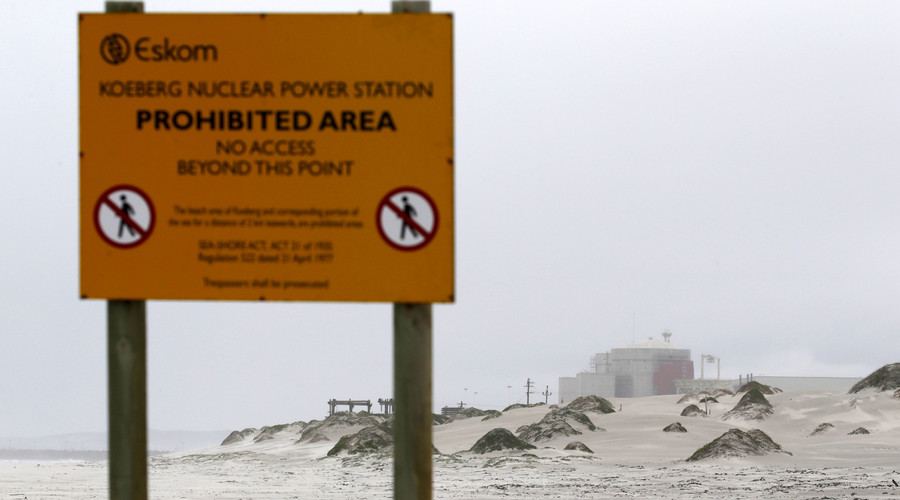
Koeberg nuclear power plant, Capetown

Koeberg is the only nuclear power plant on the continent of Africa and just 8km from the Milnerton fault, which crosses Table Bay.
While the largest earthquake to hit the city came more than 200 years ago, the Milnerton fault has the potential to hit at least 6.5 on the Richter scale.
Energy company Eskom have insisted the plant is built to "ensure that no radiation escapes under any conceivable circumstances, from an earthquake to a jumbo jet collision."
Diablo Canyon Power Plant, California
Situated along by the shores of the Pacific Ocean - and four active fault lines, this plant has come under scrutiny since Fukushima.
Diablo Canyon's two reactors lie in an earthquake red zone with the Hosgri fault, the Los Osos fault, the San Luis Bay fault, and the Shoreline fault all nearby - and the major San Andreas fault 80km away.
Operators PG&E say the plant has been upgraded to withstand a 7.5 magnitude earthquake and a 2011 report cited sensitivity tests that suggest the area was "very unlikely"to experience quakes larger than 7.1.
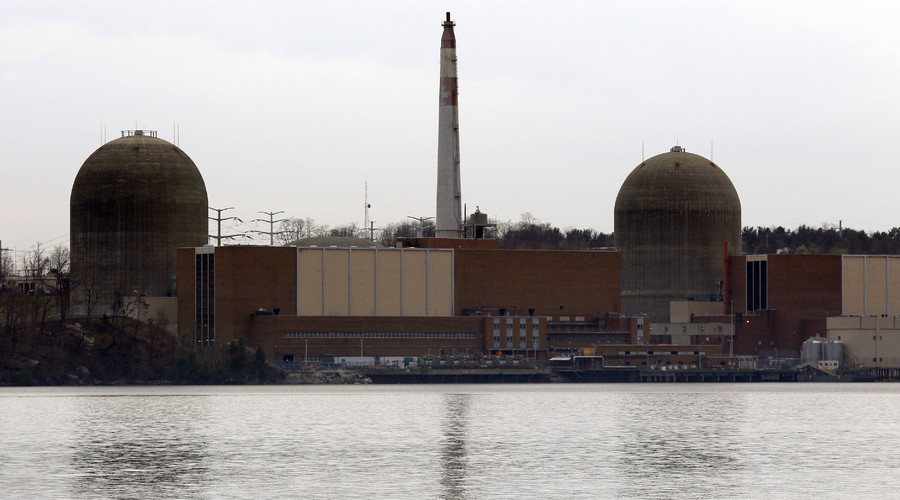
Indian Point, New York

The Empire State's Indian Point is considered by many to be the next Fukushima.
Not only has the plant been plagued with operational problems, but it is situated almost on top of the Rampano fault line.
A study by Columbia University in 2008 suggested the New York area was at greater risk of high-magnitude earthquakes than first thought, with the discovery of a new potential disaster area, the Stamfrod-Peekskill line.
A spill of radioactive water at the plant in January led environmentalists to call for its closure, with the Riverkeeper group declaring that the site, which runs reactors from the 1970s, "isn't safe anyone."
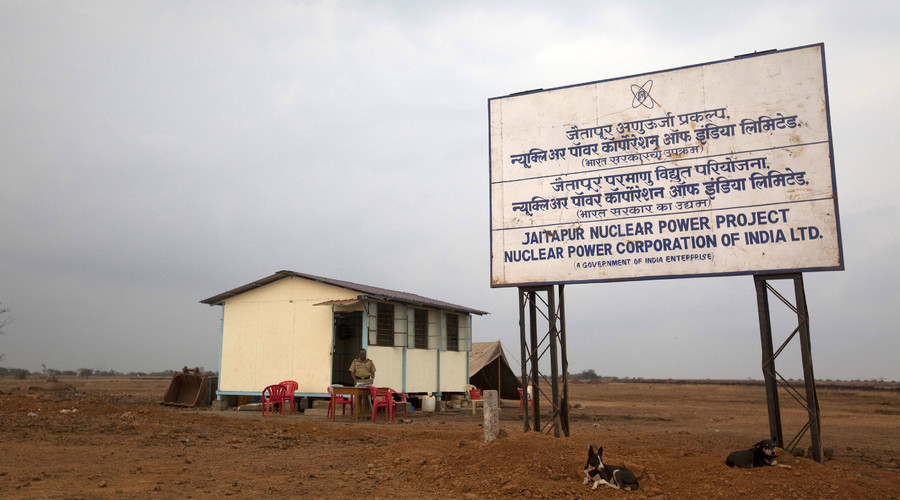
Jaitapur Nuclear Power Project, India

The French company Areva NP are proposing to build one of the largest nuclear plants in the world in India, capable of producing 9900 MW of power.
Greenpeace is among those opposing the six reactor plant, questioning the safety of its pressurized water cooling system and the shaky ground on which it might be built.
Like Fukushima Daiichi, Jaitapur would be operate along by the sea. Critics say the 16 fault lines on the west coast pose a serious threat to safety. However, India's Atomic Energy Regulatory Board are satisfied that there are no faults within 5km.
Columbia Generating Station, Washington state
The last nuclear power plant remaining in the Pacific Northwest, the Columbia Generating Station (CGS) could be a potential disaster because of its Fukushima-like boiling water reactor.
It's located near the Columbia river along the Cascadia subduction zone, acknowledged by the Washington State Department as capable of producing "some of the largest and most damaging earthquakes in the world."
A 2013 Seattle Times report quoted a geologist working with the Physicians for Social Responsibility as saying the plant had not undergone structural upgrades since its opening in 1984. A March 2015 risk assessment stated that seismic damage to the site "is low for CGS."
Arkansas Nuclear One, Arkansas
A study of the US Geological Survey hazard map suggests the Arkansas state nuclear plant could be at risk from the New Madrid zone, one of North America's most active areas for earthquakes.
A quake in 1811 was thought to be 8.0 on the Richter scale and reportedly rang bells over a thousand miles away in Boston. The US government warns the damage to the area is likely to be 20 times larger than a "big one" in California due to the "less fractured nature" of the rock.
Following the Fukushima disaster, Arkansas plant operators Entergy issued a statement detailing the improvements it was making to ensure nuclear safety.
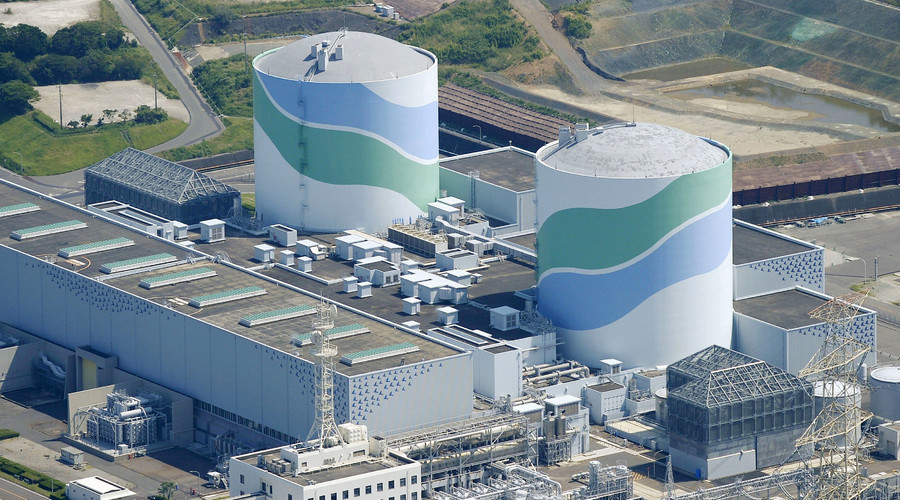
Sendai Nuclear Power Station, Japan

Sendai is currently the only nuclear power plant currently operational in Japan after the country's other 50 reactors were shut down following the Fukushima meltdown.
The plant was reopened in 2013 after a two-year break from nuclear energy. A report by the Japanese Nuclear Regulation Authority found the site safe to restart after upgrades of more than $100 million to meltdown systems and disaster response.
Sendai and other Japanese power plants need to withstand their precarious position near the tectonic plate zone called the Japan Trench. Because of plate movements in this area, the Pacific country is hit by an estimated 1,500 earthquakes per year.
Akkuyu Nuclear Plant, Turkey
The US$20-billion Akkuyu Nuclear Power Plant in Turkey slated to go up along the Mediterranean coast is a joint project with Rosatom.
Foundations for the four reactor facility were laid in April last year despite opposition to its location, which is approximately 25km from the Ecemis fault line.
The Republic of Cyprus expressed its concern with the plans when Energy Minister Antonis Paschalides questioned the decision to construct it in "a seismically active area."
~A.
Earthquake Risk | San Onofre Safety
Earthquake Risk
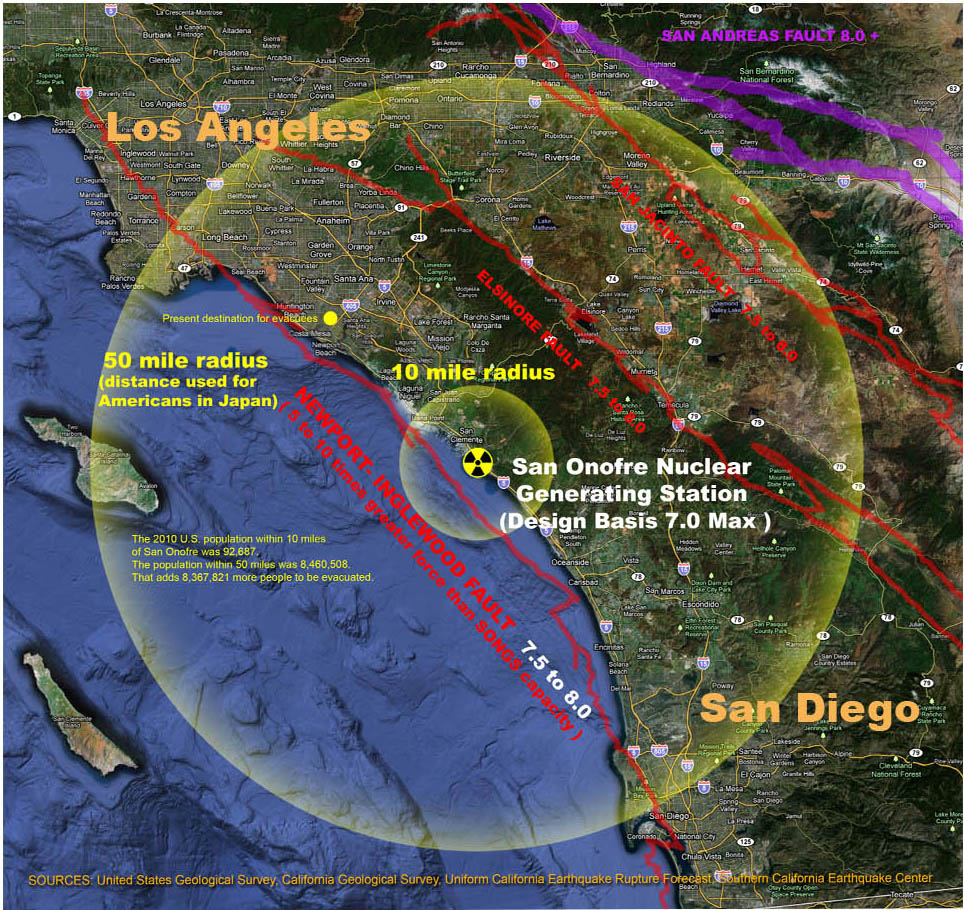
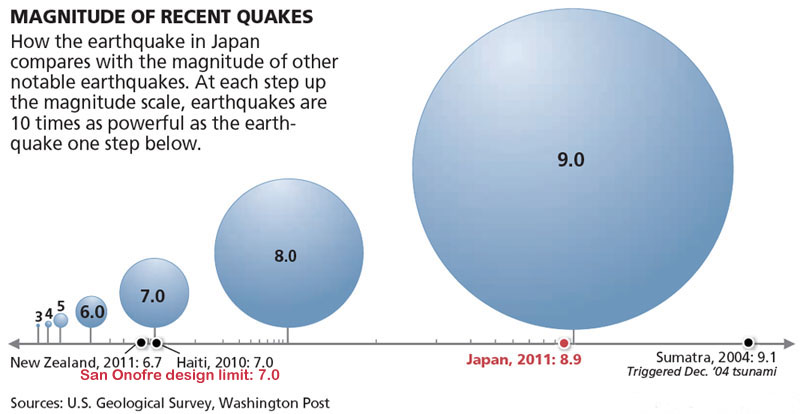
San Onofre was redesigned for a 7.0 earthquake, but sits near faults capable of 8.0+ earthquakes — 10 times larger, 32 times stronger, and long overdue. See USGS earthquake calculator.
There is no seismic rating for the nuclear waste thin storage canisters that may already be cracking at San Onofre and other nuclear plants, especially in the corrosive coastal environment. Each of the canisters contains more radiation (Cesium-137) than that released from Chernobyl.
Nelson Mar, PhD (former Senior Engineer for the original design of San Onofre Units 2 & 3), said San Onofre is not designed for current earthquake or tsunami risks. See 3/27/12 Irvine City Council meeting video.
Over the next 30 years the probability of a major earthquake occurring in Southern California is 60% and 67% in the San Francisco Bay area.
USGS: "...no scientists have EVER predicted a major earthquake."

5.5+ magnitude. Source: USGS Centennial Catalog 1900 – 2002 and USGS/NEIC (PDE) Catalog 1973 – Feb 2014
They do not know how and they do not expect to know how any time in the foreseeable future. Major earthquakes can occur on what are predicted to be minor faults. Based on scientific data, only probabilities can be calculated for potential future earthquakes. U.S. Geological Survey (USGS)
- "Information about how big an earthquake's going to be may not be in the earth's crust BEFORE the earthquake begins" says USGS seismologist Dr. Lucy Jones.
- Although it is known that most global earthquakes will concentrate at the plate boundaries, there is no reliable method of accurately predicting the time, place and magnitude of an earthquake…
Many seismic countries, however, have research programs based on identifying possible precursors to major earthquakes. This includes the study of dilatancy, how rocks crack and expand under the increased stress associated with the earthquake. Some major earthquakes, but not all, are heralded by the occurrence of foreshocks. which can be detected by dense local monitoring networks. Other instruments can measure changes in the levels of radon gas, electrical and magnetic properties, velocity changes of seismic waves and changes in topography. Long term monitoring and examination by these sensors is required as some or all of these factors may change due to the opening of cracks PRIOR to the earthquake. All attempts to predict earthquakes have, however, been generally considered as failures and it is unlikely that accurate prediction will occur in the near future. Efforts will, instead, be channelled into hazard mitigation. Earthquakes are difficult or impossible to predict because of their inherent random element and their near-chaotic behaviour. British Geology Survey FAQS
- "The Earth's natural systems are not static… This is why I personally feel we need to regularly update the scientific data we use to inform our regulatory approach so that our nuclear facilities are adequately protected against unanticipated events", said NRC Chairman Macfarlane at the November 6, 2012 INPO CEO conference, in reference to the Fukushima nuclear disaster.
Building design limitations due to ground motion unpredictibility
Professor Thomas Heaton of Caltech's Earthquake Engineering Research Lab, reveals limitations in designing structures to protect against large earthquakes. Every earthquake has different dynamics and affects different types of construction differently. "All tall buildings are designed to be flexible, but here's the rub," Heaton said. "People talk about a building designed for an 8 [magnitude], as if anybody has a good idea of what the actual ground motion would be in an 8. There's tremendous variation from one place to another." If you "put a really large quake under downtown L.A., 7-plus, it could be a true nightmare." L.A. Times, Earthquakes on the brain, April 1, 2014.
Disconnected faults can jump nine feet, according to new 2015 USGS data
Southern California 8+ earthquake 30-year probability increased from 3% to 7% due to new understanding about how disconnected faults can jump up to nine feet.
Estimates of the chance of a magnitude 8.0 or greater earthquake hitting California in the next three decades have been raised from about 4.7% to 7%, the U.S. Geological Survey said Tuesday [March 9, 2015]. Scientists said the reason for the increased estimate was because of the growing understanding that earthquakes aren't limited to separate faults, but can start on one fault and jump to others. The result could be multiple faults rupturing in a simultaneous mega-quake… LA Times, March 9, 2015
New Forecast for California's Earthquake Fault System, USGS, March 2015
Fracking on the Newport-Inglewood Fault
- Fracking for oil is currently being done in Baldwin Hills by the Plains Exploration and Production Co (PXP), a Texas based company, on the Newport-Inglewood fault. Earthquakes have been triggered by fracking.
- The Newport-Inglewood fault runs by the San Onofre nuclear power plant. Even though San Onofre is shutdown, the over 1600 tons of highly radioactive waste could be damaged by an earthquake from this fault, resulting in a nuclear disaster greater than the one currently happening in Japan. See also SCEC Final Technical Report, Integration of Fault Information, November 2009, p. 15 & 22.
- The California Conservation Division of Oil, Gas and Geothermal Resources has authority to regulate fracking, but refuses to do so. The last Division Chief lost her job after supporting stronger regulations.
- See The 'F' Word: Unregulated Fracking at Oil Wells Raising Concerns – KCET SoCal Connected 3/23/2012.
- "Governor Jerry Brown…"fired two officials who had sharply slowed down the process for issuing new drilling permits. He followed that with the year-end appointment of Tim Kustic as the chief drilling regulator —"a geologist who knows the industry," says Rock Zierman, head of the California Independent Petroleum Association. Occidental Petroleum CEO Steve Chazen gave Brown a nod at the company's fourth-quarter conference call in January: "We are pretty encouraged by the way things are going now. . . . The governor is very pro-jobs." City Journal Summer 2012.
- In the Los Angeles Basin (Figure 4.4-9), disposal wells are concentrated mainly in oilfields located along the Holocene Newport-Inglewood fault zone (slip rate 1.5 mm/yr), a segment of which was the source of the destructive 1933 Mw6.4 Long Beach earthquake, and in the Wilmington oilfield.
Several wells in the Wilmington field are located within 4 km (2.5 mi) of the Holocene Palos Verdes fault (slip rate 3 mm/yr). Only scattered seismicity has occurred near any these fields except Inglewood and Cheviot Hills at the northwestern end of the Newport-Inglewood trend. As in the Ventura Basin, clusters of seismicity are located close to some disposal wells but also elsewhere. The cluster at the top-center of the figure are aftershocks of the 2014 La Habra earthquake.
An Independent Scientific Assessment of Well Stimulation in California, An Examination of Hydraulic Fracturing and Acid Stimulations in the Oil and Gas Industry, Jane C. S. Long, PhD, California Council on Science and Technology, Steering Committee Chairman; Science Lead Jens T. Birkholzer, PhD, Lawrence Berkeley National Laboratory Principal Investigator; Laura C. Feinstein, PhD, California Council on Science and Technology, Project Manager
Fracking can trigger earthquakes

Correlation between earthquake frequency & volume of contaminated waste injected. Rocky Mountain Arsenal Well, Colorado 1962-65
Earthquakes can be triggered by any significant perturbation of the hydrologic regime. In areas where potentially active faults are already close to failure, the increased pore pressure resulting from fluid injection, or, alternatively, the massive extraction of fluid or gas, can induce sufficient stress and/or strain changes that, with time, can lead to sudden catastrophic failure in a major earthquake.
Source: Triggered Earthquakes and Deep Well Activities, Craig Nicholson and Robert L. Wesson, 1992.
.
Lessons learned from the March 11, 2011 9.0 Tohoku, Japan earthquake.
- Seismologists across the globe were surprised by the magnitude of shaking that occurred in the segment of fault responsible for the Tohoku quake. Japanese scientists had not believed a quake of such intensity could occur in that area, which in turn impacted tsunami strength estimates.
- Insights gained from the Tohoku earthquake are leading scientists to re-evaluate the way they've assumed many other major faults are segmented. This may end up altering some hazard analyses for the West Coast, and will contribute to improved scenario modeling, building code development, and public warnings about tsunami threats.
- An unparalleled amount of strong ground motion data were recorded.
- Many cases of liquefaction were witnessed and filmed for the first time. Liquefaction occurs when soil loses strength and stiffness due to an applied stress like an earthquake and behaves like a liquid, often causing damage to structures and infrastructure.
- Even though the Japanese had planned and were well-prepared for a 200- or 300-year tsunami, they were not prepared for the 1000-year tsunami (an event that's likely to occur just once every 1,000 years) that came instead. Consequently, Japan is currently updating its tsunami disaster plans for all of its coastal areas and requiring that all plans take evidence from paleo-tsunami deposits into consideration.
- Paleo-tsunami deposits are the sand and mud that tsunamis leave behind. By studying deposits from recent events like the March 11 tsunamis, scientists are able to develop criteria for what those deposits look like and use them to examine coastal areas for records of tsunamis that struck centuries back. They can tell when tsunamis occurred and how far inland they reached by looking at the evidence left behind. USGS coastal and marine geologists Bruce Jaffe, Bruce Richmond, and Rick Wilson have worked with Japanese scientists over the past year to study these deposits in Japan. Said Jaffe, "Japan has learned from this tsunami that it's necessary to look at the geologic evidence for tsunamis in conjunction with the current understanding of earthquake potential to accurately assess the future tsunami hazard." He explained that "Each tsunami brings its own sand and mud. Japan recognizes the value of using the very rich record of past tsunamis to help us understand the hazard for future tsunamis."
- The United States is also conducting its own paleo-tsunami deposit studies in California, Alaska, the Caribbean, Puerto Rico, and the Virgin Islands to better understand the tsunami risk in those areas.
Ratepayers must pay $64 million in new seismic studies.
- The California Public Utilities Commission is forcing ratepayers to pay $64 million in new seismic studies, even though existing data proves San Onofre cannot handle the current known risks and USGS says size of earthquakes is not predictable (e.g. size may change after earthquake begins). Similar $64 million dollar studies were also approved for the Diablo Canyon nuclear power plant.
- Part of the seismic studies include sonic blasts that will maim and kill large numbers of whales, dolphins, seals, sea lions, otters, and other marine life. See Coastal Commission staff recommendations approved by the Commission.
Lessons learned about strike-slip faults from 8.6 East Indian Ocean earthquake.
- On April 11, 2012, an 8.6 earthquake struck the East Indian Ocean along a strike-slip fault – the largest earthquake ever recorded on a strike slip and 10 times larger than any previously recorded strike-slip quake.
- A large earthquake in one part of the globe can trigger earthquakes elsewhere. In the 6 days after the quake, the number of earthquakes across the globe that were 5.5 or larger increased nearly five fold. "if you asked any of us if this event is possible a year ago, we would have laughed at you", said Thomas Heaton, seismologist at California Institute of Technology. BayCitizen.org 9/28/2012, USGS 9/26/2012, Nature 2012
San Onofre and Diablo Canyon nuclear plants are located within the "Ring of Fire".
The "Ring of Fire", also called the Circum-Pacific belt, is the zone of earthquakes surrounding the Pacific Ocean. About 90% of the world's earthquakes occur there.
See animation of 2011 global 6.0+ earthquakes (using USGS data) and more maps below.
Mexico's recent 7.4 earthquake (03/20/2012) was 2.5 times larger and 4 times stronger than what San Onofre is designed for. Japan's Fukushima Daiiachi nuclear meltdown began after a 9.0 earthquake.
Lessons learned about length of a fault.
Known length of a fault is not always a predictor of magnitude as in the 1952 Kern County 7.5 earthquake.

Vertical fracture on the northeast side of Bear Mountain, along the White Wolf Fault. At this location, a vertical displacement of 60 cm (2 ft) and a horizontal (left-lateral) displacement of 45 cm (1.5 ft) were measured along the break. Photo: University of California, Seismographic Station
Seismic evaluations are not required before license renewal.
San Onofre was originally licensed to shut down in 2013, but was extended to 2022. The plant was designed in 1973 for a 40 year lifespan. In 2013 Southern California Edison plans to ask for an extension to 2042. A comprehensive seismic analysis has not been conducted on San Onofre since 1995, according to an April 2012 Government Accountability Office report.
Handouts
.Resources
Forecasting California's earthquakes – What can we expect in the next 30 years (USGS) The Uniform California Earthquake Rupture Forecast, Version 2 (UCERF 2) California Institute of Technology (Caltech) Southern California Earthquake Center (SCEC) Nuclear Regulatory Commission LA Times "50 New California Faults" 04/28/2010 Earthquake Country Information Kern County Earthquake 7.5 (SCEC) Significant Earthquakes & Faults in Southern CA (SCEC) Earthquake Facts and Statistics (USGS) British Geological Survey FAQS .Maps
Southern California 8+ earthquake 30-year probability increased from 3% to 7% due to new understanding about how disconnected faults can jump up to nine feet. Estimates of the chance of a magnitude 8.0 or greater earthquake hitting California in the next three decades have been raised from about 4.7% to 7%, the U.S. Geological Survey said Tuesday [March 9, 2015]. Scientists said the reason for the increased estimate was because of the growing understanding that earthquakes aren't limited to separate faults, but can start on one fault and jump to others. The result could be multiple faults rupturing in a simultaneous mega-quake… LA Times, March 9, 2015
USGS A New Earthquake Forecast for California's Complex Fault System, March 2015
Note: Probabilities are outdated on this map. Use 2015 data from above for probabilitiesGlobal Earthquakes (1900-1999)
Source USGS
2011 Global 6.0+ earthquakes plotted and animated with sound
..
~A.