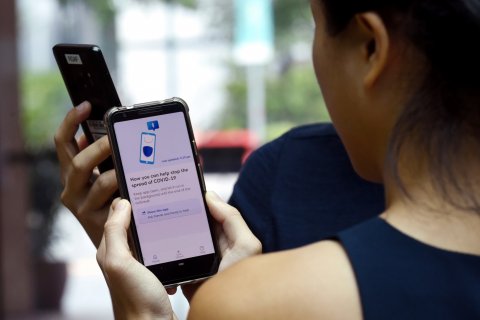
Wednesday, May 27, 2020

Was CoronaVirus A NATO ACT? Look At Previous NATO ACTs.

George Webb outlines and fills in the facts and players of ....
https://youtu.be/7RmGeilX6iM
Worth watching.

~A.

Monday, May 25, 2020

Is It Safe To Go To The Beach? Camp? Eat Out? Here's How To Evaluate The Risks : Shots - Health News : NPR

Is It Safe To Go To The Beach? Camp? Eat Out? Here's How To Evaluate The Risks : Shots - Health News : NPR

From Camping To Dining Out: Here's How Experts Rate The Risks Of 14 Summer Activities

Going to the beach
Meredith Miotke for NPR

It has been around two months of quarantine for many of us. The urge to get out and enjoy the summer is real. But what's safe? We asked a panel of infectious disease and public health experts to rate the risk of summer activities, from backyard gatherings to a day at the pool to sharing a vacation house with another household.

One big warning: Your personal risk depends on your age and health, the prevalence of the virus in your area and the precautions you take during any of these activities. Also, many areas continue to restrict the activities described here, so check your local laws.

And there's no such thing as a zero-risk outing right now. As states begin allowing businesses and public areas to reopen, decisions about what's safe will be up to individuals. It can help to think through the risks the way the experts do.

"We can think of transmission risk with a simple phrase: time, space, people, place," explains Dr. William Miller, an epidemiologist at Ohio State University.

Article continues after sponsor message

Here's his rule of thumb: The more time you spend and the closer in space you are to any infected people, the higher your risk. Interacting with more people raises your risk, and indoor places are riskier than outdoors.

Dr. Emily Landon, a hospital epidemiologist and infectious diseases specialist at University of Chicago Medicine, has her own shorthand: "Always choose outdoors over indoor, always choose masking over not masking and always choose more space for fewer people over a smaller space."

Our experts shared their thoughts via phone and email interviews.

Jump to an activity: backyard gathering; restaurant; worship service; beach or pool; outdoor party; public restroom; a friend using your bathroom; vacationing with another family; hotel; haircut; shopping mall; nightclub; camping; outdoor sports
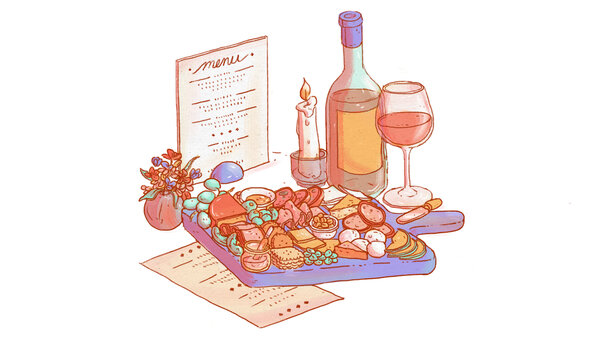
Going to a restaurant
Meredith Miotke for NPR

1. A BYOB backyard gathering with one other household: low to medium risk

Meeting in a spacious outdoor area with only a small group isn't too risky. But our experts say that safety here depends on whom you invite and what their behaviors have been. "If you have a gathering with one other household that [has] followed social distancing, this would be a low-risk activity," says Dr. Judith Guzman-Cottrill, a pediatric infectious disease expert at Oregon Health & Science University.

What alters risk? To lower risk, avoid sharing food, drinks or utensils — make it a BYO-everything party. Dr. Andrew Janowski, a pediatric infectious diseases expert at Washington University in St. Louis, notes that the food itself isn't the risk but touching shared dishes or utensils could be.

Watch out for drinking, says Dr. Abraar Karan, a physician and public health researcher at Harvard Medical School, as it can make people sloppy about social distancing. It also increases the odds that people will want to use your bathroom. "Once you move into the house with others, the risk profile goes up," he says.

Some experts suggest wearing a face covering, but Landon points out that you can't realistically stay masked while eating and drinking. She suggests an alternative to a meal would be a backyard lawn tournament: That way, "the kids can play together but still with their masks on." It could be fun for the grown-ups too.

2. Eating indoors at a restaurant: medium to high risk

Indoor dining "is still amongst the riskier things you can do," Landon warns. The trouble is, says Miller, "people tend to linger in restaurants. So even if spacing is OK, the duration of exposure is longer." Also, he says, talking "appears to lead to some release of the virus."

Karan notes that one outbreak in Guangzhou, China, took place in a restaurant with no windows and poor ventilation, and the air conditioning appears to have blown droplets between tables.

What alters risk? Janowski says the risk level depends on how well the restaurant has adapted for the pandemic. Eateries should reduce and space out seating, require servers to wear masks and offer easy access to hand-washing stations.

They should also provide single-use options for condiments so you don't have to touch shared ones, says Janowski. And they should close all self-serve areas like soda fountains or buffet tables.

If you do go to a restaurant, look for outdoor seating. Landon says she would go with only members of her household, because "I don't want to have to take my mask off in the close proximity of a bunch of other people."

3. Attending a religious service indoors: high risk

Worship services involve people from different households coming together indoors for an extended time. "All of the ingredients are there for the potential for a lot of people becoming infected in the short amount of time," says Kimberly Powers, an epidemiologist at the University of North Carolina at Chapel Hill. She points to outbreaks linked to churches: In one, 35 out of 92 people who attended a service at a rural Arkansas church developed COVID-19.

Singing — whether from the pews or the choir — is high risk, several experts noted, citing a study of a choir practice in Washington state where over half of attendees became infected.

What alters risk: If people are appropriately socially distanced, wear masks and avoid singing, it may reduce the risk, Karan says. Also, avoid any shared worship items like hymnals, Janowski adds.

Risk goes down if places of worship adapt, Guzman-Cottrill says. "My parish began having in-person services last week," she says. The church had advance sign-ups to limit attendance to 25 people. Attendees were required to be healthy, wear face coverings and sit at least 6 feet apart.

4. Spending the day at a popular beach or pool: low risk

As long as you can stay socially distanced, this could be a pretty safe activity, our experts say.

The water itself is not a risk. "The sheer volume of water will dilute out the virus, making the water a highly unlikely source of infection," says Janowski.

What alters risk? The key question is, how close are you to others? "Can you ensure that you can stay 6 feet [or more] from anyone outside of your designated family?" asks Rebecca Katz, director of the Center for Global Health Science and Security at Georgetown University Medical Center.

Watch out for crowds at entry points and bathrooms. Maintain social distance both on land and in the water.

Landon says her biggest worry about pools and beaches is kids. At pools, "they make friends with everyone," she says. "If you want to be able to see grandma for Sunday lunch, because that's what's really important to your family, then you don't want your kids running around with other people's kids."

She says a beach is better than a pool in terms of space. Go early in the morning or late afternoon, when crowds are lower, and look for beaches that mark off spots for people to set up their areas.

5. An outdoor celebration such as a wedding with more than 10 guests: medium to high risk
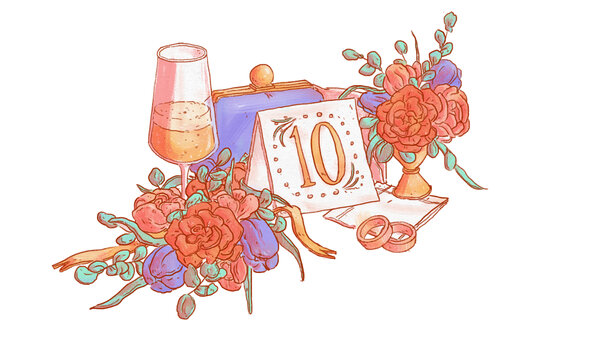
Attending a wedding
Meredith Miotke for NPR

Family-oriented celebrations are usually a summer tradition, but they come with a lot of risk right now. Many weddings have been postponed, with good reason.

"Outdoors reduces the risk, but as people are celebrating and drinking, it seems like they may not social distance as readily," says Karan, the Harvard physician. "These types of events end up being large crowds where people are having extended face-to-face conversations."

The larger the guest list, the greater the potential that one of them is infected, says Powers, the UNC epidemiologist.

What alters risk? The danger varies greatly depending on the size of the gathering and how closely people gather.

If you are considering hosting a celebration, make it a small one with mostly local guests. "Bringing people from other communities" is high risk, says Landon, of the University of Chicago. "If people have to travel by car, by plane, from other places, you're really asking for it."

And really think twice about inviting your relatives, particularly older family members or those with underlying conditions. People may feel pressure to attend, even though it's hazardous to their health — and even more so if you emphasize that you're going to try to make it safe, says Landon. One of the largest clusters of deaths from the virus in Chicago occurred after a funeral in which one of the attendees spread it to many of his family members.

6. Using a public restroom: low to medium risk

Restrooms have been designed to prevent disease transmission, says Landon: "There are all sorts of things that you can catch from other people's poop, and you almost never do, because they're set up with all hard surfaces that can be cleaned."

The risk depends on the number of local COVID-19 cases and how clean the bathroom is, says Janowski of Washington University, noting that a bathroom involves multiple high-touch surfaces.

There isn't yet sufficient data to know if there's risk from toilet flushes aerosolizing the virus. Landon says that other viruses, such as norovirus, can be aerosolized by flushing, but norovirus doesn't often spread that way as long as bathrooms are cleaned. The CDC says it's "unclear whether the virus found in feces may be capable of causing COVID-19."

What alters risk: Miller says the main risk comes from restrooms that are small, busy and poorly ventilated — like "those restrooms in a gas station off the highway where the restroom is outside."

Choose a bathroom that looks clean and is well stocked with supplies such as paper towels, soap and toilet paper. Avoid bunching up in a line to use the toilet or staying there long, if you're within 6 feet of others. Wash your hands after you go, and use hand sanitizer on them if you need to touch any surfaces after that.

7. Letting a friend use your bathroom: low risk

Landon doesn't think it's a big risk: "What happens in the bathroom is going to be sucked out of the bathroom ventilation, and you can clean all the hard surfaces really easily."

Miller agrees: "You can run the fan, leave the door open after (so air flows) and clean the bathroom later. And if you use the bathroom after they do, just wash your hands."

What alters risk? It's possible that your friend is infected but asymptomatic, says Janowski. "It would be reasonable to decontaminate the bathroom after a friend uses it, including cleaning the high-touch surfaces of the door, toilet and sink."

8. Going to a vacation house with another family: low risk

Experts said that if both families have been quarantining and limiting their exposure to others, this is pretty safe. "If one family is very active or parents have higher-exposure jobs, then the risk increases," Miller says.

Landon thinks this arrangement could be a good idea, especially if the house is "in the woods where you're not going to have a lot of contact with other people," she says.

What alters risk? Landon suggests talking with the other family beforehand to make sure you share the same expectations for the precautions everyone will take in the two weeks before arrival and while you're there. Ensure that no one has signs of illness — if they do, they need to stay home. Miller recommends cleaning the major surfaces in the house on arrival. "And the more that people can reduce exposure in the days leading up to the trip, the better," he adds.

9. Staying at a hotel: low to medium risk
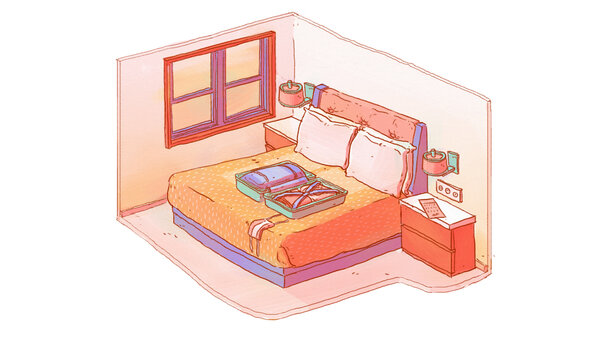
Staying in a hotel
Meredith Miotke for NPR

The consensus is that staying at a hotel is relatively low risk, especially once you're in your room. It's best to limit your time in common areas such as the lobby, gym, restaurant and elevator, where the risk of exposure is higher.

What alters risk? Bring disinfecting wipes to wipe down the TV remote control and other common surfaces. You might also want to remove the bedspread since it may not be cleaned after every guest, suggests Miller. Ask about the hotel's cleaning policies, as many have new COVID-19 protocols. "Beware of the elevators! Use the knuckle of your little or ring finger to press the buttons," says Miller.

Other suggestions: Order room service rather than eating at the restaurant, avoid the exercise room and wear a face covering in public spaces.

10. Getting a haircut: medium to high risk

A haircut involves "close contact and breathing that is extended for several minutes," Karan notes. "This is the primary mode of transmission that we know happens. And cloth masks certainly are not perfect for this."

Janowski says this is one of the highest-risk scenarios on this list, because there's no way to keep 6 feet from someone cutting your hair. "All it takes is [having] one asymptomatic but infected worker, and suddenly many customers are at high risk of infection," he says.

What alters risk? Landon believes the risk is not terribly high if both you and your haircutter wear masks and if COVID-19 is not very prevalent in your area. Look for a salon or barbershop that has (and enforces) policies to protect its employees, like wearing protective gear and sanitizing hands, she says: "By protecting their employees, they're protecting you too."

And make sure that your barber or stylist is all business, says Karan: "Stopping to chat at close distance like this is something we all love doing with our barbers normally. This is not the time for it."

11. Going shopping at a mall: risk varies

How risky this is depends on what kind of mall it is, how crowded it is and how much time you spend there, our panel agreed. "Crowds with high density lead to substantial increase in risk," says Miller. "The major mitigating factor is that people don't mingle in a single place for long."

What alters risk? Outdoor malls are preferable to indoor ones. And empty malls are better than crowded ones. Avoid the food court and go with purpose, not leisure, says Landon: "As much as you may like retail therapy, you should browse online before you go. Know what you're going to pick up or try on. Wear your mask. Go in, look at it. Make your decision and get out."

Be alert while you're there to avoid close contact. "Maintain your space," says Miller. "Try to go at off-peak hours." Bring hand sanitizer, says Guzman-Cottrill, and use it frequently, especially if you touch any shared surfaces like handrails or elevator buttons.

12. Going to a nightclub: high risk

There is consensus among the experts that going to a nightclub is a very high-risk activity. Crowds, ultra-close contact, singing, sweating and inhibition-loosening alcohol are a potent cocktail of risk factors. When drinking, people become less compliant with rules, Miller says, and they may breathe heavier from the dancing — "which means more virus is being shed," he says. If there's an infected person in the mix, the virus can spread easily.

"This is a very high-risk situation for an outbreak, as we saw in South Korea just recently," says Karan, referring to an outbreak tied to several nightclubs and bars. "Don't go to bars or clubs right now."

What alters risk? Nothing makes this a good idea right now. If you want to dance, have a dance party at home with the people in your intimate circle. If it's a small outdoor gathering, dancing under the stars — 6 feet apart — would be much less risky too.

13. Going camping: low risk

Camping
Meredith Miotke for NPR

"As far as summer activities go, this is least risky from a virus perspective," says Katz, of Georgetown. You're outdoors and isolated. Miller agrees — but he says that if you're going with a group, be sure you can trust your fellow campers. Have they been social distancing and following the guidelines? If not, they could be asymptomatic spreaders of the virus.

What alters risk? Of course, risks can creep in, depending on the particulars. "Are you camping in an isolated outdoor location with your family?" Katz asks — this is the lower-risk scenario. It's more dangerous if you're at a crowded campground with a shared restroom and communal picnic areas, she says. "Sleeping in tents together with others [not from your household] can certainly be a setup for transmission," adds Karan.

Bottom line: The activity itself is low risk, but the people whom you'll be in close contact with during the trip could increase the hazard.

14. Exercising outdoors: low risk

Unless you're playing group sports, exercising outdoors is a good way to burn off steam while staying socially distant. Our experts agree that sports such as golf and tennis are safer than contact sports such as basketball and football. "I would personally avoid contact sports until we have a better sense of transmission risk here," Karan says.

And running? "If you're not on a crowded path where people are brushing past each other, then I think that's a great form of exercise right now," says Powers.

What alters risk? The more people involved in the activity, the higher the risk. It's possible to spread the virus when you're in close proximity to others — even if you're asymptomatic — so it's best to wear a mask if you can't stay socially distanced.

The risk depends on the sport. A game like basketball is tricky, Landon says. "You're touching the ball and you're going to be breathing in each other's faces," so she suggests playing only with people in your household. Tennis carries a much lower risk: "You're far apart on either side. That's definite social distancing," she says.



~A.

Thursday, May 21, 2020

 Opening Week at Mystic Seaport Museum — Signup Sheet | SignUp.com

⚓️This is the coolest app! Ainsley made this happen....so many helpful hours willing to support the Seaport!🐳

https://signup.com/client/invitation2/secure/3268937/false


~A.

'Plandemic' Documentary

'Plandemic' Documentary

'Plandemic' Documentary

The 26-minute documentary "Plandemic," part 1, by Mikki Willis, features Judy Mikovits, Ph.D., a cellular and molecular biologist1 whose research showed that many vaccines are contaminated with gammaretroviruses, thanks to the fact that they use viruses grown in contaminated animal cell lines.

Mikovits suspects COVID-19 may in fact be a type of vaccine-derived or vaccine-induced retroviral infection, and she's undoubtedly qualified to comment on this disease because of her groundbreaking research on retroviruses.

In other words, she believes SARS-CoV-2 merely serves to activate or wake up a dormant XMRV infection, which then causes the symptoms of COVID-19. Work done by Mikovits between 2009 and 2011 suggested 25 million to 30 million Americans were carriers of XMRVs and other gammaretroviruses.

Seeing how that estimate is over a decade old, that number is now likely to be far higher. In my view, her hypothesis is an interesting one that should warrant further investigation.

Censorship and Discrediting Campaign Is in Full Swing

As expected, this film is being censored from all mainstream media networks, including, of course, YouTube. To get around the censorship, Willis is asking people to download, share and upload on other sites as they please.

That there's an upswell of public awareness is evidenced by the fact that Facebook, YouTube and Twitter are all said to be "struggling" to quell the tidal spread of the film. As reported by CNET:2

"Two simple searches on YouTube on Friday morning found nine copies of the video, with a combined 295,000 views. After CNET contacted YouTube with links to the copies, all but one were removed for violating community guidelines."

The rise of public awareness is also evidenced by the fact that Mikovits' latest book, "Plague of Corruption,"3 released April 14, 2020, rose to become a No. 1 best-seller within the first week. In it, she names names, and one of them is Dr. Anthony Fauci, the much-beloved leader of the White House's pandemic response team. It's not surprising then that the discrediting campaign against her and Willis is equally robust.

It will likely be difficult to ignore such attempts. A quick online search May 12, 2020, for "Plandemic" returns not a single link to a positive review or commentary in the first dozen pages. So, before you're persuaded by those who have skin to lose in this game, I urge you to look into her story for yourself. Watch the film and read her book. 

What Are Human Gammaretroviruses?

The reason Mikovits' career was destroyed was because she and her colleagues discovered that vaccines can spread gammaretroviruses that in turn can trigger diseases such as chronic fatigue syndrome,4 certain kinds of autism, cancers, leukemias and lymphomas. 

Gammaretroviruses5 are viruses that can cause cancer, leukemia and immune deficiencies in various animals. As explained in a 2011 paper on gamma retroviruses:6

"Retroviruses are evolutionary optimized gene carriers that have naturally adapted to their hosts to efficiently deliver their nucleic acids into the target cell chromatin, thereby overcoming natural cellular barriers …

Retroviral vectors are fascinating and efficient delivery tools for the transfer of nucleic acids. As a hallmark, all retroviruses are capable of reverse transcribing their single stranded RNA genome into double stranded DNA, which will be stably integrated into the host cell genome.

As highly evolved parasites they act in concert with cellular host factors to deliver their nucleic acid into the nucleus, where they exploit the host cell's machinery for their own replication and long-term expression occurs."

The key take-home here is that retroviruses are "integrated into the host cell genome," and infection can result in "long-term expression." In other words, once they're in your body, they can remain dormant, only to reactivate when conditions are favorable.

In this regard, they're quite different from your average virus that, when you're exposed, invades your cells, replicates and causes symptoms, and is eventually eliminated from your body through your immune response.

In 2009, Mikovits and her team discovered and isolated the first human gammaretrovirus family of retroviruses, known then as XMRVs. XMRV stands for "xenotropic murine leukemia virus-related virus." Xenotrophic refers to viruses that only replicate in cells other than those of the host species. So, XMRVs are viruses that infect human cells yet are not human viruses.7

Advertisement

Click here to learn Dr. Mercola's top tips to combat coronavirus

Safer Vaccines Can Be Made

Many critics paint Mikovits as your average "anti-vaxxer," failing to address one of her key points, which is that safe vaccines can be made, so why use dangerous ones?

She proposes a novel vaccine for viruses like SARS-CoV-2 that involves alpha interferon, small amounts of the virus and peptide T, which would block the interaction of the virus and keep your T cells from getting infected.

Unlike conventional vaccines, which are mostly injected, this would be oral and would only stimulate antibody humoral responses. Her version would also cause innate cellular immunity from the T cells. As Mikovits explained in my recent interview with her, featured in "Could Retroviruses Play a Role in COVID-19?":

"I was part of the team that first used the immune therapy, a purified Type 1 interferon alpha, as a curative therapy for a leukemia. That research has proceeded for decades, [yet] the Food and Drug Administration said, 'You can't use that in preventing coronaviruses from jumping from animals [to humans].'

[Type 1 interferon] is a simple food. It's a simple spray. We have it on the shelf now, made by Merck, [yet] Merck discontinued its use. Why would you do that if that was the frontline … prevention? Interferon alpha is your body's own best antiviral against coronaviruses and retroviruses."

Understanding Interferons

Interferon Type 18,9 is a type of beneficial cytokine released by your body as one of its first lines of defense against viral infections. In a nutshell, it interferes with viral replication. It's also been shown to suppress certain types of tumors. As part of your immune system, it digests viral DNA and viral proteins in infected cells while simultaneously protecting noninfected neighboring cells.

Interferon alpha and beta also help regulate your immune response. As noted in a 2018 paper10 on the dual nature of Type 1 and Type 2 interferons, "both antiviral and immunomodulatory functions are critical during virus infection to not only limit virus replication and initiate an appropriate antiviral immune response, but to also negatively regulate this response to minimize tissue damage."

Like Mikovits, Dominic Chan, a Doctor of Pharmacy who recently updated an article on interferon on Medicinenet.com., proposes using interferons against COVID-19. The earlier version of this article, written by Eni Williams, Pharm.D. and Ph.D., before she died in 2017,11 says:12

"Interferons modulate the response of the immune system to viruses, bacteria, cancer, and other foreign substances that invade the body. Interferons do not directly kill viral or cancerous cells; they boost the immune system response and reduce the growth of cancer cells by regulating the action of several genes that control the secretion of numerous cellular proteins that affect growth …"

She goes on to list a number of interferons that are commercially available, including Intron-A (interferon alfa-2b), Betaseron (interferon beta-1b) and many more. In April 2020, Chan added:

"Interferon beta-1a, currently in use to treat multiple sclerosis, and interferon alfa-2b are both under investigation as potential treatments for people with COVID-19 coronavirus disease …

Interferon Beta 1a, specifically, activates macrophages that engulf antigens and natural killer cells (NK cells), a type of immune T-Cell … The theory is, interferon may be able to make the immune system stronger by turning on dormant parts and directing them toward the defense against SARS-CoV-2's assault."

One of Mikovits' primary treatment recommendations for COVID-19 is interferon 1 alpha, sold under brand names such as Alferon and Roferon, to shut down the replication of RNA viruses, including retroviruses and coronaviruses.

She believes it might be beneficial to take twice a day for the duration of known exposure. Although a 1 milliliter bottle of Alferon costs between $600 and $700,13,14 one only needs small amounts and a bottle can treat 1,000 people for a week.

It's worth noting the warnings, however. According to Chan, if you already have flu-like symptoms and take interferons, the symptoms are likely to get worse before they get better, as your immune system ramps up. "If someone is already on a ventilator and symptoms are about to overwhelm them, giving them an interferon-based medicine could be catastrophic," he says.

Flu Vaccination May Increase Risk of Coronavirus Infection

In the film, Mikovits cites a paper15 published in the January 10, 2020, issue of the Vaccine journal, which found you're 36% more likely to get coronavirus infection if you got the influenza vaccine in 2017 or 2018. As noted in this study, titled "Influenza Vaccination and Respiratory Virus Interference Among Department of Defense Personnel During the 2017-2018 Influenza Season":

"Receiving influenza vaccination may increase the risk of other respiratory viruses, a phenomenon known as virus interference. Test-negative study designs are often utilized to calculate influenza vaccine effectiveness.

The virus interference phenomenon goes against the basic assumption of the test-negative vaccine effectiveness study that vaccination does not change the risk of infection with other respiratory illness, thus potentially biasing vaccine effectiveness results in the positive direction.

This study aimed to investigate virus interference by comparing respiratory virus status among Department of Defense personnel based on their influenza vaccination status. Furthermore, individual respiratory viruses and their association with influenza vaccination were examined."

Interestingly enough, while seasonal influenza vaccination did not raise the risk of all respiratory infections, it was in fact "significantly associated with unspecified coronavirus (meaning it did not specifically mention SARS-CoV-2) and human metapneumovirus" (hMPV).

Those who had received a seasonal flu shot were 36% more likely to contract coronavirus infection and 51% more likely to contract hMPV infection than unvaccinated individuals.16

Looking at the symptoms list for hMPV17 is also telling, as the main symptoms include fever, sore throat and cough. The elderly and immunocompromised are at heightened risk for severe hMPV illness, the symptoms of which include difficulty breathing and pneumonia. All of these symptoms also apply for COVID-19.

Again, if you've been barraged with articles telling you "Plandemic" is a "hoax" and that Mikovits is a disgraced researcher whose work has been "debunked," please, do your own research. Some truths are hard to swallow, but they're crucial if we care about our own, let alone public, health.

If you want to see my excellent interview with Judy that is three times as long as the above video, you can view the video below.


~A.

Sunday, May 17, 2020

Guide to: TRAIL SIGNS

Katie Wanders : Outdoorsy Girls Guide to: TRAIL SIGNS

Guide to: TRAIL SIGNS

Today, we are talking about Trail Signs


Even if you consider yourself to be a serious hiker, you can learn something new in this little post of trail sign information.  Sometimes when you are following a trail, it is a very clear path in an open area (think somewhere like the desert).  The trail you are typically following is a 4 to 6 feet wide cleared compacted surface. If it crosses a grass-covered area, you're likely to see a bare earthen path where the trail is. Trail maintainers will sometimes leave fallen logs along the side of the trail to mark its sides and channel hikers along the intended path.  Other times, you are in a dense section of woods or on a less traveled trail and you need to rely on trail signs to stay on the path.  


So you are out on a hike on your local trails and you see a bunch of blazes on the trees.  Often, its just a single blaze marking the trail you are supposed to follow ahead (hey here's the trail, head straight).  Sometimes, you get a collection of blazes in different configurations and colors.  

Color Coded Trails

Some famous long-distance hiking trails that traverse our country are blazed a specific color.   Here in New England, the famous Appalachian Trail which passes through Connecticut is blazed white.  Connecticut also has a blue-blazed trail system with more than 825 miles marked with blue rectangular blazes. The New England Trail (a 215-mile trail) starts in my hometown of Guilford, Connecticut and travels from Long Island Sound to the Massachusetts/New Hampshire border.  The Long Trail blazed white travels 272 miles through Vermont.  


Blazes are placed on trees or posts, slightly above eye level so that hikers can see them easily when traveling in either direction. In areas where the trail receives winter use, blazes are placed higher so they are visible above the snow.  According to the NPS, both paint and nail-on type blazes should be 2″× 6″ vertical rectangles.  In rocky areas, you can often see the blazes painted right on the rocks.  In some spots, cairns mark the trails instead of blazes.  A cairn is a mound of rough stones built as a landmark.


Trail Signs/Patterns

Trail blazes are organized in different variations to depict the start, end, or turn in the trail.  If the blaze is raised to the top right, the trail turns right.  If the blaze is raised to the left, the trail turns left.  A single market means continue straight while three blazes mark the start or end of the trail, or the start of a spur trail. 


Trail signs telling you the trail turns right 


End of yellow trail 


Start of red trail 

Geodetic Survey Disk


Geodetic Surveys

While blazes mark the trails, geodetic markers mark the summit.  At the top of mountain summits, you will likely find this metal circle stamped into the highest point.  These circles are installed by the  US Geological Survey and/or the National Geodetic Survey.   


In 1929, the National Geodetic Survey (NGS) compiled all of the existing vertical benchmarks and created the National Geodetic Vertical Datum of 1929 (NGVD 29). Since then, movements of the Earth's crust have changed the elevations of many benchmarks. In 1988, NGVD 29 was adjusted to remove inaccuracies and to correct distortions. The new datum, called the North American Vertical Datum of 1988 (NAVD 88), is the most commonly used vertical datum in the United States today. 


Trail Register


Trail Registers

Another aspect to be aware of is trail registers.  Think of a trail register as a "wilderness ledger".  Usually its some time of box with a lid, or some kind of safe-guarded clipboard.  Why sign in?  First off, it could save your life as it allows rescuers to know what trail you were on, what time you left, and how many were in your group.  People can also leave notes on the trail register which includes important things like wildlife sightings, warning you of wildlife frequenting the area.  Trail registers also offer a tool for researchers to better understand trail use in that area.  If you can figure out how many hikers use a trail in a day/week/month, you can find various ways to protect and preserve the trail and wildlife around it.  


While trail signs may seem straightforward, knowing a few simple things about their color, orientation, and how they are placed is extremely helpful while out on the trail.  No matter what color trail you are following, stay safe, know your trail signs, and happy hiking! 


~A.

Friday, May 15, 2020

Would You Let The Government Track Your Smartphone If It Meant We Could Reopen Sooner?


Geez, Louise…..

Would You Let The Government Track Your Smartphone If It Meant We Could Reopen Sooner?

lockdown privacy google apple Newsweek cover smartphone
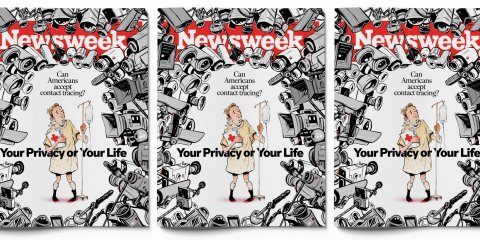
Would you let the government track your smartphone if it meant we could reopen sooner? Britt Spencer for Newsweek

Before the pandemic, the plan would have seemed like something ripped from a distant dystopian future in which the human race fully surrenders to Big Tech. On the April 10 online document, the logos of Google and Apple sat atop a description of the companies' joint plan to enable America's cellphones to keep track of everyone with whom their owners come into contact.

Who would sign on to such extensive surveillance? Much of the world already has. In South Korea, health officials use apps and video cameras to track down people who came into contact with COVID-19 patients before symptoms appeared. China, Singapore and Australia already have phone-based contact-tracing in place, and much of Europe is following suit. The UK's National Health Service, for instance, has endorsed a scheme that's undergoing a pilot test, and Germany's government is close behind.

As U.S. governors consider how to open up and allow people to go back to work, experts warn that the coronavirus, which is still in circulation, is almost certain to flare up again. To avoid more emergency-room disasters like the one that overwhelmed New York City in April, public-health officials must act aggressively to stop small outbreaks before they develop into big ones. The key, experts say, is contact tracing. For each new COVID-19 case, health care workers would develop a list of people the patient might have interacted with before symptoms developed. Then they would contact each one and recommend self-quarantine.

Contact tracing was used effectively during previous outbreaks, notably HIV/AIDS. With COVID-19, inquiries wouldn't be as intrusive as questions about sexual partners, of course, but they would reach many more people—in a country where citizens take to the streets over such assaults against their liberty as the closing of hair salons and gyms. With the coronavirus infecting tens of thousands of people each day, tracking down all those contacts would take an army of health care workers: about 100,000, says the Johns Hopkins Center for Health Security.

Technology, the thinking goes, might help automate the process. It's worked in South Korea, which achieved COVID-19 numbers that are the envy of much of the world: as of early May, it logged fewer than 11,000 cases, in a population of 50 million, and just over 250 deaths—or 1/16th the U.S. per capita case rate, and 1/300th the death rate. More than 20 countries, including most of Asia, have already been enlisting cellphones to help identify those who might have been exposed to the infection, so those people can self-isolate or get cleared by a test. America, with its vaunted technology industry, is a laggard.

It sounds like great news for the U.S., then, that contact-tracing capabilities are coming soon to a phone near you. As many states consider allowing people to go back to work, health experts say that identifying individuals who come into contact with people who have tested positive for the virus, so they can follow up with voluntary self-quarantines, is essential for keeping the outbreak from getting out of control. But such contact-tracing efforts are time-consuming and labor intensive. The hope is that all the information our phones can pull in about us, including where we are and who or what's nearby, can provide a much-needed assist, as they have in South Korea and elsewhere.

But Americans are not quite like the rest of the world. Perhaps more than the population of any other country in the world, Americans tend to resist letting the government keep a close eye on them, even under life-and-death circumstances. In the case of contact tracing, that reluctance looks like an immovable obstacle. "In a fast-moving pandemic, protecting individuals' rights to privacy limits the ability of the government to protect the health of the population," says Eric Campbell, a researcher with the University of Colorado's medical campus specializing in health policy and bioethics.

FE_Privacy_06
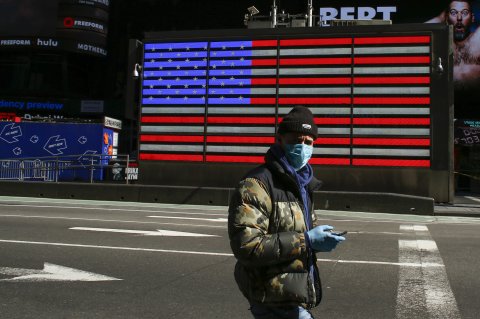
A man wears a face mask as he check his phone in Times Square on March 22, 2020 in New York City. Kena Betancur/AFP/Getty

The challenge is not technological. The Google-Apple plan and other proposed automated contact-tracing schemes check off all the boxes that privacy advocates have drawn. The challenge, rather, is that the privacy requirements themselves block data that health care officials need to keep people safe. None of the plans proposed so far gives officials and individuals enough reliable, detailed information to make a big difference.

The value Americans place on privacy virtually guarantees that automated contact tracing isn't going to make a big difference any time in the next several months and may never achieve the impact in the U.S. it's having elsewhere in the world.

Just saying no

Any U.S. contact-tracking scheme for cell phones, no matter how well crafted, is likely to run into a buzzsaw of noncompliance. No one expects the Trump administration to require participation. No state has floated a mandatory plan, either. States and localities that have mandated masks have seen angry protests in response. The town of Stillwater, Oklahoma, lifted its mask-wearing proclamation after businesses reported receiving serious threats from customers. On May 1, a store security guard in Flint, Mich. who demanded that a customer comply with the state's mask-wearing requirement was shot dead.

It's no wonder there's little appetite for requiring people to submit to electronic tracking. Any smartphone-based contact-tracing apps would have to be optional—optional to download, optional to activate, optional to self-isolate or get tested if notified of exposure, optional to report being infected, and optional to share related data with public-health officials or anyone else.

In Europe, optional participation is not expected to be a big impediment. An Oxford University survey found acceptance of contact-tracing apps in Germany, Italy and France would run between 68 and 86 percent. In the U.S., by contrast, only 45 percent of people find contact tracing with smartphones acceptable, according to a survey by the Pew Research Center in April. "To prove really useful, at least 60 percent of the population would have to participate," says Jennifer Daskal, director of the Tech, Law, Security Program at American University Washington College of Law. "With all the skepticism here, it's not clear how we'd get to that level of compliance." It doesn't help that individual users get no direct benefit from using an app, only the possible privilege of being notified of the need to go back into quarantine. The benefit accrues to everyone else.

Privacy advocates say there are legitimate fears about a contact-tracing policy that would allow organizations to identify individuals by name, along with personal information such as their locations, the names of people they're with and, especially, health information such as whether or not they've been diagnosed with COVID-19 or exposed to it and what symptoms they might have. The Health Insurance Portability and Accountability Act of 1996, also known as HIPAA, limits the sharing of information about underlying health conditions among health care organizations but doesn't prevent most companies from sharing information they happen to get their hands on.

The Google-Apple scheme, like other proposals from MIT, Stanford and elsewhere, is designed to head off those concerns. For instance, it doesn't record locations or names. Instead, it assigns each phone a unique number, which changes every 15 minutes or so to make it nearly impossible to associate the number to a name. The only information the software grabs for each phone are the unique numbers of other phones lingering nearby—close enough to flag possible coronavirus transmission, should the holder of any of those phones turn out to be infected.

To accommodate privacy concerns, the Google-Apple software stops short of providing full contact-tracing capabilities. Users have to download contact-tracing apps that can make use of the unique identifiers the phone gathers. If a user is infected, they voluntarily report that fact to the app, which then, with permission, sends out a list of unique numbers representing the phones of the people who might have been infected too in recent days. Those numbers would go to a computer run by whatever organization is managing the contact-tracing effort—most likely a government health department—which would send out some sort of "you might have been exposed" notification, along with instructions for quarantine and testing.

FE_Privacy_02
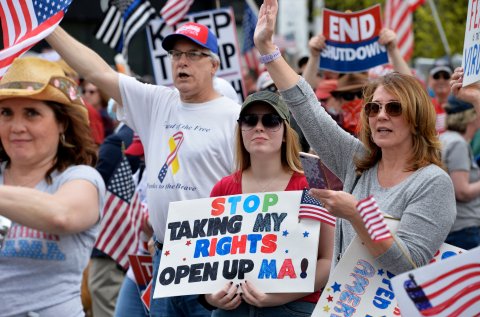
Protesters rally, to demand an end to the state wide 'stay at home advisory' and the new law enforcing everyone to wear a mask in public, outside the Massachusetts State House in Boston, Massachusetts on May 4, 2020. JOSEPH PREZIOSO/AFP/Getty

Where would the apps come from, and who would oversee them? In all non-U.S. countries with automated contact tracing, government health agencies at the national level, such as the UK's National Health Service, select the app and determine key details: how users report infections, who is notified when, what information is stored where. But the U.S. has no such organization. The closest thing is the Centers for Disease Control and Prevention (CDC), which does not have the authority to dictate detailed policies. "We've never had a national public-health infrastructure capable of handling this sort of task," says John Christiansen, an Olympia, Wash., attorney specializing in public and private health information technology. "We don't even have many state public health agencies that are strong enough. Most public health infrastructure happens at the local level, if it happens anywhere at all."

The thought of a patchwork of city- or county-level programs across the nation all specifying their own apps and policies doesn't inspire much confidence. But neither do the alternatives. Let Google, Apple or other tech giants run a national contact-tracing program and take control of the information? Unlikely. A study by the Kaiser Family Foundation found that half as many people would download a contact-tracing app from a tech company as from a public-health agency.

The best bet for a quasi-trusted authority capable of managing a large contact-tracing-app program might be a coalition of state-level health care players including hospitals, insurers and state health agencies, says Christiansen. Some states, including Washington, have coalitions in place to manage health-record sharing and uniform billing. But whether enough of these coalitions could be formed in time, and whether they'd be able to effectively manage such a massive public-health effort and reach a large-enough share of the population, are shaky propositions, he adds.

Is it secure?

Most of the world's automated contact-tracing schemes take measures to hide individual identities, typically through some form of "information blurring"—stripping out identifiable information such as names, randomly altering just enough of the data to prevent personal identification or replacing detailed data with aggregated summaries.

The Google-Apple plan goes further: it never records identifiable information in the first place, and it stores what information it does record on each user's phone and nowhere else.

The trouble is, phones are easily hacked. Companies, for instance, routinely harvest data from the phones of people who wander into stores, via open Bluetooth and wifi channels. That data includes mobile tracking numbers assigned to each device. The data is often sold to third-party data brokers where it becomes part of the information economy, exploited for targeting ads and other purposes. The Google-Apple system relies on an always-on Bluetooth connection on each user's phone in order to detect nearby phones and to swap the special contact-tracing numbers unique to each phone. "That significantly increases the privacy risks of any contact-tracing system that uses Bluetooth," says Alan Butler, interim executive director and general counsel at the Electronic Privacy Information Center, a privacy advocacy group in Washington, D.C. And it's one big reason the UK chose to go with a scheme that stores information on centralized servers rather than on individuals' phones.

FE_Privacy_03
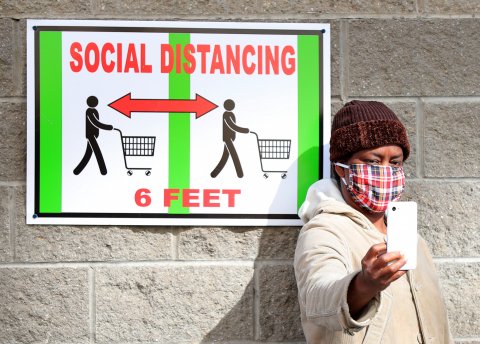
A customer takes a selfie in front of a sign recommending social distancing while waiting to enter the Industry City Costco store on April 28, 2020 in the Brooklyn borough of New York City. Mike Lawrie/Getty

Anonymity is another soft spot for contact-tracing schemes. Google-Apple's system of using ever-changing identifiers is meant to ensure that information can't be used to identify the individuals to whom the phones belong. But no such scheme has ever proven unbreakable—all kinds of supposedly "de-identified" information has later been "re-identified." One easy way to do it is to glean health-related comments from social media along with the names of the posters and correlate the comments with de-identified medical information. In 2018, Facebook worked with Stanford University's health care system and the American College of Cardiology to explore exactly that sort of approach. And last year Facebook for a time allowed outside companies to pore over supposedly private group posts to extract health information that could in theory be used for that purpose as well.

Even Google-Apple's extensive protections can't guarantee the privacy of contact-tracing participants, says Butler. "There are lots of ways hackers and others could reverse-engineer the system to re-identify people who have been infected," he says. (Google did not respond to a request for comment. An Apple spokesperson referred Newsweek to previously published material from the two companies.)

The downside risk for users of contact-tracing apps is high. Information about who is infected or who was in proximity to whom, if hacked, could have an impact on individuals' employment, personal relationships and public reputations. "It's not hard to understand why law enforcement, intelligence agencies or foreign malicious actors might want to make use of proximity-tracking data," says Daskal.

Proponents argue that the risk of misuse of data could be contained by ensuring data is regularly deleted as it becomes irrelevant to managing infection—after about two weeks, according to the Google-Apple scheme—and that the entire system is dismantled when the pandemic crisis has passed. But privacy advocates note that most of the "temporary" investigatory mechanisms put in place in the U.S. in the immediate aftermath of 9/11 remain in effect today.

Questioning the benefits

All of these risks might prove acceptable to a big swath of the American public if a proposed contact-tracing system could be counted on to play a big role in taming the pandemic. But even if enough people opted in to the system and chose to faithfully report their own infections and comply with self-isolation, plans like Google-Apple's would likely have so many false alarms and missed exposures that people would lose faith in them, says Ryan Calo, a law professor at the University of Washington Law School and co-director of the school's Tech Policy Lab. "They just wouldn't be effective, and in fact could do more harm than good."

Calo, who recently testified to the Senate on privacy issues in the coronavirus response, notes that Bluetooth signals can easily penetrate walls, car windows and other barriers that the coronavirus can't. That means many of the "you need to self-isolate" notifications sent out by Bluetooth-based systems like Google-Apple's would go to people who couldn't have been exposed. By the same token, the system would completely miss serious exposures caused by contacting, say, particles on surfaces or in the air freshly coughed-out by an infected person who has just walked away or left their phone in the other room or back in their car, out of reach of proximity detection. "You'd get false reassurances that you haven't been exposed, and there'd be a whole range of situations where you wouldn't get notified when you need to be," says Calo.

The system itself is vulnerable to misdirection as well, Calo says. Political operatives hoping to discourage voter participation or malicious agents eager to disrupt a neighborhood or an entire city could arrange for dozens or even hundreds of people to falsely report infections, triggering a slew of phony notifications. South Korea and many other countries limit these sorts of problems simply by allowing their contact-tracing systems to gather and store more data, including GPS location data, personal health records and video-camera images. This extra data can validate or eliminate proximity alerts, as well as improve the accuracy of infection reporting. But it exacts a high cost in privacy that most Americans wouldn't be willing to pay.

FE_Privacy_01
Government Technology Agency (GovTech) staff demonstrate Singapore's new contact-tracing smartphone app called TraceTogether, as a preventive measure against the COVID-19 coronavirus in Singapore on March 20, 2020. CATHERINE LAI/AFP/Getty

If these obstacles were overcome, another problem would remain: the vast inequities such a system might inject into the coronavirus battle. About 20 percent of Americans don't have smartphones, locking them out of the system. Most live in vulnerable and predominantly minority communities, which frequently harbor an especially deep distrust of sharing information with public officials, particularly out of fear it may be shared with law enforcement agencies. And many people in those same communities will simply choose to ignore any notification to self-isolate because they need to keep working to meet their families' most basic necessities, undermining the essential function of the app. "People in these communities would be invisible to the whole automated contact-tracing model," says Kirsten Ostherr, director of Rice University's Medical Futures Lab.

Lowering expectations

Still, to say that cellphone contact tracing is going to return incomplete and flawed information, fall far short of needed adoption rates, and may carry privacy risks, is not to say we should skip it altogether. Even the most ineffective versions of the proposed schemes could still get hundreds of thousands of people to self-isolate or get tested when exposed, slicing off at least a small chunk of the new-infection rate. Tens of millions of Americans will decide any extra risks to their privacy will be a small price to pay for a chance to help contain the disease.

The biggest danger to automated contact-tracing schemes is that authorities and the public misplace their faith in how much those schemes can contribute and shortchange the tactics that likely will do a much better job. That includes conventional contact-training carried out by trained workers, making rapid testing widely available, and continuing to encourage and when necessary enforce social-distancing and self-isolation policies.

If we take all those steps, says Daskal, we have a real chance of reducing the infection rate to manageable levels—and that's when automated contact-tracing might actually become a more workable scheme. "If we can get closer to normal, then phone contact-tracing can be useful in protecting against small flare-ups becoming massive ones," she says.

In the dystopia we now seem to inhabit, though, "normal" seems so far away.

cornavirus lockdown contact-tracing smartphones privacy
Your Privacy or Your Life: Can Americans Accept Contact Tracing? Newsweek cover Britt Spencer for Newsweek