Friday, October 16, 2020

Majority Are Already Immune Against SARS-CoV-2

Majority Are Already Immune Against SARS-CoV-2

Majority Are Already Immune Against SARS-CoV-2

The more data becomes available about SARS-CoV-2, the more obvious it becomes that the response to this pandemic has been grossly overblown. Fatality statistics1,2,3,4,5,6,7 from multiple sources, calculated in a variety of ways, show the risk of dying from COVID-19 is lower than your risk of dying from conventional influenza, at least if you're under the age of 60.

Overall, the data8,9 also show that the overall all-cause mortality has remained steady this year and doesn't veer from the norm. In other words, COVID-19 has not killed off more of the population than would have died in any given year anyway.

Several studies also suggest immunity against SARS-CoV-2 infection is far more widespread than anyone imagined, and that the threshold for herd immunity is far lower than previously estimated.

Most Are Already Immune to SARS-CoV-2 Infection  

Studies supporting the claim that widespread immunity against SARS-CoV-2 already exists include:

• Cell, June 202010,11 — This study found 70% of samples from patients who had recovered from mild cases of COVID-19 had resistance to SARS-CoV-2 on the T-cell level. Importantly, 40% to 60% of people who had not been exposed to SARS-CoV-2 also had resistance to the virus on the T-cell level.

According to the authors, this suggests there's "cross-reactive T cell recognition between circulating 'common cold' coronaviruses and SARS-CoV-2." In other words, if you've recovered from a common cold caused by a particular coronavirus, your humoral immune system may activate when you encounter SARS-CoV-2, thus rendering you resistant to COVID-19.

• Nature Immunology, September 202012 — This German study was initially posted on a preprint server in June 2020 under the title, "SARS-CoV-2 T-cell Epitopes Define Heterologous and COVID-19-Induced T-Cell Recognition."13

It's now published in the September 2020 issue of Nature Immunology with the slightly altered title, "SARS-CoV-2-Derived Peptides Define Heterologous and COVID-19-Induced T Cell Recognition."14 Much like the Cell study above, this investigation also found that that:

"Cross-reactive SARS-CoV-2 peptides revealed pre-existing T cell responses in 81% of unexposed individuals and validated similarity with common cold coronaviruses, providing a functional basis for heterologous immunity in SARS-CoV-2 infection."

In other words, even among those who were unexposed, 81% were resistant or immune to SARS-CoV-2 infection. The term "heterologous immunity" refers to immunity that develops against a given pathogen after you've been exposed to a nonidentical pathogen.

Typically, this occurs when viruses are sufficiently similar or from closely related species. In this case, SARS-CoV-2 appears to be sufficiently similar to coronaviruses that cause the common cold, so that if you've been exposed to any of those coronaviruses, your immune system is also able to combat SARS-CoV-2.

• The Lancet Microbe, September 202015,16 — This study found that rhinovirus infection, responsible for the common cold, largely prevented concurrent influenza infection by triggering the production of natural antiviral interferon.

The researchers speculate that the common cold virus could potentially help protect against SARS-CoV-2 infection as well. Interferon is part of your early immune response, and its protective effects last for at least five days, according to the researchers. Co-author Dr. Ellen Foxman told UPI:17

"Infection with the common cold virus protected cells from infection with a more dangerous virus, the influenza virus, and [this] occurred because the common cold activated the body's general antiviral defenses.

This may explain why the flu season, in winter, generally occurs after the common cold season, in autumn, and why very few people have both viruses at the same time. Our results show that interactions between viruses can be an important driving force dictating how and when viruses spread through a population.

Since every virus is different, we still do not know how the common cold season will impact the spread of COVID-19, but we now know we should be looking out for these interactions."

• Nature, July 202018,19,20 — Originally posted on a preprint server in May 2020,21 this Singaporean study was published in the July 2020 issue of Nature.22 Here, they found that common colds caused by the betacoronaviruses OC43 and HKU1 might make you more resistant to SARS-CoV-2 infection, and that the resulting immunity could potentially be long-lasting.

Patients who recovered from SARS infection back in 2003 still had T cell reactivity to the N protein of SARS-CoV now, 17 years later. These patients also had strong cross-reactivity to the N protein of SARS-CoV-2.

The authors suggest that if you've beaten a common cold caused by a OC43 or HKU1 betacoronavirus in the past, you may have a 50/50 chance of having defensive T-cells that can recognize and help defend against SARS-CoV-2. According to the authors:

"These findings demonstrate that virus-specific T cells induced by infection with betacoronaviruses are long-lasting, supporting the notion that patients with COVID-19 will develop long-term T cell immunity.

Our findings also raise the possibility that long-lasting T cells generated after infection with related viruses may be able to protect against, or modify the pathology caused by, infection with SARS-CoV-2."

• Cell August 202023,24 — This Swedish study, initially posted on a preprint server in June 202025 and now published in the October 2020 issue of the journal Cell,26 found that SARS-CoV-2-specific memory T cells likely provide long-term immune protection against COVID-19. According to the authors:27

"Acute-phase SARS-CoV-2-specific T cells displayed a highly activated cytotoxic phenotype that correlated with various clinical markers of disease severity, whereas convalescent-phase SARS-CoV-2-specific T cells were polyfunctional and displayed a stem-like memory phenotype.

Importantly, SARS-CoV-2-specific T cells were detectable in antibody-seronegative exposed family members and convalescent individuals with a history of asymptomatic and mild COVID-19.

Our collective dataset shows that SARS-CoV-2 elicits broadly directed and functionally replete memory T cell responses, suggesting that natural exposure or infection may prevent recurrent episodes of severe COVID-19."

Click here to read more

Innate and Adaptive Immunity

It's important to realize you have two types of immunity. Your innate immune system is primed and ready to attack foreign invaders at any moment and is your first line of defense. Your adaptive immune system,28 on the other hand, "remembers" previous exposure to a pathogen and mounts a response when an old foe is recognized.

Your adaptive immune system is further divided into two arms: humoral immunity (B cells) and cell mediated immunity (T cells). The B cells and T cells are manufactured as needed from specialized stem cells. The graphs below are from my vitamin D report and will help you understand the components of these systems and their timing.
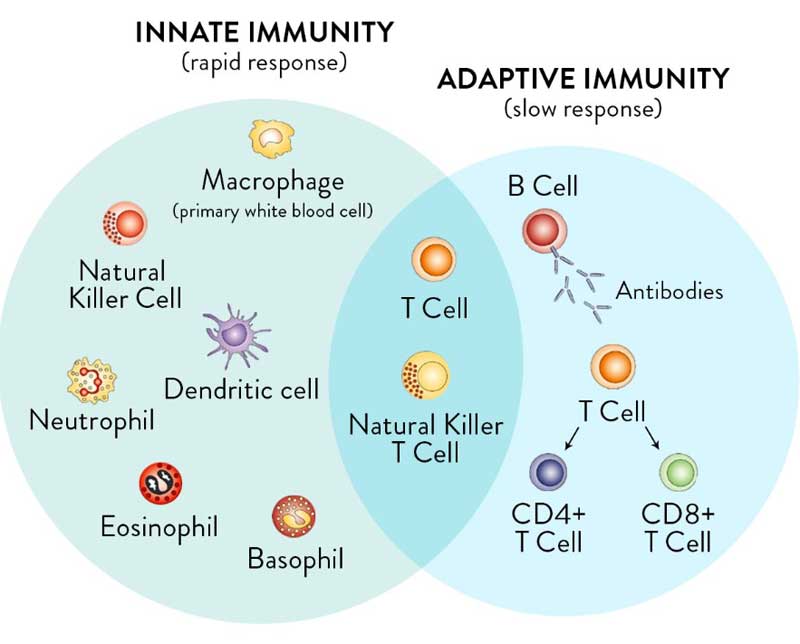

immunity diagram
immunity graph

If you have never been exposed to a disease but are given antibodies from someone who got sick and recovered, you can gain humoral immunity against that disease. Your humoral immune system can also kick in if there's cross-reactivity with another very similar pathogen.

As you can see from the list above, in the case of COVID-19, evidence29 suggests exposure to other coronaviruses that cause the common cold can confer immunity against SARS-CoV-2. 

On the flip side, there's a phenomenon known as viral interference, where exposure to one virus makes you more susceptible to another virus. Importantly, research30 has found that those who received the influenza vaccine were 36% more susceptible to coronavirus infection.

Mathematical Models Add Support for Widespread Immunity

If it's true that a majority already have some measure of immunity against COVID-19 due to previous exposure to other coronaviruses, then we've probably already reached the threshold for herd immunity, and vaccinating every human on the planet (or close to it) will not be necessary.

Added support for the idea that herd immunity may already have been achieved in most countries comes from statisticians working with mathematical models. In June 2020, Freddie Sayers, executive editor of UnHerd, interviewed31 professor Karl Friston, a statistician who claims immunity against SARS-CoV-2, globally, might be as high as 80%, as reviewed in the video interview above.

Friston is credited with inventing a statistical parametric mapping technique that is now the standard for understanding brain imaging. As the pandemic erupted, he began applying this method of analysis (which he refers to as "dynamic causal modeling") to COVID-19 data, coming up with a model that predicts far lower mortality rates than earlier models.

The reason for this is because the "effective susceptible population," meaning those who are not already immune to COVID-19 and therefore at risk of infection, was never 100%. At most, it was 50% and most likely only around 20%.

Friston's model effectively vaporizes claims that social distancing is necessary, because once sensible behaviors such as staying home when sick are entered into it, the positive effect of lockdown efforts on "flattening the curve" simply vanish. In all likelihood, the global lockdowns were completely unnecessary, and certainly should not continue, now or in the future.

Signs of Herd Immunity Emerge in Sweden

One country that bucked the global lockdown trend was Sweden, and they now appear to be head and neck ahead of most other countries in terms of herd immunity, while having a death toll that is very similar to nations that destroyed their economy and sacrificed the population's mental health in the name of infection control.

Anders Tegnell, the chief epidemiologist in charge of Sweden's coronavirus response, has stated32 he does not believe Sweden will see a second wave with widespread contagion as the country is seeing a rapid decline in positive tests, indicating herd immunity has been achieved.33

He told The Guardian34 that the primary goal was always merely to slow the spread to avoid overwhelming medical services. The intention was never to prevent infection from spreading altogether, which has indeed proven impossible.

This was in fact the original plan just about everywhere. But while Sweden stuck to the original goal, and by mid-September boasted all-time low infection rates,35 other nations have twisted response plans to prevent infection transmission altogether, even among those for whom the risk of such an infection is vanishingly minor, such as school-aged children.

The two graphs from The Guardian,36 below, show Sweden's infection rate and deaths per million, compared to other countries that enforced stricter lockdown rules.
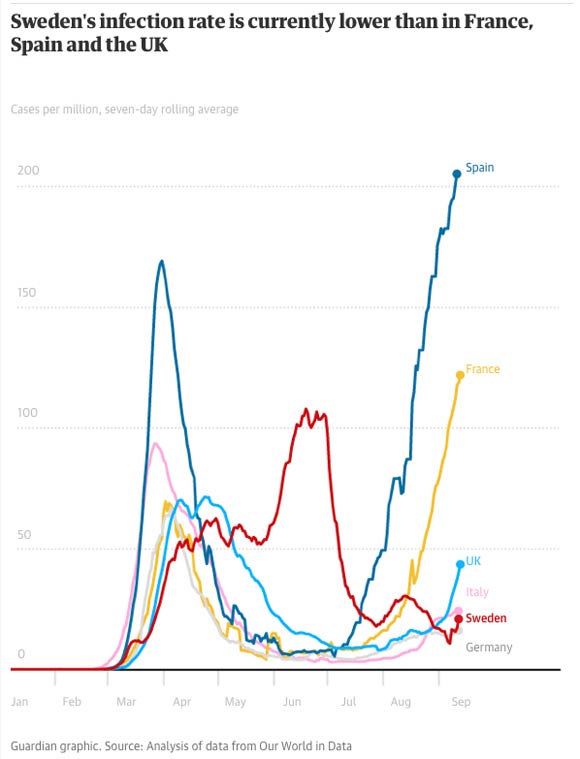
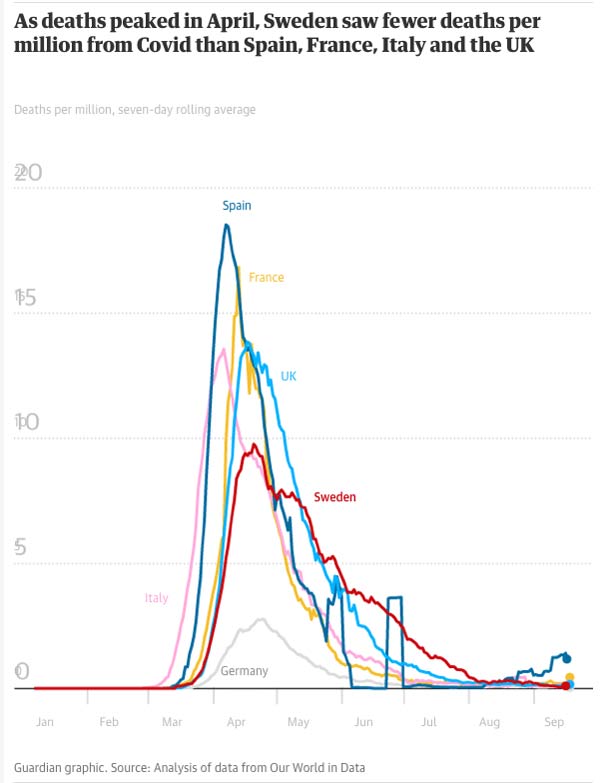
sweden's infection rate and deaths per million
swedens infection rate april

Herd Immunity Threshold Likely Below 50%

As reported in "Herd Immunity 'Ahead of Schedule'" experts initially estimated that 70% of the population or more would need to be immune before herd immunity would be achieved. Now, more than a dozen scientists claim the herd immunity threshold is likely below 50%.

As stated earlier, if this is true — and as you can see by the studies reviewed, it appears a majority do have some level of immunity — then the need for a vaccine more or less vanishes.

Herd immunity is calculated using reproductive number, or R-naught (R0), which is the estimated number of new infections that may occur from one infected person.37 R0 of below 1 (with R1 meaning that one person who's infected is expected to infect one other person) indicates that cases are declining while R0 above 1 suggests cases are on the rise.

It's far from an exact science, however, as a person's susceptibility to infection varies depending on many factors, including their health, age and contacts within a community. The initial R0 calculations for COVID-19's herd immunity threshold were based on assumptions that everyone has the same susceptibility and would be mixing randomly with others in the community.

"That doesn't happen in real life," Dr. Saad Omer, director of the Yale Institute for Global Health, told The New York Times.38 "Herd immunity could vary from group to group, and subpopulation to subpopulation," or even zip code. When real-world scenarios are factored into the equation, the herd immunity threshold drops significantly, with some experts saying it could be as low as 10% to 20%.

Researchers from Oxford, Virginia Tech and the Liverpool School of Tropical Medicine are among those that found39,40 when individual variations in susceptibility and exposure are taken into account, the herd immunity threshold dips below 10%.

Independent news source Off-Guardian also cited41 data from Stockholm County, Sweden, which shows a herd immunity threshold of 17%,42 as well as an essay by Brown University professor Dr. Andrew Bostom, who noted:43

"Lead investigator Dr. Gomes, from the Liverpool School of Tropical Medicine, and her colleagues concluded: "naturally acquired immunity to SARS-CoV-2 may place populations over the herd immunity threshold once as few as 10-20% of its individuals are immune."44

Separate HIT [herd immunity threshold] calculations of 9%,45 10-20%,46 17%,47 and 43%48,49 — each substantially below the dogmatically asserted value of ~70%50 — have been reported by investigators from Tel-Aviv University, Oxford University, University College of London, and Stockholm University, respectively."

Declaration Urges Implementation of Herd Immunity Approach

All in all, there are many reasons to suspect that continued lockdowns, social distancing and mask mandates are completely unnecessary and will not significantly alter the course of this pandemic illness, or the final death count.

As reported by British Sky News,51 October 7, 2020, many respected scientists are now calling for a herd immunity approach to the pandemic, meaning governments should allow people who are not at significant risk of serious COVID-19 illness to go back to normal life. According to the article:52

"The so-called Great Barrington declaration, signed by leading experts from the universities of Oxford, Nottingham, Edinburgh, Exeter, Cambridge, Sussex and York, suggests herd immunity as a way forward.

The declaration states: 'The most compassionate approach that balances the risks and benefits of reaching herd immunity, is to allow those who are at minimal risk of death to live their lives normally to build up immunity to coronavirus through natural infection, while better protecting those who are at highest risk. We call this focused protection."

The declaration points out that current lockdown policies are having "devastating effects on short and long-term public health" that will result in excess mortality in the future, primarily among younger people and the working class.


~A.

Wednesday, October 14, 2020

Ivo Zdarsky has been living in a Utah ghost town by himself since 2007 - Insider

Ivo Zdarsky has been living in a Utah ghost town by himself since 2007 - Insider

A man who lives alone in an airplane hangar in a Utah ghost town has found the ultimate escape

New Image
Ivo Zdarsky has lived alone in an airplane hangar in Lucin, Utah, since 2007.
Ivo Zdarsky
  • Ivo Zdarsky has been living alone in an airplane hangar in a ghost town in Utah since 2007.
  • He escaped Communist-era Czechoslovakia in a homemade hang glider in 1984, then founded a propeller company in California in 1986.
  • In 2007, he bought an abandoned airport in Lucin, Utah, to have the space to work on various projects.
  • He spends his days tinkering in his workshop, hiking, hunting, fishing, and flying himself around the country.
  • "I enjoy it," he told Insider about his solitary life in Lucin. "If I didn't like it, I wouldn't be here.

Ivo Zdarsky has been social distancing since before that became common vernacular.

Zdarsky has lived alone in an airplane hangar in the abandoned town of Lucin, Utah, since 2007.

When asked why he moved to the desert, he dryly explained, with the raspy voice of a man who doesn't speak much, "I escaped from Czechoslovakia, then I was in California, and then I moved here."

But that's a very simplistic version of events. As he warms up to me, he reveals that, in 1984, he escaped the KGB in communist-era Czechoslovakia by building himself a hang glider and flying into Austria in the dead of night, where he was granted political asylum. He didn't even tell his family about his plan to escape.

He has fond memories of the Austrian guards that took him in, recalling that they gave him coffee and doughnuts and let him sleep in an unlocked jail cell before moving him around the country to keep the KGB from finding him.

Image (6)
Zdarsky, pictured in Austria in front of the hang glider he built and escaped with.
Ivo Zdarsky

In the 1980s, Czechoslovakia, now the countries of Slovakia and the Czech Republic, was communist-ruled. According to Britannica, during this time Czechoslovakia was "one of the more prosperous but also one of the more repressive countries in eastern Europe."

Zdarsky wanted out: He wanted the freedom to build planes, start a business, and do as he pleased. 

After only six weeks as a political refugee in Austria, he was sent to Long Beach, California, where he founded a propeller manufacturing company in 1986.

When asked about his business, his answer is equally simplistic. "I was flying these ultra-light hang gliders, and I couldn't find a good propeller, so I just made one," he said. "People liked it, so I sold the propeller, and then I had money to make two propellers. Then I sold two propellers and had money to make three propellers…"

In 2007, Ivo Zdarsky traded California for Utah, describing it as yet another 'escape'

.......cyaLucin Airport
The Lucin International Airport, aka Zdarsky's home and workshop.
Ivo Zdarsky

In 2007, Zdarsky bought an airport in Lucin, Utah, which was founded as a railroad community in the 1860s when the First Transcontinental Railroad was built, according to Atlas Obscura. The town was abandoned in 1936, briefly resettled by a group of retired railroad workers, but once again empty by 1972. The area is now managed by the Utah Division of Wildlife Resources. According to Deseret News, a local news outlet, Zdarsky spent $99,000 to buy 400 acres there.

The "airport" was not much more than a runway when he bought it. He had a 100-by-50-feet steel hangar built and moved in shortly after. The hangar, one giant open space with no walls or windows, is his workshop, garage, and home in one. He calls it Lucin International Airport, and that's what shows up on my screen when I call him.

Lucin Airport
A screenshot of our call.
Sophie-Claire Hoeller/Insider

He said he's always been drawn to abandoned places, and that he was sick of Long Beach's "high-density population" and traffic on the freeways. But he also needed room to work on his various projects — for one, a sort of helicopter and plane hybrid. 

"I kinda like it here," he says in his trademark frankness.

He describes Lucin as a 'ghost site' as opposed to a ghost town, since he says that most buildings were razed, leaving almost nothing behind

Train traveling during the Lucin Cutoff construction, Utah, United States, 1956
Lucin was once a railroad community.
J.R. Eyerman/The LIFE Picture Collection/Getty Images

Zdarsky isn't lonely though. While otherwise tight-lipped about her, he said he has a girlfriend in Ogden, which is 163 miles away, that visits regularly, as well as friends that occasionally drop by to do some exploring, and that "you always run into people." When pressed to describe how often "always" is he retorts, "If you define seeing people by seeing a car driving by, maybe once a week."

However, he adds that the F.A.A., which leases a navigational beacon from him, must maintain it and regularly sends employees to check on it. He said he often sees people from the phone company, and that there are always explorers around.

He flies 45 minutes to Ogden around once a month to stock up on groceries

DSC00266.JPG
The plane/helicopter he is working on.
Ivo Zdarsky

Zdarsky also regularly flies himself around the country to explore it, from the New Mexico desert to lava caves in Idaho and South Dakota's badlands.

He speaks of wildfires and earthquakes as frequent occurrences but non-events. He spends his days tinkering around his workshop, busying himself with different projects — he recently built himself a speargun which he used to go fishing in Micronesia — and doing maintenance on his fence and the airport runway, which he says the badgers like getting into. He also loves hiking and exploring his own backyard, hunting, and fishing, and says that there are tons of beautiful spots around him.

He said while the post office won't deliver to his remote location, UPS and FedEx will, and there's a Schwan's food delivery truck that used to bring him prepared meals, which he canceled after gaining too much weight. He also brags that his internet speed is much higher than most people's with 90 megabits per second. "So I'm on Amazon ordering stuff and then UPS will bring it to me in the middle of nowhere," he said gleefully.

From the Iron Curtain to the Utah desert, Zdarsky has found himself the kind of freedom most people only dream of. He can do what he wants, when he wants, and can even fly wherever he wants.

"I enjoy it," he said dryly. "If I didn't like it, I wouldn't be here."

For more stories like this, sign up to get Insider Life Weekly directly into your inbox.

NOW WATCH:


~A.

Monday, October 12, 2020

What device (iPad) should I use with Canvas? - Canvas FAQ

What device (iPad) should I use with Canvas? - Canvas FAQ

What device (iPad) should I use with Canvas?

The Short Answer

We offer two hardware options for using Canvas with the iPad: using a LiDAR-enabled iPad, or adding a Structure Sensor to a compatible iPad model. 

In short, for most users, Scan To CAD results will be highly comparable with either option, but using Canvas with Structure Sensor will generate higher-detailed 3D meshes (which is helpful if you intend to make heavy use of the 3D scan data itself). You can learn more about the difference between using Canvas with a LiDAR-enabled iPad or a Structure Sensor here: Should I use Canvas with a LiDAR-enabled iPad or a Structure Sensor?

For most users, if you don't have an iPad, the absolute easiest and cheapest way to get started will be with the 11-inch iPad Pro 2nd Generation, which starts at $799 and, as it has a LiDAR sensor embedded into the device, doesn't require a Structure Sensor. You can simply download Canvas and start scanning.

If you already have an iPad, you can "upgrade" any of models listed below to be able to 3D scan by attaching a Structure Sensor. The iPad 7th Generation (starts at $329) is a great trade-off for cost vs. experience and speed, and we offer it by request as a bundled option in the Total Set-Up for Canvas package (which includes an iPad 7th Generation, 32GB, Wi-Fi Only for $899 and comes pre-assembled, pre-calibrated, and delivered scan-ready with a custom foam carrying case). You will need to do a few extra steps to assemble and calibrate your sensor to your iPad, but this process is quick, and you can see it in detail here: Getting Started with Canvas.

Canvas is currently only compatible with the iPad. If you would like to be notified about support for other devices (including iPhone, Android, or Windows), please reach out to us at support@canvas.io! We can't promise any immediate plans (as support for each new device requires totally new brackets, a very large amount of software changes, and additional support infrastructure), but knowing which devices are most in-demand helps us prioritize efforts to bring Canvas to them.

The Long Answer

Canvas is compatible with the following iPad models:

11-inch iPad Pro 2nd Generation (2020, LiDAR-enabled and doesn't require a Structure Sensor): Models A2228, A2068, A2230, A2231 (A12Z Processor)

11-inch iPad Pro 1st Generation: Models A1980, A2013, A1934 (A12X Processor)

iPad Mini 5: Models: A2133, A2124, A2126, A2125 (A12X Processor)

10.5-inch iPad Pro: Models A1701 and A1709 (A10X Processor)

iPad 7th Generation: Models A2197, A2200, A2198 (A10X Processor)

iPad 6th Generation: Models A1893, A1823, A1954 (A10X Processor)

iPad 5th Generation: Models A1822 and A1823 (A9 Processor)

9.7-inch iPad Pro: Models A1673, A1674 or A1675 (A9X Processor)

12.9-inch iPad Pro 4th Generation (2020, LiDAR-enabled and doesn't require a Structure Sensor): Models A2229, A2069, A2233 (A12Z Processor)

12.9-inch iPad Pro (pre-2020): Models A1584 or A1652 (A9X Processor) for 1st Generation; 1670, or 1671 (A10X Processor for A1670 or A1671) for 2nd Generation; (A12X, A1876, A1983) for 3rd Generation; 

iPad Air 3rd Generation (2019): Models: A2152, A2123, A2153, A2154 (A12X Processor)

iPad Air 2: Models A1566 and A1567 (A8X Processor)

iPad mini 4: Models A1538 and A1550 (A8 Processor)

iPad Air (not recommended): Models A1474, A1475, A1476 

To identify what iPad you have, take a look at the model number on the back cover:

The "right iPad" will be different depending on the use case, but the biggest factors to consider are RAM, storage, portability, and integrated sensing.

RAM: 

This stands for "random-access memory," and it basically means "How much can your iPad do at once?" 3D scanning is a very memory-intensive process, so having sufficient RAM is important to ensure good iPad doesn't run out of RAM while scanning (if it does, your scan will be auto-saved, but it will take more scans to cover a given area).

Most iPads have 2GB of RAM, though some of the iPad Pro models have 4GB of RAM. 2GB of RAM will be able to handle most residential-sized rooms just fine, but if you want the absolute top-line hardware, a 4GB-RAM model is a good option. We always recommend scanning on a room by room basis for the best, most accurate results, regardless of whether or not your iPad can technically scan more with more RAM. 

It is for this reason that we don't recommend buying the iPad Air (1st Generation) for use with Canvas. With only 1GB of RAM, you may have trouble scanning full rooms in one scan, and as it is an older device the iPad itself will be slower. 

Storage:

Storage refers to the amount of data your iPad can hold at one time, and the options typically range from 16GB to 256GB. When using Canvas, it affects the number of scans or homes you can hold on the device at one time. 

While the total storage footprint for a home can be all over the place, in our experience the average typically ranges from 500MB to 2GB. Since the operating system usually takes up 8-11GB (according to Apple's website), that means that if you have only 16GB of storage, in the worst case you might have only 5GB available for Canvas, which may correspond to only a few homes. If you had a 256GB iPad, you would be able to store several hundred homes.

Generally speaking, this is rarely a practical concern for our customers, unless you are using the iPad for a lot of other photo, video, or audio files that also take up space, or scanning multiple full homes every day. If you're using Scan To CAD, the scans are emailed to you along with your CAD models, so most customers clear their iPad of a home after it goes through Scan To CAD (2 business days). If you are clearing your scans regularly after they go through Scan To CAD (or exporting via email or Airdrop if you are using them in other workflows), then you shouldn't have to worry much about storage unless you are scanning multiple full homes every day. We do recommend going for at least the 32GB models for convenience, but even with the 16GB you should have enough storage to scan a few homes, upload/export your scans for safe-keeping, and then delete them to make room for more. 

Many customers prefer to keep their scans on-device for the duration of a project. If this is the case, you may want to choose an iPad with more storage, so that you can hold more scans on your iPad at one time.

Portability:

If you're traveling from job site to job site, using Canvas multiple times per week or month, portability is also something to factor into your decision.

The 12.9-inch iPad Pro models are very big devices, and this can make them fairly clunky to transport. Additionally, because the iPad is so large, we had to make a special adhesive bracket for Structure Sensor that sticks to the back of the iPad instead of our normal, latch-on precision bracket, meaning that taking Structure Sensor on and off is less convenient. You can see the difference on our accessories page. 

The iPad mini 4 is probably the easiest to transport, but in our experience, it's not a huge benefit vs. other models. 

Set-Up Ease:

NEW: Canvas now supports the LiDAR sensor onboard the new iPad Pros released in March 2020. As the LiDAR sensor is integrated into the device itself, there is no extra hardware required, and using this iPad means you can skip all assembly, calibration and basically skip ahead to Step 4b in our Getting Started with Canvas guide.

If you have any questions, please don't hesitate to drop us a line at  support@canvas.io. Happy scanning!


~A.

G. Edward Griffin on Vitamin B 17 and Cancer – International Tribunal for Natural Justice

G. Edward Griffin on Vitamin B 17 and Cancer – International Tribunal for Natural Justice

G. Edward Griffin on Vitamin B 17 and Cancer

November 17, 2019 Comments 0

G. Edward Griffin on Vitamin B 17 and Cancer

In the summer of 1971, documentary film maker, author and researcher G. Edward (Ed) Griffin was approached by a doctor friend who was successfully treating cancer patients with a natural and readily available substance called Laetrile, or Amygdalin. His friend had successfully treated his dying dog, after which he began offering it to patients, achieving 100 times the success rate of conventional treatments.

In his testimony as part of the ITNJ's Commission of Inquiry into the Weaponisation of the Biosphere, Griffin described the obstacles he faced in bringing knowledge of this incredible substance, also known as Vitamin B17, to the world, and his discovery of two distinct aspects to the story of cancer: the science and the politics.

Griffin's testimony reinforced what this Commission has heard repeatedly from witnesses: that the world of institutionalised medicine will stop at nothing to prevent natural remedies and treatments from becoming widely known or accessible. In the case of Amygdalin, as is the norm, no interest was shown in the rate of success, but merely whether or not use of the medicine met with the established rules: rules that Griffin suggests are both deliberately prohibitive and dubious, whereby any treatment must go through a near impossible multi-million dollar process proving safety and efficacy, ensuring the market remains in the hands of those who control and profit from it.

Speaking about the orthodox view, cancer is treated as a lump that must be burned, poisoned or dug out; corresponding to the treatments of radiation, chemotherapy and surgery. In contrast cancer is viewed in natural medicine as symptomatic of an underlying imbalance, which requires investigating and harmonising the conditions of the patient's environment, diet and mental state. Seen in this way, cancer is not something to fear but something to change he tells us, claiming that if this science were not being suppressed there would no longer be cancer that needed curing. To this day however the wonders of Amygdalin continue to be supressed and we are warned to avoid the foods it contains which are essential to our survival.

FOR MORE INFORMATION PLEASE VISIT: commission.itnj.org CONTACT:press@itnj.org
TO LEARN MORE ABOUT THE ITNJ, PLEASE SEE: www.itnj.org / itnjcommittee.org
FOR PRINT QUALITY PHOTOGRAPHS PLEASE CONTACT: media@itnj.org


~A.

Wednesday, September 30, 2020

Do for yourself with Love


Child of mine, I will never do for you that which I know you can do for yourself. I will never rob you of an opportunity to show yourself your ability and talent. I will see you at all times as the capable, effective, powerful creator that you've come forth to be. And I will stand back as your most avid cheerleading section. But I will not do for you that which you have intended to do for yourself. Anything you need from me, ask. I'm always here to compliment or assist. I am here to encourage your growth, not to justify my experience through you.


~A.

Laminectomy: Conditions Treated, Procedure Details, Risks & Recovery

Laminectomy: Conditions Treated, Procedure Details, Risks & Recovery

Laminectomy

What is a laminectomy?

Laminectomy is the surgical removal of a bony area of the spine called the lamina. The lamina is the back part of each vertebra of your spine and forms the back wall of your spinal canal. Your spinal cord runs through your spinal canal in the center of your vertebrae. Certain conditions of the spine can compress the spinal cord and cause pain. A laminectomy can relieve pressure in your spinal canal and on spinal nerves by opening up your spinal canal. This surgery is also known as decompressive laminectomy.

The word laminectomy is often used interchangeably with laminotomy. However, laminectomy is the removal of most of the lamina, while laminotomy is the removal of part of the lamina.

Laminectomy is an alternative to laminoplasty. Laminoplasty hinges the lamina like a door to create more space in your spinal canal without removing the lamina. However, because a laminectomy removes more bone, it may increase the need for spinal fusion, which can limit the movement of your spine.

Laminectomy is a common but major surgery with significant risks and potential complications. You may have less invasive treatment options available. Consider getting a second opinion about all of your treatment choices before having a laminectomy.

Types of laminectomy

When laminectomy involves one vertebra, it is called single level. When it involves more than one vertebra, it is called multilevel.

The types of laminectomy procedures include:

  • Cervical laminectomy is the removal of lamina in the neck area (cervical spine).

  • Lumbar laminectomy is the removal of lamina in the lower back (lumbar spine).

  • Sacral laminectomy is the removal of lamina in the back between your pelvic, or hip bones (sacral spine).

  • Thoracic laminectomy is the removal of lamina in the middle part of the back (thoracic spine).

Other procedures that may be performed

Your doctor may perform one or more other procedures in addition to a laminectomy:

  • Discectomy is the surgical removal of part or all of a spinal disc. A discectomy treats degenerated, herniated or ruptured spinal discs.

  • Foraminotomy is the widening of the opening where the nerve roots leave the spinal canal. Your doctor may use this procedure when the opening (foramina) is narrowed causing pressure on the spinal nerves.

  • Spinal fusion is the permanent joining together of two vertebrae. This procedure permanently stops movement between the two vertebrae and limits the motion of your spine. Spinal fusion is usually needed with multilevel laminectomy to stabilize your spine.

Why is a laminectomy performed?

Your doctor may recommend a laminectomy to treat a variety of diseases and conditions of the spine.

Your doctor may only consider a laminectomy if other treatment options with less risk of complications are not working. Ask your doctor about all of your treatment options and consider getting a second opinion.

Your doctor may recommend laminectomy when you have spinal cord compression with symptoms of myelopathy or spinal stenosis. Myelopathy is impaired function of the spinal cord. Symptoms include weakness, pain, numbness, clumsiness, poor balance, difficulty walking, and stiffness in the extremities. The goal of laminectomy is to relieve spinal pressure to stop myelopathy progression and allow healing.

Laminectomy relieves pressure on your spinal cord. However, completely removing the lamina makes your spine less stable. This increases the need for spinal fusion and the resulting loss of movement.

Your doctor may recommend laminectomy for persistent spinal or leg pain or other symptoms caused by:

  • Bone spurs, abnormal growths of bone on a vertebra, which can lead to compression of the spinal cord and nerves

  • Degenerative disc disease, a breakdown of the cushioning discs between the vertebrae, which can lead to compression of the spinal cord and nerves

  • Herniated spinal disc, displacement of the cushioning disc between the vertebrae

  • Sciatica, pain that runs down the buttock and leg due to compression of a nerve in the lower back

  • Spinal stenosis, a narrowing of the spinal column causing pressure on the spinal cord and nerves

  • Spondylosis, also called spinal osteoarthritis, which is caused by wear and tear on the discs in your spine

Who performs a laminectomy?

An orthopedic surgeon or a neurosurgeon will lead a surgical team to perform your laminectomy. Orthopedic surgeons specialize in the surgical treatment of diseases and conditions of the muscles and bones, including the spine. Neurosurgeons specialize in the surgical treatment of diseases and conditions of the nervous system, including the nerves of the spine.

How is a laminectomy performed?

Your surgeon will perform your laminectomy by taking out the lamina, the back part of your vertebra. This relieves pressure in your spinal canal or on the spinal nerves in your neck or back. A laminectomy is performed in a hospital or surgical center.

Surgical approaches to laminectomy

Laminectomy is performed using one of the following approaches:

  • Microlaminectomy is a minimally invasive procedure. It involves inserting special instruments and an arthroscope through small incisions in your back or neck. An arthroscope is a thin, lighted camera that transmits pictures of the inside of your body to a video screen viewed by your surgeon as he or she performs the surgery. Microlaminectomy generally involves a faster recovery and less pain. This is because it causes less damage to tissues and organs. Your surgeon will make small incisions instead of a larger one used in open surgery. He or she can then thread surgical tools around muscles and other structures instead of cutting through or displacing them as in open surgery.

  • Open surgery uses a large incision in your back or neck over the affected vertebra. The length of the incision will depend on how many vertebrae need treatment. Open surgery allows your surgeon to directly view and access the surgical area. Open surgery requires a larger incision and involves more cutting and displacement of muscle and other tissues. Open surgery generally involves a longer recovery and more pain than minimally invasive surgery because it causes more trauma to tissues. Despite the potential for damage, open surgery may be a safer or more effective method for certain patients.

Your surgeon will determine which type of laminectomy is best for you and how long you need to stay in the hospital or surgical center based on a variety of factors. These include your diagnosis, age, medical history, general health, and possibly your personal preference. Learn about the different laminectomy procedures and ask why your surgeon will use a particular type of procedure for you.
Types of anesthesia that may be used

Your surgeon will perform your laminectomy using either regional anesthesia or general anesthesia.

  • General anesthesia is a combination of intravenous (IV) medications and gases that put you in a deep sleep. You are unaware of the procedure and will not feel any pain. You may receive a peripheral nerve block infusion in addition to general anesthesia. A peripheral nerve block infusion is an injection or continuous drip of a liquid anesthetic. The anesthetic flows through a tiny tube inserted near your surgical site to control pain during and after surgery.

  • Regional anesthesia is also known as a nerve block. It involves injecting an anesthetic around the nerves in the spine that transmit pain signals from the surgical area. You will likely have sedation with regional anesthesia to keep you relaxed and comfortable.

What to expect the day of your laminectomy

The day of your surgery, you can generally expect to:

  • Talk with a preoperative nurse. The nurse will perform an exam and ensure that all needed tests are in order. The nurse can also answer questions and will make sure that you understand and sign the surgical consent.

  • Remove all clothing and jewelry and dress in a hospital gown. It is a good idea to leave all jewelry and valuables at home or with a family member if possible. The surgical team will give you blankets for modesty and warmth.

  • Talk with the anesthesiologist or nurse anesthetist about your medical history and the type of anesthesia you will receive.

  • A surgical team member will start an IV.

  • The anesthesiologist or nurse anesthetist will start your anesthesia.

  • A tube will be placed in your windpipe to protect and control your breathing during general anesthesia. You will not feel or remember this or the surgery as they happen.

  • The surgical team will monitor your vital signs and other critical body functions. This occurs throughout the procedure and recovery until you are alert, breathing effectively, and your vital signs are stable.

What are the risks and potential complications of a laminectomy?

As with all surgeries, a laminectomy involves risks and potential complications. Complications may become serious and life threatening in some cases. Complications can develop during the procedure or throughout your recovery.

General risks of surgery

The general risks of surgical procedures include:

Potential complications of laminectomy

Complications of laminectomy can be serious and include:

  • Bone infection of the vertebra

  • Injury to the esophagus or intestines

  • Nerve and blood vessel damage

  • No pain relief or little pain relief following surgery

  • Recurrent symptoms, including back and leg pain

  • Spinal nerve injuries causing weakness, numbness or pain

Reducing your risk of complications

You can reduce the risk of certain complications by following your treatment plan and:

  • Following activity, dietary and lifestyle restrictions and recommendations before surgery and during recovery

  • Notifying your doctor immediately of any concerns, such as bleeding, fever, increase in pain, or wound redness, swelling or drainage

  • Taking your medications exactly as directed

  • Telling all members of your care team if you have any allergies

How do I prepare for my laminectomy?

You are an important member of your own healthcare team. The steps you take before surgery can improve your outcome after the procedure. You can prepare for a laminectomy by:

  • Answering all questions about your medical history and medications you take. This includes prescriptions, over-the-counter drugs, herbal treatments, and vitamins. It is a good idea to carry a current list of your medical conditions, medications, and allergies at all times.

  • Getting preoperative testing as directed. Testing varies depending on your age, health, and specific procedure. Preoperative testing may include a chest X-ray, EKG (electrocardiogram), blood tests, and other tests as needed.

  • Losing weight before the surgery through a healthy diet and exercise plan

  • Not eating or drinking just prior to surgery as directed. Your doctor may cancel your surgery if you eat or drink too close to the start of the procedure because you can choke on stomach contents during anesthesia.

  • Stopping smoking as soon as possible. Even quitting for just a few days can be beneficial and help the healing process.

  • Taking or stopping medications exactly as directed. For laminectomy, this may include not taking aspirin, ibuprofen (Advil, Motrin), and blood thinners.

Questions to ask your doctor

Facing surgery can be stressful. It is common for patients to forget some of their questions during their doctor's office visit. You may also think of other questions after your appointment. Contact your doctor with concerns and questions before surgery and between appointments. 

It is also a good idea to bring a list of questions to your preoperative appointments. Questions can include:

  • Why do I need a laminectomy? Are there any other options for treating my condition?

  • Which type of laminectomy will I need?

  • How long will the surgery take? When can I go home?

  • What kind of restrictions will I have after the surgery? When can I return to work and other activities?

  • What kind of assistance will I need at home?

  • What kind of rehabilitation program or physical therapy will I need?

  • What medications will I need before and after the surgery?

  • How will you manage my pain?

  • When should follow up with you?

  • How should I contact you? Ask for numbers to call during and after regular hours.

What can I expect after my laminectomy?

Knowing what to expect can help make your road to recovery after laminectomy as smooth as possible.

How long will it take to recover?

You will stay in the recovery room after surgery until you are alert, breathing effectively, and your vital signs are stable. In most cases, your care team will have you up and walking once you are alert. You may have a sore throat if a tube was placed in your windpipe during surgery. This is usually temporary, but tell your care team if you are uncomfortable.

Laminectomy may be an outpatient procedure in which you go home the same day. However, you may need to stay in the hospital for up to four days if you have both a laminectomy and spinal fusion.

Recovery after surgery is a gradual process. Recovery time varies depending on the specific procedure and type of anesthesia, your general health, age, and other factors. Your doctor will likely recommend a course of physical therapy to help you recover. Full recovery times range from four to six weeks.

Will I feel pain?

Pain control is important for healing and a smooth recovery. There will be discomfort after your surgery. Your doctor and care team will manage your pain so you are comfortable and can get the rest you need. Contact your doctor if your pain gets worse or changes because it may be a sign of a complication.

When should I call my doctor?

It is important to keep your follow-up appointments after a laminectomy. Call your doctor if you have questions or concerns between appointments. Call your doctor right away or seek immediate medical care if you have:

  • Bleeding

  • Breathing problems, such as shortness of breath, difficulty breathing, labored breathing, or wheezing

  • Change in alertness, such as passing out, dizziness, unresponsiveness, or confusion

  • Chest pain, chest tightness, chest pressure, or palpitations

  • Fever. A low-grade fever (lower than 101 degrees Fahrenheit) is common for a couple of days after surgery and not necessarily a sign of a surgical infection. However, you should follow your doctor's specific instructions about when to call for a fever.

  • Inability to urinate or have a bowel movement

  • Leg pain, redness or swelling, especially in the calf, which may indicate a blood clot

  • Pain that is not controlled by your pain medication, worsening pain, or pain that is different or occurs in a new area, such as in your arm or leg

  • Unexpected drainage, pus, redness, tenderness or swelling of your incision

  • Weakness, numbness or difficulty moving a part of your body

How might a laminectomy affect my everyday life?

Laminectomy may reduce your symptoms so you can lead an active, normal life. For example, laminectomy may relieve or lessen your back pain. However, laminectomy will not cure your spine problems or reverse permanent nerve damage caused by long-term spinal cord compression.

You can help prevent further spine problems by:

  • Following your doctor's instructions about how to move, walk, sit and stand

  • Maintaining a healthy lifestyle including an appropriate body weight

  • Practicing good posture

  • Strengthening your back and leg muscles with exercises as recommended by your healthcare provider

  • Using proper body mechanics when lifting or carrying objects

Good luck, Charles Williams


~A.