Spending time immersed in nature is good for the soul. Being amongst trees and streams can be a refreshing experience that takes us out of the mundane routines and tasks of the day to day. It can help us clear our minds, or even reflect on our lives. The time spent admiring the earth can be meaningful as well as beautiful. Those who enjoy hiking understand this on a deep level.
Connecting with nature comes with physical and mental benefits as well. Improved mood and decreased stress levels are only the beginning of the list.
"You can boost your mood just by walking in nature ..." Lisa Nisbit, PhD, psychologist at Trent University, told the American Psychology Association. "And the sense of connection you have with the natural world seems to contribute to happiness even when you're not physically immersed in nature."
One effective and exciting way to enjoy the great outdoors is going on a hike. Connecticut, according to the Why this Place travel guide, is the best state for doing just that.
Why Connecticut is the best state for hiking
Connecticut might not have been the place you pictured when thinking of the best spot to hike. The small, unassuming state turns out to be a hidden gem for hikers with spectacular hikes to choose from. Why this Place believes its worthy of the title for multiple reasons. They considered factors such as how much of the state was a state or national park, the number of hiking trails, how many waterfalls there are in proportion to the state's size, and average temperature.
Connecticut has over 1400 trails per 1000 square miles and 30 waterfalls per 1000 square miles — making it a scenic spot that offers plenty of variety. Whether you're looking for a trail that's beginner-friendly, or something that's challenging, multiple options wait for you. Regardless of what you choose, it's sure to be scenic.
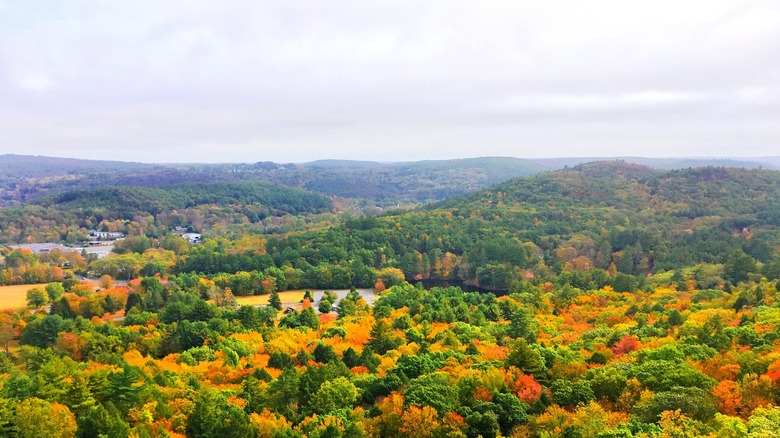
Additionally, Connecticut is a state that goes through all four seasons. The views change with each one. Summits reveal long stretches of hills and trees that are either lush and green, vibrant with hues resembling the sunset, or brown and bare — depending on what time of year you go.
Hiking and more
Morsa Images/Getty Images
If you're looking to extend your stay in the great outdoors, Connecticut offers a variety of camping options. Pitch a tent or park an RV along the shore of a lake or somewhere deep in the woods. Wherever you decide to spend the night, there's certainly a spot for you at one of the state's 1400 campsites. You also have the option to stay in a cabin, hotel or resort if camping isn't your first choice. The state, after all, is one of the most charming places to stay in New England.
As for things to do in addition to hiking, you have numerous opportunities. Water sports such as kayaking or canoeing make for lovely options. Birdwatching, rock climbing (both indoor and outdoor), geocaching, and stargazing are more ways to spend time immersed in nature after exploring the trails.
Take advantage of the many trails Connecticut has to offer by visiting for yourself. Reap the health benefits while exploring the best hiking trails in the country. "As a society, we're in challenging, chaotic, confusing times, but I haven't faced anything yet that a quiet hike in our woods can't fix," trail landowner Diane Crocker told the Connecticut Forest and Park Association. "You never know what a hike will deliver, whether it's a bird you never saw before, a cool snake, or the first hopeful sign of spring after a long, cold winter."
These risks come not only from COVID-19 injections and boosters but—unless we speak up now—also from all future RNA-based vaccines.
mRNA and modRNA Are Not the Same
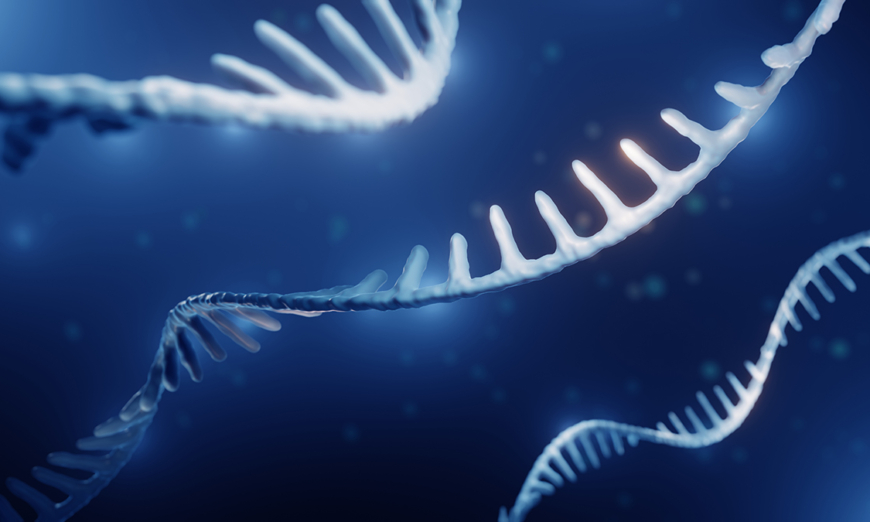
The two—mRNA and modRNA—are completely different.
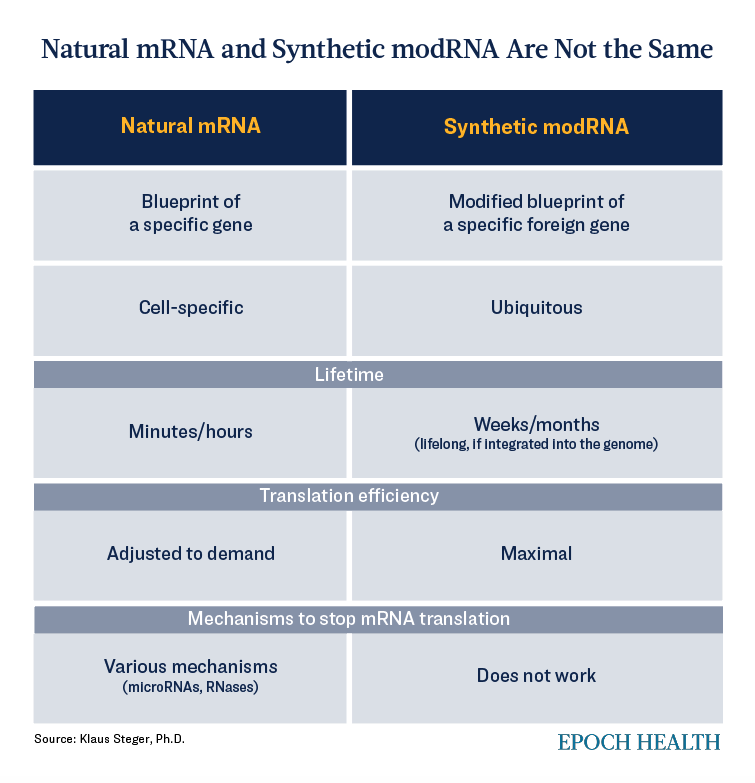
mRNA occurs naturally, lives in our cells for only a short time, and is relatively fragile. It is a specific type of RNA that carries instructions or "messages" from our genes to help make proteins, the building blocks of our cells. It is constantly produced as part of normal cellular processes. Once mRNA delivers the messages, its work is done, and it is broken down in the body.
When RNA from another source enters our cells—virus RNA, for example—these cells can generate virus proteins.
We have been told that COVID-19 injections are made with mRNA. However, a vaccine using "natural" mRNA would not last long enough to initiate an immune response before being destroyed by our immune system.
To make mRNA useful for routine medicine, scientists had to artificially modify mRNA to increase both its efficiency and lifetime. The result: modRNA.
modRNA has been optimized for long life and maximal translation. While mRNA exhibits a cell-specific expression pattern, modRNA can invade nearly every cell type.
How Did We Get Here?
In 1961, the announcement of the discovery of mRNA occurred "in a climax of scientific excitement." There had been earlier "sightings" of this short-lived but essential RNA intermediary, all leading up to an understanding of how genes made mRNA and its role in the production of proteins.
In a nutshell: mRNA carries genetic instructions from the cell's DNA to ribosomes, which use these instructions to assemble a specific protein.
It wasn't long before scientists experimented with how to use mRNA to help the body heal itself. In 1990, researchers injected natural (unmodified) mRNA into a mouse's skeletal muscle; the mouse produced a protein it would never produce naturally.
Subsequently, scientists observed that transferring natural mRNA was inefficient. Although it worked in principle, it broke down quickly and couldn't be used effectively for treatment purposes.
This observation opened the door to synthetically or artificially modifying mRNA. The original focus of this research was to reprogram and destroy cancer cells—the only aim of modRNA before the COVID-19 pandemic.
modRNA 101
How is RNA modified? Simply put, one of the four compounds in RNA is modified (e.g., the natural nucleoside uridine is modified to make synthetic/artificial methyl-pseudouridine). The modRNA is then:
More stable (it lasts longer in the body).
Less immunogenic (it evokes reduced stimulation of the innate immune system).
More efficient (modRNA produces more protein than the same amount of mRNA).
Alarmingly, modRNA contains a viral gene sequence. Upon entering a cell, modRNA takes control of the cell machinery and reprograms it to produce a viral protein—for example, spike protein.
Perhaps most astonishing is that, when creating the COVID-19 vaccines and boosters, scientists already knew that targeted delivery of modRNA was impossible. modRNA cannot be targeted to specific cells. As such, it attacks perfectly healthy cells—even beyond natural barriers like the blood-brain barrier.
The continuous production of an artificial viral protein robs the cell of energy, disrupts its metabolism, and leads to the cell no longer being able to perform its vital task for the organism as a whole.
What's worse, with virus proteins generated in them, those cells are subsequently destroyed by our immune system.
Despite these dire shortcomings, Pfizer-BioNTech and Moderna launched a large-scale production of COVID-19 "vaccines" using modRNA.
The Body Responds Differently to Natural Infection Versus modRNA Injection
Spike protein is well known to represent a poison for our body.
In the case of natural infection, our immune system will prevent the virus from infecting our body cells by neutralizing it via specific antibodies, with the possibility of cross-immunity being effective also against virus variants.
With the modRNA injection, our immune system does not have a chance to prevent the lipid nanoparticles from transferring modRNA into our cells—all cells, not just some cells with the appropriate receptor for binding of the virus (as would be the case in natural infection).
The Virus and the Vaccine Are Not the Same
Though some have argued that the body's response to the modRNA vaccine is similar to a response to the actual virus, this is not true.
First, let us look at the natural virus and our body's response to it:
The virus RNA is like a blueprint. It contains instructions for all the parts needed (not just for spike protein) to make a new virus.
The virus RNA exists within a protein envelope. Our immune system would build various antibodies (not just against spike protein), thus building some degree of cross-immunity to deal with virus variants.
The majority of respiratory viruses are prevented from entering our body by the immune system located in the oral and nasal mucosa. The virus does not inject its RNA into blood vessels but binds to a specific receptor on the cell surface and then directly injects RNA into the cell.
It must be emphasized that only specific cells (namely those carrying the appropriate receptor on the cell surface) can be infected.
Our immune system's job is to destroy a cell that has been infected with a virus to prevent replication of the virus and subsequent infection of new cells. Notably, our immune system will stop the process once that battle is won (typically, within a few days).
Next, let us examine the body's response to the modRNA injection ("the vaccine"):
The vaccine contains modRNA for only the spike protein; therefore, vaccination provides no cross-immunity.
The vaccine-modRNA has no protein envelope but is instead wrapped by a lipid nanoparticle.
Lipid nanoparticles will not need receptors to enter a cell. Lipid nanoparticles are built of lipids, as is the cell membrane; therefore, both lipid membranes will simply merge.
The immune system generates antibodies to combat antigens, which could include pathogens (viruses, bacteria), foreign particles (fungal spores, allergens), or any substances that provoke a specific immune response. However, the lipid nanoparticles that transport modRNA are devoid of these antigens, enabling them to bypass the specific immune system unnoticed and induce nonspecific inflammation. This dynamic triggers an escalation in the immune system's activity, leading to the production of an increasing quantity of antibodies against the spike protein. Each subsequent booster dose of lipid nanoparticles delivers an escalating quantity of modRNA. This, in turn, prompts an uninterrupted production of new spike proteins.
Vaccines are injected into muscle. However, it is nearly impossible to inject directly into a muscle cell (large syringe versus small cell). As muscles are strongly supplied with blood, very often, syringes will violate blood vessels. The normal situation will be that the vaccine will be placed between the muscle cells, the so-called intercellular space. Fluid in the intercellular space will be collected as lymph fluid, finally merging with the blood.
The vaccine and booster modRNA will continue to produce spike protein (for weeks or even months, which is entirely different from a natural infection), as our cell machinery (e.g., the enzyme RNase) cannot destroy the artificial modRNA. Researchers have found that some severe cases of COVID-19 were not due to the presence of the virus but to a dysregulation of the immune system (called a "cytokine storm").
Research Reveals modRNA's Poor Safety Profile
Early preclinical studies generated optimism about the advantages of RNA-based injections. However, the ability to induce an immune response was less effective in humans than anticipated based on animal experiments.
A 2018 review published in Nature reported that "recent human trials have demonstrated moderate and in rare cases severe injection site or systemic reactions for different mRNA platforms."
Hence, the focus shifted to modRNA.
Injected modRNA can result in thrombosis followed by stroke, myocardial infarction, or pulmonary embolism and can promote the formation of blood clots inside blood vessels.
Studying the open-access databases—including those in the United States, Europe, and the UK—on COVID-19 vaccine adverse effects, one can see that these risks have become real-life side effects for people who received the COVID-19 injections.
Just Released: Previously Confidential Report on COVID-19-Related Fatalities
In June 2023, in response to a Freedom of Information Act request, some of these adverse effects were made public when previously confidential reports by BioNTech to the European Medicines Agency (EMA) were released. The reports included data collected during a six-month period from December 2021 to June 2022 and cumulative data beginning December 2020 (pdf).
The data revealed 3,280 fatalities among a group of 508,351 individuals receiving the vaccine during a combined period that included clinical trials and postmarketing. These deaths, and tens of thousands of serious adverse events, happened during a period when the vaccine makers insisted the modRNA-based injections were safe.
Natural mRNA and synthetic modRNA are not the same. (The Epoch Times)
It is nonsensical that any cell in our body would be programmed to produce as much of a viral protein as possible for as long as possible. This is highly contrary to natural viral infection and will result in hyperactivation of the immune system.
Forcing perfectly healthy people to take a gene-based modRNA injection—sold as a vaccine—is both unethical and dangerous.
Views expressed in this article are the opinions of the author and do not necessarily reflect the views of The Epoch Times. Epoch Health welcomes professional discussion and friendly debate. To submit an opinion piece, please follow these guidelines and submit through our form here.
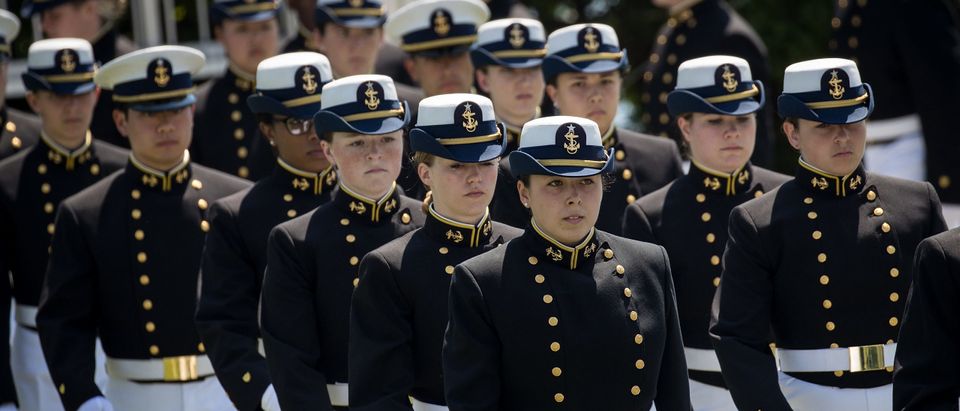
The Coast Guard Academy has not reinstated seven Coast Guard cadets discharged for refusing the COVID-19 vaccine after the academy denied religious exemption requests, representatives of the cadets told the Daily Caller News Foundation.
The cadets hoped a new law nixing the military's COVID-19 vaccine mandate would allow them to re-join.
"They are the only cadets that are getting screwed," retired Coast Guard Vice Adm. William Dean Lee told the DCNF.
Seven Coast Guard cadets booted in September after commanders denied their vaccine exemption appeals were not reinstated after a last ditch effort to allow them to start the new semester, which began Wednesday, representatives of the cadets told the Daily Caller News Foundation.
The cadets hoped that law overturning the Department of Defense (DOD) COVID-19 vaccine mandate would persuade the Academy to permit the cadets, already behind by one semester, to re-join with their cohort, one of the cadets involved and advocates for the group told the DCNF. Among the military schools, the Coast Guard Academy, which operates under the Department of Homeland Security (DHS) in peacetime, is the only one to have officially dismissed unvaccinated cadets, the advocates said.
"I sent a letter to the Coast Guard Academy superintendent asking him to use his administrative powers to have us go back in since the [National Defense Authorization Act] was signed by the president and the mandate should be lifted soon," Sophia Galdamez, one of the seven discharged, told the DCNF. (RELATED: Coast Guard Illegally Denied Hundreds Of Vaccine Exemptions, Attorneys Say)
"However, all he responded with is that it's out of his control, and you don't have authority over that decision. And for me and my family to have a happy holidays," she added.
Although operating under DHS authority, the Coast Guard went along with the mandate after Defense Secretary Lloyd Austin announced it in August 2021 as the FDA officially approved the first COVID-19 vaccines for use. Congress' defense bill for 2023, signed into law on Dec. 23, overturned the service-wide vaccine mandate.
Despite being a semester behind the other cadets in their cohort, the seven could still achieve their commissions if the Coast Guard allowed them to rejoin, retired Coast Guard Vice Adm. William Dean Lee, who, along with retired Rear Adm. Peter J. Brown, is lobbying to have the cadets reinstated, told the DCNF. Cadet processing began Wednesday, while classes are slated to begin on Jan. 9.
After initially refusing the vaccine on the grounds of religious belief in the fall of 2021, "I was immediately treated differently than all my other classmates that were vaccinated," Galdamez told the DCNF. "I was bullied by my command and administrators, faculty at the academy."
Administrators confined her behind a plexiglass barrier at the back of the classroom, she told the DCNF. One teacher pulled her aside to commend her performance as a student, but said her unvaccinated status would impede academic progress, Galdamez said.
She and her fellow unvaccinated cadets submitted requests for religious exemptions, which authorities are required to review on an individual basis.
Citing the government's "compelling interest in mission accomplishment," the force's time sensitive role in emergency response and high rate of interaction with the general public, Coast Guard adjudicator Capt. Eugenio S. Anzano shot down Galdamez's exemption request in a letter, dated March 4, 2022, that was shared with the DCNF.
"I do not question the sincerity of your religious belief or whether vaccine requirements substantially burden your religious practice. The Coast Guard reserves the opportunity to make these determinations, but I do not need to address them here to resolve your request," Anzano wrote.
When the Coast Guard denied Galdamez's request, she appealed, but the answer remained firm. The Coast Guard struck down Galdamez' appeal on May 2, according to a copy of the response letter shared with the DCNF.
Days after reporting to campus for the fall semester on Aug. 15, the cadets were called into the office and told they had 24 hours to pack and leave campus, Galdamez said, a statement echoed by Michael Rose, a pro-bono legal counsel for several of the cadets, according to The Day newspaper. Two of the cadets did not have homes to which to return.
The cadets were formally discharged on Sept. 23, according to Stand Together Against Racism and Radicalism in the Services, where Rose serves as general counsel.
"I sent letters to the academy, senators have written letters on [sic] the cadets' behalf. And so far we have heard nothing regarding our reinstatement or if I'd be able to finish my degree and commissions," Galdamez told the DCNF Wednesday.
Academy superintendent Rear Adm. William Kelley acknowledged receipt of Galdamez' letter and wished her a "good holiday season" but did not indicate future action in an email dated Dec. 22 that was shared with the DCNF.
Republican Sen. Lindsey Graham of South Carolina wrote to Coast Guard Commandant Adm. Linda Fagan pressing for the servicemembers' reinstatement, according to a Dec. 22 letter the senator's office shared with the DCNF.
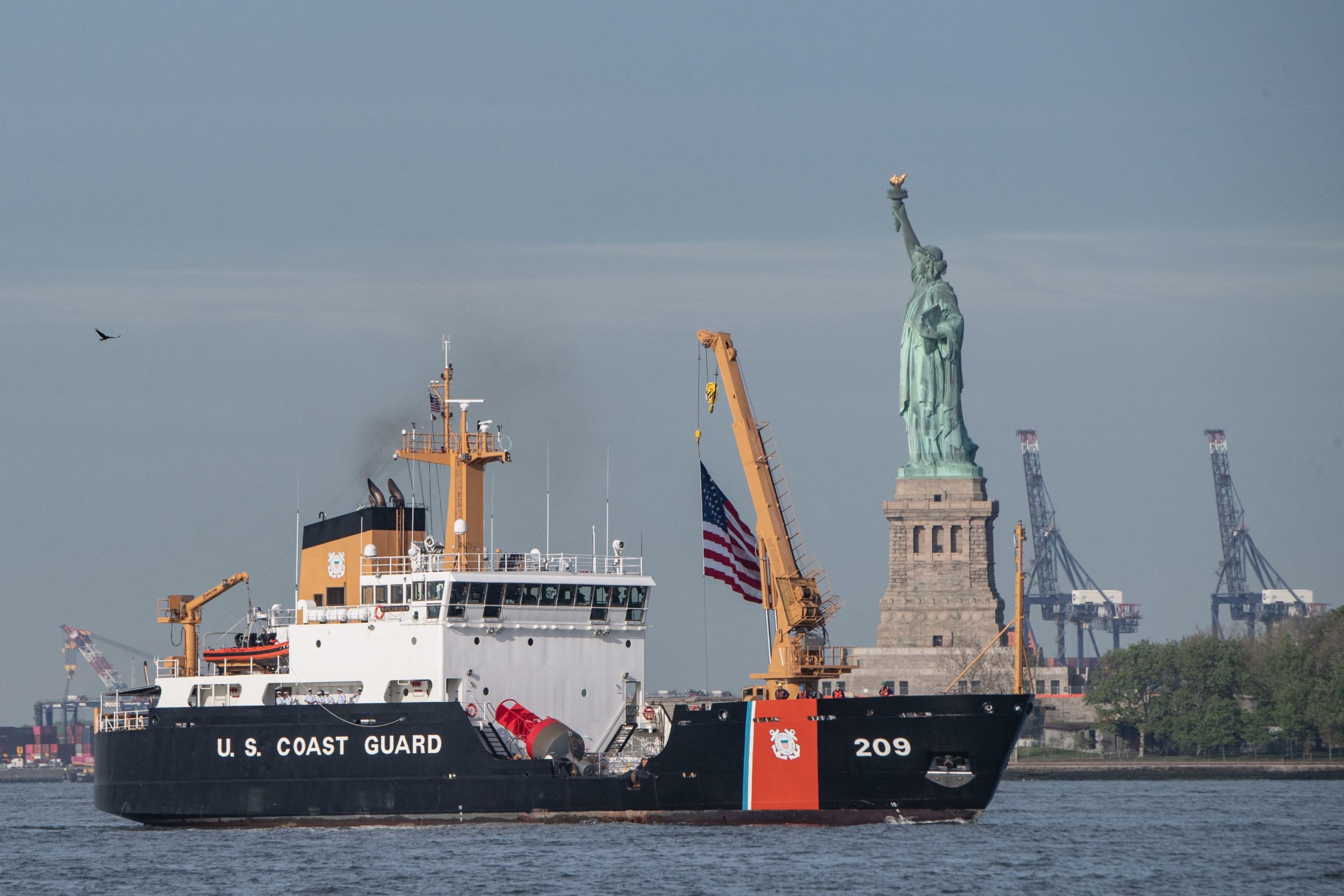
The US Coast Guard ship Sycamore arrives in New York Harbor for Fleet Week on May 25, 2022. (Photo by ANGELA WEISS/AFP via Getty Images)
Galdamez is one of thousands of servicemembers who remain in limbo as the DOD develops new guidance on COVID-19 vaccination, while lawsuits challenging the legality of the mandate and whether military leaders appropriately considered exemption requests continue to make their way through court.
The Air Force and Navy and Marine Corps have been placed under an temporary injunction against discharging unvaccinated troops, while the Army has paused separations.
"They are the only cadets that are getting screwed," Lee told the DCNF.
The National Defense Authorization Act gave DOD a 30 day period to develop new COVID-19 guidance but stopped short of calling for reinstatement or restitution to the roughly 8,400 already discharged for refusing to receive the vaccine.
"The Coast Guard, in coordination with the Department of Defense, is evaluating policies with respect to previously separated members, including cadets," a spokesperson for the Coast Guard told the DCNF.
"I think it's important to let the service members back in, and for the service members to accept going back in, because this mandate and then the subsequent denial and basically excommunication of all these service members was getting rid of a good group of people … enlisted and officers alike that display true leadership qualities that are needed in our military at the moment," Galdamez said to the DCNF.
The Coast Guard Academy did not return a phone call from the DCNF.
All content created by the Daily Caller News Foundation, an independent and nonpartisan newswire service, is available without charge to any legitimate news publisher that can provide a large audience. All republished articles must include our logo, our reporter's byline and their DCNF affiliation. For any questions about our guidelines or partnering with us, please contact licensing@dailycallernewsfoundation.org.