Monday, May 02, 2016

27 'Gorgeous and Delicious' Outdoor Restaurants in... | Patch

27 'Gorgeous and Delicious' Outdoor Restaurants in... | Patch

27 'Gorgeous and Delicious' Outdoor Restaurants in Connecticut

Connecticut Magazine recently listed 27 of the best places in the state to satisfy your desire for alfresco dining.

27 'Gorgeous and Delicious' Outdoor Restaurants in Connecticut

With weekends already feeling a little like summer, thoughts are probably turning to alfresco dining, and in Connecticut there are lots of wonderful options.

Connecticut Magazine recently listed 27 of the most gorgeous and delicious outdoor dining spots in the state. How did they come up with list? Pretty simple, for all of them "the scenery is as fine as what's on the plate."

The magazine used 11 categories to break it all down:

  • Shoreline East
  • Fairfield County Waterfront
  • On the River
  • Litchfield Hills
  • Farmington Valley
  • Up on the Roof
  • By the Empire State
  • The Quiet Corner
  • City Solitude
  • For Jet Setters
  • Par for the Course

"To greet the official arrival of the season June 21, and to serve as a guide from now through the fall, here's a list of the 25 best outdoor dining destinations in the state, with a few extras thrown in for good measure," the magazine writes.

Below is the list; click here to read the full story on the Connecticut Magazine website, which includes details as to why the magazine selected each restaurant.

Shoreline East

Fresh Salt, Saybrook Point Inn

The Wharf Restaurant at Madison Beach Hotel, Madison

Oyster Club, Mystic

Red 36, Mystic

Abbott's Lobster in the Rough, Noank

Fairfield County Waterfront

l'escale, Greenwich

The Whelk, Westport

Paloma, Stamford

On the River

Gelston House Restaurant and Inn, East Haddam

Blue Oar, Haddam

Litchfield Hills

Hopkins Inn, Warren

The White Hart, Salisbury

The White Horse Country Pub, Washington

Farmington Valley

Millwright's, Simsbury

Apricots Restaurant & Pub, Farmington

Up on the Roof

Rooftop 120, Glastonbury

Goodfellas, New Haven

Ecco Rooftop Eatery and Bar at La Zingara, Bethel

By the Empire State

Bernard's Restaurant and Sarah's Wine Bar, Ridgefield

The Quiet Corner

The Golden Lamb Buttery, Brooklyn

Lake View Family Restaurant, Coventry

City Solitude

L'Orcio, New Haven

For Jet Setters

121 Restaurant at OXC, Oxford

Par for the Course

Monty's River Grille at Great River Golf Club, Milford

On the Rocks at Fox Hopyard Golf Club, East Haddam

Lion Four Tavern at Tower Ridge Country Club, Simsbury

Jesse Camille's, Naugatuck

Photo credit: Millwright's, Simsbury


~A den Tex

Anonymous - Hillary Clinton: A Career Criminal

PLEASE! Check out this video on YouTube:
You dont know (remember) Hillary until you revisit her past (transgressions), over and over and Over....πŸ˜–πŸ˜­πŸ˜΅πŸ˜±πŸ˜§πŸ˜€πŸ˜‘πŸ€”πŸ’©πŸ’©πŸ’©πŸ’©πŸ’©πŸ’©πŸ˜·πŸ’©πŸ’©πŸ’€πŸ‘ΊπŸ‘ΉπŸ€–πŸ‘½πŸ‘Ž
Soooo bad.
Please dont vote for her or Donald.

>>>>>>> http://youtu.be/wK2K5v5bm0Q


~A den Tex

Saturday, April 30, 2016

10 Prettiest Coastal Towns in New England - Yankee Magazine

10 Prettiest Coastal Towns in New England - Yankee Magazine

10 Prettiest Coastal Towns in New England

Were postcards invented with New England in mind? Given how gorgeous these coastal towns are, it's a good bet. We picked the 10 prettiest coastal towns, from Down East harbors to Victorian island resorts.

Cape Porpoise Pier and Harbor in Kennebunkport, Maine.

Photo/Art by Brenda Darroch

Cape Porpoise Pier and Harbor in Kennebunkport, Maine.

Kennebunkport, Maine
The Kennebunk River adds even more waterline charm to the small shops, elegant ship captains' homes, and fishing ports of this vibrant Southern Maine town of 3,474.
Unique view: The quintessential fishing village of Cape Porpoise.
See more: From the river and harbor on Rugosa Lobster Tours.

Read more about Kennebunkport and Cape Porpoise!

Bar Harbor Bar Harbor, Maine

Bar Harbor, Maine

Perched on Mount Desert Island at the gateway to Acadia National Park, this historic resort town still resonates with the Victorian splendor of bygone days, not to mention the backdrop of Cadillac Mountain.
Unique view: From Bar Island, which you can walk to at low tide (plan ahead).
See more: Lighthouse and National Park Tour via catamaran.

New Castle, New Hampshire New Castle, New Hampshire

New Castle, New Hampshire
This town of 968 residents at the mouth of the Piscataqua River is made up entirely of islands. The Victorian charm of the Wentworth by the Sea Hotel makes the setting even lovelier.
Unique view: Portsmouth Harbor Lighthouse.
See more: From the water with Portsmouth Kayak Adventures' tour of Little Harbor.

best new england coastal towns camden Camden, Maine

Camden, Maine
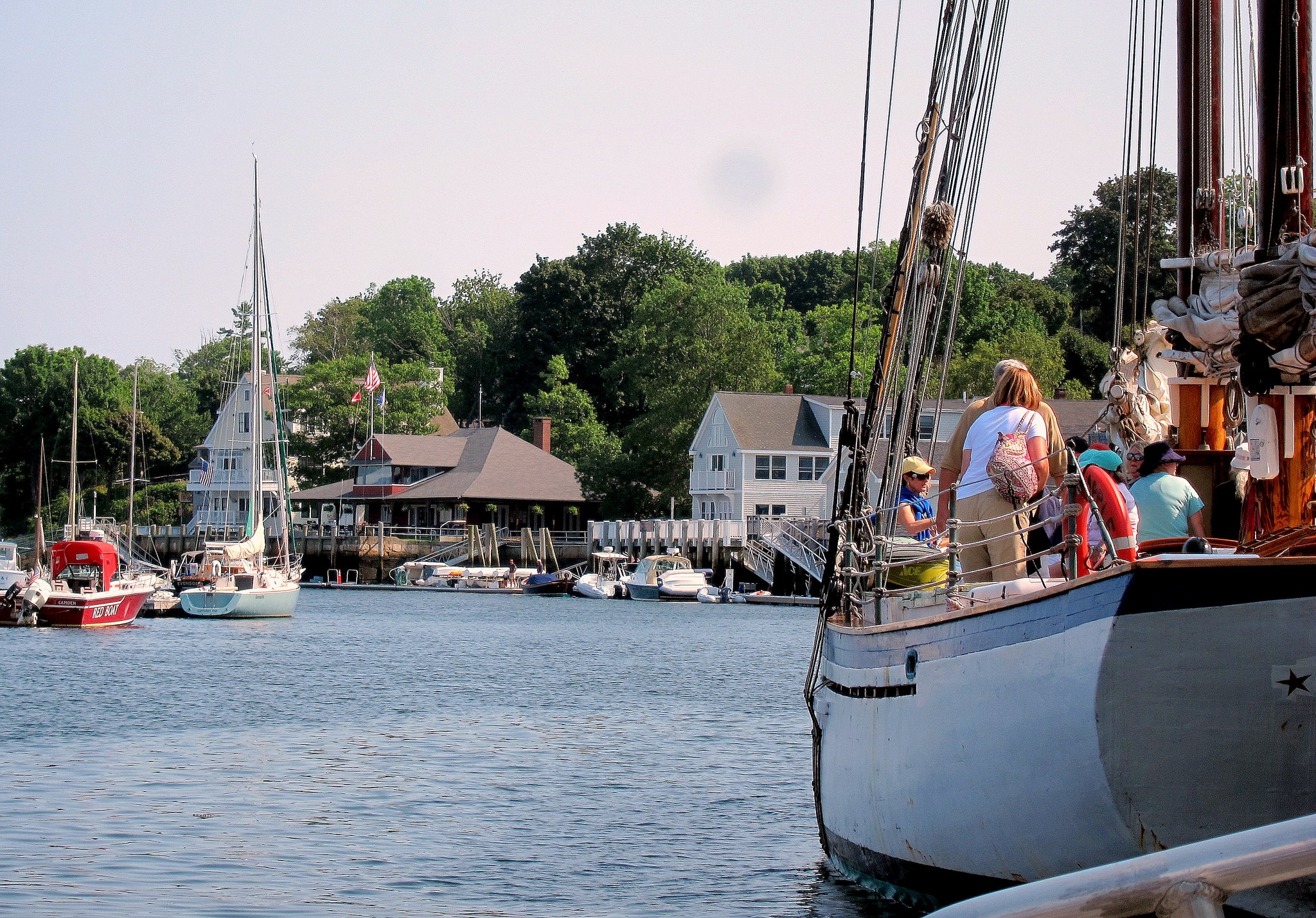
The self-dubbed "Jewel of the Coast" is a well-deserved moniker, and this Mid-Coast harbor town of 4,823 on Penobscot Bay is tucked where mountains reach down to the sea.
Unique view: Three windjammers making this narrow harbor their home.
See more: From the water, on the Schooner Surprise.

Newport, Rhode Island Newport, Rhode Island

Newport, Rhode Island
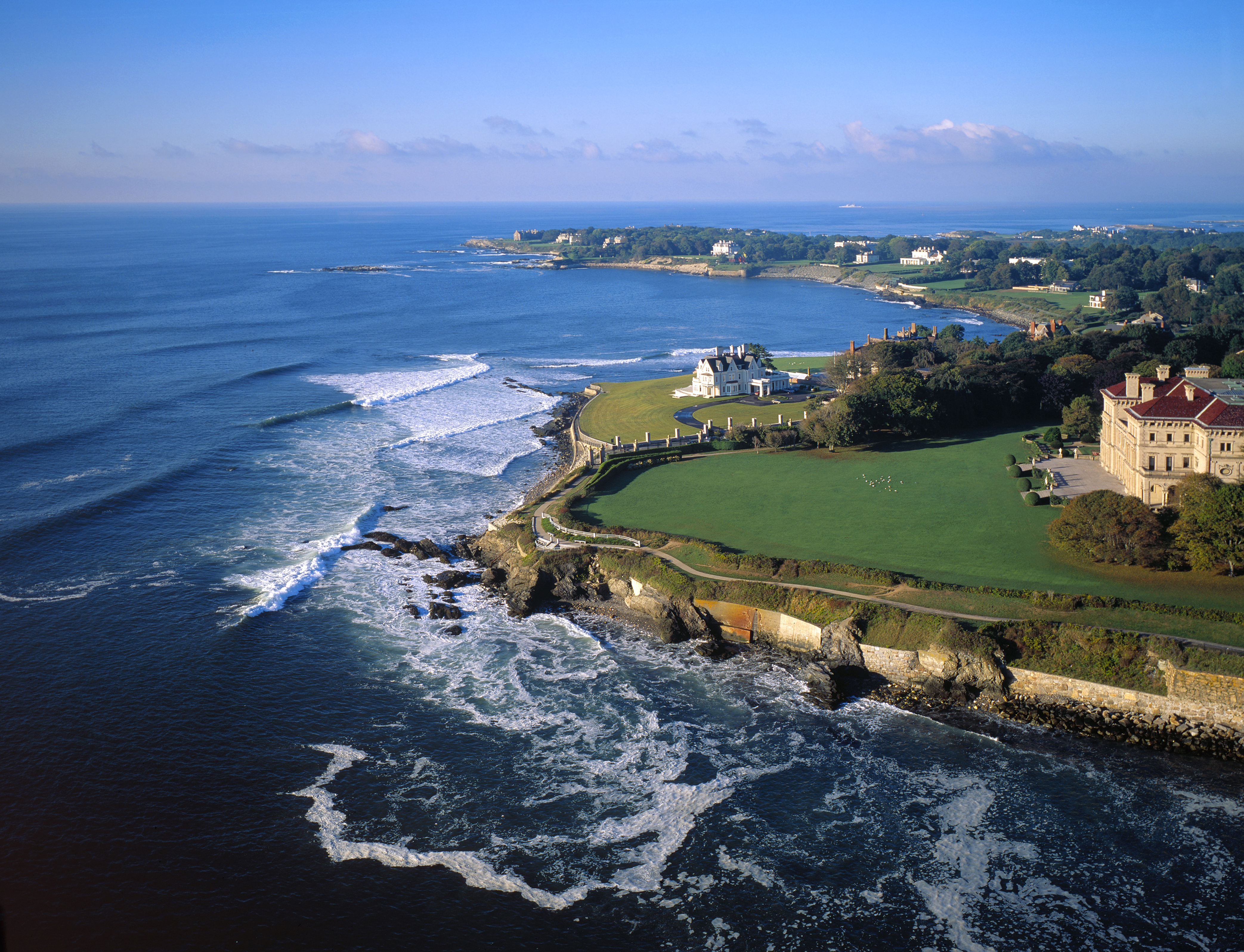
Spectacular at every turn, from broad, sandy beaches to deep harbors bristling with schooners, racing yachts, and pleasure craft; from cozy Colonial taverns to opulent Gilded Age mansions.
Unique view: The twinkling span of the Pell Bridge just after twilight.
See more: From a historical point of view, with Newport History Tours.

New Shoreham, Rhode Island New Shoreham, Rhode Island

New Shoreham, Rhode Island
All of verdant, windswept Block Island, just 13 miles off Rhode Island's southern coast, is technically New Shoreham, but it's the Victorian harbor-front that makes landing here forever captivating.
Unique view: Granite-blocked Southeast Lighthouse, perched at on one of the island's iconic bluffs.
See more: From the water on trimaran Ruling Passion.

Motif No. 1 Rockport, Massachusetts

Rockport, Massachusetts
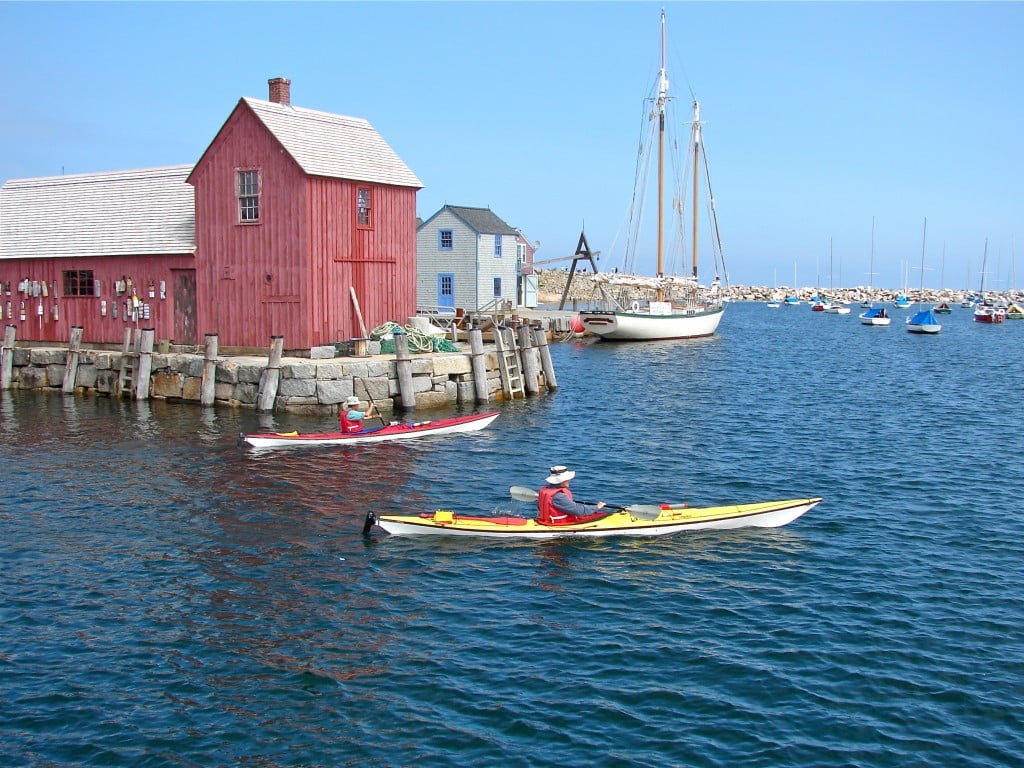
Painters turned this fishing village into an art colony for a reason—it's an inspiration. Perched at the tip of Cape Ann, there are rugged shorelines, hidden coves, and a bustling, historic village.
Unique view: Motif No. 1, the most painted building in the world.
See more: By jeep, in personalized tours from Sweet Shots Secret Spots.

Stonington Borough, Connecticut Stonington Borough, Connecticut

Stonington Borough, Connecticut
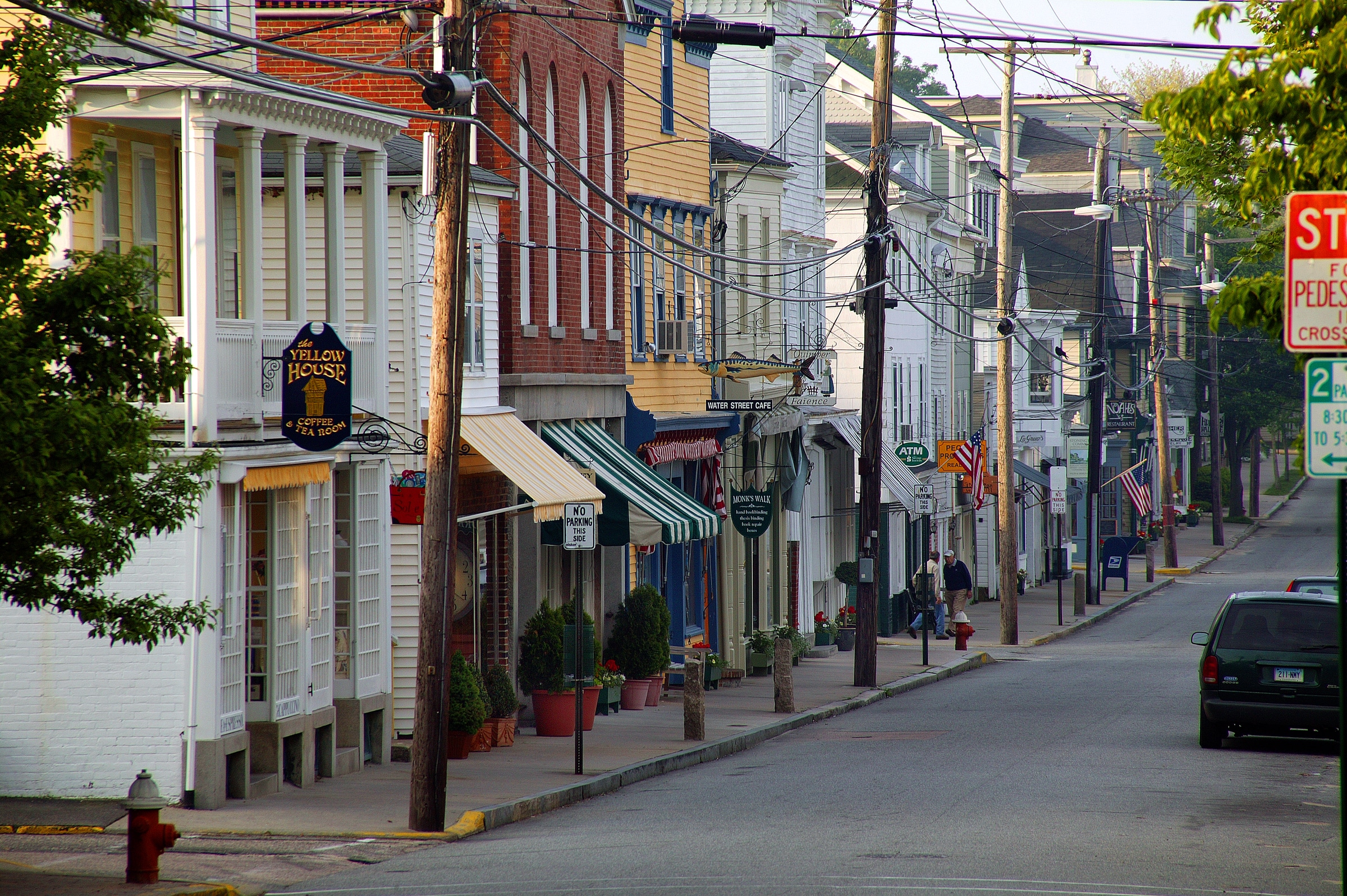
This delightful village of fewer than 1,000 residents boasts a wealth of 18th-19th-century buildings on its own narrow peninsula that juts into Fisher's Island Sound and Little Narragansett Bay, with views in all directions.
Unique view: From "The Point," a view of Rhode Island, Connecticut, and New York.
See more: On foot, with a self-guided walking tour available at the Old Lighthouse Museum.

best new england coastal towns oak bluffs

Photo/Art by Alyson Horrocks

Oak Bluffs, Martha's Vineyard

Oak Bluffs, Martha's Vineyard, Massachusetts
The brightly colored gingerbread Victorian cottages make this laid-back enclave on Martha's Vineyard a true New England confection. And on one night each summer, the cottages lights up with Chinese lanterns, making it likely the loveliest place on earth.
Unique view: The nation's oldest platform carousel.
See more: Of the historic cottages on the Martha's Vineyard Camp Meeting Association Tours.

Learn more about the Gingerbread Cottages at Oak Bluffs Campground!

Provincetown, Massachusetts Provincetown, Massachusetts

Provincetown, Massachusetts
Set at the outermost tip of Cape Cod, surrounded by water on three sides and backed by vast sand dunes on the fourth, Provincetown is a colorful gem that's drawn artists and writers for generations.
Unique view: A bird's eye, from the top of the Pilgrim Monument.
See more: By jeep, of Provincetown's famous sand dunes, with Art's Dune Tours.

See more photos of Provincetown, Massachusetts, in the off season!


~A.

Thursday, April 28, 2016

Scientists just discovered that water molecules 'tunnel' in confined spaces | Inhabitat - Green Design, Innovation, Architecture, Green Building

Scientists just discovered that water molecules 'tunnel' in confined spaces | Inhabitat - Green Design, Innovation, Architecture, Green Building

Scientists just discovered a new state of water molecules

We all know that water is pretty amazing. It sustains life, and it's one of few substances on Earth that can exist in solid, liquid, or gaseous form. Scientists just discovered a new state of water molecules that displays some pretty unexpected characteristics. This discovery, made by researchers at the U.S. Department of Energy's Oak Ridge National Laboratory, reveals that water molecules "tunnel" in ultra-small hexagonal channels of the mineral beryl. Basically, this means the molecules spread out when they are trapped in confined spaces, taking a new shape entirely.

water, water molecules, quantum mechanics, quantum tunneling, shape of water molecules, ornl, department of energy, Oak Ridge National Laboratory, shape of water in beryl

Researchers at ORNL who participated in the discovery were amazed to see water molecules behaving in this way, because the occurrence was previously thought to only exist in quantum mechanics. "At low temperatures, this tunneling water exhibits quantum motion through the separating potential walls, which is forbidden in the classical world," said lead author Alexander Kolesnikov of ORNL's Chemical and Engineering Materials Division. "This means that the oxygen and hydrogen atoms of the water molecule are 'delocalized' and therefore simultaneously present in all six symmetrically equivalent positions in the channel at the same time. It's one of those phenomena that only occur in quantum mechanics and has no parallel in our everyday experience."

Related: Atoms split and reassembled to replicate photosynthesis in computers

The new state was discovered while researchers were examining how water behaves when trapped under rocks and soil, in an attempt to learn information that can help scientists in all sorts of different disciplines. The discovery of this "quantum tunneling" state of water molecules in beryl is expected to help scientists understand the thermodynamic properties of water in confined environments, such as in carbon nanotubes, as well as in various geological conditions.

Although water is often taken for granted, this discovery proves we shouldn't be so quick to think we know everything about how things work here on planet Earth.

Oak Ridge National Laboratory

Via Phys.org

Images via A. I. Kolesnikov et al.


~A.

Tuesday, April 26, 2016

bean brownies

Gluten-Free Bittersweet Bean Brownies
Black beans replace all the flour in these rich-tasting brownies, leaving a high-protein, fiber-filled treat will all the classic chocolate flavor intact—a dietician's dream come true!
Servings
12 brownies
Cook Time
30-35 minutes
Ingredients
Servings: brownies
Instructions
  1. Preheat the oven to 350°F and grease an 8-inch square baking pan.
  2. Using a food processor, blend together the beans, sugar, eggs, vegetable oil, cocoa, vanilla, coffee, baking powder, and salt until the batter is completely smooth. Using a spatula, fold in the chocolate chips and nuts and pour evenly into the greased pan. Bake for 30 to 35 minutes, until set in the middle and the edges begin to pull away from the sides of the pan. Remove from the oven and allow to cool completely before cutting into bars. The brownies can be stored in an airtight container in the refrigerator for up to 1 week.

--
~Adrienne

Friday, April 15, 2016

Volcanoes Do Not Emit 10,000 Times More Carbon Dioxide Than Humans : snopes.com

Volcanoes Do Not Emit 10,000 Times More Carbon Dioxide Than Humans : snopes.com

Joes vs. the Volcano


Claim: A single eruption from a volcano puts more than 10,000 times the amount of carbon dioxide into the atmosphere than all of mankind has produced.

Example: [Collected via Facebook, December 2015]

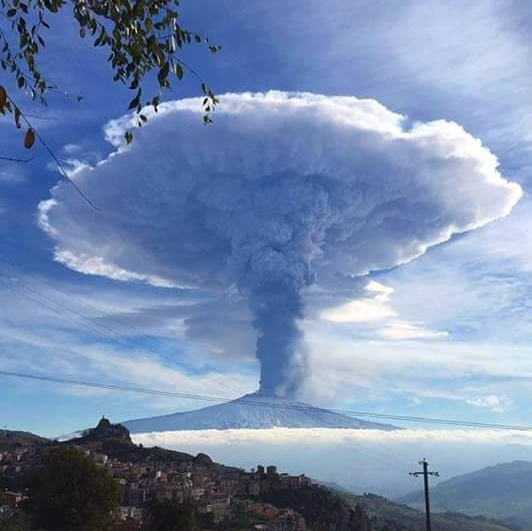
That one little burp by Mt Etna has already put more than 10,000 times the Co2 into the atmosphere than mankind has in our ENTIRE time on earth but don't worry a scam is in the works to tax you your minuscule footprint....

volcano

Origin:On 11 December 2015, Facebook user Thomas Gunn spread a longstanding myth that volcanoes produce vastly more carbon dioxide (CO2) than human activities, writing that a single volcanic eruption causes more than 10,000 times the CO2 emissions than mankind has generated in our entire time on Earth.

Similar claims have circulated for several years among climate change skeptics. In 2009, geologist Ian Plimer wrote in his book Heaven and Earth: Global Warming — The Missing Science that "volcanoes add far more carbon dioxide to the oceans and atmosphere than humans," while others have revised the claim to state that volcanoes emit more carbon dioxide than cars do. While these latter claims are more reasonable than Gunn's assertion that a single volcanic eruption generates more CO2 than humans have in the history of mankind, researchers have found that annual anthropogenic CO2 emissions "dwarf" annual volcanic CO2 emissions.

The Hawaiian Volcano Observatory explained how much CO2 is generated by volcanoes in a 2007 article:

Carbon dioxide is released when magma rises from the depths of the Earth on its way to the surface. Our studies here at Kilauea show that the eruption discharges between 8,000 and 30,000 metric tonnes of CO2 into the atmosphere each day. Actively erupting volcanoes release much more CO2 than sleeping ones do.

Gas studies at volcanoes worldwide have helped volcanologists tally up a global volcanic CO2 budget in the same way that nations around the globe have cooperated to determine how much CO2 is released by human activity through the burning of fossil fuels. Our studies show that globally, volcanoes on land and under the sea release a total of about 200 million tonnes of CO2 annually.

While 200 million tonnes of CO2 may seem like an extraordinary large amount, the United States Geological Survey (USGS) found that the estimated amount of CO2 generated annually by human activity is 135 times higher:

Do the Earth's volcanoes emit more CO2 than human activities? Research findings indicate that the answer to this frequently asked question is a clear and unequivocal, "No." Human activities, responsible for a projected 35 billion metric tons (gigatons) of CO2 emissions in 2010 (Friedlingstein et al., 2010), release an amount of CO2 that dwarfs the annual CO2 emissions of all the world's degassing subaerial and submarine volcanoes (Gerlach, 2011).

The published estimates of the global CO2 emission rate for all degassing subaerial (on land) and submarine volcanoes lie in a range from 0.13 gigaton to 0.44 gigaton per year (Gerlach, 1991; Varekamp et al., 1992; Allard, 1992; Sano and Williams, 1996; Marty and Tolstikhin, 1998). The preferred global estimates of the authors of these studies range from about 0.15 to 0.26 gigaton per year. The 35-gigaton projected anthropogenic CO2 emission for 2010 is about 80 to 270 times larger than the respective maximum and minimum annual global volcanic CO2 emission estimates. It is 135 times larger than the highest preferred global volcanic CO2 estimate of 0.26 gigaton per year (Marty and Tolstikhin, 1998).

In 2010, volcanologist Terrence Gerlach wrote an article for Earth magazine in response to Ian Plimer's book and his claim volcanoes produce far more CO2 than humans:

Although discussions of volcanic carbon dioxide emissions make up less than 5 percent of "Heaven and Earth's" text, the alleged predominance of volcanic over human carbon dioxide emissions is one of its most publicized takeaway messages. And one that will reverberate in the media and blogosphere — no matter how vociferously professionals who investigate volcanic carbon dioxide emissions bristle and huff about how appallingly at odds Plimer's claim is with our research findings.

The treatment of volcanic versus anthropogenic carbon dioxide emissions in this book illustrates one of the pathways by which myths, misrepresentations and spurious information get injected into the climate change debate. Like several climate skeptic publications, blogs and websites, "Heaven and Earth" does not provide the published estimates of the present-day global carbon dioxide emission rate from volcanoes. These estimates are, ironically, "the missing science" of a book professing to rectify supposed excesses of missing science — a book that appears impressively authoritative by citing a mountain of scientific literature.

Last updated: 16 December 2015

Originally published: 16 December 2015

Dan Evon is a Chicago-based writer and longtime truth enthusiast. His work has appeared somewhere, and he earned a degree at the University of His Choosing. His exploration of Internet truth has been supported by grants from the Facebook Drug Task Force.


~A.