Monday, August 11, 2014

Re: [A.d.Ventures] Jewelry by Picasso: the secret stash of Dora Maar, part 3 | the jewelry loupe


On Jul 30, 2014, at 12:22 PM, ~A. <adentex@gmail.com> wrote:


Jewelry by Picasso: the secret stash of Dora Maar, part 3

Continued from Jewelry by Picasso: the secret stash of Dora Maar, part 2

Gloria Lieberman, director of fine jewelry at Skinners in Boston, had not seen the jewelry Picasso made for Dora Maar when we spoke before the 1998 auction, though she has sold plenty of the jewelry he designed with François Hugo in the '50s and '60s. "I don't consider Picasso a jewelry maker," she said. "The body of his work with Hugo is small elements of his larger works, executed as jewelry by someone else. This jewelry sounds similar but more personal. I think it will interest an art collector looking for something personal."

"If a collector comes in with a wife and fails to get a painting, these are cheaper. It will be a way to compensate," Marc Blondeau told me with a laugh some time before the auction. Blondeau was founding director of Sotheby's Paris and helped catalog the items found in Maar's apartment after her death.

Their predictions proved correct. Buyers tended to be art collectors who "followed Modern Art into the domain of jewelry," jewelry expert Philippe Serret, who valued the jewelry for auction, told me at the time. "Most weren't especially interested in the jewelry market but were buying Picasso's work in the form of jewelry."

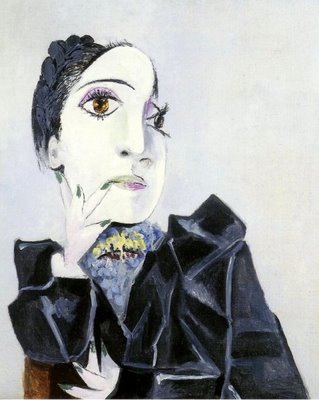
Dora Maar with Green Fingernails, oil on canvas, by Pablo Picasso, 1936

Serret did not believe the success of the sale would affect the value of the jewelry Picasso designed later with Hugo. The latter "was produced as limited editions; it was not created by the hand of the artist," Serret said. "I consider it totally separate from the jewelry made for Dora Maar."

Most of that jewelry dates from 1936 to 1939, the first three years of the affair between Picasso and Maar. The only written reference to the jewelry that the Paris experts could find appears in the biography Picasso and Dora, written by James Lord, an American who lived in Paris after World War II and became friends of both.

According to Lord, the first piece of jewelry Picasso made for Maar was a compensation for a lost gold and agate ring with a cabochon ruby for which she had persuaded him to trade a watercolor. During a stroll along the Pont Neuf, the couple got into an argument. "He reproached her for having prevailed on him to give a work of art in exchange for a bauble," Lord writes, "where upon Dora took the ring from her finger and threw it into the Seine, silencing her lover. She later regretted having been so impulsive. A few months afterwards, the riverbed at that spot was being dredged, and for several days Dora haunted the spot, in hopes of recovering her ring. But it was lost for good. And through Picasso's fault. . . . So she kept at him until he created a ring of his own design for her."

It seems Lord was unaware of the many other pieces of jewelry Picasso made for Maar. At one point she showed Lord a silver cigarette lighter engraved with her portrait, one of the double-profiles typical of Picasso in the late '30s. Dora called it "one of her most treasured possessions." When he replied that it was beautiful, she said: "That's not it's only value."

"Picasso had never been a great giver of gifts," Lord writes. "Of paintings and drawings, yes, but those, though precious, were things that poured inevitably from his fingers and required no demonstrative consideration of the . . . recipient."

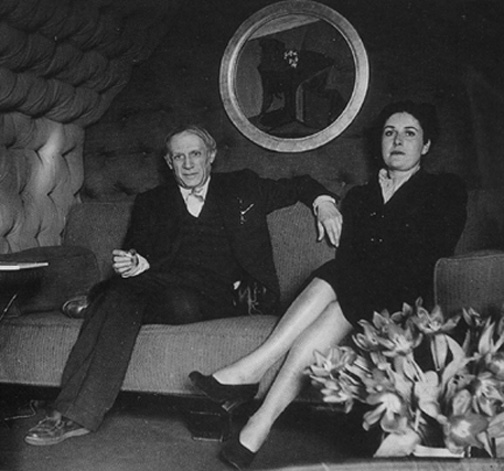
Pablo and Dora sitting in front of one of her paintings, 1940s

"I never asked him for anything," Maar asserted. "And I prize the cigarette lighter because it cost him at least a visit to the Place Vendome." Apparently, the framed-portrait jewelry required at least that much trouble, since Picasso used premade jewelry.

Lord describes a mahogany bookcase with glass doors that Maar called her "private museum." In it were objects made by Picasso, including a bronze hand and bust of Dora, matchboxes with drawings on them, several large books (illustrated by Picasso) and a "Picassian menagerie of animals and birds made of wood, paper, plaster, metal" – no doubt among the objects auctioned that year.

"He doesn't know how to stop making things," she told Lord when he first saw this collection in 1953. "It must be terrible for him. Of course, it's terrible for us as well."

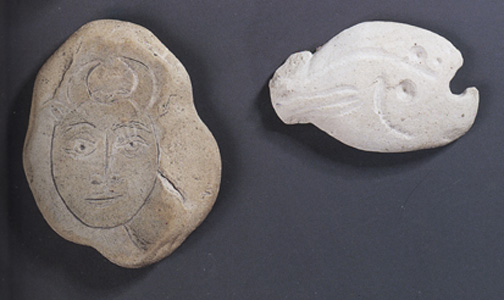
Amulets carved in beach stones by Picasso, c. 1936-1939

When Picasso left her for Françoise Gilot, Maar was distraught and suffered what some biographers describe as a nervous breakdown. Gilot  bore Picasso two children, including Paloma, who became a jewelry designer herself. Yet some of the jewelry found in Maar's apartment proves she and Picasso remained in contact long after their breakup. A couple pieces were presented by Picasso on her birthday in the 1950s, containing portraits made of her in the '30s.

Picasso had many lovers, but most have died. If any more of his handmade jewelry exists, it's probably in the possession of Gilot, who is still living in France. In 1964, she published My Life with Picasso, an account of her years with the artist, which inspired the 1996 movie Surviving Picasso. No mention was made of jewelry made for her by the artist.

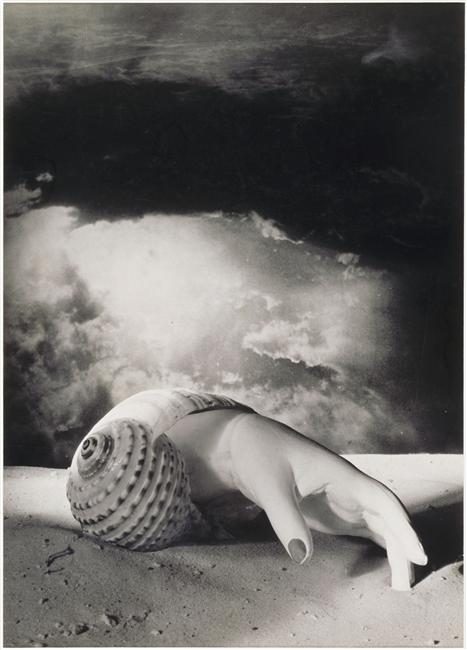
Sans Titre by Dora Maar, 1934 (Photo: Jacques Faujour/Centre Georges Pompidou)

Judging from the contents of the estate and from Lord's biography, there was a lot more to Maar than the discarded "weeping woman" of the famous portraits who is often portrayed as pining away for decades in a shrine to her ex-lover. The striking photographs in her estate prove how she earned her reputation as a talented photographer among the Surrealists. When she met Picasso, she was running with the likes of André Breton and Man Ray. Picasso influenced her to begin painting, which she continued to do in her studio/apartment until her death – but it was her connection to her celebrity lover that made her famous.

Despite the mass of Picassos in her possession when she died, Maar sold several of his works over the years and was known as a shrewd negotiator. In the 1950s, Lord recalls her asking: "How much do you think they're worth, the Picassos on my walls?"

"Half a million dollars," he guessed. "Maybe more."

"Much more," she said, gesturing emphatically with her cigarette holder, scattering ash. "And I'll tell you why. Because they're mine. On the walls of a gallery maybe, they're worth only half a million. On the walls of Picasso's mistress, they're worth a premium, the premium of history."

No one is arguing that point now. Five hundred people crowded into a room in Paris in 1998, a few months after Maar's death, hoping to capture a little of that history. The art, mementos, and surprising cache of jewelry brought $37 million.

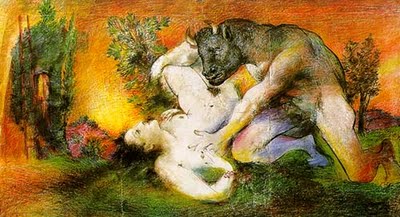
Dora and the Minotaur, painted by Picasso not long after they met in 1936

And if there were any doubts as to the depth and complexity of Picasso's feelings for Maar, her estate did much to dispel them. "The whole lesson of this sale was that the image we had of Dora as the tortured one Picasso dumped – it just can't be true," said Amy Sloane-Pinel who helped promote the sale from her Paris office. "The image of Dora and the Minotaur was monumental and incredibly heated sexually," she adds, referring to a colored drawing in the sale of a nude Maar being overwhelmed by a man with the head of a bull, an image Picasso often used to depict himself. "Just to look at it, it's hard to believe she didn't count for him. That this was a two-way relationship is obvious and has become clear in this body of work.

"The big surprise of this collection was the level of intimacy and affection and intellectual respect he obviously had for her which he didn't have with his other muses. The perpetual question is: was he meanest to the one he loved most? And the answer is theirs. It will go to the grave with them."

Related posts:

Alexander Calder's jewelry: going mobile

Salvador Dali: bejeweled surrealism

Jewelry by famous artists

Related product: (Purchasing through links on this site does not cost you more, but it does put a few pennies toward the continuation of this blog.)


Tags: , , , , ,

good spot to root around...
~A.


--
Posted By ~A. to A.d.Ventures at 7/30/2014 11:22:00 AM

Sunday, August 10, 2014

The Bohm–Krishnamurti Project | Exploring the Legacy of the David Bohm and Jiddu Krishnamurti Relationship

The Bohm–Krishnamurti Project | Exploring the Legacy of the David Bohm and Jiddu Krishnamurti Relationship

THE BOHM–KRISHNAMURTI PROJECT

Photograph by Mark Edwards. Copyright © Krishnamurti Foundation Trust Ltd

The co-exploration of consciousness by the unique spiritual figure J. Krishnamurti and world-renowned theoretical physicist David Bohm took place in a series of more than 30 investigative dialogues. The purpose of this website is twofold: To underscore the historical significance of their shared vision; and to perhaps correct the many misleading characterizations of their relationship that have been circling on the web since their passing—including those inferred in the Bohm biography Infinite Potential.

The Krishnamurti–Bohm Dialogues took place over a span of almost 25 years. Although they had met and talked before, the first one to be recorded was in August of 1965, after an annual Krishnamurti gathering in Saanen, Switzerland.

Learn more about the Dialogues…

A few months after J. Krishnamurti's passing in early 1986, friends of David Bohm who lived in Ojai asked him if he would consider holding a weekend seminar there on the grounds of the Krishnamurti Oak Grove School. He agreed, and thus began a series of annual seminars that would last until 1992 when Bohm himself passed.

Learn more about David Bohm Seminars…


~A.

Monday, August 04, 2014

Emotional Support - HealYourLife.com

Emotional Support - HealYourLife.com

Emotional Support

We often think of health and well-being only in terms of physical exercise and eating habits, but emotional support and wellness is just as important, if not more so.  If you aren't feeling content, satisfied, valued, needed, etc., these feelings often tend to slip over into other areas of your life, like physical health, finances, and relationships.  But what does it mean to be "emotionally well"? 

What Does Emotional Well-Being Really Mean?

By definition, emotional well-being is having a positive perspective which enables you to function in society and meet the demands of everyday life.  So, people who are emotionally healthy generally have a positive outlook on life, feel good about themselves, are aware and in control of their emotions and actions, maintain strong relationships with friends and family, and are able to handle challenges and setbacks.  Building your emotional "muscles" is just like pumping iron at the gym.  With regular practice, you can improve how you feel and how you handle challenges.  In fact, by incorporating a few new behaviors, you will feel happier, lighter, and more able to cope with changes.  Are you up for an emotional wellness challenge?

4 Simple Steps to Emotional Wellness:

By following these 4 easy steps on a daily basis, you'll experience balance, and with that balance will come more energy, less stress and better health. 

Step 1: Take time for you.  Whether you need 15 minutes in the morning to yourself or a 30 minute walk in the afternoon, take a little time for you each day.  When we meet our own needs, we have a higher threshold for handling stress and the obstacles we encounter. Cheryl Richardson, New York Times best-selling author, offers this excellent reason to take care of yourself first in The Art of Extreme Self-Care:  The practice of self-care "forces us to make choices and decisions that honor and reflect the true nature of our soul."  Imagine the emotional bliss that comes from being in alignment with your spirit.  There is no better reason than this to make your needs a top priority.

Step 2:  Connect with someone you love every day.  It's so easy to half-listen or get distracted by the demands of life.  Truly listening to someone without offering unsolicited advice or judging is a true gift.  So, take a little time and really listen to your spouse when he or she shares about the day at the office, or your girlfriend who is struggling right now, or spend time with one or both of your parents.  This includes connecting with you, too.  You can be your own source of comfort, even during difficult times.  Deborah King, best-selling author and spiritual teacher, shares great insight about loving yourself first in her article, 7 Ways to Be Your Own Special Someone.  Choose one of these suggestions for raising your emotional wellness meter:

  • Breathe love in and out before getting out of bed. Love your imperfectly perfect self.
  • Do the things that bring you joy and spend time with those who lift your spirit.
  • Imagine what life would be like if you believed in your own worth.  Make the decision to BELIEVE in YOU.
  • Trust yourself. You have ability to make important changes for yourself.

Step 3: Recognize and express how you feel, especially when it is uncomfortable.  There are many healthy ways to share how you feel that foster intimacy and understanding in any type of relationship. Begin with "I feel hurt that you said…" or "I am really angry about ..."   This way, you express your feelings but you do so without placing blame.  Try to see the behavior separate from the person.  Assume that the person who hurt you did so unintentionally.  Ask questions to help you understand what happened and how to prevent this situation in the future.

John Holland's article, "Get Relationship Insight with Psychic Tarot For The Heart: How Relationships Are Tools For Our Soul Growth," explains how our relationships, no matter the category (friend, lover, mother, brother, etc.), become a teaching tool, and with every new insight and lesson, your soul learns from these experiences and becomes stronger and richer. A relationship can also help you understand, change, or even enhance your own individual qualities.  Relationships are really mirrors into our souls. They  are "…always reflecting back what we need to see. The question is: Are you willing to look in this mirror and be open to what you need to learn, or will you simply pretend it's not there and pass it by?"

*A word of caution: Although it is true that most people never set out to purposely hurt or inflame you, if you find that you are repeatedly hurt by someone, even after sharing how you feel, it may be time to consider letting this person go.  To learn how to decipher who should stay and who should go, Doreen Virtue's book, Assertiveness for Earth Angels offers a guide to help you stand your ground, set boundaries, and release the guilt that comes with saying "no."

Step 4:  Forgive. If you are holding onto a grudge or an old story – let it go.  Really, you can choose to release a grudge.  That anger, pain or old story is over and getting in the way of all the good that can enter your life right now.  Forgiving yourself and others is the greatest gift you can give.

Immaculée Ilibagiza, author of Left to Tell: Discovering God Amidst the Rwandan Holocaust encompasses the real power of forgiveness:  "The love of a single heart can make a world of difference." 

Open your heart and feel the difference a little love can add to your life right now. 

Having a Bad Day?

Emotional well-being doesn't mean you never experience hard times or that you always feel positive emotions.  Challenges and feelings like sadness, disappointment, and anger are all a part of life, and which we all experience from time to time. And you don't have to be gifted with special genetic wiring to achieve emotional well-being coping skills.  Anyone can develop emotionally healthy habits and tools to build resilience, increase happiness and improve health.

So take the emotional wellness challenge today and develop your emotional muscles to enrich your life!


~A.

Sunday, August 03, 2014

I’m being forced to flee.

I'm being forced to flee.
It's and end game, perpetrated by death - theirs or mine.
I am the only one
to know what is going on in the household
to know who is…or where or how much.
answer every call x 24 hrs
keep house entirely, no assistance.
keep yards entirely, no assistance.
includes dump runs, trash, recycles,
gutters, sweeping, driveway, windows, fireplace, shed, gardens, groceries, grilling, raking,..shovel snow...
I work, in some capacity all the time.
24x7= Cinderella duty,
especially as this will never be my home.
I am the guest, doing right, or doing wrong as the case may be.
It's over, the lies are uncovered, the smugness reveals deceit perpetrated over her whole life and mine and his…
Now it's her turn to break out the wish list and turn towards her own private sunset.
Leaving me in the dust, if I'm still here.
FUCK me.

Health Benefits of Apple cider vinegar


Health Benefits of Apple cider vinegar

For more than a thousand years now, vinegar has been used across the world for a wide range of reasons. Apple must or cider is used for making apple cider vinegar which is first of all fermented where yeast and bacterial convert the sugar to alcohol, then to acetic acid. Apple cider vinegar boasts of being incredibly rich in a wide range of minerals such as sodium, potassium, phosphorous, chloride, and magnesium and phosphorous. Trace minerals are also included like fluorine and copper as well as various vitamins such as A, B2, E, pectin and bioflavonoid.

Even though science is yet to prove the various claim regarding apple cider vinegar and its incredible health benefits, it is used for a wide range of roles ranging from homemaking to beauty and health. Some of the health benefits of apple cider vinegar described here below are supported scientific evidence while others are yet to:

Apple cider vinegar

Freshen your mouth

It has been reported that apple cider vinegar is a great mouth freshener. When it is mixed with some water and then swished all around the mouth, it can go a long way in reducing bad breath and enhancing the healthiness of your mouth.

Treating acid reflux

You will be surprised to know that apple cider vinegar is mentioned in more than 13 home remedies used for treating acid reflux. In this regard, the treatments usually include a daily dosage of two apple cider vinegar teaspoons and you can be sure that it will work out magic. It is widely believed by most people that acid reflux results from the overproduction of acid but the truth is that for many people, acid reflux is the result of not having enough acid being produced.

Stop hiccups

Stopping hiccups is something that most people will be ready to move the earth in order to do. While there are many recommendations available on how you can really do it, using apple cider vinegar has been found to be one of the most effective ways of bringing hiccups to an end. This is more so for people experiencing uncontrollable hiccups and taking a teaspoonful of apple cider vinegar will settle everything.

Preventing indigestion

Most people indulge in meals which they know too well that they will be having some troubles with it later along. When your stomach start rumbling, a drink of apple cider vinegar can help settle things down there and this will indeed be a great remedy for indigestion.

Alleviating GI distress

GI distress is a form of diarrhea that is caused by bacterial infections and it is one of the worst experiences you can go through. Fortunately, the topnotch antibiotic properties of apple cider vinegar will certainly be of great relief to you. Scientists have also suggested that apple cider vinegar contains pectin which also helps a lot in calming intestinal spasms. So, if you are suffering from GI distress, just mix a tablespoon of apple cider vinegar with water and then drink and you will certainly be alright.

Soothing a sore throat

Sore throats can be treated with a wide range of natural remedies and apple cider vinegar is one of the most effective ones. Once you start feeling as if a sore throat is attacking you, take a cup of apple cider vinegar mixed with some honey and hot water and drain it down your throat.

Stop hair falling

Falling of hair can be normal but at times, this could be an alert of a more serious problem with your fail. Fortunately, apple cider vinegar acts as a great aid for falling hair and you can use it to ensure that your hair remains intact.

Skin brightening

Skin problems have become too common nowadays and many people are really suffering a lot from them. Ranging from dry skin to skin blemishes, eczema and psoriasis, you can count on apple cider vinegar to provide you with the much needed relief of the condition. Apple cider vinegar mainly works by reducing inflammation which in turn minimizes the problems greatly. You just need to dab it on your affected areas using a cotton ball and you will surely be able to improve the health of your skin.

Fighting the itch

A mosquito bite can cause serious itching on the skin. Thankfully, applying apple cider vinegar gently on the infected skin will really help a lot in stopping the itching. However, be sure that it might sting a little but after a while, it will help a lot in quelling the prickly tickle you could be experiencing.

Decrease levels of glucose

Apple cider vinegar really helps a lot with diabetes and in fact, this is one of the most potential uses of it. Several studies conducted in the past have shown that it is incredibly effective when it comes to decreasing the levels of glucose in the blood to nearly acceptable levels thus helping to contain the problem to a large extent.

Lower high blood pressure and cholesterol

Studies conducted on rats by scientific researchers have shown that apple cider vinegar contributes beneficially to lowering high blood pressure and cholesterol. While evidence is still to be provided that its effects are the same in people, we all know that rats are not very different from humans and chances are high that it can work too.

Helping with weight loss

Most super foods and supplements come with all the claims in the world of assisting in weight loss. Most people have successfully used apple cider vinegar supplements to lower their weight to acceptable numbers. This is because taking apple cider vinegar makes you feel fuller much faster and this benefits your weight loss endeavors greatly. But as usual, don't expect any magic bullet with your weight loss.

While apple cider vinegar avails all these benefits, it is essential that it is taken in controlled amounts. Larger amounts can be problematic but taking apple cider vinegar in small amounts is highly encouraged as this lowers down the risks involved greatly.


Friday, August 01, 2014

A Self-Made 12-Step Program for Living an Authentic Life. | Rebelle Society

A Self-Made 12-Step Program for Living an Authentic Life. | Rebelle Society

A Self-Made 12-Step Program for Living an Authentic Life.

via on Jul 25, 2013 | 70 comments

Photo: Tumblr.com.

Photo: Tumblr.com/photographer unknown.

Let us commence with a few wise words from Mr. Timothy Leary:

"Admit it. You aren't like them. You're not even close. You may occasionally dress yourself up as one of them, watch the same mindless television shows as they do, maybe even eat the same fast food sometimes. But it seems that the more you try to fit in, the more you feel like an outsider, watching the "normal people" as they go about their automatic existences.

For every time you say club passwords like "Have a nice day" and "Weather's awful today, eh?", you yearn inside to say forbidden things like "Tell me something that makes you cry" or "What do you think deja vu is for?". Face it, you even want to talk to that girl in the elevator.

But what if that girl in the elevator (and the balding man who walks past your cubicle at work) are thinking the same thing? Who knows what you might learn from taking a chance on conversation with a stranger? Everyone carries a piece of the puzzle. Nobody comes into your life by mere coincidence. Trust your instincts. Do the unexpected. Find the others…" 

Scary beginnings, sad endings and all the meaningful stuff in between.

I'm thinking about getting out. I'm antsy and have itchy feet. I'm gonna do it. But it takes time, right? I mean, I can't just up and go, change or do — or can I? Can you? May I?

For me it's not really about getting away or going on some worldly exploration, at least not right now. I just want to go deeper into the experience of an authentic life — right now in these shoes or better yet in bare feet.

So, what's the formula and how I do I put this secret into practice?

I'm up for anything. A new dance step, a more confident voice. I'll even brush my teeth with my less dominant hand while sending sentiments of love to all the lefties of the world. I'm ready to detoxify, love-ify, sanctify, practice, apply and fulfill with a conscientious and diligent attitude — the padawan's ageless steps for living an authentic life.

Are you with me?

(A few more ponders, question marks and little corporate digs: How do we get real, step out of the matrix, the simulation, the computer programming? How do we escape The Truman Show? How can I be sure my values are my own? How do we leave our mundane routines yet still survive? How do we stop Dow, Exxon Mobil, Wal-Mart or The Coca-Cola Company from dictating our lives? By the way, do people still believe that Hershey's is actually chocolate?)

I recognize the loop – I've just been going round and round and round. 

I'm sure you've heard someone else's broken record declaration of he said this, she said that, that's the reason why I'm doing this or why I can't do that, but I've realized that the real question is: can you hear your own broken-record-speech?

How do I turn it off? It's hurting my ears! 

Once I heard my own quadrupled platinum recorded compilation of what ifs, buts, ands, and incessant blame — that frighteningly keeps on playing even without batteries or electricity — I found that all signs lead back to one place. Yes, it all circles back just like a boomerang to Me.

I've also recognized that this self-depleting album comes with a range of multiple-choice reactions: A) Secret denial B) Find it repulsive and resort to self-deprecating behavior in order to bury it and not admit to it and C) Don't know what to do about it so procrastinate and do nothing — enters: mind-numbing self-medication.

Who's in charge of the life preservers?

The good news is, there's actually an option D) but you have to really, really want it. It is: Figure It Out.

R.I.P. Old Self. You Served a Great Purpose.

As much as I love original recipes, formulas and programs, I often find that along the way, and after much experimentation, failures, tantrums and tears, I have to write my own. I feel that in a way, all of these books, teachers, scholars, gurus and Universal Principles want us to do just that. Through their own sharing of wisdom, experience, and love, they want you to discover your own… dance with me?

So, here are mine. My 12-step program for living an authentic life.

Step #1 – Do You.

Have no apologies for who you are. If you fit in, great. Perhaps you found your tribe. If you don't fit in, don't beat yourself up about it. If you feel like the people around you aren't speaking your language, perhaps it's time to explore new flocks. Be brave and true to who you are — wearing unnecessary masks just to fit in or avoid facing the reality of YOU can make life feel hopeless and imprisoning! Even in a crowd of faces, it's easy to feel lonely if we aren't being ourselves and if the people around us don't appreciate who we are.

Take back your right to be you in front of everyone and in every situation. When you are yourself, you not only invite others to do the same, but you become a bright watch tower for the people you'd wish would find you.

"The clearest way into the Universe is through a forest wilderness." ― John Muir

Step #2 – Let Wildness In.

Stepping into the wilderness does wonders to the vibrational energy of our bodies and our nervous systems. There's a subtle reassurance that everything you need to know, you already know and everything you don't know may eventually be revealed in time without struggle and without desperation.

The wilderness strips us of competition and comparison and invites us into a state of peaceful awe. It also offers a reflection of our individual relationship with life versus being just a mere part of the human race. Who are you without people? You may just find this answer in the wild. It's powerful medicine.

"When you get the blanket thing you can relax because everything you could ever want or be you already have and are." – Bernard Jaffe, I Heart Huckabees

Step #3 – Hear the Voices.

Open up to your life's purpose and your heart's deepest desires by listening to the voices inside of you. There's a lot of dialogue going on — some incessant, some nonsensical — but if we learn to listen more sincerely, we'll discover that a deeper, all-knowing conversation is happening. It takes practice to hear this guidance as it takes practice to hear your heart's desire, to trust your gut and to listen to your intuition.

Pay attention to the whisper and the serendipitous moments that remind you of what's important to you. Keep listening and keep following the signs. You have the ability to live a life that's true to who you are and a life that you really want.

Listen like your life depends on it.

"Creativity comes from trust. Trust your instincts." — Rita Mae Brown

Step #4 – Take the damn risk already.

Make choices that put yourself first — above everything and everyone else, even those you love and cherish the most. If you don't take care of yourself, if you don't do what is best for you, your relationships will eventually suffer. Trust in the fact that doing what is best for you is best for everyone even if it doesn't feel like it at first. Sometimes sacrifices have to made. People will get hurt and there will be losses, but the rewards gained from following your heart are absolutely everything in comparison.

Do something difficult for no other reason than that you like to do it.

Photo: Google Images.

Image: cookybelle.

Step #5 – Believe.

The secret formula: Believe in yourself and people will believe in you. Don't give up due to predefined perceptions and limitations of yourself. Don't give up because of the perceived effort. Millions of people give up before they even get started. They fail to realize their potential and give up as soon as they reach the first hurdle. Why? They don't believe in themselves.

If you don't believe in yourself you will end up throwing away your creativity and ideas. On the other hand, if you believe in yourself, you will no matter the outcome, find success even in what you perceive as the greatest of losses.

"And the day came when the risk to remain tight in a bud was more painful than the risk it took to blossom." — Anais Nin

Step #6 – Use your body and love who and what you are.

It's never been about the symmetry of your face or your body. It's about the light that shines from within.

Have you ever witnessed a person that has been in a tragic, body deforming accident who has come out stronger, more compassionate and yes, even more beautiful? Their light shines so bright that after just a few minutes, you don't see their asymmetry anymore, you simply feel and connect with their light.

If you see yourself as mere looks, if you believe your worth is merely skin deep, others will see you and judge you the same. Aren't you more than that? Remember, no matter what you do, your looks will eventually fade. What will remain is the fire that burns within. Stop smothering it with delusional judgements and superficial shape chasing. Stop holding yourself back from life because you don't believe you look good enough.

Self-love exercise: go look in the mirror and tell yourself: You never ever were more beautiful than you are right now. Believe it.

Use your body in every way that you know how. Allow the intelligence of your vessel to reveal and share with you the secrets of the Universe — the secrets of You.

Step #7 – Defy your genetics.

Evolve from the base point you've been born into. Don't allow the limitations of your parents or their parents deter you from your path. See it all as potential to evolve your bloodline, your genetic makeup, your life to a place where neither you, nor your ancestors, have ever gone before. YOU hold the torch.

If you are the black sheep of the family, be grateful. The path can be lonely, but know that you broke free. Celebrate this freedom.

You are the architect of your existence.

Step #8 – Integrate into wholeness.

Accept all parts of your life. All parts. This is one of the deepest healing elixirs you can ever offer yourself. Allow it all to integrate — your mind with body, your body with spirit and your entire being with all of the experiences of your life. Accept your irrevocable wholeness. When you accept what has been, what you thought was and what is, you loosen your grip on delusions, limitations and stale beliefs that hold you back. What's left? Space. Space and room to expand into the shape you are naturally, wholly and fully with a deeper sense of truth, wisdom and compassion.

Step #9 – Paint a spectrum of love for all.

Serve and be accepting of others — of what they want to create, what they want to be and what they envision. Remind them to do everything it takes not to fail. Remind them that the bad that comes along with the good is the journey and the most beautiful, most fulfilling experience anyone could ever have. Offer and support a new way of living, thinking, creating, even working — listen and be open to the ways of others.

Have conversations that make you smile and ponder. Offer solutions that bring us closer together versus farther apart.

Step #10 – Take the time to do nothing.

Clear the slate. Erase the chalkboard. Wash it all clean. Don't do anything. Just let everything be as it is. No matter how it is, no matter what your mind is screaming or what confusion you have in your life, for a few moments or as long as you can each day, let it be. Doing nothing and sitting still, helps us recognize all the ways in which we don't let go. Explore the profound, beautiful simplicity and subtlety of doing nothing… and all the challenges it endures.

In the most simple instruction from Andrew Cohen: take a seat, be still and don't do anything.

In the words of The Beatles: Let it be.

Photo: tumblr.com.

Photo: tumblr.com/photographer unknown.

Step #11 – Seek connection versus perfection.

Living an authentic life stems from your ability to be self-aware and genuine in the ways in which you express, react, dance, share, create, listen, etc. — in other words, how you connect with yourself and the world around you. Authenticity also heightens from your ability to be aware of when you are being and/or reacting inauthentically.

Being authentic develops a connection with who you truly are, your real essence, and liberates you from the superficial pressures and expectations of always trying to be perfect.

Step #12 – Recognize that you already have everything you need to be you.

Clear away the small minded and limiting ideas of who you are that keep you bound and feeling small, hopeless, even unworthy. You already have everything — everything you need to be you. In the present moment, you have very clear goals. There is much to be done as you are right now.

Discover the clearing, discover the openness and the deepest part of your own Universe. Tap into your unlimited energy and passion to follow-through.

**

Living a life of authenticity is a path of personal evolution – and as with any journey, it's up to you.

Thank you and I love you.

  • Bio
  • Latest Posts
Co-founder and Editor of Rebelle Society (you are here). She's convinced that she once swam the depths of the deepest ocean and in the next round, grew over two hundred feet tall. In this life, she's a vulnerable creation in process. She has a Bachelor of Science in Journalism & a Master's in Business. In 2009, surrendering to the good fight within, she became a certified teacher of yoga. Now a full-time devoted student to the sacred art of self-discovery and creative expression, she spends her days on her yoga mat, in wellness experimentation and tilling the fertile soil of Rebelle Society, sharing bouts of black sheepish rebellion, self-acceptance and the beauty of darkness and well-being. She's also Co-founder and Wellness Alchemist at Rebelle Wellness. Get to know her on Facebook , Pinterest, Twitter, Thug Unicorn and at Yogacentralen.dk. Sign-up for her Quirky Monthly Yoga Newsletter and contact her via email: tanya@rebellesociety.com.

 905 78.3K


More Rebelle...

Rebelle on Facebook, Twitter, Pinterest & Instagram.
General contact: editorial@rebellesociety.com
Submissions: create@rebellesociety.com / Advertise: advertise@rebellesociety.com


468 ad


~A.hhhhhhhhh...........

become the prayer -- 7 tips for discovering your life's purpose. | Rebelle Society


become the prayer — 7 tips for discovering your life's purpose.

via on Nov 5, 2013 |
~ Artwork: I need a guide: Alex Benetel ~
~ Artwork: Alex Benetel ~

Hey, is your busy work creating a meaningful life?

An internal commentary of my own making…
Haven't you ever just had enough?
I crossed the line today.
The whole thing is fucked.
Can we get this over with? I have shit to do.
You're better than that.
Right, what's your story? Why are you wasting your life?
I'm just ah, figuring it out.
Are you a tortured soul?
Why are you crying?
Just go to sleep.
**

Intense Moments.

I was to blame. They were to blame. You were to blame. It's just the way it was/is. I did the best I could. They did the best they could. The storyline has faded yet the constriction in my body remains. An accumulation of stories, descriptive words, a collection of adjectives defining my self-identity assigned by other people and systems, instilled beliefs, decades of unquestioned patterns and habit. I've grown a hatred toward the limitations I can't seem to break and denying only magnifies.
How do I let go? How does one heal such scars? 
**

A lack of self-awareness is our most vicious poison, our most unforgiving warden.

How can I ever know if I'm on the right track? How can I ever see myself clearly if I'm constantly weighed down, distracted and foggy with my story lines? A narration that resides mostly in my inability to relax but to incessantly dive into blame assignments of the past or worries of the future?!
Me! Me! Me! I can't see around ME! Drive faster dammit! Get out-of-the-way!
I have existed with one foot in and one foot trying to step out for many years. I had a lot of excuses, worry and fear as to why I stayed on that train, so often tempted to just jump off at the next stop. There were benefits holding that ticket, but there was a lot more sacrifice.
Looking back and even now I don't feel it was ever about the "supposed" to anything but more of a, "Can I trust and answer the irrevocable, soothing, loving calling of ME?"
Then one day I jumped, or was I pushed? Either way, I now have both feet in the same place.
~ Artwork: Alexandra Cameron ~

**

How do we stop living an unexamined or overly examined life to discover the treasures of purpose?

"In the absence pf presence there is there is only that repetitive mental noise and part of that mental noise is the story of me. It's the problematic story that is hoping that at some point in the future that it will no longer be problematic not realizing that what it calls 'future' has no actual existence." – Eckhart Tolle
#1 Is it possible to accept that the future is conceptual and has no actual existence? It is only a thought, worry and/or stress element in your head and so sweetly dictated by our Franklin Covey's, to-do lists, calendars and clocks. This also applies to the past. There is no such thing as the future or the past in the present moment. In the present moment, the past no longer exists nor does the unforeseen future. They did that to them. He did that to me. What if they do that to her? What if he does that to us? Is this real?
#2 Stop betraying yourself. Allow yourself or start to be open to changing, doing, saying and thinking things that feel right. Put yourself into positions where you can feel, sense and connect with your self-worth and stop doing things that constrict, restrict and disconnect you from who you are. Allow yourself to feel valued without having to seek external approval. Allow yourself to not feel psychically and unhealthily drained by what you do in life. Every choice, every action will either drain or deplete your spirit, so choose wisely and intuitively — and know WHO you are doing what you are doing for.
#3 Live life's ups and downs and don't waste a single minute. You, we and I are in a process of building and establishing a relationship with ourselves. There will be highs, lows, ups and downs. The map back to you may not be a straight line and the point of the composition isn't to get as quickly as you can to the end. You may discover that success isn't what you've been told it is. Don't miss the point — sing and dance while the music is playing. Don't wait until it's nearly the end.
#4 Do what you love to do. What is the one thing you feel qualified to teach other people right now? Don't judge it or over-think it. Start to do what you love more often, no matter how much the limiting aspect of your mind screams: Arbitrary! Stop making excuses and share it with people every chance you get.
#5 Recognize how you change and what has been revealed as a result of your efforts. Plus one, minus one. Two steps forward, one step back. Notice your resistance, your broken record and repetitive patterns that take you back and back and back. Keep inviting the possibility of creating space around thoughts and beliefs that make you feel restricted (relax your inner organs). Softly and gently surrender to the wisdom of who and what you are.

#6 Set an intention. Be aware of what you are doing, saying, thinking and feeling. As we practice becoming more and more present, it can be easy to zone out even when involved in activities we perceive to invite us to become more awake. Surrendering to the present moment and having an open-mind is not the same as switching our attention to the incessant nonsensical chatter of autopilot even during say, meditation with the excuse of "I just don't feel like it today" or "I don't want to go there right now." Set the intention to be real and to relax. Set the intention to be honest. Set the intention to be kind to yourself. Set the intention to be more mindful. Through the process of intention setting, the things you cannot control may just manifest into a beautiful you-affirming conspiracy.

You are not just a result of the effect. You are the cause.
#7 Answer your own prayers. Work and do in the direction of your prayers. Prayer is not a substitute for work and work is not substitute for your prayers. They go hand-in-hand. You are the voice of the prayer and you can be the answer. Your prayers represent a need only you can meet and discover and chances are, nothing will conspire until you start to walk the path of your prayer.

(Oh, you don't pray? Well, do you dream, wish or hope? There you go. Don't try to get out of this one.)
It's your path to walk. It's all up to you. You are the one. You represent possibilities. You are the creator of your life.
 *****
~A.

Thursday, July 31, 2014

The Federal Long Term Care Insurance Program - The Federal Long Term Care Insurance Program Online Application Instructions

The Federal Long Term Care Insurance Program - The Federal Long Term Care Insurance Program Online Application Instructions

The Federal Long Term Care Insurance Program Online Application Instructions

You can use this premium calculator to calculate premiums for one or more of the FLTCIP's prepackaged plans. Or, you can customize your own plan and pick the options that best suit your needs.

Rate Calculator image

To use the calculator:

  1. Choose one of the four prepackaged plans or choose to customize your own plan within the table by clicking the appropriate circle next to the name of that plan. Your choices are "Plan A," "Plan B," "Plan C," "Plan D," or "Customize Your Plan."
  2. If you choose "Customize Your Plan":
    1. Select your daily benefit amount (DBA). This is the maximum amount your insurance will pay in any single day. The FLTCIP offers eight DBAs from $100 to $450 in $50 increments.
    2. Select your benefit period. This is the length of time benefits will be paid if you receive benefits each and every day equal to your DBA. You can choose from a two-year, three-year, five-year or unlimited benefit period.
    3. The waiting period under the FLTCIP is 90 days. The waiting period is the number of calendar days during which you must be eligible for benefits before we will pay benefits. It is sometimes referred to as an elimination period or a deductible.

  3. Select your inflation protection. You can choose between two automatic compound inflation options that will increase by either 4% or 5% (depending on the percentage you choose when you apply) compounded every year. Your premium does not increase annually as a result of this annual increase in benefits. However, premiums are not guaranteed.*

    Or, you can choose the future purchase option. With this option, you are given the opportunity to increase your DBA and maximum lifetime benefit every two years with a corresponding increase in your premium. Premiums are not guaranteed.*

    * Premiums are set with the expectation that they will be sufficient, but they are not guaranteed. Premiums can increase only if you are among a group of enrollees whose premium is determined to be inadequate and both the U.S. Office of Personnel Management and the insurer agree to the rate change.
  4. Choose how to view your premiums. You can view premiums either monthly or biweekly.
  5. Click the "Continue" button.

Instructions for rate calculator results

This results page displays the cost of the plan and options you selected in the dark blue highlighted column of the table. The very left column shows the possible plan options. The next four columns (labeled "Plan 1 is Selected" through "My Plan: Option 4"), allow you to select options and see the costs for up to four plans.

Calculator Two: Customize your plan

To calculate and compare additional rate quotes:

  1. Click on the "My Plan: Option" button at the top of the next empty column. This column is now highlighted in dark blue.
  2. Make any changes you would like to the plan options in the far left column.
  3. Click the "Calculate" button that appears in the dark blue highlighted column. Your new selections will appear in the dark blue highlighted column, with the premium payment and maximum lifetime benefit amount appearing at the bottom.


~A.

The Alzheimer's, Mad Cow, and Chronic Wasting Disease Connection

The Alzheimer's, Mad Cow, and Chronic Wasting Disease Connection

Story at-a-glance +

By Dr. Mercola

Alzheimer's disease, which affects an estimated 5.2 million Americans, is a devastating degenerative brain disease that develops slowly over time, and tends to be quite lethal in its final stages.

According to the latest data, the death toll from Alzheimer's exceeds half a million Americans per year. This places Alzheimer's in the top three killer diseases in the US, right behind heart disease and cancer.

There's no conventional cure, and few if any successful medical treatments available once Alzheimer's sets in. There is, however, compelling evidence indicating that your diet plays a significant role. This means you may have quite a bit of control when it comes to prevention.

In previous articles, I've discussed the links between high-carb, low-fat diets, and Alzheimer's. Sugar, it turns out, is a major promoter of the disease. Some research even suggests that Alzheimer's may be a form of "brain diabetes," instigated by high sugar/fructose consumption.

The dietary links do not end there, however. More recently, investigators have raised the possibility that this severe form of dementia may be linked to eating meat from animals raised in confined animal feeding operations (CAFOs)...

The Intriguing Connections Between Alzheimer's, Mad Cow, and Chronic Wasting Disease

The key player here is an infectious protein called TDP-43. This protein has already been linked to a number of animal and human diseases, including:

  • Amyotrophic lateral sclerosis (ALS, also known as Lou Gehrig's disease)
  • Mad Cow disease
  • Chronic wasting disease, a transmissible neurological disease in deer and elk

Researchers have found that this protein may also play an important role in Alzheimer's disease, as it is correlated with shrinkage of the hippocampus, thereby causing memory loss.

By examining the autopsied brains of more than 340 Alzheimer's patients, the researchers found that TDP-43 was present in nearly 200 of them. As reported by MedicineNet.com:

"The study is unlike some others because it looked at two types of patients who were diagnosed with Alzheimer's after death -- those who showed symptoms in life and those who didn't.

Abnormal levels of TDP-43 were found in those who had the disease and were significantly affected by it... [T]he investigators found that those with abnormal levels of TDP-43 were 10 times more likely to have thinking problems such as memory loss at death than the other patients.

How could people have signs of Alzheimer's, but not have symptoms? That's not clear... But, maybe people who have [beta-amyloid] plaques and [tau] tangles don't develop symptoms unless they also have TDP-43, the researchers hypothesized." [Emphasis mine]

Feeding Animals Animal-Byproducts Is a Common CAFO Farming Technique, and It Can Be Deadly

The common denominator between Mad Cow and Chronic Wasting Disease is forcing natural herbivores to eat animal parts. Animal byproducts are in a variety of ways mixed into the feed given to CAFO livestock, and we have repeatedly seen the devastating effects of this practice.

Even in cases where omnivores, such as pigs, are fed byproducts of animals of their own kind, the practice still poses significant problems, as an infection originating in even a single sick animal can rapidly spread this way.

Over the past year, nearly 10 percent of the entire swine population in the US has been wiped out by a highly lethal virus traced back to pig's blood used in piglet feed for example.

As explained by the Chronic Wasting Disease Alliance, the infectious agent that causes both Mad Cow and Chronic Wasting Disease is believed to be prions—an infectious type of protein—not bacteria or viruses. While some prions serve beneficial cell functions, others, acting like an infectious agent, are known to cause neurodegeneration. TDP-43 is in this latter category.

According to a University of Pennsylvania report titled, "The Saga of a Disease Protein," TDP-43 reacts to oxidative stress, suggesting that antioxidant therapy might be helpful for disease prevention.

Mad Cow Disease Is a Man-Made Plague

Mad Cow Disease is another classic example of why the CAFO "cannibal" solution, i.e. feeding animal parts back to the same species of animal tends to be a bad idea. One of the primary ways Mad Cow Disease is transmitted is when cows are fed bone meal and waste products from other cattle infected with the disease.

As a result, it's now illegal to feed beef-based products to cows. Alas, the beef industry circumvents this rule by using a feed product known as "chicken litter," and that too can introduce this devastating disease into our food system.

Mad Cows Disease is still a factor when using chicken litter because this rendered down mix of chicken manure, dead chickens, and feathers, is also comprised of nearly one-third spilled chicken feed, which includes cow meat and bone meal used to feed the chickens—the very ingredients that are supposed to be off limits for cows.

So, any cow that eats chicken litter may also be consuming various cow byproducts–the very same feed products that spurred Mad Cow Disease in the first place.

Pigs, chickens, and turkeys can also be fed cattle byproducts, and current laws permit byproducts of those animals to be fed back to cattle. This is yet another loophole that can allow Mad Cow agents to infect healthy cattle—and you, should you end up eating any of these infected meats.

The CAFO-Alzheimer's Connection

Eating CAFO meat carries a number of health risks, including the rare occurrence of Mad Cow disease. But could the infectious prions associated with Mad Cow, Chronic Wasting, and Alzheimer's be spread via CAFO meats as well? Mad Cow Disease is a prion disease that can spread like wildfire in CAFOs. And there's speculation that diseased cattle, which is ground up for feed to chickens and other non-bovine animals, may be retransmitting the disease by virtue of it passing on through the food chain, albeit indirectly.

When a foreign protein is introduced, your body will respond with inflammation. Chronic inflammation, we know, is a hallmark of most degenerative diseases. TDP-43 is one such foreign protein, but it certainly isn't the only foreign protein you might ingest via CAFO foods.

CAFO livestock are also given feed consisting primarily of genetically engineered (GE) grains, and GE plants are also known to produce unfamiliar proteins—some of these proteins have in fact never existed in the human food chain prior to the introduction of GE foods. It's no small wonder then that researchers keep finding that GE foods tend to be far more allergenic than non-GE foods.

Now, when it comes to CAFO meats, be it chicken, pork, or beef, you're being exposed to any number of foreign proteins—and TDP-43 might be one of them... Variant Creutzfeldt-Jakob disease (vCJD), or the human version of Mad Cow, has a long incubation period, and few dementia-related deaths in the US are ever investigated. An infected person usually starts having symptoms in their 60s. As noted by the Centers for Food Safety, the symptoms are similar to Alzheimer's, and include staggering, memory loss, impaired vision, and dementia.

Mad Cow Keeps Resurfacing...

In 2012, a California dairy cow was diagnosed with bovine spongiform encephalopathy (BSE or Mad Cow Disease). According to the USDA, milk from cattle infected with Mad Cow is safe for human consumption, but dairy cows can also be processed into meat, and if they're infected with BSE, such meat can cause vCJD when consumed. As noted by Center for Food Safety, which reported on the 2012 outbreak:

"Tissue from infected cows' central nervous systems (including brain or spinal cord) is the most infectious part of a cow. Such tissue may be found in hot dogs, taco fillings, bologna and other products containing gelatin, and ground or chopped meat. People who eat contaminated beef products are at risk of contracting the human version of mad cow disease... The disease slowly eats holes in the brain over a matter of years, turning it sponge-like, and invariably results in death. There is no known cure, treatment, or vaccine for BSE diseases. The incubation period for 'mad cow' disease in cattle is thought to be approximately 5 years; it may be latent in humans for a decade or more before manifesting itself."

This year, Mad Cow is rearing its ugly head again, this time claiming the life of a Texas man. He was the fourth American victim of the disease.

Chronic Wasting Disease—Another Aspect of the Same Problem

Another type of bovine spongiform encephalopathy (BSE) disease is known as Chronic Wasting Disease (CWD), which is now rapidly spreading among deer and elk. As with Mad Cow, the disease is the result of domesticating wild animals, as discussed in the featured video. CWD now affects animals in 22 US states, and 68 game farms in Saskatchewan, Canada now have infected animals, imported via game farm animals from the US... CWD-infected animals shed the infectious prions in saliva and urine, starting around three months after being infected. They remain contagious for the remainder of their life, contaminating land and water as they go along.

According to some experts, the prions causing CWD are the most resistant disease agent currently known. As noted in the featured video, should CWD spread among humans the way it's spreading through the deer population, HIV-Aids would seem like "a walk in the park" in comparison.

Game farms cater to hunters who are more or less guaranteed a kill, and the potential for CWD to spread to humans through consumption of these game animals is a serious concern. A recent paper in the journal Landes Bioscience14, offers the following sobering assessment on the ability of Chronic Wasting Disease (CWD) to affect humans:

"We hypothesize that both BSE prions and CWD prions passaged through felines will seed human recPrP more efficiently than BSE or CWD from the original hosts, evidence that the new host will dampen the species barrier between humans and BSE or CWD. The new host effect is particularly relevant as we investigate potential means of trans-species transmission of prion disease."

Losing Your Mind for the Sake of a Burger

The idea that neurodegenerative diseases like Alzheimer's and ALS may be spread via CAFO foods is not entirely new. A 2005 study published in the journal Medical Hypotheses, titled: "Thinking the unthinkable: Alzheimer's, Creutzfeldt-Jakob and Mad Cow disease: the age-related reemergence of virulent, foodborne, bovine tuberculosis or losing your mind for the sake of a shake or burger," states:

"In the opinion of experts, ample justification exists for considering a similar pathogenesis for Alzheimer's, Creutzfeldt-Jakob and the other spongiform encephalopathies such as Mad Cow disease. In fact, Creutzfeldt-Jakob and Alzheimer's often coexist and at this point are thought to differ merely by time-dependent physical changes. A recent study links up to 13 percent of all 'Alzheimer's' victims as really having Creutzfeldt-Jakob disease." [Emphasis mine]

The researchers also note that bovine tuberculosis serves as a vector for human Mad Cow Disease. Bovine tuberculosis (caused by Mycobacterium bovis and M. avium-intracellulare or paratuberculosis) is one of the most prevalent disease threats in American CAFOs, and the researchers quote USDA data suggesting that anywhere from 20-40 percent of American dairy herds are infected at any given time! According to the authors:

"The health risk for milk tainted with M. bovis has been known for decades and there was a time not so long ago when 'tuberculin-tested' was printed on every milk container. Schliesser stated that meat from tuberculous animals may also constitute a significant risk of infection. At the turn of the 20th century 25 percent of the many US deaths from TB in adults were caused by M. bovis. Dairy products aside, when past and present meat consumption are factored in, there is three times the risk of developing Alzheimer's in meat eaters as opposed to vegetarians.

The investigation into the causal trail for Creutzfeldt-Jakob, indistinguishable from Alzheimer's except for its shorter, lethal course might have grown cold where it not for Roel's and others who linked mad cow in cattle with M. bovis and related paratuberculosis on clinical, pathologic and epidemiological grounds. The southwest of the UK, the very cradle of British BSE and CJD outbreaks, saw an exponential increase in bovine tuberculosis just prior to its spongiform outbreaks. All of this brings up the unthinkable: that Alzheimer's, Cruetzfeldt-Jackob, and Mad Cow Disease might just be caused by eating the meat or dairy in consumer products or feed." [Emphasis mine]

Are We Paying Far Too High a Price for Cheap Meat?

In my opinion, the answer to that question is yes. We are paying an exorbitantly high price for factory farmed foods. Some of the health effects associated with CAFO animal products are easier to estimate than others. In all likelihood, the news that Alzheimer's disease, which now appears to be the third leading cause of death in the US, may be the result of a slower-acting form of Mad Cow or Chronic Wasting Disease is bound to come as a complete shock for most people. And yet the links between the diseases are quite compelling, and they all point to one main culprit: factory farming practices, which eliminate hygiene and replace animals' natural diets with unnatural grain diets, into which animal byproducts are mixed in.

This "cannibal" solution, and the loopholes that end up permitting same-species cannibalism, has set in motion a disease-producing cycle that can only be stopped by putting an end to such unnatural food production practices. The bottom line is, an animal's diet matters greatly. You cannot judge the benefits of the animal's diet based on added weight gain or added milk production alone... There can be all sorts of unforeseen ramifications when you alter the natural course of nature, including never-before-seen diseases.

Organic, grass-fed and finished meat that is humanely raised and butchered is really about the only type of meat that is healthy to eat. By purchasing your meat from smaller farms that raise their animals in a humane fashion, according to organic principles, you're promoting the proliferation of such farms, which in the end will not only help protect your health, it will ultimately benefit everyone, including the animals, by putting the brakes on farming practices that are actively sowing the seeds of degenerative diseases... The following organizations can help you locate farm-fresh foods in your local area that has been raised in a humane, sustainable manner:

  • Local Harvest -- This Web site will help you find farmers' markets, family farms, and other sources of sustainably grown food in your area where you can buy produce, grass-fed meats, and many other goodies.
  • Farmers' Markets -- A national listing of farmers' markets.
  • Eat Well Guide: Wholesome Food from Healthy Animals -- The Eat Well Guide is a free online directory of sustainably raised meat, poultry, dairy, and eggs from farms, stores, restaurants, inns, and hotels, and online outlets in the United States and Canada.
  • Community Involved in Sustaining Agriculture (CISA) -- CISA is dedicated to sustaining agriculture and promoting the products of small farms.
  • FoodRoutes -- The FoodRoutes "Find Good Food" map can help you connect with local farmers to find the freshest, tastiest food possible. On their interactive map, you can find a listing for local farmers, CSAs, and markets near you.


~A.